1968 Riots

1968 Riots

The Baltimore Riots 1968
1968

CIVIL DISORDER IN BALTIMORE 1968

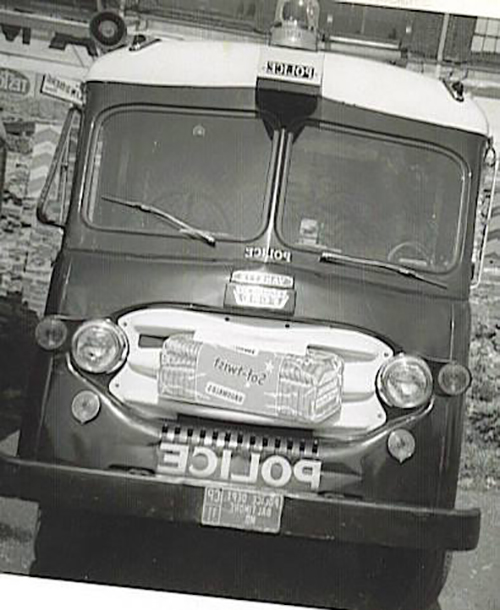
Police Riot Squad

3

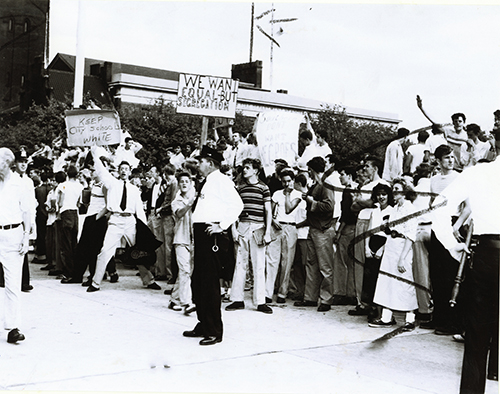
This was and continues in large part to be why we had these types of riots, and at the time the police took signs and made arrests, but the media seemed to think it was OK to take a sign that one guy made, and re-print it and circulate to more than one hundred thousand readers, in nearly every state in the country. The media regularly used terms such as, "Negro" and "Negress" to describe African American Males, and Females when reporting a story about a crime committed, or an arrest made, but they never used the race to describe a "Caucasian" male or female when a Caucasian was a suspect, or victim of a crime. What this does is make race a non-issue when a Caucasian is involved, but when an African American is involved all we hear is the race. So over time of reading articles in newspapers, or watching the news on television and hearing only one race, it would have had to have had a brainwashing effect on readers and listeners into thinking African Americans are involved in all or most crime. This was something Malcom-X commented on while talking about the dangers of the media saying “The media's the most powerful entity on earth. They have the power to make the innocent guilty and to make the guilty innocent, and that's power. Because they control the minds of the masses.” Go online and subscribe to newspaper archives even if it is for a free 7 to 30-day trial and you'll see what the media did, they control the public's views and thoughts on whatever they want the public to see and eventually think.  

 riotsBPD1968 72BW

Courtesy Dave Eastman

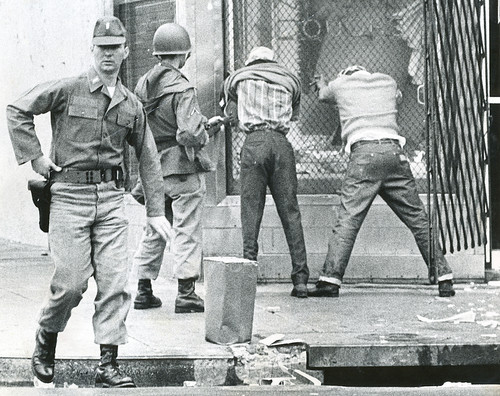
1968 Riot Squads

 The Baltimore Riots 1968

The Baltimore Riot of 1968 started in reaction to the murder of Martin Luther King. After King was assassinated in Memphis, Tennessee, on 4 April 1968, rioting broke out in 125 cities across the United States. In Baltimore, Maryland trouble didn’t start until two days later. When rioting did break out on Saturday, 6 April, the Governor of Maryland, Spiro T. Agnew, called out thousands of National Guard troops and 500 Maryland State Police to quell the disturbance. When it was determined that the state forces could not control the riot, Agnew requested Federal troops from President Lyndon B. Johnson.

By Sunday evening 7 April, 5000 paratroopers, combat engineers, and artillerymen from the XVIII Airborne Corps in Fort Bragg, North Carolina, specially trained in riot control tactics, including sniper school, were on the streets of Baltimore with fixed bayonets and equipped with chemical (CS) disperser backpacks. Two days later, they were joined by a Light Infantry Brigade from Fort Benning, Georgia. With all the police and troops on the streets, things began to calm down. The FBI reported that H. Rap Brown was in Baltimore driving a Ford Mustang with Broward County, Florida tags, and was assembling large groups of angry protesters and agitating them to escalate the rioting. In several instances, these disturbances were rapidly quelled through the skillful use of bayonets and chemical dispensers by the XVIII Airborne units. That unit did not fire a single round of ammunition and arrested more than 3,000 detainees, who were identified, tagged with bracelets, and delivered in cattle trucks to the Baltimore police precincts.

By the time the riot was over, 6 people would be dead, 700 injured, 4,500 arrested and over a thousand fires set. More than a thousand businesses had been looted or burned, many of which never reopened. Total property damage was estimated at $13.5 million (1968).

One of the major outcomes of the riot was the attention Spiro Agnew received when he criticized local black leaders for not doing enough to help stop the disturbance. While this angered blacks and white liberals, it caught the attention of Richard Nixon who was looking for someone on his ticket who could counter George Wallace’s American Independent Party, third-party campaign. Agnew became Nixon’s Vice Presidential running mate in 1968.

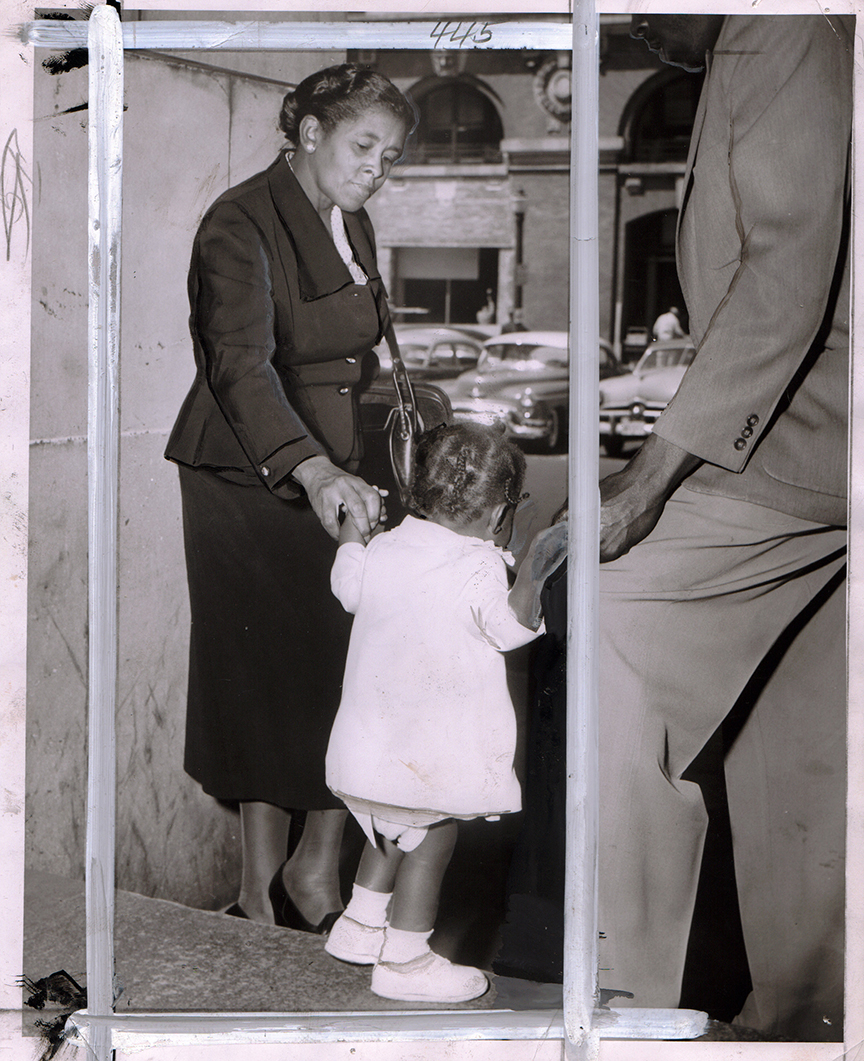
Woman Pleads for People to Stay Out.

Woman Pleads for People to "Stay Out" - Eager Street at Broadway - April 8, 1968

432 North Ave
432 North Avenue
Boys and Girls Scurry from Grocery Store

"Boys and Girls Scurry from Grocery Store ... market pillaged near Biddle Street and Greenmount Avenue." April 8, 1968

Eager Aisquith
"Citizens on Run Near Eager and Aisquith Street" - April 8, 1968

Looted building
Looted building 
HARFORD LAFAYETTE1

COURTESY SERGEANT BERNIE WEHAGE

 Harford Rd. and Lafayette Ave.

HARFORD LAFAYETTE2

COURTESY SERGEANT BERNIE WEHAGE

Harford Rd. and Lafayette Ave

HARFORD LAFAYETTE3

  COURTESY SERGEANT BERNIE WEHAGE

Harford Rd. and Lafayette Ave

BIDDLE GREENMOUNT

COURTESY SERGEANT BERNIE WEHAGE

Biddle St. and Greenmount Ave

CHASE ENSOR

COURTESY SERGEANT BERNIE WEHAGE

Chase St.and Ensor St.

CHASE ENSOR

Courtesy Patty Driscoll

400 BLK E CHASE ST

On patrol 400 Blk. E. Chase St.
RIOT
COURTESY SERGEANT BERNIE WEHAGE
An officer assisting store owner with looted building
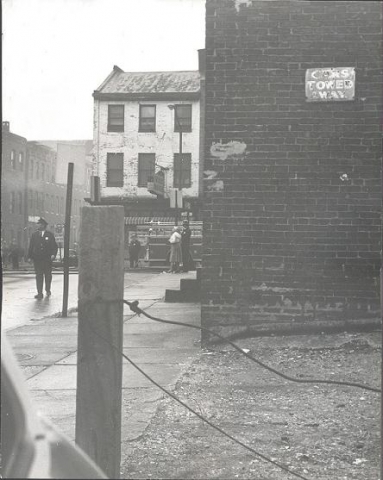
LLOYD BALTO STS

COURTESY SERGEANT BERNIE WEHAGE

Baltimore and Lloyd Sts. Officer Charlie Cumberledge CD walking down Lloyd St. toward his car...Officer Bernie Wehage had just taken a woman from the second floor apartment over top the tailor shop which had been set on fire....the woman, while Officer Wehage was dragging her down the steps, was hollering about her baby on the third floor, Officer Cumberledge ran up to the third floor and rescued her baby, "a canary"

coppin state 4 7 68aCourtesy Lt Bob WilsonGas Masks on Federal troopsCourtesy Lt Bob WilsonIMG E2493Courtesy Lt Bob Wilsonlooters biddle near madison 4 8 68 Courtesy Lt Bob Wilson Mapping Strategy Courtesy Lt Bob Wilson old town market clock tower Courtesy Lt Bob Wilson palm sunday fires 4 8 68 Courtesy Lt Bob Wilson spiro agnes4pm curfew 4 8 68 2 Courtesy  Lt Bob Wilson Smelkinson DairyCourtesy Lt Bob Wilson Study inContrastsCourtesy Lt Bob Wilson

maryland flag line6

Police Department

City of Baltimore, Maryland

officer badge1.jpg.w300h320

 1968 Riots

Action Reports, Baltimore Police Department

From 0600 Hours, Friday, April 5, 1968

To 0600 Hours, Friday, April 12, 1968

D. D. Pomerleau Police Commissioner

April 13, 1968

Police Department City Of Baltimore

Fallsway and Fayette Street Baltimore, Maryland 21202

Mulberry 5-1600 Area Code 301

Donald Pomerleau

Commissioner

Ralph G. Murdy

Administrative Bureau

Wade H. Poole

Operations Bureau

Thomas J. Keyes

Services Bureau

Deputy Commissioners

April 22, 1968

NOTICE

The attached Action Reports represent Journal entries extracted from the Log Book in the Emergency Headquarters Command Post during the period April 5-12, 1968. These Entries should in no way be interpreted as representing an all-inclusive account of the activities, which occurred in Baltimore during that period. Because of the exigencies of the moment, the entries are fragmentary and are presented merely as an overview.

Ralph G. Murdy

Deputy Commissioner

Attachments – Action Reports

PREFACE

In order to assist the Commanding General of the Task Force Baltimore in meeting his deadline, this overview of activities engaged in by the Baltimore Police Department during the period beginning 0600 hours April 5, 1968, to 0600 hours April 12, 1968, has been prepared. In the time allotted, it has not been possible to exploit all of the source documents and witnesses to fully report the commitment of forces in Baltimore city during the period of disorder. It is anticipated that additional reports will be prepared and submitted to the Commanding General.

Statistics on reports of fires, looting, deaths, and arrests were reported to Task Force Baltimore on an hourly basis and summarized daily. Accordingly, such statistics are not repeated herein. It should be noted, however, that all the statistics at this time are to be regarded as tentative since the field conditions frequently precluded their verification and the elimination of repeat calls.

D. D. Pomerleau

Police Commissioner

April 13, 1968

Table of Contents

Action Reports: Page

April 5-6, 1968

April 6-7, 1968

April 7-8, 1968

April 8-9, 1968

April 9-10, 1968

April 10-11, 1968

April 11-12, 1968

Services Bureau Report

Operations Bureau Manpower Strength Report

The activity of Field Commander Posts

Baltimore Police Department Frequency Polygon,

1700 hours April 6, 1968, to

0800 hours April 12, 1968

 Action Report, Baltimore Police Department

From 0600 hours, Friday, April 5, 1968

To 0600 hours, Saturday, April 6, 1968

1. Background

Thursday night in Baltimore found its citizens apprehensive and confused as to what events would follow the death of Dr. Martin Luther King, prominent civil rights leader, who was killed by an unidentified sniper in Memphis, Tennessee. Dr. King died of his wounds about 7:00 p.m. on Thursday evening and the first successful act of related violence in Baltimore occurred within six hours. About 12:38 a.m. on the morning of April 5, 1968, an ADT alarm was set off at Hoffman’s Liquor Store, 4451 Park Heights Avenue, where a homemade firebomb had been thrown through a window and landed on a pool table. The owner also responded to the ADT alarm and was in the process of extinguishing the blaze when police arrived. Police had answered several earlier calls of suspected arson in the Southwestern District shortly after 10:00 p.m. on April 4, 1968, but little damage was found.

Baltimoreans remained in a tense state on Friday morning. Their shock, anger and fear were best described by one cab driver who said, “Anything can happen now – and I do mean anything.” Despite the violence, which had burst out in cities across the country, Baltimoreans prayed with the President that violence would be denied a victory.

Indications of unrest in Baltimore on Friday appeared at Coppin State College and Northwestern High School where students refused to follow a regular academic routine. Mayor D’Alesandro designated Monday as a city-wide day of mourning for Dr. King. He also proclaimed Sunday as a special day of prayer in Baltimore for Dr. King.

Governor Agnew announced on Friday that he had ordered the Maryland National Guard placed in a state of readiness shortly after 1:00 p.m. and signed into law a recently enacted emergency bill giving him a sweeping power to mobilize forces to meet impending internal disorder.

The Emergency Headquarters Command Post was opened at 11:00 p.m. on Friday, April 5, 1968. AT 11:15 p.m. an arrest was made at Pennsylvania Avenue and Pearl Street of a person who was charged with throwing a firebomb into a lumberyard. This person was later identified as Willard Dixon, a member of the CORE.

At midnight, Lt. Col. George Davidson of the Maryland State Police reported that all State Police Personnel were on 1010 alert, meaning they were in readiness to be called on short notice.

During the remainder of the early morning hours, a relatively small number of fires were reported. The Emergency Headquarters and Field Command Posts were secured by order of the Commissioner at 3:37 a.m., Saturday, April 6, 1968.

11. SEQUENCE OF EVENTS BEGINNING 2310 HOURS, FRIDAY, APRIL 5, 1968

2310 Emergency Headquarters Command Post opened by Commissioner Pomerleau, 5th floor, Police Headquarters

2330 General Ogletree advised he had one MP Company mobilized at the 5th Regiment Armory for site security only. General Gelston was ordered to return from Atlanta, Georgia, to Silver Spring, Maryland by the Governor

2355 Car 1927 reported an arrest of an accused fire bomber at the lumberyard, Pennsylvania Avenue, and Pearl Street. Person Identified at 0001 as Willard Dixon, a militant member of CORE, Baltimore office.

0005 Lt. Col. George Davidson, Maryland State Police, reported all State Police on 1010 alert for possible commitment. Potential problem areas reported as Annapolis, Cambridge, Montgomery County, Maryland

0135 Commissioner Advised Pete Marudas, Mayor’s Staff that the situation was relatively quiet.

0210 Chief Battaglia and Deputy Chief Schnabel went to the scene of a fire at 2135 N. Fulton Avenue, Southway Realty Company. Found to be a mattress fire – not connected with civil disorder

0255 Fire at Broadway Market, follow up with police indicated no connection with civil disorder, i.e., building locked and intact and fire contained at the point of origin, vegetable stall

0330 Broken window reported in the barbershop at 4238 Park Heights Avenue

0337 Emergency Headquarters and Field Command Posts secured by Commissioner Pomerleau

Action Report, Baltimore Police Department

From 0600 hours, Saturday, April 6, 1968To 0600 hours, Sunday, April 7, 1968

1. BACKGROUND

The proceeding twenty-four hour period in Baltimore was marked by one of watchful waiting. The Adjutant General of Maryland had been ordered to return to the State by the Governor and the Maryland State Police had been placed on a 1010 alert. Sporadic Fires had occurred in the city but these were easily controlled. An important arrest was made just before midnight on Friday when Willard Dixon was arrested on a charge of attempted arson.

At the time the following report began, early on Saturday morning, April 6, 1968, law enforcement was in complete control of the City of Baltimore.

11. SEQUENCE OF EVENTS

1145 Headquarters and Field Command Posts activated. Field Command Post located at Presstman and Appleton Streets with Major Donald T. Shanahan in command of Field Command Post Headquarters. Lt. Col. Frank J. Battaglia, Field Force Commander. Present in Headquarters Command Post at activation: Deputy Commissioners Poole and Murdy, Directors Morrisey, Norton, and Deems. Building security in effect.

1256 Chief Battaglia reported memorial ceremony at Pennsylvania Avenue and Mosher Street had been underway for twenty minutes. It drew a crowd of 250, mostly adults.

1337 Chief Battaglia reported the rally was breaking up with no incidents.

1430 Personnel on alert at the demonstration were returned to the staging area.

1435 Commissioner Pomerleau departed Emergency Command Post. Deputy Commissioner Poole left in command.

1459 Local FBI office called Deputy Commissioner Poole with a report that CORE threatened to picket police headquarters because of an arrest of Jerome Ford, detained on assault charges.

1501 Jerome Ford released on own recognizance. Stuart Wechsler of CORE agreed to Community Relations Division request not to picket police headquarters.

1503 FBI Supervisor Maurice Garrison relayed that SNIC was going to Mondawmin Shopping center.

1712 Firebomb thrown into the vacant house at 1002 W. Baltimore Street.

1720 Disorderly crowds reported in the 400, 500 blocks of Gay Street.

1725 Order given to shift Field Command Post from Presstman and Appleton Streets to Gay Street and Aisquith.

1727 Windows were reported broken on Gay Street. Chief Battaglia stated the situation was still under control.

1834 Field Command Post relocated at Aisquith and Gay Streets.

1838 Phase IV of Mobilization Plan in effect.

1842 Warning order given to National Guard. The National Guard advised Phase IV in effect.

1844 All off-duty personnel contacted to report to their respective divisions and districts.

1845 Wire services asked to announce that all police personnel was to report for duty. General Ogletree activated the National Guard and reported to the Guard would be on the streets in two and three hours.

1850 Commissioner Pomerleau informed the Mayor and Governor of this situation.

1907 Commissioner Pomerleau and Deputy Commissioner Polle briefed Mayor D’Alesandro and Eugene Feinblatt at the Command Post Headquarters.

1911 Commissioner Pomerleau ordered the K-9 Unit deployed in the downtown area to protect the business district.

1923 Old 2-½ ton Army surplus truck was reported in the area of Chase and Eager Streets carrying persons throwing bricks. Maryland license 2660 EV.

1925 Stores were reportedly being looted in the 1600-1800 blocks of Harford Road.

1930 Major W. W. Corbin, Assistant Chief of Operations, Maryland State Police, was requested by Commissioner Pomerleau to send the Maryland State police to the staging area at the State Office Building.

1935 Parren Mitchell called Mayor D’Alesandro at Command Post Headquarters to suggest a public appeal from the Mayor to “clear the streets. David Glenn, Eugene Feinblatt, and other officials present, recommended postponing the announcement and that the Mayor “sit tight.”

1943 Four Cars from the Northwestern District were dispatched to handle rock throwers on Harford Road and North Avenue.

1945 Snipers were reported in the 4300 block of Park Heights Avenue.

1946 Large crowd was reported at Baltimore and Gay Streets.

1950 Major Pomrenke was dispatched as Baltimore Police liaison with Captain Collister at the Maryland State Police staging area at the State Office Building.

1953 Follow-up report on snipers in the 4300 block Park Heights Avenue disclosed one shot had been fired and no other trouble observed.

1955 Colonel Robert J. Lally, Superintendent of Maryland State Police, arrived at Headquarters Command Post.

1956 Charles Bressler of the Governor’s office called Commissioner Pomerleau to advise that the Governor had just signed an emergency proclamation.

1957 Governor Agnew called Colonel Lally to clarify jurisdiction and Colonel Lally recommended the Commissioner Pomerleau remain in command. The Governor agreed to this and stated he would be available to close bars and make such other orders as necessary.

2004 Mayor D’Alesandro received a call that violence was scattered and sporadic. The Mayor said he was “holding on” for the present.

2005 Maryland State Police advised Colonel Lally they would have 300 to 400 men ready by 2100 hours.

2011 City Solicitor George Russell arrived at Command Post Headquarters.

2014 Attorney General Francis Burch arrived at Command Post Headquarters.

2015 Chief Battaglia reported that his men were still in control on the streets.

2020 A group of twenty-five white men on East Baltimore Street between Calvert and St. Paul Streets was dispersed.

2025 Attorney General Burch spoke with the Governor, as did Mayor D’Alesandro. The Governor had already made an announcement of his emergency proclamation on television. Attorney General Burch said this was required and that the Governor announced that his emergency proclamation was precautionary.

2030 252 Troopers of the Maryland State Police were in position at the State Office Building, 35 were assigned to guard the State Office Building, and 200 were available for deployment.

2032 General Ogletree agreed with Commissioner Pomerleau that police officers should not respond to the call-up of the National Guard.

2036 Parren Mitchell arrived at Command Post Headquarters to see Mayor D’Alesandro.

2045 Gene Noble of the Community Relations Commission was requested to have the colored clergy who had volunteered their services, to attempt to quiet crowds on Gay Street.

2051 Chief Judge I. Sewell Lamdin of the Municipal Court advised he was police headquarters building and had sufficient judges to hold hearings.

2055 Detective cruiser 1101 intercepted the 2-½ ton truck reported at 1923 hours with Maryland License 2660 EV. Six occupants were arrested at Madison and Forrest Streets.

2056 Walter Lively, Militant head of U-JOIN was observed at Greenmount Avenue and Biddle Street. Personnel were instructed to keep him under surveillance.

2057 Robert Osborne, Director of Baltimore Civil Defense, said his unit was fully activated.

2102 Task Force units were dispatched to a reported “Soul group” gathered at Pennsylvania Avenue and Mosher Street.

2110 In response to request of Commissioner Pomerleau General Ogletree advised the Guard would have 1,000 men mobilized within the hour at the Fifth Regiment Armory.

2119 Telephone service was installed at the Command Post at Gay and Aisquith Streets.

2133 The Fire Department reported a fourth alarm at Federal Street and Milton Street.

2134 The first police injury reported was Sergeant McIntyre, Southern District, who injured his foot at Aisquith Street and Ashland Avenue. He was taken to Mercy Hospital.

2138 A store fire was reported at Lafayette and Guilford Avenues.

2139 Major William Armstrong and Director William Morrissey reported to Headquarters Command Post and they had observed numerous situations of glass breaking by roving bands and expressed concern over the situation to Commissioner Pomerleau, who ordered them to report to Chief Battaglia, Field Force Commander.

2145 Chief Judge Lamdin came to Headquarters Command Post.

2147 A large fire was reported at North Avenue and Calvert Street.

2148 A source called Mayor D’Alesandro to advise of a crowd fighting in the 1000 block of West Baltimore Street. Governor Agnew called Mayor D’Alesandro and requested a prompt report. Chief Battaglia was requested to call the Command Post by Telephone.

2153 Attorney General Burch, Mayor D’Alesandro, City Solicitor Russell, Colonel Lally, and Commissioner Pomerleau discussed the possibility of calling in the National Guard and / or the Maryland State Police.

2157 The Mayor and Attorney General leaned toward calling in the National Guard. The City Solicitor suggested a gradual buildup beginning with the Maryland State Police.

2159 Commissioner Pomerleau alerted General Ogletree to an imminent call, which would commit the National Guard.

2200 General agreement was reached to ask the Governor to bring in the National Guard, and Attorney General Burch called Governor Agnew. The Governor spoke with Mayor D’Alesandro who said “things are getting worse.” The Mayor requested commitment of the National Guard, a curfew, and a ban on the sale of liquor. The Governor committed the Guard and said the curfew would begin at 11:00 p.m. and that it would be announced immediately over the wire service.

2204 A fire was reported at 235 Hollins Ferry Road, and a firebomb ar Aisquith Street and Lafayette Avenue.

2205 Col. Robert Lally committed the Maryland State Police as follows;

Captain David Dowd would be in charge of 92 men on Greenmount Avenue from North Avenue to 25th Street. 75 men would be sent to Milton Avenue and Preston Street, 50 men to North Avenue between Greenmount Avenue and Howard Street. Commissioner Pomerleau talked with General Ogletree on deployment of the National Guard. General Ogletree said he would commit two task forces – one from the West and one from the South.

2209 Col. Lally committed 50 members of the Maryland State Police under Captain O’Hara, from Park Circle north along Park Heights Avenue.

2210 Assistant Attorney Generals Fred Oken and Norman Polavoy arrived at Emergency Headquarters Command Post.

2212 Attorney General Burch, City Solicitor Russell, Eugene Feinblatt, and Mayor D’Alesandro left the Emergency Headquarters Command Post.

2213 A request for a wagon run an ambulance was received from the 3500 block of Park Heights Avenue.

2220 Commissioner Pomerleau notified General Ogletree that trouble was spreading west and he anticipated problems in the Park Heights area.

2230 20 additional troopers of the Maryland State Police were ordered by Col. Lally to patrol in the department store area of Howard and Lexington Streets.

2231 About 2,000 National Guardsmen were reported to be committed in the general areas of Greenmount Avenue and Calvert Street between North Avenue and 25th Street.

2240 The National Guardsmen was reported coming to the city from Pikesville. Deputy Commissioner Poole recommended that one section be deployed along Park Heights Avenue as far south as Park Circle. This would be in addition to the two battalions to be deployed between Greenmount Avenue and Calvert Street from North Avenue to 25thStreet.

2243 Commissioner Pomerleau recommended to General Gelston that National Guard forces be deployed as noted above.

2252 Fire Chief Killen said his forces were getting thin, and in view of the growing number of fires, he night have to call upon neighboring fire departments for assistance.
2300 The curfew went into effect from 11:00 p.m. to 6:00 a.m. No alcoholic beverages were to be sold and no gasoline delivered except directly into gasoline tanks of motor vehicles. In addition, no firearms, inflammable liquids, or dangerous weapons were to be carried. Violation of the proceeding could result in a fine of $100.00 or 60 days in jail, or both. This information came from Mr. Robert Montgomery of the Governor’s office. An additional 15 Maryland State Police troopers were added to the Howard Street detail.

2303 Chief Judge Lamdin was notified of the curfew order.

2310 States Attorney Charles Moylan was notified of the Curfew order.

2335 Five more Troopers of the Maryland State Police were added to Howard Street detail.

2350 Commissioner Pomerleau requested troops in the 1200-1700 blocks of Pennsylvania Avenue.

2356 The 92 men of the Maryland State Police on Greenmount Avenue were relieved by the National Guard and returned to the State Office Building staging area for reassignment.

0001 300 National Guardsmen were sent to Pennsylvania Avenue for patrol. Remainder of Pikesville contingent to city along Park Heights Avenue.

0013 15 Maryland State Police Troopers sent on request of General Gelston to protect a large supply of liquor at the Baltimore Security Warehouse, Hillen and High Streets. An additional 30 troopers were sent to a fire at Federal Street and Harford Road.

0022 Maryland State Police detailed 45 men sent to the Civic Center to control the break-up of a dance.

0124 National Guard forces swept the area between Calvert Street and Greenmount Avenue from 25th Street south to three blocks below North Avenue. Baltimore Police Department Tactical Forces joined National Guard at Harford Avenue to proceed to Pennsylvania Avenue to sweep Pennsylvania Avenue.

0129 A Youth Music Festival scheduled for the Civic Center on Sunday was canceled.

0138 A recapitulation showed 41 fires reported but many of these were repeat reports.

0159 Channel 13 quoted Fire Chief Killen 250 fires reported. The detention of Walter Lively was also noted on the newscast.

0305 Commissioner Pomerleau returned to the Emergency Headquarters Command Post from the field and ordered that Chief Battaglia return to the Emergency Headquarters Command Post for a critique.

0335 Preliminary figures showed 273 arrests, which reported a looter, wounded by a police officer in self-defense, and three dead. Two of the dead were found in a burned building and one was shot by the night manager of a bar.

0343 Assignment of the National Guard. Colonel Burke commanded a Task Force in Eastern, Northeastern, and Southeastern Districts. Colonel Fowler commanded a Task Force in Western, Central, and Northwestern Districts.These two Task Forces had no fixed post, but enforced the curfew and coordinated with district police commanders. The Baltimore Police Department was subordinate to Major General George Gelston, military commander. K-9 dogs were kept in the downtown business area as a deterrent and reserve forces were available in the staging area. The Baltimore Police Department remained on twelve-hour shifts.

0425 Field Force Commanders reported city relatively calm. Commissioner Pomerleau, Deputy Commissioner Poole and Murdy departed Emergency Command Post. Major William Armstrong, Staff Duty Officer remained in charge at Emergency Command Post.

maryland flag line6

Looter shot by police

 Looter shot by a police officer in self-defense

City Prison Courtyard

 Preliminary figures showed 273 arrests maryland flag line6

140124 CN ColumbiaU1968.jpg.CROP.original original

1968 Riots

Action Report, Baltimore Police Department

From 0600 hours, Sunday, April 7, 1968

To 0600 hours, Monday, April 8, 1968

I. BACKGROUND

This period began on Sunday morning. The disturbance in Baltimore had begun the preceding night and saw the commitment of the Maryland State Police and the Maryland National Guard to augment forces of the Baltimore Police Department. Reports of fires and looting accelerated during the night with the lowest ebb in the early morning hours of Sunday.

II. SEQUENCE OF EVENTS

0759 State’s Attorney Charles Moylan visited the Emergency Headquarters Command Post and notified the department the prosecutors would be available in each Municipal Court immediately.

0810 A large crowd was reported in the 1400 block of Milton Avenue.

0853 The National Guard asked for assistance in dispersing a large crowd on Gay Street.

0930 An “assist an officer” call received from Greenmount Avenue and Biddle Street. Request received from the National Guard to seal off traffic on Pennsylvania Avenue from Mosher Street to North Avenue; on Harford Avenue from Monument Street to North Avenue: and Gay Street from Orleans Street to Preston Street.

1100 Officer Robert Haas, Southeastern District, was taken to Mercy Hospital with broken a finger and laceration of his face.

1120 Crowds stoning police officers and National Guardsmen at Preston Street and Greenmount Avenue. Tear gas was used at Gay and Eden Streets by the National Guard. Fire Department requested assistance at Lanvale Street and Guilford Avenue.

1200 City Jail prisoners refused to enter cellblocks.

1225 Chief Battaglia reported City Jail secured.  12 cars reported on Baltimore-Washington Expressway bearing Virginia and District of Columbia tags with 5-6 Negroes in each car. State police at Glen Burnie notified.

1315 City Council President W. Donald Schaefer advised Emergency Headquarters Command Post that he is trying to reach the Mayor to have the curfew moved up.

1327 Mr. Zaccagnini of the Mayor’s Office requested a National Guard Detail around City Hall.

1328 The Dickman Street Garage was opened 24 hours a day, until further notice.

1338 National Guard was given grid coordinates of reports on fires and looting since 0600 hours.

1344 Fire Department asked for assistance at 2 locations.

1346 Deployment of 50 State troopers was requested on Baltimore and Franklin Streets between Calvert and Howard Streets.

1350 Major Shanahan, at Filed Command Post 1, was advised he could obtain food at Mergenthaler High School.

1410 Maryland State Police reported 50 troopers were assigned in the downtown business areas, and over 60 were assigned for use at Field Command Post 1.

1420 Chief Thomas of the Fire Department reported that every fire in the city was under control at 1400 hours.

1433 Teletype received a proclamation from Governor Agnew prohibiting sale of alcoholic beverages in counties of Anne Arundel, Baltimore, and Howard

1449 Teletype sent to all districts notifying them of curfew from 4:00 p.m. to 6:00 a.m. with orders to first notify violators and then arrest them.

1459 Commissioner Pomerleau spoke with General Ogletree on a need to commit the entire National Guard.

1500 Commissioner Pomerleau advised Attorney General Burch of the need to have the National Guard concentrate in the area of Milton to Maryland Avenues and Orleans Street to 25th Street. The Commissioner also asked Attorney General Burch to suggest that the National Guard be more aggressive in initiating repressive patrol.

1509 Attorney General Burch informed the Commissioner that he urged the National Guard to commit all their men.

1545 The Commissioner agreed to a request of the Field Force Commander for CS Gas, gas mask, and twenty shotguns at Field Command Post 1.

1604 The Commissioner asked Col. Lally to use his influence in getting more aggressive action initiated repressive patrol and total commitment by the National Guard.

1616 The Commissioner spoke with Col. Lally who called concerning the possibility of the Governor requesting Federal Troops. The Commissioner suggested waiting to see the results of the 4:00 p.m. curfew.

1630 Field Force Commander Battaglia asked for more trucks to transport curfew violators.

1700 Chief Funk of the Fire Department stated all Fire Department personnel had been called back to duty and that 60% of his equipment was still committed.

1730 Assistant Attorney General Fred Oken made arrangements for speedy hearings of curfew violators at 9:00 p.m.

1731 Attorney General Burch was advised of the upward trend of reported fires since 0600 hours.

1746 Governor Agnew called the Commissioner for an estimate of the situation. The Governor said he would ask for Federal Troops after immediately conferring with General Gelston.

1805 Chief Wett of the Fire Department said all fires were under control as of 6:00 p.m.

1901 In the 36-hour period from 0700 hours Saturday, April 6, 1968, to 1900 hours Sunday, April 7, 1968, the Baltimore Police Department received 7, 647 calls for police service.

1930 5 Gas and Electric power sub-stations were placed under guard.

1931 A curfew was announced for Baltimore County from 9:00 p.m. to 6:00 a.m.

1932 Since 0001, Sunday, April 7, 1968, 248 reports of looting and 67 reports of fire, were received.

1940 Commissioner Pomerleau left the Emergency Headquarters Command Post to meet with Chief Battaglia and join Lt. General Robert York at the Fifth Regiment Armory. Civil Defense stated that 234 persons had been treated in hospitals during the disturbance to date.

2003 The Chief of the Fire Department refused to provide further statistics to Director Ashburn, Planning, and Research Division, stating he did not have the necessary clerical personnel.

2050 1900 Federal troops arrived at Mondawmin Shopping Center en route to Druid Hill Park.

2120 National Guard was advised of the growing trend of fires and looting in the Western and Southwestern Districts. Deputy Commissioner Poole was advised that the 18thAirborne Brigade would begin to sweep that area.

2130 Comptroller Pressman inquired and was advised against opening the 7 City markets on Monday.2225 Deputy Commissioner Poole advised Filed Command Post 1 to sweep east from Hilton Street to Pennsylvania Avenue on Edmondson Avenue.

2245 Mr. C. P. Stackhouse, 109th Military Intelligence, stated that the 82nd Airborne units were deployed on the west side of Jones Falls Expressway, and the National Guard on the east side.

2304 Commissioner Pomerleau notified Deputy Commissioner Poole that Federal troops had been committed in West Baltimore, but were not yet deployed.

2345 Deputy Commissioner notified Col. Abbott of the National Guard that 50 men were required at City Jail for disorders there.

0010 Commissioner Pomerleau notified Deputy Commissioner Poole, that National Guard troops dispatched to the Southeastern and Eastern Districts would be established outside each district. The Police Department would provide communications in order that the National Guard could be dispatched with cruising patrols accompanying in order to pick up prisoners and block off streets if necessary.

0130 Deputy Commissioner Keyes reported he was attempting to arrange for additional confinement areas.

0155 Major Norton advised that two suspects were arrested at the scene of a reported sniping in the 900 block of N. Fulton Avenue.

0340 Deputy Commissioners Poole and Keyes and Major Pomrenke were relieved by replacements.

 BNO 740 BS F 666x540

1968 Riots

maryland flag line6

Gas Masks on Federal troops

Gas Masks on and Bayonets at the Ready, Federal Troops Prepare Sweep Down Whitelock Street to Clear It of Looters  April 8, 1968

Action Report, Baltimore Police Department

From 0600 Hours, Monday, April 8, 1968

To 0600 Hours, Tuesday, April 9, 1968

I. BACKGROUND

The twenty-four hour period preceding this report saw violence in Baltimore reach a climax, which required the federalization of the Maryland National Guard and the commitment of Federal Troops. The greatest number of reports, looting, and fires received between 8:00 p.m. and 11:00 p.m. on Sunday night.

II. SEQUENCE OF EVENTS.

0601 Army and National Guard officials were advised that the Baltimore school population was 205,300 (180,000) in response to their inquiry. An announcement had already been made that schools would be closed on Monday, April 8, 1968.

0608 Commissioner Pomerleau visited Emergency Headquarters Command Post and supervised the preparation of maps.

0640 Task Force Baltimore was advised that the Baltimore Police Department was working n 12-hour shifts of approximately 1100 men on each shift.

0743 A shooting was reported in the 800-block Somerset Street.

0755 2 escort drivers were provided for Lieutenant General York and Assistant Attorney General Fred Vinson.

0925 Colonel Kriwanek, Provost Marshal of the 18th Task Force Baltimore, came to Emergency Headquarters Command Post for briefing with Director Ashburn.

0940 The number reported lootings between 9:00 a.m. and 9:40 a.m. this date were noted to be double the number reported for the same period on Sunday morning, April 7, 1968.

0950 Lieutenant Harry Frantz, Baltimore Police Department Liaison Officer with Civil Defense, advised of the following food distribution points.

Caroline and Eager Streets

Fremont and Pennsylvania Avenues

29th Street and Alameda

Gilmor and Baker Streets

4502 Park Heights Avenue

Lafayette and Arlington Avenues

720 N. Calvert Street

2202 St. Paul Street

2521 E Preston Street

Greenmount Avenue and 22nd Street

Gay Street and Broadway

300 S. Broadway

1427 N. Caroline Street

Chase and St. Paul Streets

2627 N. Charles Street

560 N. Broadway

2641 Maryland Avenue

1021 Light Street

In addition to the above, meals were being served at Eastern High School.

0950 The shooting in the 800-block Somerset Street was confirmed to be a shooting of a citizen by Officer Bernard E. Hartlove who fired in self-defense when William V. Stepter came at him with a knife and a brick.

0955 The city reported that contraband would be accepted for storage at the city warehouse, 2801 Edmondson Avenue.

1020 Task Force Baltimore was advised of a reported crowd of 500 persons converging on the Western Police District.

1025 Police Commissioner directed that the following teletype be sent to all Commanding Officers:

“You are reminded that the established Firearms Policy remains in force. Police personnel will only shoot in defense of themselves, fellow officers, military personnel, and citizens. Looters will not be shot except in self-defense as described in the previous sentence. No warning shots will be fired. No gas will be used without direct authority of the Chief of Patrol, Deputy Commissioner of Operations or the Police commissioner.”

1038 It was confirmed that all major department stores were closed and estimated that 95% of the smaller stores were closed.

1045 Chief Battaglia opened up Field Command Post 2 at Pennsylvania Avenue and Laurens Street

1050 Captain Mello reported that he had not observed a large crowd in the vicinity of the Western District

1115 Commissioner Pomerleau requested Major Wilbur Conroy of the Maryland State Police to provide 300 troopers in the State Office Building Staging Area at 1700 hours for use until at least 0100 hours.

1155 Reports were received of extensive looting in the 800 to 1100 blocks West Baltimore Street and the Field Command Post 2 was advised to dispatch the necessary personnel.

1230 A teletype was sent to all Commanding Officers notifying them that police personnel could not use unauthorized personal firearms.

1250 Colonel Kriwanek, Provost Marshal, advised that 2000 additional Federal Troops were leaving Andrews Air Force Base by bus at 1300 hours for Baltimore City.

1255 Request of Chamber of Commerce to have 2 citizens at Headquarters as liaison was denied. The Chamber was advised to have such persons remain at their Headquarters.

1310 The Assistant Attorney General, freed Oken, arranged with the Baltimore Civic Center Commission to keep prisoners at that location.

1340 Reports were received of looting at Franklin Square and Provident Hospitals. These reports were determined to be unfounded.

1345 The Acting Superintendent of Schools advised Deputy Commissioner Poole that he had been instructed to open City schools on Tuesday, April 9, 1968.

1515 National Guard Troops were sent to protect a storefront at 235 Franklintown Road which contained a large number of guns.

1530 State’s Attorney Moylan requested that prisoners be sent immediately to the Criminal Court where judges were waiting to give them a prompt hearing. He said that preliminary booking would not be necessary at the district stations.

1530 Mr. Kalman Hettleman, Aide to the Mayor, was advised in response to his inquiry that Stuart Wechsler, CORE leader, arrested as a curfew violator had been transferred from Eastern District to the City jail at approximately 1500 hours.

1600 The curfew was put in effect from 4:00 p.m. Monday, April 8, until 6:00 a.m., Tuesday, April 9, 1968. Within an hour after the imposition of the curfew Danny Gant and Yosef Kareem of CORE were arrested as curfew violators.

1620 All districts were advised that military vehicles could obtain gasoline and oil from city-owned fueling stations in the Central Garage.

1630 Prince George’s and Anne Arundel Counties’ Jails were available for receipt of 50 prisoners each.

1650 Major McLane of the 18th Airborne advised Headquarters Emergency Command Post that previously issued curfew passes were no longer valid.

1725 Deputy Commissioner Keyes resolved procedure for holding hearings on curfew violators with State’s Attorney Moylan.

1805 Mayor D’Alesandro requested Commissioner Pomerleau to meet him in the Patterson Park area.

1806 Teletype was sent that curfew violators would be tried without the presence of arresting officers by authority of State’s Attorney Charles Moyan.

1829 A teletype was sent to all districts requiring special attention to 7 establishments containing large quantities of alcoholic beverages.

2025 Deputy Attorney General Robert Sweeney called on behalf of Governor Agnew to instruct that Danny Gant of CORE should be released on his own recognizance.

2031 A sniper was reported on the roof at Lloyd and Lombard Streets.

2040 A sniper was reported at Lombard and Exeter Streets shooting at firemen.

2210 Colonel Lally of the Maryland State Police informed the Emergency Command Post of a report received that Minute Men might try to assassinate Governor Agnew, Mayor D’Alesandro, and Former Mayor McKeldin. Details were arranged to guard these homes.

2300 The area in the 1100 block East Lombard Street was cleared of snipers. Deputy Commissioner Poole requested Fire Chief Wett to return to the scene of the fire. Police and Military personnel had used the fire equipment left by the Fire Department.

2310 Commissioner Pomerleau notified Attorney General Burch that the Fire Department was not manning its equipment in the 1100 block East Lombard Street, but that State and Baltimore policemen along with National Guardsmen were manning the hoses.

2315 The Police Commissioner and Deputy Commissioner Keyes conferred with Attorney General Burch and Assistant Attorney General Oken with reference to the depletion of detention centers for prisoners. Mr. Oken was designated to work with Deputy Commissioner Keyes in resolving this problem.

2320 Chief Battaglia reported that the fire in the 1100 block East Lombard Street was under control.

0030 Pvt. Sweden John of Task Force Baltimore reported that one shot had been fired at him at 2342 hours from a high-rise apartment at Biddle Stree and Argyle Avenue.

0230 Colonel Nixon of the National Guard reported the following troop deployment:1stBattalion, 29th Infantry, had a command Post on North Avenue and Caroline Street. 2 Radio Cars are assigned on 12-hour shifts. The boundaries covered are Patterson Park to Guilford Avenue, Chase Street to North Avenue. The second unit is the 31st Infantry, which has its Command Post at Pennsylvania Avenue and Laurens Street. 2 radio cars assigned to 12-hour shifts. The boundaries are Guilford Avenue to Fremont Avenue and Chase Street to North Avenue.

Kerosene Fire Burns Lombard Street
Kerosene Fire Burns Along Lombard Street" - April 8, 1968

Smelkinson Dairy

 Smelkinson's Dairy on fire

maryland flag line6

Action Report, Baltimore Police Department

From 0600 hours, Tuesday, April 9, 1968

To 0600 hours, Wednesday, April 10, 1968

I. BACKGROUND

The peak of reported fires and looting was reached in the 24-hour period preceding this report. The greatest number of calls during the entire disturbance came at approximately 2:00 p.m. on Monday, April 8, 1968. Thereafter, while reports remained substantial during that period, a downward trend was noticeable. In the same period, the accumulation of prisoners began to tax the normal detention facilities available in Baltimore, and the Civic Center was pressed into use for this purpose. The most alarming occurrence of sniping took place during a 90-minute period just before midnight on Monday when firemen had to leave their equipment in the 1100 block of E. Lombard Street because of sniper fire. No one was hit by the fire, however.

II. SEQUENCE OF EVENTS

0915 City Council President Schaefer asked that special attention is given to neighborhood grocery stores, which he had asked to remain open.

0920 The Civic Center reported an unsuccessful attempt by several prisoners to run away.

0936 A teletype was sent out advising police personnel that law enforcement courses at local junior colleges had been postponed because of the disturbance.

0945 Chief Judge Dulany Foster stated Criminal Court judges would continue to sit and hear curfew cases.

1105 Commissioner Pomerleau visited the Emergency Headquarters Command Post to brief personnel on his conference which had taken place at the Task Force Baltimore Command Post at the Fifth Regiment Armory.

1141 Deputy Commissioner Poole requested 50 soldiers be sent to the Baltimore City Jail where the warden reported prisoners were restless.

1232 Teletype was sent to all commanders that officers would allow delivery men, doctors, nurses, etc., who had proper credentials to proceed during the curfew period.

1240 Chief of Police Rocky Pomerantz and two police officers from Miami Beach, Florida visited the Emergency Headquarters Command Post.

1301 Lieut. Harry Frantz called Emergency Headquarters Command Post to furnish a report received from City Council President Schaefer. Mr. Schaefer said that Walter Lively was reported to be on Federal Street telling residents “wait until the funeral is over and we’ll start.”

1336 Lt. Gen. York called Emergency Headquarters Command Post to state that memorial parades in honor of Dr. Martin Luther King should be condoned and protected.

1352 New call numbers were assigned to the 3 Filed Command Posts.

2501-Field Command Post 1

2502-Field Command Post 2

2503-Field Command Post 3

1434 Col. Lally passed on a report that militant leaders had left Baltimore for Philadelphia. The Inspectional Services Division was notified immediately.

1435 A car was dispatched to the Fifth Regiment Armory to bring Lt. Gen. York to Lafayette Square.

1650 United States Customs Bureau advised it would have unmarked cars patrolling the waterfront.

1705 Commissioner Pomerleau visited the Emergency Headquarters Command Post.

1730 Burial of Dr. Martin Luther King concluded.

1900 Curfew in force from 7:00 p.m. to 5:00 a.m.

1935 Danny Gant of CORE called Commissioner Pomerleau to request that he locate 6 civil rights workers who had been arrested.

0120 The following information was received from Intelligence at Task Force Baltimore:

From: County Police

To: G2 LNO 109th Time: 092155 Apr. MSG #141

MSG: County Police were monitoring citizen band messages in the Hamilton area. General conversation since
2030 hours has been in discussions of whether or not they should form vigilantes to handle area. This is due to lack of police action. All stations have Call Sign of KQI individual units are 3617, 2852, 2939 (net control) 2929 (mobile) 3375, 3626, 3771, 3375 and 12280.

TIME: 092340 MSG: County police continued to monitor citizen band transmissions. Additional units of Hamilton area radio net are KQI 3678, 3626, KKI 2185. The base station is directing mobile units through the Northwestern area of the city. Units move to areas using a code system for street designation. Operators of the units are avoiding using name identifications. When asked to identify by other units, operators refuse which is a violation of FCC regulations. Radios are operating on 11 and 14 bands. Units will be called on one band and will answer automatically on the other.

maryland flag line6

Action Report, Baltimore Police Department

From 0600 hours, Wednesday, April 10, 1968

To 0600 hours, Thursday, April 11, 1968

I. BACKGROUND

The twenty-four hour period preceding this report witnessed the funeral and burial of Dr. Martin Luther King, which lasted from approximately 10:00 A.M. to 5:30 P.M. on Tuesday. The curfew time was slightly shorter and citizens were reported fearful of an acceleration of violence after the funeral. While reports of looting and fires were still significant on Tuesday night, there was no holocaust as had predicted. Rumors were beginning to proliferate.

II. SEQUENCE OF EVENTS

0653 Civil defense delivered 576 cots and 750 blankets to 420 Fallsway, which were signed for by Lieutenant Maurice Epple.

0812 Information received that a bomb was to explode on the third floor of the Community College of Baltimore at 0915. Unit 654 reported no bomb located.

0825 Mr. John O'Malley, Executive Secretary, Board of Fire Commissioners, Baltimore City Fire Department was contacted by Major Rowlett as directed by the Commissioner to ascertain the statistics of a normal fire week. Mr. O’Mailey quoted the following average number of fires per week.

Monday 75

Tuesday 75

Wednesday 75

Thursday 75

Friday 100

Saturday 100

Sunday 100

0826 Sniper Reports, analysis of

Sniper Reports for the Period 0800 April 9, to 0600 April 10, 1968

Reports Confirmed 9 April 68

1051 401 Car reported sniper fire at Curtain and Aisquith Streets. Investigated by Sgt. Donald Sutton who located a civilian in a parked automobile which had a bullet hole – a bullet was found in the car, sniper not located.

1327 707 Car dispatched to 1400 Block North Monroe to investigate sniper fire – 1 shot was fired, sniper not located.

10 April 68

0121 Car 303 dispatched to 1615 Spring Street where resident stated she thought shot fired from 1400 Eden Street. 300 Car arrested a suspect on the roof of 1432 North Eden Street C/M, w/o weapon.

Unconfirmed reports 9 April 68

0854 Officer Tana dispatched to Lafayette and Pennsylvania to investigate sniper fire – looter found, but no sniper.

0925 Report of the sniper at CP2-West – unfounded.

0945 Sniper reported by fireman firing at passing motorists – unfounded, believed to have been noise from breaking bottle, at 1500 Aisquith Street.

1316 Sniper fire reported from the roof of Johns Hopkins Press, Aiken, and Sherwood Street – 418 Car investigated – unfounded.

1449 Sniper fire reported Hartford and Normal – investigated by 401 Car – unfounded, believed to have been caused by broken glass.

1536 Sniper fire at Pulaski and Fayette – unfounded.

1555 Shooting at 2801 Dukeland Street investigated by 817 Car – not sniper fire.

1705 Unfounded report of shooting at store and owner (No name or address listed) Unable to confirm.

1755 Shooting at 1900 Annapolis Road investigated by 817 Car – not sniper fire.

2100 Sniper fire 2100 Herbert Street investigated by CP2 – West – unfounded.

2138 Sniper fire 900 Block Whitmore investigated by Tactical Section – unfounded.

2330 Man with a gun at 4900 Block Schaub investigated by 306 Car – unfounded.

2329 Army personnel reported rifle discharged from roof 2226 Eutaw – could not be confirmed by 306 Car.

10 April 68

0209 706 Car investigated the report of sniper fire at 1800 W. Fairmount Avenue __ unfounded.

0218 Shooting from the roof at Schroeder and Fairmount investigated by 715 Car – unfounded.

0309 Shooting 1800 Block W. Fairmount Avenue investigated by 706 Car – unfounded.

0827 Following message received from Army intelligence. All CP’s notified.

FROM: Reg 1, 109th to G2 LNO, 109th

TIME: 100415 Apr 68 MSG: 151

MSG: Final additional identification of civil band radio operating in Hamilton area:

KQ13678 = Vicent D. Barrett, 1920 Spencerville Road, Spencerville, Maryland KQ12185 = Levin S. Harrison III, Dogwood Street, Tighlman, Maryland (County Police not sure this call sign was in net, next call sign seems to be one heard.)

KK12185 = Charles L. Hedgepeth, 46 C. Oak Drove Drive, Baltimore, Maryland. FCC has requested that this is allowed to operate; so that county police may make tape recordings of transmissions. FCC has reason to believe these transmissions may have something to do with riot in Washington, D.C. Recording of civil communications were made during Washington riot and FCC wants to compare tapes of Baltimore transmissions with those of Washington, D.C.

0828 Following information concerning fires received by Major Rowlett from Mr. John O'Malley, Executive Secretary, Baltimore City Fire Department.

Sat. 6 Apr 68 0600 – 2400 250

Sun. 7 Apr 68 411

Mon. 8 Apr 68 335

Tues. 9 Apr 68 207

Total Fires 1208

Mr. O'Malley further reports that a Department and a half has been in service since the emergency began.

100 First Line Units

50 Second Line Units

All personnel of the Department has been on duty --- the off shift was divided between second line and first line units causing both to be over normal operating strength.

0829 Bomb reported at Douglas High School, Gwynns Falls and Pulaski – unfounded.

0900 Warden Parks, City Jail, in reply to an inquiry from Deputy Commissioner Keyes, reported that 175 curfew violators were ready to be transported – also that they had not been fed. Information passed to Major Gaeng at 0925 upon his return to CP who handled the situation.

0846 Bomb scare at Junior High School, Pratt, and Ellwood. Investigated by unit

202 – no bombs were found.

0925 Bomb scare Eastern High School. Investigated by units 402 and 431 – no bomb found.

0904 Bomb scare 229 North Franklintown Road. Investigated by unit 726, no bomb found.

0945 Unit 302 reports auto in 600 Block Mosher Street with the sign “Lafayette Square 2 P.M. – We want it to stop now – Let’s meet at Lafayette Square at 2 P.M.” CP’s notified.

0950 Chief Judge Foster inquired about resuming Criminal Court Thursday 4/11/68. Deputy Commissioners Murdy and Poole advised him that we believe it better to wait until Monday. Upon calling him, he said Warden Schoenfield also advised Monday and that it was so decided. (VE 7-0693) Teletype D-1536

0958 Councilman Alpert requested detail at 833 Madiera Avenue (728-8700). Major Shanahan notified CP 2 to provide special attention – no detail. Councilman Alpert so advised by Major Shanahan.

1010 One arrest between 9 – 10 A.M. Total 5299.

1011 Fines accepted at City Jail. Teletype D-1534.

1015 Radio reports curfew for Wednesday, April 11 will be 10 P.M. to 4 P.M. Confirmed by 5th Regiment Armory. Teletype D-1535.

1016 (Late entry) Traffic Court open Thursday. Teletype D-1536

1020 Captain Rice said he had excellent information that Stokely Carmichael is in Baltimore. He is believed to be in a light blue vehicle license plate numbers 57646 or cream Plymouth DC 311-056. Chief Battaglia, Majors Shanahan, Schnabel, and Harris notified. Also Officer Blessing, Inspectional Services Division.

1049 Chief Judge Dulaney Foster has advised that the regular Criminal Court assignment will resume at 10 A.M., Monday, April 15, 1968. Criminal Courts will be available to hear curfew cases April 10, and April 11, 1968, Teletype D-1536. The curfew will be in effect in Baltimore City from 10:00 P.M. 4/10/68 until 4:00 A.M. Teletype D-1537 & D-1536 (Late Entry)

1050 Arrangements made for escort and bus guards for 5 buses on shuttle detail, City Jail to Criminal Court House.

1115 Information from Sergeant Eben, Intelligence Division, 250,000 firearms including 100,000 handguns are stored at Union Industrial Warehouse, 4401 Eastern Avenue. Has no private security. Has A.D.T. alarm, SEDistrict, Deputy Chief Area 1 office, 5th Regiment Armory notified?

1144 Bomb scare at reading’s Drug Store Warehouse, 2523 Gwynns Falls Parkway. Investigated by Car 621 – unfounded.

1235 Bomb Scare at Douglas High School, Gwynns Falls, and Pulaski Street. Bomb to go off at 12:30. The call was traced to telephone number 728-9482, pay phone located on the second floor of Douglas High School. Investigated by Baltimore Chief #7, Eng Co. 2, Truck Co. 18.

1300 Total arrests between 12 A.M. and 1 P.M. = 5. a grand total of 5307 arrests.

1301 Received call from Mrs. Krukowski from Commissioner’s Officer in regards to a complaint from Mr. James Williams, 1135 W. Saratoga. Complainant is blind and he stated that his 13-year-old son told him a police car drove by and threw tear gas bomb at him causing burning of the eyes. Car 724 (veh#9682) responded. Unit 724 was manned by Officer Markenlonis and Officer Carr. They stated that they talked to two witnesses who the original complaint was unfounded although officers did find fragments of what appears to be a tear gas bomb. Unit 724 will make an M.I. and bring fragments in. Mrs. Krukowski was advised by Major Pomrenke to have radio dispatch another car to 1135 West Saratoga to explain the investigation to Mr. Williams.

1315 Bomb report of a bomb placed in Chassis at 1427 Ashland Avenue. Car 308 is investigating. Reported as burned out building – unfounded.

1351 Referred to teletype to pick up one Stokley Carmichael is hereby canceled. Do not pick up. However, if observed notify Deputy Commissioner of Operations at once. Teletype D-1305 part canceled and added.

1355 (Delayed entry) State Police was relieved at 0500 but will remain on 1010 alert per request of Lt. General York and Commissioner Pomerleau: In one hour – 100 men; 2 hours – 200 men; 3 hours – 300 men.

1400 Ball game command post set up in Hecht Northwood Parking Lot.

1500 Southeastern District were advised to pay special attention to Montebello Liquor, Bank, and Central Streets.

1505 Captain Ridgeley reported the threat to Maryland Health Department at 2300 North Charles Street – unfounded.

1515 Judge R. Murphy and Assistant Oken visited Headquarters and toured the city with Officer Eddins.

1957 Copy to Military Teletype

TF Bal G2

O 1021152 Apr 68

FR Co. Ren 1

To Co. 10918 MI GP

Info St UNCLAS From Opens. Off for DCEP-B-DC

B. Spot Report – 8101 – 182

C. Summary of Activities – Civil Disturbance – Apr 68

Frank X Gallagher, Baltimore City Councilman, third district, furnished a copy of a printed handout that is currently being passed around in his area. The handout was passed among his neighbors, NFI., until it reached the hands of one of his business partners, who in turn gave it to Gallagher. The handout announces a “Procession of Penance,” scheduled for 1230 to 1400 hours 13 Apr 68 / Saturday /. The handout stated reason for the march was “To confess the guilt of white racism and to pledge ourselves to the cause for which Dr. Martin Luther King lived and died.” The plans are to assemble 1200 hours at the Cathedral of Mary Our Queen, NFI, at 1230 hours, proceed to Episcopal Church of the Redeemer, NFI, then to Grace Methodist Church, NFI, and back to the Cathedral. Gallagher is against this march and is going to discourage it. He feels there are many whites in his district that would make trouble, especially so soon after the recent civil disorder.

0010 Bomb scare at the Afro-American newspaper. Unfounded.

0045 All Districts notified that men are not to return sniper fire unless fired upon by a sniper who can be seen. In such cases, a Sergeant or Lieutenant will be immediately sent to the scene to take charge.

0400 End of curfew.

0600 No arrests reported between 5:00 A.M. and 6:00 P.M.

Action Report, Baltimore Police Department

From 0600 Hours, Thursday, April 11, 1968

To 0600 Hours, Friday, April 12, 1968

I. BACKGROUND

The twenty-four hour period preceding this report showed a considerable decrease in reports of fires and lootings and a definite increase in unfounded threats of fires and disorders. One bomb scare at Douglas High School was traced to a pay telephone on the second floor of that school. The opening game of baseball season which had been delayed one day was played without incident on Wednesday. Curfew in effect on Wednesday night was the final curfew, from 10:00 P.M. to 4:00 A.M.

II. SEQUENCE OF EVENTS

0600 No arrests reported between 5:00 A.M. and 6:00 A.M., Grand total: 5,704 April 11, 1968.

0650 No Arrests reported between 6:00 A.M. and 7:00 A.M., Grand total 5,704 April 11, 1968. Entered 0714.

0700 Prisoners Held by Locations:

Central 90

Eastern 45

Southeastern 5

Southern 1

Northeastern 9

Northern 14

Northwestern 17

Southwestern 31

Western 51

Youth Division 44

Penitentiary 99

City Jail (Approx.) 200

Total 605

0807 Officer Stem, Northern District, advised no fire at Department of Education building, 3 East 25th Street.

0850 1 arrest throughout the city between 0800 and 0900. Grand total 5709.

0952 No arrest throughout the city between 0900 and 1000. Grand total 5709.

1053 1 arrest throughout the city between 1000 and 1100. Grand total 5711.

1201 No arrest throughout the city between 1100 and 1200. Grand total 5711

1206 Officer Bolton – Message Center – advised teletype for 109 Corps G-2 sale of alcohol and gasoline lifted as of 1200.

1235 Deputy Commissioner Poole contacted Brigadier General William Ogletree, Maryland National Guard, requesting assistance at Druid Hill Park on Easter Monday. National Guard will advise on plans when completed.

1239 Tom Gravling, States Attorney’s General’s Office, advised that during the funeral of Doctor King, CORE and SNIC were passing out circulars stating stop, wait until Sunday then we will get the Jews.

1310 Entered following an executive order received.

D-253 File 14 SP Pikesville, Md. April 11, 1968To APB - - State Of Maryland

Executive Order

Whereas I, Spiro T. Agnew, Governor of the State of Maryland, have previously issued an executive proclamation proclaiming a situation of public crisis, emergency, and civil disturbance within the City of Baltimore and the counties of Baltimore and Cecil, and

Whereas I directed by executive order, that because of such public crisis and emergency, no alcoholic beverages were to be sold in the City of Baltimore and the counties of Baltimore, Anne Arundel, Howard, and Cecil, and

Whereas I directed by executive order, that because of such public crisis and emergency no gasoline was to be sold in Baltimore City of Baltimore County unless dispensed directly into the tank of a motor vehicle, and

Whereas I have now been informed by law enforcement officials and military commanders that the conditions of public crisis and emergency have lessened to a substantial degree in the areas aforementioned and that the restrictions on the sale and distribution of alcohol and dispensing of gasoline are no longer required in these areas,

Now, therefore, by virtue of the foregoing and because I am informed and persuaded that the following dictated by the improvement in the conditions of the public crisis which heretofore existed and now exist to a lesser degree, I do hereby proclaim and issue the following order….

1. All restriction on the Sale, Transfer or dispensing of alcoholic beverages in the City of Baltimore, Howard, Anne Arundel and Cecil shall be of no further effect and are removed as or 12-00 o’clock, Noon, April 11, 1968.

2. All restrictions on the sale, transfer or dispensing of gasoline in Baltimore City and Baltimore County shall be of no further and are removed as of 12-00 o’clock, Noon, April 11, 1968.

Given under my hand and the great seal of the State of Maryland in the City of Annapolis this 11th day of April at 10-30 A.M., in the year of Our Lord one thousand nine hundred and sixty-eight.

Spiro T. Agnew

Governor of Maryland

Auth Lt. Col. G.E. Davidson – Chief of Operations – Turner 1256

1312 From Operations Bureau 4-11-68

To All Chiefs

Deputy Chiefs

Director – Youth Division

Captains – All Districts, Traffic Division and Tactical Sections

The curfew has been lifted relative to everything except the sale of

guns.

maryland flag line6

Bars can now open and operated during usual hours.

/S/ Operations Bureau W.H.P.

Auth. Commissioner D. D. Pomerleau

. . . . . . . . . . .LM. . . . . . . . . . . . .1228 EST

1311 2 arrests throughout the city between 1200 and 1300 hours. Grand total 5717.

1335 Following teletype sent From the Commissioners Officer 4-11-68

To All Bureaus, Division, Districts, and Units

All units will submit to the Director of Fiscal Affairs Division for the period covering 12 Midnight, Friday, April 5, 1968, to 12 Midnight Sunday, April 14, 1968, the number of hours of overtime for patrolmen, sergeants, lieutenants, cadets, and civilian personnel by rank or category. This data will be submitted no later that Noon, Monday, April 15th.

maryland flag line6

Where exact information is not known within the time available, best estimates will be submitted.

 D. D. Pomerleau Commissioner 

LM 1320 EST

1352 5 arrests throughout the city between 1300 and 1400 hours. Grand total 5722.

1445 Lieutenant Rawlings advisers at approximately 1438 hours 50 Negro leaders left State Office Building from the conference, with Governor and are en route to Douglas Memorial Church located at Madison and Lafayette Streets.

1550 Lieutenant Horton advises he received information that there will be trouble at City Jail between 1600 and 1700 today.

1610 Major Pomrenke and Major Rowlett ordered to stand by at Emergency Headquarters Command Post.

1620 Mr. Donald Schaeffer phoned at 3:30 P.M. that he has been meeting with Jewish Refugee Organization, and stated that Mr. Herman Taub, phone 655-2351 has irrefutable information that Walter Lively has been riding in a car that was throwing firebombs and that it can be substantiated by Mr. Ford, phone number 358-6495, information given to Major DuBois at 3:45 P.M., April 11, 1968. Submitted to Deputy Commissioner Keyes.

1630 Information from Lieutenant Rawlings, an employee of a Doctor Edel, stated she received information from a minister that there would be trouble tonight on North Gay Street. Information received at 1610.

1630 Mr. Hyman Pressman called Deputy Commissioner Murdy to inquire whether an order existed that police could only shoot to protect officers. He was advised this was inaccurate since officers are required to protect citizens.

1705 Total arrest 5759. 7 arrest from 1600 to 1700.

1735 Returned call to the U.S.A. Steve Sachs for U.S.A.G.R. Clark of racial, breakdown of deaths resulting from the current disturbance in Baltimore. Advised him that preliminary figures showed a total of *6 possible:

1. Homicide 1 c/m found shot in the head in the burned building at Federal and Chester Streets – unknown.

2. Homicide 1 c/m shot by c/m, night manager of a tavern located at Harford and Lafayette. (Napoleon K. Slay)

3. Homicide 1 c/m shot in self-defense by a police officer. – Wm. V. Stepter.

4. Accident 1 c/f died in an auto collision with a police vehicle.

5. Homicide 1 w/m dead of asphyxiation in a burned building at Federal and Chester Streets. – Lee Albright

6. Homicide 1 c/m dead in burned building 400 block Myrtle – Dottie Hudson

1720 (Delayed entry) Meeting of civil rights group at Douglas Memorial Church has ended. All quiet per Lieutenant Rawlings.

1915 (Delayed entry) Press release in response to Governor Agnew by Civil Rights leaders received by Director Morrissey from Dan Riker, Bureau Chief of United Press International.

2017 Lieutenant Rawlings called to advise general situation as peaceful.

2110 (Delayed entry) 1715 General Ogletree has National Guard companies in following locations available for assignment.

2 Patterson Park

1 Clifton Park

1 Western Police Station

1 Northwestern

1 Mondawmin Shopping Center

The company has 180 men, 30-minute alert time platoon 44 men immediate alert time. All have fast light equipment as well as heavy trucks.

Central District, Colonel Williams, Pratt, and Fallsway – Druid Park Lake – Paca Street at Armory – 140 troops

Central – 20 troop flying squad, 32 troops on call at Central Station (Mobil Task)

Mobile Task Force – C.P.I., 75 troops stationed at Fayette and Front Streets under Colonel Burke.

Eastern – Southeastern- Northeastern has roving patrols, plus troops at Eastern and Southeastern. Task Force 200 troops at Kirk Field.

1510 (Delayed Entry) Mr. Katow, Mayor’s Advisory Committee on Small Business (PL 2-2000 x 565 or Laf 3-1100). Wants permission to announce in Churches Sunday that stolen goods can be returned to churches with no police action taken against them.

1700 (Delayed) Mr. Joseph Smith of the Mayor’s Office is interested in setting up receiving station for stolen goods.

1735 Teletype D1695 sent out regarding New York License 8974KD having Molotov Cocktails – negative

1825 Total arrests 6:00 P.M. April 11, 1968: 5763

1935 Lieutenant Rawlings reports the following concerning a meeting at Douglas Memorial Church:

“No anger overtone on persons attending the meeting. They formed four communities.

1. Economy restoration Committee

2. Job placement for those who lost jobs because of confinement.

3. Medical assistance

4. Food Committee (getting food into stricken areas)

Persons attending:

John Mackey – Baltimore Colts

Lennie Moore Baltimore Colts

SNEC (SIC) Walter Lively

2139 Director Osborne closed Civil Defense Headquarters. He and Lieutenant Franz can be reached at their respective homes.

2200 Arrests between 2100 and 2200 = 8, total 5807

2220 Deputy Poole departed Emergency Headquarters Command Post for the street.

2250 Deputy Commissioner Poole was notified to call Colonel Edwards 728-3388. By Major Rowlett

2310 Deputy Commissioner Poole notified Emergency Headquarters Command Post he was going home.

2340 Anonymous telephone call received in Communications from an intoxicated person, believed to be a male Negro. Call received by Cadet Wright position “H” “That Governor Agnew had better watch himself because he is going to be assassinated.” Information passed to Colonel George Davidson MSP.

April 12, 1968

0003 Information received from Sergeant Karner, Tactical Section, that Stokley Carmichael to be picked up in Washington, D.C. at 1200 and transported to Baltimore to organize a march on City Hall after 1700. Stokley will not participate in the march - - he is supposed to be picked up by Joe Perry and is to meet Melvin Williams and James Wescott. Also, Black Nationals 3 or 4 to a car in automobiles bearing DC, NY, and D.C. tags, occupants, number unknown, are supposed to be armed. Information passed to Sergeant Bowen, Inspectional Services Division.
0025 Colored soldier of 101st Engine states that he learned at a meeting that Stokley Carmichael is supposed to meet Joe Perry or Jerry and another colored man, name unknown who is bald at the Alhambra Club tonight – time unknown, to plan a march on City Hall and the Civic Center at 1700. 
Sergeant Bowen, Inspectional Services Division, notified. Colored soldier states that he is an undercover man and could not give his name. Information received from Officer Butler. 
0120 Colored Soldier, 121st Eng. Reports firebomb 143 North Broadway, 4-5 dead. Lieutenant Tyler investigated one dead, 1 seriously burned, CP #1 notified. This is a rooming house. Two units dispatched. Major Armstrong on the scene.

0135 Commissioner notified of 0120 and updated information 2 injured, 1 dead.

0220 Major Armstrong reports incident recorded on 0120 was accidental fire – no firebomb; 1 dead and 1 injured.

1830 A teletype was sent by the Police Commissioner to all Bureaus, Divisions, Districts, and Units as follows:

Each of you can be extremely proud of the job that the department has accomplished during the past several days. Your individual and collective efforts have been truly professional. Your dedication and devotion to duty and your demonstrated restraint under the most trying conditions possible have been outstanding. We can all be proud of being members of the Baltimore Coty Police Department. I can assure you its performance has established standards for these occurrences that will be most difficult to equal.

We apologize to no one for the conduct of operations. Please continue to exercise your good judgment and restraint as demonstrated during this period of stress as there are some few tensions remaining. We must continue to be ever vigilant in the interests of our community. My sincerest congratulations to each of you and to the department for the tremendous team effort which culminated in a most successful operation.

maryland flag line6

SERVICES BUREAU OPERATIONS INCIDENT TO CIVIL DISORDERS

6 April 1968 to 12 April 1968

COMMUNICATIONS DIVISION

At 1725 hours, 6 April 1968, the Departmental Emergency Mobilization Plan became effective.

At 1838 hours, Phase #4 of the Department’s Mobilization Plan was activated.

As a result of pre-planning, the Headquarters Command Post consisted of the following communication capabilities:

One base console – 155.61 megacycles which transmit and monitor the City-wide area #4 dispatching office. In addition, a base console – 453.2 megacycles, capable of transmitting and monitoring all units, includes portable transceivers.

Our telephonic communications consisted of two (2) unlisted, private telephones to enable top echelon command personnel, as well as certain state and city officials, to gain quick access to the Headquarters Command Post.

The following were direct lines:

Military Command Post – 5th Regiment Armory

National Guard at Pikesville Armory

Civil Defense,

And Maryland State Police field command at the State Office Building.

In addition, there were three (3) extensions of the Mulberry Administrative Switchboard and (2) extensions off the Call Box System.

Communications were maintained with the field forces by the following:

4 radio networks on the 150-174 megacycle band and 1 network on the 450-470 megacycle band for a total of 5 radio networks operating. These networks provided communication with 670 police vehicles. In addition, radio communication was maintained with 450 megacycle band with the Military Command Post – 5th Regiment Armory, the Pikesville Armory, Civil Defense Headquarters at 1201 E. Cold Spring Lane.

A metropolitan or mutual aid network is also maintained which permits communication with the State Police; Baltimore, Anne Arundel, Howard County Police Departments; U.S. Army Base, Fort Meade, and is interfaced with Washington D.C. Metropolitan Mutual Aid Networks.

There were also 18 cars assigned to the top echelon of this Department, as well as the Adjutant General of the Maryland National Guard and the Deputy Adjutant, that were equipped with 450 megacycle mobile radio transceivers.

The aforementioned radio communication was supplemented by 92 portable handie-talkie transceivers. These were distributed to various field command posts, detention centers and to districts to be used in conjunction with military personnel, field command posts at Maryland State Police-State Office Building, the Department’s Community Relations Division, Criminal Investigation Division, Inspectional Services Division-Intelligence Unit, and various other integral units of this Department.

Although the capabilities of our communication system were taxed to the utmost during certain times of the emergency situations, communications were continually maintained between Headquarters, the field forces and other Police Department facilities.

However, we now have under contract with a leading electronics firm, in order to supply and install the necessary electronic equipment to provide this Department with three (3) additional radio networks – 450-470 megacycle band which will increase our capability in rendering even greater communication service.

Our system will further be complemented by an additional 208, 450 megacycle portable radio transceivers which are now on order. Applications have been made to the Federal Communication Commission for 6 additional frequency pairs to meet our projected needs.

The role of the portable radio transceivers in our operation cannot be overly stressed. One of the most important assets is that it provides person to person communications and if it is necessary to leave a vehicle with mobile communication, contact is still maintained either with Headquarters or with fellow officers.

It is recommended that the Federal government stockpile these portable radio transceivers so the other municipalities not having an adequate communication system could be provided with same in the event of an emergency or civil disorder.

There are 14 emergency telephone trunk lines on the Communication Control Center and 10 complaint answering positions. In addition, there are 6 extension lines off the administrative switchboard.

The following number of calls for services were received from 0700 hours, 6 April 1968 to 0700, 12 April 1968:

0700, 6 April to 0700, 7 April - - - - - - 3, 963

0700, 7 April to 0700, 8 April - - - - - - 4, 395

0700, 8 April to 0700, 9 April - - - - - - 4, 736

0700, 9 April to 0700, 10 April - - - - - - 2, 364

0700, 10 April to 0700, 11 April - - - - - 1, 710

0700, 11 April to 0700, 12 April - - - - - 1, 890

Total calls for services - - - - - - - - - - -19, 058

PROPERTY DIVISION

Police Department Motor Vehicle Fleet:

From the time the emergency mobilization plan became effective, the Transportation Officer in charge of the Motor Pool provided the necessary supervision for the operation of our fleet totaling 707 vehicles.

He also established a liaison between the Municipal City Repair Garage enabling the fleet together with military vehicles and State Police vehicles to be gassed, serviced and repaired.

In addition, he acquired, as a result of prior [planning, 22 Baltimore City Public School buses for the transportation of prisoners and troops, as well as one 20 ton stake-body truck for the purpose of transporting recovered stolen loot.

Up to the present time, 7 police department vehicle windshields were knocked out, 4 back windows demolished and 21 others damaged as a result of stones, rocks, and other missiles that were thrown, and one total loss as a result of a traffic accident.

Armory

At 1900 hours, 6 April 1968, the Armory dispatched a loaded van, which was on standby in the Headquarters Garage and containing helmets, gas masks, riot batons, tear gas, and ammunition, to command Post 2501, Gay and Aisquith Streets.

At 1915 hours, members from various units of the Department appeared at the Armory and were equipped with 300 helmets and 200 riot batons. Riot type shotguns were also issued by the Armory to police officers acting in the capacity of security guards at detention facilities, power substations and guarding prisoners in transport, etc.

Upon request from Command Post 2501, 20 riot-type shotguns were sent to their location at 2200 hours, 6 April 1968.

As various details changed and men reassigned, equipment was turned in and re-issued throughout the emergency period. Twenty-four-hour service was maintained for the maintenance of armory equipment.

At 1730 hours, 8 April 1968, upon request from the Field Force Commander, 200 chemical Mace were obtained and distributed between the East and West field command posts.

Transportation of Prisoners:

Prisoners taken into custody by the Police and the military during the emergency period were transported in 27 departmental vehicles, consisting of 10 patrol wagons and 17 cruising patrols. In addition, and as a result of prior planning, 5 buses were secured from Baltimore City Public School System at 0230 hours on 7 April 1968. By 1600 hours, 7 April 1968, 15 additional buses had been secured from the same source.

These buses were used throughout the emergency period during which time they were operated by personnel of this Department and used to transport prisoners from the scene of arrest to place of booking and thence to a court for trial and if committed, to the Baltimore City Jail.

Security on these buses was provided by both the military and civil police and no damage, as a result of vandalism on the part of the prisoners was experienced. Prisoners were also transported, in some instances, by vehicles provided for that purpose by the military authorities.

This system of transporting prisoners was satisfactory, however, a refinement in the control and dispatching of the buses can and will be improved upon in the future.

Detention of Prisoners:

This Department has 10 detention facilities with a total capacity of approximately 1,000. When the lock-ups of this Department were filled, Warden of the City Jail agreed to accept prisoners for storage even though they had not been committed by a court.

At 1320 hours, 8 April 1968, when the capacity of the City Jail was reached, the decision to use part of the Civic Center for a place of detention was reached with Captain Lawrence of the Central District acting as the liaison; 300 male and 75 female prisoners were sent to that location.

During the entire period of the emergency, only three (3) detention facilities were used – The Police Department facilities, the Baltimore City Jail, and the Civic Center.

Transporting problems became critical inasmuch as prisoners were taken from one place to another for booking, then to a court and when the Jail could not receive those committed, back to the Civic Center.

Both the Judiciary of this City (Supreme Bench and Municipal Courts), the State’s Attorney’s Staff and the Attorney General’s Office, displayed a great sensitivity to the problems that were generated by the emergency to the extent that the administration of justice was carried out in a very expeditious and efficient manner. Both judges and prosecutors and members of the Bar often worked an excessive amount of hours and far into the night to accomplish this.

All prisoners in the custody of this Department, both in the departmental lock-ups, as well as the Civic Center, were adequately fed at least three (3) times a day and sometimes four (4), and of the same fare that police officers received. This food was prepared at the commissary of the Mergenthaler High School of the Baltimore City Public School System, staffed by their personnel and delivered to the prisoners by personnel of this Department.

In addition, throughout the entire emergency period, our forces in the field, those assigned to Headquarters Building, and other police facilities, were fed in the same manner and with food prepared as aforementioned and served by units of the Property Division.

The cooperation received by this Department from the school officials deserves unstinted praise.

In the future, many of the shortcoming in the detention of prisoners, and the booking process, as well as their subsequent trials in the courts, as experienced by us during this emergency, could be practically eliminated if consideration was given to a pre-packaging concept of a P.O.W. type stockade facility. This hopefully, would consist of tentage, chemical latrines, floodlights, galley ad sickbay with facilities for a booking and processing area and trial space so that the handling of prisoners could be reduced to the transporting of them from the place of arrest to the stockade where they would be processed, charged and tried. Judges could be available for trial at this installation and in the event of commitment; prisoners could then be transported to the place of incarceration. The resources for this type of facility should be stored at Fort George G. Meade, where it would be readily available in time of need to Baltimore, Washington, D.C. and other East Coast urban centers.

Security of Headquarters Building:

At 1800 hours, 6 April 1968, the security plan for the Headquarters Building was innovated, and the security detail has been maintained on a 24-hour basis from previously mentioned time and still in effect as of this writing.

The security force was recruited from the Property Division, Planning and Research Division, Laboratory Division, Recruitment Unit, Central Records Division, and Police Trainees from the Education and Training Division.

There were no aggressive incidents during the maintenance of this detail, however, the problem of securing the building was complicated by the fact that thousands of persons intent upon providing bail or securing information regarding arrested persons were handled in the courtrooms on the first floor of the Headquarters Building.

Recovery of Looted Property:

This Department had previously planned to use a building at 414 N. Calvert Street for the storage of recovered looted property in the event such an occurrence became reality. This storage facility was activated at 2100 hours, 6 April 1968 and is still being used in that capacity. It has been and still being secured, around the clock, by personnel of the Property Division.

Recovered looted property has been transported to the aforementioned building by City-owned trucks, army vehicles, maintenance truck of the Baltimore City Police Department, Cruising Patrols and other Departmental cars.

Although the recovery of the loot has been extensive, the capacity of the building has not been exceeded, nor has the loot been categorized as yet.

CENTRAL RECORDS DIVISION

The Central Records Division was activated in accordance with the Department’s emergency mobilization plan and furnished from that time until the present, statistical information to Headquarters Command Post 2500. The arrest information was identified by district, hour and classification.

Later, the arrests became so numerous that attempting to identify the categories of the crime interfered with arrest procedures. However, information pertaining to the arrest by the hour, day, and the grand total was maintained and furnished on the hour, every hour, to the Headquarters Command Post.

From 1800 hours, 6 April 1968, 1600 hours, 12, April 1968, there was a total of 5, 950 arrests made. Although the vast majority of these arrests during this period were associated with the civil disorder, the precise number will not be established until all the arrest reports are analyzed. Studies are now being made of all arrest reports connected with the emergency for the gleaning of intelligence and other vital information which will be evaluated and incorporated into future planning by this Department.

When viewed in retrospect, it becomes crystal clear that the cooperation between this Department, the military, Maryland State Police, the courts, prosecutor’s staff, the Attorney General’s Office, Civil Defense, Fire Department, and others, was so outstanding that the violence and destruction emanating from the civil disorders were held to a minimum, which in turn, contributed to the small number of persons killed and injured.

This detailed report of the 1968 Civil disturbance is courtesy of Officer Bobby Brown, Southern District

soldier stands guard east BaltimoreStreet

A soldier stands guard on East Baltimore Street

1900 greenmount 4 7 68

SUN PAPER PHOTO

1900 Greenmount Ave. April 7, 1968
Remains

 Remains - Several clothing dummies lie on the sidewalk in the 800 block of North Gay Street after looters swarmed through the area most of the day. Army trucks are parked on street and soldiers with weapons at the ready are patrolling in the background. The area was one of the hardest hit by looters during the riot-filled day.

Soul Brother sign

 Store with "Soul Brother" sign

Real Victim

 "Real Victim - Property owners and tenants alike both colored and white have become innocent victims of the violence which has rocked Baltimore in the last few days. Here grocer Carl Krieger weeps outside his store at North Avenue and Chester Street after troopers have chased looters

caroline eden a

SUN PAPER PHOTO

Caroline & Eden Streets April 7, 1968
coppin state 4 7 68a

SUN PAPER PHOTO

 Demonstration at Coppin State April 7, 1968

federal harford 4 7 68a

 SUN PAPER PHOTO

 Firefighters working the blaze at Federal Street & Harford Rd. April 7, 1968

curfew violator resists gay forrest 4 8 68a

Curfew violator resists arrest at Gay & Forrest Streets April 8, 1968

gay orleans 4 8 68a

 Baltimore Police Officer standing guard at Gay & Orleans Streets April 8, 1968
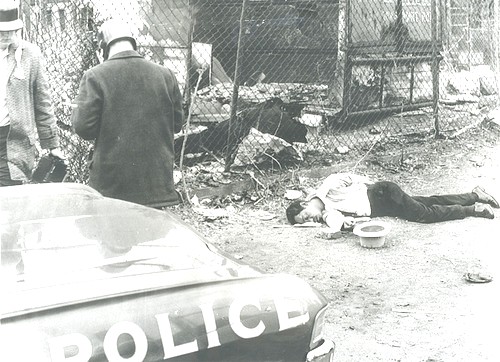
looter shot by police 4 8 68a

 SUN PAPER PHOTO

 Looter shot by Police after attacking the officer with a knife April 8, 1968

looters biddle near madison 4 8 68

 National Guard holds looters on Biddle St. near Madison Ave. April 8, 1968

Major Box Harris

 Major “Box Harris” and arrested looters - Pennsylvania Avenue

Howard Street viewed from Franklin Street

 K9 Officer on Howard Street viewed from Franklin Street

Mapping Strategy

 Mapping Strategy For Aid ... Council President Donald Schaefer and Robert Osborne

old town market clock tower

SUN PAPER PHOTO

 Fires burning in the background from the Old Town Market Clock Tower April 8, 1968

palm sunday fires 4 8 68

 SUN PAPER PHOTO

 The smoke of scattered fires clouds the air of a sunny Palm Sunday, marred by violence that followed the assassination of Dr. Martin Luther King Jr. This view is a section of East Baltimore. Rioters hampered firefighters in their efforts to douse the many fires. April 8, 1968

riots april 1968a

 National Guard on the scene of a fire April 8, 1968

spiro agnes4pm curfew 4 8 68

 SUN PAPER PHOTO

 Governor Spiro Agnew announces the 4 p.m. curfew for Baltimore yesterday accompanied by Maj. Gen. George M. Gelston, state adjutant general; Mayor Thomas L. J. D'Alesandro III; and Francis B. Burch, attorney general.

 April 8, 1968

greenmount north 4 9 68a

Greenmount & North Ave. April 9, 1968

guardsman atop city jail riot artestees 4 11 68

 National guardsman atop city jail guarding riot arrestees April 11, 1968

General George Gelston

 General George Gelston and his new army of volunteers ...members of the Negro community offer to quell disorder in the Inner city."
10 April 1968

 Study inContrasts

9 April 1968

 "Study in Contrasts - Three happy youngsters at the doorway of the Community Action Agency center at 1327 East Eager Street present a contrast to the serious situation that exists in Baltimore today. An Army trooper stands guard against future rioting as victims of four days of fires and destruction line up for food. Some 82,000 tons of federal surplus food were made available today at the six CAA centers in the city."  


maryland flag line6


CIVIL DISORDER IN BALTIMORE CITY

THE 1968 RIOTS

By Retired Officer Melvin Howell

I remember the riots in Baltimore City and the things that happened at that time. I had been pulled from the Northwest along with another officer, to work a few weeks on some burglaries in the Central District. We had gone to headquarters building to get information on a guy we considered a suspect.

The old headquarters, a large, five-story building, was located at Fayette and Fallsway. I always thought the inside was beautiful and I always regretted that it was torn down. The Central District was located on the first floor along with the Central District Court and Traffic Court for the city. The second floor had the Traffic Division for the city, and on the third floor was the Detectives, Homicide, Robbery, and Holdup Squad, etc. The fourth floor was Central Records, and the Police Commissioner and Chief Inspector had their offices there also. On the fifth floor was the Vice Squad. An elevator went up to the fourth floor but then you had to take the stairs to the fifth. You could also take stairs up to the roof of the building, which was just a flat roof. You could go up there and see the whole city in any direction - quite a sight. In the basement of the building, there was a drive-in area where departmental cars were gassed up. The Police Commissioner and Chief Inspector parked here along with some detective cruisers. The north side of the building had a parking area that held the Traffic Division cars plus those for Vice Squad and more Detective cruisers. There was a guard shack usually manned by a traffic officer who was on light duty, recovering from injury, sickness, etc. The first floor of headquarters building was really good looking. The walls around the elevator area were all made of white Italian marble, floor to ceiling. The rest of the walls in the hallways were white marble halfway up. It was real pretty. In the first floor courtrooms, the bottom half of the walls were white marble and there was more of the white marble in the bathrooms. There was a stairway on the north side of the building leading up to where the newspaper reporters had their office. One of these reporters would get so drunk he rarely left the office. He would see me when I was working in Vice, and ask, "What's going on, anything worth writing?" He would write up what I told him and it would be in the paper. As far as I know he never checked it out. He worked upstairs three or four years before he was finally fired.

Anyway, after we had finished our business about the burglary suspect, we walked outside. I saw a Lieutenant I knew and we started talking about cases we had been on together. We were standing on the drive in ramp outside Central District where his car was parked nearby and we had the door open so we could hear the police radio. A call came in to assist an officer at Gay and Hillen Street at the location of the old Bel Air market. The Lieutenant was the duty officer for the Central District, so he, a fellow officer and myself jumped into the Lieutenant's car and proceeded to the market which was about seven or eight blocks from headquarters. On our arrival, we saw the foot post officer standing on the corner and when he saw us he started to run towards the car. Behind him, a way's off was a crowd of 170 to 200 black people going north on Gay Street and as they moved along, they were breaking out the plate glass windows in all the stores. This area was highly concentrated with stores, some of which had been in business for nearly 100 years.

The area of the city was called "Old Town" and some still call it that yet today. We saw the people were pilfering as they walked along.

The foot patrolman reached our car and the Lieutenant asked, "What's happening?" The officer said, "I don't know. I just know that I saw several black males standing in front of the drug store on the corner. They started shouting and then they used rocks to break out the windows and then all of a sudden a crowd started gathering." The Lieutenant called for more police to our location and advised the dispatcher what was happening. Within a half-hour we had the same situation occurring in the Northwestern District of Pennsylvania Avenue from north of the police station all the way up Pennsylvania Avenue. A beautiful old theater stood in this area as well as a variety of businesses. The department was rushing as many officers as they could into these areas to maintain some order. The next thing we knew the crowd started setting fire to buildings. Fire engines were being called out all over the city.

 Whole city blocks were soon on fire and we knew we had something going on that was more than just a civil disturbance. Things were out of hand. The department called in everyone who wasn't already on duty. The Fire Department was really hamstrung because every time they would go to the scene of a fire, they came under sniper fire, not usually directed at the men, but the engines and equipment. Three-quarters of the business area on Pennsylvania Avenue from Hoffman Street all the way past the open-air market to Mosher Street was on fire. A decision was made that the fire department should not respond to calls in certain areas of the city until the police gained more control over the crowds of rioters and routed out the snipers.

I suggested to the Lieutenant that we should drive to the sporting goods store on Baltimore Street, which was not too far from the Central District. I felt we should make sure the rioters didn't get in that store because they had a great deal of ammunition and guns there. We also went to the large department store at North Avenue and Harford since they had a lot of guns and ammo in their sporting goods section. We stayed at the first store until the foot patrolman who was at Baltimore and Holiday Street came to stand guard over the place. We had a radio car come to the scene of the next store and stay while we handled the incident. We were trying to get a handle on things - because it seemed as if everything was out of control.

The crowd was going up Baltimore Street to Broadway. At that intersection, they were met by a large group of American Indians who had lined themselves up across the intersection and refused to allow the blacks to pass them. They told the rioters, "This is where it ends, you don't come here!" The Indians lived in that area and they were trying to protect it. We found out about this incident after the fact. I thought it was great that the Indians protected their territory like that. I'm sure they must have been armed in some way but no police had seen this take place.

Anyhow, it worked and the rioters turned and went another way.

The crowd of rioters headed east on Monument toward the business area. There were quite a few small shops there. They kept breaking out the glass as they went, picking up whatever they could find to use to break the glass. I saw one guy use a bicycle. Some used trash cans, or stones, whatever they could find. The crowd was very loud from the start, hollering, shouting but not saying anything we could understand. They stole anything that was in a store window, sofas, chairs, tables, clothes, whatever. We weren't trying to stop the theft at this time; we were just trying to contain the crowd from going any further. I remember we passed a small, well-known hamburger place at Washington and Monument Streets. They had knocked the glass out of the door. We stopped and I got out and stepped into the shop to see if anyone was still inside. It was an eerie feeling to see the coffee cups still sitting on the counter and steam still coming off the coffee. No one was inside.

The windows were all knocked out but the cash register was still intact. We could hear the crowd shouting and hollering going on down the street and we could hear the glass breaking.

We tried to arrest as many people as we could. The regular police wagons were not of any help, they were just too small, so we brought in buses, mostly school buses.

We were locking up 50 to 75 people at a time just trying to get a handle on the situation. The Lieutenants, Captains, and Inspectors had a meeting and it was decided that we did not have enough long guns for us to manage. In our arsenal, we had only about 125. It was decided to send a Lieutenant and a couple patrolmen to a well-known firearm factory up in Connecticut. The company had been called and our predicament explained. They had agreed to have the factory open when the officers arrived so they drove up right away. They had a purchase order with them and returned the second day with 250 long guns. The guns were distributed to men in the Central, Northeast and Northwest Districts. 90% of the rioters were in these areas. We had men in riot gear marching to the crowds trying to contain them, and we stationed men in a perimeter around whole neighborhoods. As we became more visible some of the rioters went on to their homes. In other districts of the city, we would have calls come in for "Breaking and Entering" and many burglaries were taking place. What was happening was that when people learned the police were all in certain areas of town, they took the opportunity to break into businesses in their own area and loot whatever they wanted. When we would get the call and get to the scene they would always be gone and then another call would come in for the same thing in another section of the city. It was a circus.

 On the second night, the Governor called in the Maryland State Police and activated the National Guard to help us. We just didn't have enough men. State Police cars were lined up on the west side of Howard Street from Maryland General Hospital to Pratt and Howard. This was to protect vandals from hitting the downtown shopping area with its large department stores.

The National Guard was a big help to us. Their headquarters was at the 5th Regiment Armory on Preston Street, and their men were deployed around the city at various locations. At three of these locations, there were machine gun emplacements, one at 33rd Street and Greenmount Avenue, one at North Avenue and Harford, at Sears Roebuck Store, and one at Mondawmin Shopping Center.

Also, a number of National Guard troops were assigned to Jeeps and placed in strategic areas such as Pennsylvania and North, Gay, and Broadway and Monument and Broadway. When a radio car was called to a particularly "hot spot" location, the three men in the National Guard Jeep would respond, following behind the car. They had facilities set up at the Armory to feed their men and provide a sleeping area.

 I didn't get home for three days. We had nothing to eat since none of the restaurants were open. The prisoners we arrested were fed but there was nothing offered the cops on the streets. Finally, a few men who had homes in the vicinity had their wives bring in sandwiches. The first sleep I got was on the second night. I slept on a pool table in the Central District because it was the only place I could find to lie down.

We got calls from all over the city. One was to North Avenue and Greenmount. Someone was breaking into a liquor store. Another plain-clothes officer and I responded. The liquor store was approximately 100 yards from North Avenue, on the west side of Greenmount Avenue, near an alley. When we pulled up, I observed two men coming out of the liquor store. Each one was carrying two cases of what appeared to be whiskey. They began running up the alley. I jumped out and fired the shotgun over their heads. With that, both men stopped about 75 feet up the alley. I approached and handcuffed both of them and brought them back to the car.

When I went back to the alley to retrieve the whiskey, it was gone. Someone had apparently seen what was happening, grabbed the whiskey and ran off.

An alarm rang outside a grocery store in the 900 block of east Biddle Street. As I got out of the car, I saw a young boy, maybe 9 or 10 years old coming out the door. He was carrying at least a dozen boxes of Wheaties cereal. I made him put the cereal back. Adults weren't the only ones looting and taking part in the destruction of stores. A lot of children were also willing participants, following the example of the adults.

We were standing on the ramp again at Central District discussing how best to post men in the various parts of the city. A call came in that the firemen who had responded to a call at Chase and Asquith Street were being pinned down by sniper fire. I was familiar with that location, it was right across from St. James Catholic Church.

There was a small grocery store on the northwest corner of the intersection, and this was where the fireman had been called. I took the radio car by myself because I didn't know just how many firemen were there and I needed room for them. I had a shotgun with me that I had gotten from a local sporting goods company. The gun only held three rounds at a time. I had gotten it when we first went to the store to be sure it was secure from the rioters. I had told the clerk I needed a shotgun and that I wanted a 32-inch goose gun. He gave it to me, and I returned it once the riots were over. When I got to the intersection where the firemen were, I could see ahead a couple of blocks that the grocery store was completely engulfed in fire with flames coming from the windows and out the side of the building up past the second floor.

 The fire truck was parked diagonally across the intersection. It was a hook and ladder truck and the firemen were lying on the ground underneath the truck. I pulled in adjacent to the fire engine and as I got out of the car, someone in the crowd that was milling around, threw a large number tin cans of tomatoes through the windshield of my radio car. With that, I fired one round in the air, which caused people to scatter. Thankfully, the sniper must have gotten the message that someone else had a gun because the shooting stopped. I hollered for the firemen to get into the radio car and not to worry about their fire engine - just get in the car!

There were 6 firemen; all who managed to get into the car. I pointed the vehicle down Chase Street toward Central Avenue and as we were driving I observed a man only about 20 years old, walking unsteadily in the middle of the street. I saw blood was coming from his back. I stopped the car and got out and walked over to him. I told him who I was because I was in plain clothes. It was then that I saw there was a bullet hole in his back. He said he had heard the shot and knew he was hit but he didn't know how bad he was hurt. He said he was having trouble breathing. I led him over to the curb and sat him down and told him I would call for an ambulance, which I did via our dispatcher. I drove the firemen to the Fire Department Headquarters at Gay and Hillen Streets, which is about a block away from Central District. The firemen were very grateful and kept thanking me for helping them. We needed the long guns because just the sight of them had an effect on the rioters and they also spoke to snipers in that they could "reach out" further than a handgun when fired. Pistols and revolvers just would not do the job in a situation like this.

By this time we had arrested about 1700 people. The magistrates were trying cases in the big court downtown at Fayette and Calvert Street, and we were only booking prisoners in the station houses not using the small courts. We were transporting prisoners to the big court where the judges were handling cases on an individual basis as much as possible. Those who had broken out the glass, or looted were tried one at a time. The courts were overwhelmed, even though we had about 30 judges sitting. We used every courtroom or any large room we could find.

Finally, we got all the fires out and the city was brought under control after about 4 or 4 and a half days. At this time there were also riots taking place in Philadelphia and Washington, D.C. It was always said that the riots were not coordinated but you can see word was passed along so that things were in turmoil up through the eastern seaboard. Fortunately, no policemen or firemen were shot during the riots, but a lot of us sustained minor injuries. Three citizens were killed by snipers. We were very, very fortunate not to have more people killed. It was surely an ugly time.

I don't know that it was ever determined what really triggered the riots.

Speculation had that it was contrived to disrupt the cities, but why we will never know.

maryland flag line6

Timeline: Baltimore Riots of 1968

This is by no means a comprehensive document. It is based on what little historical information about the unrest is available from common sources. The supporting data were compiled mostly from local newspaper accounts of the events. This timeline does, however, provide a fairly conclusive picture of what occurred during the riots.Some local events as context:

Monday, June 2, 1958, • Martin Luther King Jr. is awarded an honorary degree – doctor of law -- at Morgan State College along with three others including two Baltimoreans, Jacob Blaustein and Walter Sondheim Jr. King was the principal speaker before 3,000 gathered at Hughes Memorial Stadium on the Morgan campus.

December 20, 1963, • King speaks during the Baltimore Freedom Rally before a crowd of more than 8,000 at the Baltimore Civic Center. During the rally, an anonymous bomb threat was called in. A search by police and fire crews found nothing. The crowd was not informed.

Saturday, October 30, 1964, • King comes to Baltimore as part of a multi-city campaign to encourage Negroes to vote in upcoming elections.

Friday, April 1, 1965, • King, following a meeting in Baltimore of the Southern Christian Leadership Conference, announces plans to launch a new drive to register Negroes in the South.

April 22, 1966, • King gives a speech, "Race and the Church," before a gathering of Methodist clergy at the Baltimore Civic Center.

July 1, 1966, • King cancels a visit to Baltimore where he was to speak at the convention of the Congress of Racial Equality (CORE).

Saturday, November 12, 1966, • King visits Baltimore. During a news conference, he presses the federal government to pass a fair housing law and calls for Americans to begin electing persons to office based on their ability and not their skin color.

March 1968 • King is scheduled to visit Baltimore but changes his plans and goes to Memphis, Tenn. to march with striking sanitation workers.

Thursday, April 4, 1968 • 6:01 p.m. —Martin Luther King is assassinated in Memphis • Night: Northwest Baltimore Tavern hit by Molotov cocktails; fire at three stores at Cherry Hill Shopping Center; vacant downtown building set afire; Park Heights—firebombs at tavern; vandals at tax accounting office; debris fire at Fayette and Paca; attempted to fire in the 500 block of W. Coldspring Lane.

Friday, April 5, 1968, •National Guard on standby •No significant occurrences •Heavy violence in other cities including Detroit and Washington, D.C.The unrest begins in Baltimore:

Saturday, April 6, 1968, • National Guard on standby during day • Riots begin in earnest in Baltimore. • Noon—Peaceful gathering of 300 at memorial service for King • 2 p.m.—Service ends, city is peaceful • 4 p.m.—Commemorative interdenominational service • 5 p.m.—First reports of store windows being smashed and disturbances in the 400 block of N. Gay St. on the east side • 5:30 p.m.—Violence breaks out in Gay Street "ghetto" area • 5:40 p.m.—All policemen in Central district ordered to posts • 6 p.m.—First reports of looting at dry cleaners, Gay and Monument streets. Police move in to seal Gay St. from the 400 to 700 block (side streets as well). • 6 p.m.—Looting at Gay and Monument streets • 6:15 p.m.— First report of a fire at Ideal Furniture Company, 700 blocks of N. Gay. Police pelted with stones and bottles as they seal off Gay from the 400 block North to the 700 block. • 6:30 p.m.— Two-alarm fire in Lewis Furniture Co., another furniture store in the 700 block of Gay. Fire goes to two alarms by 6:40 p.m. • 6:50 p.m.—All off-duty policemen ordered to report; headquarters set up at Bel-Air Market. • Evening—Complete curfew declared in the city between 11 p.m. Saturday and 6 a.m. Sunday. Approximately 6,000 National Guard troops enter the city, under the command of Maj. Gen. George Gelston. Two people (one black, one white) burn to death in a blaze at Federal and Chester streets. A three-building fire at the corner of Harford Avenue is the most serious of the night. A black man is shot and killed at Harford Road and Lafayette Ave. Sales of alcohol, flammables in containers, and firearms are banned in the city. Alarms go off all night on Gay St. from 400 to the 1100 block. Johns Hopkins Hospital staff are asked to stay on duty all night. • 7:15 p.m.—Economy/furniture/appliance store broken into by 50 youths in the 900 block of N. Gay. They tear away protective iron gratings and loot the store. A crowd of boys is dispersed from Mondawmin, and at Harford Road and North Ave. • 7:20 p.m.—Police arrive at a scene of looting and call the atmosphere a "carnival." • 8 p.m./8:10 p.m.—Maryland Gov. Spiro Agnew declares a state of emergency in Baltimore. Officers from the Maryland State Police move into the city and are placed under the command of Baltimore City Police Commissioner Donald Pomerleau. A fire is reported in a tailor's shop in the 2300 block of Greenmount. Mayor Tommy D'Alessandro reports to a communication center at police headquarters at Fallsway and Fayette. • 8:05 p.m.—Looting and burning of a tailor shop in the 900 block N. Gay St. • 8:45 p.m.—The worst fire yet is reported, at an A&P in the 1400 block of N. Milton in East Baltimore. The store is looted and then burned along with and three other stores. By 9:30 p.m. it is a four-alarm fire, with onlookers throwing stones and bottles. The Levinson and Klein store at Monument and Chester streets were looted. • 9:00 p.m.—By this point, 1,200 to 1,500 officers are in East Baltimore • 9:15 p.m.—Gov. Agnew says the situation is in control. Rioting threatens to move northward, but police assure the governor that nothing will get out of hand. Agnew reportedly doesn't believe them. City leaders stress that the declaration of emergency is only a "precautionary measure." • 9:20 p.m.—Police arrest seven people riding in a truck loaded with bricks and rocks on Madison St. near Greenmount Ave. There is a fire in the 4700 block of Park Heights. • 9:30 p.m.—Police set up a command post at Park Circle on the west side as a precautionary measure. During the day there were only a few scattered incidents there. In the Ashland Ave. and Aisquith St. area, there are disturbances which generate a police response. The crowd flees, chanting "We shall overcome." A murder is reported at Lucas Tavern in the 400 block of N. Carey St. (The incident is questionably related to the riot). • 9:30 p.m.— Baltimore police set up a command post at Park Circle. • 9.35 p.m.—At North Ave. and possibly Greenmount Ave., rocks are thrown. The same thing happens at Gay from Chase to Orleans. Three stores on Greenmount from the 1900 Blk. to the 2300 Blk. were burned by firebombs. Two stores on Greenmount in the 1200 block are burned. • 10 p.m.—By this point, a dozen stores on Greenmount Ave. are on fire and looters have crossed North Ave. Sporadic fires and pillaging are reported on the west side. Looting and burning sweep up Greenmount Ave. and crosses North Ave. • 10:10 p.m.—Gov. Agnew commits the National Guard. He bans the sale of liquor, firearms, and gasoline in surrounding counties. He puts in place a curfew from 11 p.m. to 6 a.m. • 10:30 p.m.—Violence on Gay Street is declared "out of control." Gay St. area merchants, armed with rifles, board up their stores. • 10:45 p.m.—In the 900 block of N. Gay a jewelry store is firebombed. • 11 p.m.—By this time, police have arrested 100. Looting begins on Pennsylvania Ave. in the 1200-2000 blocks • 11:15 p.m.—National Guard troops move from the 5th Regiment Armory on trucks. Things quiet down. They take over the area from 25th St. to North Ave. Baltimore officers and Maryland State Police patrol the area south of North Ave. • 11:30 p.m.—Baltimore Mayor D'Alessandro appears on television. He appeals to citizens to obey the curfew and pleads for peace. Fire captain is injured by a thrown glass bottle in the 1000 block of N. Gay. • Summary for the day: Three killed, 70 hurt, 100 arrested, high levels of violence, looting downtown, 250 fire alarms. Boundaries of violence extend from Greenmount, North Ave., Chester and Baltimore. Most serious areas are in the 1900 and 2300 blocks of E. Monument, the 700 and 900 blocks of N. Gay, and at the intersection of North and Greenmount Ave.

Sunday April 7, 1968 • Midnight—Despite the curfew, looting and burning start up again. East Baltimore police send 400-500 Guardsmen armed with bayonets onto Aisquith to 25th St. to stop curfew violators. A dozen troop carriers are dispatched from the Armory. At Milton Ave. and Preston St., a food market/five and dime is looted and set ablaze. • 1:45 a.m.—City reported to be "relatively quiet." Sniper fire at police cruisers is reported at N. Fulton and Lafayette Ave. The mood of the crowds is "uglier" than on Saturday. • 7:30 a.m.—After a lull, looting picks up again • Morning—Gen. York comes to Baltimore. An early tour is made by D'Alessandro on Palm Sunday. Things are relatively calm. On Pennsylvania Ave., in the 900 block of North Ave., and the 600 block of Gay St., lootings are reported. Thirty-two are treated for injuries, and 47 fires are set in the area overnight. There are further reports of problems at 42nd St. at York Road and at Walbrook Junction. A two-alarm fire is reported at Federal St. and Milton Ave. Two fires break out two blocks apart—at Federal and Holbrook Sts., and Harford Rd. and Lanvale St. Looting is reported at Pressman St. and Fulton Ave. About 50 looters strike an abandoned liquor store three blocks south on Pressman. The intersection of Fulton Ave. and Baker St. is cordoned off. Nearly 300 angry youths throw stones and bricks at passing cars. At North Ave., looting is at its heaviest anywhere in the city. • Late morning/early afternoon—Police cars are lined up at Gay and Aisquith expecting calls. In the 2100 block of W. Baltimore St., a bus driver is robbed. There are so many people under arrest that school buses are being used to transport them instead of police wagons and patrol cars. County fire companies begin to be placed on standby. In the 1700 block of Harford Road, and on Eden and Gay streets there are fires, the latter being a huge one. Crowds chant "We've got the key to the city" and "We shall overcome." At Lafayette and Fulton avenues, and in the 900 block of Fulton, police respond to sniper warnings. In the 800 block of Gay St., a man is killed behind the 1200 block of E. Madison St. after being chased following a looting. Another 10 stores are looted in the 900 block of Whitelock St. Two blocks there are cordoned off. • 9 a.m.—Calls from the west side requesting shelter increase after this point. • 10 a.m.—Rain begins; looting slows. • 11 a.m.—At Whitelock St. and Callow Ave., a fire is reported at a Buick service station; an unruly crowd gathers near firemen. Fire breaks out in several buildings in the 2200 block of Fulton Ave. • 11:30 a.m.—Soldiers use tear gas to break up a crowd of about 300 blacks who smashed the windows of a grocery at North Ave. and Chester St. • Noon—First major fire of the day, a two-story brick furniture warehouse a half block west of the 1700 block of Guilford Ave. and Lanvale. At the city jail, inmates briefly refuse to return to cells after lunch. Police arrest 10 looters at a pawn shop at Bond and Monument streets; the store is later set on fire. A fire takes place in a store in the 900 block of W. North Ave.; it is burned along with three other buildings. Fires on Harford Ave., from Federal St. to North Ave., are reported. • 12:15 p.m.—Cordon lifted. • Afternoon—Looting and burning continues. National Guardsmen respond to hundreds of fires where they protect firefighters. Looting is reported in the 1800 block of Greenmount Ave. Police worry that the National Guard is not protecting all critical spots. At North and Linden Aves. there are reports of looting and burning. A fire is called in at Falls Road and 41st St. A grocery at Federal and Barclay streets is burned. Cars parked on East Baltimore streets are looted for parts and tires. A four-alarm fire breaks out at Guilford and Lanvale St. In the 900 block of W. North Ave., fires break out at a surplus store and three other buildings at Linden and North Ave. Looters are reported at the market a half block away. Precautionary moves are taken by officials in the early afternoon to protect the downtown shopping area. Looters strike the 1600 block of Pennsylvania Ave. In the 900 block of Whitelock St., a grocery store burns, and liquor and groceries are looted. There are unconfirmed reports of snipers, bringing state police and soldiers into protect the firemen. Later in the day, three dead are identified: killed at Harford and Lafayette, Federal and Chester, and North Ave. One person is shot in the 3500 block of Park Heights Ave. Teenage looters are reported as far north as the Pimlico area. Fires are being successfully battled, but the looting gets worse. At Federal and Milton, a fire breaks out in a liquor store. Gay St. to Broadway appears to be the center of problems. A fire is reported at W. North Ave, and surrounding stores are burglarized. All off-duty firemen are ordered back to duty. Saturday's violence is confined to a 20-by-10 block on the east side spreading to the west side. • 1:30 p.m.—State's attorney Charles Moylan Jr. is quoted as saying, "The looting in the eastern half of Baltimore has reached terrible proportions." Large crowds gather on Baltimore St. in "the block area." They break up by 3:30 p.m. at the police K-9 corps moves in. • 2 p.m.—Curfew hour is ordered advanced to 4 p.m. Gasoline sales and other inflammable are banned (except in cars). No alcohol is sold in Baltimore, Anne Arundel and Howard counties. (Bans go into effect at this time.) State, city and county offices close. • 2:15 p.m.— Three courts close. • 2.30 p.m.— Flare up at city jail between 250 prisoners. Four blocks of Harford Ave., from Federal St. to North Ave., that were hard hit by Saturday night's arson and looting erupt again. A luncheonette is set on fire, and two blocks north a deli and three houses are burned. • 3 p.m.—A police command post at Gay and Aisquith reports that between 400 and 500 people are looting stores near Monument and Bond Streets and Sinclair Lane. The first use of tear gas by National Guard takes place at the American Brewery complex. The building is looted and burned on Gay St. five blocks below North Ave. Major looting is reported on Lamont St. and Harford Ave. By this point more than 30 have been arrested in the Western District alone. Most are charged with looting and burning. • 3:30 p.m.—The eastern command post runs out of police cars. Blacks and whites work together to quell four fires beside the B&O tracks near Howard, Sisson, and 26th streets on the west side. A crowd on Baltimore St. disperses. • 3:40 p.m.—Three stores are looted at Guilford and 21st St. and at Fayette and Gilmore. A thrown brick cuts a patrolman's head. On Gilmore Ave., from Baltimore to Franklin, a string of drug and liquor stores were looted. At Lexington and Gilmore, 50 people looting the drug store, and another 200 cheer them on. Fire is reported in the 500 block of Roberts St. Looting of a burned out pawn shop at Bond and Monument was reported. A fire in Club Savoy at Bond and Monument streets is called in. Problems are reported at Hoffman and Dallas streets, and Bond and Lanvale streets. An unruly mob gathers in the 2400 block of Barclay St., and a crowd of looters moves in on a warehouse at Guilford and Biddle St. Much of this occurs just 20 minutes before the curfew begins. • 3:45 p.m.—Renewed looting at Ashland Ave. and Aisquith St., North Ave. and Wolfe St., and Preston and Ensor streets. Fire and unruly crowds are reported in the 1700 and 1800 blocks of Harford St. All cars ordered back to patrol, leaving prisoners jailed unofficially and the National Guard patrolling the post. • 4 p.m.—Curfew begins. Westside looting quickens; problems reported in the 1500-1700 blocks of Pennsylvania Ave. Police try to seal off the area, but teens circle back to loot liquor stores, with occasional rock and bottle throwing. At Ashland and Broadway, a dry cleaners is burned. At Madison and Gay, windows are kicked in at Midway Gas Station. Twenty shotguns are ordered sent up from the Armory, and four cruisers are sent to disperse a crowd of hundreds of youths at Ashland and Central Ave. At Monument and Bond, a pawn shop is looted. Three other stores are looted in the 2000 block of Edmondson Ave. Issues between police and National Guardsmen continue. Six stores are looted on Edmondson Ave. and Payson St. About 300 people mill about in the 2400 block of Barclay St. The Eastern Police District runs short of men. • 4:30 p.m.—By this time mobs are everywhere, from the 700 to the 2000 block of Pennsylvania Ave. At Bond and Madison streets a liquor store is burned and looted. • Evening—A refugee center is set up at 758 Dolphin St. The city jail now holds 500. A fire is reported at Lanvale St. and Guilford Ave. Rocks are thrown at firefighters and newsmen at the scene, and hundreds watch the massive flames for 90 minutes through three alarms. There is a fire at 21st St. and Greenmount Ave., with one store and three homes burned, and a surplus store burned and looted. Two separate fires take place at Monument and Bond, and a tavern and package goods store is looted. From the 2200 to the 1700 block of Monument St., at least 15 stores are looted. Homes burn on N. Broadway. In the 1800 block of Harford Ave., four houses burn in two hours. Army helicopters patrol. Night court plans are made to accommodate the large numbers of arrests made on the west side. A one hour warning is given before curfew violators are arrested. • 5 p.m.—Police begin to arrest curfew violators. The following is a sampling of calls made to the Civil Defense command post in northeast Baltimore after that 4 p.m. curfew: 5:05 p.m.—Fire in 600 block Barnes St. 5:06 p.m. —Fire at Myrtle Ave. and Mosher St., fire at N. Gilmore and Laurens St. 5:07 p.m.—Fire in 1900 block N. Rosedale St., fires in 1000 block E. Lombard St. at N. Calhoun and School, fire at Liberty Heights Ave., at Allendale in the 1500 block of N. Gilmore St., in the 2000 block of E. Biddle St., in the 800 block of N. Port St. , in the 1600 block of E. Eager St. 5:09 p.m.—Police protection requested at N. Poppleton and Saratoga St. 5:10 p.m.—Shooting at Poppleton and Lexington St. 5:11 p.m.—Fire in the 1600 block of Eager St. 5:17 p.m.—Fire in the 1000 block of E. Lombard St. 5:21 p.m.—Fire in the 1800 block of Baker St. 5:31 p.m.—Fire in the 1200 block of E. Preston St. 5:34 p.m.—Fire at E. Chase St. and Lakewood Ave. 5:38 p.m.—Fire at N. Milton Ave. and Preston St. 5:50 p.m.—Fire at N. Washington and Eager6 p.m.—Fires at Gay and Eager, 200 block E. Biddle Street, 700 block of E. 20th St., 30th and Jenifer Sts., 200 block of S. Bethel St. at Bond and Gay, at Madison and Caroline, at Caroline and Dallas, at Ensor and Preston, at Warwick Ave. and Presbury St., at Biddle St. and N. Collington Ave., and in the first block of N. Poppleton St. • Dusk—The number of troops and police is insufficient to quell the disturbances. Riots spread west and intensify. • 6 p.m.—Troops from the 18th Corps Airborne Artillery are bused into Druid Hill Park from Andrews Air Force base in Prince George County. Firing first reported between police and rioters on the west side of the city. There are 6,000 Guardsmen on duty in the city. Several large trash cans are set afire in the Flag House Court Apartments a half block from the Lombard St. fire. Looking at a liquor store at Baker St. and Fulton Ave. is reported. Looting is seen in the 3500 block of Park Heights Ave. City jails are filled to overflowing within two hours after curfew. The capacity of the jail is 1,700, but curfew violators and looters fill it to 2,200. Its maximum capacity is 2.500. • 6:14 p.m.—Pres. Lyndon Johnson orders 1,900 Army soldiers into Baltimore. • 7:30 p.m.—By this time, the conflict has spread across the city, especially to the west, with 95 percent of the offenders estimated to be teenagers. In the 2000 block of Edmondson Ave., looting of clothing stores takes place, and 50 are arrested on Baltimore St. from Pine St. west. • 8 p.m. to 9 p.m.—Looting peaks, with 128 incidents logged. Baltimore then becomes relatively quiet. West Baltimore hospitals treat fewer patients. Scattered looting is reported at Baltimore and Pine streets. From the 900 to the 1200 block of W. Baltimore St., stolen taxi cabs are used to transport stolen goods. In the first block of N. Caroline St., a pawn shop owner is ordered by police to hand over all his store's shotguns. Officers carry them to the Pikesville Armory. It appears that every store between Mt. Royal Ave. and Monroe St. on North Ave. has been hit. At North and Baddish, fires are reported. Guardsmen make a sweep through the east side. Gov. Agnew extends the curfew to Baltimore County. As the east side calms, the west explodes into a what is described as a "liquor-crazed frenzy of looting and carousing." • 8:30 p.m.—Gov. Agnew appears on television to explain what he has been doing and to announce a curfew. • Evening—A service is set for Monday at Loyola. Eastern High School is repurposed as a refugee center. Looting takes place at Guilford Ave. and Lanvale St. and on Harford Ave. from Federal St. to North Ave. Two liquor stores in the 800 and 900 blocks of Caroline St. are burned. At Laurens and Stricker, a liquor store is destroyed by fire. Problems are reported on Pennsylvania Ave. running past the 2000 block of Edmonson Ave. A black church in Catonsville is burned. Drunken looters are seen on the east side from Broadway to Gay. Pillaging takes place on Edmondson Ave. Looting and arson continue for four hours after curfew. The city jail remains filled beyond capacity. Three municipal courts are severely overcrowded. A race riot by 400 black prisoners breaks out at the Maryland Training Center. In the 900 block of Whitelock, rioting is reported. The riot area comprises 1,000 square blocks, bounded roughly by 23rd St. on the north, Poplar Grove St. on the west, Baltimore St. on the south and Broadway on the east. In the 1800 block of Greenmount Ave., there is a looting of a liquor store. At Sixth and Church

streets in Brooklyn Heights there is looting. At North and Linden, a crowd of 150 people witness three stores and several vacant buildings burn. Fire is reported at Falls Road and 41st St. A grocery store is burned at Federal and Barclay. At Guilford and 21st St., looting is reported. Along Gilmore from Baltimore St. to Franklin St., a string of discount drug and liquor stores is burglarized. Three stores are looted on Edmondson, and another six stores on Edmondson and Payson. A crowd of 300 gathers in the 2400 block of Barclay St. At 21st and Greenmount Ave. there is looting, as well as on North and Linden. Monument and Bond sees two fires. At Bond and Madison, a liquor store is looted and burned. The block between 1700 and 2200 Monument is hard hit, with at least 15 stores heavily damaged. On N. Broadway a home is burned, while in the 1800 block of Harford Ave. fires are set in trash cans. Laurens, Riggs and Stricker, all side streets of Pennsylvania, are consumed by looting. Pennsylvania Ave. takes on the appearance of a "ghost town" according to published reports. At Baker St. and Fulton there is looting. Also, reports of looting in Baltimore St. stores from Pine St. to the west are investigated. In the 2000 block of Edmondson Ave. and in the 900 and 1200 block of W. Baltimore, heavy looting is reported. Police say that it appears that nearly every store between Mt. Royal Ave. and Monroe St. on North Ave. was hit. Anne Arundel and Baltimore counties assisted the firemen in Baltimore city with 75 men. • Night—a shooting is reported at Lennox and Callow, and also at Franklin and Warwick Ave. At Division and Wilson, two fires break out. In the 1300 block of Edmondson Ave., a pawn shop is looted and 73 rifles are stolen. In the 4800 block of Edmondson Ave., a service station is looted. • 10 p.m.— A drug and liquor store at Windsor Mill Rd. and Chelsea St. is looted repeatedly in the two hours leading up to midnight. The Bolton Hill Shopping Center is ransacked at McMechen St. Special Municipal Courts convenes—more than 1,800 face charges of curfew violation or possession of stolen property. • 10:15 p.m.—The Maryland National Guard is federalized and Gen. York is placed in command of all military units deployed in the riot area. • 11 p.m.—Brigade of federal troops moves from Druid Lake to the 5th Regiment Armory. Four looters are arrested at Laurens and Stricker. Police confiscate a loaded pistol from a man at Monroe St. and Wilkens Ave. • 11:45 p.m.—The Fire Department refuses ambulance service for non-emergency sick cases. • Summary: Fires, looting large-scale disorderly crowds. Sunday's police reports include 400 episodes of looting, for a two-day total of 600. A 40-block swath of the east and west midsections of the city have been impacted by rioting. More than 700 businesses have been robbed. Looting increases, while fires decrease from Saturday. The riot area comprises 1,000 square blocks, bounded roughly by 25th St. on the north, Poplar Grove St. on the west, Baltimore St. on the south, and Broadway on the east. For the first time since railroad strikes in the 1870s, Baltimore is patrolled by federal troops. By evening, the force equals more than 9,000 soldiers. There are 300 injured, 420 fires, 550 cases of looting, and 1,350 arrested. A hit-and-run pattern of looting means that there are few clashes between looters and troops. Amidst the damage in riot areas, streets are filled with broken glass.

Monday, April 8, 1968, Midnight—By this point, six sniper incidents have been reported: Gilmore and Baker, the 1600 block of Calvert, Lombard and Lloyd, Monroe and Baltimore, Biddle and Argyle, and the 2900 block of The Alameda. Many more fires break out, at Frederick Road and Willard St., in the 1200 block of Central Ave., on Franklin St., and Allendale Road. Crowds gather to watch. On North and Patterson Park, the 100 block of E. Lanvale St., the 2100 block of Normandy Ave., the first block of N. Hilton St., the 600 block of Mt. Holly St., there is looting and burning of grocery and liquor stores. In the 800 block of W. Baltimore St., another furniture store is looted. A jewelry store on Eastern is looted. A tavern on Longwood St. at Westwood is looted. • After midnight—2200 block North Calvert St., a report of trouble. In the 200 block of E. Preston, a food market is broken into. Rioting reported near the Murphy Homes at Myrtle Ave. and Hoffman. In the 2100 block of Calvert St., a fire breaks out. In the 1600 block of Warwick Road, a house is burned. A store is looted and burned in the 2300 block of Hollins Ferry Road. In the 3800 block of Clifton Ave. looters are seen. There is a looting in the 1800 block of Linden Ave., and another on Division St. near Lanvale. • 1 a.m.—Lootings reported since midnight: 14, as opposed to 128 between 8 and 9 p.m. • 1:30 a.m.—"Curfew seems to be having an effect, city is generally under control."—Gen. York. The hot spot area of the night is in the Western district, where fires and looting are reported in an area bounded by Lake Drive and Gwynns Falls Pkwy on the north, Poplar Grove St. on the west, Baltimore St. on the south, and Green St. on the east. • Dawn—Three house fires are reported, several lootings, and a two-alarm fire in a liquor store at Federal St. and Milton Ave. • 7:40 a.m.—A looter is shot in an alley behind the 800 block of N. Aisquith St. He is chased in the 800 block of Gay St. from a liquor store. • 8:50 a.m.—A bomb is found in the 2700 block of N. Charles St. The area is evacuated. • 9 a.m.—By this point, police report that looting has picked up in the Western District and is causing more devastation that was seen on the east side, which was already damaged by mobs. Once police leave an area, looters swoop in and start anew. Gangs are rumored to be using walkie-talkies to figure out where police and troops are. Downtown business area is patrolled by National Guard and members of the 18th Airborne Corps. • Morning— A "whirlwind tour" is taken by the mayor, who is accompanied by Sen. Joseph Tydings. All schools, most businesses, and almost all offices in the city are closed. Another 1,900 Army troops are called into Baltimore. Rioting spills out from "Negro Slums east and west of Downtown area along main streets in all directions," according to one newspaper headline. "For the first time, unruly groups of whites and blacks confronted each other in the streets and posed the threat of race rioting," a news account reports. Since Saturday at 5:30 p.m., 510 have been injured, more than 900 fires reported, more than 1,700 cases of looting called in, and more than 3,450 blacks arrested. A 4 p.m. to 7 a.m. curfew is ordered again. Gen. York, the mayor and Pomerleau spend more than two hours traveling through the city. Fremont St. along Edmondson Ave. reports looting. • Early afternoon—Tear gas is used to disperse a crowd of 300 youths who smashed into a grocery at North Ave. and Chester St., near the worst area of destruction on Saturday night. In West Baltimore, soldiers with bayonets block the intersection of Fulton Ave. and Baker St. Crowds throw bricks and bottles at passing cars. The 400 blocks on the west side, from North Ave. south to Pratt St., from Gwynns Falls Pkwy. to Fulton Ave., are a "no man's land." At the western end, a bar, loan company, drugstore and cleaning store at the corner of North Ave. and Pulaski St. were all looted Fires in the 2700 block of Pennsylvania consume five stores and the apartments above. In the first block of N. Liberty St. a "jitterbug band" breaks windows. Cars are pelted at Monroe and W. Baltimore streets, and at Smallwood and W. Baltimore St. Police are scarce in the area below North Ave. Many people loot at will along Monroe St. The 1300-1500 blocks of Penn Ave. are destroyed, and the 1200 block contains only a few intact stores. In the 900 block of Pennsylvania Ave., looters take guns. At Edmondson Village Shopping Center, three stores have shattered windows. Looting steps up and the west side's first major fires begin shortly before noon. Afternoon a band of 75 youths armed with clubs and rocks marches down Pratt and Frederick to the Westside shopping center. Four policemen turn them back. • Noon—Fires start up again on the east side, consuming a liquor store at Milton Ave. and Federal St., a warehouse at Federal and Holbrook, and stores at Harford Ave. and Lanvale. • Mid-afternoon—Telephone exchanges are jammed. Edmondson Ave., from Fremont all the way west to the shopping center, has been scourged by looters; a few stores are burned, but almost all are looted and vandalized. In the 500 block of Roberts St., soldiers and policemen confront a mob with torches. Afternoon, looting calls come into headquarters at a rate of one per minute. A group of 40 Guardsmen set up a roadblock at Penn. Ave. and Franklin St. They block westbound traffic on U.S. 40. In the 1000 block of W. Baltimore St., a surplus store is hit by a multi-alarm fire. Four blocks west, there are still more fires. A major warehouse fire in the 500 block of Wilson St. is reported. Another 1,900 federal troops move into Baltimore in the afternoon, setting up field headquarters at the zoo. • 2 p.m.—A large crowd of whites forms on the east side of the roadway near Perkins Homes, a southeast Baltimore housing project, shouting and taunting. As whites enter these predominantly black projects, Guardsmen arrive, forcing whites east of Broadway and blacks west to create a three-block buffer zone. Whites exchange insults with black youths, bottles and bricks are thrown, four cars driven by blacks are damaged by rocks. • 2.30 p.m.—A grocery store and home at 1700 Madison Ave., looted Sunday night, are burned. • 3 p.m.—In the 3400-4000 blocks of Edmondson Ave., hundreds of people are on the street. About 10 stores are looted. In the 3500 block of Edmondson Ave., a sandwich shop is broken into. There is no arson in this area near the city line. • Before 3 p.m.—More than 50 Guardsmen stand a block away as a store at Fulton Ave. and Baker St. is looted. • 3 p.m.—Until 3:45 p.m. at Pratt and Pulaski, 250 whites gather and shout "white power," blocking North Ave. On Frederick Ave., a smaller crowd of blacks gathers. Police in general keep the crowds apart. Around that time, a block away at McHenry and Payson, a fight breaks out between several whites and two blacks. An officer arrives and prevents serious violence by firing into the air. Two white youths are arrested. A black driver ducking from rocks thrown by whites loses control of his car and causes a three-car collision. • 4 p.m.—In the 1400 block Druid Hill Ave., more looting and burning. But there is a decrease in violence immediately after curfew.

• Late afternoon—People hoard food because of curfews and fear. A shooting at 1200 block St. James St. is reported, following more looting in the 800 block of N. Gay. The 1000 block of Lombard St. finds more looting. In the 1000 block of Druid Hill, a surplus store is burned. Hospitals on the west side ask for police protection. At York Road and Woodbourne Ave., a window is smashed by a gang of roving youths. There is looting in the 500 block of Washington Blvd. In the Lower Broadway area, a crowd gathers and heads towards stores in Forest Park, where rioters do damage. In the 2900 block of Garrison Blvd., a store emblazoned with a "Soul Brother" sign is looted. At Garrison and Windsor Mill Road, drug store windows are smashed. A store is looted in the 4600 block of Park Heights Ave. Taverns along Harford Rd. opposite Clifton Park are looted by north-going looters from the east side. In the 2600 block of Harford Road, a bar that refused to serve blacks is looted. In the 100 block of E. Lafayette Ave., another bar is looted. Looting spreads out of poor areas into middle-class shopping centers serving racially mixed neighborhoods. At Fulton Ave. and Baker St., a crowd hurls bricks and bottles at cars. • Late afternoon—Tensions rise between whites and blacks in the South Broadway area and along W. Pratt St. After one man objects to being frisked, police begin to use mace to subdue uncooperative curfew violators. Some cars are covered in signs that say "Soul Brother" or "Black Brother," mostly driven by blacks with headlights on as a funeral salute to Martin Luther King Jr. Many also have a black rag tied on the antenna in solidarity. Some fire trucks begin responding to blazes with armed soldiers aboard. Roadblocks are set up at downtown intersections, and motorists are forced to turn back. • Evening—Sporadic fires burn throughout the night, many between 10 p.m. and midnight and concentrated in a single square mile bounded by North Ave., Preston St., Harford Road and Milton St. Teenagers roam the streets, throwing rocks and bricks at cars driven by whites along Monroe near Franklin and on E. Baltimore St. near Smallwood. Looting takes place on Monroe St. below Franklin, where witnesses describe the looters as "middle-aged." The mood of the rioters has grown worse. Pratt and Frederick represent a line of demarcation. Gov. Agnew releases a statement on the control of city's looting. The U.S. Dept. of Agriculture sends in trucks with non-perishable food at night. Taxis are taken off the streets. Another 800 persons are arrested and taken to the Civic Center, in addition to 3,300 prisoners warehoused at the city jail during the night. Sniper fire breaks out at night for the first time since disturbances began on Saturday. A shooting at Calvert and Lanvale is reported. Some looting is seen at Reisterstown Road and Edmondson Ave. Seven in Pikesville are arrested for violating the curfew. • 8 p.m.—An outbreak of sniper activity continues until 1 a.m. Looters and fire bombers strike hard in West Baltimore. Rioting spills up Harford Road as far as Clifton Park and all the way out to Edmondson Village Shopping Center. • 8:30 p.m.—Some city policemen are pinned down behind cars by two or three snipers firing from upper floors of the Flag House housing project in the 1000 block of E. Lombard St. They are then attacked by hurled glass bottles. Minutes later, fire erupts across the street. Firemen respond but pull back when sniper fire continues. The fire is centered at 1017 E. Lombard St. and burns Smelkinson's Dairy, Attman's Deli, a sandwich shop, and another store next to it. Guardsmen in the 1200 block of N. Charles find a man with a rifle. • 9 p.m.—At Calvert and Lanvale streets, sniper fire pins police as they try to move a truckload of curfew violators. A white man is shot at the same time. Three men are arrested, but none were snipers, the injured man is taken to the hospital in serious condition. Guardsmen shoot back at people throwing stones and bottles and shooting in housing projects. • 10 p.m.—No new fires are fought between 9:30 p.m. and this point. Looting is seen in the 2400 block of Hollins Ferry Road at a grocery store. • 10:15 p.m.—Four reports of fire from the 1000 to the 1100 block of E. Lombard. • 10:30 p.m.—Reports of sniper fire in the 4000 block Edmondson Ave. Sniper activity also at Baltimore and Monroe streets. A man is seized in the 600 block N. Carey St. after he pointed a gun at a soldier. A firebomb attack is rumored in the Guilford area. • Night—Firebombs spread across North Ave. to Forest Park directly below Druid Hill Lake, up Harford Road to Clifton Park, and west along U.S. 40 to Edmondson Village and south to W. Baltimore St. At 705 Whitelock St. an auto garage is burned and a black-owned barber shop is damaged. In the 2300 block of Callow Ave., a drugstore is vandalized and looted. Looting in the 900 block of Whitelock St. is reported, and troops cordon off the area. In the 2200 block of Fulton Ave., a few more stores burn. A drug company in the 700 block of Whitelock St. is burned. A shooting reported in the 100 block of S. Exeter St. forces city firefighters to abandon attempts to put out a raging fire in Smelkinson's dairy store in the 1000 block of E. Lombard. Firemen refuse to fight the fire until the sniper is located. Guardsmen enter projects in attempt to find the sniper. • 11 p.m.—Police struggle with a fire hydrant after firefighters leave for fear of snipers. Firefighting begins again. Communications rooms cool down around this time. • 11:10 p.m.—Fire truck returns, but the buildings are lost. • Night—At least 110 communities across the country are hit by post-assassination violence, with approximately 29 percent of all arrests made in Baltimore. Police guard hub corners of Calvert and Fayette, Baltimore and South streets, and Calvert and Baltimore. Three food distribution centers open at Eden and Ashland, North Ave. and Barclay St., and North and Pennsylvania. Phone booth service is out in riot areas. Two white men are shot during an alleged sacking of a small grocery in the 100 block of E. Lanvale St. Provident and Franklin Square hospitals are protected by guards. • Summary: By this date, 2100 firemen have fought 900 fires in three days. During this day alone, 332 fires are fought, and 466 arrests are made. Fewer than 40 persons by Monday are injured seriously enough to warrant admission to the hospital. The worst of the rioting appears to be taking place on the west side. As of this day, Hopkins Hospital reports 74 lacerations, 12 gunshot wounds, one tear gas inhalation, three fractures, four stabbings, one bout of hysteria and two burnings resulting in death. Elsewhere, the Pope plans a statement on racism. Scavengers and looters are separated into two charging categories by the Army. Gov. Agnew releases a proclamation allowing banks to remain closed this day if the managers find it necessary. The wave of looting appears to go from liquor stores, to electrical appliance stores, then food stores, followed by pawn shops for firearms, then jewelry stores and loan shops for money and valuables. Most of the devastation is in the Western District from Druid Hill Park along Pennsylvania Ave. and Fulton Ave., and in the Northeastern District along Greenmount Ave. The total complement of troops in the city is 10,848. The rioting appears to decline at normal meal times. A graph by police statisticians shows that most riot activity occurs in the city's high crime areas. Baltimore becomes the first city to plot this information as the riots are going on. Other notables: There were seven reports of snipers after the 4 p.m. curfew, with sniper fire beginning in earnest after announcements were made about the situation being under control. More gunfire is heard at Baker and Gilmore, at Exeter and Monroe and Fairmount Ave.

Tuesday, 9 April 1968 • Basic Information: The arrest total since 6 p.m. Saturday stands at 4,424. The number of injured reaches 600 shortly before dawn. Since midnight, there have been 76 lootings and 10 fires. The Civic Center holds an overflow, 800 prisoners. To date, there have been six deaths, 1,075 lootings, and 1,032 fires. • Midnight—Fresh gunfire at Flag House Housing Project draws police back. More sniper shots reported by police. • 2 a.m.—Guardsmen protect firefighters. • 3 a.m.—A 70-year-old man becomes the sixth victim of the riots, dying of burns in an apartment fire above a grocery store which was looted and burned in the 400 block Myrtle Avenue. • 7 a.m.—The curfew is lifted, and motorists from outside the city are allowed in. Looting begins again, with 10 stores hit. Another two are burned. • 8:30 a.m.—Tear gas used on rioters. • 9 a.m.—Several fires are reported on the east side, but the west side is quiet. • 9:30 a.m.—Sniper fire hits a car in the 1200 block of Aisquith Street. Tear gas was used for a second time in an hour at Dukeland St. and Lafayette Ave. • Morning—A homemade bomb is found in an apartment in the 2700 block of N. Charles St. At Gilmore and Baker streets, six drunk men disturb the peace at a food distribution center. Pennsylvania and Lafayette show more looting. Three dwellings at Pennsylvania Ave. and McMechen St. are destroyed. A drugstore at North and Greenmount and a liquor store at Wolfe and Chase streets also are ruined. Many businesses reopen along with remaining public schools. Some area taverns open, but are ordered to stay closed until further notice. Troops are assigned to ride on fire trucks to protect firefighters. King's funeral service is held in Atlanta. At Lexington and Gillmor, some apartments are burned. Downtown stores reopen. Sporadic looting takes place on the west side. City and insurance company officials begin touring the damage. • 9:30 a.m.—A sniper on Aisquith St. sends a bullet into a car. • Midmorning—The Army begins a citywide attempt to prevent further looting by boarding up partially plundered stores and exploding a bomb of CS gas inside. They start along the 2000 block of Edmondson Avenue. Gen. York takes a walking tour of the Western District. Disorderly crowds are reported in the 200 block of Edmondson Ave. and at Dukeland St. and Edmondson Ave. • 10 a.m.—More sniper fire at Aisquith and Curtain streets. Dozens of police raids take place on this morning. • 11 a.m.—Between 10 a.m. and this point, when King's funeral begins, 13 lootings and one fire are reported, with 49 arrests. • Noon—Fire burns a Laundromat and clothing store. • 2 p.m.—At Harford and Lafayette a saloon is looted and one man arrested. Armed federal troops break up a peace meeting of 200 in Lafayette Square (even though they had approval from city police); angry crowds scatter and regroup at Mosher Street and Pennsylvania Avenue. • Afternoon—The Baltimore Orioles home opener against the Oakland Athletics is postponed. • 2:10 p.m.—A liquor store is burned at Chase and Wolfe. • 3:10 p.m.—Sniper activity is reported at a fire at Fayette and Pulaski. • 4 p.m.—At Monroe and Pratt, a crowd of white youths gathered restlessly. • 4:20 p.m.—A black family driving by the area mentioned above is stoned. The driver gets out of the car and is jumped by the mob. Another group jumps on the car and kicks in the hood and windows. A tall white man runs past and fires three shots into the car at the children, then runs south and drops a pistol. A few policemen arrive to reinforce a few Guardsmen who are pushing back the white crowd. The car leaves the area in the direction of the hospital. The crowd begins jeering and surges against policemen. Two men and one woman are arrested. • 5 p.m.—The two men and woman are booked. Between 4 p.m. and this time, 30 store lootings and five fire bombings are called into police. • 6 p.m.—Between 5 and 6 p.m., trouble subsides. Looters take to the streets again shortly after that, raiding 18 stores and lighting nine 9 fires. • 8 p.m.—In the first hour of the curfew, reports of trouble continue to reach police, though the number is dropping. • 11 p.m.—Sharp drop in looting and fires between 9 and this point. Only three reports of looting and two fires, down from 194 lootings and 26 fires at the same time on Sunday, and 53 lootings and eight fires on Monday. • Night—Troops ordered to tuck away bayonets, a sign of easing tension. But there is growing restiveness in white neighborhoods bordering inner city black areas, especially on the west side. Plans are announced for at least one more night of curfew. A list of affected merchants will be compiled, and taxpayers will be allowed to file after the April 15 deadline without penalty. Scarcities of milk and gasoline develop during the day. On W. Baltimore St., in the block between Mount St. and Fulton Ave., police hear shots from a row house on Longwood near North Ave. Lethargic gangs gather at Broadway and Gay. As of this point, 50 policemen and 10 firefighters have been hurt in the riots, none critically. A number of black community leaders patrol trouble spots with plainclothes black policemen during the curfew. A crowd regroups, chanting "That's enough, baby." More than 176 arrests are made after the curfew goes into effect at 7 p.m. Mace is used in a store in the 1300 block of Pennsylvania Ave., one of the hardest-hit areas of the city. Nonviolent civil rights organizations send sound trucks through the riot areas urging residents to remain in their homes. Looting takes place on Division St. In the 1700 block of Madison Avenue, arson is reported. In the 1400 block of Presstman St., there is a looting. A liquor store at the corner of Presstman and N. Calhoun streets was robbed. Within an hour of Mayor D'Allesandro's vote of confidence in the city, 48 are arrested, 19 lootings reported and three new fires set. • Evening—Curfew is relaxed, with the hours set from 7 p.m. to 5 a.m. for Tuesday evening into Wednesday morning. • Summary: Riot losses are estimated at $10 million, enough to classify Baltimore as a catastrophe area—although it is learned that federal disaster relief does not cover riots and civil disorder. There are 1,150 fires, 1,150 lootings and nearly 5,000 arrests since the riots' beginning. Lootings drop to less than 10 an hour during the night. More than 80 percent of those booked since Saturday are tried. Arrests drop from 62 between 4 and 5 p.m. to 21 in the next hour, lootings from 30 to nine and fires from five to one. The east side's center of violence is a rectangular section bounded by North Ave. on the north, Monument St. on the south, Guilford Ave. on the west and Washington St. on the east. The west side's center of violence is a triangular area bounded on the south by Mulberry St., on the east by Monroe St., and on the west by Pennsylvania and Fremont. Fires in other areas are sporadic. By this point, large sections of Federal, Gay, Monument, Aisquith, and Pennsylvania above Biddle St. have been cleaned out. Since Saturday, 600 people were treated in hospitals, only 19 had injuries serious enough to require admission. Pupil absences of more than 50 percent are reported in elementary schools and 50 percent in secondary schools, with many teacher absences. The fire department received five bomb threats, four in city schools. All are false alarms. Hundreds of fires are reported. Scattered reports of gunfire and snipers were handled by police. A lot of phones have no dial tone, caused by the massive numbers of people reporting on the riots or telling others they are safe or calling for a phone repairman during the disturbances. Cooperation between police and the Army is said to have improved. A check of sporting goods and gun stores in the county reveals that residents were purchasing firearms and ammunition at an above-average rate on the previous Friday and Saturday as the threat of rioting in Baltimore mounted.

Wednesday, April 10, 1968, • 1:20 a.m.—Sniper fire in the 1400 block of E. Oliver St. Sniper not found but an arrest is made. • Morning—Nearly 2,000 workers are moved into East Baltimore to clean up and board up damaged buildings. A new curfew is announced. • 11 a.m.—D'Alessandro announces that he believes that Baltimore's riot was organized and planned in advance. • Noon—All banks and all seven of the city's markets (most in riot areas) are open. The only market that is damaged is Broadway, by a small fire. • Afternoon—Sightseers take the place of street gangs. Workers clean up debris from lootings and fires on the west side. • 4 p.m.— Gov. Agnew announces that conditions are improved, enough to possibly modify or remove entirely the ban on the sale of alcoholic beverages in the city and five counties • 8 p.m.—Fires are limited to a few vacant houses and previously looted stores, most of them in or near the west side. Reports label it "One last little fling." • 10:15 p.m.—Governor's spokesman announces that the statement on liquor sales still stands. • Night—Police exchange gunfire with suspected snipers on a roof in the 600 block of W. Lanvale St. Tear gas is used to disperse crowds in the area. A fire is reported on Fayette St. east of Broadway. • Summary: Arrests from midnight to 1 p.m. number 105, bringing the total to 5,316. Of that number, 175 curfew cases are tried. Juvenile court cases are postponed to Monday. There are only 10 new lootings on this day. The total number of lootings is 1,214. Two new fires bring the total to 1,208. Aid from the state insurance commission is made available at the Enoch Pratt Library. Most of the damage is in the city's "poverty belt," officials report. Student attendance rises but remains below normal. Plans are announced for a walk of penance on Saturday by a white interfaith group. Courts process the last of more than 5,300 criminal cases. The 11,000 Army and National Guard troops remain in Baltimore to assure that relative peace is kept. This day also marks the end of marathon duty hours for troops, policemen, and firefighters. Lootings are minor, but the total edges toward 2,000. There is far less crime in daylight hours than usual. Downtown shopping is open for holiday gift buying until 9 p.m., and some shopkeepers along Pennsylvania Ave. and Gay St. are open. Merchants in the 2100-2200 blocks of Monument St. report business is almost back to normal. Gov. Agnew asks in telegrams to Pres. Johnson and the Maryland Congressional delegation that quick action should be taken to bring damage caused by riots within the terms of federal disaster relief. Some 1,000 to 1,500 business owners are expected to meet at the Pikesville fire hall to discuss ways of getting help and of protecting against future disturbances.

Thursday, April 11, 1968, • Morning—50 trucks and 200 men move out to begin boarding up looted and burned out buildings. • 9 a.m.—Prohibition on selling containers of flammable materials is lifted. • Noon—Fire reported on Fayette east of Broadway. The ban on liquor sales is off, riot curfew lifted, and gasoline in containers rule is in effect. Prohibition of firearms and explosive sales remain in place. • Afternoon—Fire in the 1600 block of Ingleside Ave. in a carryout shop. This episode is just over the county line. • Summary: Repairs and assessments continue.

Friday, April 12, 1968, • Morning—Some federal troops begin to move out of Baltimore following a declaration from Gen. Robert H. York that order has been restored to the city. • 2 p.m.—Gov. Agnew says he is disappointed with the black community's leadership. •2:30 a.m.—Since 8 p.m. Friday, four outbreaks of violence have occurred: three fires and a shooting. • Summary: Insurers estimate Baltimore losses at $8-10 million. Chicago reports losses of $15 million. During four days of looting, 288 liquor-related establishments were burned or looted, and 190 food stores vandalized. About 500 of more than 5,700 persons arrested remain to be tried on various charges, mostly for curfew violations. The loss of life totals six—three by fire, one in an auto accident, and two of gunshot wounds in suspected lootings. Only one person is killed by a policeman. Baltimore accounts for a quarter of all national arrests and about a seventh of all post-assassination riot deaths.

Saturday, April 13, 1968, • 9 a.m.—Deadline for federal troops to clear out of the 5th Regiment Armory. • Summary: About 5,700 National Guardsmen remain to patrol the streets. There is an announcement that the riots will cause Baltimore to lose $345,000 in tax revenues. COPYRIGHT / USAGE Material on this site may be quoted or reproduced for personal and educational purposes without prior permission, provided appropriate credit is given. Any commercial use of this material is prohibited without prior permission from The Special Collections Department - Langsdale Library, University of Baltimore. Commercial requests for use of the transcript or related documentation must be submitted in writing to the address below.

When crediting the use of information or portions of information from this site or materials within this site that are copyrighted by us please use the citation: Used with permission of the University of Baltimore and Baltimore Police History site.

If you have any requests or questions regarding the use of our site, photos or supporting documents, please contact us: All we ask is for credit or a small donation http://policehelpingpolice.com/index.php/campaign/3.html?layout=single


maryland flag line6

university of baltimore

The students, faculty, and staff, of the University of Baltimore, are thrilled that so many folks have taken an interest in our project: Baltimore 68: Riots and Rebirth.   We would love to keep you updated on all the events and activities leading up to April 3, 2008. Periodically, we will send out information by U.S. Postal Mail.   If you would like to receive continued updates on the project, please email your postal mailing addresses to John J. Schwallenberg at the University of Baltimore. His email address: This email address is being protected from spambots. You need JavaScript enabled to view it. Also, please feel free to visit our website dedicated to the project: http://www.ubalt.edu/baltimore68


2015 Riots


1 black devider 800 8 72

POLICE INFORMATION

Copies of: Your Baltimore Police Department Class Photo, Pictures of our Officers, Vehicles, Equipment, Newspaper Articles relating to our department and or officers, Old Departmental Newsletters, Lookouts, Wanted Posters, and or Brochures. Information on Deceased Officers and anything that may help Preserve the History and Proud Traditions of this agency. Please contact Retired Detective Kenny Driscoll.

This email address is being protected from spambots. You need JavaScript enabled to view it.

Devider color with motto

NOTICE

How to Dispose of Old Police Items

Please contact Det. Ret. Kenny Driscoll if you have any pictures of you or your family members and wish them remembered here on this tribute site to Honor the fine men and women who have served with Honor and Distinction at the Baltimore Police Department.

Anyone with information, photographs, memorabilia, or other "Baltimore City Police" items can contact Ret. Det. Kenny Driscoll at This email address is being protected from spambots. You need JavaScript enabled to view it. follow us on Twitter @BaltoPoliceHist or like us on Facebook or mail pics to 8138 Dundalk Ave. Baltimore Md. 21222


Copyright © 2002 Baltimore City Police History - Ret Det Kenny Driscoll 

Baltimore Fire

Baltimore Fire

Baltimore Fire 1904  

  Baltimore fire aftermath
The Great Baltimore Fire of 1904
Baltimore In Ruins After The Great Fire Of 1904

WILBUR F COYLE
The Sun (1837-1987); Feb 29, 1920; - pg. A6

One black night from the home of City Hall I saw Baltimore burn. I will never forget that site. Few people have ever been privileged to look down upon the populous city and watch as his very heart was eaten. It was a terrible hollering experience – to look. Look. Look. And know that there was no force to stay the flames: the thousands of human beings must stand important and hopeless while myriads of hot, red tongues withered everything in their path.

It was as a memorable night of 7 February 1904 – the night of black despair – to which I refer: when Baltimore was swept by a conflagration almost an equal in the history of American cities: when modern building after modern building, heretofore assumed to be fireproof succumbed that with amazing rapidity. Fireproof – amiss – the term refers to something that does not exist. I saw Baltimore burn: I know. Yes, 7 February 1904 was a terrible day followed by a more terrible night. The city was stunned and thousands of individuals common exhausted by fruitless efforts to rescue their goods and merchandise had abandoned hope.

Late last night, utterly fatigued. I was at the city library, City Hall. Suddenly I remembered that hanging upon a book almost within reach was the key to the dome. I was tired – “deadbeat” – but I realized that never again with an opportunity be presented to see such a spectacle. What time it was I do not know. Because I did not know then. I took no note of time in its flight. With the key of the dome, I went from the third to the fourth floor where, in the West car door, is a door which bars the way to the dome. Just then I encountered two men from York Pennsylvania who had, on a special train that brought the fire apparatus of that city to our city I invited those strangers to go along. The little door blocking our path responded readily and we began to gradually ascent through the narrow, black Connell was laying its semicircular courts through walls of solid Masonry just where the dome shows above the roof that covers the winds of the City Hall.

Alexander Brown and Sons Building Survives the Fire With Little DamageThe passage was [in fact is] so contracted that we had to go single file and with great caution. As we slowly rounded the curvature of approaching the point of exit above we notice through the narrow aperture the reflection of the flames. It seemed almost that the City Hall itself was on fire. This strange uncanny staircase, which upon that particular night had all the unpleasant tree suggested of a dungeon. It was connecting to a link between the lower region and a large circular mid dome apartment into which we emerged. This is, in reality, a great barrel 50 or more feet from its stone floor to the ceiling. The view in all directions is unobstructed through immense oblong windows extending almost from top to bottom facilitating and unhampered observation.

The view from the dome from the Crystal room – it may be sowed designated because of the number of character of its window – there extends a long spiral staircase which brings the traveler to the section of the dome where the clock in the apparatus that run it are installed. I had intended to climb those precipitous stairs and keep going, but I did not do so. The spectacles to those long windows of the Crystal room were almost paralyzing in its effect. One’s power of a locomotion’s seemed affected. I was utterly tired. I wanted to CARL up. To have gone higher one of added nothing to the view. It was all laid out before me – splendid old Baltimore was ablaze. It seemed to that the lower part of the city had caught fire, so near had the flames crept, and the sweeping glance to the south showed that the entire section between the building and the waterfront was read. Great columns of fire viciously stabbed at the darkness; flames passed from building to building, from block to block. Leaving nothing but blazing the breeze, gaunt gutted buildings, and desolation in the wake.

Mere words can convey no adequate idea of the terrible scene: any description must fail. It was maddening to realize that dear old Baltimore was burning like tender and that no human power could render effectual aid. This strange room was for the time being sheltered me from the dense smoke and flying embers that fitful dust sent over the dome was itself brilliantly illuminated spasmodically. The effect of the fire was startling. Flash after flash being accomplished by dull “boom” of explosions, which concussions mingled with countless other unwanted disturbances incident to the fire.

I really do not think the extent of Baltimore’s catastrophe is now appreciated. As I watched that night as flames ate their way through its heart I did not Explosion at the Hurst Company see how the city could ever recover. Think of the vastness of the destruction: from liberty Street on the west, Jones falls on the East, Charles and Lexington streets on the north, with all the buildings on the south side of Lexington Street to St. Paul Street, either going or gone, and a great battle staged on St. Paul Street to save the courthouse. Which was next in the past of the destroyer – that was the appalling situation 17 February 1904. It is beyond the imagination to picture 140 acres of a compact city like Baltimore burning or wrecked. It was terrifying to realize that there was practically no limit to which the fire fiend. Now on harnessed, might you go, it seemed as a look down upon it that the fire would take it’s course to the whole of East Baltimore contagious to the waterfront and burn, burn, burn until open country was reached. And so I am convinced it would. Had not it’s course been stayed by that filthy stream, the Jones Falls.

A grand total of 1526 buildings, many modern, its preparation of skyscrapers and in addition for lumber yards where the fuel for that disastrous combustion. Truly an appalling panorama it was as viewed by the all struck watchers away up in the dome of the City Hall. Acres blazing or in ruin, and no relief in sight how long I was in the dome I have no means of estimating. But suddenly I heard faint shouts. Which noises I knew could come only through the narrow channel of which I had climbed. I knew, too, the call was a warning, although I really felt there was no immediate danger, I lost no time in retreating through the tunnel and was soon back on the corridor on the fourth floor. It developed that a watchman, no doubt making his rounds, found the door of the dome open and, suspecting that someone was up there, had reported the discovery to the custody and of the building. The latter wisely decided to make an investigation, and as the searchers ascended it was there shouting which I heard and answered.

At that moment the City Hall was in no danger, but it wasn’t long before the doom seemed sealed. Only those who were in the building that night realized a close call it had. True, to the westward, whence the fire earlier came, the hall was then protected by the courthouse in St. Paul Street side of which was damaged and also by the granite post office the stone structures acted as a screen for the municipal building and both would have succumbed before the City Hall was attacked from the West. The threatened assault, however, did not come from that direction at all but from the southeast. I cannot recall the variations of the wind that fiery night nor the phenomenon that occurred. But it is a fact that the flames had swept from west to east and seeming well beyond that City Hall zone, slowly worked back from the South was southeast. Coming steadily toward the big structure this was the situation when I returned from my venture into the dome.

Soldiers and Sailors Brought to DutyThe flames approach. From the first branch Council chamber member a good view of the approach and fire would be obtained and when I went there I found the number of persons assembled. The fine chamber of commerce building a few blocks away to the southeast was ablaze midst a score of others insight and the destroyer were beating back with seeing a deliberate purpose of getting the smaller structures along Fayette Street, opposite the exposed southern when of the City Hall. It wasn’t long before all the buildings across narrow Fayette Street were ablaze and all but one, the Giddings bank building at the southeast corner of Fayette and Guilford Avenue, were utterly burned, correct, collapsed. Through the balance of the night, a determined flight was put up to save this antiquated bank and strange to say this effort was successful. With blazing structures across the street, it seemed for a period that the City Hall must certainly catch. The heavy window glass was hot and with myriads of sparks in the air seeking lodgment in the edifice, there seems little chance of escape.

The catastrophe was so widespread and appalling that the senses were actually deadened or numb and a building more or less did not seem of great Monument. I glanced about the sumptuous chamber luxurious in his heavy draperies, it’s walnut furnishings and costly carpets and I wondered whether the moment had come to put into execution a plan I had to save the most valuable objects insight – the portraits of the mayors of Baltimore. Although many of these paintings have since been removed and distributed throughout City Hall, a score or more at present hangings in the mayor’s sweet, they were at the time of the fire all in the two chambers of the Council. The great wall space in each branch was covered, the rooms, in fact, were a portrait Gallery of consequence, containing as they did effigies of the mayors from James Calhoun 1797 to Thomas G. Hayes 1903. There were other fine paintings in the group, particularly of the men – including Gen. Samuel Smith – who took part in the defense of Baltimore in 1814. Such artists as Charles Wilson Peale, Rembrandt Peale, Thomas Sully and others of a lesser population were represented. The campuses, some of which were very large and heavily framed, or of great intrinsic value and historically and sentimentally priceless.

Earlier in the night [or day for it may have been daylight] I had labored to get all the records in my custody out of City Hall when it seemed to the building was directly in the path of the fire and it was almost a personal disaster to have to abandon the portraits of those fine men who had in a sense, then the builders of Baltimore. I determined these paintings should not be abandoned. I would cut them from their frames!

This I could do quickly. For I had a trusty knife ready, and with the assistance of the others present it would not be a difficult job, I could roll the campuses up and escape with them under my arm – but when should I cut?

That was, in reality, a burning question. From the other side of Fayette St., South to the waterfront, the city was ablaze. The City Hall would be next. Nothing was now between it and the fire. Was a time to strike? I waited: I waited. The structures across the street were gone. Somehow the blistering heat did not burst the heavy window glass and ignite the hall. The showers of sparks passed harmlessly by. The miracle had been wrought. Daybreak with the terrifying spectacle it revealed was at hand. The little party in the Council chamber broke up. Such was the culminating incidents of the night spent in the City Hall while ruin reigned without. A night that followed a day into which had been crowded, and the experience of the average individual, gloom, dismay, fear amounting almost to terror.

1 black devider 800 8 72 

In The First Hours

early in the day [7 February 1904] it was noised all over town that a great fire was spreading to unwanted proportions involving a considerable area, but no one dreamed of the impending danger. I went downtown in the early afternoon and called at a newspaper office to obtain information concerning the conflagration. I was asked by the editor to procure a plat of the S. Library St. section where the fire was raging, the purpose being to reproduce the chart immediately in connection with the story of the conflagration. I went to the City Hall to get a map and brought forth a large atlas containing, among other charts, the plat requested. Some persons on the sidewalk seeing me emerged from the hall was a mammoth atlas set up a shell and twitted me, assuming I was taking the record to a place of safety because of the fire than half a mile or so distant. Those looters must later have credited me with supernatural wisdom or discernment. Only a few hours elapsed where not only myself but other city officials were nervously hurrying wagon loads of records from the City Hall. I did not let my atlas get out of sight and before it could be used the newspaper office was in flames. By that time the volume was back in city halls library. I saw to that personally. 

Meeting the Records

Sometime later when the big Continental building at the corner of Baltimore and Calvert Street became luminous: flames streaming from every window. I thought the City Hall and post office doomed. So and others. There would be no further delay; we must move. I had engaged some teams [so I thought] to meet the emergency but who could hold conveyances under such conditions? People with frantic and offering fabulous sums to have their goods moved, in front of almost every establishment along Baltimore, Lombard, South, Calvert, and scores of Streets wagons parts and rays were backed up, loaded in hustle Austin to drive away and deposit their burdens in another building which surely fell prey to the flames. This, unfortunately, was the experience of very many. 

There were few officials at the City Hall that memorable Sunday. Mayor Robert M. McLean, clad in a fireman’s outfit, was one the fire line of the superintendent of buildings and his force was on St. Paul Street assisting in saving the Zen new courthouse. But I recall three persons I met momentarily at the hall – Mr. William A. Larkins then deputy Commissioner of Street cleaning: deputy city collector Hartman, now judge of the Appeal Tax Court, and Mr. Frank J Murphy, clerk of the same court. To Mr. Larkins and Mr. Murphy, I feel I owe a debt of gratitude. The form of voluntarily sent me a detail from history cleaning forces to assist in removing invaluable records from the city library, and Mr. Murphy suggested that I share it struck he had managed to commandeer, which with the one I seized enabled me to clear the city library of many official Street opening plats, books and other records, the loss of which would have been irreparable. 

Danger to the Library

Quite a. A force of men was carrying out these archives. The drivers were instructed not to unload the wagons under any conditions. I think the records were sent to Union Station. At all events, they were taken to the place of safety and returned immediately after the fire. Though several times were taking out this did not make a great impression on the whole equipment. Many, many books were left in the cases, but the rarest of the collection was sent away. And I loaded myself down was my arms, including first records of Baltimore town in Jonestown: the first directory of Baltimore town and fell’s point and such. As a final choice, I would have turned the crowd on the streets into the library rather than see the books destroyed, on the chance of getting some back again. Many merchants did this in an effort to salvage their stock. 

While stirring around the city all I ran into Mr. Hartman, deputy collector. We passed each other in a rush, but I reminded him that in a large attic room where the accumulated tax records of over a century which were doomed if the building caught. It was the work of days under ordinary conditions to remove these. And Mr. Hartman said the books would have to be abandoned. He was desperately intent upon getting the “live” records of his department out of harm’s way since these showed what money was due to the city from taxpayers of the volumes meant not only chaos and irreparable confusion but the loss of the municipality of millions of dollars. 

All the strenuous physical effort. Mental strain and sustained excitement was very exhausting, and having done my utmost in the circumstances to protect the city property and records in my custody I went back to the city library. Where the key to the dome suggested a trip, heretofore described, to that point. 

I remain downtown in the fire zone, or at my office until 6 o’clock that evening – Monday. 8 February 1904, I was as black as a minor when I got home and so tired I seemed in a trance – yet I was but one of many thousands in the same flight. Some were half-crazed by their losses, demoralization and disorganization were complete. Everyone had been laboring under intense excitement, accompanied by a depressing sense of irreparable loss. The city was shocked beyond measure. As I write all this seems an occurrence of yesterday rather than of 1904. It is almost impossible to conceive that a new generation has risen which has no personal knowledge of that moment this occurrence. Oft has the statement been made that Baltimore is better as a result of that fire. I made it myself, and it is true – but I always make a mental or rather sentimental reservation. It did make possible the building of a splendid system of municipal docs; it did give the opportunity to widen streets, and there is no question that in many physical respects this city has splendidly advanced. It, too, wake the people and they have since been more alive to their opportunities. The spirit of broad is an evidence of this – yet even to this day, it makes me sick to think how building after building, landmark after landmark went up in a flash of flame and a puff of smoke. 

As to chance – well possibly it is necessary to make all Baltimore look like new; to get away from the original surveys; to turn Cal paths into boulevards, to revamp, rebuild and beautify from time to time but how much of the old city individuality, or personality was destroyed in the process? 

Is it better than Baltimore look new and bright and smart and modern and right up to the minute – rather than an orderly, enterprising, populous city with a dash of quaintness, and suggestions of historical associations in its buildings and streets? Has a city like Boston lost anything by adhering to its old areas to early surveys, and accentuating, rather than destroying and obscuring evidence of its antiquity? Well, well, I’m getting over my head now, – let’s get back to the fire, for a brief period. 

This started at 1048 [the time registered by thermostat alarm] in the six-story brick building occupied by the J. E. Hurst company, wholesale dry goods and notion house, and German [Redwood] and liberty streets and Hopkins place. In his report Chief Engineer Horton said, “The fire raged until 11:30 AM Monday, 8 February 1904” but this does not mean necessarily it was then extinguished. As a matter of fact, it to load and burned brightly along the eastern extremity of the area until much later, an estimated 36 hours and all. There is no way of accurately computing the loss, but $125 million is the generally accepted estimate, taking all elements in the consideration. This figure is, however, more or less arbitrarily set. 

No one was killed during the fire, though some firemen sustained injuries, and there were wild rumors of many fatalities. Mayor MacLean refused all outside financial aid and he announced to the world that Baltimore would rebuild through his own efforts, which it did was amazing rapidity. Several cities, however, rendered valuable assistance at the fire – apparatus, and fighters being rushed there from several points. Written 29 February 1920 as described by the city librarian Wilbur F. Coyle – The City Librarian, describes the destruction of Baltimore by fire, 16 years ago this month February 29, 1920, as seen in the City Hall dome – the removal of the records – the plan to cut valuable portraits of mayors from their frames to save them from the flames. These are the personal Chronicles of one who from City Hall Saul Baltimore burning

1904 Feb 8 Cataract spraying water on East Pratt Street wharves

A COUNTRY OF GREAT FIRES

Some of the Blazes That Have Cost Millions of Money and Many Lives 

The United States has, it is said, a record of destruction by fire not equaled by any other country. The greatest, of course, was "The Great Fire," which swept Chicago in 1871, burning over 2,124 acres, nearly covered by buildings, causing the loss of a great many lives and a property loss of more than $100,000,000. 

The Greatest Fires Baltimore had ever known up to this time were the Clay street fire of July 25, 1875, and the Hopkins Place fire of Sunday, September 2, 1888, both of which are described elsewhere. Big fires in other parts of the country have been as follows: 

Savannah, Ga., in 1820, 463 buildings and $4,000,000 value destroyed.

New York, in 1835, 530 buildings, 52 acres burned over, and $i5,000,000 of property destroyed; In 1845, 300 acres burned over, $7,500,000 value, 35 lives lost.

Charlestown, Mass., in 1838, 1,158 buildings.

Pittsburg, in 1845, 100 buildings; $1,000,000 property value.

St. Louis, in 1849, 15 buildings; $3,000,000 value; in 1851, 2,500 buildings destroyed. Philadelphia 1850, 400 buildings.

San Francisco 1831, 2,500 .building’s and a number of lives lost; property -value, $10,000,000.

Portland Maine, in 1866, over one-half the city 200 acres burned over and 1,743 buildings destroyed.

Boston; in 1872, 65 acres or mercantile section burned, including 776 buildings, nearly all of brick and stone construction; property value, $75,000,000.

In June 1889, Seattle, Wash., was destroyed, the loss being $30,000,000. Two months later Spokane- Falls burned. The loss being-$7;000,000.

At Lynn, Mass., In November of the same year $5,000,000 worth of property was consumed. Within a few days, the fire broke out in the dry goods· district of Boston and property valued at $6.000,000 was burned.

In October 1892, a fire at Milwaukee caused a loss of $6,000,000,

At Hoboken on June 30, 1900, the North German Lloyd. Piers and steamships sustained a loss of 10,000,000 and 200 lives were lost.

At Jacksonville, Fla., May 3, 1901, loss estimated at $12,000,000 and 1,300 houses were burned some lives were lost, but the number was not exactly known. . .

October 25, 1901, · In Philadelphia, 19 persons were killed and about $500,000 damage was done by a fire in Hunt, Wilkinson & Co.'s furniture warehouse, on Market street, near Wanamaker's Store.

At Waterbury, Conn., February 2 and 3 1904, Damage now estimated· at $2,500,000 was done.

New York; March 17, 1889, The Windsor Hotel fire, in which 45 persons lost their lives and a property loss of about ·$1,000,000 caused.

BALTIMORE CITY FIRE 1904 002
7 Feb 1979

The Great Baltimore Fire of 1904:
Isaac Rehert
The Sun (1837-1987); Feb 7, 1979;
pg. B1

7 February 1979 marked the 75th anniversary of the worst disaster ever to strike the city of Baltimore known as “the great Baltimore fire” what follows are two recollections of that fire

The Great Baltimore Fire of 1904:
Two Neighborhood ‘Girls’ Remember

By Isaac Rehert

It began at Hopkins place and German (now Redwood) streets, in the warehouse of the J. Hurst Company; from there it quickly spread to surrounding buildings.

For 2 ½ days, it raged, eating its way eastward in a roaring, hissing sheet of red flames across the half-mile front reaching from Fayette Street to the harbor.

Before it was contained at the Jones falls, it has consumed an area of more than 140 acres, destroying 1500 prime office and manufacturing buildings, leaving Baltimore’s entire business district a graveyard of smoking black embers.

Financial losses were estimated at between 100 million and $150 million.

Two little girls living in Baltimore during those faithful days – both now in their 80s – still recall the fear, the danger and excitement of those few days, when the destruction of the whole city seemed imminent.

One of them, Rosa Kohler Eichelberger, has written a book about it for children and young adults called “big fire in Baltimore,” just published by Steiner house a local firm.

The other, Esther Wilner Hillman, in an interview, has related a little-known facet of that stirring piece of Baltimore history.

RKE 1904
Rosa Kohler Eichelberger

“It was a bitter cold Sunday morning, about 10 or 11 O’clock, with first got her attention where the fire engines, shrieking by every minute, with their sirens and their bells. We knew there had to be a big fire somewhere.

“We were living at 329 North Carrollton Ave. – one of those three-story houses with little white steeps. It was a beautiful neighborhood in those days with lots of teachers and doctors living in our block.

“I was eight years old. Daddy was a telegrapher for Western Union. His office was in the Equitable building, but that was one of the first buildings to go and later they set up a transmission office in the addict of Welch’s restaurant.

“There were any telephones and radios, so we didn’t know about the fire – until the claiming of the fire engines. With so many of them passing, we all ran outside and when we could see the sky to the east all lit up with flames, and the dark black smoke gathering and blowing in the distance”

that, for the little girl, was the beginning of three of the longest event-packed days of a long active life – days of anxiety, of furious chasing around town, of our order world turned suddenly to chaos, of vents that it’s themselves permanently into her mind.

She never forgot them; she could never imagine how any Baltimorean – whether he lived through the fire or not – could ever forget them.

“Later, when I was grown, I work with children in the playground athletic league, and I would ask them what they knew about the Baltimore fire. “It burned me up. They didn’t know a thing. I told him about it and they were shocked. I said to myself. Someday I was going to have to write that story.” One reason the children hadn’t heard was because of the immediate, far-flung, effective action in the city to rebuild.

There was a brief mood of pessimism; but then-Mayor Clay Timanus created a “district commission,” and public officials, merchants, and financiers got to gather with plans and activities.

By the time Rosa Kohler’s playground children came along, but memories of the fire were lost in the first pink glow of Baltimore’s first Renaissance.

But she didn’t intend that it should be lost. “Later, I lived in New York, and we would have a dinner party and I would tell people I was from Baltimore and I would bring up the subject to the fire. “They look at me with eyes full of doubt and it asks, “oh did Baltimore once have a fire?”

“I had always love to Baltimore, but remarks like that – they started my inner fires raging and I began to think again about writing my book.”

Her head was still full of memories, but the first night when her mother disappeared.

“Nobody knew where she was, nobody could call or wire, we were getting information but only through the grapevine.

“Everyone was frantic, we imagine the worst, nobody slept.

“The fire was spreading the other way, but embers were blowing back in our direction, and we never knew whether our house might catch fire.

“Men wore celluloid collars in those days. And I remember one man – and Amber landed on his collar and set fire to him. They had to douse him with a bucket of water to put them out.

“That night, and every block, they set up bucket brigades on the rooftops keeping watch in case the houses of catch fire.

“Next morning mother showed up. She has spent the night with a friend on Biddle Street, helping her pack and move in case the win to turn and flames eat up that part of the city.”

1904

She Still Recalled What the Fire Did to Her Grandfather

“He was in the shoe business. He had a factory on Water Street and three retail shoe stores. One was in the old son building on troll Street in Baltimore Street. I remember it so well, on the same floor was a shop selling Minsk badges and another for the Warner Hat Company. I used asked myself, how does the company make out selling nothing but badges?

“Daddy couldn’t go to work Monday, so he went with my grandfather to see if they could save the factory. There were hordes of people downtown. They came to go to work, just as they always did. They had heard there was a fire, but it was a workday, so they knew they had to get up and go to work.

“The military was out – and dandy fifth – keeping the spectators away from the danger zones. People standing around watching got so excited that sometimes when a wind came up, it would scatter some paper money that somehow didn’t get burnt up. But nobody would bother chasing it.

“They couldn’t save grandfather’s factory. It was completely gone. Everything stank up and burned. They found the foot of water on the floor, and they were sloshing around. Trying to find what might be left when my mother showed up.

“Nobody was supposed to get through the military lines. But mother was good-looking and somehow she made it.

“When she appeared, she looked at my father’s what feet and smiled. She said she knew it would be that way and she had bought him a pair of dry socks.

“Grandfather never rebuilt his factory; he was too old. He did reopen some stores, but he could never get used to selling shoes made by someone else. It was never the same.”

It was in her late teens that rose: the first decided she had to write a book about the fire. She had attended St. Catherine’s normal Institute, at Harlem and Arlington avenues. But she never went to college. Instead, she went to work as a recreation leader, where one of the jobs was telling stories to children.

Naturally, she would tell him about the fire. Later she wanted to be an actress, and read please with the vagabonds and with the war camp community service, the World War I organization providing recreation for servicemen.

She left Baltimore to travel with Chautauqua lectures, drama and other assorted kinds of culture to cities and small towns all over the country.

She became a professional storyteller, and one of the highlights of her career was telling stories at Hull house in Chicago where Jane Adams was at the crest of her fame.

In Chautauqua, she met her husband, Clark Eichelberger, a lecture on international affairs. He subsequently became a United Nations diplomat and has written a number of books in that area.

In the 1950s, [she was then approaching the age of 60] Mrs. Eichelberger took a course at the New York University in writing for children and shortly afterward published her first book, the Bronco close,

On the strength of that success, she has come New York publisher if he wouldn’t be interested in a long dash projected book about the Baltimore fire. He wasn’t.

“He said to me, “but you know, Mrs. Eichelberger, every little town in America has had its big fire.”

“That made me so mad.”

So she decided to write the book 1st and see if she could pedal it afterward

“I wanted children to see the fire as it actually happened. So I centered around the 12-year-old boy named Todd who wanted to become a Western Union telegrapher – he learned the moss code by practicing it on his gate latch – and he carried information to everyone about the fire.

“I get up every morning at 5 o’clock and work on this thing. Later in the day, I had my regular job and my housework to do

“getting up that early, I’ve wondered often how many millions of talented women writers have been smothered under housework. “I finished that manuscript, then I rewrote it, and then I rewrote again, again and again.

“Then I began talking to publishers, but nobody in New York was interested.

“It never occurred to me that there might be a publisher in Baltimore until one day I attended a reunion of old new dealers in Washington, and a friend of mine from Baltimore was there, and she told me about Barber hold bridge and stammer house. “I wrote to Barbara and she was interested right away.

“And that’s how it happened”

“After those kids, I personally told the story of the Baltimore fire to. I’m glad now that finally, it’ll be available to them all.

“My next book? I’m thinking about tackling my memoirs.”

ewh 1904Esther Wilner Hillman

There’s a Messiah on the door jam, and on the window, little decals about Israel. The walls are hung with pictures of children and grandchildren and great-grandchildren.

And there’s a big homemade greeting card tacked on the kitchen door from someone who I would say loves her.

Esther Wilner Hillman, 82 years old but looking nowhere near that age, is animatedly talking on the telephone, and the soap operas playing on the TV behind her.

But when you tell her you’ve come to hear her reminiscence about the Baltimore fire, everything stops.

Hastily she tells her friend, “I’ll call you back,” hangs up and leaves the instrument off the hook. She quickly turns off the TV. She explains that people are often here because she collects clothing to forward to poor people in Israel. And that today is her 82nd birthday, so she’s getting lots of calls.

But right now, first things first, “I’ve been waiting over 50 years to tell the story about what our Jewish people did in the Baltimore fire. Now that I’ve got a chance to do it, everything else is going to wait, even my birthday calls.”

First, though, a cup of tea – tea with maleness – that’s jelly or preservatives to sweeten it. And the cookie – you can’t drink tea without a cookie. Is it hot enough? If it isn’t hot enough, so warm it up.

Now that she's sure you’re comfortable, she begins her tail.

“I’ve tried to tell the story before, but they weren’t interested. All my life nearly every Friday I’ve been reading writing about the fire, but nobody has ever written what our Jewish people did. It was this way.” And she begins.

“It was bitter cold, just like today. We were living on sharp Street, at Camden.”

Sharp Street, she explains is the old name for Hopkins place. [It still Calls Sharp St., South of Pratt Street]

“That’s where the fire began, and Johnny Hearst place, right near the corner of German [Now Redwood] and Sharp.

She narrows her eyes and looks off into the distance, the better to see the exact corner.

“He was in the Drygoods and Notions business. So the stuff all over the South,” she looks solicitously into the teacup to be sure it isn’t yet empty, then continues her story.

“In those days, South Baltimore was a Jewish ghetto from Baltimore Street down to about Cross Street market.

“On the Shabbas, everything shut down because everybody went to see.

“But Sundays, they worked. Half a day, from 8 o’clock till two. Other days, they worked 12 hours. And they had to put in six days. Otherwise, they didn’t get their full pay. It was four dollars a week. Imagine, and today they made gets four dollars an hour.

“Anyway, my father worked for soul Ginsberg, whose factor was across the street from the Hertz.

“He’s going to work that morning as usual, at about 10 o’clock he came hurrying home caring these enormous books, weighed down with them. I’d never seen him look so intense and burdened. They were the ledgers from Ginsberg. “He slapped them on the chair and said to my mother, don’t let the children bother them. Tseppenin, that’s the word he used. “Then he ran back for more ledgers, and then he took my older brother, Sam, with him, back to the plant, to help them carry out bolts of cloth. Sam was nine years old. I’ve only seven. The bolts were so heavy, it took three of them to carry each one. But they kept running back and forth bringing more bolts until the police wouldn’t let them go back anymore.

“And then my father told everybody what happened. He had smelled fire and smoke, and a sent some of the workers to break the fire alarm. And then to stand at the corner ~fireman game. Remember, they were horse-drawn engines in those days.

“They saved all they could. What made it so sad was that there was a hardware store next door to the hearse, and they kept barrels of gasoline and coal oil out on the sidewalk – they weren’t allowed to keep them indoors.

“And then the fire read to them they exploded. It was terrible, after that, nobody was allowed to go back in, and the police went house to house throughout the road, telling us to get ready to move out, in case the winds shift toward the south. “We ran upstairs and carried down all our perenes (eiderdown quilts). What else do people have in those days? And then boys ran around and notified everybody who had a wagon to stay on alert – case we had to move. But thank God, the wind didn’t shift to the south.

“That night we children all slept downstairs on the perenes while our parents poured buckets of water on the roof, in case a spark should handle them.

“I remember father on the roof. And a mother on the sidewalk down below, filling the bucket and tying a rope to it so the men could port up.”

She interrupts to refill the plate holding the cookies. Do not homemade she apologizes. But you can’t get around as well as he used to.

“Now where was I? Oh, yes, sleeping on the perenes downstairs. You know, I’ll never forget that. Asked me what happened yesterday, and I won’t be able to tell you. But those days the fire, I’ll never forget.

“You know, it after just a couple of hours it was clear that it was so big that our firemen couldn’t handle it alone. So they sent help from other cities – from Washington, from Philadelphia, from door fall, from Richmond. “Of course, the firemen from out of town couldn’t go home, even the Baltimore firemen couldn’t go home. They would work for four hours, and then they were exhausted needed the rest, but in four hours they had to start again. “So the police came to our neighborhood and asked us to help. “The firemen needed hot coffee, could we keep a pot always going on the stove? And could do firemen come in and sleep in our houses? “Ordinarily we never use the parlor in winter, so it was always cold. We ate all meals in the kitchen. “But my father filled the big Latrobe stove with wood and coal, and we dragged the perenes in there on the floor, and that’s where the firemen slept. “Of course you couldn’t just give a man coffee without a bun. So my mother, like all the other women, began baking bread to feed the firemen. “I remember an old man, his name was Singer, he was very pious, and he kept a strict kosher grocery store. He sent over so many things. Without the charge, naturally. “On Camden Street, a family named Surasky kept the department store. It wasn’t like a department store today, but in those days it seemed very large to us. They sold everything. They sent boots for the firemen, and woolen socks, woolen caps, earmuffs, mittens. Whatever they had they sent, and everything was free of charge.

“My mother worked day and night, the only rest she got was on the couch in the kitchen. And my father and Sam were busy keeping the stove going day and night. “For us children, it was terribly exciting. Although strange men sleeping and eating in our house. “Since they slept around the clock, the house had to stay quiet, and my job was to watch the smaller children so they shouldn’t make any noise.

“Of course, the firemen were all black from the start, and they would wash and dry themselves on our towels – and the towels turned all black. I remember my mother standing all day over the washboard, scrubbing them clean. My father strong lines around the kitchen which were full of drying towels.

Our toilet in those days was outdoors, and we didn’t want to ask tired firemen to use that, so my father provided them buckets. I remember him and my mother caring the full buckets out and empty ones back in.

“Only the following Sunday, after it was all over, my father took us up there. What used to be such nice buildings were now all open fields. You couldn’t even tell where the streets had been.

“Everything was smoldering. I remember picking up a piece of black sender. As I held it, it still smoked.

“Back in the house, now the firemen were gone. Everything was so quiet. I remember how I missed the excitement. “But now we had to clean up. “We had no linoleums were rugs on our floors – everything was bare wood. And all the boards were black from soot. “The floors now had to be scrubbed clean. What a job that was!

“Downtown eventually was rebuilt, and the story the fire has been written and told hundreds of times.
“But nobody ever told the part our South Baltimore Jewish community played in it.

“I’ve always said that before I died, I want to tell the world that story.

“Now, thank God I’ve told it so the people will know.”

Baltimore fire 1904By Forrest Griffith Sr circa 1904

I Remember ... THE BALTIMORE FIRE OF 1904

FORREST GRIFFITH Sr

The Sun (1837-1987); Feb 4, 1973;

pg. SM2

I Remember ... THE BALTIMORE FIRE OF 1904

84-year-old Forrest Griffith recalls the most famous fire in Baltimore city history happening 69 years prior when he was just 15 years old he tells the story as follows

I remember the Baltimore fire of 1904… Sundays were quiet family affairs on N. Carey St. when I was a boy of 15 some families devoted to mornings to church, some to browsing through the Sunday paper, there was the usual huge dinner, which was even at midday. See the rest of the afternoon, the adults had time for a nap and the children did their homework.

A certain Sunday 69 years ago began as calmly as ever at our house 904 N. Carey, but before noon Joseph began coming in from Sunday school, told by their teachers to go directly home and stay off the streets. There was a big fire downtown.

By noon most of Baltimore new the story. For this particular Sunday was February 7, 1904, and “the big fire downtown” was what is still known in Baltimore as the fire, the biggest in local history.

The fire raged control for two days and flared up again and again in scattered spots for several more. At the end, 140 acres of downtown Baltimore has been reduced to smoldering ashes, 1500 buildings were destroyed. And the loss was estimated at hundred and $50 million.

All boys and men ran to the fire in those days, the men to help, the boys to watch. There was a sort of detached fascination in watching firemen fighting a fire in somebody else’s neighborhood. But watching the fire your own neighborhood, seeing something close and familiar burned, gave you an added tingle of apprehension. So it was with the fire on this day. We live 10 or 12 blocks – a mile or more – from this fire. It was somebody else’s neighborhood, in the matter of distance. But from our street, we could see the clouds of black smoke, shot through the sky of flying sparks. We could smell the smoke, and we could hear the distant clanging of the horse strong fire engines.

My father and I wanted to go right away. My mother didn’t want us to, afraid we might be in danger. There was a sort of compromise. Dinner was almost ready. In those days, meals weren’t prepared by defrosting heating and serving. It took an efficient housewife all of a busy morning to put a good meal together. And when she called the family in the dinner, it was unthinkable that anybody would let it sit there and get cold, earthquake, flood or fire notwithstanding. So after we had our dinner – my father and I went to the fire.

We walked, and our steps quickened with every block. The closer we got the louder the noise. There were the noises of shouting men, the clattering of steel horseshoes on the cobblestones, the rattling fire engines, the shouts of the firemen. And over it all, the frightening roar of the fire itself, a wild and angry, unleashed an invincible sound that I haven’t forgotten. We got so close that the smoke paid us a cough and we had to beat out the flying sparks falling on our clothing.

The picture reproduced here is one I drew late that afternoon when we got home. It was my first glimpse of the fire. The scene is the intersection of Mulberry and St. Paul Street. Looking West on Mulberry.

My father was a salesman for the Heinz Company. When we got home, I turned over one of his business letters and sketched the picture with a pencil. I can explain my compulsion to draw the scene, except the new I had seen something terribly important. Later I outlined the pencil line with a pen. I finished the drawing with watercolors.

After the picture was done I lost interest in it. There was too much going on. While the fire burned, and for many days afterward, nobody could think of anything else. At that time I was a student at the high school at Howard and center streets. It later became City College. Classes at our school, and I presume and many other schools, were dismissed for 10 days or two weeks.

I assumed my picture had been thrown away. Then a few years later, my sister India, founded in a drawer somewhere “I like this picture,” she said, “I think it should be preserved” she took it out had it framed and later gave it to me as a birthday present.

I’m glad she did, now I wouldn’t part with it for anything.

In later years I learned to draw much better. I went to the Maryland Institute when it was located at the marketplace – and was graduated in 1912 as a gold-medal student in mechanical arts, which is to say I held my classes’ highest average for my four years there.

But my crew version of the great fire still brings back the feeling I had that day when I got my first look at it.

The picture is now a pattern of smudged browns, Blacks and grays, for the bright colors I applied on that Sunday in 1904 have long since faded to everyone except me.

A writer, who witnessed the Baltimore fire, made this sketched the day the fire began. It depicts what he saw at the intersection of St. Paul and Mulberry streets, looking West on Mulberry Street.

1904fire

MILLIONS IN A FEW BLOCKS
The Sun (1837-1987); Feb 8, 1904;
pg. 1

Millions in a Few Blocks a Detailed Estimate of Loss in the Wholesale District

A careful and conservative estimate of the loss in the wholesale business district. In which the fire originated, places it at something over $11 million. This district is bounded by Baltimore, liberty, trolls and Lombard Street and contained many of the largest dry goods, clothing and shoe houses in the city, besides two prominent banks the national exchange and Hopkins place savings bank. This estimate was made for the sun last night by Mr. George E. Taylor, of the insurance firm of Jennise and Taylor, holiday water Street. Mr. Taylor set in his office dictating to a reporter of the sun until it was stated that the fire was only a few doors away when he found it necessary to remove the valuables and papers from his office.

The estimate is for each building in the section, the loss giving representing the building with its contents. According to this the heaviest losers were John E. Hearst and company, R. M. Sutton and company, and the Daniel Miller company all of which were heavily stocked with dry goods, and in each of which cases the loss in building and content was placed at 1 ½ million dollars. The Armstrong, Cator and company’s loss is estimated at half 1 million, and the great majority were hundred thousand dollars or more a piece. This district contained about 125 buildings, among them some of the finest business structures in town, which were occupied by more than 150 firms.

At 330 this Morning

At 330 o’clock this morning the fire had not crossed Jones falls on the East although a number of lumber yards on the west side of the falls were ablaze. The wind was still from the north.

West of trolls and north of Lombard the fire had practically burned out. East of trolls and south of Lombard the flames are still spreading. It was expected to reach Pratt Street before daylight. The fire probably will reach the waterfront west of Jones falls. The Lutheran Church and Broadway and Canton Avenue caught fire at 3 o’clock.

Signs of Abating

Mayor McLane and Dr. Geer have just returned from a circuit of the fire, the mayor said; “I feel the conflagration shows some signs of abating. I have received a telegram from New York stating that the fire department of that city has sent over six engines, six those carriages, six trucks and horses. These will probably reach Baltimore between six and 7:00 AM” police Marshall Farnan said: “I think the fire is practically under control.”

18715u
FLAMES SWEEP SOUTHWARD
The Sun (1837-1987); Feb 8, 1904;
pg. 2

Big buildings fire swept in a remarkably short time

Archibald McAllister, a fire patrolman, discovered the blaze. Smoke was coming from the basement of the John E Hurst and company building. The automatic alarm has registered and McAllister turned in the alarm from box 447, on the corner. When chief Burkart arrived flames were going out through the roof, and in 10 minutes, it is said, and the roof and the floors of the Hurst building had fallen. The reports of the collapse could be heard for miles.

For the Hurst building, the fire jumped northwesterly across liberty Street and attacked the building of Carr, Owens and Hindman, drugs, on the northwest corner of liberty and German streets. Then the national exchange bank, on the northeast corner, court and the fire was on its way to Baltimore Street. In less than an hour Hopkins place, liberty Street and the south side of Baltimore Street between liberty and Hanover Street was devastated.

Sparks inflaming Amberg fell in a shower almost impossible to walk through as far as Charles Street, and every building within these limits was on fire before 1 o’clock.

From Baltimore Street south on Hopkins place in liberty Street the flames were halted for a time by the high winds. Daniel Miller and company’s establishment, adjoining that of Hurst and company, caught in less than a half an hour. Mr. J. Albert Hughes, the manager, carried out a few books, but the important papers and holdings of the company, which were in a vault on the first floor, could not be reached by the time the smoke and heat drove out Mr. Hughes and a few employees who had forced their way inside. The Miller building was burned from bottom to top by 1 o’clock and the fire had jumped across Hopkins place and into the upper floors of R. M. Sutton and company warehouse, 33 and 35 Hopkins Pl. The Stanley Brown drug companies place, 31 Hopkins Pl., had burned slightly, but not until Suttons was almost destroyed in the fire burst out of the drug house.

  BS CROSS FIRE

TWENTY-FOUR BLOCKS BURNED IN HEART OF BALTIMORE
The Sun (1837-1987); Feb 8, 1904;
pg. 1

City’s most valuable buildings in ruins – loss Variously estimated at from $50 million-$80 million

Blaze Still Sprinting Eastward and Southward At 3:30 AM

Starting in John E. Hurst building the fires sweep South to Lombard, East of Holliday and North to Lexington, destroying wholesale business houses, banks, Continental, equitable, Calvert, B. And oh. Central, the sun, and other large buildings

Fire, which started at 1050 o’clock yesterday morning, devastated practically the entire central business district of Baltimore and at midnight the flames were still raging with his much fury as at the beginning. To all appearances, Baltimore’s business section is doomed. Many of the principal banking institutions, all the leading trust companies, all the largest wholesale houses, all the newspaper offices, many of the principal retail stores and thousands of small establishes went up in flames, and in most cases, the contents were completely destroyed.

What the loss will be in dollars no man can even estimate, but the sum will be so gigantic that it is hard for the average minded to grasp its magnitude. In addition to the pecuniary loss, will be the immense amount of business lost by the necessary interruption to business while the many firms whose places are destroyed or making arrangements for resuming business.

There is little doubt that many men, formerly prosperous, will be ruined by the events of the last 24 hours. Many of them carry little or no insurance, and it is doubtful if many of the insurance companies will be able to pay their losses dollar for dollar, and those that do will probably require time in which to arrange for the payment.

Appalled at the Silence

All day and all night throngs crowd at the streets, blocking every Avenue to the fire district and moving back out of danger only when forced to do so by the police on duty. Many of the spectators Saul they’re all the way up in flames before their eyes, and there were men with hopeless faces and the spring expressions seen on every hand. In fact, the throng seemed stunned with the magnitude of the disaster and scarcely seemed to realize the extent of it all.

They stood around usually in days silence, and only occasionally with the word of despair be heard. That they were almost disheartened was apparent to the casual observer, and there is little wonder, for the crushing stroke fell with the suddenness and lightning from the cloudless sky.

Starts in Hurst Building

At 1050 o’clock in the morning the automatic fire alarm box, number 854, in the basement of the wholesale dry goods house of John E Hurst and company, German Street and Hopkins place, sounded an alarm. Almost before the alarm had reached the various engine houses the entire building was boring mass of flames from top to bottom.

Gasoline Explodes

After burning fiercely for perhaps 10 minutes there was a loud explosion from the interior of the building as the gasoline tank he used for the engine in the building let go. Instantly the immense structure collapsed and the flying, blaming the breeze caused the flames to be communicated to the adjacent buildings on all four corners.

By this time the first of the fire apparatus had reached the scene and was quickly put to work, but the fire had already gone beyond control and swift with irreversible and irresistible force and credulous swiftness on its devastating way. It was known that the configuration would prove vastly destructive, but not one of those who witnessed it at this time of imagined for an instant the terrible results of this would ensue.

Chief Horton Disabled

Chief engineer Horton, of the fire department, was quickly won the ground, but scarcely had he begun to direct the force of firemen when a live trolley wire fell on him at the corner of liberty and Baltimore streets, knocking him senseless, and he had to be carried to his home and placed in bed. By this accident, the city was deprived of the services of its most experienced and trusted firefighter, and although district chief Emerich, who succeeded chief Horton in command on the ground, did apparently all that was possible, those present could not but regret that chief Horton was not there.

Mayor McLane came down and was on the ground until a late hour in the night. He walked around the burning district and conferred with various officials as to the steps necessary to be taken and various stages of the fire.

It is thought the loss will be over $50 million.

Aid from Washington

For general alarms, force is the least sent in and within half an hour after the first alarm, every piece of fire apparatus in Baltimore was on the ground and at work. Realizing the gravity of the peril a telegram was sent to Washington for aid and two engines from that city were placed on a special train and hurried to the city over the Baltimore and Ohio Railroad in record-breaking time. It was said that the trip was made in 37 minutes.

It was an all aspiring site to witness the progress of the flames. A building eight or 10 stories in height would suddenly break in the flames from top to bottom almost in an instant and wood burning fiercely until with a crash that would be heard for blocks the walls would collapse and the spot is marked only by a heap blazing ruin. The crash of falling walls is almost incessant and now and then could be heard the muffled form of an explosion as some gasoline tank or chemical substance became ignited by the heat and let go with a terrific force.

Many Firemen Injured

Every minute almost the lives of the firemen were in imminent danger from falling walls or leaping flames, and more than 50 of them were carried from the ground more or less severely burned, and dismayed by the danger or hopelessness of the task, however, they continued the unequal struggle, and took the hose into narrow alleys, where the flames ward menacingly overhead on both sides of them, and directed streams of water where it was thought of some effect could be produced.

Long matters were placed against the walls of fiercely burning buildings and brave firemen climbed up and broken windows and turned streams of water into the doom buildings until the walls weighed and rocked and the crowd of onlookers shouted to them to come down, and many turned away their eyes and momentary appreciation of a fatal calamity.

Apparently, every person in Baltimore was in the vicinity of the fire, and the various streets leading to the fire district will Paxil during the entire day. The entire police force, in charge of marshal Farnan and deputy Marshal Manning, was on the ground and with ropes succeeded in keeping the crowds back from the dangerous points. As the fire spread further and further the ropes were shifted and the crowds moved back one block at a time.

Great Building Gone

Dissection devastated contains the largest and most modern buildings in the city and this renders the calamity the more appalling. Immense office buildings, 10 and 20 stories high, large modern wholesale houses made of brick and steel, all disappeared as it builds of the flimsiest material.

The exact origin of the fire is not known, but the explosion which started spread of the flames to other buildings is said to have been caused by gasoline engine in the Hurst building Mr. S. F. Ball on Fayette Street who was standing on the corner of Sharp in Baltimore Street when the fire first broke out, said that in less than 10 minutes the entire Hurst building was a boring mass of flames from top to bottom. When the explosion occurred Mr. Ball was cut on both hands and a whole was cut through his hat by flying fragments of glass.

To Lombard St.

From German Street fire spread rapidly to Lombard Street, leaping from building to building, and sometimes skipping two or three buildings at a time and in this way a block would become ignited in a remarkably short space of time. At Lombard Street the fire paused for some time and the large building of Guggenheimer, will, and company stood for a time apparently undamaged. It was eventually doomed, however, and all arrangements were made for Dynamiting it in order to save the Lloyd L. Jackson building, just across Lombard Street. The Guggenheimer, well and company building suddenly burst into flame and in a very short time the floors began falling in with a crash, the heaviness of graphing machinery, when many times, causing a detonation that made many think the place was really being dynamited. The walls quickly followed the floors and the Jackson building was saved after a hard struggle.

A number of other buildings on the south side of Lombard Street became ignited, however, and both sides of that Street from liberty to Charles or practically ruined, the houses on the north side being completely destroyed and those on the south side, with the exception of the Jackson building, badly damaged

Across Sharp Street

Meantime the flames had swept through the block to the east and quickly began destruction of the buildings on the west side of Sharp Street. With scarcely a pause they jumped over to the east side of Sharp Street and the large roller buildings on that side of the street began to sparkle and burn. Hardly had a portion of the fire apparatus been shifted to meet the new point threatened when the fire was sweeping madly across to the west side of Hanover Street, and there the scene was repeated. Almost before the firemen realize the fact the building on the east side of Hanover Street was blazing.

To Baltimore Street

At this time the scene in this portion of the burning district was magnificent in its spectacular grandeur. Looking up Hanover Street to Baltimore nothing but a seething boring mass of flames, mingled with dense smoke, could be seen. Baltimore Street itself was a boring furnace. On every side were flying senders, the war of the flame was broken at frequent intervals by the crash of falling walls and now and again the detonation of some explosive sound it along with other sounds of destruction.

Dynamite Used

After crossing Hanover Street there was little to oppose the one rushing flames and the blaze continued its destructive course without a check to Charles Street. Prior to this time there have been many talks of dynamiting the material was on the ground and Mr. Roy C. Lafferty, the government expert, who would come from worse and especially to take charge of the work of dynamiting the buildings, was on the ground with his apparatus and readiness. By the time it was thoroughly realized that the flames were completely beyond control and only desperate measures could be expected to relieve the situation. In this straight city engineer Sindall and Mr. Lafferty lady charge in the building adjoining Armstrong, Cator, and companies on the West and set it off. The building fell with a crash but the blazing ruins ignited the Armstrong building and the situation was if anything made worse.

Armstrong, Cator and company’s building burned rapidly. A largely charged dynamite was let off in it, but the structure failed to collapse and the idea of destroying it with dynamite was abandoned.

The flames by this time were raging fiercely all along German Street to Charles Street and it was then that Mr. Lafferty set off six charges of dynamite, each charge containing 100 pounds, in the building at the south-west corner of Charles and German streets the tremendous force of the explosion tore out massive granite columns that supported the building and left it with apparently almost no support, but those walls failed to collapse and stood until the flames had crossed Charles Street and were eating into the block between Charles and light streets.

The Carrollton Goes

The fire had meantime been communicating to a row of buildings on South Charles Street, between German and Lombard streets, and all those places, occupied principally by wholesale produce and grain dealers, were in flames.

Shortly before midnight, the Carrollton hotel was in flames and the wire was sweeping toward Calvert Street with irresistible fury.

The firemen working on the south side has succeeded in checking the flames at Lombard Street, and as the wind was blowing from the Northwest there was no danger of it spreading further in that direction. The Western limit had also been reached and Howard Street and the danger was now on the east and north.

The progress of the flames toward the north had in the meantime been so rapid as to be simply appalling. From structure to structure the blue, looking up the massive buildings as if they were composed of paper. In the block between German and Baltimore Street, they flew along, and almost before it could be realized the building along Baltimore Street were blazing from the roof to the basement.

Mullins in Ruins

For a time it was hoped the fire could be kept from crossing to the north side of Baltimore Street and the firemen made a desperate effort to prevent it. The effort was useless, however, and soon the tall, narrow buildings of Mullin’s hotel began to dart out tongues of flames from several stories and in a few minutes, the entire building was an immense flaming torch. At almost the same instance the remainder of the building between sharp and liberty streets were blazed and the fire began its march to the North. The small two and three-story buildings on little sharp Street burned comparatively slowly in this narrow space and to Washington companies fought a plucky battle with the devouring element.

They were Hammond in on both sides by fire and directed the streams at the buildings from which smoke and flames were pouring, at a distance of only two or 3 yards.

Across Charles Street

it was utterly, heartbreakingly useless. The flames darted rapidly from place to place, and soon the entire south side of Fayette Street was in a grasp of the flames. Down Fayette Street, to Charles Street, they swept, and in a space of time that seemed incredibly short, the building occupied by J. W. Pots and company was evidently doomed.

Seeing that nothing could save it Mr. Fendall, acting under instruction from chief Emerich, decided to destroy the building with dynamite, in the hope of preventing the fire from crossing Charles Street. The explosion was successful in accomplishing the object, and the entire corner collapsed instantly, but this had apparently, no effect upon the progress of the fire, for almost before the sound of the falling walls had died away the building on the east side of Charles Street began to blaze, and it was evident that the block between trolls and St. Paul Street was doomed.

Calvert and Equitable Company

And desperate, but futile, effort to prevent the fire from going any further to the east, building after building was done dynamited in this block, but it was all of no avail and the fire proceeded steadily forward. The daily record building was soon in flames, and not many minutes later the fire had leaped over St. Paul Street and the lofty, massive Calvert building began to admit smoke and flame. The Equitable building, just over a narrow alley, quickly followed, and these two immense buildings gave forth a glare that lighted the city for miles around.

It was thought that the fire could be prevented from crossing to the north side of Fayette Street and here again a desperate stand was made by firemen. Again it was useless, and soon the large building Hall, Haddington, and company, on the northwest corner of Charles and Fayette Street, was blazing brightly. With scarcely a pause the fire darted across to the east side of Charles Street and began to lap up to handsome building of the union trust company, while at the same time the large buildings to the west of Hall, Haddington, and company, occupied by wise brothers and Oppenheim, Oberndorf and company, were in flames throughout.

  tumblr m0zvdand5Y1qgikbdo2 1280

DEVASTATING FIRE IS STOPPED AT LAST
The Sun (1837-1987); Feb 9, 1904;
pg. 2 Declared under control at 5 PM after raging 30 hours

Leaps the Falls into East Baltimore

The Loss Now Estimated At From $75 Million to $150 Million

On Philpott Street – Business Heart of City a Scene of Desolation

After 30 hours defiance of all human agencies, the fire which began at 11 o’clock Sunday morning was officially declared under control at 5 o’clock tonight. In the burned district extending from liberty on the West, the Philpott Street on the East, and from Pratt Street on the south to Lexington Street on the north small islands of fire continue in a desolate waste but they have all ceased to menace adjoining property.

Up to last night, the loss was conservatively estimated by Mr. Alexander Brown and various prominent real estate and insurance men at from $75 million $250 million. These estimates are of course rough and not intended to be accurate for there is as yet no way of arriving at a definite estimate.

It is impossible for the human mind to conceive the magnitude of the disaster and it is utterly beyond the power of man to approximately depict the extent of the ruin and the far-reaching and disastrous consequences of the calamity.

Imagine a beautiful modern city of over 600,000 souls, with all the building, needs to house the population and the thousands of buildings needed to provide for its material prosperity and enterprise. Wholesale houses, built with all the massive stability that modern architectural ingenuity can suggest: elaborate financial establishments constructed with an eye to substantial richness and ornate design, lofty skyscrapers of handsome finish and magnificence of detail wearing far above the earth: elaborate retail stores, fitted in the expensive and artistic manner necessary to attract 20th-century buyers: immense containing all the latest and most expensive, machinery for supplying the critical needs of the present generation in the shortest possible time and in the least expensive manner. All of these and many more buildings, occupying block after block of busy streets and comprising the very center of commercial life, from which the entire population must draw its sustenance, either directly or indirectly.

The men of wealth were dependent solely upon this section for their annual income and the humble toiler was equally dependent upon it for his daily bread. The small merchant and Ardisson looked to the workers of this district for his patrons add prosperity and one and all the city inhabitants must derive their support from the products and profits of this section.

All this essential portion of Baltimore’s property and almost existence, is gone like the mists of morning, wiped out in a day, and in magnificent array of buildings the visible sign of our greatness and place among the cities of the land is tumbled around the ears of the citizens like house of cards knocked over as if in a wanton sport by the titanic hand of the giant fire

Ruin and Devastation

The erstwhile busy streets which echoed to the rumble of traffic are now choked and blocked from curb to curb was half burnt bricks, tangled masses of wires and long electric poles, and the citizens who tread them almost daily for years of the long life fails to recognize them. On each side, where formerly the vision was bounded by solid rows of bricks, the eye passes through the dismantled shells of towering walls or forms unobstructed to more distant scenes of ruin and devastation; where 48 hours ago the trolley cars applied unceasingly and the vehicles in traffic or pleasure wound in and out and the prosperous, happy pedestrians thronged on business or pleasure intent, the monopoly of desolation is relieved only by the sight of two or three workmen making their way slowly and toilsomely over piles of debris in an effort to cut away the tangle wires or by placing dynamite under tottering walls which threaten to topple on the heads of passersby and causing more destruction, clear the way for the Phoenix of the new Baltimore to rise from the ashes of her old self by the indomitable pluck and ingenuity of her people.

The Zone of Ruin

Starting at the corner of Lombard and Liberty streets, the fire zone extends in a rectangular five blocks in up to Calvert Street. At this point the varying winds caused the path of destruction to wind by devious and eccentric ways down to Jones’s falls, taking in the territory as far South as the North side of Pratt Street. At the falls a branch of the flames by some strange fatality of the wind, switch back and traversed the south side of Pratt Street to light Street, destroying every building along both sides of Pratt Street to the waterfront. Thence apparently taking the waterfront as a boundary, the flames swept down toward the east, consuming everything in their track and leaving only heaps of blackened and worthless ruins to Mark their path.

Help from Other Cities

Early Sunday it was realized that the fire department of this city was totally inadequate to cope with the conflagration and request for assistance were sent to Washington, Philadelphia, New York, Wilmington, Annapolis and other nearby towns the response was prompt and generous Washington sent three companies with apparatus, New York sent seven companies, Philadelphia responded with several companies, Wilmington sent one company, Annapolis sent almost her entire force, Chester Pennsylvania sent one company, all the suburban towns around Baltimore sent in their quotas and yesterday afternoon a small army of firemen finally baffled the flames.

Errors of Judgment

Many experienced firefighters expressed the opinion that, in the exigencies of the tremendous battle with the flames Sunday, when the fire first started, serious mistakes and judgment were made by those in charge it is said, that the men of the engine companies were placed in many instances where the danger to their own lives was greatest and the chance of any beneficial result almost nothing. It was remarked that almost the entire by am of water used was directed at buildings that were either burning fiercely or hopelessly doomed. By this method it is said, the firemen were placed in imminent danger of being crushed by falling walls or suffocated by the densely growing smoke. Time and again a lofty wall would totter and tremble for an instant and with an ominous rumble fall on the narrow street, while the members of the fire company who had been placed directly under it would barely escape destruction by a precipitate flight.

Many thought the available streams of water could have been used to much better advantage and the lives of the brave firemen better safeguarded if the streams had been directed principally to the buildings in the pathway of and not immediately contagious to the flames. By thoroughly drenching these buildings in advance of the fire, it is said, there would have been a much better chance for effective results.

Why Dynamite Failed

The same complaint was made of the use to which the hundreds of pounds of dynamite was put. The general opinion was that its use was too long delayed, and when it was decided to use it those in charge placed the charges in buildings too close to the flames and in such small quantities as to be entirely inadequate for the purpose designed.

The case of Armstrong, Cator and company building was cited in proof of this idea. It was pointed out that the dynamite was placed in an adjoining building already ignited and the ensuing explosion merely causes the flames to scatter and the burning debris set fire to the Armstrong building, causing the fire to spread with accelerated rapidity.

It was said that the use of dynamite was advised as early as 3 o’clock Sunday afternoon, and it was then pointed out that nothing else could be expected to bulk the flames, but city officials and those in charge of the fire, it is said, declined to take the responsibility of ordering the use of explosive and precious time was then lost.

When the dynamite was finally used, it is said, the charges should have been placed in buildings at some distance from the fire as entire block should have been demolished, thus providing a wide space over which the flames would have been compelled to leap in order to proceed onward much is allowed for the pressure under which the officials were working and stupendous nature of the unaccustomed responsibility which was thrust upon them but many persons cannot help sighing as they recall the fate of the brave firemen and think that he might have been spared had a different and bolder policy been used in fighting the fire.

Peril from Gasoline

Many expressions oh wonder were also heard at the immensity of the lesson that Baltimore had been taught in regard to the danger of the indiscriminate use and storage of gasoline in the city. For several years the sun has persistently and repeatedly pointed out the dangers of this treacherous and powerful explosive and has published case after case of loss of life or serious injury caused by this means, but the authorities have procrastinated and temper rise until this awful calamity to everyone the wisdom of the warnings of the Sun.

As surely as the kicking over a small lamp by the Cal of Miss Leary started the conflagration which practically destroyed Chicago 30 years ago, so surely did the gasoline storage tanks in the John E Hurst and company building the place in motion the muddy engine of destruction which has devastated Baltimore. But for the fact that this subtle, but tremendous, force was caged within the building, the fire would have undoubtedly resolved itself into an ordinary one, such as the local fire department has frequently handled effectively.

Once the mighty force within the insignificant looking tank was let loose, however, the proposition became different altogether. Instead of one building, there were four or five burning fiercely and communicating the flames to still others, and the firemen faced a situation when they arrived on the scene that totally exceeded their limitations of power.

Chief engineer Horton, of the fire department, was quoted in the sun not long since as saying that a dish of gasoline placed in a closed room could be allowed to evaporate and if a lighted match were applied to the keyhole the explosion which would follow would wreck the largest most substantial building in Baltimore, and the recent experience proves that Chief Horton did not underestimate the power of the stuff.

“Fireproof” a Delusion

Another fact that is claimed as emphasized by the fire is the other failure of so-called fireproof buildings to resist the power of intense heat. The Continental trust building, which on completion was heralded throughout the country as an absolutely fireproof building, was an easy prey to the flames Sunday night and now only the charred and dismantled all of the 16 story structure marks the position of the much vaunted fireproof structure. The Equitable building is cited as another “perfectly fireproof” building and when the menacing flames drew nearer and nearer to the building Sunday night the manager of the Western Union telegraph company is said to have laughed at those who advised him to get out of the building.

“This building is fireproof,” he is said to have responded. “There is no danger of it catching fire.”

Yet a few minutes later the manager and his corps of assistance were compelled to flee for their lives from the blazing structure. Instances of much heralded fireproof buildings which went up in flames and smoke on that direful Sunday could be multiplied almost without limit and the conclusion is clearly drawn that only by using proper precautions and protecting their buildings from the influence of fire and owners and occupants hope to escape disaster.

Under Military Control

Baltimore was practically placed under military control yesterday. Brig. Gen. Lawson Riggs and his staff established headquarters at the courthouse. The fourth and fifth regiments and troop a were placed on guarded every Avenue of approach to the burned district and on orders were issued to allow no one to pass without a military pass signed by Gen. Riggs.

In addition to the military, almost the entire police force of Baltimore reinforced the numbers of officers sent over from Washington, Wilmington, Philadelphia and other cities, assisted the military and guarding the lines, and a detachment of regulars from Fort McHenry Board over the post office, customs house, and other government property.

All these precautions were taken to prevent the looting which is almost universal when some dire calamity causes the human birds of prey to flock to the scene for purposes of the village and, perhaps murder. Ebling undoubtedly to the prompt and effective measures taken Baltimore has been signally free from this gruesome addition to her other calamities, and so far as can be ascertained not a case of the looting or violence has been discovered.

Crowds View Ruins

All day yesterday thousands of people congregated on the outskirts of the fire district to view with all the scene of desolation. The burning of Pratt Street powerhouse had tied up nearly all the cars of the United railway and electric company and only the York Rd., Maryland Avenue and one or two other lines were operated at all, and these could not reach the center of the city. For this reason, a vast majority of the curious crowds which visited the scene of the fire were compelled to make their way on foot, and the sidewalks of the streets leading to the fire were thronged with pedestrians during the day and early evening.

Wagons in Place of Cars

The tying up of the trolley line was in “ill wind” which apparently “good” to the proprietors of vehicles of every description and they practically made their own terms. At whatever price charged every vehicle that will carry passengers was kept busy taking people to and from their homes and caring passengers back and forth between the various depots.

In this connection, it is recalled that a novel site was witnessed Sunday night and one which, but for its extreme paths, might in many instances have been ludicrous.

Suspension of Business

All business was suspended yesterday, as there was little left in Baltimore’s wholesale district to do business on. Most of the merchants will call their salesmen off the road, having no stock to deliver to buyers. Others are arranging with out of state Jobbers in a similar line to take care of their trade pending arrangements for the resumption of business. What is true of the jobbing trade was true in all markets. Commission trade was at a standstill. Many of these houses were destroyed, and those who escape the flames were prevented from doing business by the impassable condition of the streets and by the rigid military guard which was maintained throughout the whole center of the city. Accommodations could not be obtained at the banks, and without credit, business is necessarily paralyzed. There was little heart for trade, however, and it will be many weeks before matters in this line will go along in their accustomed groove.

Explosion at the Hurst Company

Great Baltimore Fire
The Aftermath of the Fire

The Great Baltimore Fire raged in Baltimore, Maryland, United States, on Sunday, February 7, and Monday, February 8, 1904. 1,231 firefighters were required to bring the blaze under control, both professional paid Truck and Engine companies from the city's B.C.F.D. and volunteers from the surrounding counties and outlying towns of Maryland, as well as out-of-state units that arrived on the major railroads. It destroyed a major part of central Baltimore, including over 1,500 buildings covering an area of some 140 acres (57 ha). From North Howard Street in the west and southwest, the flames spread north through the retail shopping area as far as Fayette Street and began moving eastward, pushed along by the prevailing winds. Narrowly missing the new 1900 Circuit Courthouse (now Clarence M. Mitchell, Jr. Courthouse), passed the historic Battle Monument Square from 1815-27 at North Calvert Street, and the quarter-century-old Baltimore City Hall (of 1875) on Holliday Street; and finally further east to the Jones Falls stream which divided the downtown business district from the old East Baltimore tightly-packed residential neighborhoods of Jonestown (also known as Old Town) and newly named "Little Italy". The wide swath of the fire burned as far south to the wharves and piers lining the north side of the old "Basin" (today's "Inner Harbor") of the Northwest Branch of the Baltimore Harbor and Patapsco River facing along Pratt Street. It is believed to be the third worst conflagration to affect an American city in history, surpassed only by the Great Chicago Fire of 1871, and the San Francisco Earthquake and Fire of 1906. Other major urban disasters that were comparable (but not fires) were the Galveston Hurricane of 1900 and most recently, Hurricane Katrina that hit New Orleans and the Gulf of Mexico coast in August 2005.

One reason for the fire's long duration was the lack of national standards in firefighting equipment. Although fire engines from nearby cities (such as Philadelphia and Washington, D.C. as well as units from New York City, Virginia, Wilmington, and Atlantic City) responded, with horse-drawn pumpers, wagons and other equipment (primitive by today's standards) carried by the railroads on flat cars and box cars, many could not help because their hose couplings could not fit Baltimore's hydrants. Very few, if any, were motorized in those early years except for steam engines.

Much of the destroyed area was rebuilt in relatively short order, and the city adopted a building code, stressing fireproof materials. Perhaps the greatest legacy of the fire was the impetus it gave to efforts to standardize firefighting equipment in the United States, especially hose couplings. Background
Almost forgotten in this day of strict fire codes is that in centuries past, fires regularly swept through cities, frequently destroying large areas of them. Close living quarters, lax, unenforced, or non-existent building codes; and a widespread dearth of firefighting services all contributed to both the frequency and the extent of city fires. The rapid growth of American cities in the nineteenth century contributed to the danger.

In addition, firefighting practices and equipment were largely unstandardized: each city had its own system. As time passed, these cities invested more in the systems they already had, increasing the cost of any conversion. In addition, early equipment was often patented by its manufacturer. By 1903, there were over 600 sizes and variations of fire hose couplings in the United States. Although efforts to establish standards had been made since the 1870s, they had come to little: no city wanted to abandon its system, few saw any reason to adopt standards, and equipment manufacturers did not want competition. Progression of the Fire
Fire was reported first at the John Hurst and Company building on West German Street at Hopkins Place (modern site at the southwest corner of the Baltimore Civic Center of 1962, later the 1st Mariner Arena) in the western part of downtown Baltimore at 10:48 a.m. on Sunday, February 7, and quickly spread. Soon, it became apparent that the fire was outstripping the ability of the city's firefighting resources to fight it, and calls for help were telegraphed to other cities. By 1:30 p.m., units from Washington, D.C. were arriving on the Baltimore and Ohio Railroad at Camden Street Station. To halt the fire, officials decided to use a firebreak, and dynamited buildings around the existing fire. This tactic, however, was unsuccessful. Not until 5:00 p.m. the next day was the fire brought under control, after burning for thirty hours.

One reason for the fire's duration was the lack of national standards in firefighting equipment. Fire crews and fire engines came from as far away as Philadelphia and Washington that day (units from New York City were on the way, but were blocked by a train accident; they arrived the next day - Monday, February 8). The crews brought their own equipment. Most could only watch helplessly when they discovered that their hoses could not fit Baltimore's gauge size of water hydrants. High winds and freezing temperatures added to the difficulty for firefighters and further contributed to the severity of the fire. As a result, the fire burned over 30 hours, destroying 1,545 buildings spanning 70 city blocks—amounting to over 140 acres (57 ha).
While Baltimore was criticized for its hydrants, this was a problem that was not unique to Baltimore. During the time of the Great Fire "American cities had more than six hundred different sizes and variations of fire hose couplings." It is known that as outside firefighters returned to their home cities they gave interviews to newspapers that condemned Baltimore and talked up their own actions during the crisis. In addition, many newspapers were guilty of taking for truth the word of travelers who, in actuality, had only seen the fire as their trains passed through the area. All of this aside, the responding agencies and their equipment did prove useful as their hoses only represented a small part of the equipment brought with them. One benefit of this tragedy was the standardization of hydrants nationwide.

In addition to firefighters, outside police officers, as well as the Maryland National Guard and the Naval Brigade, were utilized during the fire to maintain order and protect the city. Officers from Philadelphia and New York were sent to assist the City Police Department. Police and soldiers were used to keep looters away and keep the fire zone free of civilians. The Naval Brigade secured the waterfront and waterways to keep spectators away.
Thomas Albert Lurz (b. January 9, 1874), a Baltimore native, made a career as a letter carrier with the U. S. Post Office. He was honored by the U. S. Post Office for his efforts in rescuing tons of mail from the burning Central Post Office on the east side of Battle Monument Square, on North Calvert Street, between East Lexington and Fayette Streets. Thomas gathered a group of men who loaded bags of mail onto horse-drawn wagons and directed it by wagon and on foot to North and Pennsylvania Avenues. They stood guard while the mail sat on the sidewalk until it could be protected by the Maryland National Guard when it was called out. Back at the General Post Office, employees kept spraying on water on the sides and roof of the building and were able to keep the damage to a minimum and saved the 1889 Italian Renaissance pile with its nine towers and central tall clock tower (later razed and replaced by the current 1932 building, later owned by the city as Courthouse East).

Devider. black

Baltimore Fire 1904 West from Pratt and Gay Streets 3a

Great Baltimore Fire of 1904, looking West from East Pratt and North Gay Streets

Aftermath
Over $150,000,000 worth of damage was done. Immediately after the fire, Mayor Robert McLane was quoted in The Baltimore News as saying, "To suppose that the spirit of our people will not rise to the occasion is to suppose that our people are not genuine Americans. We shall make the fire of 1904 a landmark not of decline but of progress." He then refused assistance, stating "As head of this municipality, I cannot help but feel gratified by the sympathy and the offers of practical assistance which have been tendered to us. To them I have in general terms replied, 'Baltimore will take care of its own, thank you.'" Two years later, on September 10, 1906, The Sun reported that the city had risen from the ashes and that "One of the great disasters of modern time had been converted into a blessing."

Baltimore Fire 1904 West from Pratt and Gay Streets 3a
Great Baltimore Fire of 1904, looking West from East Pratt and North Gay Streets
Same view in 1906, 2 years after the fire

Most of the books written on "The Great Fire" stated that no deaths occurred as a direct relation to the fire. A bronze historical marker from 1907 commemorates "The Great Fire", located next to the main western entrance (on the left) of the old "Wholesale Fish Market" that was constructed on Market Place (between East Baltimore and Lombard Streets), as one of three new Centre Market adjoining structures to replace the old burned second "Centre Market" building (which also housed the Maryland Institute) of 1851, and is now the "Port Discovery" children's museum (since late 1980s). This major commemorative tablet of the disaster also reads "Lives Lost: None." However, a recently rediscovered newspaper story from The Sun of the time tells of the charred remains of a "colored man" being pulled, almost two weeks after the fire, from the harbor basin, near the modern area of the Inner Harbor at Constellation Dock (old Pier 2) where the historic Civil War-era sailing frigate USS Constellation is currently docked.

Five lost lives were later attributed indirectly to the fire. Two members of the 4th Regiment of the Maryland National Guard, Private John Undutch of Company 'F', and Second Lieutenant John V. Richardson of Company 'E', both fell ill and died as a result of pneumonia. Fireman Mark Kelly and Fire Lieutenant John A. McKnew also died of pneumonia and tuberculosis due to exposure during the Great Fire. The fifth person who died as a result of the fire was Martin Mullin, the proprietor of Mullin's Hotel. Located on the northwest corner of West Baltimore and North Liberty Streets (above Hopkins Place), the hotel was a block away to the north from the John E. Hurst Building where the fire started.

In the aftermath, 35,000 people were left unemployed. After the fire, the city's downtown "Burnt District" was rebuilt using more fireproof materials, such as granite pavers.

Legacy
As a result of the fire, a city building code was finally adopted. Public pressure, coupled with demands of companies ensuring the newly re-built buildings, spurred the effort. The process took seventeen nights of hearings and multiple City Council reviews. A national standard for a fire hydrant and hose connections was adopted by the National Fire Protection Association. However, inertia remained, and conversion was slow; it still remains incomplete. One hundred years after the Baltimore Fire, only 18 of the 48 most populous American cities were reported to have installed national standard fire hydrants. Hose incompatibility contributed to the Oakland Firestorm of 1991: although the standard hose coupling has a diameter of 2.5 inches (64 mm), Oakland's hydrants had 3-inch (76 mm) couplings. H. L. Mencken, future famed columnist/commentator/author, and linguist, at the beginning of his blossoming journalism and literary career, survived the fire, but the offices of his newspaper, the Baltimore Herald, at the northwest corner of St. Paul and East Fayette Streets, were destroyed on the northern edge of the "Burnt District", but the City's massive new Circuit Courthouse just to the east, across St. Paul Street, completed just four years earlier, survived untouched. The Herald printed an edition the first night of the fire on the press of The Washington Post, in exchange for providing photographs to The Post, but could not continue this arrangement as The Post had a long-standing agreement with the Baltimore Evening News. For the next five weeks, The Herald was printed nightly on the press of the Philadelphia Evening Telegraph and transported 100 miles (160 km) to Baltimore on a special train, provided free of charge by the B&O Railroad. In addition, the other major newspapers of the city were also devastated, including The Sun with its famous "Iron Building", considered the forerunner of modern steel skyscrapers, built 1851 at East Baltimore Street. Across the intersecting South Street-Guilford Avenue was the publishing headquarters of The Sun's main competitor, The Baltimore News, founded 1871 and built in 1873 with its mansard roof and corner clock tower. This intersection, the information center of town for most of the later 19th century, was the site of many "newspaper wars" with the bulletin boards, mounted chalkboards on the front of the buildings, posters and hawking "newsies" (newspaper delivery boys—made famous in the 1990s by the Broadway musical and later Disney movie Newsies). The Baltimore American, the town's oldest news publication, dating back to 1796 and traditionally further to 1773, owned and published by local civic titan, General Felix Agnus, was also burnt out of its offices and so out-of-town arrangements had to be made to have papers printed and shipped back to the city by train. Mencken relates the fire and its aftermath in the penultimate chapter of Newspaper Days: 1899-1906, the second volume of his autobiographical trilogy, published 1941. He writes, "When I came out of it, at last, I was settled and indeed almost a middle-aged man, spavined by responsibility and aching in every sinew, but I went into it a boy, and it was the hot gas of youth that kept me going." The "Box 414 Association", which has assisted the Baltimore City Fire Department for many years, acts like a local American Red Cross, or the United Service Organization (USO) for the military, sending refreshments and break-time trucks to the sites of major alarms and fires to provide exhausted firefighters some comfort and snacks. "Box 414" was the first alarm box pulled on the morning of Sunday, February 7, 1904. Ceremonies of the BCFD are held annually at the bronze statue of a firefighter at the old headquarters of the Department, facing City Hall, the War Memorial Building and the broad ceremonial plaza in between at East Lexington and North Gay Streets. Observances are also held at the closest street corner to the Great Fire's beginnings at South Howard and West Lombard Streets alongside the old Civic Center/Arena. On the Centennial observances in February 2004, an exhibition was mounted at the Maryland Historical Society with an accompanying internet website and a number of other events, lectures, and tours through the auspices of the Fire Museum of Maryland on York Road in Lutherville-Timonium-Cockeysville in Baltimore County. Several commemorative stories and special sections were published during the month in Baltimore's only remaining daily newspaper, The Baltimore Sun, and coverage was televised on the four local television stations' local news programs, along with several documentaries and interviews/discussion programs on the city's public radio network (NPR) station, WYPR-FM. An additional commemorative "coffee-table" style illustrated book The Great Baltimore Fire by Peter B. Petersen, was published through the Maryland Historical Society to supplement the earlier, well-known historical tome and authority Baltimore Afire! by Harold Williams of The Baltimore Sun, with additional photos, information and stories, and some more recent historical scholarship and research. The fire is also memorialized in the folk song "Baltimore Fire" by (Charlie Poole and the North Carolina Ramblers, recorded on Columbia Records (15509-D, May 6, 1929).

    Fire!, fire!, I heard the cry
    From every breeze that passes by
    All the world was one sad cry of pity
    Strong men in anguish prayed
    Calling out to the heavens for aid
    While the fire in ruins was laid
    Fair Baltimore, the beautiful city

1904 BFsketch

1904 Sketch
1904 BGFsketch

1904 Baltimore Sketch
Devider. blackFlames Sweep Southward

8 February 1904


Big Buildings Fire Slept in a Remarkably Short Time

Archibald McAllister, a fire patrolman, discovered the blaze. Smoke was coming from the basement of the John E. Hurst and Company building. The automatic alarm had registered, and McAllister turned in an alarm from box 447 at 10:51 AM, on the corner. When chief Burkhardt arrived, flames were going out through the roof, and in 10 minutes, it is said, the roof and floors of the Hurst building had fallen. The reports of the collapse could be heard for miles.

From the Hurst building, the fire jumped northwesterly across liberty Street and attacked the building of car, Owings and Heinemann, drugs, on the northwest corner of liberty and German streets [Redwood Street]. Then the national exchange bank, on the northwest corner, caught in the fire was on its way to Baltimore Street. In less than an hour Hopkins place, liberty Street and the South side of Baltimore Street between liberty and Hanover streets was devastated. Sparks and flaming embers fell in a shower almost impossible to walk through as far as Charles Street, and every building within these limits was on fire before 1:00 PM.

From Baltimore Street south to Hopkins Place and Liberty Street the flames were halted for a time by the high winds. Daniel Miller and Company’s establishment, adjoining that of Hurst’s and Company, caught in less than half an hour. Mr. J. Albert Hughes, the manager, carried out a few books, but the important papers and holdings of the company, which enabled on the first floor, could not be reached by the time to smoke and heat drove Mr. Hughes and a few employees who had forced their way inside back out of the building. The Miller’s building was burned from bottom to top by 1:00 PM and the fire had jumped across Hopkins Place and into the upper floors of R. M. Sutton & Company’s warehouse, 33 and 35 Hopkins Pl. The Stanley Brown Drug Companies place, 31 Hopkins Pl., had burned slightly but not until Sutton’s was almost destroyed the did the fire burst out of the drug house.

Devider. blackAlarms Kept Bringing

8 February 1904


Not less than 21 regular and special calls turned in

There were 21 alarms and six specials sent in.

They were:

Box 266, – McElderry and Eden Streets 10:44 AM

Box 834, – Hurst and Company 4 minutes later at 10:48 AM

Box 447, – Baltimore and Liberty Streets 3 minutes later at 10:51 AM

Box 414, – [General] German and Howard Streets 4 minutes later at 10:55 AM

Box 513, – Lombard and Sharp Streets 10 minutes later at 11:05 AM

Box 41, – Fayette and St. Paul Streets 8 minutes later at 11:13 AM

Box 213, – Low and Front Streets 28 minutes later at 11:41 AM

Box 264, – Monument Caroline Streets 6 minutes later at 11:47 AM

Box 219, – Holiday Inn Fayette Streets 1 minute later at 4:48 AM

Box 266, – McElderry and Eden Streets 21 minutes later at 12:09 PM

Box 241, – Front and Hillen Streets 7 minutes later at 12:16 PM

Box 226, – Orleans and Forrest Streets 25 minutes later at 12:41 PM

Box 32, – St. Paul and Saratoga Streets 31 minutes later at 1:16 PM

Box 422, – Fayette and Howard Streets  38 minutes later at 1:54 PM

Box 31, – Calverton and Pleasant Streets. 26 minutes later at 2:20 PM

Box 248, – Bath and Holliday Streets 23 minutes later at 2:43 PM

Box 31, – Calvert and Pleasant Streets 1hr 38 minutes later at 4:06 PM

Box 318, – Charles and Barnet Streets 2 hrs 26 minutes later at 6:32 PM

Box 224, – Preston Druid Hill Avenue 1 hr 18 minutes later at 7:50 PM

Box 21, – Gay and Saratoga Streets 16 minutes later at 8:06 PM

Box 214, – Exeter and Fayette Streets 54 minutes later at 9:00 PM

Devider. black

Box 414: A Misunderstood Symbol of Baltimore's Great Fire

1904 Feb 8 Cataract spraying water on East Pratt Street wharves

Click HERE to visit Box 414's website

The Reality: A Sequence of Alarms 
Contrary to popular belief, Box 414 was not the first alarm sounded during the 1904 fire. In fact, it was the fourth. Historical newspaper reports from the time provide a detailed account of the sequence of events:

  • Box 266: Pulled at 10:44 am, this was the initial alarm.
  • Box 834: Came in 4 minutes later at 10:48 am.
  • Box 447: Pulled 3 minutes later at 10:51 am.
  • Box 414: Pulled 4 minutes later at 10:55 am.

The Role of Hurst and Company 
The fire department's response to the initial alarms led to the discovery of the fire's location. Hurst and Company, responding to the alarm from Box 834, were the first to identify the source of the smoke and locate the fire. Their efforts were crucial in containing the flames and preventing further damage. It was Hurst and Company who pulled Box 414 that day and transmitted the signal 2-2-2-2 (the signal used to request all available firefighting equipment in the city), initiating the Great Baltimore Fire of 7 February, 1904.

A Symbol of Resilience 
While Box 414 may not have been the first alarm pulled, it has become a symbol of the resilience of the Baltimore community. The fire, despite its devastation, ultimately brought people together and forced the city to rebuild. The Box 414 Association, a local organization dedicated to preserving the memory of the fire, continues to honor the victims and survivors, ensuring that their stories are remembered.

A Community Service 
Beyond its historical significance, the Box 414 Association continues to serve the Baltimore community. One of its notable activities is providing refreshments to those attending fire scenes and the funerals of Baltimore police and firefighters.

By offering drinks and donuts, the Box 414 Association helps to support the families and colleagues of those affected by local tragic events. This gesture of kindness and compassion demonstrates the enduring spirit of the organization and its commitment to the city and its first responders.

Summation
In the annals of emergency response, certain events stand out for their intensity and the bravery they inspire. One such event is the story behind Box 414, a day marked by fire, explosions, and the unwavering courage of first responders.

Initially, it was believed that Box 414 was the first alarm pulled on that fateful day. However, further investigation revealed that it was actually the fourth, following boxes 266, 834, and 447. Interestingly, Box 834 was an auto alarm, which means Box 414 could be considered the third manual alarm pulled.

As first responders arrived at the scene, they were immediately confronted with a raging fire and a subsequent explosion. The situation was dire, prompting them to back off momentarily. Recognizing the severity of the incident, they signaled a 2-2-2-2, a code that calls for an all-hands-on-deck response. This signal, akin to a fire department’s version of “signal 13,” was crucial in mobilizing additional resources and personnel to tackle the emergency.

The pulling of Box 414 and the subsequent 2-2-2-2 signal underscore the unpredictable nature of emergency situations and the critical importance of swift, coordinated action. It serves as a testament to the dedication and bravery of those who risk their lives to protect others.

Devider. blackAdditional information
The Heroic Response to the Great Baltimore Fire of 1904  
The Great Baltimore Fire of 1904 is a significant event in the history of firefighting, marked by the bravery and quick actions of the first responders. The fire began on 7 February, 1904, at the John Hurst & Company building, and one of the initial alarms was triggered by an automatic signal from Box 834.

The Initial Response  
Engine Co. 15 was the first to arrive at the scene, led by a chief who quickly assessed the situation. The fire was already intense, and as the firefighters entered the building, an explosion occurred. Despite the danger, the chief and his men managed to escape unharmed.

The Critical Signal  
Recognizing the severity of the fire, the chief proceeded to Box 414 and signaled a 2-2-2-2 code. This signal, essentially an all-hands-on-deck alert, mobilized every fire company in the city. The 2-2-2-2 code is akin to a fire department’s version of “signal 13,” indicating a situation that requires immediate and extensive resources.

Equipment and Personnel  
The response to the fire included a variety of equipment and personnel. The initial units brought:

Horse-drawn steam engines 
Hose wagons
Ladder trucks 
Salvage corps

Captain Jordan of the Salvage Corps was among the first on the scene1. Appeals for additional help were sent to nearby cities, including New York, Washington, Philadelphia, and Wilmington.

Impact of the Response 
The swift and coordinated response, initiated by the 2-2-2-2 signal from Box 414, played a crucial role in limiting the damage and loss of life. Although the fire caused extensive property damage, destroying over 1,500 buildings and covering an area of 140 acres, the loss of life was limited to one person.

Legacy  
The Great Baltimore Fire of 1904 highlighted the importance of standardized firefighting equipment and procedures. The bravery and quick thinking of the first responders, particularly the actions taken at Box 414, remain a testament to their dedication and heroism.
  

Devider. blackHow the Fire Spread

23 February 1904


Chief Horton Describes Beginning of The Disaster

The Fire Board yesterday held its first meeting since the Fire Commissioner Parish was present, he had just recovered from an attack of influenza. The session was spent in discussing the recent fire, [4 Feb 1904] receiving reports from Chief Horton and others and adopting resolutions concerning the disaster.

"At 10:48 am on Sunday, 7 February 1904, Automatic alarm Box 834 at J. E. Hurst and Company"

In describing the beginning of the fire and the matter in which it spread Chief Horton said:

“At 10:48 am on Sunday, 7 February 1904, Automatic alarm Box 834 at J. E. Hurst and Company, the corner of Liberty and German Streets, (German Street now Redwood St) was received, and number two truck, number 15 engine company, salvage corpse and fifth district engineer L. H. Burkhardt responded. The members of number two truck and number 15 engine companies entered the building by the doorway, with a chemical and a 2 ½ inch line of hose. They went into the basement and found fire among packing boxes. The fire was near the elevator shaft, to which the flames were drawling. Upon entering the basement, the atmosphere appeared to be free from gases, and there was very little smoke. A few moments after reaching the basement a dance, black smoke descended upon the men. This was followed immediately by an explosion, which lifted the roof and pours out all the glass in the building. Flames immediately enveloped the building and pierced the building on the opposite side of the star, German and Liberty streets.

"Capt. Malcolm Jordan sent in a FIRST alarm from Box 447 at 10:51 AM, just 3 minutes after we had received the automatic alarm"

Four minutes later

"Seeing the fire in the basement immediately went to box 414 at 10:55, located at German and Howard Streets"

“Upon the arrival of the Salvage Corpse, Capt. Malcolm Jordan sent in a first alarm from Box 447 at 10:51 AM, just three minutes after we had received the automatic alarm. District engineer Burkart, who had entered the building with the members of the number 2 Truck Company, seeing the fire in the basement, immediately went to box 414 at 10:55, located at German and Howard Streets, and sounded before; also called numbers 17 and 18 engine companies. Upon careful investigation as to the time of sounding the alarm; I find in seven minutes after the receipt of the first round of the automatic alarm the explosion occurred. One arrived on German Street, west of Liberty Street, and 15 minutes later the automatic, and I found the buildings on the northeast and northwest corners of liberty and German streets, Northwest and Northeast and Southeast corners of sharp and German streets on fire. Number 15 engine was at the plug on the northwest corner of sharp and German streets, and the number two truck was standing on the north side of German Street, between sharp and Liberty streets. Both pieces of apparatus were burning and could not be reached because of the heat.

Issues Call for Help

“After directing several lines of hose, I passed in the rear of Hopkins Bank building to German Street and to the rear of Brown Brothers drug house, making a careful survey, and concluded to send to Washington for assistance. I returned to Baltimore Street by way of Hanover Street [being unable to go west on German Street], and I met Lieut. Charles M. Cole, of the central district police, and requested him to telephone Washington authorities for help, which was done.

“I then ordered secretary P. W. Wilkinson to have the fire alarm office call all companies to the fire and ordered the reserve engine at number 23 engine companies quarters to be placed at Charles and Baltimore streets. The fire then appeared in the building occupied by the Roxbury ride company, 115 West Baltimore St. I ordered number four engine to be moved to the northeast corner of Baltimore and Liberty streets. The engine had not proceeded 50 feet when the building collapsed and covered the plug to which the engine had been attached. I then ordered a line of the hose into the second story northeast corner of Baltimore and sharp streets. The conditions were thoughts and five minutes that I ordered it out at once.

Received Three Electric Shocks

“Then I ordered chief Emirates with a line of the hose into the southwest corner of Baltimore and sharp streets, which order I had to countermand in a few minutes because of the conditions.

“The building on the northeast corner of Baltimore and liberty streets then took fire in the mansard. I then tried to form a water curtain with several deludes streams to protect the building. I ordered number one and number 23 engines to be moved and a line of hose from number 23 taken to the roof of Mullins Hotel, on Liberty Street. I then ordered number four engine to be removed at once, as the fire had taken firm hold of the northeast corner of liberty and Baltimore streets, where number four was stationed.

“Up to this time I had received three shocks from electric currents, and I had become incapacitated for duty and was removed to my night quarters at number 23 engine house, where I remained until Monday, the eighth, at 2 PM, at which time I resumed charge of the department.”

The resolutions were submitted by Commissioner Cathcart, and they expressed the board’s appreciation of the magnificent work of the firemen and commended especially chief Horton for valor “which well high cost him his life,” the district chiefs, superintendent of machinery, surgeon Edwin Geer and officers and members of the Uniformed Police Force, “who for 30 hours, with dauntless spirit, contended with the raging flames, counting not their lives dear to themselves if only Baltimore be saved.”

The resolutions also thanked superintendent J. B. Yay coal and the employees of the fire alarm telegraph and telephone service for their excellent work, and expressed the board’s “deep sense of obligation and gratitude to the gallant firemen of New York, Philadelphia, Washington, Wilmington, Atlantic City, Chester, York, Altoona, Harrisburg, Annapolis, Roland Park, Baltimore County, relay house, Westminster and sparrows point, who paralleled their lives for us, and in the storm of fire one our love and admiration of the world.”

The board decided to take immediate steps to rehabilitate the department. Pres. Gail and chief Horton were authorized to confer with the mayor today relative to telegraphic orders to duplicate the engine and truck destroyed. It was also agreed to compile a statement of the claims and losses of outside departments and body them in an emergency ordinance to be introduced to the City Council.

Superintendent yay coal, of the police and fire alarm office, submitted his report, showing that 56 alarms were turned in during the fire without a mistake.

Communications were received from the Chamber of Commerce, William Fuller and see. And O’Neil and company, commanding the department for its efficiency. 

Devider. black

The Baltimore Sun Mon Feb 8 1904 7272

8 Feb 1904

The Baltimore Sun Mon Feb 8 1904 72

8 Feb 1904 

The Baltimore Sun Tue Feb 23 1904 i7272i

23 February 1904

Devider. black


This is the UNOFFICIAL History Site of the Baltimore Police Department. It depicts the history of the department as was originally conceived of, and told by Retired Officer, William M. Hackley. Sadly Officer Hackley passed away on 15 March 2012 leaving his site to Ret. Det. Kenny Driscoll. It took a month or so to take full responsibility for the site and its content. The thoughts and use of certain items, terms, sounds, and implications are not necessarily those that would be agreed upon by the Baltimore Police Department, as an official Governmental Agency. Likewise, we do not seek their permission or approval to post the things we post, and as such, nothing in these pages should be held against them.

The intent of this site is more than just to tell our history, to have everyone remember our Injured, and Fallen Heroes, those who in the performance of their duties were called upon to make the Ultimate Sacrifice.

So as you surf these pages, you will see the Baltimore Police Department from its infancy, showing the crude methods of policing in the 1700's, through to the 1800's and become the modern highly efficient department that it has become today.

Enjoy the site for what it is, a rendition of the proud history of one of this country’s finest Police Departments, one for which those of us who have worked it, are proud of, and honored to have served. The many men and women that still proudly serve, and those that someday will serve.

1 black devider 800 8 72

Any request for official police information should first be made directly to:

Baltimore Police Department
242 W. 29th St., Baltimore, MD.

Emergencies: 9-1-1  Non-emergencies: 410-396-2037
BALTIMORE POLICE Web Site: http://www.baltimorepolice.org 

Devider color with motto

Again please contact Ret. Det. Kenny Driscoll if you have pictures of you, your family, or other members of the Baltimore Police Department and wish to see them remembered here on this tribute site. We are anxious to honor the fine men and women who have served this fine police department. Ret. Det. Kenny Driscoll can be reached at  This email address is being protected from spambots. You need JavaScript enabled to view it. - Like us on Facebook, or contact us for a mailing address 

1 black devider 800 8 72

POLICE INFORMATION

Copies of: Your Baltimore Police Department Class Photo, Pictures of our Officers, Vehicles, Equipment, Newspaper Articles relating to our department and or officers, Old Departmental Newsletters, Lookouts, Wanted Posters, and or Brochures. Information on Deceased Officers and anything that may help Preserve the History and Proud Traditions of this agency. Please contact Retired Detective Kenny Driscoll.

This email address is being protected from spambots. You need JavaScript enabled to view it.

Devider color with motto

NOTICE

How to Dispose of Old Police Items

Please contact Det. Ret. Kenny Driscoll if you have any pictures of you or your family members and wish them remembered here on this tribute site to Honor the fine men and women who have served with Honor and Distinction at the Baltimore Police Department. Anyone with information, photographs, memorabilia, or other "Baltimore City Police" items can contact Ret. Det. Kenny Driscoll at This email address is being protected from spambots. You need JavaScript enabled to view it. follow us on Twitter @BaltoPoliceHist or like us on Facebook or mail pics to 8138 Dundalk Ave. Baltimore Md. 21222


Copyright © 2002 Baltimore City Police History - Ret Det Kenny Driscoll 

Baltimore Flood

Baltimore Flood

The Baltimore Flood

In 1868, The Jones Falls Overflowed
Causing a Disaster Known as "Baltimore’s Black Friday Flood.”

In 1868, the Jones Falls overflowed, a disaster now known as Baltimore’s “Black Friday Flood.” The flood, which is illustrated above on the cover of Frank Leslie’s Illustrated, took 50 lives and caused millions of dollars in damages. It wasn’t until 1911 that construction finally began on the Fallsway covering the stream in an effort to prevent another deadly overflow. - See more HERE

1868 Flood72

City Flood - July 24, 1868, The Jones Falls Overflowed The Tide Swept in Flooding Houses, Horses, Telegraph Poles, Bridges and More were Swept Away with the Water

Devastating floods like those that have caused havoc in North Dakota and Minnesota are no strangers to Maryland, as the great floods of 1936, 1955, 1972 and 1985, and prior to the 1868 Flood, there were two more notable floods, the Flood of 1837, which was well documented, and the less documented Flood of 1817. This page will discuss briefly the 1817, 1837 Floods, and go a little more into the depth of the Great Flood of 1868

To start the Flood of 1868 was better known at that time as the "Black Friday Flood of 1868" in one day it claimed approx. 50 lives, damaged more than 2,000 homes and caused property damage estimated to be in the area of 2 to 3 million Dollars. Some 4,000 people were thrown out of work by this flood. Described as a "Freshet," the flood began harmlessly as a heavy rain during the early hours of July 24. As the day wore on, Wagner-esque lightning tore the skies, barrages of thunder echoed throughout the city and the downpour continued.

Baltimoreans on their way to work noticed that the Jones Falls was overflowing its banks, but it was not until a south wind began blowing a high tide in from the harbor that the crisis really began. The tide joined with the raging waters of the Jones Falls, and the stream rose 5 feet in 10 minutes. The stream eventually reached a height of 20 feet.

The flood washed away telegraph poles and smashed horse-drawn cars against buildings as terrified passengers and horses scrambled for their lives. Dislodged houses and bridges swirled toward the harbor, and the city's water supply and gas system were rendered useless.

Devider
Seven Bridges Swept Away

"The small wooden bridge at Charles Street avenue was the first within the city limits to give way, sweeping down with other debris from above. [It] passed under the lofty Belvidere and Eager-street bridges, the latter being a stone arch, and reaching thence the iron bridge at Madison street, struck it, causing that bridge to give way, and soon after the bridges at Monument, Centre, Bath, Hillen and Fayette streets, making seven bridges in all in the city, swept away," reported The Sun the day after.

A reporter for the Baltimore Telegraph observed the scene as the bridges gave way:

"The water took the immense iron fragments as if they had been feathers, and, after toying with them awhile, threw them with great force upon Baltimore Street Bridge. This caused the north side of the bridge to give way," he wrote.

"This city," said The Sun, "and the adjacent country was visited yesterday with violent storms of rain, which lasted several hours, producing a most disastrous flood. The rain poured down in torrents from early in the morning, and about midday the water in Jones' falls -- that delectable stream which passes directly through the city -- rose with great rapidity, soon overflowing its walled banks, backing into numerous contiguous streets, and penetrating dwellings, stores and innumerable basements, creating great alarm and damaging and sweeping off property, carrying away bridges, & etc."

Water poured into the main waiting room of the Northern Central Railroad's Calvert Station, and the thick walls of the German Zion Church on North Gay Street gave way with a mighty crash.


Oh, Rats!

Schools of rats driven from their normal berths by rising water fled in terror through the streets. Communication between the eastern and western sections of the city was severed.

Water rose into the basement of The Sun Iron Building on East Baltimore Street and for a time threatened the building and its equipment as basement pumps failed to keep pace with the onrush of water. It was only the intervention of a fire department pumper that saved the building and allowed the paper to publish the next day's newspaper.

"Engineer-Cosgrove, with John A. Hogg, president of the board, rendered us valuable aid, for which we tender our heartiest thanks," said The Sun in an editorial.

"The scene from the bridge at Eager Street when the water was at its greatest height was very striking. Its yellow flood came down with a turbulent roar like some mountain torrent, bringing in its headlong rush fragments of bridges and buildings, uprooted trees, driftwood, fences, sheds, outhouses, oil tanks, barrels, merchandise. As soon as the rain slackened, crowds of people flocked to the banks of the stream to witness and view of the scene of destruction," reported The Sun.

"The disaster was not without its lighter moments," said an article in The Sunday Sun Magazine in 1957.

"On some streets, men and women 'revealed in semi-nudity, catching the waifs and strays borne down by the tide. Barrels of flour and whiskey, articles of household furniture and all other imaginable stuff was captured.' "

Railroad service on the Northern Central was disrupted as bridges at Melvale, Woodberry and Mount Washington were destroyed. The telegraph lines along the B&O railway were ripped down and several bridges along the Western Maryland Railway were ruined.

The waters receded as quickly as they had raced through the city. By nightfall, looters were breaking into empty stores, homes, and warehouses and taking what they wanted, unchallenged by any authority.

The next morning downtown Baltimore was littered with debris, and mud was, in places, 6 to 8 inches deep. An awful stench arose over the city from the carcasses of dead animals that baked in the July heat. There was soon an outbreak of typhoid fever.

Seventy years had not dimmed the memory of the flood for Miss Josephine McPhail, then 94, who told The Sun in 1937, "I can still see in my mind's eye the color of that raging torrent, the mad rush of debris and the rats. Above all, the rats."

The Power of Nature

An editorial in The Sun said, "The great flood of Friday was an impressive exhibition of the mighty power of the elements and of the feebleness and frailty of man when he is confronted with a sudden outbreak of those forces of nature which are generally considered subservient to his will, but which sometimes assert themselves with an energy that he has no resources to withstand. It was also a revelation of the peril and disaster which a few hours may bring to property and life in a city traversed, as this is, by a stream like Jones' falls."

Controlling the Jones Falls became a matter of civic concern, but wasn't until 1914 that the Fallsway covering the stream was constructed at a cost of $2 million.

While everything on this site is about or has something to do with "Baltimore City", not everything is about "Baltimore City's Police" that said, this does have a Baltimore City Police Connection in that a newly appointed Commissioner of the Police, Commissioner James E. Carr, took command, saving lives and making a difference. Harper's Weekly reported on the Commissioner's Bravery and the lives he saved.

Devider

Carr 1868 Flood

24 July 1868


It was shortly after his election to the Police Board that that most dreadful calamity, the flood of Baltimore (24 July 1868), overtook our city. In that crisis, the bravery of Commissioner Carr in rescuing the victims of the catastrophe became a matter of national fame. Harper's Weekly, at the time, in a long article on the floods, quoted the following editorial notice from the Baltimore Sunday Telegram, of 26 July,1868: "It is a true saying, that in times of great public calamities, some men rise to the position of a great public benefactor, and such was the case yesterday with Police Commissioner James E. Carr. He, at first sight, apprehended the character of the calamity, and he immediately sent for boats and organized a sufficient force of policemen to manage them. He soon had work enough to do. He led his boat in places of great peril and rescued women from drowning.

The city was afflicted on Friday, 24 July 1868, with a calamity, which formed a fitting close to what was perhaps the most eventful decade in Baltimore's history. It was the memorable and disastrous flood which proved so conclusively of what brave men the police force was composed, and how efficient was their organization. For several days previous to the flood the rain had fallen in torrents, saturating the earth and swelling the streams among the hills of Baltimore and Howard counties. The land, therefore, was almost incapable of absorbing any more of the moisture, when on Friday morning the rain came as if in the realization of some awful plan of nature, and in pursuance of the preparation which preceded it. The cause of the flood has been variously attributed to the overflowing of Lake Roland; to the breaking of a water-spout in the neighborhood of the Queen Spring Valley, and to a number of other things equally unsatisfactory. But as similar floods occurred at various places along the Atlantic slope of the Alleghenies, the inundation is doubtless to be attributed wholly to the heavy fall of rain which began on the morning of July 24 and lasted until 1 o'clock of the same day. The part most difficult to explain, is the rapidity with which the streams rose. The Patapsco river at Ellicott City and Jones Falls rose at the rate of five feet in ten minutes; the water came down those streams like a great wave on the sea-shore. The river at Ellicott City rose ten feet before a drop of rain had fallen there, and was at one time forty feet high. In this city, the rise was so rapid that a gentleman entering a cigar store from a dry street returned with a lighted cigar to find himself knee-deep in a rapidly rushing stream. A passenger car, while crossing a street, was caught by the flood, and with its passengers was swept several blocks toward the river. The market men were caught at ' their work, and only had time to get on their benches and stalls for safety, and these were washed away with their occupants. Terrible as was the catastrophe in Baltimore, it was much worse in Ellicott City. Had it occurred at night the loss of life that it must have caused is fearful to contemplate. It was about ten o'clock in the morning when the water first rose above the banks of Jones Falls and began to flood the low streets of this city. Slowly, at their beginning, the floods covered Harrison street, but in a moment they rushed down Harrison street, increasing in volume at each minute, until the bed of the street was filled with a swollen and powerful stream, whirling on in its surface the shattered remains of ruined homesteads, wrecks of furniture, and, in fact, almost everything in ordinary and common use. When it reached Baltimore street the stream divided into three currents. One rushed like a torrent to the right, the other to the left, and the third ran with more slowness down the center of the market. Above the roar of the vortex could be heard the shrieks of women and children, and the cries of men for help, as they were whirled along with the furious current. Even carriages, with their occupants, were caught up and carried along. For some hours after the awful scenes of destruction had begun in the center of the city, the greater part of the population of the upper portions, kept indoors by the pouring rain, had no idea of the dreadful occurrences below. An extra edition of the Evening Commercial, published at about two o'clock, gave them their first intimation of the disaster. When the flood first appeared on Harrison street the police busied themselves aiding the residents of the street to carry their household goods to places of safety. In a few moments, however, they were obliged to turn their attention towards rescuing the people themselves. Alarms were rang, and men called in from all the stations, to the scene. Numerous boats were promptly ordered from the wharves by the Police Commissioners, and were hurried to the inundated district. They were manned by experienced boatmen and policemen. Most of the boats were launched from the Holliday Street Theatre, and were sent thence, under the direction of Commissioner James E. Carr, through Calvert, North Holliday, and other streets, for the purpose of removing families and furniture to places of safety. On the streets, running at right angles with Harrison street, the streams were by no means so turbulent as in the thoroughfares running parallel with Jones Falls, and they experienced but little of the fierce current that dashed through the latter. Many persons refused the proffered aid, preferring to guard their property. In the neighborhood of North, Davis and Bath streets thieves were busy plying their trade. They were principally young negroes. The police captured a number of them, who were afterwards convicted and sentenced to long terms of imprisonment. One citizen appealed most piteously to Commissioner Jarrett to send policemen to his house, into which he had seen some men swim. The Commissioner and a party got into a boat and pulled in the direction of the house, mooring their boat at a second-story window, through which an entrance was made. A search of the premises discovered that his money, amounting to 8570, was gone. Shortly afterwards it was ascertained that his wife, fearing the flood, had secured the money on her person without informing her husband. At about four o'clock in the afternoon an exciting scene took place on Saratoga street, between Gay and Holliday streets. A boat, in which were Commissioner James E. Carr, Sergeant Charles McComas, Win. Henry Collier, and a colored man, had gone to the second story of a tenement on the east side of Saratoga street, nearly opposite the Central District station-house, to remove several children. Immediately in front of the house was lodged a large quantity of driftwood, consisting of beams and logs, alongside of which the current was running with fearful rapidity. In attempting to stem the tide and effect a landing on the driftwood, which the rescuing party thought to be securely lodged against the houses, an oar was dropped overboard, and Mr. Carr, in attempting to recover it, was flung forcibly into the seething yellow water. Sergeant McComas, in trying to catch him, was also precipitated into the stream, together with the colored man. Confusion ensued, and the three men floated helplessly along with the tide, Commissioner Carr very rapidly, for he had been thrown out into the current. The others succeeded in reaching the pile of driftwood, but the Commissioner was whirled away out of sight, notwithstanding his powerful efforts to swim into stiller waters. A shout at once went up that Commissioner Carr was drowned. It had been seen to disappear under the water, and everybody supposed his corpse would be found after the flood subsided. The Evening Commercial quickly published the rumor in an extra edition. An hour later it was happily proved to be incorrect, for the Commissioner was rescued at the corner of Fayette and Harrison streets. He had been washed from Saratoga street into Harrison street, catching at various fixed articles, and endeavoring to pull himself out of the water, but being unable to do so. At one time he caught hold of a balcony, but was forced from it by the inhuman owner of the house, lest he should break off the balcony ! From Fayette street he was seen by a number of citizens, however. One of them, an expert swimmer, tied a rope around his waist, and while the other end of the rope was held by some persons standing in the shallow water, he swam out to the middle of the street. Recognizing the Commissioner, who was at that time almost exhausted, after an hour's battle with the waves the citizen made to him the Odd Fellows' signal of distress. The Commissioner let go his hold on the house to which he was clinging, and allowed himself to float down the stream toward his rescuer. He was quickly pulled out of the water. The news then spread, amid much rejoicing, that Commissioner Carr had been rescued, which the latter hastened to give visible proof of to his friends by hurrying as soon as he recovered, back to the place where they had seen him disappear. His two companions in distress, Sergeant McComas and the colored man, who had succeeded in reaching the pile of debris, had floated a short distance further down the stream. Their position was an extremely dangerous one, but they were rescued by Detective Richards, who got into a boat and steered it towards the men, persons holding it from the second story windows of a house by a long rope. When the imperiled men succeeded in escaping into the boat, the craft was hauled back against the tide. A somewhat amusing incident occurred at the Gay Street bridge. Mayor Banks was inspecting the scene of the flood late at night, after the waters had fallen to such an extent as to be confined within the limits of the banks of Jones Falls. A great crowd of people was still on the streets. Noticing a large number on the Gay Street bridge, which seemed liable to fall at any moment, he ordered a policeman to clear the structure. The officer, not recognizing the Mayor, turned on him fiercely : " Do you want that bridge cleared?" he cried. " Yes, and at once," replied the Mayor. '•Well, clear it yourself, then!" said the policeman, as he seized Mayor Banks by the collar, and swung him forcibly into the crowd. Nothing could be more abject than the man's apologies, when he discovered whom he had assaulted. Captain Frey, now Marshal of the police force, then in charge of the Southern District, who had been ordered at the beginning of the flood to report at the Holliday Street Theatre, with as many men as he could get together, was soon returned to his own district, when it was learned that the floods had invaded his precinct also, and that the bridges were in danger. His men remained at work all day and all night, recovering property and bodies as they floated down the stream. They took several thousand dollars' worth of goods from the water and eighteen corpses, most of which had been washed down from Ellicott city. His men worked for several days afterward, looking for property and bodies among the debris. In the middle precinct also, a number of bodies were recovered and a large amount of property returned to its owners. Several thieves, who took advantage of the disaster to rob unprotected houses, were also caught and punished.

It was not until the night after the inundation that the dilapidated old Middle Station was sufficiently cleared of the five- inch deep deposit of mud that covered it, to permit of its occupation, and then Captain Mitchell and his officers only used the upper floor. On the following day the citizens of Baltimore, with their proverbial liberality, set about to relieve the distress of the victims of the flood. The police carried private alms where they knew immediate relief was needed, until the Citizens Relief Committee opened its headquarters for the distribution of aid. Among the methods of raising money for the relief of the suffering, was a benefit given at the Holiday Theatre on Saturday evening, August 1, on which occasion John E. Owens played "Major Wellington de Boots," in "Everybody's Friend." The tickets for the benefit were sold by the police. When the returns were handed in, they showed a total of $3,601.50. There were but four districts in the city at this time, it will be remembered. The money was immediately banded over by Marshal Farlow to manager John T. Ford, to whose generosity the benefit was due. That gentleman, in company with Mayor Banks, proceeded at once to the office of the Relief Committee, and gave over the entire amount, not deducting any part on account of his expenses, etc. A few weeks later, when the excitement had subsided, and the devastated district was beginning to be restored, the City Councils passed resolutions of thanks to the police, for their services during the terrible Friday of the flood.

The first report of the new Board of Commissioners, made to the State Legislature, was dated January 18, 1870. It included the transactions of the department during the years 1868 and 1869. There had been comment of slightly unfavorable character, upon the number of policemen employed. The critics declared that the number was excessive, and that taxation was unnecessarily increased. The Commissioners called the attention of the Legislature to the fact that Baltimore then had a population of very nearly 400,000 persons, and that the entire police force consisted of only members. These policemen, the Board asserted, were apportioned among twenty wards, giving an average of not more than twenty-eight of the regular force to each of them to serve both night and day, with no suitable reserve for emergencies. This explanation by the Commissioners was so sweeping that there was no further comment made upon the excessive number of policemen. Any criticism thereafter was rather in the contrary direction. The Board, during the first two years of its service, had many things brought to its attention which demanded reform. Among these was the prevalence of prize-fights in the vicinity. Northern ruffians were in the habit of coming to Baltimore county, and here settling their claims of prowess in the most brutal fashion. They evaded the law giving the Police Commission power to arrest or " shadow" men from the city, by making their rendezvous outside of the city limits. The Commissioners appealed to the State, .and had the law so modified that prize-fighting soon became a reminiscence. Another evil was the increase in the number of private detective agencies in town. Under the most favorable circumstances, these organizations are provocative of blackmailing. Every good police official looks at them with doubt, and they are in many cases used by the criminal as feelers, to ascertain what the authorities are about. The detective service of the police department had just about got itself into an excellent state of efficiency in 1869, and the Commissioners were anxious to relieve it from every embarrassment, so again the Legislature was appealed to. The State authorities responded, and gave the department the same power of control over these agencies as it had over all other bodies engaged in the discovery or prosecution of crime. It was in October, 1867, that the Board forbid all processions through the streets of any organizations not part of the army or navy of the United States, without first procuring permits. This action was occasioned by a sad experience the city had early in the month. During a parade of a negro company, some persons in a crowd of onlookers began to jeer and torment the paraders. One of the colored men lost his control, and drawing a revolver, fired into the crowd, killing a young white man named Charles A. Ellermeyer. The paraders were attacked by the indignant citizens, and a riot was prevented only by the • prompt appearance of a large force of police.

It was on that fearful day in July, 1868, when Baltimore was swept by flood, and part of the town was fairly drowned beneath the waters which raged from the country about, that patrolman Gault discovered that he was not merely an enthusiastic police man, but a man full of that noble desire to do good which impels one to risk his life for another's benefit. There was a great crowd of terror-stricken citizens standing in High street, near Front street, at about 3 o'clock in the afternoon of July 24. The yellow flood roared and writhed and twisted itself in apparent deviltry as it rushed on its path of destruction. On its breast was borne all manner of things : parts of houses, great tree trunks from which huge branches had been torn by the angry waters, chicken coops, furniture, produce — but look ! what is this floating upon the tossing waves, half hidden at times by the billows, but always rising with them, always cresting them — making them sacred even in their maddened rush for prey ? It comes nearer the great crowd ; it is upon them, abreast of them, and within the cradle which rides the flood a babe looks out and smiles upon the thousand men who stand awe-stricken at the strange sight. There is no motion in the crowd ; not a hand is waved, not a tongue is loosened as the cradle with its precious burden sweeps by, the wreckage apparently making way for it. Again look ! a man darts from the midst of the crowd ; he wears the familiar uniform of a policeman ; his head is bare, his hair streaming in the wind and tossing spray. Over he goes into the raging waters, and amid the cheers of the crowd swims towards the castaway. Tree trunks intervene ; great masses of wreckage interpose themselves, but nothing daunts the brave man who struggles toward the object of his endeavors. Struck now and forced back by some heavy drift he begins all over again, and with set teeth grasps the cradle. The baby smiles at him and then gives a little crow of delight as the rescuer's weight tilts the cradle to one side. Little it knows how near it has been to the end. The policeman landed many squares below the place where he leaped into the flood, but the crowd had followed him, and as he stepped ashore and handed the little one to a lady who was standing near, the immense crowd surged about him and made the air ring with cheers. Three hours after this Mr. Gault, still drenched from his heroic battle with the flood, again leaped into the water at Harrison and Gay streets, and in the presence of fully 500 persons rescued John Steigel, after the latter had almost choked the brave officer to death. In the summer of 1876 Detective Gault gained much praise by his clever capture of a pickpocket in this city. One of the officials at the Union depot had put his aunt, an elderly lady, and her daughter on board a train. They were going to Hartford, Connecticut. Before the train left the Union depot a well- dressed gentleman who was sitting in a seat behind them, with much politeness assisted the ladies in disposing of their baggage, etc. As soon as they were comfortably seated he left the car, telling them that he was going into the " smoker " and would return. At that time it was customary for the trains from the Union depot to stop at Bay View junction to take on the cars that had come up from the President street station. Before they reached the junction the conductor went through the train collecting the tickets. Then the old lady suddenly discovered that her pocket-book, containing the tickets for herself and her daughter and about §20 in bills was missing. She supposed she must have lost it, and returned to the Union depot much chagrined with the next train. When she told her nephew about the polite gentleman who had assisted her with her pack ages the young man at once suspected that the " gentleman " had stolen the pocket-book. He reported the facts to the police headquarters. Detective Gault was assigned to look into the case. When he learned that the pocket-book contained two Hartford tickets, heat once determined to watch the "scalpers' " offices, suspecting that the thief would try to sell the tickets. As the detective was loitering along Baltimore street in the neighbor- o o o hood where the "scalpers' " shops are located, he noticed a man answering the description given by the ladies of the polite he leaped into the flood, but the crowd had followed him, and as he stepped ashore and handed the little one to a lady who was standing near, the immense crowd surged about him and made the air ring with cheers. Three hours after this Mr. Gault, still drenched from his heroic battle with the flood, again leaped into the water at Harrison and Gay streets, and in the presence of fully 500 persons rescued John Steigel, after the latter had almost choked the brave officer to death.

Devider

 THE LATE FLOOD
The Sun (1837-1987); Jul 27, 1868;

pg. 2
The Late Flood – Causes and Remedies

The Great Flood of Friday, 24 July, 1868 was an impressive exhibition of the mighty power of the elements and of the feebleness and frailty of man when he is confronted with the sudden outbreak of those forces of nature which are generally considered subservient to his will, but will sometimes assert themselves with the energy that he has no resources to withstand. It was also a revelation of the peril and disaster which a few hours may bring to property and life in a city traversed, as this is, by a stream like the Jones falls.

This stream, coming from the hilly country of the Northwest, runs for miles on its winding course through the very center and heart of Baltimore, from its Northwestern to its Southeastern limits, and whenever the narrow banks are swollen by sudden freshets, becomes incapable of retaining its boundaries, and widens out in the lowlands into small lakes, submerging the sellers of stores and dwellings, while some of the streets in its neighborhood are converted into rivers, with water enough in places to float schooners and sailboats. Almost yearly there are occasional disasters, though to know very considerable extent, from this disloyal and extraordinary institution, but the late calamity was probably unprecedented, and without any approach to a parallel, unless it was the flood of 1837. That commence, like this, with dark and heavy clouds, accompanied by vivid flashes of lightning, and continuous peals of heavy thunder, one of which is described in the sons account of the storm of that period as seeking the firmest fabric of the city.” The. However, at which the flood of 1837 came on was night, between nine and 10, when the rain began to fall from the heavens in Tarrant, and continued till past 1 o’clock in the morning. At that time Jones falls over ran its banks, the force of the waters carried away the several bridges which crossed it, which, reinforced by huge quantities of Driftwood and fragments of this lodged buildings, brought up against the bridge and gay Street, so penning up the flood above it that the water burst from its banks and immediately inundated all that section of the city then known as the, “Meadows.” The lateness of the hour and the darkness of the night combined to render the calamity more destructive of life then the recent disaster. – Some 20 people were drowned in the city and vicinity; in one case a man, his wife and three children, living at the corner of holiday and Saratoga streets, were drowned in their beds. The loss of property was estimated that not less than $2 million. Although the loss of life in the city by the late flood has not been as large, the loss of property is believed to be considerably larger. To the municipality, as well as individuals, the visitation is heavily disastrous. In addition to the destruction of costly bridges, and other public improvements, of articles of commerce, the interruption of industries, &c., the number of persons who have lost their little all by this last visitation, and two were suddenly forced from their homes, and are now in want, must be very great.

It is certainly worthy of great consideration whether a body of water which is almost as menacing to life and property in some sections of the city through which it passes as Vesuvius and Etna are in their occasional eruptions and a fire to the dwellers on their borders, and which is hard to manage at best, in view of sanitary measures, cannot be so regulated and directed as to afford some safeguard against day we occurrence of these terrible calamities. – It is difficult to devise means to accomplish this object, though there are no physical obstacles to it which art and science cannot overcome. Some suggest a change in the channel of the fails. So as to carry it outside the city or into Gwen’s Falls or Herring run – either of which plans would involve the long delay necessary to state and city legislation. And an enormous expenditure to pay, in addition to the cost of the work, for the condemnation of lands and of water and millwrights. It is also urged by the correspondent that the city should condemn all property lying on the west side of the falls from North Avenue to its mouth. And make a channel or bed of the falls to take the with of the W. Falls Ave. and Harrison Street between the points named. This plan, however, involves the actual necessity for an elevated Levy on the west side, without openings for sewerage, to make it effective, and the lifting of bridges above the streets on the same side, which would render them impracticable, unless the low grounds were also filled up. Without having such information from scientific and engineering sources as wood and able us to form a very decided opinion, the most feasible plan seems to be to cut a more direct route from the point near where the stream enters the city to the upper portion of the basin, on the higher grounds which intervened, thus placing the bridges at a better height over the water. This would involve, of course – as will any plan, indeed, for a change in the course of the stream – large costs for condemnation, but the present bed of the stream would be gained for building purposes, and facilities for ordinary sewerage be retained. There may be no plan yet named which would be regarded as practicable, but, with the growing greatness of the city, and when it rises, by that spirit of enterprise which may be expected to grow out of the demands of its brilliant future, some plan will of necessity be adopted adequate to the object and worthy the energy and resources of our people.

The property and business out of the direct reach of the floods down the falls may be affected seriously, as well as others, thereby. This is shown by what happened at the sun office on Saturday morning. About 2 o’clock on that morning, after all danger from the flood was supposed to be over, the water suddenly rose in the seller of the sun iron building with such force as to defy our pumps, and we should not have been able to get the paper out at that usual time on Saturday but for the prompt and efficient assistance of Mr. A. J. Albert, fire Commissioner, with engine number four fully manned, under command of engineer Crossgrove, who, with John A. Hogg,, president of the board, rendered us valuable aid, for which we tender our heartiest thanks. The rush of water at such a time can be explained by stating that our seller is of double depth, and that the water in the numerous and sellers within a square or so of us, included the immense quantity in the large excavation for the new City Hall, created a pressure which forced the water into our press room. The same was the case in the basement pressroom of the German correspondent, on gay Street, one square below, and our contemporary received the same aid from the fire department, and was thus enabled to issue its warnings journal

  Devider

ENGINEERS' REPORT ON JONES'S FALLS
The Sun (1837-1987); Oct 6, 1868;

pg. 2

Engineers Report on Jones Falls

Remedy against future floods – the report of the board of engineers appointed by a joint special committee of the city Council in July last to devise a plan for preventing a recurrence of the calamity produced by the flood of that month, the material portions of which we give elsewhere, is a document of great interest upon a subject of general importance to the city.

The board seem to have given the whole subject thorough and exhaustive consideration, having apparently spared no labor upon it, and examined it most carefully in all of its aspects, as was proper and becoming in a matter of such vital interest to the city, looking to the its future, and what we have reason to anticipate of it, as the seal of great enterprises and augmenting population. They in fact suggestive four plans, two in connection with the diversion of the Jones falls outside the city into Herring run, and two in connection with the retention of the falls inside the city without diversion. The estimated cost on the first line of diversion from Belvedere Bridge to Herring run, head of back River, is 6,000,003 and $34,412.53; on the second line the diversion. To the same .3 million $875,934.90. The estimated cost of straightening out and widening the falls to the city, on the line nearly straight from John Street to Baltimore Street, is $2,070,718; the estimate of the cost of altering and widening the falls on a curved line near the present channel. $1,906,116.50. – Both the lines of diversion outside, through they differ considerably in estimated cost, are looked upon as equally effective in carrying the stream to Back River. As it is assumed that of the annual expenditures for dredging purposes in the harbor, $66,000, are due to the deposit of Jones falls, Harford Ron and Harris Creek, which would represent at 6%, a capital of $1,100,000, it is contended that, as the diversion would save the city the annual cost indicated, it should be credited with that amount, thereby virtually reducing it in cost from $3,925,954 to $1,825,954. It is also observed in this connection that the injury to the harbor is not fully represented by capitalizing the annual expense and money of removing the deposits, but that the reduction in the depth of the water until the slow operation of the dredging is completed, must be injurious to the navigated path, and consequently to commerce, to an expert the money vein of which cannot be tested even approximately. It is also urged that other credit: which should be given to the plan of an entire diversion is at the space now occupied by the bed of the falls and which, the general sewer required to carry on the drainage of the city below that point being played therein, may be filled up as far down as the street at which the channel would have to be and as a dock, and so would be utilized either as an Avenue or as foundation for building purposes. In the event of adopting the alternative plan of keeping the channel of the falls within the city, the board would recommend the costly mode that of altering and widening the curved line, near the present channel should be employed. The establishment of lines of sewage, parallel to the falls, hereto for suggested by the sun, and the filling up of lower streets to some extent, are shown to be unnecessary. It is however remarked that it may, on a more caring study of the subject, be found bested to adopt the straight-line channel, in consideration of the fact that a large area of building lots will be thrown into that part of the city, west of the falls, where they will be more valuable, and that a desirable arrangement can be made for straightening and squaring up Saratoga, Gay, Harrison, Frederick, bath, Franklin and pleasant streets. Upon any plan state legislation will be necessary.

It will be seen by reference to the city Council procedures, that a resolution has been passed by the first branch, after the re-caption of the report, requesting the representation of the city and legislature to endeavor to procure the passage of a law authorizing the city authorities to provide for the straightening, widening or deepening the falls, or for diverting the channel thereof; to provide for filling up or tunneling the streets in the lately submerged district; to condemn private property if necessary, for the object; to create any debt to defray the expense, and to provide for the issuing of the bonds of the city for the same. The whole subject is one which is of great importance to the material interest and future growth of the city, and all to be well Wade and acted upon deliberately and with circumspection. Especially in view of the financial burdens which it involves.

  Devider                                                                                                    

The Floods of 1817, 1837, 1868
For the Baltimore Sun A PROPERTY HOLDER

The Sun (1837-1987); Oct 19, 1868;
pg. 4 The Floods of 1817, 1837, and 1868

The first we barely recollect from seeing men on horseback who had to cross the lower streets, and the boats which had to float about in helping those inundated. The second was an alarm after midnight to the city: for help. When the daylight came, as we walked the streets, and alleys, into the houses and yards of the people, looked at the cows, horses and &c., drowned in their stalls, beheld the destruction upon destruction, we felt something should be done. A meeting was called in the upper room of Mr. Cooper, on the market space, a few doors below Baltimore Street. – Various projects were brought forth on the part of the property holders. We advocated the deepening of the falls, but it was voted to petition the Council to pass an ordinance requiring the property holders along the line of the falls to build stonewalls a certain height, under the impression that this would control the stream. – This, which we then pronounced a foolish waste of money, was done.

In 1868 the third flood came. What resistance did the stonewalls make? Another project was on foot to turn the fails across the country above Woodbury or near the lake into Harris Creek or Herring run. This idea which exploded by the flood on stony run and another on Schroders run, in the Western part of the city, when there was no rain a few hundred yards east of it, showing that the quantity of water which would fall in such a basin as that of the falls, between the city, and Woodberry when the lake, would require on outlet of very considerable size, even if the falls had been turned out into either Creek, and large provisions must be made for it to vent.

This last flood of 1868 establishes the fact that a greater amount of water fell and laid waste in its way than either of the proceeding. When at its height the report was in circulation that both the storage lakes had given way; that it was not possible for so much water to be collected from rain in the time. But it was not so. We may add to the amount which thus fell that on both lakes, in case of rain which will break their embankments. Thus we have provision to make for a greater flood, or floods, which will ever be the peril to property- holders, as storage lakes are provided for the city.

Is it wise for city which has so lately suffered – which may any year, or day, or even few hours – suffer as much, yea more, to delay making adequate provision to meet the emergency? That provision, without a shadow of a doubt, which must be made, is to widen, deepen and straighten the falls. We would scarcely consider a man sane who would call this in question after seeing the falls as they overflowed from Dan Meads foundry lot and rust on uncontrolled, until they reach the basin by the falls, Harrison, Frederick and gay Street wharves, on 24 July, 1868.

A preposition has been directly brought before the city in the plat and suggestions of Mr. Tyson. The engineers who have examined the various plans have concluded also that the widening, deepening and straightening are the proper remedy. To this let us as citizens, property – holders and councilman, addressed ourselves, with a determination to do something, and to do it without delay.

Conceding that the plan adopted must be to widen, deepen and straighten, what is the best way in which it can be done, and how can it be made of gratis used to the city? We say greatest, use because we believe it can be made one of the most profitable investments, not merely improvements, that the city can make.

Without difficulty it can be deepened to the rocks below either – Street bridge, so as to give a canal, or dock, 6 feet deep at low water. This will give a wharf first gals, canal and tugboats, etc. – On both sides, the entire length, and would almost equal in length two thirds of the wharf property of the city. Along both sides would be the very best locations in the city for coal, lumber, would and stone yards, machine shops and almost every kind of Manufactory. The result would be to make what is now in many places a nuisance, one of the most valuable parts of the city. Seldom has a city the opportunity for such improvements, and certainly and few would be as long and turning in to profit.

Mr. Tyson has called special attention to this as an improvement, whilst it is a remedy against a terrible evil from which we have suffered, and to which we are any day liable. On each side of this to now avenues and thoroughfares are proposed. It is a line in the city which is in need, at this time, of just such a thoroughfare, and would relieve some now overcrowded. The sewerage, bridges, with, &c., will all take care of themselves as a necessity, on the adoption of the plan to make so grand an improvement. We are persuaded that on the carrying out of this plan the increase of the property along the falls, and adjacent to it, will be such that in 10 years it will pay for its entire cost.

It is probably not known to many of our citizens that the falls did, before 1796, turn off nearly but above Monument Street, and across Calvert Station to Calvert Street, running along the Street to Lexington, and then nearly at right angles to the present bed of the falls north of gay Street. This, with the present bed from eager Street down, made the ground between Calvert Street and the falls, at times, an island. If so early in our history, with so few people, they could undertake an accomplice the filling up of this channel and confining it to its present limits, surely we can do what is now proposed.

It will protect against destruction of property and loss of life: will improve the appearance and faculties of the city; remove nuisances which every season in danger the health of the city; destroy old haunts and demoralization and crime, and be certain, positive profit. Written by an 1868 property holder

*Throughout these writings you may see this symbol &c., for those that might not know; it is the same etc. or the one-word spelling "etcetera" commonly used and accepted as correct by many dictionaries. It is also sometimes spelled "et caetera, et coetera" or "et cœtera" and is usually abbreviated to "etc." or "&c." Archaic abbreviations, most commonly used in legislation, notations for mathematics, or qualifications, include "&/c.," "&e.," "&ct.," and "&ca." Note that the ampersand is a ligature of "etc.".

The phrase et cetera is often used to denote the logical continuation of some sort of series of descriptions. For example, in the following expression:

"We will need a lot of bread: wheat, granary, whole meal, etc." or "We will need a lot of bread: wheat, granary, whole meal, &c."

Typically, the abbreviated versions should always be followed by a full stop (period), and it is customary—even in British English where the serial comma is typically not used—that "etc." always be preceded by a comma. Therefore:

Devider color with motto

Please contact Det. Ret. Kenny Driscoll if you have any pictures of you or your family members and wish them remembered here on this tribute site to Honor the fine men and women who have served with Honor and Distinction at the Baltimore Police Department. Anyone with information, photographs, memorabilia, or other "Baltimore City Police" items can contact Ret. Det. Kenny Driscoll at  This email address is being protected from spambots. You need JavaScript enabled to view it. - Like us on Facebook or mail pics to 8138 Dundalk Ave. Baltimore Md. 21222


Copyright © 2002 Baltimore City Police History - Ret Det Kenny Driscoll

Sun Pics

Sun Pics

Baltimore Police

Sun Paper Pictures

2 62 62 62 62 62 62 62 62 62 62 6Decency Rally 20 April 1969
2 62 62 62 62 62 62 62 62 62 62 62 62 62 62 62 62 62 62 62 6

20525406 10210943451885755 664106557833213459 n

31297529 10212931224418826 2025549582301134848 n

This picture of Baltimore Auxiliary Police circa 1941/42 features both White & Black Officers in the same picture. 

Name plate 1966 Ed Campbell

1b

 1Elroy Norris

72 1967 nosehair gone comunications patch and unit front cropped72 1967 nosehair gone comunications patch and unit front cropped72 1967 nosehair gone comunications patch and unit front cropped72 1967 nosehair gone comunications patch and unit front cropped72 1967 nosehair gone comunications patch and unit front cropped72 1967 nosehair gone comunications patch and unit front cropped72 1967 nosehair gone comunications patch and unit front cropped72 1967 nosehair gone comunications patch and unit front cropped72 1967 nosehair gone comunications patch and unit front cropped72 1967 nosehair gone comunications patch and unit front cropped72 1967 nosehair gone comunications patch and unit front cropped72 1967 nosehair gone comunications patch and unit front cropped72 1967 nosehair gone comunications patch and unit front cropped72 1967 nosehair gone comunications patch and unit front cropped72 1967 nosehair gone comunications patch and unit front cropped72 1967 nosehair gone comunications patch and unit front cropped72 1967 nosehair gone comunications patch and unit front cropped72 1967 nosehair gone comunications patch and unit front cropped72 1967 nosehair gone comunications patch and unit front cropped72 1967 nosehair gone comunications patch and unit front cropped72 1967 nosehair gone comunications patch and unit front cropped72 1967 nosehair gone comunications patch and unit front cropped72 1967 nosehair gone comunications patch and unit front cropped72 1967 nosehair gone comunications patch and unit front cropped72 1967 nosehair gone comunications patch and unit front cropped72 1967 nosehair gone comunications patch and unit front cropped72 1967 nosehair gone comunications patch and unit front cropped72 1967 nosehair gone comunications patch and unit front cropped72 1967 nosehair gone comunications patch and unit front cropped41334450 10213880368666839 3719540372389494784 n41334450 10213880368666839 3719540372389494784 n41334450 10213880368666839 3719540372389494784 n41334450 10213880368666839 3719540372389494784 n41334450 10213880368666839 3719540372389494784 n41334450 10213880368666839 3719540372389494784 n41334450 10213880368666839 3719540372389494784 n41334450 10213880368666839 3719540372389494784 n41334450 10213880368666839 3719540372389494784 n41334450 10213880368666839 3719540372389494784 n41334450 10213880368666839 3719540372389494784 n41334450 10213880368666839 3719540372389494784 n41334450 10213880368666839 3719540372389494784 n41334450 10213880368666839 3719540372389494784 n41334450 10213880368666839 3719540372389494784 n41334450 10213880368666839 3719540372389494784 n41334450 10213880368666839 3719540372389494784 n41334450 10213880368666839 3719540372389494784 n41334450 10213880368666839 3719540372389494784 n41334450 10213880368666839 3719540372389494784 n41334450 10213880368666839 3719540372389494784 n41334450 10213880368666839 3719540372389494784 n41334450 10213880368666839 3719540372389494784 n41334450 10213880368666839 3719540372389494784 n41334450 10213880368666839 3719540372389494784 n41334450 10213880368666839 3719540372389494784 n41334450 10213880368666839 3719540372389494784 n41334450 10213880368666839 3719540372389494784 n41334450 10213880368666839 3719540372389494784 n41334450 10213880368666839 3719540372389494784 n41334450 10213880368666839 3719540372389494784 n41334450 10213880368666839 3719540372389494784 n41334450 10213880368666839 3719540372389494784 n41334450 10213880368666839 3719540372389494784 n41334450 10213880368666839 3719540372389494784 n41334450 10213880368666839 3719540372389494784 n41334450 10213880368666839 3719540372389494784 n41334450 10213880368666839 3719540372389494784 n41334450 10213880368666839 3719540372389494784 n41334450 10213880368666839 3719540372389494784 nBPD sig 30 72BPD sig 30 72BPD sig 30 72BPD sig 30 72BPD sig 30 72BPD sig 30 72BPD sig 30 72BPD sig 30 72BPD sig 30 72BPD sig 30 72BPD sig 30 72BPD sig 30 72BPD sig 30 72BPD sig 30 72BPD sig 30 72BPD sig 30 72BPD sig 30 72BPD sig 30 72BPD sig 30 72BPD sig 30 72BPD sig 30 72BPD sig 30 72BPD sig 30 72BPD sig 30 72BPD sig 30 72BPD sig 30 72BPD sig 30 72BPD sig 30 72BPD sig 30 72BPD sig 30 72BPD sig 30 72BPD sig 30 72BPD sig 30 72BPD sig 30 72BPD sig 30 72gunpowder range linegunpowder range linegunpowder range linegunpowder range linegunpowder range linegunpowder range linegunpowder range linegunpowder range linegunpowder range linegunpowder range linegunpowder range linegunpowder range linegunpowder range linegunpowder range linegunpowder range linegunpowder range linegunpowder range linegunpowder range linegunpowder range linegunpowder range linegunpowder range linegunpowder range linegunpowder range linegunpowder range linegunpowder range linegunpowder range linegunpowder range linegunpowder range linegunpowder range linegunpowder range linegunpowder range linegunpowder range linegunpowder range linegunpowder range linegunpowder range linegunpowder range linegunpowder range linegunpowder range linegunpowder range linegunpowder range linegunpowder range linegunpowder range linegunpowder range linegunpowder range linegunpowder range linegunpowder range linegunpowder range linegunpowder range lineSig31 NurseSig31 NurseSig31 NurseSig31 NurseSig31 NurseSig31 NurseSig31 NurseSig31 NurseSig31 NurseSig31 NurseSig31 NurseSig31 NurseSig31 NurseSig31 NurseSig31 NurseSig31 NurseSig31 NurseSig31 NurseSig31 NurseSig31 NurseSig31 NurseSig31 NurseSig31 NurseSig31 NurseSig31 NurseSig31 NurseSig31 NurseSig31 NurseSig31 NurseSig31 NurseSig31 NurseSig31 NurseSig31 NurseSig31 NurseSig31 NurseSig31 NurseSig31 NurseSig31 NurseSig31 NurseSig31 NurseSig31 NurseSig31 NurseSig31 NurseSig31 NurseSig31 NurseSig31 NurseSig31 NurseSig31 NurseSig31 NurseSig31 NurseSig31 NurseSig31 NurseSig31 NurseSig31 NurseSig31 NurseSig31 NurseSig31 NurseSig31 NurseSig31 NurseSig31 NurseSig31 NurseSig31 NurseSig31 NurseSig31 NurseSig31 NurseSig31 NurseSig31 NurseSig31 NurseSig31 NurseSig31 NurseSig31 NurseSig31 NurseSig31 NurseSig31 NurseSig31 NurseSig31 NurseSig31 NurseSig31 NurseSig31 NurseSig31 NurseSig31 NurseSig31 NurseSig31 NurseSig31 NurseSig31 NurseWytteWytteWytteWytteWytteWytteWytteWytteWytteWytteWytteWytteWytteWytteWytteWytteWytte


1 black devider 800 8 72

POLICE INFORMATION

Copies of: Your Baltimore Police Department Class Photo, Pictures of our Officers, Vehicles, Equipment, Newspaper Articles relating to our department and or officers, Old Departmental Newsletters, Lookouts, Wanted Posters, and or Brochures. Information on Deceased Officers and anything that may help Preserve the History and Proud Traditions of this agency. Please contact Retired Detective Kenny Driscoll.

This email address is being protected from spambots. You need JavaScript enabled to view it. 

Devider color with motto

NOTICE

How to Dispose of Old Police Items

Please contact Det. Ret. Kenny Driscoll if you have any pictures of you or your family members and wish them remembered here on this tribute site to Honor the fine men and women who have served with Honor and Distinction at the Baltimore Police Department.

Anyone with information, photographs, memorabilia, or other "Baltimore City Police" items can contact Ret. Det. Kenny Driscoll at This email address is being protected from spambots. You need JavaScript enabled to view it. follow us on Twitter @BaltoPoliceHist or like us on Facebook or mail pics to 8138 Dundalk Ave. Baltimore Md. 21222


Copyright © 2002 Baltimore City Police History - Ret Det Kenny Driscoll 

More Pics

More Pics

More Pics

63

Northern District

102

Courtesy John Heiderman
Information supplied by Dave Eastman
Off. John Heidemann1275245 and Sparky
Little Boy is Mark
Off. Greg Faherty on RC (the horse Roy Rogers donated)
550 2

Novelty Badge
POLICE replaced with Detective's Last Name

IMG 2493IMG 3282IMG 4275IMG 4277 72IMG 4280IMG 4344IMG 5958Officer Scott StevenOfficer Scott Steven
Steven Oken execution on June 17 2004 at the Maryland Pen Mostly a very happy crowd
Courtesy Jeff Rosen

Steven Oken execution on June 17 2004 at the Maryland Pen
Mostly a very happy crowd
Tiba Wise 2Tiba WiseTiba WiseTiba WiseTiba

Tiba Wise

2
Frank SchmitzFrank SchmitzHamilton Sr Lolandomaxx andersonsafe image
5681011121518192023252829313337414344455051535455565859606261646566676869707280838687888991929798100104105106108109110111112113116117A bad night in Cherry Hill 500

Courtesy Jeff Rosen

P O Dave Bowen at home shortly before he passed 500

Courtesy Jeff Rosen

The Caveys father and son 500

Courtesy Jeff Rosen

IMG 722523

Retired Detective Kenny Driscoll & Det John Calpin
2016

John Calpin Ken Driscoll

Officer John Calpin & Officer Kenny Driscoll
circa 1992

The following pics came to us courtesy of Robert Oros

Scan161Scan161


1959 Balto PD Patrol Car   Restored

Skip Panowitz1959 Balto PD Patrol Car   Restored

Skip Panowitz

1959 Balto PD Patrol Car   Restored

Skip Panowitz

1959 Balto PD Patrol Car   Restored

Skip Panowitz

1959 Balto PD Patrol Car   Restored

Skip Panowitz

1959 Balto PD Patrol Car   Restored

Skip Panowitz

1959 Balto PD Patrol Car   Restored

Skip Panowitz

1959 Balto PD Patrol Car   Restored

Skip Panowitz1959 Balto PD Patrol Car   Restored

Skip Panowitz

1959 Balto PD Patrol Car   Restored

Skip Panowitz

1959 Balto PD Patrol Car   Restored

Skip Panowitz

1959 Balto PD Patrol Car   Restored

Skip Panowitz

1959 Balto PD Patrol Car   Restored

Skip Panowitz

1959 Balto PD Patrol Car   Restored

Skip Panowitz

1959 Balto PD Patrol Car   Restored

Skip Panowitz1959 Balto PD Patrol Car   Restored

Skip Panowitz1959 Balto PD Patrol Car   Restored

Skip Panowitz

1959 Balto PD Patrol Car   Restored

Skip Panowitz1959 Balto PD Patrol Car   Restored

Skip Panowitz

1959 Balto PD Patrol Car   Restored

Skip Panowitz1959 Balto PD Patrol Car   Restored

Skip Panowitz1959 Balto PD Patrol Car   Restored

Skip Panowitz

1959 Balto PD Patrol Car   Restored

Skip Panowitz

1959 Balto PD Patrol Car   Restored

Skip Panowitz

1959 Balto PD Patrol Car   Restored

Skip Panowitz

1959 Balto PD Patrol Car   Restored

Skip Panowitz

1959 Balto PD Patrol Car   Restored

Skip Panowitz

1959 Balto PD Patrol Car   Restored

Skip Panowitz

1959 Balto PD Patrol Car   Restored

Skip Panowitz

Scan161Scan161Scan161Scan161Scan161Scan161Scan161Scan161Scan161Scan161Scan161Scan161Scan161Scan161Scan161

The above pics came to us courtesy of Robert Oros

Musuem 3

This is nice, I would like to build a display showing our various hats, but have hat devices made to reflect the year said hat was worn, I would like to show our women's police hat (The hat device can't use a year because all Women's badge numbers at the time started with 7000. The Pith Hat, Round hat, Bobby type Helmet, and Six Point Hat. It would make a nice display.

Musuem 4

The horse for this display was said to have been on loan until the owner decided he wanted to start charging, when he was told the department didn't have a budget, he brought a truck and took his horse, or so the story goes.

Musuem 5

dad34

Thomas Gay Sr. 

Musuem 6

Musuem 8Musuem 9Musuem 10

Musuem 11

Musuem 12Musuem 13

These were nicely made for the times, but since we have better ways of making these kinds of things. Sadly these so poorly made that using them would be a disgrace to our fallen and not an honor to them. 

Musuem 14

Musuem 15

We bought a few pics from a lady on eBay that bought several of these in a storage locker, she thought the young lady in the pics was a criminal because she was being polygraphed in one shot and either fingerprinted, or standing with uniformed police, but the seller thought she was in trouble. I explained she was an officer and the lady felt bad, saying she didn't realize we polygraphed our own.

Musuem 16

Musuem 17

Musuem 18Musuem 19

Musuem 21Mounted patrol at race courseFirst Meter Maid class

The First Ten Meter Maids in Baltimore City
Front Row - Delores Nots, Joan Covert, Sheila McAlee, Shirley Boyley, Elizabeth Aro
Back Row- Betty Erwin, Annie George, Donna Lloyd, Lillian Hartlove, Shirley Kurtz

communication bpd

Teletype Room Baltimore Police Department's Headquarters

Dep Comm

George Adam Smith 2 1890s

George Adam Smith 2 1890s

George Kane

George Proctor Kane

Hostlers at Baltimore and BroadwayMajorMajor Apat kirby may001pat kirby may002police memorial with commissionersdcapt 1swift fatherswift sonTraffic Officer in stand

Driscoll Harrison 2019

26 June 2019 Meeting with Commissioner Harrison

2201 1044289750961 2905 n
Taken in Central
2206 1043701576257 4460 n

22 Jan 2015 Batts Hyatt 72

LT Col Melissa R. Hyatt - Ret Det Kenny Driscoll - Commissioner Anthony Batts

2206 1043693336051 4777 n

John Calpin, Ed Chaney Kenny Driscoll

RECUTING AD SIDE A

Courtesy Bernie Wehage

RECRUTING AD SIDE B

Courtesy Bernie Wehage 

davis72

 The Baltimore Sun Sat Jun 20 1908 72

Reported - 20 June 1908

Thomas Gay Sr. Thomas Gay Sr. 

BPD Graffittii72

Central Police

CD the Pot

Courtesy Bernie Wehage 

28F16 001d 72Baltimore was the first department in the country to officially use fingerprinting to print an arrestee when on 6 Nov 1904  Sgt. Casey, chief of the local Bureau of Identification officially printed  John Randles, a suspect being held on a theft charge. 

11131E16 001k 72

13925264 10207868502333938 7838279243002643562 n


 Misc Pics Pg 1

More Misc Pics Pg. 3

 More Misc Pics Pg 4


1 black devider 800 8 72

POLICE INFORMATION

Copies of: Your Baltimore Police Department Class Photo, Pictures of our Officers, Vehicles, Equipment, Newspaper Articles relating to our department and or officers, Old Departmental Newsletters, Lookouts, Wanted Posters, and or Brochures. Information on Deceased Officers and anything that may help Preserve the History and Proud Traditions of this agency. Please contact Retired Detective Kenny Driscoll.

This email address is being protected from spambots. You need JavaScript enabled to view it.

Devider color with motto

NOTICE

How to Dispose of Old Police Items

Please contact Det. Ret. Kenny Driscoll if you have any pictures of you or your family members and wish them remembered here on this tribute site to Honor the fine men and women who have served with Honor and Distinction at the Baltimore Police Department.  Anyone with information, photographs, memorabilia, or other "Baltimore City Police" items can contact Ret. Det. Kenny Driscoll at This email address is being protected from spambots. You need JavaScript enabled to view it. follow us on Twitter @BaltoPoliceHist or like us on Facebook or mail pics to 8138 Dundalk Ave. Baltimore Md. 21222


Copyright © 2002 Baltimore City Police History - Ret Det Kenny Driscoll 

Samuel Hamilton

Samuel Hamilton

 hamilton

Marshal Samuel T. Hamilton1 black devider 800 8 72

Samuel Hamilton

On October 7, 1897, Capt. Samuel T. Hamilton was elected Marshal of Police to succeed Marshal Jacob Frey. Marshal Hamilton was a veteran officer of the Civil War and a man of indisputable courage and integrity.

For many years following the great civil conflict he had served on the Western frontier and took part in the unremitting campaigns against the Sioux and other Indian tribes that were constantly waging war upon the settlers and pioneers as they pushed their way toward the setting sun, building towns and railroads and trying to conquer the wilderness and its natural dwellers.

In the Sioux campaign of 1876, when Gen. George A. Custer and his command, outnumbered ten to one by the Indians in the valley of the Little Big Horn were annihilated, Captain Hamilton and his troop rode day and night in a vain effort to re-enforce Custer and his sorely pressed men.

It was on June 26, 1876, the 7th United States Cavalry rode and fought to their deaths, and on the 27 of the same month, just 1 day after the Battle at Little Big Horn, the reinforcements arrived, exhausted from their terrific ride across the country. Captain Hamilton and his troops fought through the rest of the campaign, which resulted in Crazy Horse and Sitting Bull, the great Indian war chief, being driven across and into the Canadian frontier.

Marshal Hamilton brought to his office pronounced ideas of a semi-military discipline for the police, (what is called today a paramilitary organization) and it may be said that many of the military forms which were adopted under his administration have been of great service to the Department in the matter of the individual carriage and conduct of the members when on the street.

Ex-Marshal Hamilton, after ceasing his connection with the Police Department, was raised to the rank of Major in the United States Army and granted a pension commensurate with that rank. Accustomed to an active life, he requested the War Department to give him employment, and he was assigned to take charge of the army recruiting district, with headquarters in Harrisburg, Pa., where he died in 1906.

1 black devider 800 8 72

Col Custer 72Jacob Frey served as Marshal from Oct 15, 1885 - Jul 12, 1897

Gen. George A. Custer - Little Big Horn -  26 June 1876 - Crazy Horse & Sitting Bull

On 12 July 1897, the active connection of Marshal Jacob Frey with the Police Department ceased. On 7 October 1897, Capt. Samuel T. Hamilton was elected Marshal of Police to succeed Marshal Frey. Marshal Hamilton was a veteran officer of the Civil War and a man of indisputable courage and integrity. For many years following the great civil conflict he had served on the Western frontier and took part in the unremitting campaigns against the Sioux and other Indian tribes, who were constantly waging war upon the settlers and pioneers as they pushed their way toward the setting sun, building towns and railroads and trying to conquer the wilderness and its natural dwellers. In the Sioux campaign of 1876, when Gen. George A. Custer and his gallant command, outnumbered ten to one by the Indians in the valley of the Little Big Horn, were annihilated, Captain Hamilton and his troop rode day and night in a vain effort to re-enforce Custer and his sorely pressed men. It was on 26 June 1876, the Seventh United States Cavalry rode and fought to their deaths, and on 27 June, the day following, the reinforcements arrived, exhausted from their terrific ride across the country. Captain Hamilton and his troop fought through the rest of the campaign, which resulted in Sitting Bull, the great Indian war chief, being driven across the Canadian frontier. Marshal Hamilton brought to his office pronounced ideas of a semi-military discipline for the police, and it may be said that many of the military forms which were adopted under his administration have been of great service to the Department in the matter of the individual carriage and conduct of the members when on the street. Ex-Marshal Hamilton, after ceasing his connection with the Police Department, was raised to the rank of Major in the United States Army and granted a pension commensurate with that rank.

Page 45 of the Baltimore Police History Blue Book Click HERE

Capt. Samuel T. Hamilton Audio HERE

1 black devider 800 8 72

MARSHAL THOMAS F. FARNAN

Marshal Thomas F. Farnan, the present head of the Baltimore Police Department, has rounded out forty years' continuous service as a policeman. Looking back on the splendid record made by this ideal chief of a police force that is considered one of, if not the best, in the country, one is impressed with the belief that Thomas F. Farnan was born to be a policemen and that he was particularly destined to fill the responsible position he now occupies. Entering the police service on April 30, 1867, Marshal Farnan step by step climbed the ladder of promotion until, on August 8, 1902, he reached the summit and by the unanimous vote of the Board of Police Commissioners, Messrs. George M. Upshur, John T. Morris and Edward H. Fowler, was appointed Marshal of Police, to succeed Marshal S. T. Hamilton, whose commission had expired seven months before that date. From the time that Marshal Hamilton's commission expired until the date of his final promotion Deputy Marshal Farnan was to all practical purposes the Marshal of Police of the city, for he exercised all the functions of that office.

Not only this humble volume but the future histories of Baltimore City will give Thomas F. Farnan a prominent place in their pages. During his administration the great fire of February 7, 1904, swept Baltimore's great business district, laying in ruins over 70 blocks of the commercial section of the city. From the time the first alarm was sounded until three months afterward Marshal Farnan was practically on duty day and night. Now, and in after years, Baltimoreans can appreciate what the head of the Police Department did for the protection of the lives and property during those days that tried men's souls. By day and night, the Marshal of Police was seemingly tireless. Walking and riding over the city, whom he had stationed at dangerous points, guarding with the faithfulness of a watch dog the great trust imposed upon him, losing sleep and rest without a murmur, Thomas F. Farnan stands out against the lurid light of the flames and smoke a truly heroic figure. Lest the reader should think that this tribute is overdrawn, the writer can truthfully say that he is acquainted with his subject from the closest and most personal kind of observation. For many days and many nights he was thrown constantly with the Marshal, watched his untiring efforts for the protection of the public, made the rounds with him over smoking and blistering ruins and day by day saw more threads of white silvering the head of the man who was throwing his whole body, thought, soul and action into accomplishing the great task which fate had thrown upon him. It was no uncommon thing in the four weeks following the fire for the Marshal to enter his private office, sit down at his desk and then fall asleep from utter physical exhaustion. It was at those times that his office force and those whom duty had gathered around him moved softly and talked in whispers, grateful that the Marshal was able to snatch even a "cat nap." In their hearts they would wish that the district call bells would not ring and that the telephones for the moment would be silent. It is a picture that comes before the writer with wonderful distinctness, the greying hair, the strong face, furrowed from thought and loss of rest, the exhausted pose, as with head resting on his hand, he leaned on the desk under the full glare of the electric light. Then would come the jangling call of a station house bell, or some subordinate officer would telephone in for directions. The call would hardly sound through the room than the Marshal would be on his feet to answer it personally, for in those days he exercised a personal direction of details that was truly amazing. The work accomplished by the Marshal during and after the fire extended a reputation that was becoming national, and when he attended the convention of the National Police Chiefs in the June following, the heads of every police force in the country, represented at that notable gathering, crowded around him and congratulated him on the manner in which he had protected his city and people during their great trial by fire. Thomas F. Farnan was born in Baltimore on March 15, 1846. After a few years in the public schools his parents sent him to Calvert Hall, but scholastic affairs were not much to his liking. He wanted to earn his own living, and finally, seeing that he was determined, his parents allowed him to get a position as errand boy in a music store. When he was 18 years old Thomas F. Farnan was apprenticed to a carpenter, and later he became a millwright.

On April 30, 1867, he received his commission as a policeman and was assigned to the Southern District. On February 1, 1870, he was promoted to the grade of sergeant, and a year later was made lieutenant of the Southern District. It was while serving in this position that the future Marshal began showing the police ability which has forced him steadily upward in his profession. On October 15, 1885, Lieutenant Farnan was promoted as captain of the Southern District, but he only remained in that district one day, and on October 16 was placed in command of the Central District, which was then, as it is now, the most important district in the city. When Deputy Marshal Lannan's post became vacant in 1893, Captain Farnan became Deputy Marshal under Marshal Jacob Frey. From that period until August 8, 1902, Deputy Marshal Farnan ably and efficiently acted as assistant to the Marshal, and at many times was acting Marshal of the city. A few days before Deputy Marshal Farnan received his appointment to the highest office in the Department the Commissioners had elected Police Magistrate J. McKenney White to the position. Justice White did not qualify nor receive his commission, as, convinced that he did not have the qualifications to make him a successful Marshal of Police, he informed the Commissioners by telegraph that he could not serve.

It was significant of the feeling of the entire Department that when the Marshal received his appointment and the members of the force wished to testify their appreciation of his final promotion that they sent him a huge floral ladder, the rungs of which were lettered. The first rung was inscribed "Patrolman," while the highest rung bore the inscription "Marshal of Police."

If Thomas F. Farnan has made a good chief of police, his record as a patrolman, sergeant, lieutenant and captain shows equally as well. One of his first cases was that of George Moore, alias Woods, a notorious thief and desperate character. Capt. Wallace Clayton, of the schooner Pringy, docked at Bowley’s Wharf, was assaulted and robbed one night and the thieves cut out one of his eyes. The assault and robbery aroused a great deal of indignation, and though the thieves left no clue behind, Patrolman Farnan worked assiduously on the case for nearly a year, struck a trail finally and arrested Woods. The suspect denied the crime, but Captain Clayton positively identified him as one of his assailants, and, with the evidence collected by the young officer who had been on his track, Moore, alias Woods, was convicted and sent to the Maryland Penitentiary for fifteen years. One night when the Marshal was a sergeant, he met a man who was deaf and dumb. The man, who was a giant in stature and muscle, had committed an assault. Sergeant Farnan placed him under arrest, but the subject suddenly wheeled about, caught the Sergeant's arm and threw him over his shoulder as though he was a sack of potatoes.

With both his hands held by the giant, the sergeant was at his mercy. Without apparent effort the man climbed up the stairs of a house in the neighborhood until he reached the attic, Sergeant Farnan found himself face to face with three other men whom he knew to be men of desperate character. Realizing his position, the sergeant told the three men that if they did not assist him in arresting the deaf and dumb subject, he would hound every one of them if he got away alive. The men knew Sergeant Farnan and felt they had better take sides with him. Throwing themselves on their former companion, they grappled with him while Sergeant Farnan tried to snap the nippers around his wrists. Struggling, the five men pitched down the steep stairway together. The struggle on the staircase was more than its crumbling, ramshackle supports could stand, and it gave way. The mass of humanity, of which the sergeant was a part, rolled out on the sidewalk, and the sergeant, as he struggled, managed to rap on the sidewalk with his espantoon. Other policemen responded, and it took eight of them to land the man in the Southern Station. Guilford alley, at that time one of the worst localities in South Baltimore, was a portion of Patrolman Farnan's post, and the first night he spent in that neighborhood he made sixteen arrests. There were no patrol wagons in those days, and the young officer was obliged to literally fight and drag his prisoners to the station. One of the most eventful periods of the Marshal's life was during the Baltimore & Ohio Railroad riots of 1877, when he was a lieutenant in the Southern District, under command of Captain Delanty. Lieutenant Farnan was placed on guard at Camden Station with a force of but three men. When the Fifth Regiment arrived at Camden Station the mob threw stones at the soldiers and Lieutenant Farnan saw one of the mob leaders hurl a large paving stone. At once he seized the man and put him under arrest, although his fellow officers begged him not to try and get his prisoner through the crowd. "I have arrested him and will take him to the station," said the lieutenant, and started with his prisoner. The mob made a rush for him. Women called from the windows overlooking the scene and begged the young officer to take refuge indoors and save himself from being wounded or killed. Shouted at and threatened by the mob, Lieutenant Farnan kept his head, but as the crowd pressed around him, he realized that he must impress them with his determination. Drawing his pistol, he pressed it against the head of his prisoner. "You men," he cried to the mob, "if this man is a friend of yours, you had better keep back." Then turning to his prisoner, he told him if he did not tell the mob that he was willing to go to the station he would blow his brains out. Thoroughly frightened, the man told the crowd he was perfectly willing to go with his captor. The crowd withdrew and Lieutenant Farnan was the only policeman who got through the mob with a prisoner. During the forty years he has been in the police service Marshal Farnan has received only one reprimand, and that came from an old Irish woman during the Cathedral Centenary. The Marshal had a large force of police on hand to see that the crowd was kept orderly and did not infringe upon the space set apart for the Church, State and municipal dignitaries. One little group stood in a place that was especially reserved, and the Marshal walked over to them and politely requested them to move forward. "Oh, go on, Tommy Farnan, and don't get smart with those who knew you when you was a boy. We've got as much right here as you have," exclaimed the old lady. "That's right," replied the Marshal, "but if you'll walk over here with me, I'll show you where you can see everything and not be in the way," and he conducted the little party of sightseers to a point of sightseeing vantage. "You always were a good boy, Tommy," said the old lady, and the Marshal smiled under his gray moustache as she continued, " I 'm sorry I spoke cross to you, and don't let it worry you, darlin." So, the Marshal smiled at his first reprimand and its quick withdrawal. Incidentally, and in connection with the Cathedral Centenary, it may be remarked that Cardinal Gibbons is a personal friend and admirer of Baltimore's Marshal of Police. Only a short time ago the distinguished Churchman said: "In these days, when the press is full of articles regarding the acceptance of bribes by public officials and the wrong conduct of those who have been commissioned to high offices of public trust, there has never been the slightest hint of stigma cast upon Thomas F. Farnan, the head of the Baltimore Police Department. He is a splendid and efficient official and his work and memory should in future days be remembered and honored by his fellow citizens." Marshal Farnan is a practical policeman and not a mere man of theory. He believes in a strict order of police discipline, but he has no fads and frills. He asks, demands, that his subordinates do their full duty, and if they are lax, negligent or disobedient, he quickly brings them to book. The policeman who makes a mistake or is guilty of an indiscretion, and admits it to his chief, finds a willing and kindly listener, a critical one, perhaps, but one who knows from long experience the difficulties, temptations and trials of those who wear the blue uniform and brass buttons. To such the Marshal is a kindly adviser. To Police Headquarters come many complaints against officers. Sometimes these complaints are well founded and at other times they emanate from political sources or from individuals who are incensed because subordinate members of the Department insist upon them obeying the laws. When complaints are received the Marshal makes a full investigation before reporting them to the Board of Commissioners. If the complaint is justified, the policeman is haled before the Board and asked to explain his conduct. If the Marshal finds that the complaints are not justified, or are laid because of politics or other interests, he is quick to discover their true meaning. Every man in the Department knows that its head will always support him as long as he does his duty and conducts himself as "an officer and a gentleman." The Marshal generally knows how to properly judge a policeman, for one learns many things in an experience of forty years on the police force of a large city. Forty years' experience as a policeman has made the Marshal very astute, a little doubtful of human nature, but has never hardened him. He is grim and stern enough with the professional criminal, but to the youth, or unfortunate, who has committed his first crime and has fallen into the hands of the police, he is always kindly, though absolutely rigid in carrying out the law. "Many criminals do wrong by choice," said the Marshal recently, "but there are some who are almost forced into a criminal life, because of their surroundings and other circumstances. I believe in treating all of them fairly and justly. The days when prisoners could be treated brutally by the officials who had them in charge have passed, and it is well they have, for it shows that the world is becoming really civilized and less brutal. I believe in police officers taking their prisoners 'in' at any cost. Once a policeman takes a man into custody, he should never let him go until he lands him in the station. If in doing this he is obliged to use his espantoon, or even his revolver, I believe he is justified, but he should never pull, haul or roughly handle a prisoner simply because he is an officer and wears the police badge of authority. In these days, I am glad to say, people recognize the law and its officers and there are but few cases of men resisting arrest and being clubbed for their resistance." In his domestic life the Marshal sets an example to the members of the force he directs and to Baltimoreans in general. His home—and it is a home in every sense of the word—is on Lombard street, near Fremont. Rid, if even for a short time, of the cares of office, he makes for his own fireside with the rapidity of a carrier pigeon seeking its loft, for awaiting him is the wife and mother who has been his domestic mainstay and companion for nearly 40 years. Then, in the soothing atmosphere that arises from his own hearthstone, the Marshal is no longer the grim chief of police, but the affectionate husband, the thoughtful head of the family, the father—yes, and grandfather, for the third generation of Farnan’s gather around him, climb on his shoulders and toy with the gilded badge that is an insignia of honor the Police Department or who is at all familiar with the force and its methods of operating and working. That he has been able to accomplish so much is due in a large measure to the fact that in all questions relating to the police or to the protection of the public from accidents and the attacks of criminals or evilly disposed persons the Deputy Marshal and Marshal Farnan, his chief, work in perfect unison. Not only are the Marshal and his Deputy close official associates, but they are very warm personal friends. Each appears to know instinctively the ideas of the other and to agree with them and this creates a harmony of action and effect that cannot but be of benefit to the whole Department and to the interests of life and property that it safeguards. Deputy Marshal Manning has inaugurated and put into effect several new ideas in connection with his work at Police Headquarters. He takes a great interest in statistics in matters that relate to the Police Department and the public. During the past year he has put into operation a system by which the records of all murders, suicides and accidents, fatal and otherwise, are tabulated and are monthly given to the public through the medium of the daily newspapers. The duties of Deputy Marshal Manning are manifold. In case of the sickness or absence from the city of the Marshal he exercises full command over the force. He must attend the Marshal's office and assist the Marshal by attending to such parts of his duties as the latter may designate. When his services are not required for the performance of such duties, he must inspect the members of the force on duty in the streets and he must daily visit as many of the station houses as practicable. He must repair in person to all serious or extensive fires in the City of Baltimore and to all riotous and tumultuous assemblages, and, if the Marshal is not present, take charge of the police and act as the Marshal. The Deputy Marshal has, under the direction of the Marshal, supervision over the police patrol boat, its officers and crews, and must see that proper care is taken of the vessel, its machinery and equipment. Connected with these specific duties there are thousands of details that are quickly grasped and disposed of by the second in command of the force.

The Deputy Marshal is comparatively a young man, and it required him just a little over 20 years to work his way to the highest position in the Police Department under the civil service, for the Marshal is  appointed for a term of four years by the Police Board.

The Deputy's parents, Mr. Thomas and Mrs. Jeannette Manning, were Scotch-Irish. They lived in Seneca county, New York, where the Deputy first saw the light of day. He was born on October 1, 1855. When a youngster he attended the Catholic schools of the parishes in which he lived. When he was 12 years old his mother moved to Baltimore, and for two more years James Manning attended school here. Although he worked, he attended night school. Later he took a course at Eaton & Burnett's Business College. At the age of 15 he began to learn goldbeating, and his relatives thought he would continue to pound away in the little shop for the rest of his life. Despite the fact that the present Deputy Marshal looks and is the picture of health, he was not so fortunate in his younger days. He gave up goldbeating and went to work as a clerk for Messrs. Tyson & Bro., grain merchants. But this, too, disagreed with him and his health became so bad that Mr. Manning got up every morning and took long walks for exercise, lack of which caused his trouble. He put in his application for a place on the police force and said that if he had been subjected to such a rigid examination then as the men are now, he would probably have been rejected. One day in April 1882, he was notified of his appointment, and that night he reported at the Western Police Station for duty. Captain Lepson, then at the Western, took a liking to the young officer. After he had been on the force some time the Captain wanted him to become turnkey. He pointed out that the duties would not be hard, that his clothes would not cost so much, and that he would not be exposed to such rough weather. His friends told young Manning he was little short of crazy for not accepting the position, but Patrolman Manning wished to elevate himself, and he realized that he could only climb the ladder by getting good cases. It was not long before he displayed marked ability. Though he had made many arrests, the first very important case that came his way occurred in November 1887, when he arrested James Johnson, a burglar. Johnson was regarded as a dangerous man, because he was always heavily armed, and his peculiar specialty was robbing houses while the occupants were asleep. He expected to be shot at if caught in the act, so he went prepared to give battle. One morning two houses on Saratoga street were robbed, and a long Newmarket overcoat was among the things stolen. A few hours after the report was made at the police station Patrolman Manning went to a pawnshop to warn the broker about the stolen articles. As he was entering the place, he saw Johnson pawning an overcoat. While he did not know the man, he felt that the coat was the one for which he was looking. Johnson, in the meantime, had gotten out the door, but he was overtaken. When searched at the station house sufficient evidence was found in the suspect's pockets to connect him with eleven cases of burglary. He was sent to the Maryland Penitentiary for nine years. On February 6 of the following year Manning arrested Frank Sullivan and Ned Spurrier, charged with assaulting and robbing Mr. Jacob Eakle, of Hagerstown. Patrolman Manning was on day duty at the time and was notified one afternoon that an old man from the country had been beaten and robbed on his post in broad daylight. Being young and energetic, the patrolman felt that he must get the case, or his superiors would think the grass was growing under his feet. He hurried to Pratt and Penn streets, where the holdup took place, and saw the old man, with blood streaming down his face from the blows of his assailants. Then he felt a slight tug at his coat sleeve. He turned and saw a small boy, who led him aside. The youngster said he had seen the robbery and had just passed the highwaymen on Fremont street. With his diminutive assistant, Manning ran to Fremont street, where the youngster pointed out two men. Realizing that the men would run if they had the opportunity, Patrolman Manning ran as lightly as possible and burst between the men. Before they had recovered from the shock of the collision a strong hand clutched both of their collars. At the patrol box Sullivan became unruly.

He twisted Patrolman Manning's thumb back until he dislocated it, but the officer did not release his hold. Though the agony was intense, he did not say a word in complaint, as no one in the crowd would at first aid him. When it seemed that Sullivan would surely get away the prisoner became crazed. He kicked at the crowd and acted so that he came near being mobbed. When the men were searched at the police station Mr. Eakle's watch was taken from Sullivan. Then the young patrolman was given the position of telephone man in the police station, and this valuable experience has stood him in great stead. On March 31, 1888, he was promoted to sergeant, and on August 21, 1891, he was again promoted. It was while a round sergeant that the Deputy waged a war on gambling houses and violators of the liquor law. One of the best raids he ever made was upon a gambling joint in the Western District which had a cigar store front. The store was closed about 9 o'clock every night, and the players used the second floor. Two complaints had been made about the place, both persons declaring they had been fleeced. Early one morning, when all the players had left the building, Round Sergeant Manning and the present Lieutenant Poulton talked the matter over. Manning said he wanted to get into the house to "get the lay of the land," so he climbed the back fence and, with the aid of a ladder, crawled through a second-story window. He made his investigations and looked for the best point to attack, and found it in the kitchen, which, he discovered, was not used. Everything in the room was covered with dust, and the windows and shutters were bolted. The bolts were slid, and the shutters unlatched. Two or three nights later the cigar store was closed, but the lights in the second story were so bright that the "Rounder" knew there was a big game on. He got his squad of raiders and climbed the back fence. Having removed their shoes, the policemen crept into the kitchen, after one of the men had climbed through the kitchen window.

Round Sergeant Manning knew where the game was, so he started to crawl toward it in the darkness. Suddenly he became aware that a sentry stood on the landing above him. "We've got to run for it," he shouted to Poulton, and they reached the sentry's side and clutched him by the throat before he could say a word. The man was too surprised to yell. When they saw the officers in uniform the players were dumfounded. As a round sergeant the Deputy was well informed regarding the Chinese in Chinatown, and he made several raids. One was on Bow Sing's place, in Marion street. Numerous complaints had been made against the dive, and the Deputy started out one night to raid it. He knew the house was barred and provided with signals to warn the gamblers. He knew also that no one could gain entrance until he had shown his face to the doorkeeper, who looked through a glass panel.

Finally, he decided upon a plan. He took his men into the rear yard of a house occupied by several bad characters, which was next door to the dive. All the occupants were kept under surveillance to keep them from warning Bow Sing and his guests. Then, with the door of the house opened just far enough for him to see what was going on, the Deputy waited. Soon a young Chinaman came along, and, thinking no one was in sight, gave the mystic sign and the door was opened. Before the Chinaman could step across the threshold the Deputy had knocked him sprawling and dashed into the den. The gamblers were fined and the Chinaman who was knocked down was ostracized by his fellow-countrymen. In another Chinese raid Round Sergeant Manning dashed into the "joint" and took it by storm. He was in citizen's clothes, and the Chinamen could not stop him until he was alongside of the gaming table, about which 50 Chinamen were seated. The other members of the raiding party were locked out, and the Deputy was left in the den with the gamblers, but no one made an attempt to injure him.

The only time the Deputy's life was in actual danger was when he arrested Lewis Stewart, a young man who lived in South Baltimore some years ago. Stewart and a girl friend had been at a ball and quarreled on the street. Patrolman Nicholson ordered them to move on, and Stewart turned on the officer and shot at him. Round Sergeant Manning was coming down the street, and Stewart approached him with the pistol in his hand. In a minute the young man found himself on his back, but as Manning looked down at his prisoner, he found the muzzle of the pistol staring him in the face. With a quick movement of his hand the round sergeant pushed the young man's hand away just as the weapon was fired. His good work as round sergeant earned promotion, and he was sent to the Central District, where his opportunities were greater. Later he was sent to the Northwestern District, and on April 6, 1898, he was promoted to lieutenant. His good working the house won a captaincy for him August 6, 1900, and he was assigned to the Northeastern District. When he took command, the district needed a strict disciplinarian, and he was the right man for the place. Soon his men began to see him in the district at midnight and at all hours. They met him here, there and everywhere. As a result, everybody worked hard. The most daring piece of work Manning did as captain was to arrange with ex-City Councilman John Stone to be held up on Sinclair Lane, a dark walk in the northeastern suburbs. It was learned that Herbert Carter, alias John Smith, and Llewellen Winslow, alias Louis Keene, had planned to rob Mr. Stone. Mr. Stone was in the coal business, and his receipts Saturday night were said to be large. These he carried home with him and the two young men, it was said, intended to rob him. Captain Manning sent for Mr. Stone and told him of the plan. He got Mr. Stone to consent to be held up. When the hold-up took place Detective Dougherty, Round Sergeant Arbin, Round Sergeant Leverton and several other policemen were nearby. The hold-up was not successful because the officers fired at the men too soon. In the chase which followed one man got away but was caught later. Each man was given nine years in the Maryland Penitentiary. When Marshal Farnan was appointed, Captain Manning took the examination for the Deputy Marshalship. He passed with a high percentage and was promoted. Since that time, he has been out of the limelight, except when Marshal Farnan goes away, when he takes up the reins and handles the affairs of the Department.


 1 black devider 800 8 72

Custer's Last Stand Calvary Trumpet-1878

800px Camp Verde Fort Camp Verde Custers Last Stand Calvary Trumpet 1878

Click HERE to see full size pic

 Click HERE to hear Audio File
 

1 black devider 800 8 72

POLICE INFORMATION

Copies of: Your Baltimore Police Department Class Photo, Pictures of our Officers, Vehicles, Equipment, Newspaper Articles relating to our department and or officers, Old Departmental Newsletters, Lookouts, Wanted Posters, and or Brochures. Information on Deceased Officers and anything that may help Preserve the History and Proud Traditions of this agency. Please contact Retired Detective Kenny Driscoll.

This email address is being protected from spambots. You need JavaScript enabled to view it.

Devider color with motto

NOTICE

How to Dispose of Old Police Items

Please contact Det. Ret. Kenny Driscoll if you have any pictures of you or your family members and wish them remembered here on this tribute site to Honor the fine men and women who have served with Honor and Distinction at the Baltimore Police Department.

Anyone with information, photographs, memorabilia, or other "Baltimore City Police" items can contact Ret. Det. Kenny Driscoll at This email address is being protected from spambots. You need JavaScript enabled to view it. follow us on Twitter @BaltoPoliceHist or like us on Facebook or mail pics to 8138 Dundalk Ave. Baltimore Md. 21222


Copyright © 2002 Baltimore City Police History - Ret Det Kenny Driscoll 

Police Women

Police Women

Women and the Baltimore Police Department

Musuem  15

Timeline of some of Baltimore's Women in Law Enforcement

Devider

IMG 6748Courtesy Ret LT Bob Wilson 

Devider

Timeline

1912- The first Women Officer was hired under the title of Policewomen was Mary S. Harvey, E.O.D. of June 19, 1912, her hiring was followed by that of Margaret B. Eagleston July 22, 1912
1914 -17 October 1914 - The first female officer shot in the line of duty was Policewoman Elizabeth Faber. As she and her partner, Patrolman George W. Popp were attempting to arrest a pickpocket on the Edmondson Avenue Bridge when they were both shot.
1925 - 28 March 1925 - Two female members of the department were given their first lesson in pistol shooting. Baltimore policewomen received their first lesson in the use of firearms. Lieut. James O. Downes, expert marksman and instructor of the Baltimore Police Department's Pistol Team, explained the use of pistols to the two policewomen. Mrs. Mary J. Bruff and Miss Margaret B. Eagleston were the students who appeared at the Central police station yesterday.
1937 - For the first time in the history of the Baltimore Police Department, women have been advanced to the rank of Sergeant - Mrs. Cronin and Misses Lillie, Lynch and Ryan Promoted, The women, four in number, joined the force during or immediately after the World War, when there was a shortage of men, and functioned for a time as telephone and signal operators. Under terms of a bill signed Friday (28 may 1937) by Governor Nice, they will hereafter enjoy the rank and the pay, which is $46.50 a week as against their previous $40-of sergeants.
1937- First African American female Violet Hill Whyte, became Baltimore Police Department's first African American female officer hired. She worked out of the Western District for her 30-year career with the department, rose to the rank of Lieutenant. She was promoted to Sergeant in 1955 and Lieutenant in 1967. During her career, she never missed a day of work.  HERE

1937 - Four females were promoted to the rank of Sergeant, Mrs. Bessie C. Cronin, Ms. Mae E. Lillie, Ms. Clara Lynch and Ms. Margaret Ryan. First time in Baltimore Police History that a female made the rank of Sergeant.
1945 - 2 June 1945 – Policewoman Ada F Bresnan of the Baltimore Police Department, became the first woman elevated to the rank of Sergeant. Sgt. Bresnan was appointed to the department in November of 1929, and on October 10, 1944, was placed in charge of policewomen after the retirement of Miss Eva Eldridge, who held the post for 15 years. The staff now consists of four white women and two Negroes
1952 - Crossing Guards added, hired in June of 1952, trained and ready to take their posts in September at the start of the new school session. Guards made $25 a week to be paid bi-weekly during school sessions.
1953 - Mrs. Mary E. Hoy, Baltimore City Police Crossing Guard received the department's highest award “The Medal of Honor.” During that time School, Crossing Guards were employees of the Baltimore Police Department.
1969 - In May of 1969, we have our first father/daughter on the police department. Officer James F. Stevens and Policewoman Patricia A. Loveless
1969 - 26 July 1969 - Baltimore Police announce their search for uniforms for their 48 sworn Baltimore Policewomen by the end of the year.

1969 - In October of 1969, we have our first female officer honored by the Criminal Justice Commission. Policewoman Mercedes Rankin
1970 - Helen Mackall - Crossing Guard was awarded the Medal of Honor, first African American women to be awarded the medal, she lost her leg saving a child that was nearly run over. During that time School, Crossing Guards were employees of the Baltimore Police Department.
1973 - 8 June 1973 - Gladys Aye became the first woman officer to enter the academy after the designation Policewoman was dropped and both men and women officers went by the single title of "Police Officer" this also gave female officers the opportunity to be promoted above the rank of Lieutenant. The change from Policeman and policewoman was in the works for nearly two weeks before it was officially announced on 11 June 1973  HERE
1973 - 12 June 1973 - The Civil Service Commission authorized the single classification of "Police Officer" to replace the dual designation "Policeman / Patrolman" and "Policewoman / Patrolwoman". This reclassification was a continuation of the department's efforts in the area of equal employment opportunity. (Female "Police Officers" now had the same prerogatives and responsibilities as their male counterparts. Now only one competitive test for promotions is necessary. Thus, a single career ladder was established for all sworn members.) 
1975 - 20 March 1975 - Dorothy Woodcock became the first female aerial observer in Baltimore's Fox Trot unit, at the time they felt she could have actually been the first in the state.
1978 - 24 October 1978 - Baltimore Police promoted the First Woman Police Major, Lt. Patricia Mullen, elevated two grades as she became Major Patricia Mullen. Promoted from Lieutenant of the Homicide Unit, Major Mullen was put in charge of Youth Section. 

1979 - Officer Linda Flood became the first female assigned to plain clothes in the newly formed STOP Squad, which was responsible for arresting street-level drug dealers. She did not stop there; she would later become the first female African-American aerial observer in the helicopter unit.
1981 - Janice West became the first female officer assigned to the Mounted Unit
1982 - Police Officer Kathy Adams is the first female officer to become a member of our QRT (Baltimore's SWAT).
1982 - 30 July 1982 - The First Female K9 officer is assigned. Officer Charlene M. Jenkins was handler to  Max 

198315 January 1983 - The First Woman Promoted to District Commander - Major Bessie R Norris, was promoted to Major and assumed her duties as Commander of the Southwestern District 
1984 - Police Officer Donna M. Cooper was shot on November 2, 1984, and was the first female officer to be awarded the Citation of Valor.
2002 - Police Officer Crystal Deneen Sheffield was the first female officer to die in the line of Duty and also awarded the “Medal of Honor.”
2007 - Deborah A. Owen's promoted to Deputy Commissioner 10/12/2007 highest ranking female

2010 - Deputy Commissioner Deborah Owens was the highest-ranking female in the Department and the only female to reach that rank.
2011 - Officer Latosha Tinsley would be the first surviving female "Officer" to be awarded the “Medal of Honor.” There was a previous female recipient of the award, but while employed by the Baltimore Police department she was acting as a school crossing guard
2018 - LaTonya Lewis promoted to Lt. Colonel 2/9/2018 highest ranking African American female

We know this list is incomplete, we need more info, so if you have info, a first, or dates of when a unit, or event took place that involves our Women in Baltimore's Police Department; Please do not hesitate in getting that information to Kenny or me. This email address is being protected from spambots. You need JavaScript enabled to view it.
 

Devider
police matrons policewomen 24 june 1912


Devider  End Policeman Policewoman Wed Jun 13 1973 1 7213 June 1973 Sun Paper Part 1 
Click HERE of the above PicDevider
End Policeman Policewoman Wed Jun 13 1973 2 72
13 June 1973 Sun Paper Part 2
Click HERE of the above PicDevider

This article verifies Police Officer Gladys Aye became the first woman officer to enter the academy after the designation Police Woman was dropped and both men and women officers went by the single title of "Police Officer." This also gave female officers the opportunity to be promoted above the rank of Lieutenant. The change from Policeman and policewoman was in the works for nearly two weeks before it was officially announced on 12 June 1973 and Officer Ayes was hired with the knowledge that she would hold the title Police Officer by the time the academy class began.

GladysPolice Officer Gladys Aye
The First Woman Officer to Enter the Academy
Click HERE or on the Picture Above

Devider

This year, [1957] nearly 10,000 high school girls throughout Maryland will receive graduation diplomas, with an estimated 1500 more receiving college degrees.  What kind of job will they look for?  This is the second in a new series of articles appearing regularly in the women’s pages of the Evening Sun telling of the diverse job opportunities open to intelligent young women who regard their work as “more than just a paycheck.

The Evening Sun Friday

A Girl and Her Job

 24 May 1957

Hometown Adventures and Intrigue

By Alice Price


Baltimore women, 21 through 35, can find adventure and intrigue without ever leaving their hometown. Mrs. Frances Seidlick, Senior Policewoman in the Women’s Division of the Baltimore City Police, declares that in her nearly 13 years on the Force, “there has never been a dull moment.” A junior colleague, Miss Geraldine Lane, a former WAC, who has recently completed her two-year probationary period, was quick to agree. All of Baltimore city’s 39 Policewomen are frankly enthusiastic about their work and every hour of the day they are policewomen first, and above all.  That they are instilled with a loyalty to themselves, their city, their fellow workers and the public is apparent in every experience, they relate.

Room for One More

There are more members of the Women’s Division in Pine Street Headquarters than ever before.  However, there is room for one more, says Captain William L.  Hartung, Chief at the Women’s Headquarters there. The objective of the Women’s Division, established in 1912, is the prevention of crime.  Subsequently, a great part of their work deals in the area of human relations, particularly cases involving negligence and broken homes. Before going into the department, they are aware that there are violations of the law. But after they come in direct contact with cases involving the criminal neglect of children, assault, mashers, purse snatchers, nonsupport, rape and others, they are, as Miss Lane puts it, “Outraged at the commonplace prevalence” – of these things.

Recalls 1955 Case

Much of the policewomen’s time is devoted to the negligence of children.  It is unbelievable, says Miss Lane, how very severe this condition is today, even in times of relatively high prosperity. She recalls a case, about two years ago, when she first came on the Force, where 10 children and their parents were found living in two small rooms. The children were sleeping on piles of dirty closed.  And that the father was an alcoholic. There was only one definite course to take.  That children taken into custody of the court.  The court, in turn, put the children in the custody of the Baltimore City Dept of Welfare’s Home Finding Division, later, they were placed in Foster Homes. In most cases, such drastic action is not necessary.  Miss Lane and Mrs. Seidlick both agree that reap the greatest satisfaction from their work when they can witness progress in bringing a disorganized family to operate as a single unit again.

Woman Eats Garbage

Outstanding in Mrs. Seidlick’s recognition is a case, several years ago, where an African American woman was found eating from garbage cans and wandering in the streets. Apparently in her late seventies the woman told of being “In-service” with a local family until she had outlived her usefulness.  Since she had no home, and no relatives there was nothing left for her, she said, but the streets.

Tears came from the policewomen’s eyes as she recounted the story of this wrinkled, feeble old woman dropping to her knees in relief and thanksgiving before a Nun of the Little Sisters of the Poor after her request to live in the convent and care for the chapel had been promised. The desire to help is one of the basic characteristics every police applicant must possess.  If a woman lacks this, Captain Hartung explains, then “they are no good at all, to the department.” Though the women in the city’s police department are not attracted to their careers by the anticipated excitement alone, they will have plenty of it.

Other Daily Chores

And, there is a daily variety of duty.  Aside from handling such cases as nonsupport, negligence of children, etc., they are apt to work on special detail with Abortion, Rackets and Narcotic Squads, the Missing Persons Bureau, Sanitation Department, Mashers, Molesters and Gamblers. Not too long ago, Ms. Lane was “roughed up a bit,” when a young Purse Snatcher selected her as a victim.  Miss Lane, was actually a decoy flanked by two plainclothesmen in an area where the snatcher was operating. The young culprit was thwarted but managed to flatten Miss Lane before he was shot while trying to escape, by one of the protective officers.  In the excitement Miss Lane didn’t have a chance to signal her bodyguards as previously planned. Policewomen are often frightened but never thwarted from their duty.  They will tell anyone they are often scared but ever confident of the coverage they receive from the officers accompanying them whenever they act as decoys. About a year ago, three months after they had been armed with a small revolver, several were detached as decoys in an effort to catch a, “Slasher” loose in the northeastern section of the city.

“They Were Scared”

“Sure,” they admit, “they were scared then,” but had confidence in their ability and the realization that they had, “a real job to do.” Women on the force find also that the policewomen’s salary and security benefits are attractive. They receive the same salary as the policemen: the first year $4000 is their base pay; the second, $4250, and the third year, $4500. During their service with the department, the women are granted “Unlimited Sick Leave,” provided they don’t misuse this privilege, of course, says, Captain Hartung.

Other Types of Work

The more background in education and general work experience a woman has the better, naturally, the Captain believes.  They may be called on for duty as a stenographer, nurse (there are three registered nurses in the department now) telephone operator, waitress, or a number of other vocations – whatever the situation demands. An applicant must first take a battery of tests, including one for intelligence and aptitude, at the State Employment Service Office at 6 North Liberty Street. If she receives a satisfactory grade, she’d advance to the City Service Commission for an application.  After formally submitting her application, each woman is setup for a “rigid” investigation.

Similar Training

Women making applications for appointment with the Women’s Division need not necessarily be perfection personified.  They must, however, measure up to a certain requirement.  Besides, unquestionable loyalty and a broad interest in social work, the applicants must have unimpeachable conduct, manners and a good general intelligence.  And too, each applicant must realize the responsibilities of the job.

Besides receiving the same salaries as a fellow policeman, the women undergo a similar training program. After their appointment by the Baltimore City Police Commissioner, they attend Police School for a 12 week course which includes instruction in law, conduct, and this is all one courtesy (for creating a good public relationship) judo and firearms. The department feels judo, which enables a woman to employ physical protection where ability and no how mean more than strength, and accuracy in firing a handgun will be sufficient.  Entire practice, a marksman score is their aim – 60 out of a possible one hundred bulls-eyes.

Expansion Program

In addition, policewomen during the 12-week training period, must pass a “rigid driver’s test,” following a two-day instruction course. Captain Hartung, says the Women’s Division handles about 170 cases a week involving anything in the racket line plus: runaway juveniles, accompanying women into court, negligence, nonsupport and others. Apparently, there is a constant and ever-increasing need for women in the Baltimore City Police Department.  An expansion program has been in effect since the women’s division was organized in 1912 with a lone woman “squad.” In 1940 (Mrs. Seidlick came to the department in 1944) there were only three women in the division. However, since the women moved to the Pine Street Station in 1952 with an 11 women detachment, the department has steadily expanded by reason of demand.

Devider

BPD Women 72 DWDonna Watson

Devider

In the 1915 BPD Rules and Regulations, a Policewoman's job was described as

Rule 20 Page 48-49

Matrons of the Police Force (Policewomen)

1. Matrons of the Police Force (Policewomen), are conservators of the peace and members of the Force; they are amenable to the rules and regulations of the Department in so far as the rules and regulations respectively apply, subject to such modifications thereof, as may from time to time be defined by the Board of Police Commissioners or the Marshall in special and general orders.

2. They would report directly to the Marshal and will perform such special and general duties and make such reports as may be from time to time directed by the Board of Police Commissioners, or the Marshal.

3. Matrons to the Force (Policewomen), shall serve on probation for one year.

 Devider

Our Ladies of the Law

10507033 10205257585342645 5999892579308975139 o

The Evening Sun Fri Apr 10 1925 lady pistol 72Firearms Training - Handgun Retention
10 April 1925

10922515 988523914499467 4560867273728916836 n

Woman Appointed Sergeant of Police


Jun 3, 1945

Miss Anna F. Bresnan, Chief of Policewomen of the Baltimore Police Department, yesterday was appointed to Sergeant, by Hamilton Atkinson, Commissioner of the Police Department. The first woman elevated to the rank of Sgt., Miss Bresnan was appointed to the force in November 1929, and on October 10, 1944, was placed in charge of policewomen after the retirement of Miss Eva Eldridge, who held the post for 15 years. The staff now consists of four white women and two Negroes.

10953277 1014422855242906 26 4t july15383258585053696 n

10422105 1008121429206382 2821013529872840283 n

11057373 991682200850305 6445522033732199039 n

11130120 987857021232823 4320028183812920491 n

11209438 991682187516973 240767938621812198 n

1954 Three New Women Officers Join the Baltimore Police Force
Click HERE for full size article

11209438 991682187516973 240767938621812198 n

11229903 1008119762539882 1003743498217530887 n

This was a detail in which Major Bolesta put Sue Ritz and Andrea Nolan on in January 1984. They were decoys for a purse snatching crew that were targeting elderly women in Sector 3 (Cross-country Blvd., Rogers Ave.) While Sue and Andrea walked foot, they were trailed by P/O Joe Drobrashelsky. One night while walking past the Fire Station on Cross-country, the firemen saw Officer Drobrashelsky trailing the ladies and thought he was the purse snatcher. Our fine women in law enforcement had to break cover to prevent their tail from getting a beat down by the fire department.

11248256 988523947832797 3996058456624698496 n

11255770 991682170850308 745690961813827184 n

11391686 393705347485571 836057623167742402 n

11535841 1009422575742934 7116289073700243394 n

10374480 1012061118812413 6324396910038909599 n

250429 1008119789206546 5640721588327659090 n

police
Baltimore's Finest

Baltimore City Police Department's First, and Second Policewomen

The first women hired under the title of, "Policewomen" by Baltimore City was Mary S. Harvey, E.O.D. of 19 June 1912, followed by Margaret B. Eagleston on 22 July 1912. She traveled the world to inspect how other departments were using female officers and reported back to the Marshal of Baltimore's Police. Mrs. Harvey, passed away on 26 Mar 1934, in Tyron, Craven County, NC. Ms. Eagleston who was the second female officer hired, 22 July 1912, passed away on 3 Oct 1929, while she was still active in the BPD. Policewomen at that time were assigned to HQ under the Police Marshal, and mostly dealt with Social problems, children, other types of crime involving women, as well as challenged individuals.


In 1914 the first woman officer to be shot in the line of duty within our agency was Elizabeth Faber she was shot 18 Oct 1914 on the Edmondson Avenue Bridge (Officer Faber survived her injuries, but resigned less than a year later due to those injuries, and somewhat might today be called PTS or PTSD - Women on the force at that time would not become armed until 1925; a full 11 years after the shooting of this officer, and 13 years after the first woman officer was hired. They were true pioneers in the Baltimore Police Force).  Devider

ACC 138 BS 72

Sun Paper Photo by Ellis Malashuk

28 Mar 1925

Policewomen Receive -  Firearms Instruction
March 28, 1925 - Baltimore Sun Paper
Two female members of department given the first lesson in pistol shooting. Baltimore policewomen yesterday received in their first lesson in the use of firearms. Lieut. James O. Downes, expert marksman and instructor of the Baltimore Police Department's Pistol Team, explained the use of pistols to the two policewomen. Mrs. Mary J. Bruff and Miss Margaret B. Eagleston were the students who appeared at the Central police station yesterday. Several minutes later the basement of the building resounded with sharp reports (sounds of gunfire) as efforts were made to pierce the "Bulls-eye". The target was 6 feet in distance from the policewomen. Other policewomen will receive their first lesson next week. The distance of the target will be increased as Lieut. Downes plans to make each of five expert shots. With the exception of Mrs. Mary Harvey, none of the policewomen are familiar with firearms. The others are Miss Eva Aldridge and Ms. Mildred Campbell. 

Click HERE to Hear Audio Of First to Recieve Firearms Training

Ladies in Blue The Evening Sun Tue Aug 10 1954 72

Click HERE or on the pic above to see full size article

Click HERE to Hear Audio Of First to Recieve Firearms Training

Devider

24 Aug 1956

End Policeman Policewoman Wed Jun 13 1973 2 72Click HERE or on the pic above to see full size article

Devider

POLICE GET FIRST WOMEN SERGEANTS

30 May 1937


Quartet Advanced "Under

Terms Of Bill Signed Friday

By Nice - May 30, 1937  

Mrs. Cronin and Misses Lillie, Lynch and Ryan Promoted Pay to be $46.50. For the first time in the history of the Baltimore Police Department, women have been advanced to the rank of sergeant. The women, four in number, joined the force during or immediately after the World War, when there was a shortage of men, and functioned for a time as telephone and signal operators. Under terms of a bill signed Friday (28 may 1937) by Governor Nice, they will hereafter enjoy the rank and the pay, which is $46.50 a week as against their previous $40-of sergeants. Recipients Listed The recipients of the promotions and their present positions are Miss Mae E. Little, clerk in the office of the commissioner. Mrs. Bessie K. Cronin, Northern District telephone operator. Miss Clara Lynch, Clerk, Missing Persons Bureau. Miss Margaret Ryan, clerk in the police

Headquarters. Miss Ryan is the senior of the four in point of service. She was appointed to the force on January 9, 1917, serving on the headquarters switchboard until she was advanced to the clerkship. She lives in 1100 Block Barkley Street. Appointed Same Day Miss Little and Mrs. Cronin, who live at 4329 Glenmore Avenue and 2716 Oak Street, respectively, were appointed on the same day. October 2, 1918. Miss Little served first as Central District operator before being transferred to the commissioner’s office. Mrs. Cronin has remained at her original post at the Northern district switchboard. Miss Lynch was appointed on January 10, 1921, originally worked at the Eastern district board, and went from there to headquarters.

Devider


Lt Whyte72

First African American Female Hired
Violet Hill Whyte

KSCN0036i72


In 1937 Violet Hill Whyte became the BPD's first African American officer hired by the force. She was assigned to the Northwestern / Western District for her entire career. In 1955 she was promoted to Sergeant and in 1967 she was promoted to Lieutenant, and retired shortly afterward. In The Afro American News Paper, they wrote of her -Baltimore's first Black Policewoman, Lieutenant Violet Hill Whyte, 88 died July 17, 1980, at the Keswick nursing home where she had been since November 1979.Born in Washington, DC Violet Whyte was the daughter of the late Rev. and Mrs. Daniel Hill. She was a graduate of Douglass High School and Coppin Teachers College. When she joined the force, she was assigned to the Northwestern District. (The old Western District)Her promotion to Sergeant took place in October 1955 and in the following February she was transferred to the Pine Street station.When the new Western station was opened in August 1959 she was named to head its detail of policewomen. Lieutenant Whyte never wore a uniform and was seldom armed; she worked on a variety of cases on narcotics, robbery, homicides, child abuse, and sexual delinquency. During her 30 years on the force, Lieutenant Whyte never missed a day at work and was willing to go out and work at all hours because she recognized the problems. In a 1963 AFRO-AMERICAN newspaper clipping, Lieutenant Violet Whyte stated: "I'm not afraid of work, my first case was to investigate a homicide and it was successful.” Lieutenant Whyte stated she found it easy to overcome racial antagonism. She received special training in police work in various seminars and universities. She served as commission to study problems of delinquency. During her 30 years on the police force, she proved that time and time again by working 16 to 20 hour days, often starting at 6 a.m. She collected clothing for prison inmates and needy people, made holiday baskets for the needy and counseled delinquent children and their families. Devider
In an Afro-American newspaper report, they wrote of her - Baltimore's first Black Policewoman, Sgt. Violet Hill Whyte, 88 died July 17, 1980, at the Keswick nursing home where she had been since November 1979. Born in Washington, DC Sgt. Whyte was the daughter of the late Rev. and Mrs. Daniel Hill. She was a graduate of Douglass High School and Coppin Teachers College. When she joined the force, she was assigned to the Northwestern District. (The old Western District) Her promotion to Sergeant took place in October 1955 and in the following February she was transferred to the Pine Street station. When the new Western station was opened in August 1959 she was named to head its detail of policewomen. Sgt. Whyte never wore a uniform and was seldom armed, she worked on a variety of cases on narcotics, robbery, homicides, child abuse, and sexual delinquency. During her 30 years on the force, Sgt. Whyte never missed a day at work and was willing to go out and work at all hours because she recognized the problems. In 1963 AFRO clipping Sgt. Whyte stated "I'm not afraid of work, my first case was to investigate a homicide and it was successful. Sgt. Whyte stated she found it easy to overcome racial antagonism. She received special training in police work in various seminars and universities. she served as commission to study problems of delinquency. 

Women Police 1950s

Photo by Sun Paper Photographer Albert D. Cochran
Women and the Baltimore Police Department 1953

12 June 1952

Here It Is, Girls – The Uniform That Will Stop Traffic Next Fall.

Designed by a woman and approved by 10 men who solemnly discussed such details as skirt lengths, stiff plastic visors versus soft cloth ones, heel heights, etc., this is the authorized costume for the newly created Women’s Auxiliary to the Police Force – The School Crossing Guard – who go on duty when classes reopen in September. At the invitation of Police Commissioner Beverly Ober, the men, representing The Department of Education, Automobile Club, Safety Council, and Parent-Teacher Associations, met in the Col.’s office in the Central Police Headquarters to okay the outfit adapted by Mrs. Frederick B. Bang, of the Baltimore League of Women’s Voters.

Visor Adopted

There was some talk of an overseas cap, but since that type is used in so many capacities, the one with the visor was chosen. This, plus a top coat of worsted gabardine, including a zip–in lining for winter, two white blouses, an inch-wide black knit tie, white cotton, and white wool gloves, and the necessary rain-wear comprises the uniform. It will cost about $140 – which the men believe was reasonable enough.

Wear Own Shoes

After a little conversation on the subject of shoes, the men decided “Since comfortable feet are an important factor” to let the ladies wear their own – provided “they are of navy blue calfskin – to match the belt and attached purse – with closed heels and toes and neither perforations nor decorations.” They may be pumps or oxfords. “The height of the heel makes a big difference to some women,” Col. Ober  observed. The skirts will be 12 inches from the ground. The high visibility yellow rain cape, with a navy corduroy collar, will overlap the black zippered galoshes by 3 inches. The matching cover will be one of the shoulder length jobs that snaps under the chin, thus protecting milady’s permanent on damp days. And her badge may be attached on both. Col. Ober made it clear that he is only replacing traffic officers already on duty at school crossings and is not creating any new posts. There are, he explained, no funds available for additional guards. He also suggested that potential members of the force mention, in their applications, the school in whose area they reside. The salary is $25 a week will be paid bi-weekly during the school year.

Devider
ARMED LEGArmed Leg


February 26, 1956


With a heft of the hem, policewoman, Ethel T. Divens, a Baltimore policewoman draws a revolver from a stocking holster in a demonstration. This is one of several types of holsters that are being tested by the Baltimore Police Department. The city's policewomen have been issued guns for the first time; their work is being extended beyond the juvenile cases they handled in the past. The gun is a special designed .32 caliber revolver nicknamed, "The Cobra". Where to hide it is a subject under study at the department. In detective stories, the female officer carries her gun in her handbag. But in real life, this has its disadvantages as the handbag can be snatched – and as our women officers are used as decoys for purse snatchers – and it holds so many other things. Shoulder holsters can be hidden under a suit. But what happens on a hot summer day? The stocking holster is easy to get at but it tends to pull down the stockings, and drawing it could draw too much attention; especially if the holstered gam is shapely.

DeviderMullen Named First Woman Police Major

1978 - 25 Oct 1978 - Lt. Patricia Mullen, of the city Police Department, was promoted to major making her the highest appointed woman official in the history of the department.

Devider
Dotty Woods 7220 March 1975

Officer Dotty Woods
First Female Flight Observer in Baltimore's Fox Trot Unit
Possibly in the State of Maryland says source Baltimore Sun
20 March 1975

From "Fifteen Years of Progress Donald Pomerleau"
1982

On June 11, 1973, the Civil Service Commission authorized the single classification "Police Officer" to replace the dual designation "Patrolman" and "Police Woman". This reclassification was a continuation of the department's efforts in the area of equal employment opportunity. Female "Police Officers" now had the same prerogatives and responsibilities as their male counterparts. Now only one competitive test for promotions is necessary. Thus, a single career ladder was established for all sworn members.

This is the second part of a series featuring women in nontraditional jobs and who are the first of females in their jobs

In 1970 the Baltimore City Police Department had 53 female officers of which 12 were black. By this year that figure had grown to 163 with 91 being black. Females are not only proving themselves as officers but advancing into unique areas within the department and challenging their male counterparts. Three young ladies, Officer Janice West, Carolyn Hawkins, and Sgt. Linda Flood, all served the requested time on patrol before taking on jobs that earned them second looks, and double takes from the citizens they're out there protecting. Janice West, caught Baltimore's attention last year riding through the streets of Baltimore on a horse, she was the first woman to become a mounted police officer. "I chose mounted because it was something different. - I have never been on a horse before. The department was looking for women in that unit so I signed up for it." She recalls having to ride bareback for the first week and falling off, "I kept saying to myself why am I doing this? I should quit…" - "But then I realized what my ambitions were and I told myself to hang in there, the saddle would be better." Janice, a perfect model type, she stands 5' 10" and wears a size 9 dress; having graduated from the police academy in 1977 she was assigned to the southwest district. "There were not many women when I started some people thought I couldn't do the job but I knew I could", she said with an air of confidence,  "I had my own way of handling situations, I just talked to people the way I felt they wanted to be talked to." Miss West states, "Most men she meets the idea of a woman having a different kind of career. They like the idea of a woman not being at home, or in the office." Her duties include issuing tickets and working in crowd control situations. Sometimes she comes down off her horse and works on foot at sporting events at the Stadium. "I really feel good about my job, I feel I've accomplished something. But this is just the first phase of what I really want to accomplish" Carolyn Hawkins a 1968 graduate of Carver vocational-technical high school, joined the department because "Insider work just wasn't for me" in high school while setting her sights on a dressmaking and design career, she had no idea she would eventually become a police officer. "Sometimes I felt like the men didn't want us there but I never had any problems." After graduation Ms. flood was soon on our way to achieving several firsts in the department assigned to the plainclothes division in 1979, she was the first female to work in the STOP squad, one of the department's tactical units. -


1st femal observer


Then came the job as an Aerial Observer in the helicopter unit, another first and now, of the 55 black police officers promoted as a result of a suit filed by several black officers, Officer Flood now Sgt Flood was the only black female, to be promoted to the rank of Sgt. Currently the highest ranking female is Major Patricia Mullins and Lieut. Bessie Nourse, a 16-year veteran is the highest-ranking black female. Mrs. Violet Hill Whyte who died in July became the first black policewoman in 1937 and never missed a day on the job for more than the 30 years.

DetJP1


Devider

Police Promote Women to District Commander

23 Dec 1982

Baltimore Sun paper 23 December 1982

Page D4

Police Promote Woman to District Commander

Baltimore city police Commissioner Frank J Battaglia announced several Christmas promotions yesterday, including the appointment of the first woman district commander in departmental history. Lieut. Bessie R Norris, 49, Dean of students with the department’s education and training division, The series of promotions was prompted by the upcoming retirement of Col. William L Rawlings chief of criminal investigations division. Col. Rowlands plans to leave the force January 15 Harry C Allender, now a major serving as deputy chief in charge of the central, Southwest and southern districts, was promoted to Col. and will replace Col. Rawlings. The new deputy chief will be Major Calvin Lewis, who is currently commander of the southwestern district. Major Norris, an 18 year veteran of the force, or replace Major Lewis, in addition to being the first woman district commander, she is also the first black a woman to attain the rank of major. A native of McBee, South Carolina Major Norris earned her associates degree from the community college of Baltimore 10 years after becoming a police officer. In 1976, she received a Bachelor of Arts degree in criminal justice from Coppin State University. She was promoted to Lieut. in 1978 and served in the criminal investigations and personnel divisions before working of the shift commander at the Northwest district station. She was the first woman to be a shift commander in the districts. Major Norris has been working in the education and training division since June. She previously worked in the department’s communication division. In other promotions, Lieut. Joseph T Newman, head of the recently formed and highly publicized narcotics task force, was promoted to Capt. and named as head of the bisection in the criminal investigations division. Capt. Newman, 36, had been a member of the force since 1969. He has worked in criminal investigations division since 1971. In 1980 he received a bronze star for his work and narcotics.

DeviderPolice Career is Big Challenge for Women

 Mar 26, 1987

Police Career is Big Challenge for Women
Deborah I Greene Sun Staff Writer

The Sun (1837-1987); Mar 26, 1987;
pg. G5

Linda flood rarely thinks about the years as she spent flipping hamburgers on the grill or pounding away at a keyboard in the billing department of a store. There weren’t many changes then. Certainly, nothing to compare to the scaling of an 80-foot wall, hovering in a helicopter high above the city, or posing as a decoy for rapist at dark city bus stops. And when she remembers she is but one of three women lieutenants in the Baltimore City Police Department a force made up of thousands, and a hint of a satisfying smile creeps into the corner of her mouth. “When I came here 12 years ago you could count the number of women in the department on one hand,” the 35-year-old supervisor said, “then, everyone was skeptical of me because not only did I have to prove myself because I was new, but also because I was a woman.” During her police career, she has worked with the narcotics squad, the sex crimes squad, the helicopter squad and the internal investigations division. She also was the first woman to graduate from the department’s tactical squad. In the past two decades, Baltimore’s police force has been not only a challenge but a viable alternative for women entering the workforce. Some women officer say that the skills they gather from more traditional roles have prepared them for their job as protectors of society, a career that involves more negotiation than physical confrontation. “Women have for centuries successfully handled the hardest job in the world and that is being a wife and a mother – often as head of the household,” says agent Arlene Jenkins, a spokeswoman for the Police Department and a mother of two, “to me, that’s probably more difficult than being a police officer.” “The same dedication and skills women have used in being a wife and mother are those they use in their job as police officers – skills such as negotiating, mediating, and counseling,” Asian Jenkins says. There are about 300 women on the police force currently made up of 1569 officers officer Bonnie Keller chuckles when she remembers the rigorous 20 weeks of training and a difficult Academy course she undertook at the Academy five years ago. “We took courses like sociology and psychology and I remember that there was always a lot of running. Running up and down steps, running around the harbor in 90° weather, and lifting tires over your head to build upper body strength,” said the five-year veteran. “It never got easier but there was always a lot of support among the officers and it was a good feeling to know that the support you encountered in training you hoped you also would encounter on the streets,” says Lieut. Keller. Some officers develop a “macho attitude” to deal with the skepticism they sometimes face among their peers and the public. But there are times when a strong attitude is needed. “Everybody has their own way of acting when you go out on the street. You never know if it’s going to be a simple call return in the something complex,” says officer Shirley Jean Wood. Some women are reluctant to talk to family and friends about the stress that accompanies their job. Often, in the eyes of their children, they are seen as “supermoms,” balancing a household checkbook in one hand and a nightstick in the other. Many say that despite their proficiency on the firing range, in combat, or while solving day to day problems for the public, their male counterparts remain skeptical of their achievements. “I would like to thank that a lot of the old male viewpoint – that this is a man’s job and there was absolute, no room in this profession for women – has changed and is changing,” says Lieut. Bass. “I think those who thought that a few years ago are learning through experience and observation that is just not so,” he added. The number of women applying to the force is higher today than they were two decades ago when the Academy graduated a woman once or twice a year. However, the number of women promoted to higher rank in the department still remains low. In addition to the three women Lieutenants, the department also has a Colonel and two Sergeants. “You’ve got to be determined,” said Lieut. flood as she squared her white lieutenants, took her place at the podium and led the group of two dozen officers in the roll call


Devider

Female Detective makes History in Baltimore

BALTIMORE - Anastacia Oluoch is spending her 59th birthday Monday in a Baltimore jail.  And the woman who helped put her there spent the day talking to ABC-2.  Baltimore Detective Julie Pitochelli chased the fugitive around the world and finally brought her back to see justice served, making history with the police department. You don't have to tell Julie Pitochelli it's a man's world.  As one of the 702 women in the 3,300 member Baltimore City Police Department, she already knows.  She explains, "When I first got here I felt like I really had to prove myself." That was 19 years ago.  But Detective Pitochelli's latest move has left no doubt about her abilities.  She brought back the first international extradition suspect in the department's history, something no man on the squad has ever done.  Pitochelli says helping the department hit that milestone isn’t about her gender, "I like people to judge me based on the work that I do, not because I'm a woman or anything else.  I like my work product to speak for itself." In this case, it did and it wasn't easy.  Pitochelli’s crammed case folder is evidence.  With help from the FBI and Interpol, it took the detective five years to bring Anastacia Oluoch back from Africa. Oluoch fled Baltimore and the U.S. in 2007; accused of beating 90-year-old John Taylor, a patient she was caring for.  It was a brutal attack caught on tape by the victim's daughter, Jaki.  Pitochelli says, "This one was personal.  We don't usually connect with family members as much as I did with Jaki.  Five years working with her day in and day out, I consider her a friend now." It is a friendship forged in mutual motivation:  righting a wrong and serving justice.  Jaki pushed and Julie responded, showing the strength to lead a case from halfway around the world, but never losing the sensitivity it required at home.  She tells ABC-2, “I have a way of making people feel at ease.  They talk to me.  They can tell me things they might not tell other police." Pitochelli helped convince Oluoch's family in Delaware to tell police where Anastacia had gone.  She says she also helped build the case that had a Nairobi court send her back, “They had to believe we had enough evidence against their citizen to bring her back." The dedicated detective had collected more than enough over the years.  Baltimore Police spokesman Anthony Guglielmi says, "It's refreshing to see how one case inspired her for the last five years to work so hard to bring this woman back to justice." And when it came down to Oluoch's return, it was Julie who got to escort her into Baltimore Police Headquarters.  It was an emotional conclusion to an investigation half a decade in the making.  Pitochelli says, “It was shocking and relief.  I thought, ‘Oh my God, it's finally over’." But even after Oluoch’s return, there were some tense moments.  Once back on U.S. soil, Pitochelli had concerns the fugitive would be released on bail.  She was eventually held on no bail.  Oluoch will be arraigned October 12th in Baltimore. 

  Devider

U.S.A

1865 -  6 women matrons appointed in New York City.
1880/86 - Police matrons appointed in 13 cities.
1888 - Massachusetts passed a law directing the appointment of police matrons in all cities of  20,000 inhabitants.
1910 - First policewoman appointed in Los Angeles
1924 - 145 cities employ policewomen, (Owings)
1927 - Above facts quoted (C.T.F.E.331)
1929 - Census of policewomen in the U.S.A. gives a total of 593} employed by 260 cities and 28 counties* Largest numbers New York 115s Detroit 45* Chicago 30* Washington 23; Los Angeles 22$ St. Louis 18j Cleveland 15. (Report of International Policewomen's Association) Organized as Women Bureaux*

1930 - Crime Prevention Bureau in New York employed 53 women,  (C.T.F.E.509)
1934 - “A movement for the permanent establishment of Women's Bureaux in city police departments and appointment of properly trained and qualified policewomen in all communities” 

The first woman who has been made a member of a Police Force “lives in St Paul, Minn.  Her name is Mrs. Edwin T. Root and she was named a full-fledged Officer of the law by the Mayor of St. Paul” ….. From that information, I would say, St Paul, Minn had the first Woman Officer in the country.

Devider

Nancylee Kleine formerly Nancylee Wilhelm passed away on December 19th 2012Photo Courtesy Andy de la Vara
The Female Police Officer to the far left wearing a black dress with white color is "Nancylee Kleine" formerly "Nancylee Wilhelm"

1 black devider 800 8 72

POLICE INFORMATION

Copies of: Your Baltimore Police Department Class Photo, Pictures of our Officers, Vehicles, Equipment, Newspaper Articles relating to our department and or officers, Old Departmental Newsletters, Lookouts, Wanted Posters, and or Brochures. Information on Deceased Officers and anything that may help Preserve the History and Proud Traditions of this agency. Please contact Retired Detective Kenny Driscoll.

This email address is being protected from spambots. You need JavaScript enabled to view it.

Devider color with motto

NOTICE

How to Dispose of Old Police Items

Please contact Det. Ret. Kenny Driscoll if you have any pictures of you or your family members and wish them remembered here on this tribute site to Honor the fine men and women who have served with Honor and Distinction at the Baltimore Police Department.  Anyone with information, photographs, memorabilia, or other "Baltimore City Police" items can contact Ret. Det. Kenny Driscoll at This email address is being protected from spambots. You need JavaScript enabled to view it. follow us on Twitter @BaltoPoliceHist or like us on Facebook or mail pics to 8138 Dundalk Ave. Baltimore Md. 21222


Copyright © 2002 Baltimore City Police History - Ret Det Kenny Driscoll 


Calvin McCleese

Calvin McCleese

Calvin McCleese

Calvin McCleese090 class


On 5 March 1989 – Retired Officer Calvin McCleese would die effecting an arrest in his neighborhood - For years the toll bridge at the end of Dundalk Ave in Baltimore County was closed, it sat unused and inoperable. Even longer than that it was under the watchful eye of one of our Department’s finest; Southeast District’s Officer Calvin McCleese lived on the corner of Dundalk Ave and Bullneck Rd. just across the street from the bridge and Watersedge Park, the ladies and gentlemen that collected tolls were safe from anyone trying to bring them harm. Even though its location is in the county, like his family, and his post, Officer McCleese protected his neighborhood. He had two sons Michael, and Jeff that would also grow up to be Police.

Calvin McCleese worked his entire career with the Baltimore Police Department all in the same area since his joining in 1957. He started out in Eastern District's Southeast Substation until 1958/59 when Southeast Station House on Eastern Ave. opened. The kind of police Calvin was; on 22 Jan 1970, while patrolling in Highland town, he grew suspicious of a car parked around the corner from The Chesapeake Federal Savings and Loan. Officer McCleese approached the car just as the car’s tag number was broadcast over his radio in a report about a bank robbery at The Chesapeake S&L. Officer McCleese pulled his handgun and single-handedly captured the two men in the car, one of which was armed with a sawed-off shotgun. But that was 1970, and that was the way Officer McCleese worked.

He retired from the department in 1985 and went on to be the typical retired police… He still looked out for his family and his neighborhood… until this day in 1989 when a vehicle being operated by a drunk driver either not knowing the bridge was closed, or just plain lost control, but it hit the bridge embankments, had an accident and his car burst into flames… Retired Officer McCleese ran to the driver’s aid, after breaking the windows and getting the driver out, the driver woke up. Fearing he would be arrested for DWI, and an out of state warrant he decided he would fight the man that just came to his aid and saved his life. Having just fought his way into a burning car, and getting a man out, then realizing the man was drunk, Officer McCleese wasn’t about to just let him go. So he fought back, subduing the individual until Baltimore County Police would show up on scene, laying on top of him pinning him down when police arrived and took over the arrest. Officer McCleese had had a heart attack which he would succumb to on scene. Officer McCleese had held on for as long as he could. His last action in his life was to first save a life, and then to effect an arrest of a drunk driver and wanted fugitive.

Those that knew him, knew how much he loved being a Baltimore Police Officer, the pride he had in wearing our badge, and while he had already been retired for a few years, he died on this day in 1989 doing what he loved best… serving his community. BTW, one of the ladies P/O McCleese was intent on guarding at that toll booth was his wife, Rebecca McCleese the mother of his two sons.

May he never be forgotten as "His service "Honored" the City of Baltimore and the Police Department" God bless and RIP

#‎BPDNeverForget‬

Devider

KSCN0001Courtesy Jeff McCleese
Santa played by Officer Calvin McCleese
KSCN0002
Courtesy Jeff McCleese
Santa played by Officer Calvin McCleese
KSCN0003Courtesy Jeff McCleese
Santa played by Officer Calvin McCleese
KSCN0004Courtesy Jeff McCleese
Santa played by Officer Calvin McCleese
KSCN0012Courtesy Jeff McCleese
Santa played by Officer Calvin McCleese with Joseph Avara
KSCN0013Courtesy Jeff McCleese
Santa played by Officer Calvin McCleese
KSCN0014Courtesy Jeff McCleese
Santa played by Officer Calvin McCleese

Calvin McCleese092rookie Courtesy Jeff McCleese
His father Calvin McCleese
Calvin McCleese093 copy 2deat lisence 
Courtesy Jeff McCleese

His father Calvin McCleese
Calvin McCleese093 copy 3emlo id
Courtesy Jeff McCleese
His father Calvin McCleese
Calvin McCleese093 olice id
Courtesy Jeff McCleese

His father Calvin McCleese
Calvin McCleese093 copy 5 id back
Courtesy Jeff McCleese

His father Calvin McCleese
Calvin McCleese094i
Courtesy Jeff McCleese

His father Calvin McCleese
Calvin McCleese094isrtub2
Courtesy Jeff McCleese

His father Calvin McCleese
cm
Courtesy Jeff McCleese

His father Calvin McCleese
Calvin McCleese095wagon
Courtesy Jeff McCleese

His father Calvin McCleese
Calvin McCleese0953
Courtesy Jeff McCleese

His father Calvin McCleese
Calvin McCleese096wagon
Courtesy Jeff McCleese

His father Calvin McCleese
Calvin McCleese098santa
Courtesy Jeff McCleese

His father Calvin McCleese 
Calvin McCleese0983Calvin McCleese0981

Calvin McCleese0982

Courtesy Jeff McCleese

His father Calvin McCleese
Calvin McCleese099re2 Courtesy Jeff McCleese

His father Calvin McCleese
Calvin McCleese099a3co 
Courtesy Jeff McCleese

His father Calvin McCleese
Calvin McCleese1002Courtesy Jeff McCleese
His father Calvin McCleese
McCleeses new backgroundiJeff his brother and his father
Jeff McCleese iiiCourtesy Jeff McCleese
Jeff McCleeseCourtesy Jeff McCleese

SED Personalities 1965Courtesy Jeff McCleese

Cox James Captain SED 1965Courtesy Jeff McCleese


1 black devider 800 8 72

POLICE INFORMATION

Copies of: Your Baltimore Police Department Class Photo, Pictures of our Officers, Vehicles, Equipment, Newspaper Articles relating to our department and or officers, Old Departmental Newsletters, Lookouts, Wanted Posters, and or Brochures. Information on Deceased Officers and anything that may help Preserve the History and Proud Traditions of this agency. Please contact Retired Detective Kenny Driscoll.

This email address is being protected from spambots. You need JavaScript enabled to view it.

Devider color with motto

NOTICE

How to Dispose of Old Police Items

Please contact Det. Ret. Kenny Driscoll if you have any pictures of you or your family members and wish them remembered here on this tribute site to Honor the fine men and women who have served with Honor and Distinction at the Baltimore Police Department.

Anyone with information, photographs, memorabilia, or other "Baltimore City Police" items can contact Ret. Det. Kenny Driscoll at This email address is being protected from spambots. You need JavaScript enabled to view it. follow us on Twitter @BaltoPoliceHist or like us on Facebook or mail pics to 8138 Dundalk Ave. Baltimore Md. 21222


Copyright © 2002 Baltimore City Police History - Ret Det Kenny Driscoll 

Novelty Patches

Novelty Patches

Baltimore City Patches

Collector, Novelty, and Unit


Ravens police

A Novelty Patch said to have been used during the Raven's Parade Detail

motto lgBaltimore Police Motto large
motto sm

Baltimore Police Motto Small
Breast Cancer Awareness

Breast Cancer Awareness Large
Breast Cancer sm

Breast Cancer Awareness Small
retired

Baltimore Police Retired Large
retired sm

Baltimore Police Retired Small

1 black devider 800 8 72

The Following Four Patches, look Better in our hands than they do on screen and can be picked up from Jeff Gary Send me an email This email address is being protected from spambots. You need JavaScript enabled to view it. and we'll get contact info

autisim72blacked out72camo72pink72

1 black devider 800 8 72

11232986 10205178248599276 4903204507867570796 n

Our 2015 Riot Squad Patch recognizing today's riot police, remembering yesterdays

100 6538 copy 72

PolicePatch 2nd copy 72

100 4832 copy 72

100 4834 copy 72

100 4912 copy 72

Aviation Unit 1st copy 72

100 4913 copy 72

Communications 1st copy 72

100 4916 copy 72100 4916 copy 72100 4916 copy 72 100 4916 copy 72100 4916 copy 72100 4916 copy 72 100 4916 copy 72100 4916 copy 72City that Bleeds w/Red Threads100 4916 copy 72

s l1612cs7200
City that Bleeds w/Pink Threads
s l1612cs7200s l1612cs7200
s l1612cs7200
s l1612cs7200
s l1612cs7200
s l1612cs7200
s l1612cs7200
s l1612cs7200
s l1612cs7200
 
servicestarsgold
 
SERVICE STARS FOR PATROLMAN AND SERGEANTS 
EACH STAR REPRESENTS 5 YEARS OF SERVICE
 
bpd cadet 1st issue patch.jpg.w300h101
bpd cadet 2nd issue patch
 
40th Anniversary02
 
traffic5.jpg.w300h293
 
2015 riots II72 B3 RiotTeamPatch 68 riot team
 
civil defense 1950s
 
BPD Retired
Photo courtesy Officer Ken Driscoll
  
bpd patch collage


Please contact Det. Ret. Kenny Driscoll if you have any pictures of you or your family members and wish them remembered here on this tribute site to Honor the fine men and women who have served with Honor and Distinction at the Baltimore Police Department.

Anyone with information, photographs, memorabilia, or other "Baltimore City Police" items can contact Ret. Det. Kenny Driscoll at  This email address is being protected from spambots. You need JavaScript enabled to view it. follow us on Twitter @BaltoPoliceHist or like us on Facebook or mail pics to 8138 Dundalk Ave. Baltimore Md. 21222


Copyright © 2002 Baltimore City Police History - Ret Det Kenny Driscoll

Police Patches

Police Patches

Baltimore City Police Patches

Rocker Patch 1952 sma

1952 Sun paper Photo Digital Painting 
Introduction of the BPD Shoulder Rocker Patch

Devider rockerbpdsm

"EVER ON THE WATCH"

All Patched up..  

For years our department wore a single patch on our left arm, first a rocker panel arched up (See Patch BCPD-1). The patch was black with simple yellow (gold) fonts/thread that read "Baltimore City Police". Then we went to a more detailed blue shoulder patch with a Maryland seal more like the one worn today. (See Patch BCPD-2) The shield on the patch like the one in the center of the badge, and collar pins, blouse buttons etc. has the, "Great Seal of Maryland" a design that was brought over from England during the early days of the colony. The shield, has the Calvert and Crossland arms (quartered). The 2nd Lord Baltimore (Cecilus Calvert) choose this design with the gold and black of the "Calvert's" in the upper left, and lower right quarters, and the red and white crosses of the Crossland family (the second Lord Baltimore's maternal for bearers) in the lower left, and upper right quarters.. This patch was unchanged until late 60's early 70's when the word "CITY" was dropped from the patch, to give us the patch that is worn today (Patch BPD-3). There were many rumors as to why the word "CITY" was dropped, the most common was "COST". Someone convinced a lot of people that it cost less to have patches made with fewer letters/words on them, and that with the number of patches bought by the department, it was done to save money. Another rumor was that it was done to change the appearance of the city, i.e. "CITY" is not a place for tourist, city is a place for crime. Dropping "CITY" reduces the reason for people to stay on 95 instead of stopping in for a visit. And the third was, "Baltimore City" PD and, "Baltimore County" PD both had the same initials. So to avoid confusion, and since The Baltimore City Police Department was the senior of the departments, they should be the department recognized as "The Baltimore Police Department" without a designation as to whether they are "City" or "County"... All three convincing stories BUT...

rockerbpdsm

BCPD-1 - 1952/1967

1 black devider 800 8 72

A SHOCK TO PATRIOTISM

"Beauty Squad" Wearing, The Wrong Colors On Coats.

16 Aug 1905

Bombshell for Police Board Ukase Goes Forth That Unheralded Orange and Black Shall Give Way

To Simon Pure "Or and Sable."  Shades of the Immortal Lords Baltimore, can such things be!

That astute and august body, the Honorable Board of Police Commissioners, sifted, and resifted, then resifted, the sifted... some more the 300 odd men who guard the lives, the homes and the politics of the people in order to get a score of human perfectos that would combine the grace and strength of Apollo Belvedere and Eugene Sandow. The selection has thus far evoked no adverse criticism from the Municipal Art Commission.

The Board thought and thought again and thought still more concerning the wherewithal the 20 nonpareils should be clothed. They should have a Gold Hat Cord and White Gloves, said the board, with an eye for the artistic, and with commendable patriotism they should wear upon their coat sleeves a the gorgeous Coat of Arms of Maryland. It was done, and an appreciative public smiled Approvingly. 

And then came the inevitable iconoclast, the role being assumed by Col. William H. Love, who says In effect that the coat of arms which bedecks the blue uniforms of the "Beauty Squad'' ls about as correct historically as an Aztec sketch of Brian Boru, the original Fenian, would probably be.

In a letter to the board Colonel Love calls Its attention to the fact that the quartering on the arms is Orange, a color unknown In the realm of Maryland heraldry, As every eighth-grade schoolboy o the 1950s knew the Maryland colors were and still are "Or" and "Sable", that is, "Gold" and "Black." To say that the board was horrified would have been to Put it mildly, almost too mild.

A member of the "Beauty Squad" was yanked from the streets to come before the Board of Commissioners, he attended while trembling before the tribunal. The emblem on his sleeve was examined, and he was questioned; "Is it or and sable?" asked the board. "I d·d-don't know, ·sir," stammered the unfortunate officer as he stood in exhibit.

The authorities were consulted, and the truth was revealed. The quartering of the Coat of Arms was plain, common Orange a deep Orange of the California seedless variety. The relieved officer was allowed to depart, and the firm that furnished the Coats of Arms Emblems was called in to account for their gross violation of the rules of Heraldry. 

The firm apologized as they explained to the board that in the print shop they use catalogs to identify colors and assure the right colors go to the right project, in this case, OR and sable were used, all of their workers knew Sable was Black, and as sure as they were that black was sable, they were also sure Or was an abbreviation for Orange. They apologized for the mistake assuring it would not happen again, and that when the winter uniforms were made, the 1st and 4th quarters will be corrected using the correct "OR" and "SABLE." The firm made a note of the correct colors and promised the next shipment will be as ordered.

Meanwhile, the "Beauty Squad" will continue to besport the armorial bearings that resemble the original as much as an inflammatory chromo of an Alpine sunset looks like the real Swiss article.

1 black devider 800 8 72


baltimore city police2BCPD-2 - 1967/1974
patch BPDBPD-3 - 1974/Current

Let's learn, The True Story...

Why the patch was changed!! To understand why that happened, we need to know a little bit about the History of the City of Baltimore. Going back to the 1800's, Baltimore had the reputation of being a "bad town", at one time it was referred to as "Mob Town." During the Civil War, The Southern Sympathizers in Baltimore actually fired on Federal Troops who passed through the City, as they marched from one train station to another, on their way to battle, it was the Sixth Massachusetts, that was attacked! The power to appoint the Police Commissioner naturally resided with the Mayor. But, the City Government became so corrupted, that the appointing authority for the Police Commissioner was taken from the Mayor, and given to the Governor. I guess that was to "isolate" the appointment of the Commissioner from the corruption of the Mayor's Office! Anyhow, it was a unique position, to have a Major City Police Chief appointed, not by that City's Mayor, but by the Governor of the State! Commissioner Donald D. Pomerleau was appointed by the Gov. J Millard Tawes at the time, it was around 1966 or so, at any rate shortly after the Release of the IACP's Report on the Baltimore City Police Department, which was a scathing report, indicating an inefficient, and corrupt agency! Pomerleau had been one of the IACP's "Inspectors" who made the study, and issued the report! I guess the report is about three inches thick! Subsequent to that Report, Bernie Schmidt, who was then the Commissioner, retired sorta under fire, and eventually Pomerleau (after a couple of inter-rim Police Commissioners, including one of our own Inspectors, and later Army General George Gelston, who is buried in our very own Greenmount Cemetery, along with former BCPD Police Commissioner Beverly Ober, who was really a man before his time) was appointed to that position! Fast forward a few years, Pomerleau is still the Police Commissioner, and William Donald is now the Mayor, and the PC is still appointed by the Governor! At that time, the patches read: "Baltimore City Police!"

  Devider

1960s new Baltimore Police Patch Monument touchng the word POLICE

Notice in Early Baltimore City Patches, the Monument dipped up into the Letter "L" in POLICE

BPD Robert Crispens Jr610 cr721

Courtesy Ret Sgt Ed Mattson
A Time before the Patch
Patrolman Robert Crispens Sr 


1952 

Baltimore Police Patch History

Until 1952 the Baltimore Police Department didn’t have a shoulder patch. Under Commissioner Beverly Ober Baltimore Police would get their first regular patch, it was a rocker patch and had a black background with both a yellow outline and yellow lettering. At the time, police wore just one patch, and it was on the shoulder of their left sleeve. The rocker patch would remain in use until 1967 when Police Commissioner Donald D. Pomerleau switched to the shield-shaped patch which with only one exception is similar to the one worn today and found in this folder. From 1967 until 1974 the word “CITY” was on our police patch. In 1974 with Donald Pomerleau still Commissioner the word “CITY” was removed. There were rumors as to why the word “CITY” came off the patch. Some said it was to save money; others said because the police department fell under state government. But the truth was the city was changing its image from a “Port/Industry Town” to a “Tourist Town.” Mayor Donald Schaffer wanted the word “CITY” removed from as many places as possible. Some say even highway and road signs went from “Baltimore City - 25 Miles ahead” to “Baltimore - 25 Miles ahead.” His efforts paid off with the success of the Inner Harbor starting in the mid to late 1970s and opening in the early 1980s. Baltimore became a worldwide tourist destination and model of urban planning and development. In 1995 the final change to our patch came when Commissioner Thomas C. Fraiser went to a double patch system in which we put a patch on both shoulders. Through all the changes one thing has remained the same, and that is every man or woman that wears or has worn the patch of a Baltimore Police Officer has worn a patch of pride and taken an oath to protect and serve a city that they have come to love and respect.

In 1995 the story went a Commissioner was standing in the lobby of the Omni Hotel; it was Preakness time, the horses ready to run, the city poised for a week of wealthy horse owners partying hard in the city of Baltimore. A tourist town, not a city; thanks to previous administrations in city hall circa the 1970’s we were no longer a city. A lady frantically calls for the attention of a bellhop, “I say you there… excuse me… you… yes you!: she calls frantically, “My bags; excuse me, I am not going to ask you again to get my bags, and for every second you waste, your tip will be reflected!” Still, she gets no response, “Perhaps he is deaf in his right ear, she mutters under her breath as she circles around this tall bellhop wearing more gold on his sleeves than Libya’s prime minister Moammar Kadafi, with more scrambled eggs on his hat and sleeve cuffs than Deny’s and IHOP will sell in a day…  As she approaches from his left side about to comment on his good ear, she reads Baltimore Police on his shoulder patch, looking up to his nameplate she see’s he is none other than Badge number 1…Commissioner Thomas Frasier. So he carried her bags to her room, she tipped him $20 bucks... (OK that part didn’t really happen... he didn’t take the tip) But with this rumor, a rumor that some actually believe, and others claim they were there... we’ll not them, but a close friends, old partner’s trainee. Two things happened that year... oh yeah, I almost forgot, Fraiser then ran back to his office, called down to the Quartermaster and insisted patches we put a patch on both shoulders and by the end of the next day. While it wasn’t part of the story, and he didn’t actually say this, he also said, “and while at it, no more white shirts, from now on all blue shirts for Officers and sergeants wanting to wear them during certain shifts.  I said all f this tongue in cheek and introduced it while referring to it a rumor through out because it has never been confirmed and while we are not sure f he was mistaken as a Bellhop or other hotel employee, we do know a few things about this story. On the uniform he was wearing, and I will only say uniform because it had Baltimore City Police Buttons on the front, six or eight, double breasted, t had shoulder boards, four stars on the sleeves and was allegedly made by Howard Uniform with an identification patch on the inside right pocket the way all of our uniforms were marked. The things we know untrue based on that same uniform is that it had no patches on the sleeves, no place for a name plate, or badge. As I have pointed out elsewhere on this page, I have been in contact with Retired commissioner Fraiser and asked about the double patch and blue shirts… He said it was all done for safety. Being a historian, I like the old styles; I liked the old cloth ribbons, the Espantoon, and leather gun belt and holsters. But I also like safety and have spoken to a lot of officers about all of these things, Blue shirts, and double patches are one thing most police like. While it is not a safety issue most guys and gals like the enamel awards over the cloth ribbons and see two-thirds of my career was spent out of uniform, I have little say in what the medals were made of. But that s off topic. The truth is, in every rumor we have ever heard about being mistaken for a bellhop due to not having a patch on both sleeves, was debunked when the Tuxedo from that night was uncovered and found to have no patches, no badge, and no nameplate. This lends credibility to his adding a patch for safety, making shirt dark blue again for safety. So like anything rumors make interesting and humorous stories, but they do not make history. Lets quash rumors with the truth. 

The current patch design with exception to the omission of the word CITY was designed in 1966 and put into service in 1967. It was created in the shape of a shield to represent protection for those who wear it, and all those he or she will serve. The Patch has a blue background that like the blue field of our American flag represents vigilance, perseverance & justice. The gold/yellow border of the patch reminds us and those confronting us that we are here to protect and uphold everyone’s constitutional rights. This too goes back to our nation's flag, in particular, American flags that have 3 or 4 sides of gold fringe; most often found in courtrooms. In the background on the field of blue, we see our State flag in the shape of Baltimore Police Department's 4th issue badge; this was to represent our agency. The badge with our state flag encased inside is to represent our organization as having once fallen under the control of the state government.

The Maryland flag, by the way, is the only flag in our country to have been designed solely based on our English heraldry. The black and gold design on the state flag is the coat of arms of the Calvert family, while the red and white design is the coat of arms of the Crossland family. In the foreground, we see the Battle Monument which is not only the first public war memorial in the United States to honor the memories of those who fell during the battle of 1812, but since 1827 it has been the official seal of Baltimore City. Like the patch, the monument is filled with symbolic meaning to remind us all of the sacrifices made for our city and country. Everything from the eighteen layers in the marble base that represent the eighteen states that made our nation at the time. To its griffins, one at each corner of the base, ever on the watch like the Baltimore police they will guard and protect. The column itself which is carved as a Roman fasces and is bound with cords listing the names of those who died during the battle. Citing the names of officers who died at the top and the soldiers down the bottom.

The monument is topped with an 8-foot tall marble statue of a female figure representing the City of Baltimore. She has come to be known as, “Lady Baltimore” and some say she was modeled after Anne Arundell, the wife of Cecilius Calvert and also known as Lady Baltimore. In either case, the statue wears a crown of victory on her head and holds a laurel wreath in her raised hand as a symbol of victory over the British. In her lowered hand, she holds a ship's rudder as a testament to Baltimore's Nautical role in the war.


Devider

Our Patch72

Devider

  Shoulder Patch Sat Jun 28 1952 72

This 28 June 1952 article not only gives us info as to when the "rocker patch" was first used, giving us our first shoulder patch, it also mentions plans they had for a separate patch to be used on the shirt sleeves. We made a mock-up of what that patch would have looked like and we may have some sets made of the two patches, for collectors and educational purposes. 

1bcpd Orangrocker

This is the orange/gold and black rocker patch proposed for use on left coat/blouse sleeve only. 

Initially when the colors were ordered for a patch circa 1905, they ordered "Or" and "Sable." The patch maker at the time knew "Sable" was "Black," but mistakenly thought, "Or" was an abbreviation for, "Orange," so they used Orange and Black. Later they learned, "Or" was "Gold" or "Goldenrod" and "Sable" is "Black." 

OR 3  (Ôr) n. Heraldry - Or is English Heraldry for Gold or Goldenrod. In the Maryland the best way to describe it, is to look at our state flag, "Or" is the Yellow/Goldenrod color found along side the Black in the two Calvert quarters of our flag.

Gold, represented in heraldic engraving by a white field sprinkled with small dots.[Middle English, from Old French, from Latin aurum.]

This was initially applied to new officer’s uniforms as part of the uniform; veterans however had to pay 30 cents per patch to bring their issued uniforms up to date, their later uniforms came with the patches at no additional costs. 

While the first thoughts were to put these patches on coats and summer blouses only, and having a Blue/White patch made for the shirts. That plan never came to fruition, and shirts didn’t get patches until much later. Though, we were told about this patch long before we found the article, and the officer that talked about them said he once saw a Baltimore City Police rocker patch where the Black portion of the patch was White and the Gold portion was done in Blue. He said he didn't know a thing about it, he was working headquarters security and saw it and a bunch of other Baltimore Police items, that he thought may have been designing, uniform trials, logos etc. We took note of what he said, but until we found this article we didn't know anything about the Blue/White BPD rocker patches that he described as being White where we normally saw Black and Blue where the Gold is expected to be found. Jim said it was a nice looking patch, and he didn't understand why they never used it. We had researched his claims and couldn't find anything, so like we do with many of these kinds of things, we storied it in our memory banks until we found something that could help us understand what he had been telling us. Then we found this article, that introduced the 1952 Shoulder Patch, and during the interview, someone told the reporter about the Blue/White patch and what it would have been used for.  

1bcpd bluerocker

Proposed white and blue to have been used on left shirt sleeve. When the rocker was devised it was to set us apart from the county police and from special police that used to design uniforms to look like us. Pomerleau put an end to that, he used an old 1907 law that allowed the BPD to approve or deny uniforms of “Special Police,” security guards etc. His first rule was no left sleeve patches, no collar pin rank, or Md insignia, and a 1" red seam down the pant legs etc. He was tired of not just having them try to look like us, but us having to answer for their errors from a public that was mistaking them for us..

The blue and white patch was an idea from 1952 when they first started wearing a shoulder patch on the left sleeve of the coats and summer blouses. At the time no patch was worn on the shirt sleeve, and the thought was we should have a patch that blends with the white shirt as much as the patch did with the dark coat. They wanted the patch to be visible, but look like it belonged, not as if it was out of place, so a dark patch with yellow/orange lettering and marrow on the dark coat/blouse with that in mind a patch for a white shirt would have to be white, so they chose blue letters and a blue marrow.

The blue patch was never done, for a while they went without a shirt patch

Devider

Rocker Patch End of Brass Mounted Patch Wed Oct 1 1952 72

1 October 1952
Article Describing the Date the Metal Horse-Head Traffic Insignia was Changed for a Cloth Patch

mounted unit insignia1

This insignia was worn from 1905 until 1952

The Evening Sun Sat May 21 1927 pg 1 72

Click HERE To See Full Size Article

The Evening Sun Sat May 21 1927 pg 1 72

Click HERE To See Full Size Article

This 1 Oct 1952 article not only talks about the "rocker patch" but also tells when why they did away with the "brass wheel and horse" used by traffic police and replaced it with a similar patch done in a cloth material.Devider

Rocker Patch End of Brass Mounted Patch Wed Oct 1 1952 72

Devider

Rumors as to why "City" came off the BPD Patch

Pomerleau was unceremoniously "summoned" to King Don's Office, upon which Schaeffer proceeded to "rip him a new one" for some transgression, of which we have no knowledge! If you knew DDP, you'll also know that that Marine was not going to take a lot of crap from the Mayor, and finally blew up! He informed the Mayor that his boss was Governor Tawes and that he didn't have to answer to "The Donald" at all, it was considered to be one heckova confrontation of two extremely large Baltimore egos! At any rate, when DDP returned from City Hall, he contacted his Quarter Master, and told him to have "City" removed from the official patch, and to begin to retrofit all uniforms with the new patch, a patch that read "Baltimore Police."

And, that is how it happened! Or is it?

Eventually, The appointing authority was restored to the Mayor! Who would want to bet it wasn't long after William Donald Schaeffer was elected Governor of Maryland... Of course, that's just a joke, as the Baltimore City Police Department remained under state governance until 1978, when the Mayor began to appoint the Police Commissioner, subject to confirmation by the City Council (Chapter 920, Acts of 1976), and William Donald Schaeffer wasn't elected Governor of Maryland until 1986. By the way, Donald Pomerleau was the commissioner from 1966 until 1981, so, the two Don's must had made up, otherwise, Mayor Don, would have had four years to oust Commissioner Don,

Since including the stories of our Patch history on this site, we received another version or variant on one of the other versions of why we took "City" off our patch.

Here is what was written:

Kenny the way I heard it from my father "he worked CP-11" it wasn't Donald D it was Battaglia who changed it. A reporter asks Battaglia a question about Baltimore "City" and Baltimore "County" Police. To which Battaglia stated there is only one Baltimore Police Dept, the next day the Quartermaster on the Mez level was ordered to change all of our shirts. I forget the QM Sgt name but he and my father went back to the 50th together. I was a new probationary officer when this happened.

Every version we get is important as they will either take us to the truth, or help build the foundation under what we already have, in this case, if we look at Fifteen Years of Progress Donald Pomerleau we'll see the cover has the latest version of the patch (without "City") showing the change could have been made before Battaglia was Commissioner. (That don't mean he didn't make the change as Deputy Commissioner) I mean of the two versions, the one with the two Dons came from a very reliable source, (it was firsthand information, but memories fade and he could have it remembered wrong.) The timing was right, the patch shows up on PC Don Pomerleau's progress report, so it looks like the "Don P vs. Don S" version is strong. Still, some might say, Battaglia did this, so it would naturally show up on the departmental seal/letterhead on the Pomerleau report. Ya gotta love it.

Since adding this information, someone sent us the following information:

I came on in February 1978.  Donald Pomerleau was commissioner. I got six long sleeve white and six short sleeve white single patch Baltimore Police" patch shirts.  Now, I'm not saying that Batman had nothing to do with the change.  I'm only pointing out that we had the new patches while Pomerleau was Commissioner.

No Patch, Rocker Patch, Baltimore City Police Patch, Baltimore Police Patch... and now the double shoulder patches. The Baltimore Police Department has seen its fair share of uniform changes, rich in tradition, badge changes etc. all in the name of building the perfect police department, politics, pride and any number of other reasons. For many years no patch was worn on the sleeves of our police, it was our hat, jacket with brass buttons, and an Espantoon tucked under our arm or in our hand that let citizens know of our authority. In 1952 there came the first of many it was a rocker patch, yellow/orange letters on a black field that read, “Baltimore City Police”. In 1967/68 as the department grew and came more into the modern age, so did the patch that would be used to identify us. They retired that “rocker patch”, a patch that was actually a good idea, a rocker signifying the department would often have a circular patch under it designating a unit, motors, radio patrol, mounted, marine etc. A nice idea some felt, others felt it took a singular department and separated it into a lot of little departments (I didn’t see it that way but over the years those that can count beans, or make rules will. They have also changed units from “Units” to “Divisions” to "Sections" and back again. Most of the times the changes were made to unit, or out of fear of separating… Divisions divided, Sections separated, but Units United… all hogwash, mumbo jumbo… At any rate, they did come up with a better patch, and it did make one team, it was said that the public was confused. So they came out with the Baltimore City Police shoulder patch, like the rocker patch it was worn on the left shoulder (this was so an officer could be quickly identified from within his patrol car) Or was it because that was the shoulder used by our military, and we are a para military organization. Now comes the real reason the change was made that became the product of many rumors, in 1975/76 the word "City" was dropped from the patch, giving us an almost 100% identical patch with the exception of the word “City” being removed from the patch. This change produced three rumors many stories all based on the same three principals. 1st as were heard previously, to save Money… 2nd an argument with the mayor (the department was under control of the state, so when the Don’s got into a heated argument over something one did or didn’t do, the PC Don told the Mayor Don, he was sworn in by the Gov and to basically to go pound sand, Mayor Don told PC Don, his patch says "City" not "State" and that he should serve him.. PC Don then ordered "City" be dropped from the patch as an in your face to Mayor Don. Then come the 3rd reason, they wanted Baltimore to seem more like a town than a city, in fact at one time this was known as Baltimore Town, not Baltimore City. So in order to bring about this change they dropped “City” from the patch. Some of our smartest detectives, and brightest minds believed reason number 1, I can assure you it is not #1. I have had tons of patches made over the years, and we don’t pay by the letter, it is a patch, not engraving. 2nd and 3rd will have even the most scholarly of police argue over which is right. As a rookie I thought #1 was right (of course it was the only version I had ever heard, and I didn’t know what I know now. But now, I know some things I didn’t before, and I put 2 and 2 together (something we are not supposed to do.. because logic never fits in.) So, I won’t say which story is the true version, instead, I will simply point something things out and let you decide. On July 4, 1976, following the rendezvous of Tall Ships in New York for the U.S. Bicentennial, eight ships from other nations visited Baltimore, where they attracted a huge number of tourists. This interest helped spur the development of other tourist attractions – including the National Aquarium, Maryland Science Center, and the Harbor place festival marketplace (operated by The Rouse Company), which opened on the Fourth of July, 1980. The nearby Baltimore Convention Center and Hyatt Regency Baltimore Hotel added to the services and resulted in population density and visitors.

Since the at the beginning of Mayor Theodore R. McKeldin's second term in 1963, the redevelopment program was expanded to include 240 acres (97 had) surrounding the Inner Harbor. Corporate headquarters and hotels were built around the shoreline of the Inner Harbor. A public park and promenade were added for leisure activity and community gatherings. Mayor Don Schaffer succeeded where McKeldin let off, he had a tourist town made from a onetime dyeing port town. Right off I-95 a beautiful inner harbor, with attractions, on top of attractions with still more attractions, but what was our downfall? It was our image, since Baltimore’s beginning times, it was a Mob Town, high crime rates etc. So what Baltimore tourist town needed was different from Baltimore crime town, Baltimore Mod Town… Those visiting needed to come see for themselves, we didn’t need to lie on street signs exiting travelers off the interstate into Baltimore. But into Baltimore what? Baltimore City? Baltimore County? ¯\_()_/¯ I don’t know why they dropped "City" from the patch… I doubt it was cost, it actually cost more to take city off than to leave it on so #1 is doubtful… not to mention they also dropped "City" from traffic signs, no longer did it say "Baltimore City 25 miles, now it reads,"Baltimore 25 miles" the Don’s were both bull headed, and to be honest PC Don would more likely leave City on a patch so he could thumb his nose up at Mayor Don all the while rubbing it in that his patch says City, but he answers to a Governor. And with the success of Baltimore’s Inner Harbor, I am more likely to believe # 3… But what you believe is up to you, all three are fun. Have at it. Now let’s go on to another Patch rumor and a story/rumor as crazy or crazier than Don vs. Don over a City. I contacted Ret. Police Commissioner Thomas Frasier on 14 January 2014 and asked him to clear this up for me... He said it is all true... everything we have heard about him having the patches changed and the shirt colors altered is true... except the part about the Omni, and the part about the bell hops uniform it is all true. He did order double patches, and he did order darker shirts despite, his popularity in Baltimore, he actually enjoyed his time here, and regardless of what some may say, he was police, and as police he is part of the brotherhood, he attended 4 police funerals during his time 1994 to 1999; Those included -Lieutenant  Owen Sweeney, Officer Harold Carey, Flight  Officer Barry Wood and he came back for the 2000 funeral of Officer Roussey. People don’t think the Brass care, they are not on the level of those of us on the street. It is true they are on a level of Mayors, Governors etc. But I was on the department's Critical Incident Team, and I was called out to handle the Death of Officer Harold Carey, There was a long wait while they freed Keith from the van that day, and I was standing their like everyone else waiting to get word on my friend, and co-worker, I saw someone out of the corner of my walk-up and stand there off to my side, on the team there is no rank, so we could break ranks and approach, I did, and when asked about injuries I told him we lost Harold Carey, the look on his face, being overcome with sadness, was genuine, he cared. What follows is his response as to why he made the changes. It was strictly an officer safety issue.  Officers need to be recognized in low light conditions by their uniform.  No visible insignia of authority was visible from the right side.  Thus the addition of the patch.  The same but reversed when it came to the white shirts issued to patrol officers.  The fabric was such that it was extremely visible in the dark, thus a safety issue to someone on a perimeter, etc.  Thus a change to blue shirts with a patch on each side. TF

Again we appreciate his taking the time to set the record straight and to let us know he did care, and thought of himself as a brother. While in most cases we don’t feel that way, we have to realize that on some level they have to care. It would be nice if they all could be more like Norris, When he told the media like it was, or Hamm who told the media, “I don’t know, you tell me!” as if to say, you have all the answers, and or, “you are going to write what you want anyway!” For those that think city hall pulls the strings of a PC, the way many seem to think the current Mayor and former PC Frederick H. Bealefeld worked together… a duet that had the younger of us thinking McCarthyism was more like that of the puppeteer Edgar Bergen and his little wooden friend Charley McCarthy. McCarthyism is the practice of making accusations of disloyalty, subversion, or treason without proper regard for evidence. It also means "the practice of making unfair allegations or using unfair investigative techniques, especially in order to restrict dissent or political criticism."

Collector, Novelty and Unit Patches
 

1 black devider 800 8 72

POLICE INFORMATION

Copies of: Your Baltimore Police Department Class Photo, Pictures of our Officers, Vehicles, Equipment, Newspaper Articles relating to our department and or officers, Old Departmental Newsletters, Lookouts, Wanted Posters, and or Brochures. Information on Deceased Officers and anything that may help Preserve the History and Proud Traditions of this agency. Please contact Retired Detective Kenny Driscoll.

This email address is being protected from spambots. You need JavaScript enabled to view it.

Devider color with motto

NOTICE

How to Dispose of Old Police Items

Please contact Det. Ret. Kenny Driscoll if you have any pictures of you or your family members and wish them remembered here on this tribute site to Honor the fine men and women who have served with Honor and Distinction at the Baltimore Police Department. Anyone with information, photographs, memorabilia, or other "Baltimore City Police" items can contact Ret. Det. Kenny Driscoll at   This email address is being protected from spambots. You need JavaScript enabled to view it. follow us on Twitter @BaltoPoliceHist or like us on Facebook or mail pics to 8138 Dundalk Ave. Baltimore Md. 21222


Copyright © 2002 Baltimore City Police History - Ret Det Kenny Driscoll 

How to Dispose of Old Police Items

logo

Please contact Det. Ret. Kenny Driscoll if you have any pictures of you or your family members and wish them remembered here on this tribute site to Honor the fine men and women who have served with Honor and Distinction at the Baltimore Police Department. Anyone with information, photographs, memorabilia, or other "Baltimore City Police" items can contact Ret. Det. Kenny Driscoll at   Kenny@BaltimoreCityPoliceHistory.com follow us on Twitter @BaltoPoliceHist or like us on Facebook or mail pics to 8138 Dundalk Ave. Baltimore Md. 21222.

NEWSLETTER

Subscribe now to get 100 exclusive photo & two newsletters per month