Baltimore police officer on life support after being dragged two blocks

'Tonight, we pray': Baltimore police officer on life support after being dragged two blocks

Baltimore police officer on life support after being dragged two blocks

Picture1 

By: WMAR Staff
Posted at 8:44 PM, Jun 28, 2022
and last updated 11:13 PM, Jun 28, 2022

BALTIMORE — A Baltimore City police sergeant is fighting to survive.

Police said an officer was attempting a traffic stop around 8 p.m. Tuesday in the 5200 block of Park Heights Avenue, got engaged with the car and was dragged two blocks.

The sergeant, whose name was not released, was taken to Shock Trauma where the officer is on life support.

"He is critically ill and on full life support," Dr. Thomas Scalea said. "Our diagnostic studies are ongoing. He will be headed to intensive care unit in the not-so-distant future."

Police said the officer was doing what he should have been doing when he stopped the car.

Commissioner Michael Harrison said that once the officer got to the stopped car, the driver hit the gas and continue to drag the sergeant before ramming into another car.

"The officer was doing exactly what we want, being out there proactive, making sure citizens are being protected, finding people who are doing harm and making sure the Northwest district is a safe place," Harrison said. "Tonight, we pray and we ask you for your prayers for one of our sergeants who is recovering, but here at Shock Trauma."

The driver took off, and has not been arrested.

Police said they are following leads from witnesses.

"We are in pursuit of leads for a suspect, and those leads are good leads. Detectives are pursuing those leads as we speak," Harrison said. "I would ask that everyone join us in their thoughts and prayers for our sergeant who is in Shock Trauma."

Baltimore Mayor Brandon Scott said the sergeant on duty was at that location on Park Heights Avenue for good reason.

"I hear a lot about what our police officers in Baltimore aren't doing and what they won't do," Mayor Scott. "What we have tonight is a sergeant who is on life support because he was doing exactly what he should have been doing. If you have ever been to the 5200 block of Park Heights, you have seen the violence there and you know exactly why he was there."

No other information was provided.

Mayor Scott asks everyone in Baltimore to keep the officer in their thoughts and prayers.

"We need everyone in Baltimore to pray for this sergeant's recovery, for his family and for the members of our department and our city," Mayor Scott said. "Put your thoughts and prayers behind this officer. We continue to have people who have no regard for anyone's life. We will find this person and bring this to justice."

Copyright 2022 Scripps Media, Inc. All rights reserved. This material may not be published, broadcast, rewritten, or redistributed.

This page is not meant for the public, it is on a hidden page within this site and is meant for site admin, as research, or file material, if you are seeing this and you are not a member of the PBD Historical Society we ask you close this page ad go visit the original authors page linked in by clicking on the picture at the top of this page. 

1 black devider 800 8 72

POLICE INFORMATION

If you have copies of: your Baltimore Police Department Class Photo, Pictures of our Officers, Vehicles, Equipment, Newspaper Articles relating to our department and or officers, Old Departmental Newsletters, Lookouts, Wanted Posters, and or Brochures. Information on Deceased Officers and anything that may help Preserve the History and Proud Traditions of this agency. Please contact Retired Detective Kenny Driscoll.

This email address is being protected from spambots. You need JavaScript enabled to view it.

Devider color with motto

NOTICE

How to Dispose of Old Police Items

Please contact Det. Ret. Kenny Driscoll if you have any pictures of you or your family members and wish them remembered here on this tribute site to Honor the fine men and women who have served with Honor and Distinction at the Baltimore Police Department. Anyone with information, photographs, memorabilia, or other "Baltimore City Police" items can contact Ret. Det. Kenny Driscoll at This email address is being protected from spambots. You need JavaScript enabled to view it. follow us on Twitter @BaltoPoliceHist or like us on Facebook or mail pics to 8138 Dundalk Ave. Baltimore Md. 21222


Copyright © 2002 Baltimore City Police History - Ret Det Kenny Driscoll 

Maryland State Police patrol along Interstate 83 inside Baltimore limits

md 137 e at i 083 1

by Tim Swift


Starting Friday, the Maryland State Police will officially begin patrolling Interstate 83 from the Baltimore County line to Fayette Street.

The troopers will handle criminal and traffic enforcement on the Jones Falls Expressway and a small portion of President Street. The troopers are part of an effort to bring more state and federal law enforcement support into the city, which is struggling with a shortage of police officers amid a rising crime rate and a competitive labor market.

Meanwhile, the Maryland Transportation Authority Police will conduct criminal and traffic enforcement along Route 295 within the city limits. The Maryland Capitol Police will assist both the state police and MDTA police along both roadways.

1 black devider 800 8 72Maryland State Police to expand enforcement on I-83

Posted at 10:52 PM, Jun 30, 2022
and last updated 10:52 PM, Jun 30, 2022

BALTIMORE — Maryland State Police will extend patrol duties on Interstate 83 from the Baltimore County line to Fayette Street in Baltimore City starting July 1.

Three law enforcement agencies in Maryland and the Baltimore Police Department agreed to provide concurrent jurisdiction over I-83 and Route 295 in Baltimore City. The three police agencies include the Maryland Department of State Police (MDSP), the Maryland Transportation Authority (MDTA) Police and the Maryland Capitol Police.

Recent Stories from wmar2news.com

Currently, Maryland State Police are responsible for calls for service on I-83 from the Pennsylvania line to the Baltimore County/Baltimore City line. Starting at midnight, Maryland state troopers from the Golden Ring Barrack will extend criminal and traffic enforcement to the end of I-83 at Fayette Street. The Maryland Department of Transportation’s Coordinated Highways Action Response Team (CHART) will provide assistance with road closures and detours.

MDTA Police will assume patrol responsibilities and conduct criminal and traffic enforcement on Route 295 within the Baltimore City limits. MDTA Police will respond to calls for service on Route 295 from Bush Street to the Baltimore County line.

The Maryland Capitol Police has been given the same enforcement authority on both roadways. They will provide concurrent law enforcement upon request by MDSP or MDTA.

1 black devider 800 8 72Maryland State Police expand traffic enforcement on JFX in Baltimore City

Updated: 11:02 AM EDT Jul 1, 2022

State troopers begin patrolling I-83 from Pennsylvania line into downtown Baltimore

Maryland State Police said troopers will patrol I-83, also known as the Jones Falls Expressway, from the Baltimore County line to its terminus at Fayette Street in downtown Baltimore.

Maryland State Police, Maryland Transportation Authority police and Maryland Capitol Police entered into an agreement with Baltimore police to patrol the JFX and Maryland Route 295 within the city limits.

Before the agreement, state troopers were only responsible for calls for service on I-83 from the Pennsylvania line to the Baltimore County/Baltimore City line.

Additionally, the Maryland Department of Transportation's Coordinated Highways Action Response Team (CHART) will provide assistance with road closures and detours, state police said.

MDTA police will patrol and conduct criminal and traffic enforcement on Route 295 within the city limits. MDTA police will also respond to calls for service on Route 295 from Bush Street to the Baltimore County line.

The Maryland Capitol Police has been given the same enforcement authority on both roadways, state police said.

1 black devider 800 8 72

Baltimore City Police Force. The first State agency to exercise police powers was the Baltimore City Police Force. Established in 1867 under a Board of Police Commissioners, the Force was elected by the General Assembly (Chapter 367, Acts of 1867). Baltimore had been developing a police force since the formation in 1784 of a night watch "very necessary to prevent fires, burglaries, and other outrages and disorders" (Chapter 69, Acts of 1784). Its police force, from 1867, was governed by a State board although jurisdiction was limited to the City. From 1900 to 1920, the Board of Police Commissioners was appointed by the Governor. After 1920, a single Police Commissioner of Baltimore City was chosen and also served on the Governor's Advisory Council. The Baltimore City Police Department remained under State governance until 1978, when the Mayor began to appoint the Police Commissioner, subject to confirmation by the City Council (Chapter 920, Acts of 1976).

In 1909, the Board of Police Commissioners of Baltimore City urged the creation of a State detective force since the Governor, the Fire Marshal, and State's Attorneys in the counties frequently sought help from Baltimore City's expert investigators. The first tentative step towards a statewide police force, however, was taken in 1914 as a corps of motorcycle officers under the Commissioner of Motor Vehicles began to enforce motor vehicle laws throughout Maryland (Chapter 564, Acts of 1914).

1 black devider 800 8 72
Personal Notes: Administrative page, in hidden page/folder, if you found this page, please exit and visit the authors page(s)
This page is for administrative use as notes, and or research for future historical references

Click HERE for original authors page

 Click HERE for original authors page 

Click  HERE for original authors page

1 black devider 800 8 72

POLICE INFORMATION

If you have copies of: your Baltimore Police Department Class Photo, Pictures of our Officers, Vehicles, Equipment, Newspaper Articles relating to our department and or officers, Old Departmental Newsletters, Lookouts, Wanted Posters, and or Brochures. Information on Deceased Officers and anything that may help Preserve the History and Proud Traditions of this agency. Please contact Retired Detective Kenny Driscoll.

This email address is being protected from spambots. You need JavaScript enabled to view it.

Devider color with motto

NOTICE

How to Dispose of Old Police Items

Please contact Det. Ret. Kenny Driscoll if you have any pictures of you or your family members and wish them remembered here on this tribute site to Honor the fine men and women who have served with Honor and Distinction at the Baltimore Police Department. Anyone with information, photographs, memorabilia, or other "Baltimore City Police" items can contact Ret. Det. Kenny Driscoll at This email address is being protected from spambots. You need JavaScript enabled to view it. follow us on Twitter @BaltoPoliceHist or like us on Facebook or mail pics to 8138 Dundalk Ave. Baltimore Md. 21222


Copyright © 2002 Baltimore City Police History - Ret Det Kenny Driscoll 


Captain Charles W. Gittings

Captain Charles W. Gittings

The Baltimore Sun Tue Sep 12 1916 police suicide 72

Captain Charles Gittings took his life on 11 September 1916 after a long illness. He had retired from the job on 18 December 1911 after a successful career. May he rest in peace

1 black devider 800 8 72

POLICE INFORMATION

If you have copies of: your Baltimore Police Department Class Photo, Pictures of our Officers, Vehicles, Equipment, Newspaper Articles relating to our department and or officers, Old Departmental Newsletters, Lookouts, Wanted Posters, and or Brochures. Information on Deceased Officers and anything that may help Preserve the History and Proud Traditions of this agency. Please contact Retired Detective Kenny Driscoll.

This email address is being protected from spambots. You need JavaScript enabled to view it.

Devider color with motto

NOTICE

How to Dispose of Old Police Items

Please contact Det. Ret. Kenny Driscoll if you have any pictures of you or your family members and wish them remembered here on this tribute site to Honor the fine men and women who have served with Honor and Distinction at the Baltimore Police Department. Anyone with information, photographs, memorabilia, or other "Baltimore City Police" items can contact Ret. Det. Kenny Driscoll at This email address is being protected from spambots. You need JavaScript enabled to view it. follow us on Twitter @BaltoPoliceHist or like us on Facebook or mail pics to 8138 Dundalk Ave. Baltimore Md. 21222


Copyright © 2002 Baltimore City Police History - Ret Det Kenny Driscoll 

Tombstone History

tombstone arizona joe granita

Tombstone History

In 1877, the City of Tombstone was founded by Ed Schieffelin. At the time, there was a scouting voyage in Tombstone against the Chiricahua (chir-i-cow-uh) Apaches. 

Ed was part of this mission and was staying at a place called Camp Huachuca (wa-chu-ka) During his stay, he would leave the camp to look for rocks within the wilderness despite the fact that fellow soldiers at his camp warned him not to.

The soldiers told him that he wouldn’t find stones out in the wilderness and would only eventually find his own tombstone. Fortunately, for Ed, he did not find his tombstone, but he did find something: silver.

Taking the advice his fellow soldiers gave him, his very first mine was named The Tombstone.

Word quickly spread about his silver strike. It wasn’t long before homesteaders, cowboys, speculators, prospectors, lawyers, business people and gunmen headed to the area. Known as Goose Flats back then, a town site was situated near the mines in 1879 and was named Tombstone due to the first claim of silver mining by Ed Schiefflelin.

The popular in Tombstone increased to approximately 7,500 by the mid-1880s. However, this figure only consisted of the white males over the age of 21 that were registered vote. The figure that consists of women, children and other ethnicities, the population was at least 15,000 and possibly as much as 20,000. Tombstone was considered to be between San Francisco and St. Louis as the fastest populating city. Tombstone was home to more than 100 saloons, a multitude of eateries, a huge red-light district, a larger popular of Chinese, newspapers, churches, schools, and one of the original Arizona community swimming pools, which is still being used today.

2 years later at the end of 1881 on October 26, the Earp Brothers and the Clanton-McLaury gang tore it up in the O. K. Coral making Tombstone, the Earp brothers, Doc Holliday and the Clanton-McLaury famous

Gunfight at the O.K. Corral

October 26, 1881

On the cold afternoon of October 26, 1881, four men in long black coats strode purposefully down the dusty Fremont Street. Around the corner, in a narrow vacant lot behind the O.K. Corral, waited six cowboys. In a fateful thirty seconds, nearly thirty shots were fired at close range. The gunbattle between the Earps – lead by Marshal Virgil Earp, his brothers Wyatt and Morgan and their friend, Doc Holliday – and the Clanton-McLaury gang left Billy Clanton and the McLaury brothers dead and Virgil, Morgan, and Doc wounded.

Here's a few great stories of Tombstone from a Baltimore newspaper 1929 just 50 years after it was founded in 1879


Page 1
http://www.baltimorepolicemuseum.org/images/The_Baltimore_Sun_Sun_Oct_27_1929_pg1.jpg?fbclid=IwAR3qf9woncHofwrBhEJXZNTw_eEx7p_C40YW2qArctirDzeN_zKZ94eDN1o

Page 2
http://www.baltimorepolicemuseum.org/images/The_Baltimore_Sun_Sun_Oct_27_1929_pg2.jpg?fbclid=IwAR33bwaaoR00QrTLdtgdcAvjcy6TTipbZZM75DzYpdcLn3jdXGBroeRlAk4


Terry v. Ohio

terry vs ohioTerry vs Ohio

The Terry case involved an incident that took place on October 31, 1963, in Cleveland, Ohio. Police officer Martin McFadden was on duty in downtown Cleveland and noticed two men standing on a street corner. One of the men, John W. Terry, walked down the street, stopped in front of a certain store and looked through its window, then briefly continued on before turning around and returning to where he started, stopping on his way back to look in the store window again. The other man, Richard Chilton, then did the same. McFadden watched the pair repeat this routine about a dozen times. A third man then joined Terry and Chilton and the three walked up the street together toward the store. McFadden suspected that the men had been "casing" the store in preparation for robbing it, so he followed and confronted them. He asked the men's names, but they gave noncommittal mumbling answers. McFadden then grabbed Terry and Chilton, spun them around, patted down their exterior clothing, and discovered that they both had pistols in their jacket pockets.

McFadden arrested Terry and Chilton, and they were charged in the Cuyahoga County Court of Common Pleas with illegally carrying concealed weapons. At trial, Terry's lawyer filed a motion to suppress the evidence of the discovered pistol, arguing that the "frisk" had been a violation of the Fourth Amendment and therefore the pistol McFadden discovered during it should have been excluded from evidence under the exclusionary rule. The trial judge denied his motion on the basis that the "stop-and-frisk" was generally presumed legal, and Terry was convicted. He appealed to the Ohio District Court of Appeals, which affirmed his conviction, then appealed to the Supreme Court of Ohio, which dismissed his appeal. He then appealed to the U.S. Supreme Court, which agreed to hear his case and granted certiorari.

Supreme Court decision

On June 10, 1968, the Supreme Court issued an 8–1 decision against Terry that upheld the constitutionality of the "stop-and-frisk" procedure as long as the police officer performing it has a "reasonable suspicion" that the targeted person is about to commit a crime, has committed a crime, or is committing a crime, and may be "armed and presently dangerous".

Opinion of the Court

Chief Justice Earl Warren,
The author of the majority opinion in Terry
 

Eight justices formed the majority and joined an opinion written by chief justice Earl Warren. The Court began by accepting Terry's arguments, which Ohio had disputed, that policeman McFadden's stopping, questioning, and frisking of Terry and Chilton constituted actual "searches" and "seizures" under the Fourth Amendment. But the Court ruled that the Fourth Amendment "searches" and "seizures" that occurred during a "stop-and-frisk" were not "unreasonable" under the Amendment's first clause. Both the initial "stop" and the subsequent "frisk" were so "limited" and "brief" that a lesser justification sufficed, rather than requiring the police to have probable cause beforehand.

If this case involved police conduct subject to the Warrant Clause of the Fourth Amendment, we would have to ascertain whether "probable cause" existed to justify the search and seizure which took place. However, that is not the case. We do not retreat from our holdings that the police must, whenever practicable, obtain advance judicial approval of searches and seizures through the warrant procedure, or that in most instances failure to comply with the warrant requirement can only be excused by exigent circumstances. But we deal here with an entire rubric of police conduct—necessarily swift action predicated upon the on-the-spot observations of the officer on the beat—which historically has not been, and as a practical matter could not be, subjected to the warrant procedure. Instead, the conduct involved in this case must be tested by the Fourth Amendment's general proscription against unreasonable searches and seizures.

— Terry, 392 U.S. at 20 (citations omitted).

Reasoning that police officers' need to protect themselves outweighed the limited intrusions involved, the Court ruled that officers could "stop" a person if they had "reasonable suspicion" that criminal activity was afoot, and could then "frisk" the person who was stopped if they had "reasonable suspicion" that the person was "armed and presently dangerous." Neither intrusion required that police have the higher level of "probable cause" that would be needed to arrest or to conduct a full search. The Court defined this new, lesser standard of "reasonable suspicion" as being less than "probable cause" but more than just a hunch, stating that "the police officer must be able to point to specific and articulable facts which, taken together with rational inferences from those facts, reasonably warrant [the] intrusion."

Our evaluation of the proper balance that has to be struck in this type of case leads us to conclude that there must be a narrowly drawn authority to permit a reasonable search for weapons for the protection of the police officer, where he has reason to believe that he is dealing with an armed and dangerous individual, regardless of whether he has probable cause to arrest the individual for a crime. The officer need not be absolutely certain that the individual is armed; the issue is whether a reasonably prudent man in the circumstances would be warranted in the belief that his safety or that of others was in danger. And in determining whether the officer acted reasonably in such circumstances, due weight must be given, not to his inchoate and unparticularized suspicion or "hunch," but to the specific reasonable inferences which he is entitled to draw from the facts in light of his experience.

— Terry, 392 U.S. at 27 (footnotes and citations omitted).

The Court held that this "reasonable suspicion" standard must apply to both the initial stop and the frisk. First, it said that a police officer must have reasonable suspicion to stop a suspect in the first place. Second, it held that an officer could then "frisk" a stopped suspect if he or she had reasonable suspicion that the suspect was armed and dangerous, or if, in the officer's experience, the suspected criminal activity was of a type that was "likely" to involve weapons. The officer's "frisk" could only be for the sole purpose of ensuring the suspect was not armed, and so had to be limited to a pat-down of the suspect's outer clothing.

The Court then applied these legal principles to McFadden's actions with Terry and found that they comported with the "reasonable suspicion" standard. McFadden had years of experience as a policeman and was able to articulate the observations that led him to suspect that Terry and the other men were preparing to rob the store. Since McFadden reasonably suspected that the men were preparing for armed robbery, he reasonably suspected that Terry was armed, and so his frisk of Terry's clothing was permissible and did not violate Terry's Fourth Amendment rights. 

The Court ended its opinion by framing the issue very narrowly, saying the question it was answering was "whether it is always unreasonable for a policeman to seize a person and subject him to a limited search for weapons unless there is probable cause for an arrest." In answer to this limited question, the Court said it was not. It ruled that when an American policeman observes "unusual conduct which leads him reasonably to conclude in light of his experience that criminal activity may be afoot and that the persons with whom he is dealing may be armed and presently dangerous", it is not a violation of the Fourth Amendment for the policeman to conduct a "stop-and-frisk" of the people he suspects.

Concurring opinion of Justice White

Justice White joined the opinion of the Court but suggested that

There is nothing in the Constitution which prevents a policeman from addressing questions to anyone on the streets. Absent special circumstances, the person approached may not be detained or frisked but may refuse to cooperate and go on his way. However, given the proper circumstances, such as those in this case, it seems to me the person may be briefly detained against his will while pertinent questions are directed to him. Of course, the person stopped is not obliged to answer, answers may not be compelled, and refusal to answer furnishes no basis for an arrest, although it may alert the officer to the need for continued observation.

With regard to the lack of obligation to respond when detained under circumstances of Terry, this opinion came to be regarded as persuasive authority in some jurisdictions, and the Court cited these remarks in dicta in Berkemer v. McCarty, 468 U.S. 420 (1984), at 439. However, in Hiibel v. Sixth Judicial District Court of Nevada, 542 U.S. 177 (2004), the Court held that neither of these remarks was controlling in a situation where a state law required a detained person to identify himself.

Dissenting opinion of Justice Douglas

Justice William O. Douglas strongly disagreed with permitting a stop and search absent probable cause:

We hold today that the police have greater authority to make a 'seizure' and conduct a 'search' than a judge has to authorize such action. We have said precisely the opposite over and over again.

To give the police greater power than a magistrate is to take a long step down the totalitarian path. Perhaps such a step is desirable to cope with modern forms of lawlessness. But if it is taken, it should be the deliberate choice of the people through a constitutional amendment.

1 black devider 800 8 72

POLICE INFORMATION

If you have copies of: your Baltimore Police Department Class Photo, Pictures of our Officers, Vehicles, Equipment, Newspaper Articles relating to our department and or officers, Old Departmental Newsletters, Lookouts, Wanted Posters, and or Brochures. Information on Deceased Officers and anything that may help Preserve the History and Proud Traditions of this agency. Please contact Retired Detective Kenny Driscoll.

This email address is being protected from spambots. You need JavaScript enabled to view it.

Devider color with motto

NOTICE

How to Dispose of Old Police Items

Please contact Det. Ret. Kenny Driscoll if you have any pictures of you or your family members and wish them remembered here on this tribute site to Honor the fine men and women who have served with Honor and Distinction at the Baltimore Police Department. Anyone with information, photographs, memorabilia, or other "Baltimore City Police" items can contact Ret. Det. Kenny Driscoll at This email address is being protected from spambots. You need JavaScript enabled to view it. follow us on Twitter @BaltoPoliceHist or like us on Facebook or mail pics to 8138 Dundalk Ave. Baltimore Md. 21222


Copyright © 2002 Baltimore City Police History - Ret Det Kenny Driscoll 

Call Box Locations

Call Box paintCall Box Locations
by District and Number

Some of our Call Boxes have an old black rotary phone in them, if yours has one of these phones, the 7 digit phone number on that phone can be used to trace the corner/location it came from - Also you might have a 3 or 4 digit plate on the front of the box, that number might also be found on this list, and in best case scenarios you will have both and can show that the numbers match and the phone and box were paired together on the streets. Special Thanks to John Heiderman, Patrick Youells, Jeff Hewett, Bernie Wehage and Kevin Larmore for providing the info that helped compile this list.


Central

Baltimore and Holiday Street - 396-2111 - 3-Digit Box #500 Box #116 
Howard and Fayette - 396-2112 - 3-Digit Box #501   Box #127 
Park Ave and Clay St. - 396-2113  - Box #1430  - 3-Digit Box #502  Box #143 
Howard and Franklin St. - 396-2114  - 3-Digit Box #503   Box #144 
Maryland and Biddle - 396-2115  - 3-Digit Box #504         Box #163 
Charles Street south of North Ave - 396-2116  - 3-Digit Box #505   Box #168 
Madison and Tyson Streets. - 396-2117 - 3-Digit Box #506   Box #171 
Biddle and Madison Streets. - 396-2118  - Box #1730 - 3-Digit Box #507  Box #173 
Lanvale St. and Jenkins Alley - 396-2119 - 3-Digit Box #508   Box #182 
North Ave and Jordan Alley - 396-2120 - 3-Digit Box #509     Box #187 
Civic Center Hopkins Plaza - 396-2121 - 3-Digit Box #510   Box #197 
Whitlock St and Mason Alley - 396-2122 - 3-Digit Box #511     Box #514 
25th and Mace Streets. - 396-2123 - 3-Digit Box #512     Box #521 
Pearl and Lexington Streets. - 396-2124 - 3-Digit Box #513     Box #711 
Paca St north of Lexington St. - 396-2125 - 3-Digit Box #514   Box #718 
Pennsylvania Ave and Hoffman St. - 396-2126 - 3-Digit Box #515    Box #721 
Pennsylvania Ave and Lafayette Ave. - 396-2127 - 3-Digit Box #516   Box #725 
Pennsylvania Ave and Wilson St. - 396-2128 - 3-Digit Box #517   Box #727 
Fallsway and Lexington Streets. - Box #135  1350  
Eager and Forrest Streets. - Box #152  1520 
McMechen St and Mason Alley - Box #183   1830 
Bath and Davis Streets.   - Box #145   1450 
Lombard and Market Place   - Box #117    1170 
Oliver St and Morton Alley   - Box #167     1670 

Southwestern

Dennison and Clifton Ave - 396-2129 - 3-Digit Box #594 Box #624
Windsor Mill and Eagle Roads - 396-2130 - 3-Digit Box #595 Box #654
Belmont Ave and Ellamont St - 396-2131 - 3-Digit Box #596 Box #783
Pratt and Pulaski Streets. - 396-2132 - 3-Digit Box #597 Box #846
Desoto Rd and Washing Blvd. - 396-2133 - 3-Digit Box #598 Box #852
Canton and Wilkens Ave. - 396-2134 - 3-Digit Box #400 Box #853
Frederick and Augusta Ave - 396-2135  - Box #8540 - 3-Digit Box #401 Box #854
Frederick Ave and Millington St. - 396-2136 - 3-Digit Box #402 Box #861
Baltimore and Hilton Streets. - 396-2137  - Box #8630 - 3-Digit Box #403 Box #863
Edmondson Ave and Lyndhurst St. - 396-2138 - Box #8650 - 3-Digit Box #404 Box #865
Edmondson Ave and Swann Ave - 396-2139  - Box #8660 - 3-Digit Box #405 Box #866
Fremont Ave. and Ridgley St.   - Box #811  8110 
Bayard and Hamburg Streets.  - Box #834 8340 
Addison and Pratt Streets.  - Box #843     8430 
Washington Blvd. and Desoto Rd.  - Box #852     8520 
Smallwood St. and Wilkens Ave.  - Box #847      8470 
Annapolis Ave. and Washington Blvd.  - Box #851    8510 
Wilkens Ave. and Caton Ave.  - Box #853     8530 
Annapolis Ave. and Clare St.  - Box #836    8360 
Cooks Lane and Edmondson Ave.  - Box #867    8670 
Monroe St. and Washington Blvd.  - Box #837     8370 
Lombard and Poppleton Streets.  - Box #828     8280 
Hilton Streets. and Edmondson Ave.  - Box #864    8640 
Cross St. and Washington Blvd.  - Box #824    8240  

Southern

Eutaw and Ostend St. - 396-2140 - 3-Digit Box #426 Box #814 
Cross and Washington Blvd. - 396-2141 - 3-Digit Box #427 Box #824
Arlington Ave and Hollins St. - 396-2142 - 3-Digit Box #428 Box #829 
Fremont Ave and Washington Blvd. - 396-2143 - 3-Digit Box #378 Box #819 
Gilmore and Ramsey St. - 396-2144 - 3-Digit Box #410 Box #844 
Washington Blvd and Scott St. - 396-2145 - 3-Digit Box #411 Box #851 
Hollins Ferry Rd opposite Puget St. - 396-2146 - 3-Digit Box #412 Box #855 
Hanover and Dover Streets. - 396-2147 - 3-Digit Box #413 Box #912 
Hill St 50 feet west of Hanover St. - 396-2148 - 3-Digit Box #414 Box #916 
Leadenhall St 85 feet south of Hamburg St - 396-2149 - 3-Digit Box #415 Box #917 
Light and Cross St. - 396-2150 - 3-Digit Box #416 Box #934 
Covington and Heath St. - 396-2151 - 3-Digit Box #417 Box #942 
Fort Ave and Light St. - 396-2152 - 3-Digit Box #418 Box #952
Cherryhill and Seabury Aves - 396-2153  - Box #9560 - 3-Digit Box #419 Box #956 
Reedbird and Seamon Aves. - 396-2154 - 3-Digit Box #420 Box #959 
Patapsco Ave opposite 10th St. - 396-2155  - Box #9640 - 3-Digit Box #430 Box #964 
Sharp and Barre Streets.  - Box #913     9130 
Fort and Riverside Aves.  - Box #941    9410 
Hanover and Cromwell Streets.  - Box #955    9550 
Benhill Ave. 50 feet West of Curtis Ave.  - Box #967    9670 
Jeffrey St. and Brooklyn Ave.  - Box #965    9650 
Chesapeake Ave. and Fairfield Rd.  - Box #968     9680  
Pennington Ave. and Locust St.  - Box #966   9660  
Fort Ave. and Woodall St.  - Box #943    9430 
Cross and Race Streets.  - Box #918     9180 
Bridgeview Rd. and Spellman Rd.  - Box #958    9580  
Patapsco Ave. and Hanover St.  - Box #961   9610  
Light and Churchill Streets.  - Box #932      9320  

Northern

Greenmount Ave. and 27th St. - 396-2156 - 3-Digit Box #564   Box #421 
York Rd and Nicole Ave -   
York Rd and Evesham Ave. (Northern Pkwy) - 396-2157 3-Digit Box #565 Box #462 
Charles and University Pkwy. - 396-2158 - 3-Digit Box #566  Box #544 
Cold Spring and Maynadier Lanes - 396-2159  - Box #5460 - 3-Digit Box #567 Box #546 
Old Cold spring and York Rd. -  396-2160 - 3-Digit Box #568   #547 
Roland Ave and 36th St - 396-2161 - 3-Digit Box #569  Box #553 
Druid Park Dr. and Park Hgts Ave. - 396-2162   - Box #5560 - 3-Digit Box #570 Box #556 
Cold Spring Lake and Pimlico Rd. - 396-2163 - 3-Digit Box #571 Box #557 
Swimming Pool, Druid Hill Park - 396-2164  - Box #5580 - 3-Digit Box #572 Box #558 
Falls Rd and Kelly Ave. - 396-2165  - Box #5610 - 3-Digit Box #573  Box #561 
Seville Ave. and Pimlico Ave. - 396-2166 - 3-Digit Box #574 

Mansion House, Druid Hill Park - 396-2167  - Box #5670 - 3-Digit Box #575 Box #567 
Charles St. and Belvedere Ave. - 396-2168  - Box #5720 - 3-Digit Box #576  Box #572 
Robert E. Lee Memorial Park (Lake Roland) - 396-2169 - 3-Digit Box #577  Box #576 
Whitelock St. and Mason Alley   - Box #514    5140 

22nd St. and Hunter Alley   - Box #525     5250 
34th St. and Chestnut Ave.   - Box #549    5490 
Witherspoon Rd. and Waywell Lane   - Box #575    5750 
Cylburn and Greenspring Ave.  - Box #565   5650 
Stratford Rd. and Charles St.   - Box #548   5480 
36th St. opposite Poole St.   - Box #552   5520 
Park Heights Ave. and Spring Hill Ave.   - Box #631    6310 
Olenly Rd. and Woodland Ave.   - Box #563    5630 
Rogers Ave. and Pimlico Rd.   - Box #672   6720 
Roland Ave and Wyndhurst Aves.  - Box #573     5730 
East Side, Prospect Hill, Druid Hill Park   - Box #568   5680 
On Wall of Tractor Garage, Lake Roland  - Box #576   5760 
Fulton Ave. and Flora St.  - Box #515    5150 
Keswick Rd. and 40th St.  - Box #545    5450 
Virginia Ave. and Pimlico Rd.  - Box #562    5620 
Howards and 27th Sts.  - Box #541      5410 
Clyburn and Pimlico Road - Box #564     5640

Northwestern

Gwynns Falls Parkway and Warwick Ave. - 396-2170  - Box #6130 - 3-Digit Box #578 Box #613 
Field House, Hanlon Park - 396-2171 - 3-Digit Box #579 Box #614 
Gwynns Falls Pkwy and Garrison Blvd. - 396-2172  - Box #6230 - 3-Digit Box #580 Box #623 
Cold Spring Lane and Reisterstown Rd. - 396-2173 - 3-Digit Box #581  Box #632 
Park Heights and Belvedere Ave. - 396-2174 - 3-Digit Box #582 Box #642 
Belle and Ayrdale Ave. - 396-2175  - Box #6520 - 3-Digit Box #583  Box #652 
Liberty Heights and Garrison Blvd. - 396-2176 - 3-Digit Box #584 Box #651 
Liberty Heights and Hillsdale - 396-2177  - Box #6530 - 3-Digit Box #585 Box #653 
Belle and Milford Aves. - 396-2178  - Box #6680 - 3-Digit Box #586 Box #668 
Glen and Narcissus - 396-2179  - Box #6710 - 3-Digit Box #587 Box #671 
Rodgers Ave. and Pimlico Ave - 396-2180 - 3-Digit Box #588 Box #672 
Clarks Ln and Reisterstown Rd. - 396-2181  - Box #6740 - 3-Digit Box #589 Box #674 
Front St. and 2103 Ellamont St.  - Box #622      6220   
Hayward and Cuthbert Aves.  - Box #644      6440 
Clifton Ave. and Dennison St.  - Box #624     6240 
Hayward Ave. opposite Eldorado Ave.  - Box #663      6630 
Strathmore 50ft S. Cross County Blvd.  - Box #673    6730 
Clifton Ave. and Longwood St.  - Box #621    6210 
Liberty Heights and Reisterstown Rd.  - Box #551    5510 
Dennison St. S. Liberty Heights Ave.  - Box #625     6250 
Reisterstown Rd. and Garrison Blvd.  - Box #645     6450 
Rodgers Ave. opposite Highgate Drive  - Box #646     6460  

Southeastern

Baltimore St and Central Ave. - 396-2182 - 3-Digit Box #518 Box #134
Gay and Exeter Streets. -  396-2183 - 3-Digit Box #519 Box #136
Gay and Aisquith Streets. - 396-2184  - 3-Digit Box #520 Box #139
Eastern and Central Streets. - 396-2185 - 3-Digit Box #521 Box #219
Baltimore St. and Patterson Park Ave.- 396-2186 - 3-Digit Box #522 Box #222
Broadway and Pratt St.- 396-2187  - Box #2230 - 3-Digit Box #523 Box #223
Lakewood Ave and Fleet St. - 396-2188 - 3-Digit Box #524 Box #238
Eastern Ave. and Boulding St. - 396-2189  - Box #2410 - 3-Digit Box #525 Box #241
Eastern Ave. and Conkling St. - 396-2190 - 3-Digit Box #526 Box #242
East & Fait Ave. - 396-2191 - 3-Digit Box #527 Box #243
Haven St and Pulaski Hwy. - 396-2192 - 3-Digit Box # 528 Box #254
Eastern Ave. and Haven St. - 396-2193 - 3-Digit Box #529 Box #259
Eastern Ave. and Oldham St. - 396-2194 - 3-Digit Box #530 Box #261
Boston St. and Dundalk Ave. - 396-2195 - 3-Digit Box #531 Box #269
Clinton St. at Pier 2 - 396-2196 - 3-Digit Box #532 Box #271
Broening Hwy and Holabird Ave. - 396-2197 - 3-Digit Box #533 Box #273
Broening Hwy and Fayette St. - 396-2198  - 3-Digit Box #534 Box #312
Fayette and Glover Streets.- 396-2199 - 3-Digit Box #535 Box #323
Wolfe and Monument Streets. - 396-2200 - 3-Digit Box #536 Box #325
Monument St and Patterson Park Ave. - 396-2201 - 3-Digit Box #537 Box #326
Newkirk St. and Holabird Ave.   - Box #272     2720 
Lumbard and Haven Streets.   - Box #256      2560 
Eastern Ave. and Hornel St.  - Box #265    2650 
Boston St. and Broening Hwy   - Box #268    2680 
Foster Ave and Umbra St.   - Box #263     2630 
Fleet and Patterson Park Ave.  - Box #235    2350 
Oldham and Hudson Streets.  - Box #262    2620 
Fleet and Caroline Streets.   - Box #215     2150 

Western

Reisterstown Rd. and Winsor Ave - 396-2202 - 3-Digit Box #626 and Box #611 
Pennsylvania Ave and North Ave. - 396-2203 - 3-Digit Box #627 and Box #733 
Fremont Ave and Laurens St. - 396-2204 - 3-Digit Box #628 and Box #742 
Fremont Ave and Lafayette Aves. - 396-2205 - 3-Digit Box #629 and Box #743 
Parrish and Lanvale Streets. - 396-2206 - 3-Digit Box #630 and Box #745 
Baltimore and Schroder Streets. - 396-2207 - 3-Digit Box #631 and Box #755 
Baltimore and Carey Streets. - 396-2208 - 3-Digit Box #632 and Box #756 
Saratoga and Stricker Streets. - 396-2209  - Box #7580 - 3-Digit Box #633 and Box #758 
Baltimore and Gilmor Streets. - 396-2210 - 3-Digit Box #634 and Box #759 
Baltimore St. and Franklintown Rd. - 396-2211  - Box #7630 - 3-Digit Box #635 and Box #763 
Edmondson Ave and Pulaski St. - 396-2212 - 3-Digit Box #636 and Box #766 
Poplar Grove St. and Edmondson Ave. - 396-2213 - 3-Digit Box #637 and Box #768 
Lafayette Ave. and Claymont St. - 396-2214 - 3-Digit Box #638 
Baker and Pulaski St. - 396-2215 - 3-Digit Box #591 and Box #782 
North Ave and Pulaski St. - 396-2216 - 3-Digit Box #592 and Box #784 
North Ave and Dukeland Ave. - 396-2217 - 3-Digit Box #593 and Box #787 
Pine and Josephine Streets.  - Box #712    7120 
Lafayette Ave. and Pennsylvania Ave.  - Box #725   7250
Calhoun and Presstman Streets.  - Box #736    7360 
Mosher and Vincent Streets.  - Box #746     7460 
Saratoga and Pulaski Streets.  - Box #765    7650 
Wheeler and Lafayette Aves.  - Box #775   7750 
Baker and Moreland Ave.  - Box #785   7850 
Lexington and Bentalou Streets.  - Box #754   7540 
Lannvale and Poplar Grove Streets.  - Box #774    7740 
Baker and Longwood Streets.  - Box #788    7880 
Winchester and Stricker Streets.  - Box #741    7410 
Franklintown Rd. and Ellicott Dr.  - Box #778    7780 
Ellamont St. and Belmont Ave.  - Box #783    7830 
Front of 909 Edmondson Ave.  - Box #716    7160 

Eastern

Madison St. and Greenmount Ave. - 396-2218 - 3-Digit Box #538 
Aisquith and Preston Streets. - 396-2219 - 3-Digit Box #539 
Greenmount and North Aves. - 396-2220 - 3-Digit Box #540 
Gay and Caroline Streets. - 396-2221 - 3-Digit Box #344 
Wolfe and Eager Streets. - 396-2222 - 3-Digit Box #382 
Chase St and Broadway - 396-2223 - 3-Digit Box #387 
Bond and Federal Streets- 396-2224  - Box #3370 - 3-Digit Box #390 
North and Harford Aves. - 396-2225 - 3-Digit Box #545 
Patterson Park at the Penn. Railroad - 396-2226 - 3-Digit Box #546 
Preston St. west of Edison Hwy.- 396-2227 - 3-Digit Box #547 
Chester and Federal Streets. - 396-2228 - 3-Digit Box #548 
Bonaparte Ave. near Harford Rd. - 396-2229 - 3-Digit Box #549 
Belair Rd. and Sinclair Lane - 396-2230 - 3-Digit Box #431 
Greenmount Ave. and 23rd St. 396-2231 - 3-Digit Box #551 
Caroline and Monument Streets.   - Box #317   3170 
Monument St. and Lakewood Ave  - Box #328   3280 
Preston St. and Patterson Park - Box #342   3420 
Erdman Ave and Federal St. - Box #356    3560 
Belair Rd. and Frankford Ave. - Box #363    3630 
Chesterfield and Mannasota Ave. - Box #355    3550 
Belair Rd and Parkmont Ave. - Box #454   4540 
Pulaski Hgwy. Opposite Debelius Ave.  - Box #358    3580 
Broadway and Monument St. - Box #318    3180 
Elmley Ave. and Belair Rd. - Box #352     3520 
Broadway and Ashland - Box #319    3190 

Northeastern

Belair Rd. and Erdman Ave. - 396-2232 - 3-Digit Box #281 and Box #353
Pulaski Hwy and Produce Mkt. Debelius Ave - 396-2233 - 3-Digit Box #291 and Box #358 
Belair Rd and Frankford Ave. - 396-2234 - 3-Digit Box #474 and Box #363
Memorial Stadium - 396-2235 - 3-Digit Box #261 and Box #424
Kirk Ave. and 25th St - 396-2236 - Box #4350 - 3-Digit Box #556 and Box #425
Hillen Rd. and 33rd St - 396-2237 - Box #4290 - 3-Digit Box #557 and Box #429
Coldspring Lane and Harford Rd. - 396-2238 - 3-Digit Box #558 and Box #434
Harford Rd. and Mary Ave. - 396-2239 - Box #4520 - 3-Digit Box #559 and Box #452
Belair Rd. and Kenwood Ave. - 396-2240 - 3-Digit Box #560 and Box #455
Loch Raven Blvd. and Arlington Ave. - 396-2241 - Box #4630 - 3-Digit Box #561 and Box #463
Belvedere Ave. and Loch Raven Blvd. - 396-2242 - Box #4640 - 3-Digit Box #562 and Box #464
Tramore Rd. and Westfield Ave. - 396-2243 - 3-Digit Box #563 and Box #465
South Side of the southwest corner of Sinclair Lane at Herring Run High School - 396-2244 
Curtain Ave and Robb St. - Box #412   4120 
Exeter Hall Ave. and Loch Raven Rd. - Box #423    4230 
Ellerslie Ave. and 36th. St. - Box #442   4420 
Loch Raven Blvd. and Belvedere Ave. - Box #464   4640 
Field House and Herring Run Pkwy. - Box #433    4330 
Cator and Wilsby Aves. - Box #443     4430 
York Rd and Evesham Ave. - Box #462   4620 
Harford Rd. opposite Erdman Ave. - Box #431    4310 
Harford Rd. and Moravia Ave. - Box #434    4340 
Harford Rd. and Hamilton Ave. - Box #451     4510 
Harford Rd. and Westfield Ave. - Box #453   4530 
Rose St. Ext. and Belair Rd. Dr.- Box #435    4350 
Argonne Dr. and Tivoly Ave. - Box #446   4460 
Coldspring Lane and Ivanhoe Ave. - Box #445  4450 
Gorsuch Ave. and Hamilton Ave. - Box #364    3640 

    _______________________________________________

Call Box 
Locations Call In Times

JH C1 100

JH C2 100

JH C3 100

JH C4 100

JH C5 100

JH C6 100

JH C7 100

JH C8 100 90CC

The Call-in used for the various Call Boxes was as Follows
Officer Claude Merritt worked 723 Post located at
Edmonson Avenue and Pulaski Street.
Every hour on his Call Sign he would call in.
as much as 5 minutes early or 15 minutes late.
After 15 Minutes, the Recall Light Lit, and
the Sergeant and Post Car came Looking for him.


call box a

call box b

call box e

call box 8call box 8

call box 10call box 3

call box 4call box 2

call box 7

call box 5

 call box 19

call box 22call box 24call box 22call box 21


call box 28call box 33call box 28call box 28call box 28

1 black devider 800 8 72

POLICE INFORMATION

If you have copies of: your Baltimore Police Department Class Photo, Pictures of our Officers, Vehicles, Equipment, Newspaper Articles relating to our department and or officers, Old Departmental Newsletters, Lookouts, Wanted Posters, and or Brochures. Information on Deceased Officers and anything that may help Preserve the History and Proud Traditions of this agency. Please contact Retired Detective Kenny Driscoll.

This email address is being protected from spambots. You need JavaScript enabled to view it.

Devider color with motto

NOTICE

How to Dispose of Old Police Items

Please contact Det. Ret. Kenny Driscoll if you have any pictures of you or your family members and wish them remembered here on this tribute site to Honor the fine men and women who have served with Honor and Distinction at the Baltimore Police Department. Anyone with information, photographs, memorabilia, or other "Baltimore City Police" items can contact Ret. Det. Kenny Driscoll at This email address is being protected from spambots. You need JavaScript enabled to view it. follow us on Twitter @BaltoPoliceHist or like us on Facebook or mail pics to 8138 Dundalk Ave. Baltimore Md. 21222


Copyright © 2002 Baltimore City Police History - Ret Det Kenny Driscoll 

What Makes an Espantoon an Espantoon

What Makes an Espantoon an Espantoon

Nomenclature to the Espantoon

 What Makes an Espantoon an Espantoon
Espantoon Info History and Nomenclature

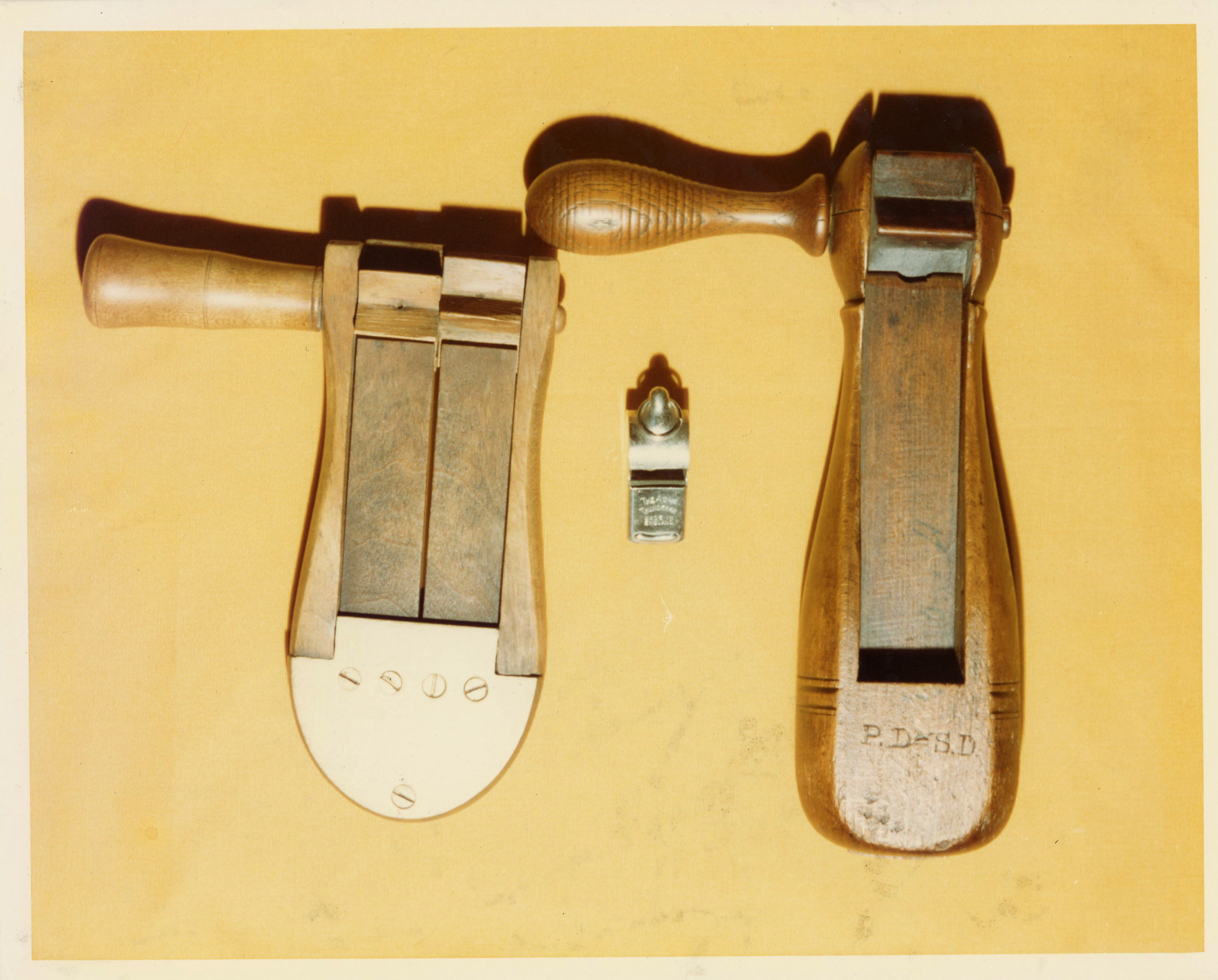
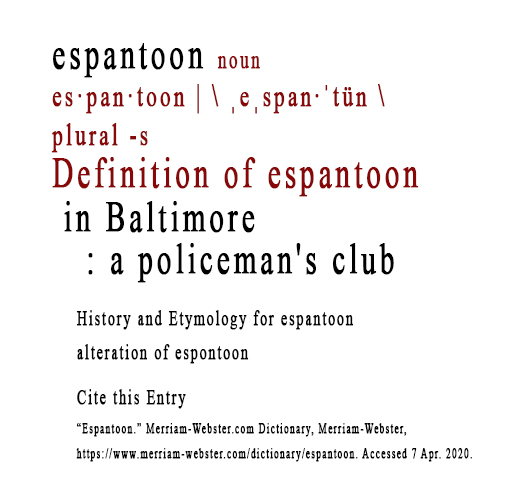
Webster's Third Edition: defines an espantoon as follows: "An espantoon In Baltimore, a policeman's club" We would like to start out by saying we collect nightsticks, Espantoons, Batons, Truncheons, Billy Clubs, etc. If you have one for sale or that you would like to donate, please let us know, as we are interested.  For what might be obvious reasons, we particularly like the Baltimore eagle. Aside from their being the stick carried by our brothers and sisters in law enforcement, they also show a progression not just in what we carried or had made, but in what the department had made for us and issued to us. That said, while we like Baltimore sticks, we collect all sticks from any state in the US and from any country in the world.

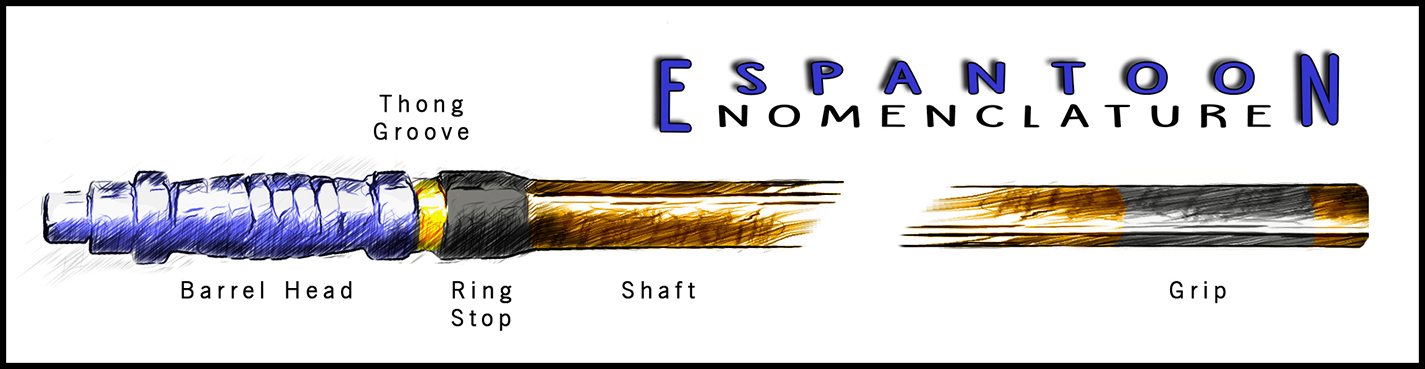
We have always been serious about the espantoon, and why is Baltimore City Police the only police department in the world that uses an espantoon? Also, why if a Baltimore County Officer and a Baltimore City Officer both have their sticks made by the same guy (let's say Nightstick Joe), why would one guy's stick be a baton or nightstick and the other be an Espantoon? We talked to several old-timers over the years, asking about the nomenclature of our Espantoon. We were told over and over that the part that looks like the handle at the top is actually not the handle and is called the "barrel head." Next to that is the "thong groove," the "ring stop," and the "shaft." The word "barrel head" might be a mispronunciation that, if correctly pronounced, may have solved this riddle much earlier, but we worked with what we had! For years, we knew the difference; we just couldn't find the words to explain it. That was until reading a newspaper article one night. When Ken read the question asked by the reporter, it was a question that flipped the switch in Ken's mind, and once it was, it was like the old saying, "It couldn't be unseen!" Now it seems we have more ways to describe or answer the question. So, what was the 1970's newspaper man's question? He asked, "If a Baltimore City Officer gifts his Espantoon to a Baltimore County Officer, is it still an Espantoon?" The answer in Ken's eyes was, no, and as odd as it may sound like so many police issues, it all comes down to training. For years, when asked what makes an Espantoon an Espantoon, the satisfactory answer was, "Webster's 3rd edition dictionary says it is!" That has not been acceptable to us, so we dug further, reading every newspaper article, every general order, and every policy. Doing so gave us what we think is the truest of answers. Baltimore turns a nightstick into an Espantoon because what looks like a "handle" is the "barrel head" (most likely originally pronounced "burl head"), whereas everywhere else in the world the part that looks like a handle is a handle, but in Baltimore City, we turn the stick around, and that handle-looking part is the striking end. If a city and county officer traded sticks, they would each take their new stick and use it according to their training, one having a nightstick with a handle and the other having an espantoon with a burl head. That is what makes a Nightstick an Espantoon. What follows is some supporting documentation on the subject.

As for the old answer, what makes an espantoon? A name for a nightstick that is only used by the Baltimore police. Here is the old answer, from the pages of Webster's 3rd edition.
Webster

1 black devider 800 8 72

We had a difficult time explaining what made an Espantoon an Espantoon, until reading that 1970's Sun Paper, newspaper article that asked, "If a Baltimore City officer gave his espantoon to a county officer, would it still be an espantoon?" This single question sparked the answer, which we've known for years but had trouble wording into a reasonable explanation.

The Baltimore Police Department's General Orders, or what today is known as Baltimore Police "Policy," specifically Policy number 1111, define the Espantoon as follows:

A wooden baton is between 22 and 25 inches in length, with the striking end of the baton being between 1-1/2 and 1-3/4 inches in diameter and the grip end being 1-3/8 inches in diameter.

This means our nightstick has a "Burl Head." But what if the county officer simply turned his baton around wouldn't that make it an espantoon? Well in theory it would, except, in Baltimore City this can be done under Policy 1111, and remain within the officer's guidelines and training, in the county the officer would be going against his, or her training, and therefore, not only wouldn't it be an espantoon, but the officer could be charged (if not criminally, at least departmentally) and quite possibly lose his or her job. So, part of it not just that we turn the stick around, it, is that it is within our agencies rules and regulations and is within our training that we use it this way, and that is what makes our baton an espantoon.

1 black devider 800 8 72

Baltimore Issued Espantoon

ESP held in check dropped shadow 72

Notice in this picture that the officer is carrying his espantoon with the barrel head out. This practice has been the way Baltimore police have carried their sticks going back to the late 1700's and the early 1800s it is what makes a nightstick an espantoon. The espantoon, also known as a nightstick, is a traditional symbol of authority for Baltimore police officers. Its unique design with the barrel (or burl ) head carried outward is for self-defense and crowd control. Its uniqueness is believed to have originated here in the late 18th century and has been consistently followed ever since. With the barrel head facing outward, it allows for quick and effective strikes, or jabs while maintaining a non-threatening appearance. This longstanding practice showcases the rich history and traditions of the Baltimore police force. The distinctive carrying style has become an iconic feature of Baltimore's law enforcement history and also serves as a visual representation of their role in maintaining law and order while reflecting the city's deep-rooted connection to its policing heritage. 


1 black devider 800 8 72

1 KSCN0004 sm

Woodworkers that Turned Baltimore Espantoons
1937 / 2007

1937 1957 – Rev W Gibbs McKenney - Made BPD Issue - Sold to Howard Uniform - 10000 hickory 2000 redwood over 20 yrs

1957 1977 – Rev. John D  Longenecker - Made BPD Issue - Sold to Howard Uniform - 10000 hickory 2000 redwood over 20 yrs

1955 / 1979 – Carl Hagen - Made BPD Issue & his own Stick - Sold to Howard Uniform & Officers - 2000 various wood types over 24 yrs

1974 1977 – Edward Bremer - Made his own Stick – Sold to Officers - 300 various wood types over 3 yrs

1977 2007 – P/O Joe Hlafka - Made his own Stick - Sold to Officers and Police Supply Shops - 10,000 various wood types over 30 yrs

1 black devider 800 8 72


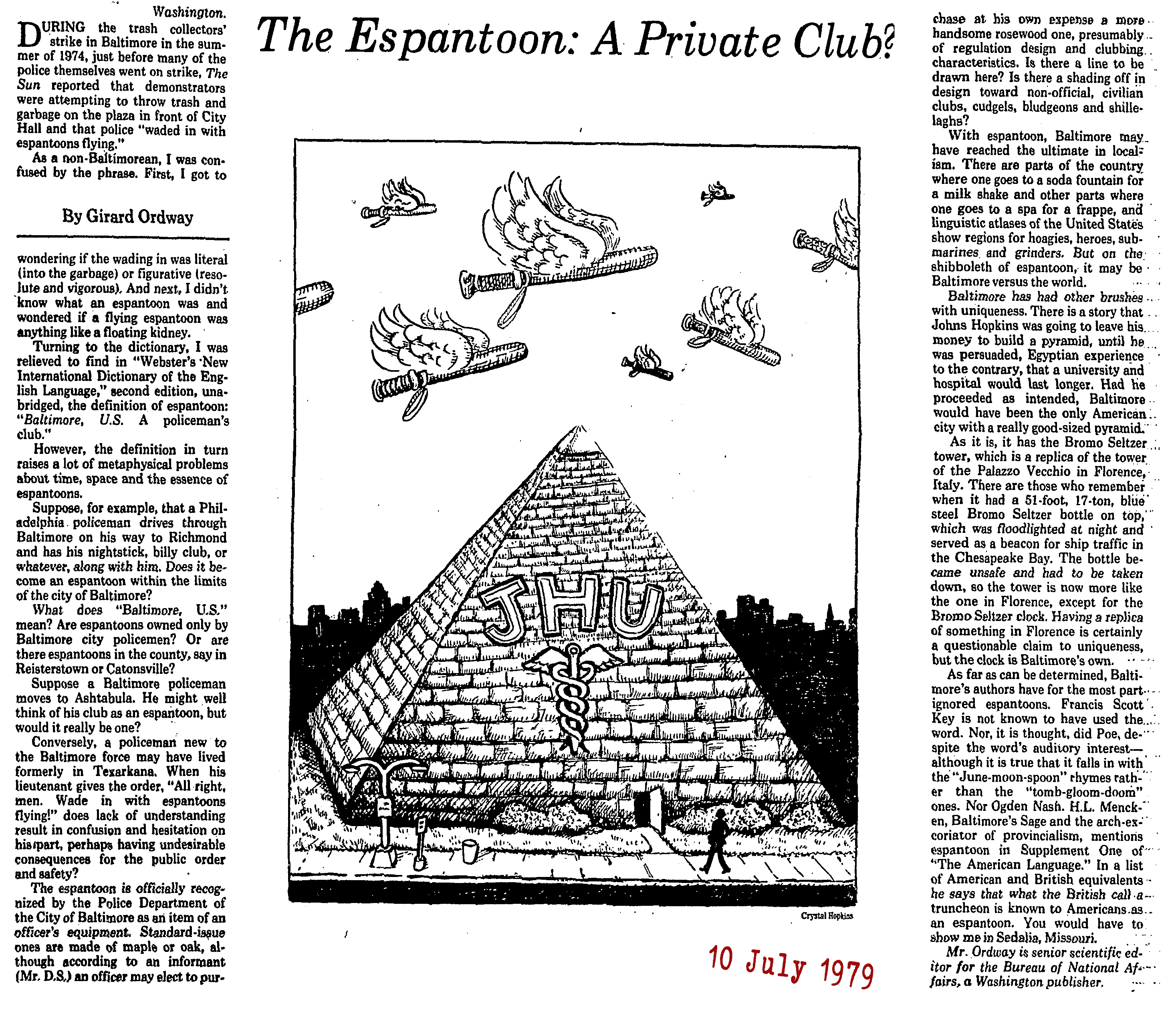
10 July 1979 Espantoon 72

Above is the article that best helped us put our answer into words about what makes an espantoon an espantoon. To read the full article, click on the pic above or click HERE and it will take you to the article, you can click on it after it opens if you need to zoom in.

Note - Johns Hopkins was born on May 19, 1795. Raised as a member of the Society of Friends (Quakers), Johns Hopkins was known as an honest man, generous to a fault, somewhat stubborn, and hard with a bargain. He transformed himself from a grocer’s helper to a millionaire banker, and became Victorian Baltimore’s greatest philanthropist.

Johns Hopkins
Johns Hopkins

1 black devider 800 8 72

ESPANTOON NOMENCLATURE72

The blue portion of the espantoon in the above illustration is most often mistaken as the handle of the stick but is the striking/burl end. It is called a Barrel Head, this most likely comes as the result of an error in pronunciation, as in many blunt force weapons, the striking end is called a "Burl" head.  As in the Tomahawk, and other such weapons the blunt end can either be added or carved into the weapon. Here in Baltimore with years of mispronunciation and a slight southern drawl, Burl sounds more like, Barrel. So, Burl Head, became Barrel Head. A funny thing to add to this, is that shape of the Espantoon's burl as it is kind of shaped like a barrel, which added to the error. Now, in the way the JEEP a military vehicle that also has ties to Baltimore has a name that was derived from the letters G.P. for General Purpose. G.P. said often enough, and fast enough took on the sound of JEEP and long before it was manufactured and marketed as the JEEP it became JEEP and would have with, or without the JEEP's we know have forever called a Jeep, likewise, the Burl Head or the striking end of our espantoon will now and will forever be called the Barrel Head. Under the barrel head, indicated with Yellow is the thong Groove, it is where we add a leather strap aka a Thong, under the Thong groove, indicated in black here is the Ring Stop, it is a little wider to help keep the ring from falling through the Ring on our gun belt. under the Ring stop is the Shaft, it gives us reach to create distance between us and a suspect. Down around the bottom of the shaft, about an inch and half up from the bottom and maybe 3 to 4" past that is the grip, it is where we hold the stick when jabbing or swinging, and where we catch the stick while spinning. I hope that helps better understand our espantoon, its parts, how it is used different from your average nightstick. Its name most likely came from, "A Spontoon" and again over the years it may have gone from Get me a spontoon" make sure you have "a spontoon" to "espontoon" to "espantoon"  some early sun paper reports 1839sh had it spelled "Spontoon" Also in pictures of Baltimore Police almost as far back as we can find, officers hold them by the Shaft end, as well on older sticks you can tell by dirt marks where the officers held them and all the marks are closer to the end of the shaft furthest away from the Barrel head. 

 ESP means to Carry at the ready labled 72i

Looking at the pictures above, we can see that the Baltimore Police carry what is known to them as the espantoon. It is carried in a way that keeps the barrelhead at the ready. Tucked under the weak arm with the striking end extending out toward the officer's back, it leaves the grip end ready for the officer to grab or grip with his or her strong hand in the event that it might be needed. In photograph A) we see it in the officer's strong hand. If necessary, he could turn his hand downward with the thong over a finger of the strong hand, allowing the stick to slide out until stopped by the strap. This would put the stick in his hand by the grip end, with the striking end out, and at the officer's ready. Photograph B) is as described above, tucked under the weak arm, ready to be grabbed with the strong hand at the grip end, which would leave the striking end again at the ready. PhotographC) and D) are similar in that the officer's stick is held in the strong hand, with the thong over a finger, and the stick is held at the halfway point, or so, with the striking end pointing forward, allowing the officer to simply loosen their grip while the stick slides forward until the thong brings it to a stop, at which point the stick would be ready for use. The important thing about Photograph D) is that the stick is behind the officer's back, so while he is holding it at the ready, he is not doing anything that could be seen as a threatening move to provoke confrontation. We can now see why these 4 pictures are a nice representation of how a Baltimore officer can always be ready to protect himself or the public without walking around in a way that might be seen as or used as an excuse to claim it as having been threatening. Compare the way a Baltimore officer holds the espantoon to the way other juristictions hold their nightstick, or billy clubs.

ESPANTOON NOMENCLATURE72

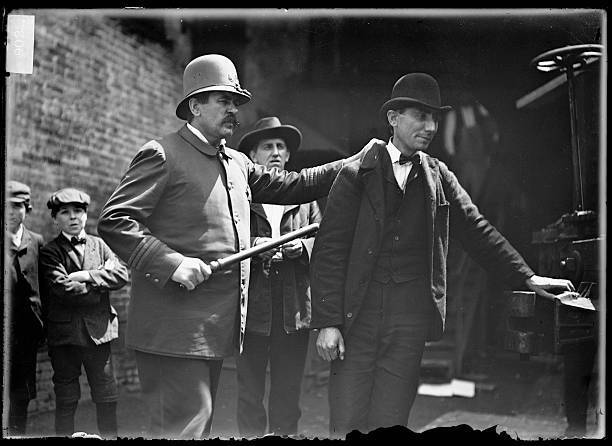
This is the difference: These officers are not Baltimore Police
They are not wielding an Espantoon in Baltimore; this would be considered
The Wrong End of the Stick
ESPANTOON NOMENCLATURE72

This is the difference: These officers are not Baltimore Police
They are not wielding an Espantoon in Baltimore; this would be considered
The Wrong End of the Stick

1 black devider 800 8 72

Unraveling the Espantoon
A Deep Dive into Baltimore’s Policing History with Insights

Written by OpenAI’s ChatGPT, a division of CoPilot by Bing

12 January 2024

The nightstick, also known as a baton or truncheon, is a cylindrical club that has been used as a compliance tool and defensive weapon by law enforcement officers, correctional staff, security guards, and military personnel. The term “nightstick” was first used in 1887 and is derived from the combination of “night” and "stick.”. Because police officers or watchmen carried it during their night patrols, it earned its name. The name “night stick” also refers to the usage of a longer baton at night by the NYPD, as opposed to the more discreet 11-inch “day stick” used during the dayshift. The names come from the fact that these weapons were used primarily for nighttime police work. The term “stick” in this context refers to a piece of wood, generally long and slender, that can be used as a weapon. So, the term “nightstick” essentially means a stick used at night. The use of different batons for day and night was based on the perceived level of threat and the need for protection being different during the day.

The concept of a modern police force using a club (truncheon) as a tool originated with the formation of London’s first police department in 1829 by Prime Minister Sir Robert Peel. The officers, also known as "bobbies," were armed only with a truncheon, which could be used in a variety of ways, not all of them harmful. The use of the club soon spread to American cities like New York, Boston, and Baltimore.

As for the specific invention of the nightstick, it’s difficult to attribute it to a single person or time, as similar tools have been in use since ancient times. However, the first mention of the Baltimore Police Department using a nightstick dates back to March 19, 1798.

Please note that while the nightstick has evolved over time, the basic design—a roughly cylindrical club made of wood, rubber, plastic, or metal—has largely remained unchanged. Today, most nightsticks are made of composite materials

The espantoon, a unique symbol of the Baltimore Police Department, has a rich history and distinct characteristics that set it apart from the common nightstick. This ornate wooden baton, equipped with a swiveled leather strap for ease in twirling, is more than just a tool; it’s a part of Baltimore’s cultural fabric.

The term “espantoon” is believed to have evolved from "spontoon," a weapon carried by officers in the Roman legion. However, what truly distinguishes an espantoon from a nightstick is not just its physical features but also the way it is used and held. In Baltimore, the part that appears to be a handle is actually the “barrel head” or “burl head," which is used as the striking end. This is in stark contrast to all other regions, where the part that looks like a handle is indeed used as a handle.

Retired Detective Ken Driscoll’s findings have been instrumental in understanding these nuances. According to his research, the training that the officers receive and how they use the stick determine the difference between an espantoon and a nightstick. Interestingly, Driscoll also discovered that the term “barrel head” might be a misinterpretation of “burl head," a term used to describe the striking end of impact weapons. This linguistic mix-up is thought to have occurred due to Baltimore’s rich southern drawl, leading to “burl head” being heard as “barrel head.”. To support Driscoll’s theory that the espantoon differs due to its use of a burl or barrel head, we can refer to the Department’s training policy number 1111, which describes the espantoon as follows:

Espantoon: ─ A wooden baton between 22–25 inches in length and 16–32 ounces, with the striking end of the baton being between 1.5 - 1.75 inches in diameter and the grip end being 1.375 inches in diameter. This baton has color restrictions and shall only be coated in an oak, ash, maple, hickory, or rosewood finish. Decorations are prohibited.

Right there, in black and white, policy 1111 specifies that the diameter of the striking end is between 1 1/2 inches and 1 3/4 inches, while the diameter of the grip end is described as 1 3/8 inches. So, the striking end is 1/8” to 3/8” larger in diameter than the grip end. This is a clear indication that the burl or barrel head is the striking end.”

Driscoll’s findings not only clarified the distinction between an espantoon and a nightstick but also shed light on the cultural and linguistic aspects of its usage. His work is a testament to the importance of context and local knowledge in understanding these unique aspects of Baltimore’s policing history.

In conclusion, the espantoon is more than just a tool; it’s a symbol of Baltimore’s unique policing culture and history, as the espantoon was at one time a badge of authority for Baltimore Police, and Ken Driscoll’s findings have played a crucial role in unraveling the mysteries of this important tool for Baltimore police dating back to the late 1790s.

In the Victorian era, police in London carried truncheons about one foot long called Billy clubs. The truncheon acted as the policeman’s ‘Warrant Card’ as the Royal Crest attached to it indicated the policeman’s authority. This was always removed when the equipment left official service.

Over time, the design of the nightstick has evolved to meet the changing needs of law enforcement. For example, straight batons of rubber have a softer impact. Some of the kinetic energy bends and compresses the rubber and bounces off when the object is struck. However, rubber batons are not very effective when used on the subject’s arms or legs and can still cause injury if the head is struck. That is why most police departments have stopped issuing them.

There have also been variations of the nightstick, such as the sap, slapjack, or blackjack, which is a heavy leather pouch, eight to twelve inches long, filled with lead and sometimes a flexible steel spring or rod. These were easier to conceal and could be used in close-quarters combat.

Mr. Edward Bremmer once said his espantoon saves lives, as it is one step in the escalation of violence just ahead of using a firearm. So, if the espantoon doesn’t work, officers would be forced to step up to the firearm. For that reason, Mr. Bremmer made his espantoon heavier and added what he called a “Nib” on the top of all his barrel heads. With this Nib, the officer can not only swing it in defense of himself or others, but he could also use that Nib end to jab the espantoon. Mr. Bremmer felt he has saved lives, both the lives of officers and the lives of suspects, because, as he once said, “Nightsticks prevent officers from needing to escalate from hand-to-hand combat to the use of firearms.” He also said, “The faster we can get a suspect into cuffs, the safer it is for everyone involved.” One of Mr. Bremmer's old sticks, made of Lignum vitae, a wood that the department forbade because it was too heavy, too hard, and too dangerous, is on display at the Baltimore Police Historical Society. The department felt the stick of that material could cause serious injury or death.

Today, most nightsticks are made of composite materials, and their use has declined with the advent of other law enforcement tools like TASERs and pepper spray. However, they still remain a part of the law enforcement toolkit in many jurisdictions.

1 black devider 800 8 72

The Espantoon and the "Tune-Up"
A Baltimore Police Relic and Its Murky Origins

Introduction:

Within the annals of Baltimore Police Department history, certain terms evoke a starkly different era. Among them, "espantoon" and "tune-up" stand out, relics of a time when policing was often more direct and, some might argue, more brutal. This article delves into the potential origins of these terms, particularly focusing on the "espantoon" – a baton that played a significant role in crowd control and, allegedly, individual encounters. It also examines the chilling phrase "tune-up," and how it may be connected to the use of this tool.

The Espantoon: From Spontoon to Nightstick?

The word "espantoon" itself is a linguistic puzzle. The prevailing theory suggests it evolved from "spontoon," a historical term for a type of polearm, often carried by military officers. 1 The transition from "spontoon" to "espantoon" likely occurred through a process of phonetic drift, possibly influenced by the spoken language of the time.  

A crucial point to consider is the historical context. In the 1970s and 80s, the Baltimore Police Department, like many urban forces, faced significant challenges related to crime and civil unrest. During this period, the "espantoon" – essentially a long, wooden baton – was a standard piece of equipment.

The term "nightstick" also comes into play. It is believed that the longer baton was carried at night, and the shorter baton was carried during the day. During periods of civil unrest, or large gatherings, buckets of the longer batons would be brought to the scene for distribution.

The hypothesis that "a spontoon" became "aspontoon" and then "espantoon" is intriguing. Oral traditions and rapid communication during chaotic situations could easily lead to such linguistic shifts. Furthermore, early records may have shown variations in spelling (like "Spontoon"), further supporting this idea.

The "Burl Head" and "Barrel Head"

Adding to the complexity, the striking end of the espantoon, often referred to as the "barrel head," is likely a misnomer. Veteran officers have suggested that the term originated from "burl head," referring to the naturally occurring burl wood used in the baton's construction. Due to the visual resemblance to a small barrel and the influence of Baltimore's southern-tinged dialect, "barrel head" became the common term. This highlights the importance of considering regional dialects when tracing the origins of terms.

The "Tune-Up": A Euphemism for Force?

The phrase "tune-up" is where the story takes a darker turn. In the context of Baltimore policing, it's widely understood to refer to the use of the espantoon to subdue or punish individuals. This euphemism, while seemingly innocuous, carries a heavy weight.

The theory that "toon-up" became "tune-up" as a play on words related to the "espantoon" is a compelling, if speculative, explanation. It's plausible that officers, seeking to mask the brutality of their actions, adopted a seemingly more benign term. This also speaks to the use of police culture, and the use of language to obfuscate, or to give a level of separation from the action being taken.

The use of euphemisms in law enforcement is not uncommon. It allows for the discussion of sensitive topics without explicitly detailing the violence involved. However, it also serves to obscure the reality of police actions, potentially contributing to a culture of impunity.

Speculation and Historical Context:

It's important to acknowledge that the origins of these terms are not definitively known. Much of the information comes from oral history, which can be subject to inaccuracies and embellishments over time.

However, the speculation surrounding the "espantoon" "toon-up" and "tune-up" provides valuable insights into the history of policing in Baltimore. It highlights the challenges faced by law enforcement during a turbulent period, as well as the potential for abuse of power. The tool itself, and its unique use within the Baltimore police force, is what created the unique words used.

Oral Tradition and Local Dialect:

The role of oral tradition in preserving and transforming these terms cannot be overstated. Baltimore's unique dialect played a crucial role in the pronunciation and evolution of these words. The practicality of the "espantoon" and the need for discreet communication likely contributed to the development of the "tune-up" euphemism.

Conclusion:

The "espantoon" and the "tune-up" are more than just words. They represent a chapter in Baltimore's history that is both complex and controversial. While the exact origins of these terms may remain shrouded in mystery, their legacy continues to shape the conversation about policing and accountability.

Further Research:

  • Archival research into Baltimore Police Department records from the 1970s and 80s.
  • Interviews with retired police officers who served during that period.
  • Linguistic analysis of the evolution of the terms "spontoon" and "espantoon."

By continuing to explore these topics, we can gain a deeper understanding of the past and work towards a more just and equitable future.

1 black devider 800 8 72

The History and Design of Burl-Head Weapons Across Cultures

Weapons have been an essential part of human history, evolving alongside societies to meet their defensive and offensive needs. One intriguing design element that appears across various cultures is the "burl head" or a similar feature, which enhances the weapon's effectiveness by providing a more substantial striking surface.

The Baltimore Espantoon

The term "burl head" is often associated with the Baltimore police's espantoon, a distinctive nightstick or baton. The espantoon features a part known as the "burl head" (a mispronunciation of "barrel head"), which is the striking end of the baton. This design is unique to the Baltimore City Police and includes other components such as the thong groove, the ring stop, and the shaft.

African Knobkerries

In African cultures, particularly in Southern Africa, a traditional weapon known as the knobkerrie features a similar design. The knobkerrie is a wooden club with a rounded, often carved, striking end. This burl-like feature is either carved out of the same piece of wood or added separately, enhancing the weapon's impact. Knobkerries are used both as tools and weapons, reflecting the versatility and ingenuity of their design.

Native American War Clubs

Native American cultures also developed weapons with similar characteristics. The ball-headed war club, used by various Native American tribes, features a rounded, sometimes intricately carved, striking end. These war clubs were effective in close combat and symbolized the warrior's status and skills. The carved designs often held cultural and spiritual significance, adding an extra layer of meaning to these formidable weapons.

Other Cultural Examples

Beyond Africa and Native America, other cultures have independently developed similar designs for their traditional weapons. For instance, in Polynesian societies, the mere and patu are short clubs with broad, flat striking surfaces, often adorned with intricate carvings. These weapons, like their counterparts in other cultures, were both practical tools and symbols of power and authority.

Conclusion

The recurring design of the burl-head or similar features in traditional weapons across different cultures highlights the universal human ingenuity in creating effective tools for combat and survival. These weapons not only served their practical purposes but also carried cultural, spiritual, and social significance. As we study these artifacts, we gain a deeper appreciation for the diverse ways in which human societies have approached the challenges of defense and warfare throughout history.

1 black devider 800 8 72

POLICE INFORMATION

If you have copies of: your Baltimore Police Department class photo; pictures of our officers, vehicles, and equipment; newspaper articles relating to our department and/or officers; old departmental newsletters; lookouts; wanted posters; or brochures. Information on deceased officers and anything that may help preserve the history and proud traditions of this agency. Please contact retired detective Kenny Driscoll.

This email address is being protected from spambots. You need JavaScript enabled to view it.

Devider color with motto

NOTICE

How to Dispose of Old Police Items

Please contact Det. Ret. Kenny Driscoll if you have any pictures of you or your family members and wish them remembered here on this tribute site to Honor the fine men and women who have served with Honor and Distinction at the Baltimore Police Department. Anyone with information, photographs, memorabilia, or other "Baltimore City Police" items can contact Ret. Det. Kenny Driscoll at This email address is being protected from spambots. You need JavaScript enabled to view it. follow us on Twitter @BaltoPoliceHist or like us on Facebook or mail pics to 8138 Dundalk Ave. Baltimore Md. 21222


Copyright © 2002 Baltimore City Police History - Ret Det Kenny Driscoll 

Richard J. Ellwood Sr

Richard Ellwood sr 2

Richard J. Ellwood Sr

P/O Richard J. Ellwood Sr joined the Baltimore City Police Department in 1939. He was thirty-four years old when he joined, probably a little older than most who joined the department in their early twenties. He may have felt a little pressure from his father-in-law, who was a cop, and his brother-in-law also on the force.

When P/O Ellwood Sr finished his initial police training, he was assigned to the Central District. This is ironic as many years later his son Sgt Richard J. Ellwood Jr. would follow in his father’s footsteps, and he too would spend his first days in uniform assigned to the Central District, as did Sgt Richard J. Ellwood Jr’s brother, Sgt John Ellwood, who was also assigned to the Central District when he joined the department.

To get the true picture of why we feel Richard J. Ellwood Sr belongs in our Hall of Fame, and why he was considered a legend to his sons, and so many others you have to understand what it meant to a neighborhood back in those days to have a police officer living amongst them.

In those days a police officer was revered. It was as if he was the sheriff of a small town. He was expected to have all the answers when asked by the neighbors about things like problems with their kids, marital problems, sanitation problems, parking tickets, and many more very mundane issues. Oh yeah… he was the guy who was called when someone died in the neighborhood. I know this sounds crazy but it’s true… P/O Richard J. Ellwood Sr would get calls or people would just knock on the door when they needed him, regardless of the time. His family used to kid P/O Ellwood Sr that when a man in the neighborhood passed away, you would see him wearing what appeared to be a new suit.

I don’t think he ever turned anyone down that wanted his help. In the summer when it was very hot, the family would sit out on their marble steps, sometimes very late into the night. People used to come to P/O Ellwood Sr asking if they could talk to him. Sometimes they would take him to the side to talk; sometimes they would just talk in front of his family. His family consisted of three daughters, two sons and his wife. The marble steps were crowded.

The favors or questions that the neighbors asked, always got an answer…you see, P/O Ellwood Sr had a great knowledge on many facets of city government. The neighborhood had several men that were involved in city government; P/O Ellwood Sr knew where to go to get things done.

P/O Ellwood Sr helped some of the men in the neighborhood get on the police department. He knew the chief physician for the department. His son Sgt Ellwood Jr knew first-hand that a few of the men that got on the police department, got on because of his dad. He knew this because years later they told him how it had all happened.

There was one guy that Sgt Ellwood Jr remembered coming by their house and asking for his dad’s help in getting him on the job…his name Sgt Ellwood Jr could never forget… it was, Francis Xavier Donahue. He was probably twenty-one at the time, but he didn’t look his age. He appeared to be very shy when he approached P/O Ellwood Sr.

Donahue was a not a tall man; he stood about five feet six inches tall. On his first try to get on the department, he was told he was too short. Sgt Ellwood Jr said he remembered him talking to his father and was very disappointed that he failed on his first try. P/O Ellwood Sr told him that he would talk to the police physician. He later told Donahue that when he gets called back for another chance that he should stand on his tippy toes when being measured for his height.

Well, many years later when Sgt Ellwood Jr reported to the Central District, he met the then Sergeant Francis Xavier Donahue. Sergeant Donahue pulled the young Sgt Ellwood Jr. aside and told him that his father was the reason Sgt Donahue was a cop. 

P/O Ellwood Sr touched many lives during his career with the Baltimore Police Department. He worked in the foot traffic unit for his last seventeen years. His assigned corner was Baltimore Street and South Street. He knew everyone in that area, and they all knew and loved him. When Sgt Ellwood Jr was a young boy, his father would sometimes take him to meet people in the area of "his corner".

Richard J. Ellwood Sr was not a medal of honor recipient, or even a highly decorated police officer. He did not get promoted during his career with the department, but what he was, was what most people see as what the true meaning of a police officer should be: he was dedicated, loyal, honest, faithful, righteous, church going, true blue and of course, the best husband, and father, anyone would ever want. 

Not only did Richard J. Ellwood Sr serve and protect the city, but he served as a role model, and example to a point that he raised two sons that admired their father so much that they would also go on to take the oath and follow in their dad’s footsteps to serve and protect the residents of Baltimore City, and for that, The Baltimore City Police Historical Society is adding him to our Police Officer’s Hall of Fame.

 1 black devider 800 8 72

A list of Richard Ellwood Sr's family that were members of the Baltimore Police Department

P/O Dick Ellwood Sr. (Father to Dick Ellwood Jr. & John Ellwood)
Sgt. John Ellwood (Brother of Dick Ellwood Sr. - Son/Dick Ellwood Jr.)
Sgt. Dick Ellwood Jr.(son of Dick Ellwood Sr./brother to John Ellwood)
Det. David Ellwood (son of Dick Ellwood Jr.)

Capt. John Dunn (Grandfather to Dick Ellwood JR. & John Ellwood)
Lt. Ed Dunn (Uncle to Dick Ellwood & John Ellwood)
Edward Dunn (Father)
Michael Dunn (Son)
Paul Dunn, (Son) 
Officer James T. Dunn (
HERE)

1 black devider 800 8 72

POLICE INFORMATION

If you have copies of: your Baltimore Police Department Class Photo, Pictures of our Officers, Vehicles, Equipment, Newspaper Articles relating to our department and or officers, Old Departmental Newsletters, Lookouts, Wanted Posters, and or Brochures. Information on Deceased Officers and anything that may help Preserve the History and Proud Traditions of this agency. Please contact Retired Detective Kenny Driscoll.

This email address is being protected from spambots. You need JavaScript enabled to view it.

Devider color with motto

NOTICE

How to Dispose of Old Police Items

Please contact Det. Ret. Kenny Driscoll if you have any pictures of you or your family members and wish them remembered here on this tribute site to Honor the fine men and women who have served with Honor and Distinction at the Baltimore Police Department. Anyone with information, photographs, memorabilia, or other "Baltimore City Police" items can contact Ret. Det. Kenny Driscoll at This email address is being protected from spambots. You need JavaScript enabled to view it. follow us on Twitter @BaltoPoliceHist or like us on Facebook or mail pics to 8138 Dundalk Ave. Baltimore Md. 21222


Copyright © 2002 Baltimore City Police History - Ret Det Kenny Driscoll 

Gary Provenzano BPD History Pictures

Gary Provenzano
BPD History Pictures


http://www.baltimorepolicemuseum.org/images/Gary_Provenzano/BPD_IMG085cropCart.png

http://www.baltimorepolicemuseum.org/images/Gary_Provenzano/BPD_IMG086-cropjohn-wilks-booth.jpg

http://www.baltimorepolicemuseum.org/images/Gary_Provenzano/BPD_IMG018.png

http://www.baltimorepolicemuseum.org/images/Gary_Provenzano/BPD_IMG092.jpg

http://www.baltimorepolicemuseum.org/images/Gary_Provenzano/BPD_IMG093.jpg

http://www.baltimorepolicemuseum.org/images/Gary_Provenzano/BPD_IMG085crop.png

http://www.baltimorepolicemuseum.org/images/Gary_Provenzano/BPD_IMG185-crop.jpg

http://www.baltimorepolicemuseum.org/images/Gary_Provenzano/BPD_IMG184-crop.jpg

http://www.baltimorepolicemuseum.org/images/Gary_Provenzano/BPD_IMG183-crop-4.jpg

http://www.baltimorepolicemuseum.org/images/Gary_Provenzano/BPD_IMG183-crop-3.jpg

http://www.baltimorepolicemuseum.org/images/Gary_Provenzano/BPD_IMG183-crop-2.jpg

http://www.baltimorepolicemuseum.org/images/Gary_Provenzano/BPD_IMG183-crop-1.jpg

http://www.baltimorepolicemuseum.org/images/Gary_Provenzano/BPD_IMG179-crop.jpg

http://www.baltimorepolicemuseum.org/images/Gary_Provenzano/BPD_IMG178-crop.jpg

http://www.baltimorepolicemuseum.org/images/Gary_Provenzano/BPD_IMG177-crop-3.jpg

http://www.baltimorepolicemuseum.org/images/Gary_Provenzano/BPD_IMG177-crop-2.png

http://www.baltimorepolicemuseum.org/images/Gary_Provenzano/BPD_IMG177-crop-1.png

http://www.baltimorepolicemuseum.org/images/Gary_Provenzano/BPD_IMG177-crop-2.jpg

http://www.baltimorepolicemuseum.org/images/Gary_Provenzano/BPD_IMG177-crop-1.jpg

http://www.baltimorepolicemuseum.org/images/Gary_Provenzano/BPD_IMG176-crop-4.png

http://www.baltimorepolicemuseum.org/images/Gary_Provenzano/BPD_IMG176-crop-4.png

http://www.baltimorepolicemuseum.org/images/Gary_Provenzano/BPD_IMG175-crop-2.png

http://www.baltimorepolicemuseum.org/images/Gary_Provenzano/BPD_IMG174-crop-2-tilted.png

http://www.baltimorepolicemuseum.org/images/Gary_Provenzano/BPD_IMG174-crop-2.png

http://www.baltimorepolicemuseum.org/images/Gary_Provenzano/BPD_IMG174-crop-1.png

http://www.baltimorepolicemuseum.org/images/Gary_Provenzano/BPD_IMG173-crop.jpg

http://www.baltimorepolicemuseum.org/images/Gary_Provenzano/BPD_IMG172-crop.jpg

http://www.baltimorepolicemuseum.org/images/Gary_Provenzano/BPD_IMG170-crop-1-front-and-back.png

http://www.baltimorepolicemuseum.org/images/Gary_Provenzano/BPD_IMG171-crop-2.png

http://www.baltimorepolicemuseum.org/images/Gary_Provenzano/BPD_IMG170-crop-1.png

http://www.baltimorepolicemuseum.org/images/Gary_Provenzano/BPD_IMG169-crop.png

http://www.baltimorepolicemuseum.org/images/Gary_Provenzano/BPD_IMG168-crop.png

http://www.baltimorepolicemuseum.org/images/Gary_Provenzano/BPD_IMG167-crop.png

http://www.baltimorepolicemuseum.org/images/Gary_Provenzano/BPD_IMG166-crop.png

http://www.baltimorepolicemuseum.org/images/Gary_Provenzano/BPD_IMG165-crop.png

http://www.baltimorepolicemuseum.org/images/Gary_Provenzano/BPD_IMG164-crop.png

http://www.baltimorepolicemuseum.org/images/Gary_Provenzano/BPD_IMG163-crop.png

http://www.baltimorepolicemuseum.org/images/Gary_Provenzano/BPD_IMG162-crop.png

http://www.baltimorepolicemuseum.org/images/Gary_Provenzano/BPD_IMG161-crop.png

http://www.baltimorepolicemuseum.org/images/Gary_Provenzano/BPD_IMG160-crop.png

http://www.baltimorepolicemuseum.org/images/Gary_Provenzano/BPD_IMG159-crop.png

http://www.baltimorepolicemuseum.org/images/Gary_Provenzano/BPD_IMG158-crop.png

http://www.baltimorepolicemuseum.org/images/Gary_Provenzano/BPD_IMG157-crop.png

http://www.baltimorepolicemuseum.org/images/Gary_Provenzano/BPD_IMG156-crop.png

http://www.baltimorepolicemuseum.org/images/Gary_Provenzano/BPD_IMG154-crop.png

http://www.baltimorepolicemuseum.org/images/Gary_Provenzano/BPD_IMG153-crop.png

http://www.baltimorepolicemuseum.org/images/Gary_Provenzano/BPD_IMG152-crop.png

http://www.baltimorepolicemuseum.org/images/Gary_Provenzano/BPD_IMG151-crop.png

http://www.baltimorepolicemuseum.org/images/Gary_Provenzano/BPD_IMG150-crop.png

http://www.baltimorepolicemuseum.org/images/Gary_Provenzano/BPD_IMG149-crop.png

http://www.baltimorepolicemuseum.org/images/Gary_Provenzano/BPD_IMG148-crop.png

http://www.baltimorepolicemuseum.org/images/Gary_Provenzano/BPD_IMG147-crop.png

http://www.baltimorepolicemuseum.org/images/Gary_Provenzano/BPD_IMG146-crop.png

http://www.baltimorepolicemuseum.org/images/Gary_Provenzano/BPD_IMG145-crop.png

http://www.baltimorepolicemuseum.org/images/Gary_Provenzano/BPD_IMG143-crop.png

http://www.baltimorepolicemuseum.org/images/Gary_Provenzano/BPD_IMG142-crop.png

http://www.baltimorepolicemuseum.org/images/Gary_Provenzano/BPD_IMG141-crop.png

http://www.baltimorepolicemuseum.org/images/Gary_Provenzano/BPD_IMG139-crop-goes-with-ending-40.jpg

http://www.baltimorepolicemuseum.org/images/Gary_Provenzano/BPD_IMG140-crop-goes-with-ending 39.jpg

http://www.baltimorepolicemuseum.org/images/Gary_Provenzano/BPD_IMG138-cropending-37.jpg

http://www.baltimorepolicemuseum.org/images/Gary_Provenzano/BPD_IMG137-crop-with-38.jpg

http://www.baltimorepolicemuseum.org/images/Gary_Provenzano/BPD_IMG136-crop.jpg

http://www.baltimorepolicemuseum.org/images/Gary_Provenzano/BPD_IMG136-crop.jpg

http://www.baltimorepolicemuseum.org/images/Gary_Provenzano/BPD_IMG134-sgt=Flood-crop.jpg

http://www.baltimorepolicemuseum.org/images/Gary_Provenzano/BPD_IMG133-crop-1904-Cutome-house.jpg

http://www.baltimorepolicemuseum.org/images/Gary_Provenzano/BPD_IMG132-crop.jpg

http://www.baltimorepolicemuseum.org/images/Gary_Provenzano/BPD_IMG130-crop.jpg

http://www.baltimorepolicemuseum.org/images/Gary_Provenzano/BPD_IMG131-crop.jpg

http://www.baltimorepolicemuseum.org/images/Gary_Provenzano/BPD_IMG129-crop.jpg

http://www.baltimorepolicemuseum.org/images/Gary_Provenzano/BPD_IMG128-crop.jpg

http://www.baltimorepolicemuseum.org/images/Gary_Provenzano/BPD_IMG127-crop-with-26.jpg

http://www.baltimorepolicemuseum.org/images/Gary_Provenzano/BPD_IMG126-crop.jpg

http://www.baltimorepolicemuseum.org/images/Gary_Provenzano/BPD_IMG125-crop.jpg

http://www.baltimorepolicemuseum.org/images/Gary_Provenzano/BPD_IMG124-crop.jpg

http://www.baltimorepolicemuseum.org/images/Gary_Provenzano/BPD_IMG123-crop.jpg

http://www.baltimorepolicemuseum.org/images/Gary_Provenzano/BPD_IMG122-crop.jpg

http://www.baltimorepolicemuseum.org/images/Gary_Provenzano/BPD_IMG121-crop.jpg

http://www.baltimorepolicemuseum.org/images/Gary_Provenzano/BPD_IMG120-crop.jpg

http://www.baltimorepolicemuseum.org/images/Gary_Provenzano/BPD_IMG119-crop.jpg

http://www.baltimorepolicemuseum.org/images/Gary_Provenzano/BPD_IMG118-crop.jpg

http://www.baltimorepolicemuseum.org/images/Gary_Provenzano/BPD_IMG117-crop.jpg

http://www.baltimorepolicemuseum.org/images/Gary_Provenzano/BPD_IMG116-crop.jpg

http://www.baltimorepolicemuseum.org/images/Gary_Provenzano/BPD_IMG115-crop.jpg

http://www.baltimorepolicemuseum.org/images/Gary_Provenzano/BPD_IMG114-crop.jpg

http://www.baltimorepolicemuseum.org/images/Gary_Provenzano/BPD_IMG113-crop.jpg

http://www.baltimorepolicemuseum.org/images/Gary_Provenzano/BPD_IMG112-crop.jpg

http://www.baltimorepolicemuseum.org/images/Gary_Provenzano/BPD_IMG111-crop.jpg

http://www.baltimorepolicemuseum.org/images/Gary_Provenzano/BPD_IMG110-crop.jpg

http://www.baltimorepolicemuseum.org/images/Gary_Provenzano/BPD_IMG109-crop.jpg

http://www.baltimorepolicemuseum.org/images/Gary_Provenzano/BPD_IMG108-crop.jpg

http://www.baltimorepolicemuseum.org/images/Gary_Provenzano/BPD_IMG107-crop.jpg

http://www.baltimorepolicemuseum.org/images/Gary_Provenzano/BPD_IMG106-crop.jpg

http://www.baltimorepolicemuseum.org/images/Gary_Provenzano/BPD_IMG105-crop.jpg

http://www.baltimorepolicemuseum.org/images/Gary_Provenzano/BPD_IMG104-crop.jpg

http://www.baltimorepolicemuseum.org/images/Gary_Provenzano/BPD_IMG103-crop-.jpg

http://www.baltimorepolicemuseum.org/images/Gary_Provenzano/BPD_IMG102-crop-2.jpg

http://www.baltimorepolicemuseum.org/images/Gary_Provenzano/BPD_IMG102--crop-1.jpg

http://www.baltimorepolicemuseum.org/images/Gary_Provenzano/BPD_IMG101-crop-2.jpg

http://www.baltimorepolicemuseum.org/images/Gary_Provenzano/BPD_IMG101-crop-1.jpg

http://www.baltimorepolicemuseum.org/images/Gary_Provenzano/BPD_IMG099-crop-2.jpg

http://www.baltimorepolicemuseum.org/images/Gary_Provenzano/BPD_IMG100-crop.jpg

http://www.baltimorepolicemuseum.org/images/Gary_Provenzano/BPD_IMG099-crop-1.jpg

http://www.baltimorepolicemuseum.org/images/Gary_Provenzano/BPD_IMG098-crop-2.jpg

http://www.baltimorepolicemuseum.org/images/Gary_Provenzano/BPD_IMG097-crop-826-front ad back.png

http://www.baltimorepolicemuseum.org/images/Gary_Provenzano/BPD_IMG098-crop-1.jpg

http://www.baltimorepolicemuseum.org/images/Gary_Provenzano/BPD_IMG097-crop-654-front-back.png

http://www.baltimorepolicemuseum.org/images/Gary_Provenzano/BPD_IMG097-crop-826.jpg

http://www.baltimorepolicemuseum.org/images/Gary_Provenzano/BPD_IMG097-crop-654.jpg

http://www.baltimorepolicemuseum.org/images/Gary_Provenzano/BPD_IMG096-crop-826.jpg

http://www.baltimorepolicemuseum.org/images/Gary_Provenzano/BPD_IMG095-crop-1908.jpg

http://www.baltimorepolicemuseum.org/images/Gary_Provenzano/BPD_IMG096-crop-654.jpg

http://www.baltimorepolicemuseum.org/images/Gary_Provenzano/BPD_IMG095-crop-1894.jpg

http://www.baltimorepolicemuseum.org/images/Gary_Provenzano/BPD_IMG094-crop-1i.jpg

http://www.baltimorepolicemuseum.org/images/Gary_Provenzano/BPD_IMG094-crop-1.jpg

http://www.baltimorepolicemuseum.org/images/Gary_Provenzano/BPD_IMG093-crop.jpg

http://www.baltimorepolicemuseum.org/images/Gary_Provenzano/BPD_IMG092-crop.jpg

http://www.baltimorepolicemuseum.org/images/Gary_Provenzano/BPD_IMG091-crop-2.jpg

http://www.baltimorepolicemuseum.org/images/Gary_Provenzano/BPD_IMG090-crop.jpg

http://www.baltimorepolicemuseum.org/images/Gary_Provenzano/BPD_IMG089-crop.jpg

http://www.baltimorepolicemuseum.org/images/Gary_Provenzano/BPD_IMG088-crop.jpg

http://www.baltimorepolicemuseum.org/images/Gary_Provenzano/BPD_IMG087-crop.jpg

http://www.baltimorepolicemuseum.org/images/Gary_Provenzano/BPD_IMG086-crop.jpg

http://www.baltimorepolicemuseum.org/images/Gary_Provenzano/BPD_IMG084-crop.jpg

http://www.baltimorepolicemuseum.org/images/Gary_Provenzano/BPD_IMG083-crop.jpg

http://www.baltimorepolicemuseum.org/images/Gary_Provenzano/BPD_IMG083-Crop-Schryver.jpg

http://www.baltimorepolicemuseum.org/images/Gary_Provenzano/BPD_IMG082-Crop-1.png

http://www.baltimorepolicemuseum.org/images/Gary_Provenzano/BPD_IMG082-Crop-2.jpg

http://www.baltimorepolicemuseum.org/images/Gary_Provenzano/BPD_IMG082-Crop-1i.png

http://www.baltimorepolicemuseum.org/images/Gary_Provenzano/BPD_IMG082-Crop-1.jpg

http://www.baltimorepolicemuseum.org/images/Gary_Provenzano/BPD_IMG081-Crop-frey-2.png

http://www.baltimorepolicemuseum.org/images/Gary_Provenzano/BPD_IMG080-Crop-2.jpg

http://www.baltimorepolicemuseum.org/images/Gary_Provenzano/BPD_IMG080-Crop.png

http://www.baltimorepolicemuseum.org/images/Gary_Provenzano/BPD_IMG079-Crop.jpg

http://www.baltimorepolicemuseum.org/images/Gary_Provenzano/BPD_IMG078-Crop.jpg

http://www.baltimorepolicemuseum.org/images/Gary_Provenzano/BPD_IMG077-Crop.jpg

http://www.baltimorepolicemuseum.org/images/Gary_Provenzano/BPD_IMG076-Crop-1.jpg

http://www.baltimorepolicemuseum.org/images/Gary_Provenzano/BPD_IMG075-Crop-1.jpg

http://www.baltimorepolicemuseum.org/images/Gary_Provenzano/BPD_IMG073-Crop.jpg

http://www.baltimorepolicemuseum.org/images/Gary_Provenzano/BPD_IMG072-Crop-i1.png

http://www.baltimorepolicemuseum.org/images/Gary_Provenzano/BPD_IMG072-Crop-2.png

http://www.baltimorepolicemuseum.org/images/Gary_Provenzano/BPD_IMG071-Crop.png

http://www.baltimorepolicemuseum.org/images/Gary_Provenzano/BPD_IMG072-Crop-1.png

http://www.baltimorepolicemuseum.org/images/Gary_Provenzano/BPD_IMG072-Crop-1.jpg

http://www.baltimorepolicemuseum.org/images/Gary_Provenzano/BPD_IMG070-Crop.jpg

http://www.baltimorepolicemuseum.org/images/Gary_Provenzano/BPD_IMG069-Crop-2.png

http://www.baltimorepolicemuseum.org/images/Gary_Provenzano/BPD_IMG069-Crop-2.jpg

http://www.baltimorepolicemuseum.org/images/Gary_Provenzano/BPD_IMG069-Crop-1.png

http://www.baltimorepolicemuseum.org/images/Gary_Provenzano/BPD_IMG069-Crop.png

http://www.baltimorepolicemuseum.org/images/Gary_Provenzano/BPD_IMG069-Crop-1.jpg

http://www.baltimorepolicemuseum.org/images/Gary_Provenzano/BPD_IMG068-Crop-2.png

http://www.baltimorepolicemuseum.org/images/Gary_Provenzano/BPD_IMG067-Crop.png

http://www.baltimorepolicemuseum.org/images/Gary_Provenzano/BPD_IMG068-Crop-1.png

http://www.baltimorepolicemuseum.org/images/Gary_Provenzano/BPD_IMG066-Crop.jpg

http://www.baltimorepolicemuseum.org/images/Gary_Provenzano/BPD_IMG065-Crop.png

http://www.baltimorepolicemuseum.org/images/Gary_Provenzano/BPD_IMG062-Crop-spliced.png

http://www.baltimorepolicemuseum.org/images/Gary_Provenzano/BPD_IMG064-Crop.jpg

http://www.baltimorepolicemuseum.org/images/Gary_Provenzano/BPD_IMG062-Crop.png

http://www.baltimorepolicemuseum.org/images/Gary_Provenzano/BPD_IMG061-Crop.jpg

http://www.baltimorepolicemuseum.org/images/Gary_Provenzano/BPD_IMG060-Crop.jpg

http://www.baltimorepolicemuseum.org/images/Gary_Provenzano/BPD_IMG059-Crop.jpg

http://www.baltimorepolicemuseum.org/images/Gary_Provenzano/BPD_IMG058-Crop.jpg

http://www.baltimorepolicemuseum.org/images/Gary_Provenzano/BPD_IMG057-Crop.jpg

http://www.baltimorepolicemuseum.org/images/Gary_Provenzano/BPD_IMG055-Crop.png

http://www.baltimorepolicemuseum.org/images/Gary_Provenzano/BPD_IMG056-Crop.jpg

http://www.baltimorepolicemuseum.org/images/Gary_Provenzano/BPD_IMG054-Crop.jpg

http://www.baltimorepolicemuseum.org/images/Gary_Provenzano/BPD_IMG053-crop.jpg

http://www.baltimorepolicemuseum.org/images/Gary_Provenzano/BPD_IMG052-Crop.png

http://www.baltimorepolicemuseum.org/images/Gary_Provenzano/BPD_IMG051ropi.png

http://www.baltimorepolicemuseum.org/images/Gary_Provenzano/BPD_IMG051rop.png

http://www.baltimorepolicemuseum.org/images/Gary_Provenzano/BPD_IMG051rop.jpg

http://www.baltimorepolicemuseum.org/images/Gary_Provenzano/BPD_IMG050-Crop-BandW.jpg

http://www.baltimorepolicemuseum.org/images/Gary_Provenzano/BPD_IMG050-Crop.jpg

http://www.baltimorepolicemuseum.org/images/Gary_Provenzano/BPD_IMG050-Crop-i.jpg

http://www.baltimorepolicemuseum.org/images/Gary_Provenzano/BPD_IMG049-Crop.jpg

http://www.baltimorepolicemuseum.org/images/Gary_Provenzano/BPD_IMG048-Crop.jpg

http://www.baltimorepolicemuseum.org/images/Gary_Provenzano/BPD_IMG047-Crop.jpg

http://www.baltimorepolicemuseum.org/images/Gary_Provenzano/BPD_IMG046-Crop.jpg

http://www.baltimorepolicemuseum.org/images/Gary_Provenzano/BPD_IMG045-Crop-.png

http://www.baltimorepolicemuseum.org/images/Gary_Provenzano/BPD_IMG044-Crop.png

http://www.baltimorepolicemuseum.org/images/Gary_Provenzano/BPD_IMG043-Crop.jpg

http://www.baltimorepolicemuseum.org/images/Gary_Provenzano/BPD_IMG042-Crop.jpg

http://www.baltimorepolicemuseum.org/images/Gary_Provenzano/BPD_IMG041-Crop.jpg

http://www.baltimorepolicemuseum.org/images/Gary_Provenzano/BPD_IMG040-Crop-wd.jpg

http://www.baltimorepolicemuseum.org/images/Gary_Provenzano/BPD_IMG039-Crop-wd-front.jpg

http://www.baltimorepolicemuseum.org/images/Gary_Provenzano/BPD_IMG037-Crop.jpg

http://www.baltimorepolicemuseum.org/images/Gary_Provenzano/BPD_IMG038-Crop.jpg

http://www.baltimorepolicemuseum.org/images/Gary_Provenzano/BPD_IMG035-Crop.jpg

http://www.baltimorepolicemuseum.org/images/Gary_Provenzano/BPD_IMG036-Crop.jpg

http://www.baltimorepolicemuseum.org/images/Gary_Provenzano/BPD_IMG033-Crop.jpg

http://www.baltimorepolicemuseum.org/images/Gary_Provenzano/BPD_IMG032-Crop.jpg

http://www.baltimorepolicemuseum.org/images/Gary_Provenzano/BPD_IMG031-Crop.jpg

http://www.baltimorepolicemuseum.org/images/Gary_Provenzano/BPD_IMG030-Crop.jpg

http://www.baltimorepolicemuseum.org/images/Gary_Provenzano/BPD_IMG029-Crop.jpg

http://www.baltimorepolicemuseum.org/images/Gary_Provenzano/BPD_IMG028-Crop.jpg

http://www.baltimorepolicemuseum.org/images/Gary_Provenzano/BPD_IMG027-Cropedout.jpg

http://www.baltimorepolicemuseum.org/images/Gary_Provenzano/BPD_IMG026-croped-levels.jpg

http://www.baltimorepolicemuseum.org/images/Gary_Provenzano/BPD_IMG025-Crop-2.jpg

http://www.baltimorepolicemuseum.org/images/Gary_Provenzano/BPD_IMG025-Crop-1.jpg

http://www.baltimorepolicemuseum.org/images/Gary_Provenzano/BPD_IMG024-Crop-2.png

http://www.baltimorepolicemuseum.org/images/Gary_Provenzano/BPD_IMG024-Crop-1.jpg

http://www.baltimorepolicemuseum.org/images/Gary_Provenzano/BPD_IMG023-Crop-2.png

http://www.baltimorepolicemuseum.org/images/Gary_Provenzano/BPD_IMG023-Crop-1.png

http://www.baltimorepolicemuseum.org/images/Gary_Provenzano/BPD_IMG022-Crop.png

http://www.baltimorepolicemuseum.org/images/Gary_Provenzano/BPD_IMG019-Crop-no-DS.png

http://www.baltimorepolicemuseum.org/images/Gary_Provenzano/BPD_IMG020-Crop-Samuel-Hindes.jpg

http://www.baltimorepolicemuseum.org/images/Gary_Provenzano/BPD_IMG016-Crop.png

http://www.baltimorepolicemuseum.org/images/Gary_Provenzano/BPD_IMG014-Crop-2.png

http://www.baltimorepolicemuseum.org/images/Gary_Provenzano/BPD_IMG014-Crop-2.jpg

http://www.baltimorepolicemuseum.org/images/Gary_Provenzano/BPD_IMG010-Crop-2.jpg

http://www.baltimorepolicemuseum.org/images/Gary_Provenzano/BPD_IMG186-crop-tilted.png

http://www.baltimorepolicemuseum.org/images/Gary_Provenzano/BPD_IMG009-crop.jpg

http://www.baltimorepolicemuseum.org/images/Gary_Provenzano/BPD_IMG008-crop-2.jpg

http://www.baltimorepolicemuseum.org/images/Gary_Provenzano/BPD_IMG186-crop.png


1 black devider 800 8 72

POLICE INFORMATION

If you have copies of: your Baltimore Police Department Class Photo, Pictures of our Officers, Vehicles, Equipment, Newspaper Articles relating to our department and or officers, Old Departmental Newsletters, Lookouts, Wanted Posters, and or Brochures. Information on Deceased Officers and anything that may help Preserve the History and Proud Traditions of this agency. Please contact Retired Detective Kenny Driscoll.

This email address is being protected from spambots. You need JavaScript enabled to view it.

Devider color with motto

NOTICE

How to Dispose of Old Police Items

Please contact Det. Ret. Kenny Driscoll if you have any pictures of you or your family members and wish them remembered here on this tribute site to Honor the fine men and women who have served with Honor and Distinction at the Baltimore Police Department. Anyone with information, photographs, memorabilia, or other "Baltimore City Police" items can contact Ret. Det. Kenny Driscoll at This email address is being protected from spambots. You need JavaScript enabled to view it. follow us on Twitter @BaltoPoliceHist or like us on Facebook or mail pics to 8138 Dundalk Ave. Baltimore Md. 21222


Copyright © 2002 Baltimore City Police History - Ret Det Kenny Driscoll 

Officer John F. Andrews

Officer John F. Andrews

Sgt Benjamin GrahamOfficer John F. Andrews 
CLICK HERE FOR AUDIO

Officer Andrews was pursuing a speeder in the 900 block of S. Monroe. Officer Andrews was on a motorcycle with all of his emergency equipment on traveling at approximately 70 to 75 miles per hour. As the officer was overtaking the speeder, the driver swerved in front of Officer Andrews, causing his motorcycle to jump the sidewalk and hit a cement wall. He was killed immediately. Officer Andrews served in the U.S. Navy from March 9, 1943 to February 5, 1946. He saw three years of combat in the Pacific.

How to Dispose of Old Police Items

logo

Please contact Det. Ret. Kenny Driscoll if you have any pictures of you or your family members and wish them remembered here on this tribute site to Honor the fine men and women who have served with Honor and Distinction at the Baltimore Police Department. Anyone with information, photographs, memorabilia, or other "Baltimore City Police" items can contact Ret. Det. Kenny Driscoll at   Kenny@BaltimoreCityPoliceHistory.com follow us on Twitter @BaltoPoliceHist or like us on Facebook or mail pics to 8138 Dundalk Ave. Baltimore Md. 21222.

NEWSLETTER

Subscribe now to get 100 exclusive photo & two newsletters per month