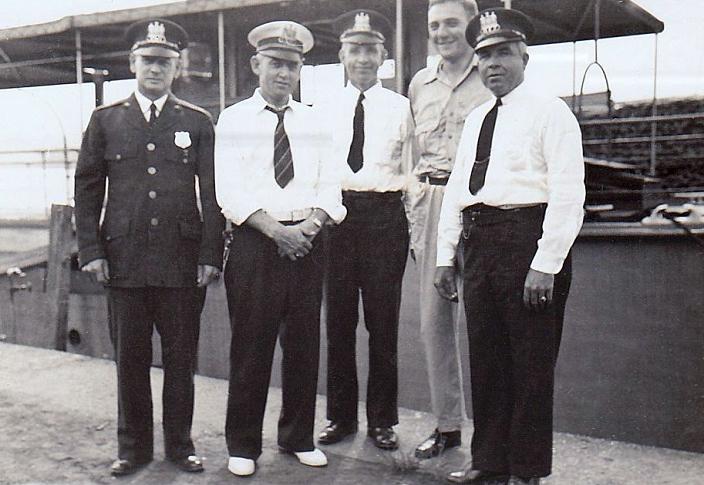
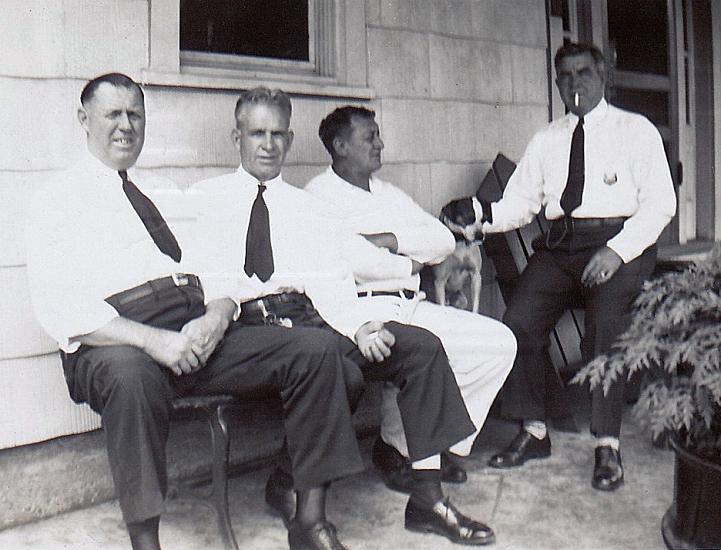
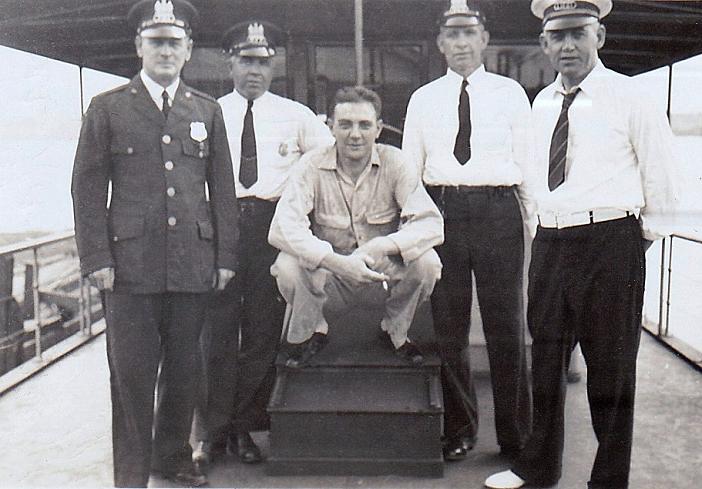
The “thin blue line” symbolizes the police’s role in maintaining civilized society. The police are the barrier between the law-abiding and the criminal, the vulnerable and the predatory, order and chaos. Across the United States, police are under attack and the blue line is wavering. In Baltimore, it has broken.
The Baltimore Police Department has been in crisis for years. The BPD operates under an onerous consent decree and is understaffed by 700 officers. Democratic mayor Brandon Scott’s “Group Violence Reduction Strategy,” apparently designed to replace cops with social workers, is responsible for much of the crisis. GVRS produced “Safe Streets,” Scott’s flagship violence-reduction initiative. The Safe Streets program hires ex-convicts and former gang members as “violence interrupters” to mediate conflicts between gang members, drug dealers, and other violent criminals. Safe Streets workers do not cooperate with the police.
In July, I observed in City Journal that Baltimore’s crime-enabling policies had culminated in the worst mass shooting in the city’s history. On July 2, 30 people were shot, two fatally, at an unauthorized “Brooklyn Day” block party in the Brooklyn Homes public housing project.
On August 30, Mayor Scott released the city’s agency after-action reports regarding the mass-shooting incident. The BPD, the Housing Authority of Baltimore City (HABC), and the Mayor’s Office of Neighborhood Safety and Engagement—the agency administering Safe Streets—each submitted reports.
Many Baltimoreans had hoped that city leadership would use the report as an opportunity to end misguided policies that had elevated concerns for criminals above those for victims. They focused much of their dissatisfaction on Safe Streets, which has evaded scrutiny for years.
The critical issue affecting all BPD operations, including those on Brooklyn Day, is a massive staffing shortage. BPD officers were hopeful that in the wake of the Brooklyn Day disaster, acting police commissioner Richard Worley would finally address short-staffing and the resulting mandatory overtime, canceled off-days, and poor morale.
Instead, Baltimore’s leadership ducked responsibility, remained committed to failed policies, and scapegoated the officers and command staff of BPD’s Southern District. The fallout has put the Baltimore Police Department on the road to extinction.
Let’s take a closer look at the findings.
The BPD report reiterates anti-police critics’ condemnations of law enforcement, placing full blame on the responding officers. It excoriates the Southern District command and officers for failing to learn about the event before it occurred, not requesting additional citywide officers, and showing alleged “indifference” to the community. Acting Commissioner Worley has already made command-staff changes and is seeking to discipline supervisors and officers but refused to call to account other genuinely responsible agencies. Disturbingly, he doesn’t seem interested in obtaining more than a superficial understanding of police decision-making.
The BPD was unaware of the Brooklyn Day block party because event organizers did not obtain a city permit and circumvented police scrutiny by deliberately keeping information off social media. That the BPD lacked prior knowledge of the event isn’t inculpatory. HABC, which manages the entire Brooklyn Homes project, wasn’t aware of the event, either. The only agency with prior knowledge about Brooklyn Day was Safe Streets, and it did not inform the police.
This tragedy would not have happened without the complicity of one or more Brooklyn Homes residents. Hosting an unpermitted block party, enabling public drug and alcohol use, and stealing electricity are all prohibited by the housing authority, but no one will face any accountability for these lease violations. HABC has announced that no residents will be evicted. Worley’s report doesn’t even mention that the event was illegal.
The report also absolves the Safe Streets violence-interrupters of responsibility for the incident. The organization not only concealed its awareness of Brooklyn Day but also its mediation of two conflicts during the event involving individuals armed with guns. Safe Streets refused to notify the police of these confirmed threats. Instead, it inserted the armed antagonists back into the crowd, letting the conflicts re-escalate later.
Worley’s report also ignored how Safe Streets’s noncooperation policy with the BPD obstructed the subsequent investigation. Four of the five violence-interrupters are originally from and still live in the Brooklyn community. They know every criminal in the neighborhood, certainly knew the armed thugs they separated on the night of the shooting, and by now know the identities of all the shooters. Neither the mayor, the city council, nor the interim police commissioner have demanded their cooperation with investigators.
Safe Streets is part of the problem, not the solution. The gang-inspired “no snitching” mentality dominates Brooklyn Homes, and Safe Streets leads by example. Dozens of residents were eyewitnesses to the shooting but refuse to step forward, while others who want to cooperate are intimidated into silence. After nearly three months, only five arrests have been made, the result of surveillance video and home detention monitors placing the offenders at the scene. Nobody has been charged with murder.
Acting Commissioner Worley never stated what he expected the Southern District to do with advance intelligence if it had it, or with additional officers if it had requested them. Should the district’s officers have prevented the illegal event from even starting or inserted officers into a hostile crowd to provide a passive police presence?
In a scandal that Worley offers as a model, BPD’s after-action report includes last year’s Brooklyn Day operation plan. That event was also unpermitted, but through social media, BPD had learned of it a few days in advance. Instead of using this information to prevent the illegal party, BPD crafted an operational plan using overtime to assign more than two dozen officers to the event.
In its Brooklyn Day 2022 plan overview, BPD acknowledged that, as in the past, Brooklyn Homes drug dealers were funding the event! The plan reads: “This event is financially supported by individuals living in the community, and who have historical connections to the sale of controlled dangerous substances” (emphasis added).
In my 29 years of policing, I have never seen an official policy so shocking—and so pathetic. BPD’s 2022 Brooklyn Day operational plan concedes that drug dealers will own and operate the event while the police serve as their security detail. This dysfunction provides insights both into police decision-making during Brooklyn Day 2023 and the subsequent criticism by anti-police politicians.
In other words, since the purpose of obtaining early intelligence had never been to stop the unpermitted event, police supervisors were not motivated to shut down Brooklyn Day 2023 once they learned about it. They decided to maintain the status quo by monitoring the party.
The police knew that they would incur backlash if they decided to shut down the event, arresting some Brooklyn Homes residents in the process. The same politicians trying to burn cops at the stake for inaction and “indifference to the community” would try to burn cops for overreaction and “indifference to the community.” Police were in a no-win situation.
As the crowd swelled to as many as 1,000 and spread over several blocks, officers faced another dilemma. Taking any enforcement action or even entering the crowd without overwhelming backup would have been impossible. Officer safety could not be maintained. Trying to disperse a huge crowd filled with thugs and gang members who were there for “lotta guns, lotta drugs . . . lotta money,” many of whom had been consuming drugs and alcohol for hours, would have resulted in mass arrests, uses of force, and probably a riot.
History helps explain why the BPD is reluctant to engage proactively in hands-on enforcement. Marilyn Mosby, Baltimore’s George Soros-supported state attorney, declined to enforce quality-of-life laws. Mayor Scott and former police commissioner Michael Harrison supported her non-prosecution policy. Mosby and her policies are now gone, but enforcement of those laws has not resumed. In fact, Baltimore’s consent decree admonishes officers from proactively engaging individuals involved in criminality and disorder. The decree states that officers will “address quality-of-life issues in a manner that minimizes stops, citations, searches, arrests, and use of force.” (emphasis added).
Officers are not only hampered by the culture of chaos that Mosby helped inaugurate but also by allegations of racism coming from the department’s highest levels. The most insidious excerpt from BPD’s Brooklyn Day 2023 report was its unsupported speculation that “officer indifference may have compromised the awareness, planning and response,” and that “[m]embers of the community can view such indifference . . . as a form of bias.”
It is absurd to suggest that the Baltimore Police Department is racially biased. For years, the BPD has been a “majority minority” department. Only 45 percent of its officers are white, and six of BPD’s last nine police commissioners have been black.
More than any other major police department in America, the BPD has been infested with woke ideology. BPD instituted an equity office that monitors alleged incidents of bias and oversees a training regimen of diversity, equity, equality, inclusion, accessibility and anti-racism (DEIA)—euphemisms for critical race theory. Officers are inundated with the debunked implicit-bias theory, alleging that hidden racism pervades policing. The equity office conducted an “equity assessment” as part of the Brooklyn Day after-action report.
BPD equity training includes a DEIA Toolkit with a video featuring Kimberlé Crenshaw, a leading critical race theorist. Crenshaw’s presentation instructs BPD officers on intersectionality, a radical leftist doctrine that has been described as “American Maoism.”
Many critical race theorists claim that America is irredeemably racist, that all whites are oppressors, all blacks are victims, and the police are an instrument of racist oppression. This explains the BPD’s equity office reflexively attributing officer inaction to race-based bias. When reality is viewed through an “equity lens,” the viewer ascribes to racism all behavior he disapproves of or doesn’t understand. Consequently, one of the equity office’s post-incident corrective actions will be mandatory training classes in equity policy for all department members. The equity office is a Trojan horse designed to destroy the BPD.
Every American big city will eventually reach its moment of truth where the future of its police department is on the line. Baltimore has come to it. The Brooklyn Day tragedy was the culmination of years of Baltimore’s crime-enabling and police-incapacitating policies. The city’s review process was an extraordinary opportunity to change its disastrous course. The city blew it.
Instead of self-reflection leading to positive transformation, the entire city administration conducted a whitewash of the event and the policies that precipitated it. They covered up the real failures to crucify the one agency that can prevent crime: the Baltimore Police Department.
Nothing kills a police department faster than the destruction of officer morale—and in the BPD, morale is dead. After this report, more good cops will quit or retire early, more officers will back off from proactive policing, and quality men and women who want to serve their community and make a difference will not even apply for the job.
Baltimore’s thin blue line is broken. Anarchy will terrorize the city’s law-abiding citizens. It will get a lot worse before it gets better. The people of Baltimore have the power to resurrect their police department—but to do that, they must first find new leadership for their city.
Maurice Richards is the former chief of the Martinsburg, West Virginia, police department. He worked for 24 years as an officer and lieutenant in the Chicago Police Department and holds a doctorate in adult education from Northern Illinois University.
Photo By Raymond Boyd/Getty Images
Police union says BPD is downplaying 'dangerous' officer shortage to the public
Police union says BPD is downplaying 'dangerous' officer shortage to the public (WBFF)
Baltimore City, MD — There’s no debating, Baltimore City is grappling with a worsening officer shortage. But when you compare just how many officers the Baltimore Police Department (BPD) says they’re down, to how many the police union says they’re down, the numbers don’t add up.
While the BPD says they have 500 officer vacancies, the police union claims they’re actually 700 short.
Circling back to a 2020 consent decree hearing, a federal judge called the department’s staffing levels “critical.” U.S. Chief District Judge James Bredar saying, “I’m serving notice that the Court is alarmed and, you know, pulling the fire alarm. This is, this is the patient bleeding out.” Bredar went on to specify that the BPD needs “at least 2,800 officers” to be fully staffed. At the time, the department had about 2500 officers.
Flash forward to today, the department has only dwindled, reaching a record low of 2100 officers. 700 officers short of what’s been recommended and 200 more than what the BPD is claiming.
In a statement to FOX45, police union president Mike Mancuso accuses the BPD of “deceiving the public.” “This message is not transparent at all!” Mancuso wrote in part, “This brings us to the very ineffective and low-ball attempt by the city to recruit new officers.”
When asked to explain the discrepancy, the department said, “Our number is based off of budget. The BPD is budgeted for 2604 sworn members.”
“I don't think that to downplay the numbers is a desire not to hire,” said Law enforcement expert and former FBI agent Tyrone Powers.
According to Powers, there’s a reason the BPD may be skewing the stats.
“First of all, you don't want the public to have anxiety and fears. Secondly, you don't want the criminal element who might be looking at those numbers to feel like they're more opportunities,” he said.
Regardless of the exact number, BPD is still significantly understaffed at a time crime is projected to climb.
Ahead of the anticipated summer crime surge, Mancuso says, “We are going into the summer months and our officers are already exhausted due to canceled days off and forced daily overtime. The BPD preaches “health and wellness” but in reality, they could care less about our officers’ well-being. If they did, they would be doing everything possible to retain as well as recruit. This summer you will have the brave men and women of the BPD working double shifts with no days off to try and keep our citizens and visitors safe.”
When asked how the BPD is preparing to tackle the pending summer crime surge amid record low staffing, they replied, “While we cannot comment on something that has not happened, I can share with you that the Baltimore Police Department (BPD) recognizes the seasonality and the challenge in the different tempo that the summer months and holidays may present in addressing crime. Not only do we adjust crime and deployment strategies frequently, but each district produces weekly and quarterly deployment plans to optimize the use of all available resources. There are broad plans but they also incorporate special initiatives that direct our resources more effectively to address short term trends without shifting our focus on longer term issues.”
The following is Mancuso’s full statement on the matter:
Police Commissioner Harrison continues to deceive the public by stating that the Baltimore Police Department is 450 police officer short. This message is not transparent at all! That number actually represents the funded vacancies that exist within the BPD. That is not the number of officers needed to police Baltimore. Judge Bredar is the judge charged with overseeing the Consent Decree in Baltimore. He is a federal judge who, at the January 2020 Consent Decree hearing, told PC Harrison in open court that the actual number of officers needed to police this city was 2,800 to possibly 3,000. Currently Baltimore has about 2,100 sworn members. If you add PC Harrison’s 450 funded vacancies to that you get 2,550 officers. Judge Bredar believes the number should be 2,800 to 3,000, with which FOP3 agrees. So that leaves the BPD at least 700 officers short of what is needed to effectively police this city.
This brings us to the very ineffective and low-ball attempt by the city to recruit new officers. The incentive package for recruitment is low compared to the 5 major Police Departments with which we compete for recruits. As far as a retention package goes, absolutely none exists. Major Police Departments around the country are offering retirement eligible officers tens of thousands of dollars to stay a few extra years until their agencies can catch up on the recruiting end. The BPD does absolutely nothing while our veteran officers continue to leave. This means decades of experience is going out the door, leaving officers with little time in the department to do the training of new officers.
All of which leaves us with a violent city and a critically short-staffed Police Department. We are going into the summer months and our officers are already exhausted due to canceled days off and forced daily overtime. The BPD preaches “health and wellness” but in reality, they could care less about our officers’ well-being. If they did, they would be doing everything possible to retain as well as recruit. This summer you will have the brave men and women of the BPD working double shifts with no days off to try and keep our citizens and visitors safe. Remember though, tired employees in any business tend to make mistakes and errors in judgement that for a law enforcement officer can be devastating. Any negative events that occur should be placed squarely on the shoulders of Mayor Scott and Police Commissioner Harrison. Baltimore has a full calendar of events planned for the warmer months and they will have a very difficult time filling the spots needed to ensure that the public is safe.
Safe Streets
Since 2007, Safe Streets has been Baltimore’s flagship gun violence reduction program. Founded in 2000 by epidemiologist Dr. Gary Slutkin, Cure Violence is a public health approach that uses trusted messengers in the community to interrupt the transmission of violence. Violence interrupters spread anti-violence messages and encourage positive changes in individual behavior as well as community norms around violence. In 2007, the Cure Violence model pioneered in Chicago came to McElderry Park in East Baltimore. In 2021, Safe Streets will be adding its tenth site: Belvedere.
Safe Streets is starting an intensive internal evaluation to identify ways to improve the levels of service and outcomes provided by the ten sites. Using state funds, MONSE has contracted with Dr. Joseph Richardson, Acting Chair of the African-American Studies Department at the University of Maryland, and Dr. Daniel Webster, Director of the Center for Gun Violence Prevention and Policy at Johns Hopkins Bloomberg School of Public Health, to also evaluate Safe Streets and recommend steps for updating the model and integrating an improved Safe Streets into an ecosystem of care to address violence in our communities.
Safe Streets serves the residents of 10 target areas across Baltimore City, totaling 2.6 square miles.
How have Safe Streets contributed to crime reduction?
Past evaluations of the program from Johns Hopkins have found that Safe Streets sites are associated with decreases in fatal and nonfatal shootings, both in the sites' target areas and the area immediately surrounding the sites. In 2020, Safe Streets sites mediated over 2,300 conflicts. In June 2021, the Cherry Hill site celebrated over one year without a homicide in their target area.
Additional information about the program and evaluations can be found here:
A core piece of Safe Streets' model is community mobilization. Sites host events and conduct daily outreach to share information, build trust with community members, and spread the Safe Streets message via credible messengers. Safe Streets sites are regarded as trusted community hubs to access resources and conflict mediation services. In 2020, Safe Streets sites hosted 451 community mobilization events with 58,000+ total attendance.
We are always looking for help from the community to
help us co-produce public safety.
How can you get involved?
Community members can volunteer at any of our Safe Streets sites during community events. If there are individuals who are interested in volunteering long-term, we could use support in the following areas:
GED preparation;
professional development programming and;
connections to life-sustaining resources.
Safe Streets crew worked South Baltimore block party, but shifts ended before mass shooting
Published 7/6/2023 2:00 p.m. EDT, Updated 7/6/2023 2:32 p.m. EDT
Bishop John Watts of Kingdom Life Church Apostolic greets a Safe Streets worker on July 2, following a shooting at Brooklyn Homes. (Jessica Gallagher/The Baltimore Banner)
Four months after city leaders celebrated the results of Safe Streets, their flagship anti-violence program, one of the worst acts of violence in Baltimore history took place squarely within the group’s turf.
Gunfire erupted at a South Baltimore block party on Saturday, leaving two dead and 28 others wounded shortly after midnight. Earlier that night, four Safe Streets workers had monitored the Brooklyn Homes party and stepped in to calm minor arguments. Their shifts went from 3 to 11 p.m., and the crew left around 11:30 p.m., according to the nonprofit that operates Safe Streets in Brooklyn. About an hour later, the shooting started.
“Once the Safe Streets staff heard of the shooting, they immediately returned to the scene, remaining on-site and at the hospitals where victims, including their loved ones, were being treated until 5 a.m.,” Kevin Keegan with Catholic Charities wrote in an email. “The team returned to the scene at 10 a.m. the following morning to continue to support the community.”
Keegan added, “Catholic Charities is proud of our team members in Brooklyn.”
In the context of Baltimore’s burgeoning “community violence intervention ecosystem,” the shooting underscores some of the institutional weaknesses of the Safe Streets program that’s operated in Baltimore since 2007.
As that network of social services groups grows, some have viewed the Safe Streets model as being somewhat outdated. Premised on using longtime community residents as mediators, some gun violence experts have questioned whether that reliance on “OGs,” older folks who have experience in the criminal justice system, is effective at reaching young people, who are now at the heart of the city’s gun violence crisis.
In the case of Saturday night’s shooting, those concerns are compounded by the fact that the understaffed Brooklyn site, which was opened fairly recently in 2019, has not seen the same success as other Safe Streets territories.
A report released by Johns Hopkins University in March noted that the Brooklyn site saw an increase of homicides during its tenure. Daniel Webster, who authored the study, said that it’s hard to know whether the shooting could have been prevented by Safe Streets workers without more details, but the fact that the DJ reportedly stopped the party multiple times to calm tensions stuck out to him.
“While their typical day-to-day stuff doesn’t look like monitoring a very, very large party deep into the night, it is a common thing that community violence intervention programs do,” Webster said. “It’s hard to know with certainty that this was a preventable thing from the Safe Streets angle, but the fact that they were there, they were deployed there, tells me that they thought they could have the potential to prevent shootings.”
More reporting on the Brooklyn Homes mass shooting
Community residents, for their part, have questioned why Safe Streets didn’t do more to intervene before the situation deteriorated further. Many have asked why police weren’t notified, though dispatch communications showed that law enforcement was aware of the party and reports that people there were armed, but chose not to do anything about it.
Beyond that, Safe Streets workers are explicitly trained not to involve law enforcement in their interventions, which maintains their credibility with communities who are distrustful of police after decades of antagonistic relations.
At Brooklyn Homes, police said, two shooters opened fire amid a crowd of hundreds. Two people were killed: Kylis Fagbemi, 20, and Aaliyah Gonzalez, 18, an honors student and recent graduate of Glen Burnie High School. The wounded ranged from age 13 to 32. Authorities are offering $28,000 for information leading to arrests.
Webster added that most of the city’s 10 Safe Streets sites are understaffed. The Brooklyn office is budgeted for five violence interrupters, but two of those positions are currently open. Keegan noted the Safe Streets workers are members of the Brooklyn Homes community and also shaken by the violence.
“They, like so many others including their own families, were directly impacted, injured and traumatized by this event,” he wrote.
The Hopkins gun violence professor also emphasizes that it is entirely plausible that Safe Streets did the best they could to intervene, and someone still came back to the party with a gun.
“Maybe they did everything they could do,” he suggested.
A Safe Streets sticker on the door of a residence in Brooklyn Homes. (Brenda Wintrode)
By midnight, hundreds of teenagers and young adults had converged on the block party. City logs show a flood of 911 calls. By 10 p.m., someone posted online a video clip of a young man flashing a gun. Police radioed that the crowd seemed to near 1,000 people and they dispatched a helicopter.
Families in Brooklyn Homes and people across the city have asked why city officials failed to make sure the annual Brooklyn Day celebration was safe and why police did not intervene when the party spun out of control.
Sunday morning, a woman who asked for anonymity to protect her safety told The Baltimore Banner there had been repeated scares that young people had brought guns. The woman said she asked Safe Streets workers to step in.
“I asked them, why don’t y’all mediate? They said, ‘we don’t know what’s going on,’” she recalled.
Safe Streets is funded with a mix of city and state dollars totaling about $5 million in the budget year ending June 30.
The Public Safety Committee of the Baltimore City Council has called a meeting for next Thursday to examine the response of city agencies and police to the party and the shooting.
Reporter Hallie Miller contributed to this article.
This email address is being protected from spambots. You need JavaScript enabled to view it.
On July 2, a huge crowd gathered at Baltimore’s Brooklyn Homes public housing project for a block party. The “Brooklyn Day” celebration culminated in the worst mass shooting in Baltimore’s history, with 30 victims, including two fatalities; police recovered shell casings from as many as 16 guns. Before a single arrest had been made or weapon recovered, local officials were blaming guns for the incident, with Baltimore’s young Democratic mayor, Brandon Scott, condemning Congress for not banning “ghost guns.” But the Brooklyn Homes shooting was the inevitable result of policies that have engendered crime in Charm City for decades.
Baltimore’s elected officials bear much of the blame for the city’s crime problem. From 2015 until leaving office earlier this year, State’s Attorney Marilyn Mosby undermined the rule of law in Baltimore. A George Soros-supported prosecutor, Mosby helped unleash an unprecedented crime wave by dropping cases, refusing to prosecute serious crimes, and keeping violent criminals out of prison. During Mosby’s first year in office alone, Baltimore homicides soared 62 percent; they totaled 2,653 during her tenure. Mosby was guided by an ideology that sees criminals as victims, police as criminals, and victims as collateral damage, even when most of this last group are black (as are 95 percent of all Baltimore homicide victims).
After Mosby’s disastrous tenure, Baltimore’s citizens got fed up. In last July’s Democratic primary, 72 percent of voters rejected her and elected Ivan Bates on a platform to hold criminals accountable.
Unfortunately, Mayor Scott seems to share Mosby’s ideology. As City Council president, Scott helped to slash $22 million from the Baltimore Police Department budget. The money was subsequently restored, but Scott began dismantling the BPD by other means. In 2021, when Baltimore announced its Group Violence Reduction Strategy, I observed that the anti-police scheme sought to replace cops with social workers. Today, the BPD is understaffed by 700 officers.
Meantime, Safe Streets, Scott’s flagship violence-reduction initiative, has also proved a failure. The program hires ex-convicts and supposedly reformed gang members as “violence interrupters” to mediate conflicts between neighborhood gang members, drug dealers, and other violent criminals. Baltimore spent $5 million on Safe Streets last year, and another $21 million is on the way. But Scott has kept secret the details of the program’s policies, operations, and finances. For more than a year, his office has refused to explain how the program works or where the money goes. Disturbingly, Scott hides the identities of Safe Streets workers from the public. The mayor has also channeled millions in taxpayer dollars to nonprofits that manage Safe Street operations and put the workers on their payrolls. Scott then claims that the workers are not city employees, using this ruse to continue concealing their names.
These policies played a clear role in the Brooklyn Day tragedy. The BPD is so short of manpower that, on the night of the block party, only seven officers were on duty in the entire Southern District, where Brooklyn Homes is located. The few officers available to respond faced an impossible situation. Confronted with a crowd of more than 1,000 people, many hostile, police lacked the massive backup they needed. The event organizers were irresponsible in not obtaining a permit. They demonstrated no interest in cooperating with the police or other city departments to ensure a safe and orderly event. Neither Mayor Scott nor any City Council member has held the block party organizers accountable.
The Brooklyn Day catastrophe proved the incompatibility of Safe Streets with building community policing in Baltimore. Safe Streets workers are instructed not to cooperate with the police, a policy that has led to deadly results. Safe Streets workers knew about the event in advance and attended because of the likelihood of violence. They did not share this information with the police. At the event, Safe Streets intervened in five confrontations that threatened imminent violence. They did not call the police. And even as violence and tension escalated throughout the crowd, Safe Streets called it an early night at 11:30 p.m. An hour later, 30 people had been shot and two were dead.
In the aftermath, Safe Streets’ lack of cooperation has obstructed the BPD’s efforts to bring the offenders to justice. Safe Streets has worked in the Brooklyn community for years and knows every gang member and criminal. Its workers either already know the shooters or could learn their identities quickly. But they won’t help the police make arrests.
Mayor Scott supports this non-cooperation policy. He says that it enables the workers to “maintain their credibility with the community.” What Scott really means is that it helps them maintain their credibility with the criminal community.
As a law enforcement leader for 29 years, I have seen genuinely reformed ex-convicts and former gang members make a difference in community violence prevention. As mentors, they can provide leadership to young men and at-risk youth, guiding these young people on a law-abiding path and sharing crime-related information with the police. We need programs like these. But Safe Streets is not one of them. It needs to go.
Baltimore is one of America’s most crime-ridden and dysfunctional cities. But don’t sell its decent law-abiding citizens short. They rose up last year to reclaim their hijacked criminal justice system by throwing out a powerful Soros prosecutor. The Democratic Party primary for Baltimore’s mayor and city council is scheduled for April 2024. Starting now, Baltimoreans must find new leadership who will turn back the ill-conceived leftist policies that have undermined their police department and produced an epidemic of homicide.
Maurice Richards is the former chief of the Martinsburg, West Virginia, police department. He worked for 24 years as an officer and lieutenant in the Chicago Police Department and holds a doctorate in adult education from Northern Illinois University.
Photos: Nathan Howard/Getty Images
T.C. McGowan
I served honorably in the BPD for twenty years, retiring in September of 2019 at the rank of Sergeant. As such, I have first hand knowledge of just how destructive the Consent Decree was and is for the rank and file officers who hold the line every day. Implementing the Consent Decree was THE WORST decision ever agreed to by then Commissioner Anthony Batts, who was subsequently fired and is now quietly (and desperately) trying to achieve a successful career in consulting, because no Police Department in the country will hire him. The Decree is specifically designed to force Officers to do LESS, not more, proactive policing. The Decree targets and punishes any officer who attempts to engage the criminal element, and forces motivated officers to give up and shut down. Good police work requires a proactive approach, and this is something that will, unfortunately, never return to the BPD.
Add to that the insidious nature of (what I like to call) the mentality of The Constant Victim. The Constant Victim is incapable of accepting any responsibility for their actions, instead blaming everyone else for their adult choices. For example, The Constant Victim chooses to operate a motor vehicle while their driving privileges are suspended. Then, when pulled over by a proactive patrol officer, The Constant Victim chooses to whine and cry that Racial Profiling is the cause of their misfortune. This mentality permeates not only Baltimore, but our country as a whole. And it’s only getting worse.
When asked how policing had changed from the time I was hired in 1999 to the time I retired in 2019, I put it thusly: When I graduated the academy in early 2000, veterans close to retirement at that time were all planning to continue in Law Enforcement in some capacity; be it by joining another department, becoming a court bailiff, or some other form of service. Conversely, when I put the badge down for the last time, no one… and I mean NO ONE with the same amount of time under their belts as me, had any intention of ever putting a uniform on again. Welcome to policing in modern America. I seriously fear that it will take another 9/11 type incident for the citizens of this country to realize just how important that Thin Blue Line is. Until that day comes… and it will come… America in general and Baltimore in particular… you’re on your own.
greg
The multiple news conferences by Baltimore's mayor, police chief and state's attorney following the Sept. 25, 2023 brutal murder of Pava LaPere, a young white tech entrepreneur, apparently by a black career criminal, shows that the police apparatus can be efficient. The alleged murderer was arrested within days. Clearly, bogus "Safe Streets" violence mediators didn't prevent this murder, but the mayor's position of record is that we cannot know how many other murders (over 300 happened per year for the past decade) were prevented by this group of ex-felons, each hired at a policeman's salary instead of restoring a depleted police department. No, Mr. Mayor, Baltimoreans cannot know. It's not possible to quantify what did not happen, and there's no public accounting for anything that "Safe Streets" does. Effective policing will return to Baltimore when one of two things happens: Either young white tech entrepreneurs (lives that matter) replace Baltimore's current low-information population OR a responsible adult replaces the wannabe "squeegee kid" (street-corner panhandler) currently occupying the mayor's office.
A check-in on FOX45's investigation into Safe Streets
Safe Streets program under scrutiny as employee pleads guilty to drug dealing within working zone (WBFF)
BALTIMORE (WBFF) — As questions swirl surrounding the implementation of Safe Streets, Baltimore’s flagship gun violence prevention program, FOX45 News’ investigation continues.
The Mayor’s Office of Neighborhood Safety and Engagement, MONSE, oversees the implementation of the Safe Streets program. The City has approved millions of dollars to go to two community-based organizations to run the 10 different Safe Streets sites.
Catholic Charities operates the Penn-North location, along with Cherry Hill, Brooklyn, and Sandtown-Winchester sites. LifeBridge Health Center for Hope operates the sites in Belair-Edison, McElderry Park, Franklin Square, Park Heights, Belvedere, and Woodbourne-McCabe.
Throughout the years-long investigation into Safe Streets, FOX45 News has sent dozens of questions to Mayor Brandon Scott, MONSE leaders, other leaders in City Hall, along with the community-based organizations. Here’s a look at some of the questions that have been asked, and what information has been shared.
Police staffing woes complicate reform effort in Baltimore
BALTIMORE (AP) — After a grueling defensive tactics class with a dozen other recruits, Antonio Martinez secures his expandable baton and wipes the sweat from his brow. He’s getting ready to make his debut as a rookie cop on the streets of Baltimore, a city with the dual misfortune of having high rates of violence and a dysfunctional police force.
At Baltimore’s police academy, the earnest 25-year-old from a law enforcement family said he wants to earn his stripes as a protector of neighborhoods. He was attracted by the agency’s recruitment pitches urging police hopefuls to become part of the “greatest comeback story in America.”
“There’s clearly a goal to change things up here. I want to be part of that change,” said Martinez, adjusting his department-issued duty belt.
Martinez and other cadets have an outsized job before them: help transform a beleaguered police agency struggling to reinvent itself amid a national crisis of confidence in policing. But the city’s thin blue line just keeps getting thinner. The Baltimore Police Department has roughly 400 vacancies among the force’s sworn staff and its recruitment efforts can’t keep pace with those leaving their jobs. Last year, the agency hired one above attrition for the entire year.
Amid the national reckoning on policing in the U.S. since George Floyd’s killing by an officer in Minneapolis, any number of police agencies have struggled to recruit and retain law enforcers. For Baltimore, a city with chronically high rates of violent crime and a dysfunctional police force laboring under a tarnished image, there’s a constant challenge in drawing enough recruits to stem the outflow, including retirements and a churn of younger officers with roughly three to seven years on the job giving up their badges.
While it’s hardly the first time that Baltimore’s force has been below authorized strength, the city is now facing new kinds of pressure. It has to meet hundreds of benchmarks for staffing, accountability, use-of-force policies and other matters before it can prove it’s a transformed agency and get out from under a sweeping oversight program.
Since 2017, the city has been under federal oversight after the U.S. Justice Department released a scathing report detailing longstanding patterns of racial profiling and excessive force. The so-called consent decree is similar to ones undertaken in places such as Ferguson, Missouri, and Cleveland. Some cities return to local control after a few years, others take far longer. The Oakland Police Department has been under a consent decree for nearly 20 years.
A staffing plan calls for 2,785 sworn officers, but city police had 2,398 members on payroll in recent months.
Those closely monitoring the federal intervention in Baltimore are increasingly voicing doubt. The judge overseeing the process, U.S. District Judge James Bredar, said without more bodies the city’s force “will be unable to meet some of the consent decree’s most basic requirements.”
Timothy Mygatt, a Justice Department lawyer, said staffing shortages are affecting the BPD’s ability to achieve compliance in critical areas. These include big shortages in the Public Integrity Bureau, which is down so many investigators that the average time to complete a misconduct probe is now eight months.
But the biggest worry is with patrol’s street-level policing, where Baltimore still routinely has to draft officers to work double shifts, something the decree says must be avoided as it could lead to more unconstitutional law enforcement.
“Tired officers are in a worse position to exercise good judgment,” Mygatt said at a recent hearing.
Rewriting department policy has been relatively smooth. But deploying a new model of community policing on Baltimore’s streets and gaining citizen trust — the core of the entire intervention — has barely begun.
Some residents wonder if Baltimore just needs to focus on implementing the big-ticket reforms since it’s hard to overstate the deep history of distrust between citizens in large swaths of Baltimore and police.
“People can’t see the reforms on the streets. There’s frustration,” said Ray Kelly of the No Boundaries Coalition, an advocacy group in West Baltimore, an area only too familiar with heavy-handed policing and sometimes a complete absence of patrols.
Baltimore Police Department spokeswoman Lindsey Eldridge said the agency will at some stage need to add positions to its budget authorization to meet the long-term staffing goals, but it’s prioritizing the filling of current vacancies before making any request. She also confirmed that 46% of job separations are due to retirement. Earlier this year, Baltimore’s City Council authorized a $555 million budget for the force despite pressures from various quarters to slash it. It included a $28 million increase. This was largely to cover pension obligations and higher insurance premiums.
Some experts who aren’t involved with Baltimore’s decree believe staffing might not prove crucial down the line.
Christy Lopez, a Georgetown University professor who has led Justice Department probes of police agencies in numerous U.S. cities, including Chicago and Ferguson, that police agencies can be more effective even if they’re smaller.
“It would be a huge step backward to respond to police being spread too thin by adding more police to continue doing the work that police should not be doing. Instead, we should narrow the scope of what police do,” Lopez said.
Police often are put in positions to deal with complex calls involving mental health and drug addiction, problems that clinicians and other community partners are better trained to deal with.
Patrol shortages are near daily in the city’s nine districts, which each have three shifts. The head of the local police union, Michael Mancuso, said routinely drafting officers to work patrol is punishing.
“Officers are burned out,” he said.
But in Baltimore’s training academy, new personnel are getting ready to become the next generation of officers. As two Associated Press journalists watched cadets on a recent morning, a trainer told Martinez and his fellow hopefuls not to get anxious about the press attention.
“Don’t worry about their cameras. Pretty soon, the public’s going to be watchin you 24-7,” he said.
City releases after-action report on Baltimore mass shooting at Brooklyn Homes
Wednesday, August 30, 2023 David Collins, Rachel Duncan and Greg Ng, WBAL-TV 11
Fifty-eight days after the shooting killed two people -- Aaliyah Gonzalez, 18, and Kylis Fagbemi, 20 -- and injured 28 others, the long-anticipated report examines the shooting at the Brooklyn Day party and the aftermath from a variety of perspectives.
The 173-page report's key findings include gaps in communication, poor leadership and police officer indifference. It's broken down into four parts from the Baltimore Police Department, the Housing Authority of Baltimore City, the Mayor's Office of Neighborhood Safety and Engagement and the Baltimore Office of Emergency Management and the Baltimore City Fire Department.
"I wanted to make sure the assessment we would ultimately produce was comprehensive and uncompromising," Mayor Brandon Scott said at a news conference Wednesday morning. "This mass shooting is one of the most painful chapters in our city's history, which has had more than its fair share of painful chapters."
The report also includes recommendations on changes that need to be made. Moving forward, the city's chief administrative officer will convene meetings with agency leaders to continue to review agency actions and monitor compliance with the recommendations provided in the after action reports.
The report claims the city's response to the shooting was swift and comprehensive; however, there were breakdowns that need to be addressed.
"I was also clear that while I wanted a detailed accounting of mistakes made and actions taken or not taken, I also wanted each report to identify clear recommendations on actions that city government should be taking," Scott said Wednesday morning. "I want to be explicit with all Baltimoreans, we are setting a path forward with the goal of ensuring every mistake outlined in these reports is never repeated."
Findings from the Baltimore Police Department:
Acting Baltimore Police Commissioner Richard Worley said BPD made mistakes.
"We know we made mistakes. It was important that our after action report not only mentioned those mistakes, highlighted those mistakes and shortcomings, but also provides recommendations to improve and learn from," Worley said Wednesday morning.
The report claims that had BPD known about the Brooklyn Day party, the department would have been able to move several dozen more officers to the area to help manage the event.
I WATCH: City news conference on morning of report's release
The report found police brass failed to provide officers with direction on how to intervene in the large crowd or to request additional resources. The report indicates there were plenty of officers available to help.
"It's frustrating for me because if we didn't have the people available, I understand, but we had over 100 officers available throughout the city that we could have moved there in a short amount of time," Worley said Wednesday morning.
A major advised officers to "monitor only, don't get drawn in and become a target." Police said multiple people face discipline action, and a major in the Southern District has since been reassigned.
"They turned all of their findings over to the Public Integrity Bureau, which has already served some members with charging papers for different charges during the incident," Worley said Wednesday morning.
Breakdown of intelligence for the event, officer indifference:
The report cites "sustained staffing shortages" in patrols as likely contributing to Southern District officers' inability to form community relationships in Brooklyn that could have foretold of the Brooklyn Day event before it took place.
"Officer indifference may have compromised the awareness, planning and response to Brooklyn Day prior to the large crowds arriving," the report states.
I WATCH: 911 calls from Brooklyn mass shooting shed light on response:
The report goes on to explain that the community can see the indifference -- either real or perceived -- as a form of bias that keeps people from coming forward with information.
"We need to do a more in-depth study of not just the Southern District, but the entire city to see if these inequities are occurring elsewhere," Worley said Wednesday morning.
"The only way we can heal from this trauma is to begin by focusing on accountability, accountability for those who commit the crime, accountability for the police or anyone who showed indifference, accountability for city government that made missteps and take action to ensure that this never happens again in our city," Scott said Wednesday morning.
The report states that BPD's Open Source Intel Unit found one social media post about Brooklyn Day but no other social media posts about before the event. The unit was not staffed to work or monitor social media the day of the event.
"Had those personnel been available, they may have processed social media posts about Brooklyn Day that were happening in real time," the report states.
"For whatever reason, we didn't know about it this year, we should have and we could have. We had chances all during the day to do the same thing, and we missed those chances and we now have to hold ourselves accountable for it," Worley said Wednesday morning.
The report also found that two CitiWatch camera operators saw the crowd activity in the afternoon and early evening, but didn't notify supervisors. A third CitiWatch camera operator would later make notifications at 10:15 p.m. over the radio citing the large crowd size.
Report addresses inequity in police coverage for Brooklyn:
One of the key findings within the review of the police department shows that the patrol assignment that includes Brooklyn Homes has been in the top 1% of busiest patrol areas for the city. The boundaries of that post had not been updated for decades, leaving just one officer responsible for the significantly higher volume of workload in that area.
"When you think about Brooklyn, when you think about the Southern District, when you think about police districts in Baltimore, we know that there has been inequity," Scott said Wednesday morning. "In fact, that's the reason why I've been leading the efforts to redistrict Baltimore police districts for more than a decade. ... Redistricting when into effect a week after this happened. Brooklyn was served by one patrol officer for all those many years, handling 17% of the calls for all of the Southern District. That is inequity at its finest."
Brooklyn now has three officers assigned to its area, the mayor said.
Additionally, based on 2020-2023 records, the Brooklyn Homes area had not received "sufficient proactive efforts" -- including foot patrols, directed patrols, business checks, etc. -- when compared with historic crime rates.
Officers' actions saved lives:
The report found the three shifts for the Southern District were all fully staffed and the officers who responded to the mass shooting used their training and First Aid equipment to stop hemorrhaging and stabilize victims until advanced medical care arrived.
"The conduct by many of those officers demonstrably saved lives, and in many cases, represents heroic efforts that went above and beyond the call of duty," the report states.
In one example, the report includes body-worn camera video of an officer trying to help victims of the shooting, and it explains how the officer and bystanders realized there wasn't time to wait for an ambulance for one of the victims, so the officer brought his patrol car to the victim to take the victim to a hospital.
"The actions that this patrol officer took when providing emergency medical care and then deciding to transport the victim to the hospital undoubtedly saved the life of this gunshot victim," the report states.
Worley said the investigations into the mass shooting and the response will continue.
"We're going to continue to do this. If we get more information a month from now, six months from now that other people knew about this and never escalated it up the chain of command, withheld information, we can continue to investigate this and hold those accountable who made mistakes," Worley said Wednesday morning.
Police have since arrested two youths, Tristan Brian Jackson, 18, of Baltimore, and a 17-year-old boy. Worley said the reward for information leading to an arrest is now $88,000.
Recommendation highlights for BPD:
The report makes several recommendations to include changes to the BPD command staff and changes to involve the police integrity bureau, when necessary. The report claims acting Commissioner Richard Worley will update the mayor on his recommended personnel changes within the next 30 days.
The report also recommends district intelligence officers and district command staff better communicate to ensure proper planning for large gatherings.
It also recommends regular schedules for intelligence units and neighborhood coordination units to include weekends.
Findings from the Housing Authority of Baltimore City:
Housing officials said they do not have live-in workers at the apartments, so when workers left on Friday, July 1, they weren't expected to return until Tuesday because of the July Fourth holiday weekend.
Now, the authority has hired private security to be at the complex to cover some of those gaps.
Housing officials acknowledged the authority needs to build better relationships with the families who live at Brooklyn Homes.
"We do have some trust issues with residents and management at the site. We are looking into that and we're working with our management team to make sure they have proper communications with the residents," HABC CEO Janet Abrahams said Wednesday morning.
Housing officials said they're working with families involved to make sure they understand the terms of their lease, saying no one is being evicted over the Brooklyn Day party.
HABC said it did not receive notice about the Brooklyn Days because the event wasn't organized by tenants as it usually was since before COVID-19.
"The activities that took place at this year's Brooklyn Day are prohibited by HABC," the report states. "Permission must be granted to host events after 4 p.m. If HABC grants permission, the organizers must provide their own security after 4 p.m., as well as the required proof of insurance for any third-party event."
HABC also stated it received no calls to its after-hours emergency hotline about the event or crowds or weapons at the property.
The report states that had HABC known about the event, it would have coordinated public safety efforts with BPD and other city agencies, as it has in the past.
HABC said its leaders followed the agency's emergency response and coordinated with city agencies and service providers, but that it could have been better accomplished with more efficient coordination among all agencies through a Joint Information Center.
HABC said it has since engaged with a third-party evaluator analyze the agency's emergency preparedness plan and ongoing response.
HABC releases statement:
"We want to thank Mayor Scott and his administration for taking the important initiative to assess each agency's response and actions to the tragic incident that occurred on July 2. It's an opportunity to understand what worked well with our emergency response plans and areas where we can improve.
"Most importantly, we want our residents to feel safe in the communities they call home. We want residents and their families to enjoy spending time with each other and their neighbors. It can be done in a manner that is safe and fun.
"Our hearts and prayers continue to be with every victim, family member and resident. It has been a challenging time for Baltimore City, and we hope that justice is served to the victims' families."
Findings from the Mayor's Office of Neighborhood Safety and Engagement:
"While this incident has greatly traumatized direct and indirect victims in the Brooklyn community, as well as the entire city of Baltimore, we will not stop working to facilitate healing, address residual trauma and move forward as a village to improve the safety of Baltimoreans regardless of ZIP code," said Stefanie Mavronis, interim executive director of MONSE.
Safe Streets workers integrate themselves in communities and work to stop conflict before it becomes violent. During the event, Safe Streets staff mediated five conflicts/interventions involving event participants that included arguments, and all five interactions were marked as resolved.
In the afternoon of the Brooklyn Day event, MONSE reported that Safe Streets Brooklyn violence interrupters observed youths getting off buses, asking where the event was taking place. The report states that the violence interrupters encourage the youths to return home if they weren't sure where they were going.
By the evening, MONSE said the violence interrupters walked through the large groups to separate and spread crowds out. MONSE said Safe Streets staff left the site at the end of their shift at 11 p.m. but returned upon hearing of the shooting.
Among the findings included in the report, MONSE said there is no documented protocol for Safe Streets staff to share knowledge with city leaders about large events or potential/emerging threats to public safety.
"In this case, Safe Streets had no advance information about conflicts among attendees or likely violence at Brooklyn Day, although they were aware of the occurrence of the Brooklyn Day event," the report states.
Part of the model for Safe Streets involves them working independently from law enforcement to maintain credibility in the communities. Authorities are now looking for ways to allow two-way communication.
"That would look like awareness of an event that's going to have more than 50 people, sharing that information if there's prior intelligence of conflict before an event, let's say, between two groups that potentially that have challenges between each other. That's the kind of thing we want escalated," Mavronis said Wednesday morning.
City officials said they also want to find a way for Safe Streets workers to let them know in real time whether situations are getting potentially dangerous enough that they need a police response.
"There are a few proposed policies that we are considering with our site, everything from awareness of an event that was going to have 50 people or more, sharing that information with us," Marvonis said.
Among the report's recommendations, MONSE will update its operation manual for Safe Streets staff to escalate information about potential incidents.
Findings from the Baltimore Office of Emergency Management and Baltimore City Fire Department:
This portion of the report includes a timeline of the agencies' response to the shooting and put forth an improvement plan.
Among its recommendations includes, in part, enhancing dispatch and communication to ensure a swift and coordinated response; improve triage and incident comment to assess the scope of the incident while still treating patients; ensure a safety officer is dispatched to address safety concerns and mitigate risks; and train personnel on incident management, effective communication and decision-making during mass-casualty incidents.
Statement from Mayor Brandon Scott:
In a statement made available along with the release of the report, the mayor said: "The mass shooting in Brooklyn Homes is one of the most painful chapters in our city's history. The loss of two young lives, Aaliyah Gonzalez and Kylis Fagbemi, and the traumatic impact that it had on dozens and dozens of others will leave a devastating impact on our city forever.
"We can begin to heal that trauma by focusing on accountability and taking steps to ensure this never happens again in our city. With these After Action Reports, we've identified a number of findings, revelations and recommendations that will offer us valuable insight into exactly what occurred or did not occur within city government leading up to this horrific act of violence. But they also lay the foundation for the path forward as we seek to address those shortcomings.
"We discussed the need for this type of detailed accounting the very night we arrived on the scene at Brooklyn Homes. These reports are only a first step. Now, we will continue to pursue the reforms necessary to respond. Baltimore City government agencies and counterparts fell short on our promise to our residents, and we will do everything in our power to ensure those mistakes are not repeated.
"We will also not rest until justice is served to those individuals who made the decision to pick up a gun with reckless disregard for the lives of their neighbors and turned a peaceful community event into a traumatic event. The investigation is not slowing down, and we will continue seeking the accountability that this community deserves.
"Baltimore, you have my word that we will address every misstep and, together, find a path forward to heal."
Statement from Baltimore City Council Public Safety and Government Operations Committee Chairman Mark Conway:
"The reports released today capture a heartbreaking series of failures and missed opportunities in the lead-up to the Brooklyn Day event on July 1 and 2 that ended with the shooting that killed Aaliyah Gonzalez and Kylis Fagbemi and injured 28 others. Their findings underscore my conviction that the Baltimore Police Department and Housing Authority should have known more about this event before it occurred, and should have acted sooner before it spiraled out of control. To see that police department personnel was aware of the growing crowds but took minimal action is beyond disappointing. The fact that HABC staff was unaware of an hours long event on their property with hundreds of people until early the next morning suggests gaps in communication that must be addressed going forward.
"At the same time, it is important to recognize the heroic efforts of police officers, EMTs, doctors, nurses, Safe Streets workers and others who tended to victims and comforted stunned loved ones. Words will never be enough to fully express our gratitude to them.
"I already have a number of questions after reviewing the reports and look forward to asking them at the council's next oversight hearing."
The committee scheduled a hearing on the reports and city government response for 1 p.m. on Sept. 13.
Statement from the Fraternal Order of Police Lodge No. 3:
Fraternal Order of Police Lodge No. 3 President Mike Mancuso released a statement Wednesday afternoon, saying the reports find no surprises.
Mancuso wrote in his statement, in part: "Shortly after this horrific event, FOP3 predicted that the Southern District police officers and Southern District command would be the scapegoats."
The union reiterated its long-standing message about BPD staffing levels under the leadership of former Commissioner Michael Harrison, saying he allowed anti-police sentiment and its proponents to flourish in Baltimore, leading to hundreds of officers quitting or retiring than were hired.
Brooklyn Homes resident fears for safety amid increasing threats and intimidation
by Jeff Abell
Brooklyn Homes resident fears for safety amid increasing threats and intimidation (WBFF)
BALTIMORE (WBFF) — A resident of Brooklyn Homes says threats and intimidation have grown so great that she fears for her safety.
"I don't feel safe here. I don't want to be here," said Ashley Johnson.
In the days following the deadly mass shooting at Brooklyn Homes, Johnson was captured in an online photograph speaking with police officers.
Now, she's become a target.
Johnson says vandals have damaged her vehicles and bullied her children.
"They get called snitches or 'your mother's a snitch' and they get bullied and teased and now I have to keep them in the house all over again," said Johnson.
At a community meeting Thursday night, Acting Police Commissioner Richard Worley seemed to discount the threat of stopping snitching in the Brooklyn community.
"I don't know if it's a case of stop snitching. I can tell you we don't have any eyewitnesses and we haven't had anybody come forward and point out any suspects that have pulled the trigger," said Worley.
Retired Police Sergeant Melissa Pinkleton believes the city's top brass should acknowledge the threats surrounding residents at Brooklyn Homes.
"He knows it's part of the problem and if he doesn't, he's in the wrong job. Somebody else needs to do that job," said Pinkleton.
Baltimore Police arrest 15-year-old boy in Brooklyn Homes mass shooting
by Chris Berinato
BALTIMORE (WBFF) — A 15-year-old boy has been arrested in connection with July's mass shooting in Brooklyn homes, according to Baltimore City Police.
The teenager was arrested at a home in the city, according to a news release from police.
According to police, the teen will be charged with 44 offenses including attempted first degree murder, conspiracy to commit first degree murder, attempted second degree murder, reckless endangerment and handgun charges in connection with the shooting on July 2 that left two people dead and 28 others injured.
“BPD continues to work aggressively and diligently on the criminal investigation into the July 2nd, Brooklyn Homes critical incident,” said Acting Commissioner Richard Worley in a news release. “I want to thank the tireless work of our Homicide Detectives and members of our operations bureau, along with our law enforcement partners and our community. We will continue to follow every lead and pursue all of those that were involved in this incident to bring justice to the families and the Brooklyn Homes community.”
Maryland law prevents officials from releasing information about the 15-year-old suspect but did say that the teenager had previously been arrested on August 30th for a handgun violation.
“It is evident by the continued arrests in this case that law enforcement is committed to ensuring every individual who pulled a trigger at the Brooklyn Day shooting is held accountable for their reckless actions that wreaked havoc on our beloved city,” said Baltimore City State’s Attorney Ivan Bates in a news release. “My office will continue working with our partners at BPD and the state and federal levels to deliver justice for the victims and their families. While we cannot undo the immense trauma inflicted on the Brooklyn community, we can ensure that these acts of violence are met with swift and certain consequences.”
This is the fifth arrest in connection with the mass shooting. No one has been directly charged with killing 18-year-old Aaliyah Gonzales and 20-year-old Kylis Fagbemi.
City Hall report on Brooklyn mass shooting ignites debate over police responsibility
by Jeff Abell
Agency After Action Reports Regarding Brooklyn Homes Mass Shooting Incident (City of Baltimore)
BALTIMORE (WBFF) — City Hall's after action report on July's mass shooting in Brooklyn is unleashing a firestorm of debate.
The 173-page report describes what led to the city's failure to maintain public safety at the block party where two people were killed and 28 others were injured.
"I think the lack of seriousness was a little shocking that we saw from the police department," said City Councilman Mark Conway, who chairs the council' public safety committee.
"It's a deeply disturbing report that, in some cases, showed a level of contempt officers showed toward those that they served," said Councilman Zeke Cohen.
Cohen insists the failure to maintain public safety at the event cannot be excused.
"We need to hold the department accountable," said Cohen. "It's not okay to say, 'well, we're understaffed.'"
While council members demand accountability from law enforcement, some critics complain the council's demands are misplaced.
"So they're going to use BPD as a scapegoat once again," declared WCBM radio host Kim Klacik.
"We're for sure going to lose more officers," said Klacik.
'Lots of guns, lots of drugs, lots of money': A look back at the history of Brooklyn Day block parties
by GARY COLLINS | Fox45 News
Scenes from Brooklyn Day 2020 promotional video (James Jones/YouTube)
BALTIMORE (WBFF) — While the public continues waiting for Baltimore City officials to provide more details about the deadly mass shooting in Brooklyn Homes earlier this month, Fox45 News is investigating the circumstances that led to the tragic incident and the history of the annual "Brooklyn Day" festivities.
Fox45 News has reviewed several online promotional videos for past Brooklyn Day block parties that depict large crowds, underage drinking, illicit drug use and alleged organizers brandishing what appears to be firearms. The videos include footage claiming to be from the 2020, 2021 and 2022 Brooklyn Day celebrations.
Ranging from five to 20 minutes in length, these elaborately produced videos were filmed in high-definition and included drone footage. In all of the videos except for one, the same group of three men are followed throughout their Brooklyn Day experiences.
In the 2020 video, one of the men from this group pulls what appears to be a handgun with an extended magazine from his waistband. He then points the weapon at the camera before placing it back under his shirt.
Man seen in 2020 Brooklyn Day promotional YouTube video pointing gun at camera (James Jones/YouTube)
In another video by the same producer, a 2021 Brooklyn Day attendee explains what he feels that year’s celebration was all about.
Lot of sticks, a lot of guns, a lot of drugs, a lot of b****es, a lot of money. A lot of all that,” the man said in front of the camera.
In these videos, Fox45 News also identified the same 36-year-old West Baltimore resident that confirmed he personally paid for the rental of several party items and attractions at this year's Brooklyn Day event. This individual confirmed to Fox45 News he rented a U-Haul truck that transported much of the equipment for this year’s block party.
According to court records obtained by Fox45 News, the West Baltimore man has a history of alleged cocaine possession and distribution, with most recent charges in February and May 2023.
This person has not been identified as a suspect in the shootings. There is currently no information at this time that he is connected to those responsible for the violent acts that occurred earlier this month.
Scene the morning after Baltimore's worst mass shooting in its recorded history (WBFF)
“We have the moon bounce for the kids, the stage, all that [sic]. We are doing all that. We [are] doing all that for the kids. It’s Brooklyn Day,” a purported 2021 Brooklyn Day organizer said.
Why these videos matter
As of July 19, no one has been directly charged in connection with the 2023 Brooklyn Day mass shooting. The only arrest has been of a 17-year-old that is allegedly seen in a widely circulated social media video pulling what appears to be an assault-style weapon from a backpack. He has only been charged with gun-related offenses.
During a heated Baltimore City Council hearing Thursday, the Housing Authority of Baltimore City (HABC) testified it was neither “notified” nor assisted in the “planning” for this year’s Brooklyn Day party. HABC reportedly alleged $7,200 was available to Brooklyn Homes residents for community event resources, like tables and chairs. They claim tenants did not seek any funding for this year’s block party.
In a statement to Fox45 News, HABC confirmed its community partner, The Brooklyn Homes Tenant Council, has been defunct for a period of time, but is now active again. Fox45 News confirmed via state records that The Brooklyn Homes Tenant Council’s business filings were forfeited in October 2017.
“The prior association dispersed at the start of the COVID-19 pandemic. The Brooklyn Homes Tenant Association recently formed its new membership this past spring,” HABC told Fox45 in a statement.
In the prior Brooklyn Day videos, organizers are heard repeating how many years the block party has been going on.
It’s the third year, Brooklyn Day,” one of the alleged organizers is heard saying in a 2020 video.
That claim is consistent with another 2022 event video uploaded by a separate account that features a DJ announcing the event's fifth year.
Welcome to the motherf***ing fifth annual, motherf***ing Brooklyn Day,” the DJ is heard announcing to attendees in 2022.
Lots of guns, lots of drugs, lots of money - in public housing?
The 36-year-old who helped put together this year's Brooklyn Day event was arrested in May 2023 on drug charges unrelated to July's shooting. In court documents relating to that case, police wrote they were surveying the Brooklyn Homes public housing neighborhood at the time because it’s “one that is plagued by open-air drug trafficking.”
HABC also admitted to Fox45 News there has been a history of criminal activity in the community.
“We rely upon the expertise of Baltimore Police Department to identify and address criminal activity at Brooklyn Homes. We maintain a strong relationship with the Southern District to ensure they are part of our efforts to provide public safety,” HABC tells Fox45.
Scene from Brooklyn Day 2020 promotional video (James Jones/YouTube)
While it has been reported Safe Streets was on-site earlier in the evening at Brooklyn Day 2023, both the police and government officials continue to allege they were not aware of the gathering until it was too late.
Baltimore Police Department dispatch audio reviewed by Fox45 News revealed the agency knew about the large crowd of 900 – 1,000 hours before shots were fired. Officers are heard asking if backup was coming.
10-4, I’m right here. Any other units,” questioned a Baltimore Police Officer on dispatch radio before Brooklyn Day turned fatal.
His sergeant is heard telling him not to go towards the crowd alone.
We’re coming. Fox[trot] is overhead. You’re not going in the crowd by yourself,” Baltimore City Police Sergeant is heard telling his officer.
With a police department struggling to maintain adequate staffing, questions remain as to what law enforcement may have known about the gathering for the last five years prior to this lethal evening.
In response to a series of question about these videos and prior events inside Brooklyn Homes community, the Baltimore Police Department's spokesperson did not speak directly to inquiries made.
Due to this being an ongoing and active criminal investigation, we are unable to comment further to maintain the integrity of the investigation. An after-action report is forthcoming and will be made public," said Baltimore Police Department's spokesperson to Fox45 News.
Dave Boz
"concerns for criminals above those for victims..." "the Baltimore Police Department on the road to extinction..." "no one will face any accountability..." "drug dealers will own and operate the event while the police serve as their security detail..." "enforcement of those laws has not resumed..." "The equity office is a Trojan horse designed to destroy the BPD"
And finally... "It will get a lot worse before it gets better."
A succinct listing of the things a majority of Baltimore voters want. Not "put up with," but actively want. This is unfortunate for the law-abiding citizens who live in Baltimore, but they are not the concern of the authorities, and not particularly welcome except as tax cows or theft targets.
Baltimore Police went to New York to take part in rescue/recovery efforts L to R are: Shawn Garrity, Aaron Owens, Maxx Anderson III, and Greg Woodlon. They were standing in the demolished lobby of the Millennium Hilton Hotel, which was directly across from the footprint of the World Trade Center complex
From the 2002 BPD Newsletter to see full year of 2002 newsletter click HERE To see this article go to page 5 of the PDF found in the links above
September 11, 2001
The September 11 attacks, commonly known as 9/11, were four coordinated Islamist suicide terrorist attacks carried out by al-Qaeda against the United States on Tuesday, September 11, 2001. That morning, 19 terrorists hijacked four commercial airliners scheduled to travel from the New England and Mid-Atlantic regions of the East Coast to California. The hijackers crashed the first two planes into the Twin Towers of the World Trade Center in New York City, two of the world's five tallest buildings at the time, and aimed the next two flights toward targets in or near Washington, D.C., in an attack on the nation's capital. The third team succeeded in crashing into the Pentagon, the headquarters of the U.S. Department of Defense in Arlington County, Virginia, while the fourth plane crashed in rural Pennsylvania following a passenger revolt. The attacks killed nearly 3,000 people and instigated the multi-decade global war on terror.
The first impact was that of American Airlines Flight 11, which crashed into the North Tower of the World Trade Center complex in Lower Manhattan at 08:46. Sixteen minutes later, at 09:03,the World Trade Center's South Tower was hit by United Airlines Flight 175. Both 110-story skyscrapers collapsed within an hour and forty-one minutes, bringing about the destruction of the remaining five structures in the WTC complex, as well as damaging or destroying various other buildings surrounding the towers. A third flight, American Airlines Flight 77, crashed into the Pentagon at 09:37, causing a partial collapse. The fourth and final flight, United Airlines Flight 93, flew in the direction of the capital. Alerted to the previous attacks, the passengers retaliated in an attempt to take control of the aircraft, forcing the hijackers to crash the plane in a Stonycreek Township field, near Shanksville at 10:03 that morning. Investigators determined that Flight 93's target was either the United States Capitol or the White House.
Within hours of the attacks, the Central Intelligence Agency determined that al-Qaeda was responsible. The United States formally responded by launching the war on terror and invading Afghanistan to depose the Taliban, which rejected the conditions of U.S. terms to expel al-Qaeda from Afghanistan and extradite its leaders. The U.S.'s invocation of Article 5 of the North Atlantic Treaty—its only usage to date—called upon allies to fight al-Qaeda. As U.S. and NATO invasion forces swept through Afghanistan, al-Qaeda leader Osama bin Laden disappeared into the White Mountains, eluding captivity by western forces. Although bin Laden initially denied any involvement, in 2004 he formally claimed responsibility for the attacks. Al-Qaeda's cited motivations included U.S. support of Israel, the presence of U.S. military bases in Saudi Arabia and sanctions against Iraq. The nearly decade-long manhunt for bin Laden concluded on May 2, 2011, when he was killed during a U.S. military raid after being tracked down to his compound in Abbottabad, Pakistan. The war in Afghanistan continued for another eight years until the agreement was made in February 2020 for American and NATO troops to withdraw from the country, and the last members of the U.S. armed forces left the region on August 30, 2021, resulting in the return to power of the Taliban.
Not including the 19 hijackers, the attacks killed 2,977 people, injured thousands more and gave rise to substantial long-term health consequences while also generating at least $10billion in infrastructure and property damage. It has been described by many as the deadliest terrorist act in human history and remains the deadliest incident for both firefighters and law enforcement personnel in the history of the United States, killing 340 and 72 from each organization. The loss of life stemming from the impact of Flight 11 secured its place as the most lethal plane crash in aviation history followed by the death toll incurred by Flight 175. The destruction of the World Trade Center and its environs seriously harmed the U.S. economy and induced global market shocks. Many other countries strengthened anti-terrorism legislation and expanded their powers of law enforcement and intelligence agencies. Cleanup of the World Trade Center site (colloquially "Ground Zero") took eight months and was completed in May 2002, while the Pentagon was repaired within a year. After delays in the design of a replacement complex, construction of the One World Trade Center began in November 2006; it opened in November 2014. Memorials to the attacks include the National September 11 Memorial & Museum in New York City, the Pentagon Memorial in Arlington County, Virginia, and the Flight 93 National Memorial at the Pennsylvania crash site.
POLICE INFORMATION
If you have copies of: your Baltimore Police Department Class Photo, Pictures of our Officers, Vehicles, Equipment, Newspaper Articles relating to our department and or officers, Old Departmental Newsletters, Lookouts, Wanted Posters, and or Brochures. Information on Deceased Officers and anything that may help Preserve the History and Proud Traditions of this agency. Please contact Retired Detective Kenny Driscoll.
This email address is being protected from spambots. You need JavaScript enabled to view it.
NOTICE
How to Dispose of Old Police Items
Please contact Det. Ret. Kenny Driscoll if you have any pictures of you or your family members and wish them remembered here on this tribute site to Honor the fine men and women who have served with Honor and Distinction at the Baltimore Police Department. Anyone with information, photographs, memorabilia, or other "Baltimore City Police" items can contact Ret. Det. Kenny Driscoll at This email address is being protected from spambots. You need JavaScript enabled to view it. follow us on Twitter @BaltoPoliceHist or like us on Facebook or mail pics to 8138 Dundalk Ave. Baltimore Md. 21222
Proposed Baltimore police and fire training facility has a hefty price tag: $330 million
The Baltimore Banner - Justin Fenton and Ben Conarck - Published 8/25/2023 3:30 p.m. EDT, Updated 8/25/2023 4:14 p.m. EDT
A proposal for a new joint training facility for Baltimore’s police and fire departments on the Coppin State University campus has come back with a whopping price tag of $330 million.
A preliminary design report was posted to the Maryland Stadium Authority website Aug. 17, and it outlines two possible sites on the campus of the historically Black university in West Baltimore that would offer classroom and training space for the city’s two public safety agencies.
The Coppin project, pushed for nearly a decade and more formally explored starting in 2021, received renewed attention this week when a top Police Department official described it as a “tactical village,” drawing comparisons to the so-called “Cop City” project in Atlanta that has been the subject of protests.
But the controversial Atlanta project cost $90 million, a fraction of the proposed plans for the Baltimore facility. About $30 million of the Atlanta facility came from taxpayer funds, with the rest cobbled together from private donations.
Only $450,000 for the study has been expended thus far for the Coppin project. The design report addresses possible funding sources, including the suggestion of a possible “sunsetting public safety income tax” on residents. It also cites the Atlanta project as a “case study” in courting public support.
“The cost of this facility is a significant investment. However, the cost of doing nothing is exponentially more,” the report from architects Manns Woodward Studios concludes.
Gary McGuigan, an executive vice president with the Maryland Stadium Authority, said it was asked by Baltimore Mayor Brandon M. Scott to secure the project study and that it’s up to the city to figure out next steps.
“We put appropriate contingencies and escalation into these numbers, and, yeah, it’s a big number, but it’s a big building,” McGuigan said.
City Council President Nick Mosby has championed the project for nearly a decade. In a phone call Friday afternoon, Mosby reiterated his support for a police training facility in West Baltimore but declined to comment on the costs outlined by the Maryland Stadium Authority because he said he wasn’t familiar with the report.
Scott’s representatives could not be reached for comment Friday.
At Thursday’s quarterly meeting on the Baltimore Police consent decree, Deputy Commissioner Eric Melancon said officials are trying to determine funding sources. He described the project as a “tactical village,” which drew ire online.
Atlanta’s plans drew national attention and local protests, with activists saying the plans would further militarize police. Demonstrators occupied a campground on its site, and a protester was shot and killed by police as they moved in to make arrests. Other concerns include the destruction of forests to make way for the facility.
“Baltimore and Maryland leaders have seen all the controversy around Atlanta’s #StopCopCity and decided we need one too, at the expense of investing in prevention & roots causes of violence,” Nick Wilson, a former city public safety official now with the Center for American Progress, wrote on X, formerly known as Twitter.
Discussion of the Coppin facility dates to at least 2015, when Mosby, at the time a councilman representing West Baltimore, expressed a desire to see such a facility and sponsored a resolution calling for a feasibility study that passed easily through the council. Mosby said then that “a “state-of-the-art academy in West Baltimore that leverages Coppin’s current criminal justice school is a win-win situation.”
Then-Senate President Mike Miller and then-Mayor Catherine Pugh also threw their support behind it in 2018. “We’re working with Coppin State University because I’m going to double train police officers,” Pugh said while speaking at a community event. “I have got to have another training facility.”
U.S. District Judge James K. Bredar, who is overseeing the police consent decree reforms, also said in 2019 that building a new police training facility should be a top priority of city leaders and that the state should pitch in.
The Police Department training academy was located at a former school building just north of Pimlico Race Course. In 2019, amid discussion about moving the facility to Coppin, the city announced plans to relocate the academy to the University of Baltimore, at a cost of $6.8 million over five years, in addition to what The Baltimore Sun described at the time as “hundreds of thousands of dollars for parking and other fees associated with the move.”
Elected leaders including Antonio Hayes said at the time that they feared the University of Baltimore arrangement could come at the expense of the Coppin project, which he supported.
“It’s troubling to me, and it’s troubling to the community,” he said.
In May 2021, the Maryland Stadium Authority’s board of directors approved a memorandum of understanding to conduct a preliminary design of a new proposed Public Safety Building at Coppin State University.
Coppin State fully funded the design cost of $450,000 through a state grant. The stadium authority says the General Assembly has identified the new proposed Public Safety Building as a “priority project.”
Manns Woodward Studios won the contract to conduct the study in April 2022.
Their plan includes an indoor firing range and a “practical training village” that “combines the typical street widths found in Baltimore (alley, street, avenue) with the building typologies that the first responders will typically experience in Baltimore, such as two-story rowhomes, liquor stores, garden apartments, and a convenience store.”
“These buildings are modeled after real-world scenarios, enabling Fire and Police recruits to train independently and together,” the design plan says.
Also included is a community plaza where “local residents and university personnel can experience purposeful, positive interactions with first responders and alter preconceived perceptions.
“One of the significant challenges associated with this project will be to design an ‘Accessible Fortress’ that engages the community and keeps public safety personnel safe,” the study says.
Banner reporter Adam Willis contributed to this article.
This email address is being protected from spambots. You need JavaScript enabled to view it.
POLICE INFORMATION
If you have copies of: your Baltimore Police Department Class Photo, Pictures of our Officers, Vehicles, Equipment, Newspaper Articles relating to our department and or officers, Old Departmental Newsletters, Lookouts, Wanted Posters, and or Brochures. Information on Deceased Officers and anything that may help Preserve the History and Proud Traditions of this agency. Please contact Retired Detective Kenny Driscoll. This email address is being protected from spambots. You need JavaScript enabled to view it.
NOTICE
How to Dispose of Old Police Items
Please contact Det. Ret. Kenny Driscoll if you have any pictures of you or your family members and wish them remembered here on this tribute site to Honor the fine men and women who have served with Honor and Distinction at the Baltimore Police Department. Anyone with information, photographs, memorabilia, or other "Baltimore City Police" items can contact Ret. Det. Kenny Driscoll at This email address is being protected from spambots. You need JavaScript enabled to view it. follow us on Twitter @BaltoPoliceHist or like us on Facebook or mail pics to 8138 Dundalk Ave. Baltimore Md. 21222
On 2 June, 1914, we lost our brother, Carroll E. Bond, to an on duty suicide. Turnkey Bond joined the Baltimore Police Department in 1900 as a patrolman. In 1911, while on a hunting trip with a fellow officer, he was shot in the face with a shotgun blast of birdshot. The tragic incident not only cost him his eye but also forced him to leave his role as a patrolman. As a turnkey, Bond's spirits dampened, and he grew increasingly melancholy. Eventually, on 2 June, 1914, he reached a breaking point and made a desperate decision. He went to the assembly area of the booking station, called out to his sergeant, and tragically ended his own life with a single gunshot to his right temple.
To see full size article click HERE or on the article above
To see full-size article, click HERE or on the article above
POLICE INFORMATION
If you have copies of: your Baltimore Police Department class photo; pictures of our officers, vehicles, and equipment; newspaper articles relating to our department and/or officers; old departmental newsletters; lookouts; wanted posters; or brochures. Information on deceased officers and anything that may help preserve the history and proud traditions of this agency. Please contact retired detective Kenny Driscoll.
This email address is being protected from spambots. You need JavaScript enabled to view it.
NOTICE
How to Dispose of Old Police Items
Please contact Det. Ret. Kenny Driscoll if you have any pictures of you or your family members and wish them remembered here on this tribute site to honor the fine men and women who have served with honor and distinction at the Baltimore Police Department. Anyone with information, photographs, memorabilia, or other "Baltimore City Police" items can contact Ret. Det. Kenny Driscoll at This email address is being protected from spambots. You need JavaScript enabled to view it. follow us on Twitter @BaltoPoliceHist or like us on Facebook or mail pics to 8138 Dundalk Ave. Baltimore Md. 21222
Maryland continues to follow common law principles on the use of force in self-defense, although there is a statute (discussed below) on the subject of immunity from civil lawsuits for the use of force to defend a home or a business.
In the case of Baltimore Transit Co. v. Faulkner, 179 Md. 598, 20 A.2d 485 (1941), which involved a civil lawsuit for assault and battery, the Court of Appeals of Maryland set forth the general common law principles of the doctrine of self-defense:
The law of self-defense justifies an act done in the reasonable belief of immediate danger. If an injury was done by a defendant in justifiable self-defense, he can neither be punished criminally nor held responsible for damages in a civil action. ... One who seeks to justify an assault on the ground that he acted in self-defense must show that he used no more force than the exigency reasonably demanded. The belief of a defendant in an action for assault that the plaintiff intended to do him bodily harm cannot support a plea of self-defense unless it was such a belief as a person of average prudence would entertain under similar circumstances. The jury should accordingly be instructed that to justify assault and battery in self-defense the circumstances must be such as would have induced a rea[s]onable man of average prudence to make such an assault in order to protect himself. The question whether the belief of the defendant that he was about to be injured was a reasonable one under all the circumstances is a question for the consideration of the jury.
The Court of Appeals said in the case that, even if the plaintiff had struck the defendant's employees first, the plaintiff would still be entitled to prevail in an action for battery if the defendant's employees, in repelling the plaintiff's acts, "used unreasonable and excessive force, meaning such force as prudent men would not have used under all the circumstances of the case." Id., 179 Md. at 600, 20 A.2d at 487.
The Use of Deadly Force in Self-Defense
Maryland also continues to follow common law principles on the issue of when one may use deadly force in self-defense. In the case of State v. Faulkner, 301 Md. 482, 485, 483 A.2d 759, 761 (1984), the Court of Appeals of Maryland summarized those principles, and stated that a homicide, other than felony murder, is justified on the ground of self-defense if the following criteria are satisfied:
(1) The accused must have had reasonable grounds to believe himself in apparent imminent or immediate danger of death or serious bodily harm from his assailant or potential assailant;
(2) The accused must have in fact believed himself in this danger;
(3) The accused claiming the right of self defense must not have been the aggressor or provoked the conflict;
(4) The force used must have not been unreasonable and excessive, that is, the force must not have been more force than the exigency demanded.
See also Roach v. State, 358 Md. 418, 429-30, 749 A.2d 787, 793 (2000).
In addition, when one is in one's home, one may use deadly force against an attacker if deadly force is necessary to prevent the attacker from committing a felony that involves the use of force, violence, or surprise (such as murder, robbery, burglary, rape, or arson). See Crawford v. State, 231 Md. 354, 190 A.2d 538 (1963).
Duty to Retreat and the Castle Doctrine
Maryland also follows the common law rule that, outside of one's home, a person, before using deadly force in self-defense, has the duty "'to retreat or avoid danger if such means were within his power and consistent with his safety.'" DeVaughn v. State, 232 Md. 447, 453, 194 A.2d 109, 112 (1963), cert. denied, 376 U.S. 527 (1964), quoting Bruce v. State, 218 Md. 87, 97, 145 A.2d 428, 433 (1958). See also Burch v. State, 346 Md. 253, 283, 696 A.2d 443, 458 (1997).
But a person does not have to retreat if it would not be safe for the person to do so. "[I]f the peril of the defendant was imminent, he did not have to retreat but had a right to stand his ground and to defend and protect himself." Bruce v. State, supra, 218 Md. at 97, 145 A.2d at 433.
The duty to retreat also does not apply if one is attacked in one's own home. "[A] man faced with the danger of an attack upon his dwelling need not retreat from his home to escape the danger, but instead may stand his ground and, if necessary to repel the attack, may kill the attacker." Crawford v. State, 231 Md. 354, 361, 190 A.2d 538, 541 (1963). The Court of Appeals said in Crawford, a case in which the defendant fatally shot a younger man who was attempting to break into his home to beat and rob him:
* * * A man is not bound to retreat from his house. He may stand his ground there and kill an[y] person who attempts to commit a felony therein, or who attempts to enter by force for the purpose of committing a felony, or of inflicting great bodily harm upon an inmate. In such a case the owner or any member of the family, or even a lodger in the house, may meet the intruder at the threshold, and prevent him from entering by any means rendered necessary by the exigency, even to the taking of his life, and the homicide will be justifiable.
This principle is known as the "Castle Doctrine", the name being derived from the view that "'a man's home is his castle' and his ultimate retreat." Barton v. State, 46 Md. App. 616, 618, 420 A.2d 1009, 1010-1011 (1980). A man "is not bound to flee and become a fugitive from his own home, for, if that were required, there would, theoretically, be no refuge for him anywhere in the world.".
A person does not have to be the owner of the home or the head of the household in order to be able to invoke the "Castle Doctrine." Instead, "any member of the household, whether or not he or she has a proprietary or leasehold interest in the property, is within its ambit. ... ".
However, even in one's own home, the degree of force used in self-defense must not be "excessive." Crawford v. State, supra, 231 Md. at 362, 190 A.2d at 542. Quoting a treatise on criminal law, the Court of Appeals said in Crawford:
It is a justifiable homicide to kill to prevent the commission of a felony by force or surprise.
The crimes in prevention of which life may be taken are such and only such as are committed by forcible means, violence, and surprise, such as murder, robbery, burglary, rape, or arson.
It is also essential that killing is necessary to prevent the commission of the felony in question. If other methods could prevent its commission, a homicide is not justified; all other means of preventing the crime must first be exhausted.
Burden of Proof on Self-Defense
Although self-defense is commonly called a "defense," a defendant who invokes self-defense in a criminal case in Maryland does not have the burden of proving that he or she acted in self-defense.
Instead, the defendant in a criminal case only has a burden of production on the issue of self-defense. This means that a defendant who wishes to invoke the doctrine only needs to "generate the issue" by introducing some evidence that he or she acted in self-defense. If the defendant satisfies that burden of production and thus generates the issue, then it is the prosecution that has the burden of proving that the defendant did not act in self-defense. In other words, once the defendant satisfies his or her burden of production on the issue of self-defense, then the prosecution has the burden of persuasion on the issue of self-defense.
If the defendant does not generate the issue of self-defense, then the prosecution does not have to prove that the defendant had not acted in self-defense.
The Court of Appeals of Maryland adopted these principles in the case of State v. Evans, 278 Md. 197, 207-08, 362 A.2d 629, 636 (1976). The Court said allocating the burdens of production and persuasion in this manner was required by the Supreme Court's decision in Mullaney v. Wilbur, 421 U.S. 684 (1975).
In civil cases, by contrast, self-defense remains a defense, meaning that the burden of proving its applicability is on the defendant. See Baltimore Transit Co. v. Faulkner, supra, 179 Md. at 600-01, 20 A.2d at 487.
Pattern Jury Instructions on Self-Defense in Criminal Cases
If the duty-to-retreat criterion is met, then the following self-defense criteria are examined, as contained within the Maryland Criminal Pattern Jury Instruction. Optional or alternate inclusions into the jury instruction are enclosed with < >. Phrases surrounded with () are substituted with specific instances of the case.
Self-defense (MPJI-Cr 5:07)
Self-defense is a defense, and the defendant must be found not guilty if all of the following three factors are present:
The defendant actually believed that <they> were in immediate and imminent danger of bodily harm.
The defendant's belief was reasonable.
The defendant used no more force than was reasonably necessary to defend <themselves> in light of the threatened or actual harm.
"Deadly-force is that amount of force reasonably calculated to cause death or serious bodily harm. If the defendant is found to have used deadly-force, it must be decided whether the use of deadly-force was reasonable. Deadly-force is reasonable if the defendant actually had a reasonable belief that the aggressor's force was or would be deadly and that the defendant needed a deadly-force response."
"In addition, before using deadly-force, the defendant is required to make all reasonable effort to retreat. The defendant does not have to retreat if the defendant was in <their> home, retreat was unsafe, the avenue of retreat was unknown to the defendant, the defendant was being robbed, the defendant was lawfully arresting the victim. If the defendant was found to have not used deadly-force, then the defendant had no duty to retreat."
Defense of Others (MPJI-Cr 5:01)
Defense of others is a defense, and the defendant must be found not guilty if all of the following four factors are present:
The defendant actually believed that the person defended was in immediate and imminent danger of bodily harm.
The defendant's belief was reasonable.
The defendant used no more force than was reasonably necessary to defend the person defended in light of the threatened or actual force.
The defendant's purpose in using force was to aid the person defended.
Defense of Habitation - Deadly Force (MPJI-Cr 5:02)
Defense of one's home is a defense, and the defendant must be found not guilty if all of the following three factors are present:
The defendant actually believed that (suspect) was committing <was just about to commit> the crime of (crime) in <at> the defendant's home.
The defendant's belief was reasonable.
The defendant used no more force than was reasonably necessary to defend against the conduct of (victim).
Defense of Property - Nondeadly Force (MPJI-Cr 5:02.1)
Defense of property is a defense, and the defendant must be found not guilty if all of the following three factors are present:
The defendant actually believed that (suspect) was unlawfully interfering <was just about to unlawfully interfere> with property.
The defendant's belief was reasonable.
The defendant used no more force than was reasonably necessary to defend against the victim's interference with the property.
"A person may not use deadly force to defend <his> <her> property. Deadly force is that amount of force reasonably calculated to cause death or serious bodily harm."
Pattern Jury Instructions on Self-Defense in Civil Cases
Persons are not responsible for assault or battery if they were defending themselves, other persons, their property or their employer's property, so long as they used only such force as was reasonably necessary to protect themselves, other persons, their property, or their employer's property from actual attack or threat of imminent harm. Threat of imminent harm does not mean that one must wait until the other person makes the first move.
b. Use of Deadly Force
A person may use deadly force only as a last resort. The person must reasonably believe that he or she or a third person was in immediate danger of serious bodily harm and that there was no other reasonable means of defense or ability to escape.
Civil Immunity
While the use of force in self-defense may be justifiable, the person defending himself or herself still runs the risk of being sued by the attacker for monetary damages. In 2010, the Maryland General Assembly passed, and Governor Martin O'Malley signed, a bill to address this issue and to provide for an immunity to such civil lawsuits in certain cases in which a person used force, including deadly force, to defend his or her home or business. The statute — § 5-808 of the Courts and Judicial Proceedings Article of the Maryland Code — provides as follows:
(a) In this section, "person" does not include a governmental entity.
(b) A person is not liable for damages for a personal injury or death of an individual who enters the person's dwelling or place of business if:
(1) The person reasonably believes that force or deadly force is necessary to repel an attack by the individual; and (2) The amount and nature of the force used by the person is reasonable under the circumstances.
(c) Subsection (b) of this section does not apply to a person who is convicted of a crime of violence under § 14-101 of the Criminal Law Article, assault in the second degree, or reckless endangerment arising out of the circumstances described in subsection (b) of this section.
(d) The court may award costs and reasonable attorney's fees to a defendant who prevails in a defense under this section.
(e) This section does not limit or abrogate any immunity from civil liability or defense available to a person under any other provision of the Code or at common law.
The statute essentially codifies the common law rule of self-defense. It is arguable that the statute makes the "Castle Doctrine" applicable to actions committed to defend a person's business. But the statute is not entirely clear on that point, because of its requirement that the force be "reasonable under the circumstances" and the absence of specific language saying that the defendant may stand his or her ground in the business. Importantly, the statute also provides that, if a defendant prevails in a defense under the statute, then the court "may" order the plaintiff to pay the defendant's costs and reasonable attorney's fees. The statute further provides that the immunity which it creates does not apply if the defendant had been convicted of certain criminal charges in connection with the incident.
By its terms, the statute does not apply to criminal prosecutions.
The General Assembly enacted the statute nine years after an incident that occurred on the night of March 19, 2001, in which one or both of the co-owners of a cement company in Glyndon, Maryland opened fire on three intruders on the company's premises, killing one of them and wounding the other two. The company's premises had also been burglarized the two previous nights, and the two co-owners (who were brothers) were staying overnight at the business to guard it. In February 2004, the estate and young son of the deceased intruder sued the two brothers and their company for damages. According to online records of the Maryland court system, the plaintiffs dropped the lawsuit on January 28, 2005. It is not stated in the online records whether or not the case was settled.
Within days of the shooting in 2001, bills were introduced in each of the two chambers of the General Assembly to shield business owners from civil lawsuits for deadly force against a person "who unlawfully and forcefully enters" the business. The state Senate passed its bill, but the House of Delegates took no action on the measure or on the bill that had been introduced in the House. In 2004, 2005, 2008, and 2009, the House of Delegates passed bills on the subject, but none of the bills made it out of committee in the state Senate. The statute that the General Assembly enacted in 2010 had wording that was different from the language of the prior bills.
This is not a line of duty death, just an interesting story about what apears to be one tough police. he was shot in the cest by the safecracker, and still had the strength to capture and arrest the lookout, which most likely led to the name of the yeggman. This occured in october of 1930, Patrolman Monkhouse carried that round next to his heart for 22 years until in 1952 when it shifted and doctors felt it was safe to remove. At one point the yeggman escaped prison, was captured and taken back, he served all his time and was released, he went to Anne Arundle County where he raped a woman a crime for which he was hung. Sergeant Monkhouse would go onto to retire from the force and move to Ocean City maryland where he lived until 29 January 1960. May he rest in peace. We thank him for his service and hope he will be rememebred for his courage and strength as a Baltimore Police officer.
To see full size article click HERE or on the article above
To see full size article click HERE or on the article above
More will be added to this page as we locate the information.
POLICE INFORMATION
If you have copies of: your Baltimore Police Department Class Photo, Pictures of our Officers, Vehicles, Equipment, Newspaper Articles relating to our department and or officers, Old Departmental Newsletters, Lookouts, Wanted Posters, and or Brochures. Information on Deceased Officers and anything that may help Preserve the History and Proud Traditions of this agency. Please contact Retired Detective Kenny Driscoll.
This email address is being protected from spambots. You need JavaScript enabled to view it.
NOTICE
How to Dispose of Old Police Items
Please contact Det. Ret. Kenny Driscoll if you have any pictures of you or your family members and wish them remembered here on this tribute site to Honor the fine men and women who have served with Honor and Distinction at the Baltimore Police Department. Anyone with information, photographs, memorabilia, or other "Baltimore City Police" items can contact Ret. Det. Kenny Driscoll at This email address is being protected from spambots. You need JavaScript enabled to view it. follow us on Twitter @BaltoPoliceHist or like us on Facebook or mail pics to 8138 Dundalk Ave. Baltimore Md. 21222
FELLS POINT COBBLESTONE STREETS A TRIP BACK IN TIME!
Fells Point is named after the Englishman William Fell, who founded a ship-building company here in 1726 that went on to produce the famous “Baltimore Schooners”. This charming area has waterfront streets – most paved in granite cobblestone – dating from the 18th century.
William Fell purchased the peninsula in 1726, seeing its potential for shipbuilding and shipping. Starting in 1763 his son Edward and his wife, Ann Bond Fell, divided and sold the land. Soon docks, shipyards, warehouses, stores, homes, churches, and schools sprang up, and the area quickly grew into a bustling seaport.
The notoriously speedy clipper ships built here annoyed the British so much during the War of 1812 that they tried to capture the city, a move resulting in Fort McHenry’s bombardment. The notable African-American Frederick Douglass (1818-1895) social reformer, abolitionist, orator, writer, and statesman. worked at a shipyard at the end of Thames Street and lived in Fells Point from 1820 to 1838. Around the 1840s the shipbuilding industry started to decline, in large part because of the rise of steamships, which were being constructed elsewhere.
Today the well-preserved cobblestone streets, stores, restaurants, taverns and homes give you a feeling little has changed since it was founded several hundred years ago. Fells Point has so much to offer, an entire day can easily be filled by wandering the charming cobblestone streets.
The History of Cobblestone in the United States
Cobblestones are a strong, natural material, originally collected from riverbeds where the flow of the water made them round. When set in sand or bound with mortar, cobblestones once proved perfect for paving roads. With the strength of cobblestone, no ruts developed in the streets. The surface remained flexible, so it wouldn’t crack during freezes. The stones also wouldn’t easily crack due to any normal movement on the road. Cobblestones prevented a road from getting muddy when it rained or from getting dusty in dry weather. If a stone did need replacing for any reason, it was easily dug up and a new one put in its place. Read more about the history of cobblestone in the U.S.A below.
Though commonplace in Europe, cobblestones were also used extensively in the United States. In the 1800s, most cobblestones arrived on ships from Europe as ballast. The cobblestones were then configured into city roads. In the mid-1800s in Philadelphia, most of the city streets were cobblestone. Today, Elfreth’s Alley is still paved with old cobblestones. In Pittsburgh’s Squirrel Hill North, a cobblestone street lined with beautiful, historic homes still exists.
Cobblestone streets in the historic district of Charleston, South Carolina have now been preserved as well. These streets, made up of used cobblestones, also came over in ships from Europe and were eventually repurposed as pavement for the city’s roads. By the late 18th century, more than ten miles of streets in Charleston were ultimately paved with the old cobblestones.
In Omaha’s Old Market district, the cobblestone streets date back to the late 1800s, when the area used to serve as a railroad center. Now it’s a popular entertainment center. In Minneapolis, original cobblestones still pave Main Street — the oldest street in that city. When exploring Old Town Alexandria in the state of Virginia, one can find Captains Row lined with old homes and cobblestone streets. In Boston, you’ll find Acorn Street on Beacon Hill paved with antique cobblestone. It’s known as the most photographed street in the United States.
Historically, cobblestones were not only used for roads but for buildings as well. Cobblestones were once found in the Finger Lakes region of New York and used in architecture before the Civil War. Many of the old cobblestone buildings still standing today are in or near Rochester, New York, where the style was prominent.
Most existing cobblestone buildings are now private homes, such as the Walling Cobblestone Tavern in Wayne County, New York. The two-story, gable-roofed tavern — built around 1834 from irregular, multicolored cobblestones — is now listed on the National Register of Historic Places. However, some public, cobblestone buildings do still exist today. In Wayne County, a historic one-room schoolhouse remains standing. Constructed of cobblestones in the early 1800s, the builders of the Roe Cobblestone Schoolhouse used the same type of cobblestones as used with the Walling Tavern. It’s now a schoolhouse museum, operated by the Butler Historical Society.
Another public cobblestone building is the Alexander Classical School in Alexander, New York. This three-story school was first erected in the 1830s with cobblestone. After being used for a variety of purposes throughout the years, it was finally remodeled in the 1990s, restoring it to its natural beauty with reclaimed cobblestone to keep its historic charm. The building now contains a museum.
Due to their uniqueness and beauty, old cobblestones are once more becoming popular building materials. Old cobblestone, where the surface of the stones became smooth through years of activity, is now used to pave driveways or for use on patios, walkways, and more. For additional information about authentic, antique cobblestones for building projects or to restore properties, please contact us today. Reclaimed or used cobblestones uphold “green” building principles, and they add a unique beauty to any residential or commercial property.
What Do You Really Know about Cobblestone?
Cobblestone roads are uncommon these days. At one time, however, road builders used cobblestones in many cities and towns. Building contractors also used them to create buildings.
What do you really know about cobblestone history? Let’s take some time to explore the history of cobblestone streets in a little depth.
True cobblestones, the building material made of small, natural stones with edges smoothed by water, have been around for centuries. In England, the term cobblestone first appeared in the 15th Century when towns wanted to make trade routes and traveling from town to town more reliable and sturdier than the old dirt roads. Actually, though, it was the Romans who first invented cobblestone streets. The first recorded cobblestone roads appeared in Rome’s unparalleled network of roads in the third century.
The term cobblestone refers to the smooth, round shape of the stones that workers picked up in rivers and streams. Cobblestones were cheap and they were plentiful. They generally range between 2 and 10 inches in size. They were laid together by hand without any tools in a sort of jigsaw puzzle configuration. Cobblestones were generally laid in sand or sometimes set in mortar if the road owner were wealthy. Cobblestone roads are serviceable. They do not get muddy or rutted by rain like the old dirt roads that needed fixed each spring. Granite cobblestone pavers do not break easily and when they do they are easily replaced with new cobblestones by hand.
Are cobblestone streets still in view in Europe?
In Europe, there are still a few true cobblestone streets. In general, however, what many people think of as cobblestone streets are really pitched surface roads. Pitched surface roads use flat stones that have a narrow edge. Builders set the stones on their edges instead of flat on the ground. Builders made pitched surface roads long after cobblestone streets but 1,000 years before man-made setts.
Setts consist of granite that men mined from quarries and then shaped into a rectangular shape. These rectangular blocks (Belgian Blocks) are then used to make street surfaces.
When did cobblestones come to the US?
During the 17th century in New York, the city streets began to change from oyster shell and dirt roads to cobblestone streets. The original cobblestone streets used the rounded stones but later the construction materials gave way to Belgian Block. Belgian Block was the construction material until the mid-19th century when concrete replaced cobblestones because it was cheaper to use. Street builders poured concrete over the Belgian Block and later asphalt did the same.
There is a restoration movement afoot in New York and many of the old cobblestone streets are in the process of finding their original glory. Where asphalt and concrete have broken from wear and tear of the last centuries, the restoration rules require that builders use the original material upon restoration.
In addition, firms that carry antique cobblestone (also called vintage cobblestone) and reclaimed cobblestone are in great demand for construction projects for private residences, including driveways, fireplaces, walls, patios, or the buildings themselves. One such firm states that its reclaimed cobblestones are granite pavers that are 150-200 years old and will last forever. They mostly come from old streets in turn-of-the-century mill towns and old seaports. Most of the 17th and 18th century cobblestones in the US are actually Belgian Block.
There is something magical about cobblestones. Walking on the natural, water-smoothed stones transports pedestrians back in time to a less complicated and more romantic time when the clip-clop of horseshoes echoed with each step and gaslight street lamps pushed back the night.
For more information contact Gavin Historical Bricks HERE or HERE
POLICE INFORMATION
If you have copies of: your Baltimore Police Department Class Photo, Pictures of our Officers, Vehicles, Equipment, Newspaper Articles relating to our department and or officers, Old Departmental Newsletters, Lookouts, Wanted Posters, and or Brochures. Information on Deceased Officers and anything that may help Preserve the History and Proud Traditions of this agency. Please contact Retired Detective Kenny Driscoll.
This email address is being protected from spambots. You need JavaScript enabled to view it.
NOTICE
How to Dispose of Old Police Items
Please contact Det. Ret. Kenny Driscoll if you have any pictures of you or your family members and wish them remembered here on this tribute site to Honor the fine men and women who have served with Honor and Distinction at the Baltimore Police Department. Anyone with information, photographs, memorabilia, or other "Baltimore City Police" items can contact Ret. Det. Kenny Driscoll at This email address is being protected from spambots. You need JavaScript enabled to view it. follow us on Twitter @BaltoPoliceHist or like us on Facebook or mail pics to 8138 Dundalk Ave. Baltimore Md. 21222
Photo courtesy Lankston-Roach Family Archive James Joseph Roach 1944
James Joseph Roach was born in 1893 and served in the US Navy during WWI. He served in the trenches in France during WWI. The family has a diary James kept during his time in France, but that is a story for another archive; perhaps they will provide a link to a page if they have it posted.
James was honorably discharged from the Navy in the summer of 1919. In the 1920 census, he is listed as single, living with his widowed mother and siblings, and employed as a foreman at a steel plant. His brothers were also listed as working at a steel plant. James married in 1920.
In a page from the 1923 Baltimore City Directory. James was listed as a policeman, telling us James joined the police department sometime between spring of 1920 and the time information was collected for that 1923 City Directory. The family moved into their Hoffman Street row home sometime between 1926 and 1929. This information is also based on a City Directory.
The 1930 US Census lists James as a patrolman. The next item the family recovered was from the Sun dated December 29, 1934. The article lists the officers who received awards HERE. James was given an award by the SPCA, but no details are given.
Next comes the 1940 census in which James is still listed listed as a City Police Officer. James' draft registration card during the WWII era dated April 1942 lists him as working for the Baltimore City Police Department, Marine Division at he foot of Wells St. So, here, we get the sense that the unit’s name had changed to Marine from Harbor Patrol.
In an article in the Sun from December 13, 1942. The article lists James as Patrolman and handling the helm of a 48 ft craft. This article names the Wells Street dock. The article gives the length of the craft as 48 ft but does not name it. I presume that it is, The Robert D. Carter.
At this time we are unsure when Sgt Roach retired.
The story ends with the death of Sgt roach in November 1957. His wife was an Army nurse during WWI, she lived into the 1970s They are buried together at Baltimore National Cemetery. The Sun printed an obituary that included a memorial from the Baltimore City Retired Police Association on November 13, 1957.
Baltimore's Own Little Navy
The Baltimore Sun 24 Feb 1946 Page 1 Click HERE to see full size add
The Baltimore Sun 24 Feb 1946 Page 2 Click HERE to see full size add
Photo courtesy Lankston-Roach Family Archive Officer James Roach (center) with son Navy man William (left) and future son-in-law, Coast Guardsman Robert Lankston (right) May 1942, Location: 2428 E. Hoffman Street.
Photo courtesy of Mrs. Linda Hresko, Captain Harvey Von Harten's granddaughter
Standing (L-R) Officer Harry Langwhr, Lieutenant Welsh, Officer James Roach, Fireman Otto Thierfelder, Officer Charles Jullian
Photo courtesy of Mrs. Linda Hresko, Captain Harvey Von Harten's granddaughter
(L-R) Officer Charlie Juillan, Officer James Roach, Officer Ed Travers, Engineer Joe Meyers
Photo courtesy of Mrs. Linda Hresko, Captain Harvey Von Harten's granddaughter
(L-R) Officer Harry Langwhr, Officer Charles Juillan, Fireman Otto Thierfelder, Officer James Roach, Lieutenant Welsh
To read full size article Click HERE or on the article above
To read full size article Click HERE or on the article above
To read full size article Click HERE or on the article above
To read full size article Click HERE or on the article above
To read full size article Click HERE or on the article above
POLICE INFORMATION
If you have copies of: your Baltimore Police Department Class Photo, Pictures of our Officers, Vehicles, Equipment, Newspaper Articles relating to our department and or officers, Old Departmental Newsletters, Lookouts, Wanted Posters, and or Brochures. Information on Deceased Officers and anything that may help Preserve the History and Proud Traditions of this agency. Please contact Retired Detective Kenny Driscoll.
This email address is being protected from spambots. You need JavaScript enabled to view it.
NOTICE
How to Dispose of Old Police Items
Please contact Det. Ret. Kenny Driscoll if you have any pictures of you or your family members and wish them remembered here on this tribute site to Honor the fine men and women who have served with Honor and Distinction at the Baltimore Police Department. Anyone with information, photographs, memorabilia, or other "Baltimore City Police" items can contact Ret. Det. Kenny Driscoll at This email address is being protected from spambots. You need JavaScript enabled to view it. follow us on Twitter @BaltoPoliceHist or like us on Facebook or mail pics to 8138 Dundalk Ave. Baltimore Md. 21222
The following is the commissioners excuse for leaving. We are not sure he did anything. I will say that when Ken went to talk to him in 2019, when he first joined the department, and Ken offered some suggestions for the museum, Harrison said, "I don't make any decisions without the use of a committee." This is a guy that is supposed to be the leader of men and women that don't have that option, yet they are looked at under a magnifying glass, and their commissioner can't make a decision on his own... I am sorry; I lost all faith in him when Ken told me what he had said, as did Ken, and Ken never bothered to talk to him anytime after that meeting. We won't give our opinion about his reason for leaving, only to say read his OP-ED and ask yourself how deep he piled it, or if you think he is 100% honest. Most of these guys forget they are a part of BPD history, and their actions will be reflected upon.
The following is the commissioner's excuse for leaving. Baltimore Police Commissioner Michael S. Harrison: ‘I have done what I came to do’ | GUEST COMMENTARY
By Michael S. Harrison
For The Baltimore Sun
Jun 27, 2023 at 9:26 am
Just over four years ago, I received an unexpected phone call from then-Baltimore City Solicitor Andre Davis inviting me to consider the role of commissioner of the Baltimore Police Department, which had lost the faith of the citizens it exists to protect and serve through the actions of rogue officers who defiled their oaths by engaging in unmitigated bias and blatant corruption. Freddie Gray’s death while in the custody of police officers was still an open and painful wound. The department had endured a succession of leaders since, and I faced the prospect of becoming the fourth in as many years.
I didn’t hesitate. I said “yes.”
I knew that many would be wary of me — an outsider who had only lived in one city far from the one I might now serve and had never visited. I was well aware of the instability resulting from the rotation of leaders both at City Hall and at the Baltimore Police Department. I was aware of the scandals and police practices that landed the department into a federally mandated consent decree, much like the one in my hometown of New Orleans. I was aware of the systemic neglect of long-underserved communities and the persistent levels of violence, murder and lawlessness that had defined a narrative for Baltimore that belied its assertions of being the “Greatest City in America”; or “The City that Reads” and “Believes.” I was also aware of its vibrant and diverse neighborhoods, its legacy of grit and determination, its incomparable assets of higher education institutions and medical systems, its big heart and generous spirit.
For all these reasons, I
I inherited a department required by the federal consent decree to reform its policies and practices — its internal culture — in order to conform with 21st century standards of constitutional, community-based policing. I soon realized in those early days of listening to the concerns, frustrations, hopes and recommendations within communities north, south, east and west, that the solutions to the issues plaguing Baltimore were not only within reach, they were right before me. They were revealed in the pleas and appeals, the common sense remedies offered with intense passion and often heart-rending accounts of personal loss and tragic experience. They were expressed in words of welcome and encouragement, pledges of support and promises to not give up. That policing alone would not — could not — solve the underlying causes that fueled violence and criminal acts was not an excuse but an undeniable fact.
Still, I knew we could do so much better and so much more as a department. Many said to me that it felt like the last best chance.
I am extremely proud to have led the Baltimore City Police Department through this period of transformation and cultural change, doing away with the “warrior and enforcement-only” model in favor of the “guardian” model as protectors of the community. This department has undergone a 100% makeover and is, without question, a department very different from the one I took over just over four years ago.
From the first day I assumed my responsibilities, my team of dynamic leaders and I sought to build a department that would serve as a model for the nation, and more importantly, for the people of Baltimore. Over the past 4 1/2 years, as detailed in my recently-published four-year review, we’ve demonstrated a 16% violent crime reduction and 21% property crime reduction. And by the end of the 1st quarter of 2023, murder was down 21%, and shootings were down 24% compared to the same time last year.
— Michael S. Harrison
We’ve made community policing the focus, delivering the first ever plan and training program, along with the first peer intervention program. Essential trainings that reflect 21st century constitutional policing have also been incorporated that now make the BPD a model department. In the last two years alone, we’ve hosted more than 40 agencies from around the country to teach them what we didn’t know ourselves less than five years ago.
Partnering with the Mayor’s Office and community organizations, the city implemented a Comprehensive Violence Reduction Strategy, for which I advocated in my first days here and included in my five-year plan. This has directly led to the reductions in violent crime that Baltimore is experiencing today. We’ve acquired new technology that took the department from being paper-based to now being fully digital — putting in officers’ hands the essential digital tools to be effective and efficient. We improved working conditions with new facilities and have targeted additional upgrades for the coming years. We have approximately 150 new vehicles on the street with more than 150 on the way.
I can’t help but be eternally grateful to our mayor, our governor, our federal delegation and our broader community partners, which include: elected, academic, community and faith leaders; U.S. District Court Chief Judge James K. Bredar; the Department of Justice and the consent decree monitors; and especially the men and women of BPD for all of the work and collaboration that helped us to achieve the success we have under my leadership. We have turned this department around and made it the world-class department that the rest of the country now knows it to be.
I have heard the concerns that violence reduction, especially as it pertains to homicides, hasn’t happened fast enough. I share those frustrations. However, we built a timeless infrastructure with processes designed to promote equity and fairness. We worked hard to end the culture of cronyism such that BPD now selects and promotes individuals based on their knowledge, skill and ability. We’ve designed a department that is responsive to the needs of residents and operates according to national best practice standards. Although we’ve created the best training programs at all levels to ensure competence and confidence, I’ll be the first to admit there’s more to do. Changing internal culture is always the hardest of all things to accomplish because it means unlearning while simultaneously reteaching and then relearning.
We have turned this department around and made it the world-class department that the rest of the country now knows it to be.
— Michael S. Harrison
I have done what I came to do — to turn the department into a self-assessing, self-correcting, law enforcement agency that treats people with dignity and respect. BPD now has the ability to get better every day, having prepared, cultivated and developed individuals for leadership roles. The momentum of across-the-board crime reduction now underway makes this the ideal time to pass the torch to a new commissioner who should assume the role while the hard work of these past several years is proving its effectiveness, rather than in a time of crisis. These are among the reasons that factored into my decision to pass the torch at this time.
I promised when I was appointed that I would put the Baltimore Police Department back in the hands of Baltimore. That time has come. I am eternally grateful for the opportunity, honor and privilege to have served as your police commissioner. I remain a Baltimore resident committed to the success of this department and to the success and growth of our city.
Thank you so much for this blessing of allowing me to be a part of the greatest comeback story in America.
Michael S. Harrison (This email address is being protected from spambots. You need JavaScript enabled to view it.; @BaltimorePolice on Twitter) is the outgoing commissioner of the Baltimore Police Department, having served in that role since January 2019.
Baltimore NAACP calls on mayor to withdraw police commissioner nomination: 'Process needs to be transparent'
BY ADAM THOMPSON
29 JUNE 2023
CBS BALTIMORE
BALTIMORE -- The NAACP of Baltimore is calling on city leaders to conduct a national search for a new police commissioner and withdraw the nomination of Richard Worley for the position.
Mayor Brandon Scott earlier this month announced his nomination of Worley to fill the role full-time after Michael Harrison announced his resignation.
Worley, the Deputy Commissioner, is serving in an interim role until the permanent position is confirmed by the Baltimore City Council.
"He must not become commissioner without a thorough vetting that includes interviews and input from relevant organizations," NAACP Baltimore President Kobi Little said. "We call on Mayor Brandon Scott to withdraw his nomination of Acting Commissioner Worley and to start the process over in a transparent and inclusive manner that includes community input or the necessary qualities that we would like to see in the next commissioner and includes a nationwide search. The safety of our city relies on it."
The nomination of Worley received approval from several city council members on social media.
However, Little said he was surprised and disappointed that Baltimore City leaders went ahead and vouched for the current acting commissioner.
"It is critical that our next commissioner is appointed through a transparent process that includes community engagement and real participation," Little said. "it is truly concerning that the general public, nor local community-led groups have been fully made aware of the process or how to be engaged. This process needs to be transparent, and inclusive of community voices to attempt to repair the damages that have been done. We cannot move forward without it."
Harrison was hired from New Orleans through a national search in 2019.
Little believes the same process should be made for the next police commissioner.
"We are saddened we have to have this press conference today," Little said. "It is our hope that we have a Baltimore Police Department that is marked with equity and is part of a strategy that is to build peace in Baltimore City and to advance equity to repair the damage that has been done by mass incarceration and the war on drugs by racial profiling and by an antagonistic history with the African-American community and other communities in Baltimore."
Worley is a Baltimore native who joined the Baltimore Police Department in 1998.
He started on patrol in the Western District and was later promoted to Lieutenant of that district and then Major.
Worley was appointed Chief of Detectives in 2021 before being named Deputy Commissioner in September 2022.
"Our statement is about the process," Little said. "The only issue of concern for us is that three weeks have gone by and this acting commissioner has not reached out to the very active coalition of civil society organizations that have been working to end police violence and police terror and bring about police accountability. That is a tremendous oversight. He has to do the work to show that he understands the vital role that our organizations play, not only in the selection process but in the ongoing process of reforming the Baltimore Police Department to maintaining community relations in Baltimore City and building peace and security of all people in Baltimore."
Homicides in Baltimore are down by nearly 40 compared to this time last year.
But Little said a concern is how the police department responds to armed suspects with illegal guns.
"We must have a strategy to disarm those who are possessing weapons illegally," Little said. "However, we are very clear the department's approach to disarm must not be to shoot anyone who is in possession of an illegal weapon. We are unclear if the Baltimore Police Department has gotten this message."
If you have copies of: your Baltimore Police Department Class Photo, Pictures of our Officers, Vehicles, Equipment, Newspaper Articles relating to our department and or officers, Old Departmental Newsletters, Lookouts, Wanted Posters, and or Brochures. Information on Deceased Officers and anything that may help Preserve the History and Proud Traditions of this agency. Please contact Retired Detective Kenny Driscoll.
This email address is being protected from spambots. You need JavaScript enabled to view it.
NOTICE
How to Dispose of Old Police Items
Please contact Det. Ret. Kenny Driscoll if you have any pictures of you or your family members and wish them remembered here on this tribute site to Honor the fine men and women who have served with Honor and Distinction at the Baltimore Police Department. Anyone with information, photographs, memorabilia, or other "Baltimore City Police" items can contact Ret. Det. Kenny Driscoll at This email address is being protected from spambots. You need JavaScript enabled to view it. follow us on Twitter @BaltoPoliceHist or like us on Facebook or mail pics to 8138 Dundalk Ave. Baltimore Md. 21222
By Heather Cobun Times Staff Writer Carroll County Times
8 March 2014
Carroll County residents may have noticed an unusual law enforcement agency on the road, sometimes making traffic stops. It's the Baltimore Environmental Police, and it's been around for years, actively patrolling in any area near a reservoir.
The environmental police is a unit of the Baltimore City Department of Public Works tasked with protecting water supply assets for the city, but it has full powers of arrest in the water supply and watershed regions around Liberty, Loch Raven and Prettyboy reservoirs, according to Chief Luke Brackett.
"If it's got markings, it's legit," said Lt. Patrick McCrory, commander of the Maryland State Police Westminster Barrack, of resident concerns about what agency was making traffic stops on Md. 26 and Md. 32 in Eldersburg recently. According to Brackett, this area falls into the Baltimore Environmental Police's Northern Patapsco region.
"We're real police," Brackett said of the nine officers patrolling Carroll and Baltimore counties.
"We add an extra layer of protection," he said. The environmental police share concurrent jurisdiction in approximately half of Carroll County with the Maryland State Police and the Carroll County Sheriff's Office.
"The assistance of the [environmental] police on their property ... has been invaluable," said Col. Phil Kasten, of the sheriff's office, adding that his office is glad to extend support whenever it is needed to assist in investigations in the environmental police's jurisdiction.
While no officer from the environmental police is assigned specifically to traffic patrol, all units are prepared to enforce the law, according to Brackett.
"Any of our officers, when confronted with a traffic violation in our jurisdiction, will deal with it," Brackett said.
According to Brackett, traffic enforcement is a key area of protection for the reservoirs and their watersheds because crashes and unsafe driving can be a danger to the water supply.
The environmental police also assist county law enforcement and provide backup in emergencies. When the Carroll Community Bank in Sykesville was robbed in September 2012, a Baltimore Environmental Police officer pursued a suspect across the Md. 26 bridge over Liberty Reservoir and into Baltimore County, where he was apprehended, according to Brackett. Officer Silas Phillips received the Carroll County Sheriff's Office Valor Award for his actions.
They also participate in searches for fugitives because they are responsible for bridges on routes leading out of Baltimore, Brackett said.
"In Carroll County there's a real teamwork approach to policing due to the rural nature of the county and the distance between units when calls come in," he said.
The Baltimore Environmental Police was previously the Baltimore Watershed Police but was out of commission for several years due to funding issues. The agency was re-established in 2007 as the Watershed Rangers, then renamed the Baltimore Environmental Police, and Brackett said he was the only officer for the first year.
"The Carroll County law enforcement family was a great group to work with," he said of getting the environmental police off the ground in 2007.
Anyone receiving a citation from the Baltimore Environmental Police will receive a hearing date in the county where the violation occurred and fines are paid to that court, Brackett said. The police does not receive any portion of these fines.
Anyone can report suspicious activity in and around the reservoirs by calling 911 for emergencies or 410-517-3600.
How to Dispose of Old Police Items
Please contact Det. Ret. Kenny Driscoll if you have any pictures of you or your family members and wish them remembered here on this tribute site to Honor the fine men and women who have served with Honor and Distinction at the Baltimore Police Department. Anyone with information, photographs, memorabilia, or other "Baltimore City Police" items can contact Ret. Det. Kenny Driscoll at Kenny@BaltimoreCityPoliceHistory.com follow us on Twitter @BaltoPoliceHist or like us on Facebook or mail pics to 8138 Dundalk Ave. Baltimore Md. 21222.



:quality(70)/cloudfront-us-east-1.images.arcpublishing.com/baltimorebanner/Q3XOVZPTHJE3ZHGPGG7N53KZLI.JPG)
:quality(70)/cloudfront-us-east-1.images.arcpublishing.com/baltimorebanner/K4RC4SRXL5FF3GRXQORVGYIMRE.jpg)


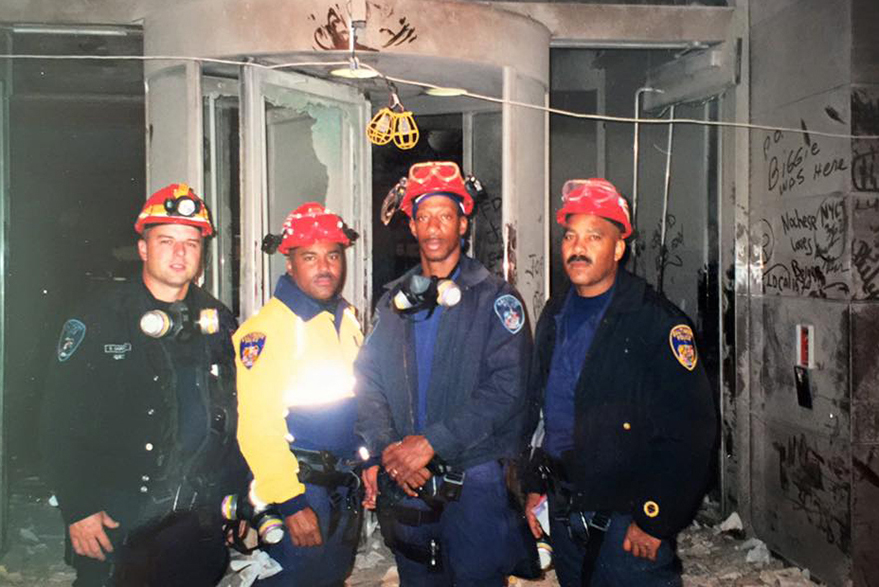


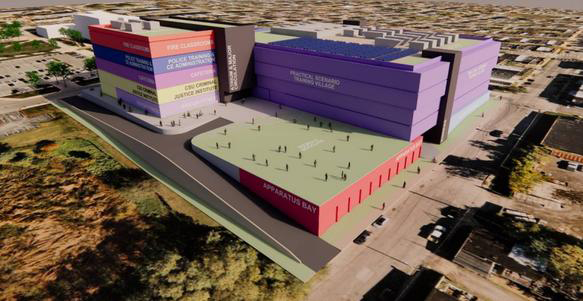 Proposed Baltimore police and fire training facility has a hefty price tag: $330 million
 Turnkey Carroll E. Bond