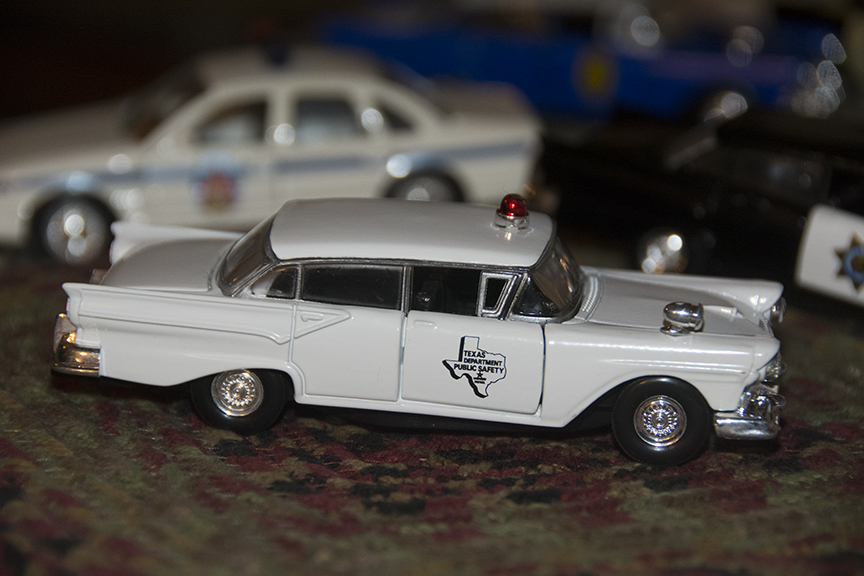
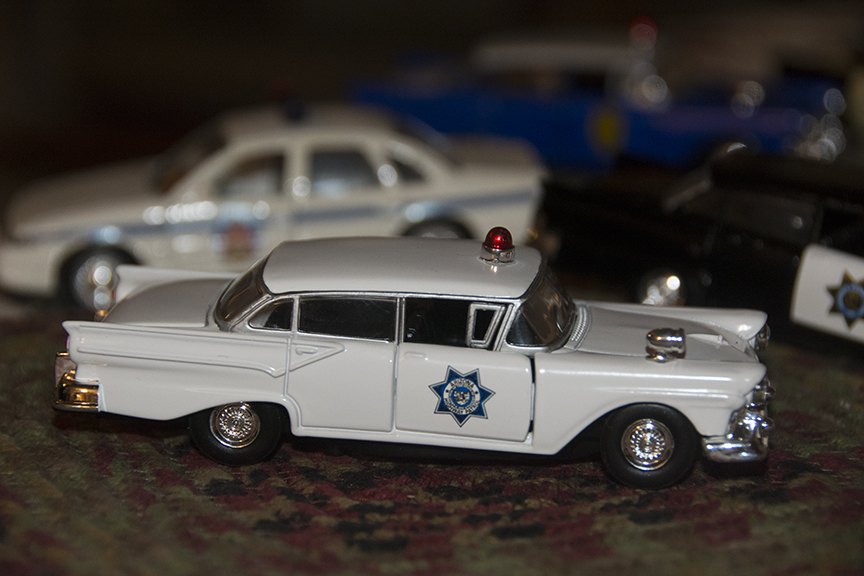
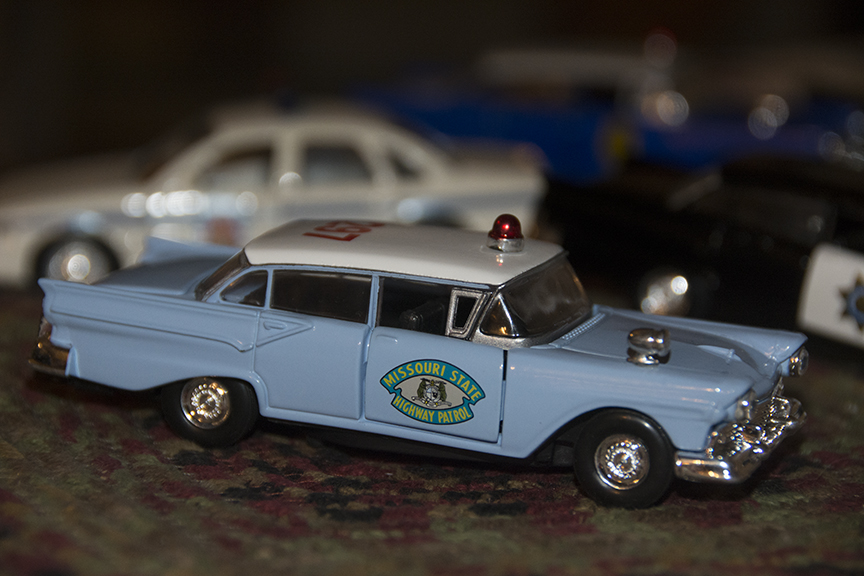
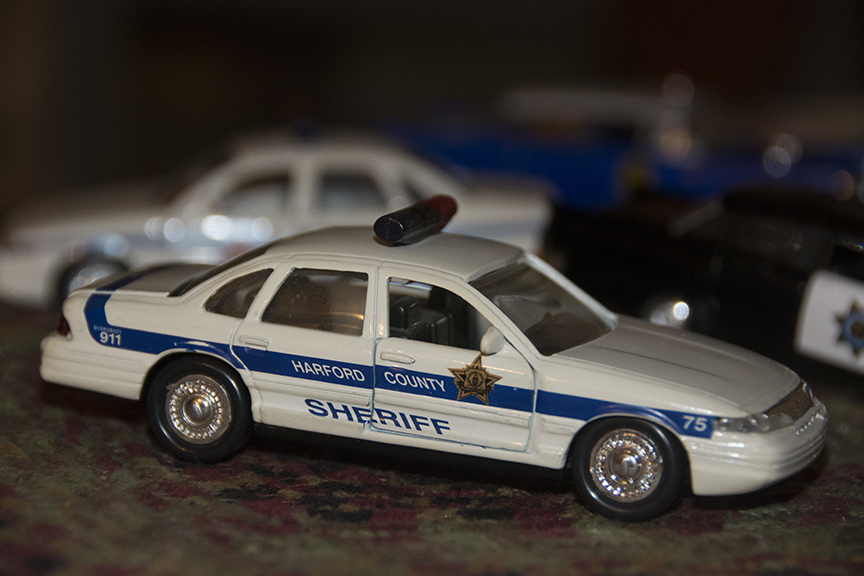
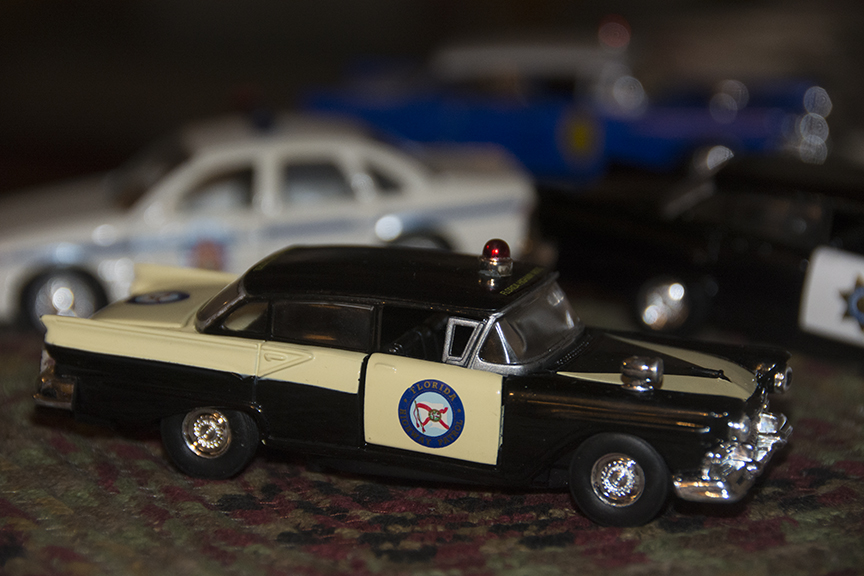
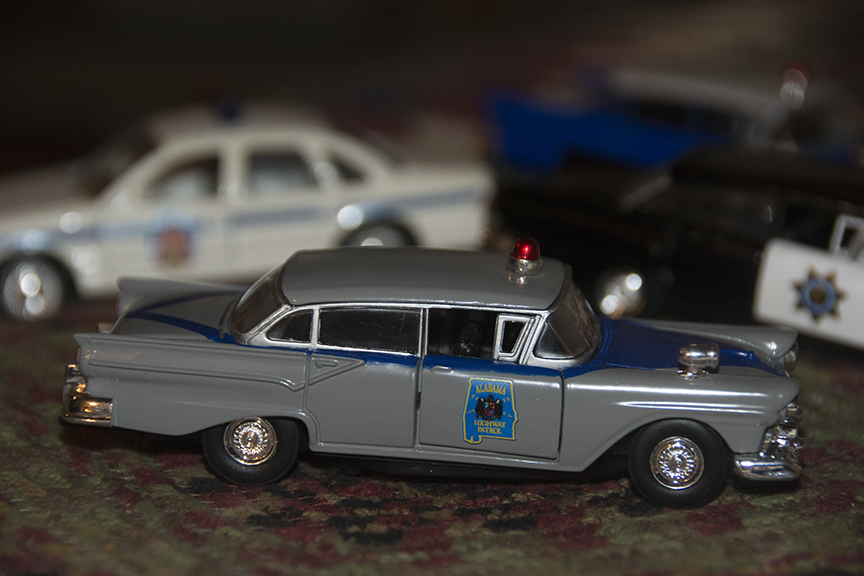
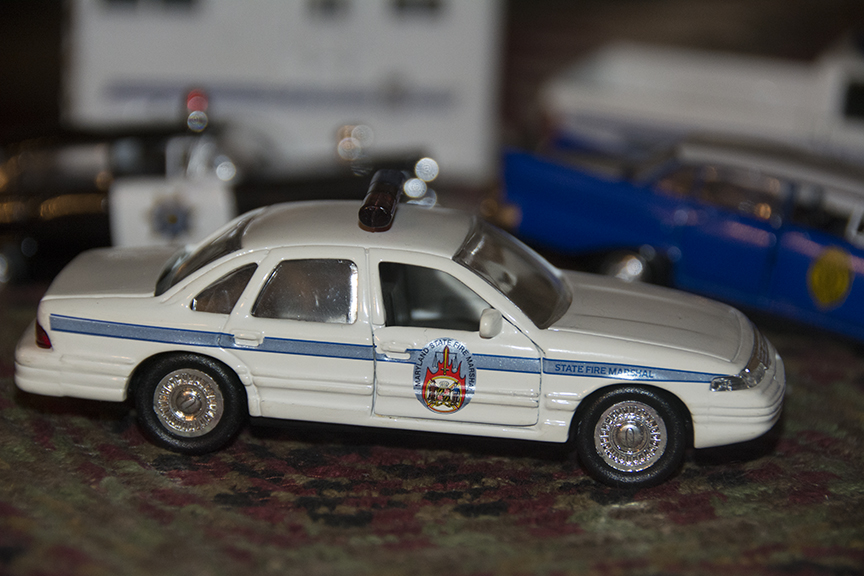
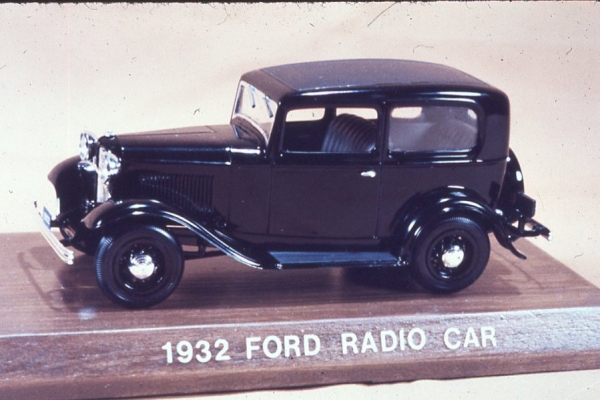
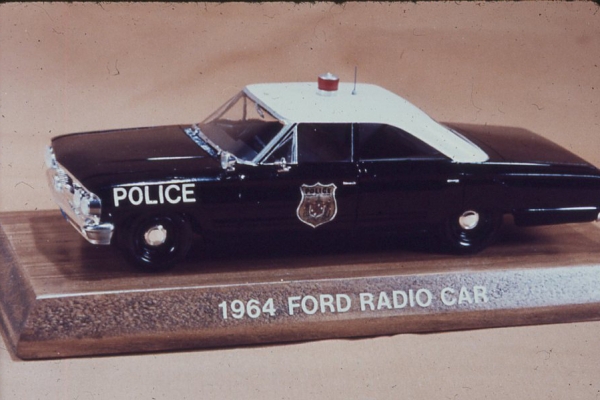
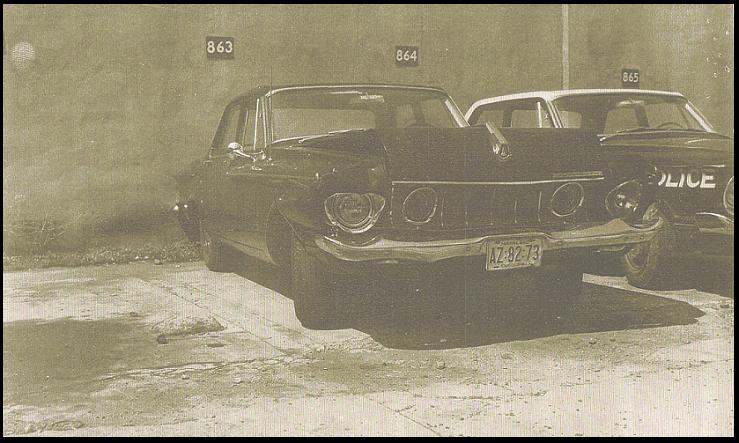
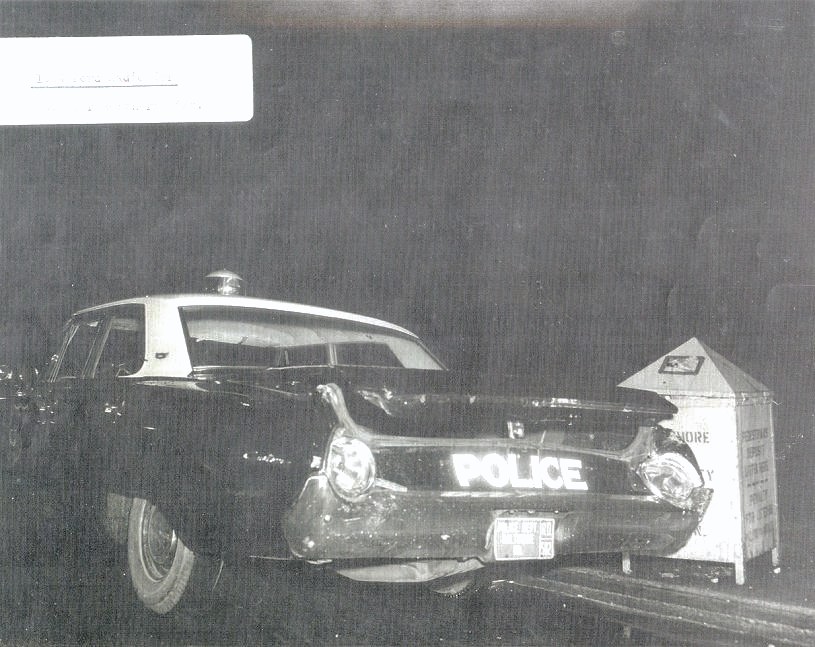
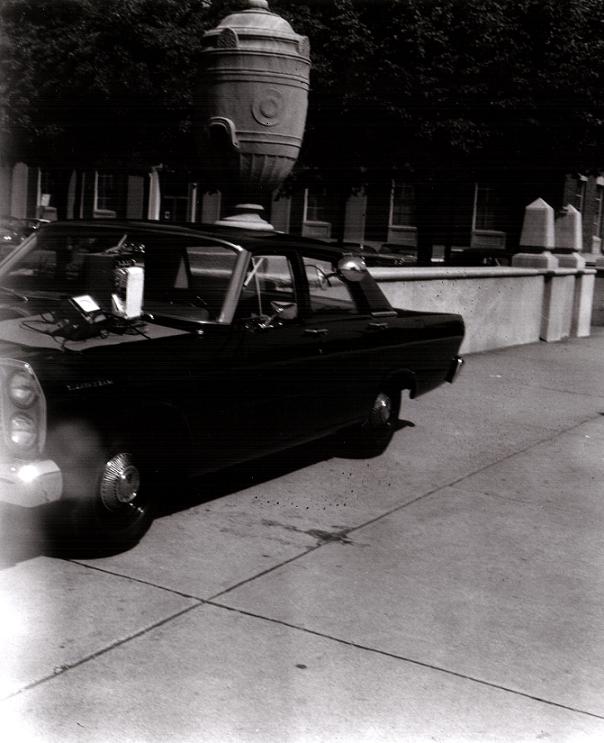
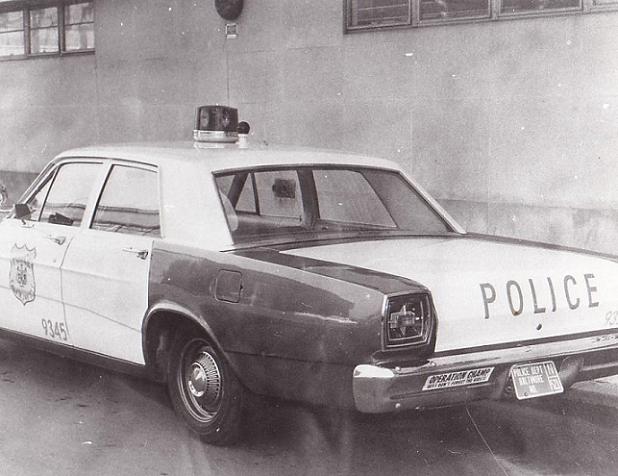
Out of State Die-cast Vehicles

Out of State Die-cast Vehicles

Out of State Die-cast Vehicles

baltimore motto small chrome II 72 DSC3207 DSC3208 DSC3209 DSC3210 DSC3211 DSC3212 DSC3213 DSC3214 DSC3216Toni Furlong  Die-cast Connections

 DSC3216Devider color with motto

NOTICE

How to Dispose of Old Police Items

If you come into possession of Police items from an Estate or Death of a Police Officer Family Member and do not know how to properly dispose of these items please contact: Retired Detective Ken Driscoll - Please dispose of POLICE Items: Badges, Guns, Uniforms, Documents, PROPERLY so they won’t be used IMPROPERLY. This email address is being protected from spambots. You need JavaScript enabled to view it. 

Please contact Det. Ret. Kenny Driscoll if you have any pictures of you or your family members and wish them remembered here on this tribute site to Honor the fine men and women who have served with Honor and Distinction at the Baltimore Police Department.  Anyone with information, photographs, memorabilia, or other "Baltimore City Police" items can contact Ret. Det. Kenny Driscoll at This email address is being protected from spambots. You need JavaScript enabled to view it. follow us on Twitter @BaltoPoliceHist or like us on Facebook or mail pics to 8138 Dundalk Ave. Baltimore Md. 21222


Copyright © 2002 Baltimore City Police History - Ret Det Kenny Driscoll

Shot Tower

Shot Tower

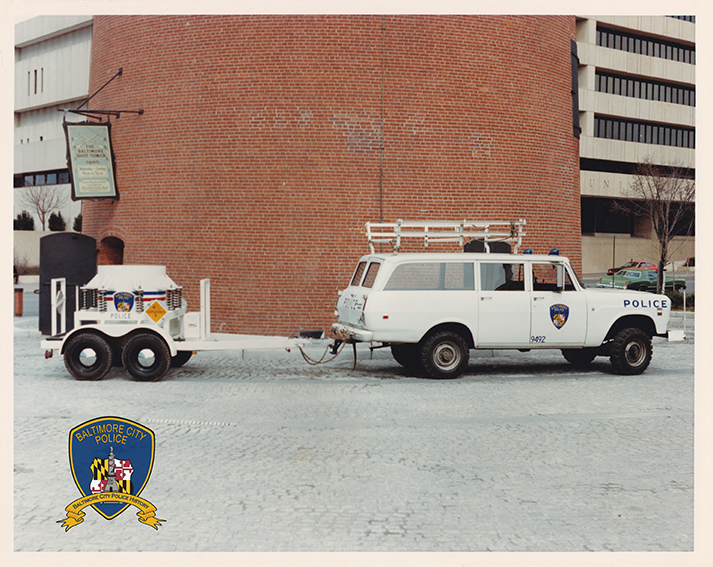
The Shot Tower at the corner of Front and Fayette Street was built in 1828, and it said to be the finest early specimen of brickwork on this continent. It raises 220 feet above the pavement and has a foundation 17 feet in depth, resting upon solid rock.

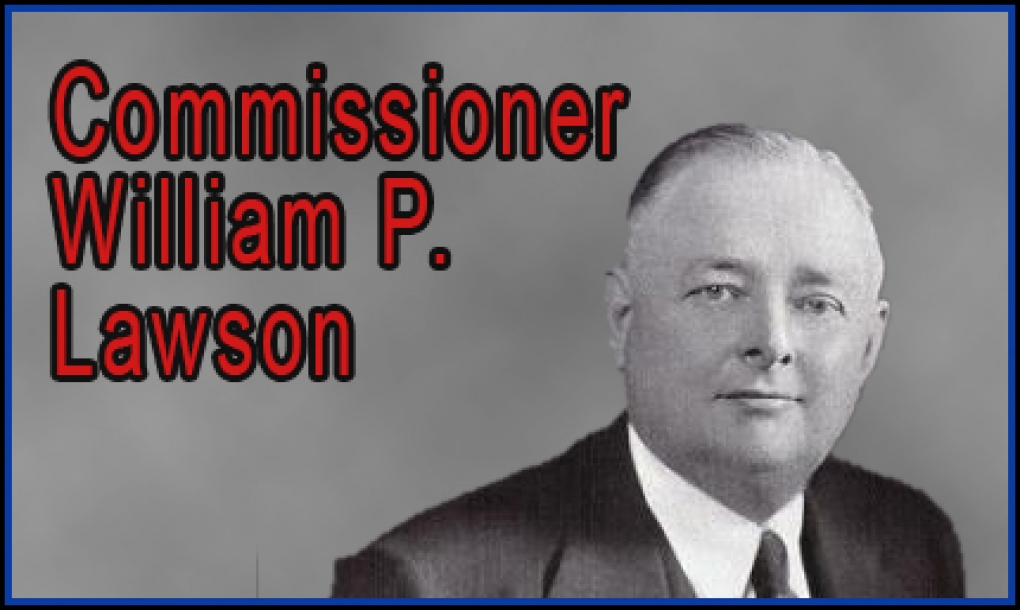
William Lawson

William Lawson

The standard chunk of Lorem Ipsum used since the 1500s is reproduced below for those interested. Sections 1.10.32 and 1.10.33 from "de Finibus Bonorum et Malorum" by Cicero are also reproduced in their exact original form, accompanied by English versions from the 1914 translation by H. Rackham.

Samuel Battle

Samuel Battle

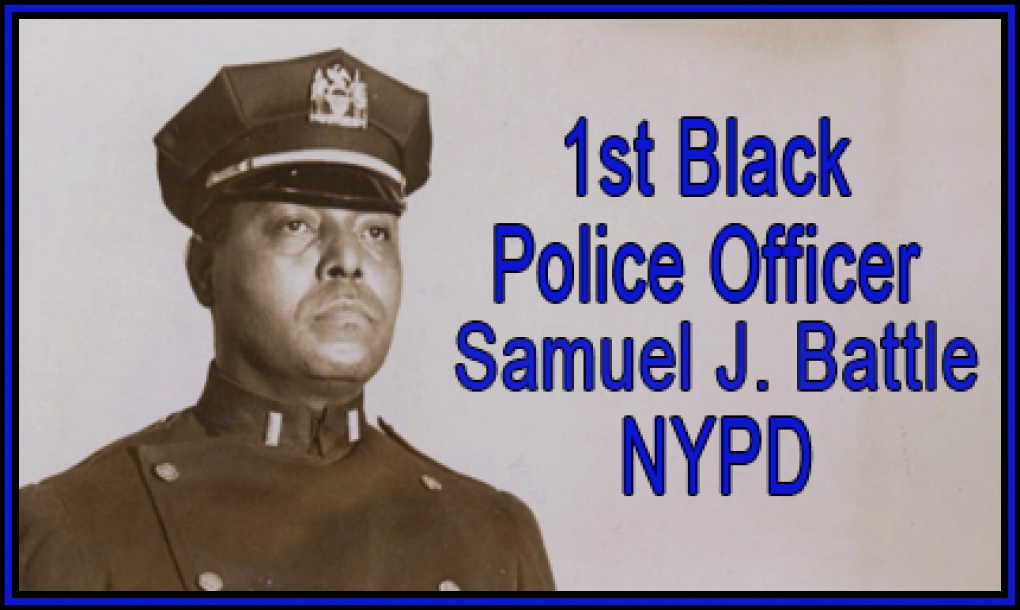
In 1912, Samuel Battle was the First African American appointed to the NYPD. He rose to the rank of Lieutenant. Meanwhile, in Baltimore, African Americans had been pressuring Maryland Governor Harry Nice, Baltimore Mayor Howard Jackson, the Maryland General Assembly and the Baltimore City Council to hire black police officers. The effort was led by a Baltimore Real Estate Broker named Marse Colloway. Calloway had started a police training school to prepare African Americans to take the Civil Service Examination to be a Police Officer. Black leaders scheduled a rally at the Bethel AME Church (^) on Druid Hill Ave.

Police Collections

Police Collections

From our Private Collections

 ABCDEF - GHIJKL - MNOPQR - STUVWXYZ

{tab A B C D E F}  

A B C D E F 

  A

Wallpaper

Officer Anonymous 

 1 black devider 800 8 72


A B C D E F 

B

Richard Berglund

 Richard Berglund

1 black devider 800 8 72

A B C D E F 

 C

1 black devider 800 8 72


A B C D E F 

 D

Retired Detective Kenny Driscoll

what what

Driscoll

what what Mounted

Driscoll
what what mounted sign with other BPD mem

Driscoll

Mounted sign

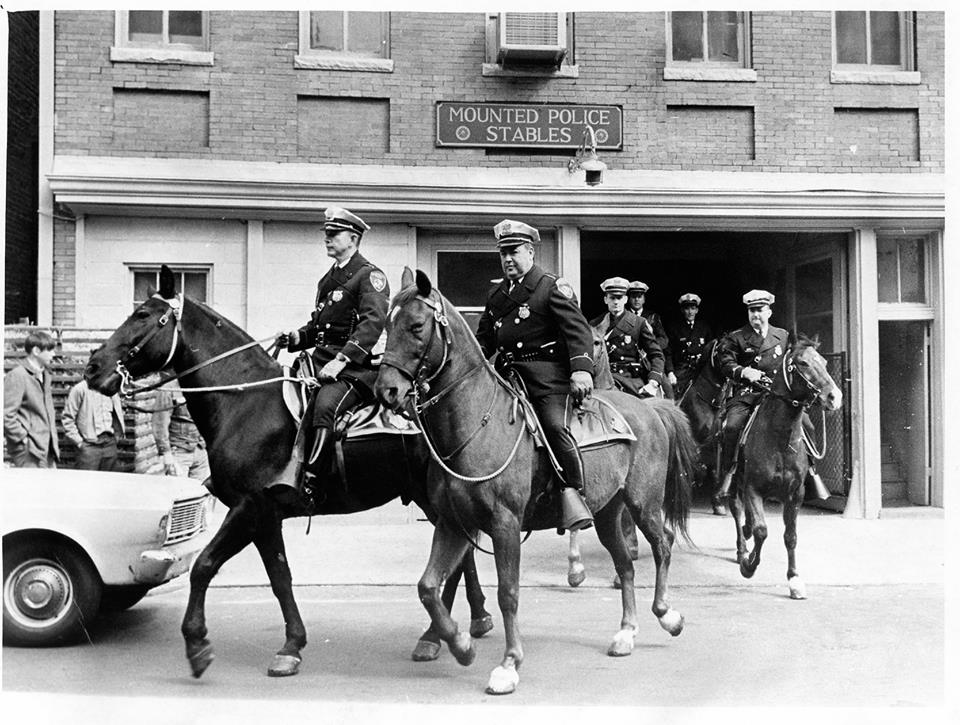
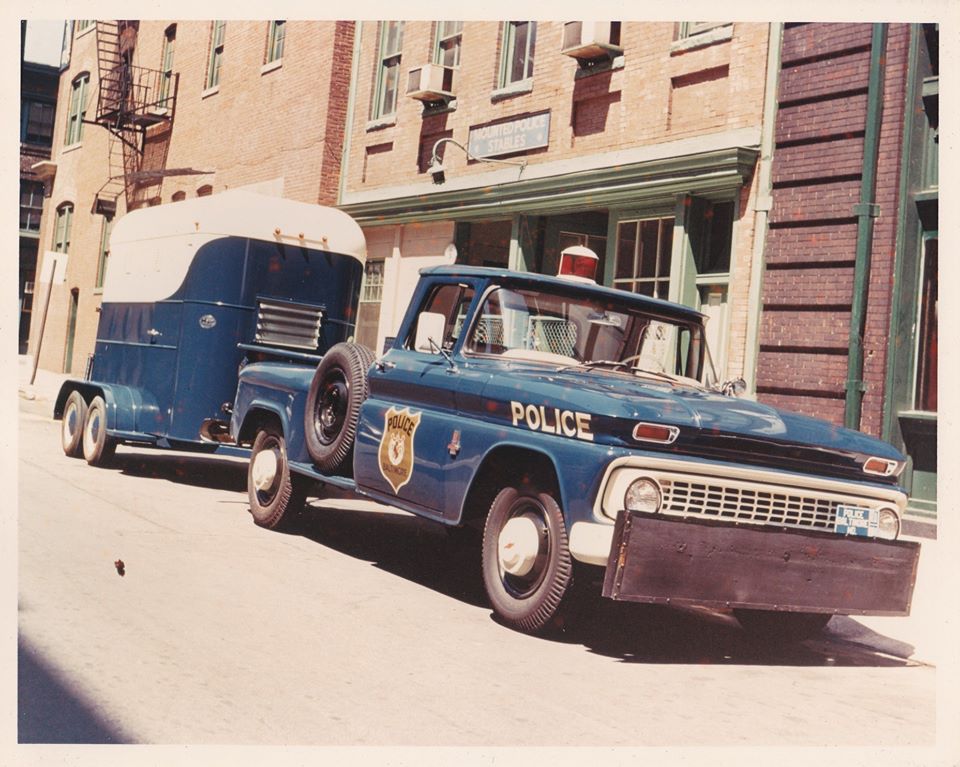
A little hard to see, but the "Mounted Police Sign" two pictures up, can be seen hanging above the truck in this pic

1 P Button

Driscoll
1 P Button 2

Driscoll

2 BCP button

Driscoll

2 BCP Button 2

Driscoll

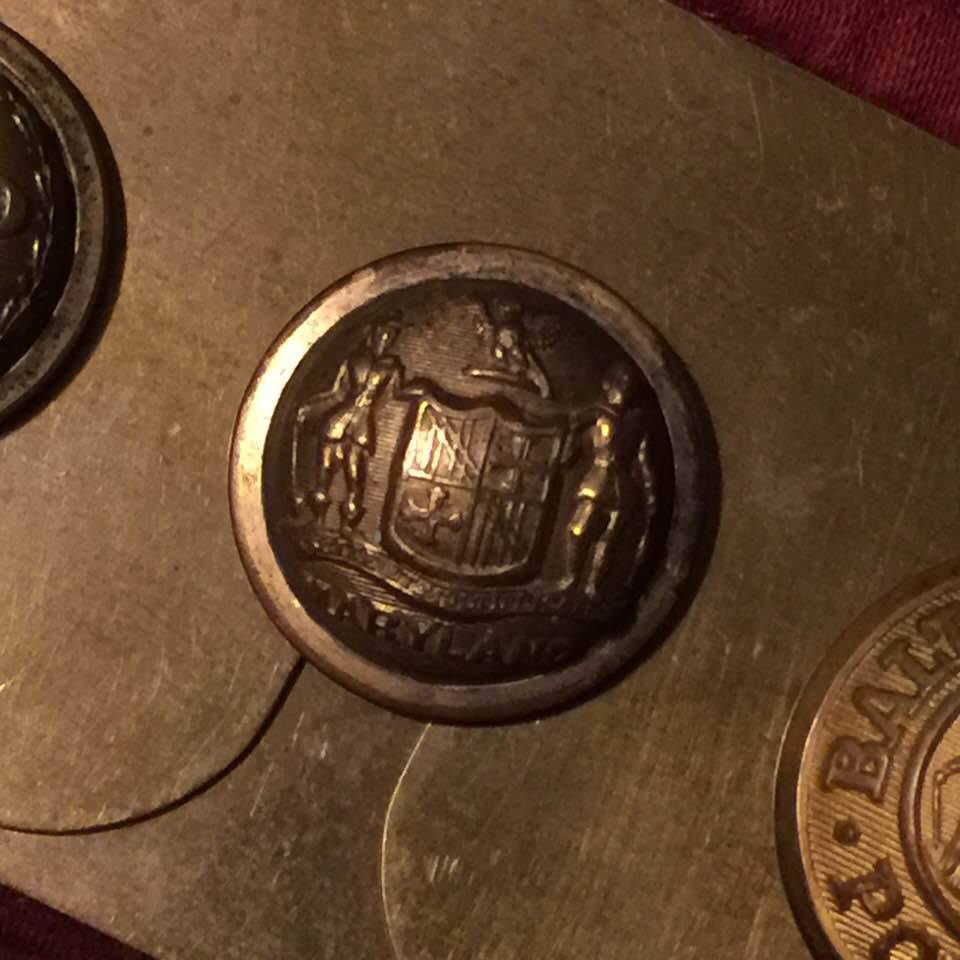
3 MD Seal Button

Driscoll

3 MD Seal Button 2

Driscoll

4 Early BCPD Button

Driscoll

4 Early BCPD Button2

Driscoll

5 Modern BCPD Button

Driscoll

5 Modern BCPD Button2

Driscoll

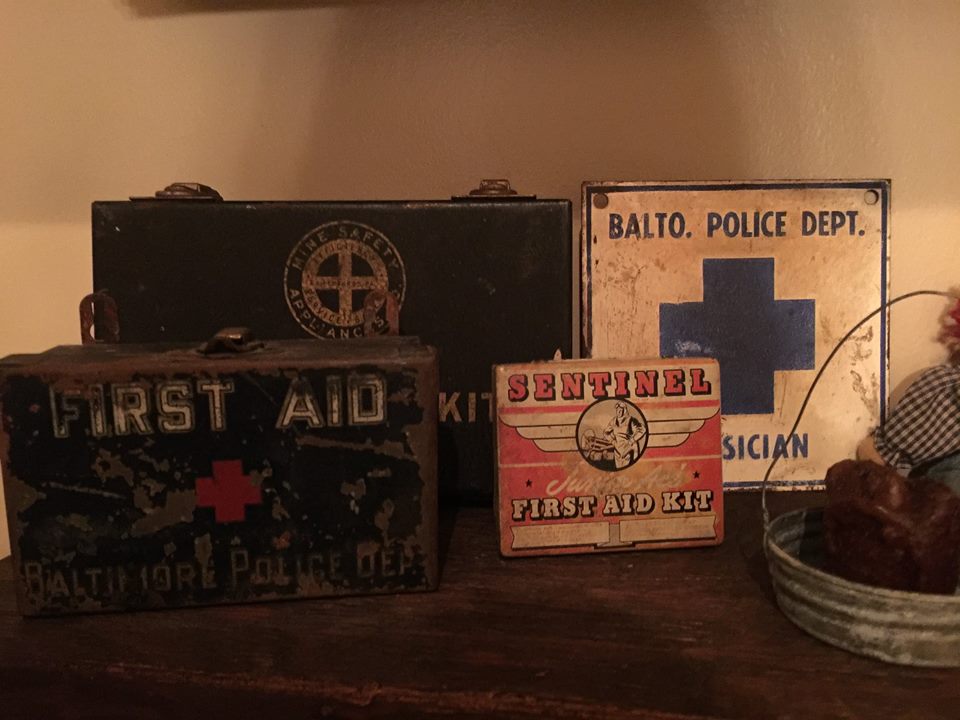
1st aid kits

 Driscoll

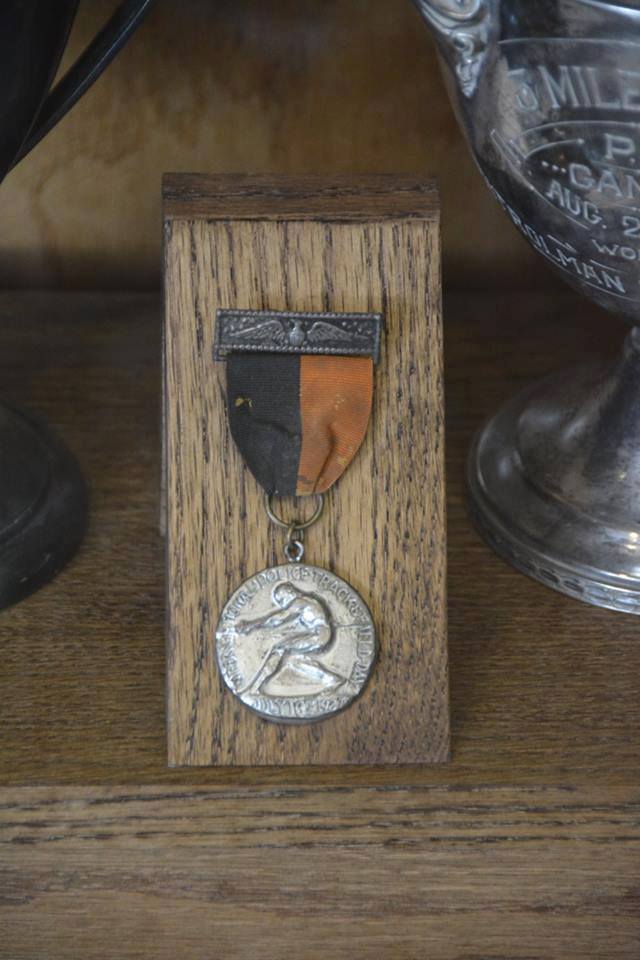
1927 polce games 2

Driscoll

1927 polce games

Driscoll

1940s aux policepic

Driscoll

15F16 001d 72

Driscoll

15F16 001e 72

Driscoll

15F16 001f 72

Driscoll

15F16 001i 72

Driscoll

15F16 001j 72

Driscoll

17E16 001q 72

Driscoll

17E16 001p 72

Driscoll

s l1600 15

 Driscoll

s l1600 29

Driscoll

Lambert 72

 Driscoll

Lambert McKellon wm

 Driscoll

Lambert.police 72

 Driscoll

s l1600 14

 Driscoll


Here's the list of log books

1.    1869 Middle District Log
2.    1878 Marshal's Log
3.    1878 Northwestern District Log
4.    1880 Northeastern District Log
5.    1892 Marshal report Log Book
6.    1896 Central Log Book
7.    1902 Central District Log
8.    1907 Southern District Log
9.    1908 Northern District Log
10.  1908 Board of Police Commissioner Log Book
11.  1909 Northern District Log
12.  1911 Northern District Log
13.  1915 Northern District Log
14.  1917 Northern District Log
15.  1918 Board of Police Commissioner Log Book
16.  1924 Southwestern Log
17.  1924 Northern District Log
18.  1926 Southeastern Log
19.  1940 Southwestern District Log
20.  1945 Northern District Log
21.  1946 Northern District Magistrate Docket
22.  1947 Northern District Arrest Docket
23.  1918 Board of Police Commissioner Log Book
 

LBPC

1 black devider 800 8 72

ABCDEF - GHIJKL - MNOPQR - STUVWXYZ

A B C D E F

E

1 black devider 800 8 72


A B C D E F

F


   ABCDEF - GHIJKL - MNOPQR - STUVWXYZ

{tab G H I J K L}  

G H I J K L

1 black devider 800 8 72

G H I J K L

 G

1 black devider 800 8 72

G H I J K L 

 H

Retired Officer John Heiderman

1

Courtesy John Heiderman

2

Courtesy John Heiderman

3

Courtesy John Heiderman

4

Courtesy John Heiderman

5

Courtesy John Heiderman

6

Courtesy John Heiderman

7

Courtesy John Heiderman

8

Courtesy John Heiderman

10

Courtesy John Heiderman

11

Courtesy John Heiderman

12

Courtesy John Heiderman

13

Courtesy John Heiderman

14

Courtesy John Heiderman

15

Courtesy John Heiderman

16

Courtesy John Heiderman

17

Courtesy John Heiderman

18

Courtesy John Heiderman

19

Courtesy John Heiderman

20

Courtesy John Heiderman

21

Courtesy John Heiderman

22

Courtesy John Heiderman

23

Courtesy John Heiderman

24

Courtesy John Heiderman

28

Courtesy John Heiderman

29

Courtesy John Heiderman

30

Courtesy John Heiderman

31

Courtesy John Heiderman

32

Courtesy John Heiderman

33

Courtesy John Heiderman

35

Courtesy John Heiderman

36

Courtesy John Heiderman

37

Courtesy John Heiderman

41

Courtesy John Heiderman

42

Courtesy John Heiderman

43

Courtesy John Heiderman

45

Courtesy John Heiderman

46

Courtesy John Heiderman

47

Courtesy John Heiderman

48

Courtesy John Heiderman

49

Courtesy John Heiderman

50

Courtesy John Heiderman

51

Courtesy John Heiderman

52

Courtesy John Heiderman

53

Courtesy John Heiderman

54

Courtesy John Heiderman

55

Courtesy John Heiderman

56

Courtesy John Heiderman

57

Courtesy John Heiderman

58

Courtesy John Heiderman

59

Courtesy John Heiderman

60

Courtesy John Heiderman

61

Courtesy John Heiderman

62

Courtesy John Heiderman

63

Courtesy John Heiderman

64

Courtesy John Heiderman

65

Courtesy John Heiderman

66

Courtesy John Heiderman

67

Courtesy John Heiderman

68

Courtesy John Heiderman

70

Courtesy John Heiderman

72

Courtesy John Heiderman

74

Courtesy John Heiderman

75

Courtesy John Heiderman

76

Courtesy John Heiderman

77

Courtesy John Heiderman

78

Courtesy John Heiderman

80

Courtesy John Heiderman

82

Courtesy John Heiderman

86

Courtesy John Heiderman

88

Courtesy John Heiderman

89

Courtesy John Heiderman

92

Courtesy John Heiderman

92i

Courtesy John Heiderman

92ii

Courtesy John Heiderman

92iii

Courtesy John Heiderman

92iiii

Courtesy John Heiderman

94i

Courtesy John Heiderman

94ii

Courtesy John Heiderman

94iii

Courtesy John Heiderman

96i

Courtesy John Heiderman

96iii

Courtesy John Heiderman

97

Courtesy John Heiderman

98i

Courtesy John Heiderman

100

Courtesy John Heiderman

Call Box 
Locations with call in times

JH C1 100JH C2 100JH C3 100JH C4 100JH C5 100JH C6 100JH C7 100JH C8 100 90CC

1 black devider 800 8 72

G H I J K L

 I

1 black devider 800 8 72

G H I J K L

 J

1 black devider 800 8 72

G H I J K L

 K

1 black devider 800 8 72

G H I J K L 

 L


ABCDEF - GHIJKL - MNOPQR - STUVWXYZ 


{tab M N O P Q R}  

M N O P Q R 

1 black devider 800 8 72

M N O P Q R 

 M

1 black devider 800 8 72

Retired Sergeant Edward Mattson

Ed Mattson1

Courtesy Edward Mattson

Ed Mattson3

Courtesy Edward Mattson

Ed Mattson2Courtesy Edward Mattson

Ed Mattson4

Courtesy Edward Mattson

BPD Robert Crispens Jr610 cr723

Courtesy Edward Mattson

BPD Robert Crispens Jr610 cr721

Courtesy Edward Mattson

BPD Robert Crispens Jr610 cr722

Courtesy Edward Mattson

BPD Robert Crispens Jr610 cr724

Courtesy Edward Mattson

1 black devider 800 8 72

M N O P Q R 

 N

1 black devider 800 8 72

 ABCDEF - GHIJKL - MNOPQR - STUVWXYZ

M N O P Q R 

 O

1 black devider 800 8 72

M N O P Q R 

 P

1 black devider 800 8 72

Retired Officer Gary Provenzano

Gary p 1 72

Courtesy of Gary Provenzano 

Gary p 2 72

Courtesy of Gary Provenzano 

Gary p 4 72

Courtesy of Gary Provenzano 

Gary p 3 72

Courtesy of Gary Provenzano

BPD IMG008 crop 2 72

Courtesy of Gary Provenzano 

BPD IMG009 crop 72

Courtesy of Gary Provenzano 

BPD IMG010 Crop 2 72

Courtesy of Gary Provenzano 

BPD IMG014 Crop 2 72

Courtesy of Gary Provenzano 

BPD IMG014 Crop 2 72

Courtesy of Gary Provenzano

BPD IMG016 Crop 72

Courtesy of Gary Provenzano 

BPD IMG018 72

Courtesy of Gary Provenzano
CLICK THE ABOVE PHOTO TO SEE FULL SIZE VERSION
P O Samueal Hindes

Courtesy of Gary Provenzano 
Officer Samuel Hindes

BPD IMG022 Crop 72

Courtesy of Gary Provenzano

BPD IMG023 Crop 1 72

Courtesy of Gary Provenzano

BPD IMG023 Crop 2 72

Courtesy of Gary Provenzano

BPD IMG024 Crop 1 72

Courtesy of Gary Provenzano

BPD IMG024 Crop 2 72

Courtesy of Gary Provenzano

BPD IMG025 Crop 1 72

Courtesy of Gary Provenzano

BPD IMG025 Crop 2 72

Courtesy of Gary Provenzano

BPD IMG026 croped levels 72

Courtesy of Gary Provenzano

BPD IMG027 Cropedout 72

Courtesy of Gary Provenzano
CLICK THE ABOVE PHOTO TO SEE FULL SIZE VERSION

BPD IMG028 Crop 72

Courtesy of Gary Provenzano

BPD IMG029 Crop 72

Courtesy of Gary Provenzano

BPD IMG030 Crop 72

Courtesy of Gary Provenzano

BPD IMG031 Crop 72

Courtesy of Gary Provenzano

BPD IMG032 Crop 72

Courtesy of Gary Provenzano

BPD IMG033 Crop 72

Courtesy of Gary Provenzano

BPD IMG035 Crop 72

Courtesy of Gary Provenzano

BPD IMG036 Crop 72

Courtesy of Gary Provenzano

BPD IMG037 Crop 72

Courtesy of Gary Provenzano

BPD IMG038 Crop 72

Courtesy of Gary Provenzano

BPD IMG039 Crop wd front 72

Courtesy of Gary Provenzano

BPD IMG040 Crop wd 72

Courtesy of Gary Provenzano

BPD IMG041 Crop 72

Courtesy of Gary Provenzano

BPD IMG042 Crop 72

Courtesy of Gary Provenzano

BPD IMG043 Crop 72

Courtesy of Gary Provenzano

BPD IMG044 Crop 72

Courtesy of Gary Provenzano

BPD IMG045 Crop 72

Courtesy of Gary Provenzano

BPD IMG046 Crop 72

Courtesy of Gary Provenzano

BPD IMG047 Crop 72

Courtesy of Gary Provenzano

BPD IMG048 Crop 72

Courtesy of Gary Provenzano

BPD IMG049 Crop 72

Courtesy of Gary Provenzano

BPD IMG050 Crop 72

Courtesy of Gary Provenzano
CLICK THE ABOVE PHOTO TO SEE FULL SIZE VERSION

BPD IMG051rop 72

Courtesy of Gary Provenzano

BPD IMG052 Crop 72

Courtesy of Gary Provenzano

BPD IMG053 crop 72

Courtesy of Gary Provenzano
CLICK THE ABOVE PHOTO TO SEE FULL SIZE VERSION

BPD IMG054 Crop 72

Courtesy of Gary Provenzano

BPD IMG055 Crop 72

Courtesy of Gary Provenzano

BPD IMG056 Crop 72

 Courtesy of Gary Provenzano

BPD IMG057 Crop 72

 Courtesy of Gary Provenzano

BPD IMG058 Crop 72 Courtesy of Gary Provenzano

BPD IMG059 Crop 72

 Courtesy of Gary Provenzano

BPD IMG060 Crop 72

 Courtesy of Gary Provenzano

BPD IMG061 Crop 72 Courtesy of Gary Provenzano

BPD IMG062 Crop spliced 72

 Courtesy of Gary Provenzano

BPD IMG065 Crop 72

 Courtesy of Gary Provenzano

BPD IMG066 Crop 72

 Courtesy of Gary Provenzano

BPD IMG067 Crop 72

Courtesy of Gary Provenzano

BPD IMG068 Crop 1 72

 Courtesy of Gary Provenzano

BPD IMG068 Crop 2 72

 Courtesy of Gary Provenzano

BPD IMG069 Crop 2 72

 Courtesy of Gary Provenzano

BPD IMG069 Crop i1 72

 Courtesy of Gary Provenzano

BPD IMG070 Crop 72

 Courtesy of Gary Provenzano

BPD IMG071 Crop 72

 Courtesy of Gary Provenzano

BPD IMG072 Crop 1 72

 Courtesy of Gary Provenzano

BPD IMG073 Crop 72

 Courtesy of Gary Provenzano

BPD IMG075 Crop 1 72

 Courtesy of Gary Provenzano

BPD IMG076 Crop 1 72Courtesy of Gary Provenzano

BPD IMG077 Crop 72

Courtesy of Gary Provenzano
CLICK THE ABOVE PHOTO TO SEE FULL SIZE VERSION

BPD IMG078 Crop 72

 Courtesy of Gary Provenzano

BPD IMG079 Crop 72

 Courtesy of Gary Provenzano

BPD IMG080 Crop 2 72

Courtesy of Gary Provenzano

BPD IMG081 Crop frey 2 72

Courtesy of Gary Provenzano
CLICK THE ABOVE PHOTO TO SEE FULL SIZE VERSION

BPD IMG082 Crop 1 72

 Courtesy of Gary Provenzano

BPD IMG082 Crop 2 72

 Courtesy of Gary Provenzano

BPD IMG083 Crop Schryver 72

 Courtesy of Gary Provenzano

BPD IMG084 crop 72

Courtesy of Gary Provenzano

BPD IMG085 crop 72

Courtesy of Gary Provenzano
CLICK THE ABOVE PHOTO TO SEE FULL SIZE VERSION

BPD IMG086 crop 72

 Courtesy of Gary Provenzano

BPD IMG087 crop 72

 Courtesy of Gary Provenzano

BPD IMG088 crop 72

 Courtesy of Gary Provenzano

BPD IMG089 crop 72

 Courtesy of Gary Provenzano

BPD IMG090 crop 72

 Courtesy of Gary Provenzano

BPD IMG091 crop 2 72

 Courtesy of Gary Provenzano

BPD IMG091 crop 72

Courtesy of Gary Provenzano

BPD IMG093 crop 72

Courtesy of Gary Provenzano
CLICK THE ABOVE PHOTO TO SEE FULL SIZE VERSION

BPD IMG092 crop 72

Courtesy of Gary Provenzano
CLICK THE ABOVE PHOTO TO SEE FULL SIZE VERSION

BPD IMG094 crop 1 72

Courtesy of Gary Provenzano

BPD IMG095 crop 1908 72

Courtesy of Gary Provenzano

BPD IMG094 crop 1i 72

Courtesy of Gary Provenzano

BPD IMG095 crop 1894 72

Courtesy of Gary Provenzano

BPD IMG097 crop 654 front and back mug shot 72

Courtesy of Gary Provenzano

BPD IMG097 crop 826 frnt and back 72

Courtesy of Gary Provenzano

BPD IMG098 crop 1 72

Courtesy of Gary Provenzano

BPD IMG098 crop 2 72

Courtesy of Gary Provenzano

BPD IMG099 crop 1 72

Courtesy of Gary Provenzano

BPD IMG099 crop 2 72

Courtesy of Gary Provenzano

BPD IMG100 crop 72

Courtesy of Gary Provenzano

BPD IMG101 crop 1 72

 Courtesy of Gary Provenzano

BPD IMG101 crop 2 72

 Courtesy of Gary Provenzano

BPD IMG102 crop 1 72

 Courtesy of Gary Provenzano

BPD IMG102 crop 2 72

 Courtesy of Gary Provenzano

BPD IMG103 Crop 72

 Courtesy of Gary Provenzano

BPD IMG104 crop 72

 Courtesy of Gary Provenzano

BPD IMG105 crop 72

 Courtesy of Gary Provenzano

BPD IMG106 crop 72

 Courtesy of Gary Provenzano

BPD IMG107 crop 72

 Courtesy of Gary Provenzano

BPD IMG108 crop 72

Courtesy of Gary Provenzano

BPD IMG111 crop 72

 Courtesy of Gary Provenzano

BPD IMG112 crop 72

 Courtesy of Gary Provenzano

BPD IMG113 crop 72

 Courtesy of Gary Provenzano

BPD IMG114 crop 72

 Courtesy of Gary Provenzano

BPD IMG115 crop 72

 Courtesy of Gary Provenzano

BPD IMG116 crop 72

 Courtesy of Gary Provenzano

BPD IMG117 crop 72

 Courtesy of Gary Provenzano

BPD IMG118 crop 72

 Courtesy of Gary Provenzano

BPD IMG119 crop 72

 Courtesy of Gary Provenzano

BPD IMG120 crop 72

 Courtesy of Gary Provenzano

BPD IMG121 crop 72

 Courtesy of Gary Provenzano

BPD IMG122 crop 72

 Courtesy of Gary Provenzano

BPD IMG123 crop 72

 Courtesy of Gary Provenzano

BPD IMG124 crop 72

 Courtesy of Gary Provenzano

BPD IMG125 crop 72

 Courtesy of Gary Provenzano

BPD IMG127 crop with 26 72

 Courtesy of Gary Provenzano

BPD IMG128 crop 72

 Courtesy of Gary Provenzano

BPD IMG129 crop 72

 Courtesy of Gary Provenzano

BPD IMG130 crop 72

 Courtesy of Gary Provenzano

BPD IMG131 crop 72

 Courtesy of Gary Provenzano

BPD IMG132 crop 72

Courtesy of Gary Provenzano

BPD IMG133 crop 1904 Cutome house 72

 Courtesy of Gary Provenzano

BPD IMG134 sgtFlood crop 72

 Courtesy of Gary Provenzano

BPD IMG135 crop 72

 Courtesy of Gary Provenzano

BPD IMG136 crop 72

 Courtesy of Gary Provenzano

BPD IMG137 crop with 38 72

 Courtesy of Gary Provenzano

BPD IMG138 cropending 37 72

 Courtesy of Gary Provenzano

BPD IMG139 crop goes with ending 40 72

 Courtesy of Gary Provenzano

BPD IMG140 crop goes with ending 39 72

 Courtesy of Gary Provenzano

BPD IMG141 crop 72

 Courtesy of Gary Provenzano

BPD IMG142 crop. 72jpg

 Courtesy of Gary Provenzano

BPD IMG143 crop 72

 Courtesy of Gary Provenzano

BPD IMG144 crop 72

 Courtesy of Gary Provenzano

BPD IMG145 crop 72

 Courtesy of Gary Provenzano

BPD IMG146 crop 72

 Courtesy of Gary Provenzano

BPD IMG147 crop 72 i

 Courtesy of Gary Provenzano

BPD IMG148 crop 72

 Courtesy of Gary Provenzano

BPD IMG149 crop 72

 Courtesy of Gary Provenzano

BPD IMG150 crop 72

 Courtesy of Gary Provenzano

BPD IMG151 crop 72

 Courtesy of Gary Provenzano

BPD IMG152 crop 72

 Courtesy of Gary Provenzano

BPD IMG153 crop 72

 Courtesy of Gary Provenzano

BPD IMG154 crop 72

 Courtesy of Gary Provenzano

BPD IMG155 crop 72

 Courtesy of Gary Provenzano

BPD IMG156 crop 72

 Courtesy of Gary Provenzano

BPD IMG157 crop 72

 Courtesy of Gary Provenzano

BPD IMG158 crop 72

 Courtesy of Gary Provenzano

BPD IMG159 crop 72

 Courtesy of Gary Provenzano

BPD IMG160 crop 72

 Courtesy of Gary Provenzano

BPD IMG161 crop 72

 Courtesy of Gary Provenzano

BPD IMG162 crop 72

 Courtesy of Gary Provenzano

BPD IMG163 crop 72

 Courtesy of Gary Provenzano

BPD IMG164 crop 72

 Courtesy of Gary Provenzano

BPD IMG165 crop 72

 Courtesy of Gary Provenzano

BPD IMG166 crop 72

 Courtesy of Gary Provenzano

BPD IMG167 Crop 72

 Courtesy of Gary Provenzano

BPD IMG168 crop 72

 Courtesy of Gary Provenzano

BPD IMG169 crop 72

 Courtesy of Gary Provenzano

BPD IMG170 crop 1 front 72

 Courtesy of Gary Provenzano

BPD IMG171 crop 2 72

 Courtesy of Gary Provenzano

BPD IMG172 crop 72

Courtesy of Gary Provenzano

BPD IMG173 crop 72

Courtesy of Gary Provenzano

BPD IMG174 crop 1 72

Courtesy of Gary Provenzano

BPD IMG174 crop 2 72

Courtesy of Gary Provenzano

BPD IMG175 crop 2 72

Courtesy of Gary Provenzano

BPD IMG175 crop 3 72

Courtesy of Gary Provenzano

BPD IMG176 crop 4 72

Courtesy of Gary Provenzano

BPD IMG177 crop 1 72

Courtesy of Gary Provenzano

BPD IMG177 crop 2 72

Courtesy of Gary Provenzano

BPD IMG177 crop 3 72

Courtesy of Gary Provenzano

BPD IMG178 crop 72 72

Courtesy of Gary Provenzano

BPD IMG179 crop. 72jpg

Courtesy of Gary Provenzano

BPD IMG183 crop 1 72

Courtesy of Gary Provenzano

BPD IMG183 crop 2 72jpg

Courtesy of Gary Provenzano

BPD IMG183 crop 4 72

Courtesy of Gary Provenzano

BPD IMG183 crop 3 72jpg

Courtesy of Gary Provenzano

BPD IMG184 crop 72

Courtesy of Gary Provenzano

BPD IMG185 crop 72

Courtesy of Gary Provenzano

BPD IMG186 crop 72

 Courtesy of Gary Provenzano

1 black devider 800 8 72

M N O P Q R

 Q

1 black devider 800 8 72

M N O P Q R

 R


ABCDEF - GHIJKL - MNOPQR - STUVWXYZ


{tab S T U V W X Y Z} 

S T U V W X Y Z


1 black devider 800 8 72


S T U V W X Y Z   


 S


1 black devider 800 8 72


S T U V W X Y Z   


 T


1 black devider 800 8 72


S T U V W X Y Z   


 U


1 black devider 800 8 72


S T U V W X Y Z   


 V


1 black devider 800 8 72


S T U V W X Y Z   


 W


1 black devider 800 8 72


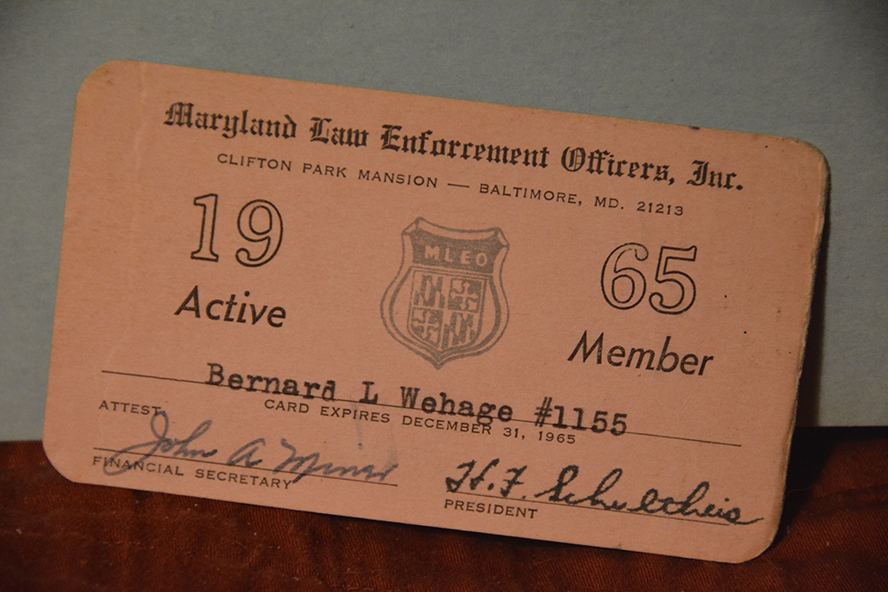
Retired Sergeant Bernie Wehage

1968 Bernie Wehage 72


Courtesy Sergeant Bernie Wehage

1966 Bernie Wehage 72


Courtesy Sergeant Bernie Wehage

1967 Bernie Wehage 72


Courtesy Sergeant Bernie Wehage

1969 Bernie Wehage 72


Courtesy Sergeant Bernie Wehage

1975 Bernie Wehage 72


Courtesy Sergeant Bernie Wehage

1967 Advice of rights side1 72


Courtesy Sergeant Bernie Wehage

1967 Advice of rights side2 72


Courtesy Sergeant Bernie Wehage

1967 BofI mu shot 904 Bernie 72


Courtesy Sergeant Bernie Wehage
Sgt Bernie Wehage Notice the B of I number 409; this seems to be his badge number

Bernie Wehage 72


Courtesy Sergeant Bernie Wehage
Sergeant Bernie Wehage

BPD Union application card 72


Courtesy Sergeant Bernie Wehage

BPD Union Decal 72


Courtesy Sergeant Bernie Wehage

BPD Union Application card with union decal 72


Courtesy Sergeant Bernie Wehage

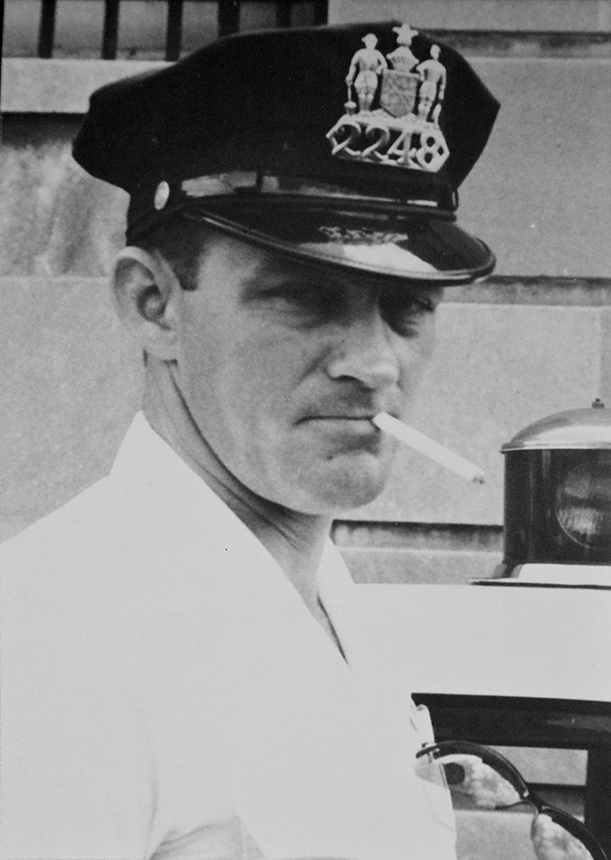
2248 Al Moog BPD 72


Courtesy Sergeant Bernie Wehage
Ed Moog

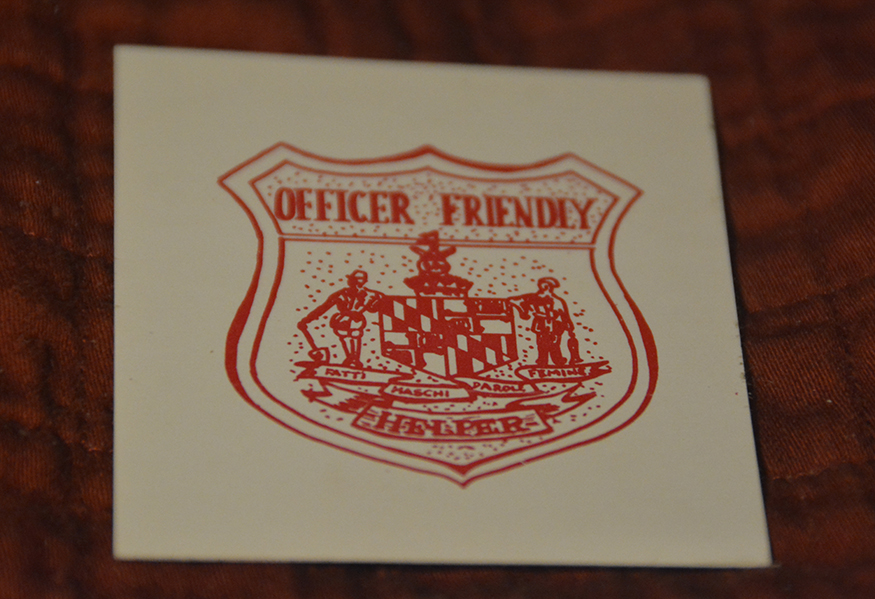
BPD Officer Frendly sticker 72


Courtesy Sergeant Bernie Wehage

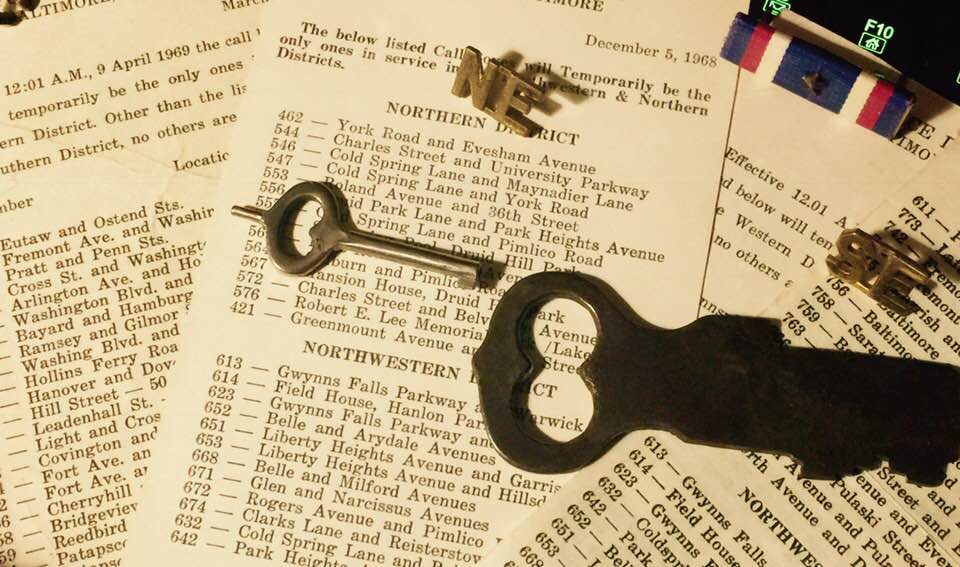
call box locations


Courtesy Sergeant Bernie Wehage

1952 BPD Issue 72


Courtesy Sergeant Bernie Wehage
BPD Issued Espantoon

Call Box number locations lookouts nd nwd 1968 72

   Courtesy Sergeant Bernie Wehage

December 1968 - ND - NWD

Call Box number locations lookouts WD 1969 72

   Courtesy Sergeant Bernie Wehage

February 1969 - WD

Call Box number locations lookouts SD 1969 72

  Courtesy Sergeant Bernie Wehage

March 1969 - SD

Cd Call box Location 1969 front 72

 Courtesy Sergeant Bernie Wehage
June 1969 - Front - CD

Cd Call box Location 1969 front 72 Courtesy Sergeant Bernie Wehage
June 1969 - Front - SD-NE

Call Box number locations lookouts CD 1969 72

Courtesy Sergeant Bernie Wehage
June 1969 - back - WD - NWD

Court Game 1973 74 72


Courtesy Sergeant Bernie Wehage

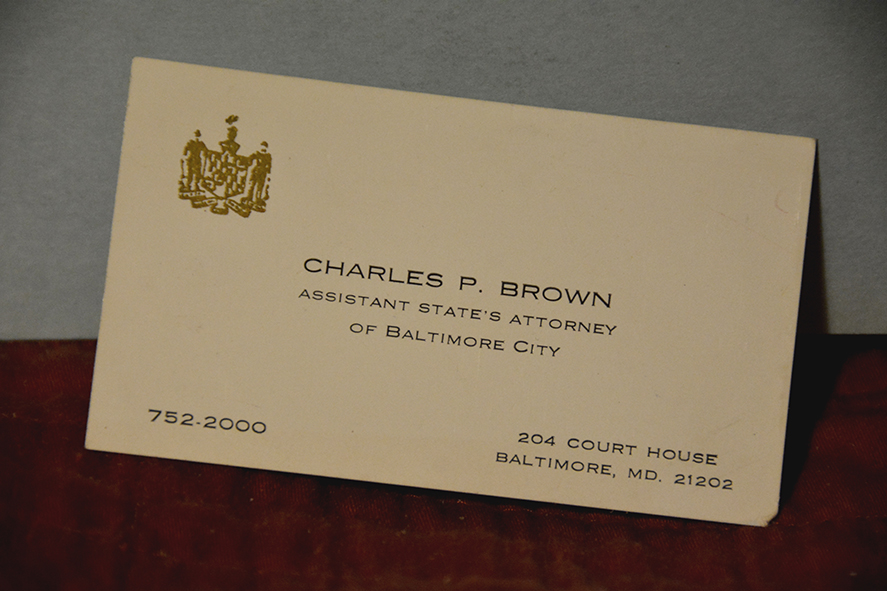
Charley Brown 72


Courtesy Sergeant Bernie Wehage

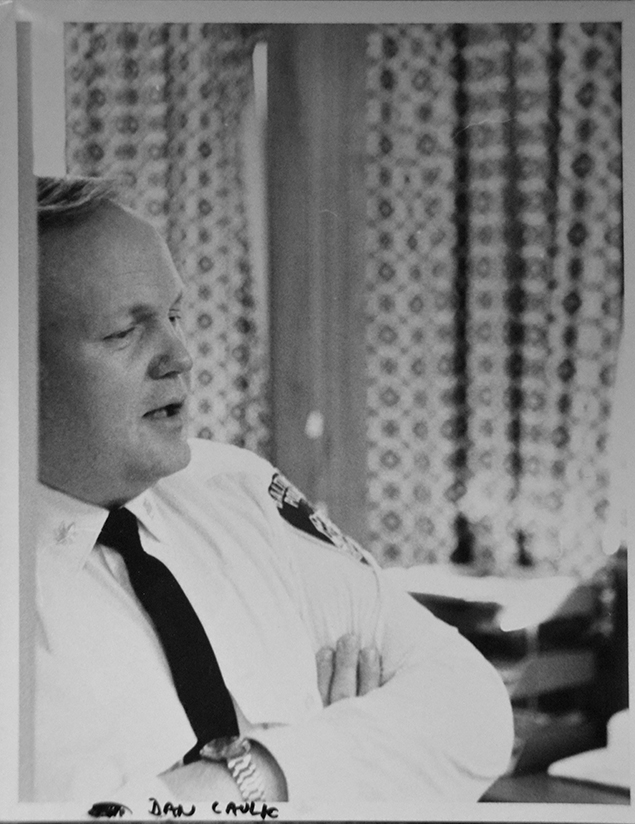
Dan Caulk 72


Courtesy Sergeant Bernie Wehage
Lt Dan Caulk

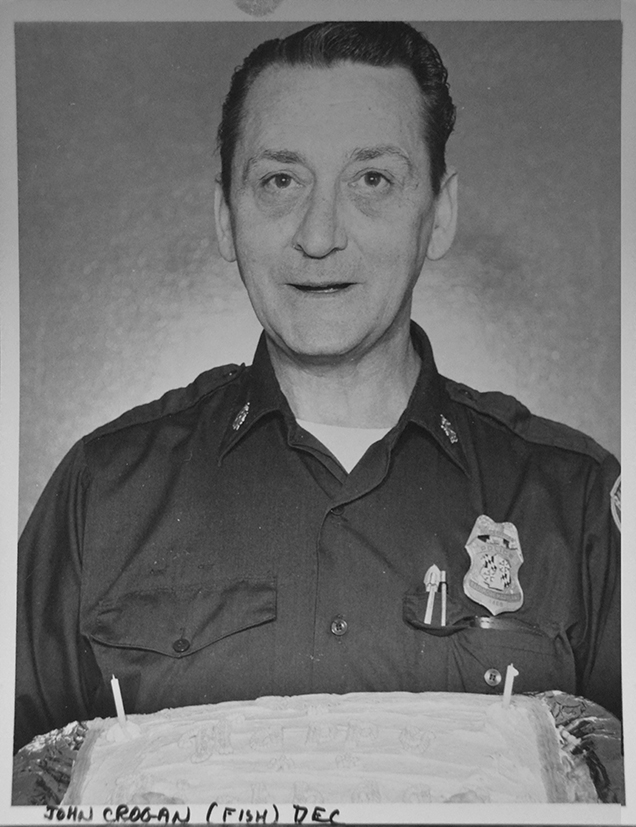
Dan Caulk John Crofhan aka Fish 72


Courtesy Sergeant Bernie Wehage
Dan Caulk and John Crogan aka FISH

Ed Boston 72


Courtesy Sergeant Bernie Wehage
Lt Ed Boston

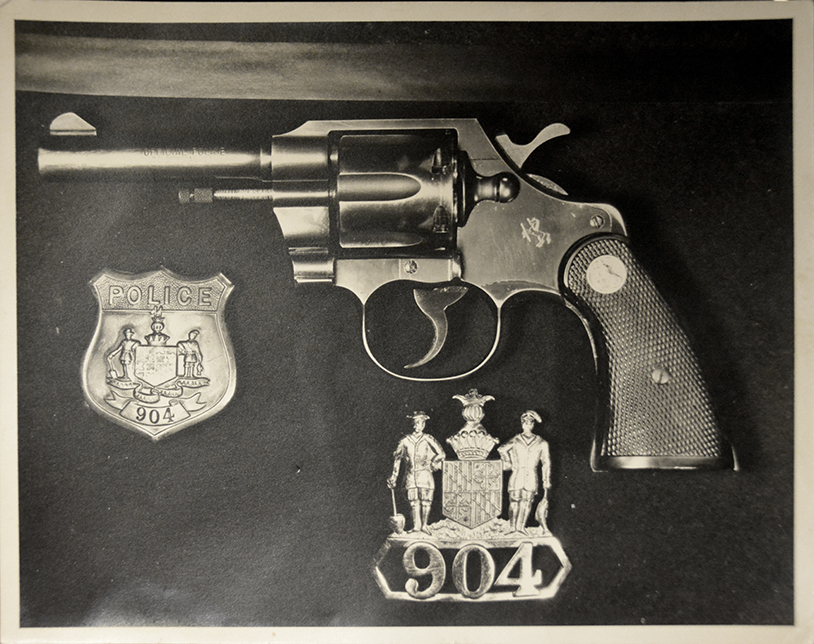
Badge Gun Hat Device 72


Courtesy Sergeant Bernie Wehage

Hat Device 409 72


Courtesy Sergeant Bernie Wehage

INK BPD 72


Courtesy Sergeant Bernie Wehage
Sgt Ned Schleig

James Crogan 72


Courtesy Sergeant Bernie Wehage
John Crogan aka FISH

Jess Baker 72


Courtesy Sergeant Bernie Wehage
Jess Baker

John Hall 72


Courtesy Sergeant Bernie Wehage
John Hall

John Schoff 72


Courtesy Sergeant Bernie Wehage
John Schoff

M Miller 72


Courtesy Sergeant Bernie Wehage
Melvin Miller


Odis Sis Trunk 72


Courtesy Sergeant Bernie Wehage
Odis Sistrunk


Ollie Creig 72


Courtesy Sergeant Bernie Wehage
Ollie Craig

Willie Roster 72


Courtesy Sergeant Bernie Wehage
Willie Roster

SW Officer 72


Courtesy Sergeant Bernie Wehage 

SE BPD 72


Courtesy Sergeant Bernie Wehage
Ed Mizijewski


SANTA ARN MUGSHOT 72


Courtesy Sergeant Bernie Wehage
Santa Clause


BPD 9966 72


Courtesy Sergeant Bernie Wehage
SE Truck 9966 Russell France


BPD UNK 72


Courtesy Sergeant Bernie Wehage


1 black devider 800 8 72


Retired Officer Tom Wade


BPD UNK 72


Courtesy of Tom Wade


1 black devider 800 8 72


Lieutenant Bob Wilson


IMG 6494


Courtesy Lieutenant Bob Wilson


img048


Courtesy Lieutenant Bob Wilson


IMG 4392


Courtesy Lieutenant Bob Wilson


img050


Courtesy Lieutenant Bob Wilson


img052


Courtesy Lieutenant Bob Wilson


mounted 3 72


Courtesy Lieutenant Bob Wilson


mounted 72


Courtesy Lieutenant Bob Wilson


mounted 272


Courtesy Lieutenant Bob Wilson


img053


Courtesy Lieutenant Bob Wilson


IMG 5910


Courtesy Lieutenant Bob Wilson


img055


Courtesy Lieutenant Bob Wilson


img060


Courtesy Lieutenant Bob Wilson


img063


Courtesy Lieutenant Bob Wilson


img064


Courtesy Lieutenant Bob Wilson


IMG 4252


Courtesy Lieutenant Bob Wilson


img074


Courtesy Lieutenant Bob Wilson


img136


Courtesy Lieutenant Bob Wilson


img137


Courtesy Lieutenant Bob Wilson


img138


Courtesy Lieutenant Bob Wilson


img143


Courtesy Lieutenant Bob Wilson


img146


Courtesy Lieutenant Bob Wilson


img147


Courtesy Lieutenant Bob Wilson


img148i


Courtesy Lieutenant Bob Wilson


img149


Courtesy Lieutenant Bob Wilson


img152


Courtesy Lieutenant Bob Wilson


img160


Courtesy Lieutenant Bob Wilson


img161


Courtesy Lieutenant Bob Wilson


img162


Courtesy Lieutenant Bob Wilson


img163i


Courtesy Lieutenant Bob Wilson


img166


Courtesy Lieutenant Bob Wilson


img167


Courtesy Lieutenant Bob Wilson


img168


Courtesy Lieutenant Bob Wilson


img169


Courtesy Lieutenant Bob Wilson


img170


Courtesy Lieutenant Bob Wilson


img174


Courtesy Lieutenant Bob Wilson


img175


Courtesy Lieutenant Bob Wilson


img178


Courtesy Lieutenant Bob Wilson


img179


Courtesy Lieutenant Bob Wilson


img181


Courtesy Lieutenant Bob Wilson


img183


Courtesy Lieutenant Bob Wilson


img185


Courtesy Lieutenant Bob Wilson


img187


Courtesy Lieutenant Bob Wilson


img189


Courtesy Lieutenant Bob Wilson


img190


Courtesy Lieutenant Bob Wilson


img191


Courtesy Lieutenant Bob Wilson


img192


Courtesy Lieutenant Bob Wilson


img199


Courtesy Lieutenant Bob Wilson


img201


Courtesy Lieutenant Bob Wilson


img202


Courtesy Lieutenant Bob Wilson


img210


Courtesy Lieutenant Bob Wilson


img212


Courtesy Lieutenant Bob Wilson


img214


Courtesy Lieutenant Bob Wilson


img217


Courtesy Lieutenant Bob Wilson


img218


Courtesy Lieutenant Bob Wilson


img219


Courtesy Lieutenant Bob Wilson


img220


Courtesy Lieutenant Bob Wilson


img221


Courtesy Lieutenant Bob Wilson


img222


Courtesy Lieutenant Bob Wilson


img226


Courtesy Lieutenant Bob Wilson


img230


Courtesy Lieutenant Bob Wilson


img232


Courtesy Lieutenant Bob Wilson


img233


Courtesy Lieutenant Bob Wilson


img235


Courtesy Lieutenant Bob Wilson


img238


Courtesy Lieutenant Bob Wilson


img240


Courtesy Lieutenant Bob Wilson


img241


Courtesy Lieutenant Bob Wilson


img244


Courtesy Lieutenant Bob Wilson


img245


Courtesy Lieutenant Bob Wilson


img250


Courtesy Lieutenant Bob Wilson


img251


Courtesy Lieutenant Bob Wilson


img259


Courtesy Lieutenant Bob Wilson


img260


Courtesy Lieutenant Bob Wilson


img261


Courtesy Lieutenant Bob Wilson


img264


Courtesy Lieutenant Bob Wilson


img265


Courtesy Lieutenant Bob Wilson


img252


Courtesy Lieutenant Bob Wilson


img253


Courtesy Lieutenant Bob Wilson


img255


Courtesy Lieutenant Bob Wilson


img256


Courtesy Lieutenant Bob Wilson


img257


Courtesy Lieutenant Bob Wilson


img269


Courtesy Lieutenant Bob Wilson


img271


Courtesy Lieutenant Bob Wilson


img274


Courtesy Lieutenant Bob Wilson


img276


Courtesy Lieutenant Bob Wilson


img277


Courtesy Lieutenant Bob Wilson


img273


Courtesy Lieutenant Bob Wilson


img279


Courtesy Lieutenant Bob Wilson


img280


Courtesy Lieutenant Bob Wilson


img281


Courtesy Lieutenant Bob Wilson


img283


Courtesy Lieutenant Bob Wilson


img285


Courtesy Lieutenant Bob Wilson


img291


Courtesy Lieutenant Bob Wilson


img292


Courtesy Lieutenant Bob Wilson


img315


Courtesy Lieutenant Bob Wilson


img316


Courtesy Lieutenant Bob Wilson


img318


Courtesy Lieutenant Bob Wilson


img317


Courtesy Lieutenant Bob Wilson


img322


Courtesy Lieutenant Bob Wilson


img333


Courtesy Lieutenant Bob Wilson

img347

   Courtesy Lieutenant Bob Wilson

img348


Courtesy Lieutenant Bob Wilson


img349


Courtesy Lieutenant Bob Wilson


img365


Courtesy Lieutenant Bob Wilson


img369


Courtesy Lieutenant Bob Wilson


img395


Courtesy Lieutenant Bob Wilson


img407


Courtesy Lieutenant Bob Wilson


img409


Courtesy Lieutenant Bob Wilson


img412


Courtesy Lieutenant Bob Wilson


img414


Courtesy Lieutenant Bob Wilson


img476


Courtesy Lieutenant Bob Wilson


img477


Courtesy Lieutenant Bob Wilson


img478


Courtesy Lieutenant Bob Wilson


img499


Courtesy Lieutenant Bob Wilson


img501


Courtesy Lieutenant Bob Wilson


img502


Courtesy Lieutenant Bob Wilson


img503


Courtesy Lieutenant Bob Wilson


img507


Courtesy Lieutenant Bob Wilson


img508


Courtesy Lieutenant Bob Wilson


img513


Courtesy Lieutenant Bob Wilson


img522


Courtesy Lieutenant Bob Wilson


img524


Courtesy Lieutenant Bob Wilson


img529


Courtesy Lieutenant Bob Wilson


img531


Courtesy Lieutenant Bob Wilson


img532


Courtesy Lieutenant Bob Wilson


img537


Courtesy Lieutenant Bob Wilson


img543


Courtesy Lieutenant Bob Wilson


img535


Courtesy Lieutenant Bob Wilson


img547i


Courtesy Lieutenant Bob Wilson


img548


Courtesy Lieutenant Bob Wilson


img550


Courtesy Lieutenant Bob Wilson


img551


Courtesy Lieutenant Bob Wilson


img552


Courtesy Lieutenant Bob Wilson


img554


Courtesy Lieutenant Bob Wilson


img557


Courtesy Lieutenant Bob Wilson


img559


Courtesy Lieutenant Bob Wilson


img567


Courtesy Lieutenant Bob Wilson


img577


Courtesy Lieutenant Bob Wilson


img320


Courtesy Lieutenant Bob Wilson


img324


Courtesy Lieutenant Bob Wilson


img334


Courtesy Lieutenant Bob Wilson


img336


Courtesy Lieutenant Bob Wilson


img337


Courtesy Lieutenant Bob Wilson


img338


Courtesy Lieutenant Bob Wilson


img340


Courtesy Lieutenant Bob Wilson


img341


Courtesy Lieutenant Bob Wilson


img345


Courtesy Lieutenant Bob Wilson


img347


Courtesy Lieutenant Bob Wilson


img348


Courtesy Lieutenant Bob Wilson


img349


Courtesy Lieutenant Bob Wilson


img350


Courtesy Lieutenant Bob Wilson


img360


Courtesy Lieutenant Bob Wilson


img361


Courtesy Lieutenant Bob Wilson


img362


Courtesy Lieutenant Bob Wilson


img363


Courtesy Lieutenant Bob Wilson


img365


Courtesy Lieutenant Bob Wilson


img368


Courtesy Lieutenant Bob Wilson 


1 black devider 800 8 72


S T U V W X Y Z  


 X


1 black devider 800 8 72


S T U V W X Y Z  


 Y


1 black devider 800 8 72       

ABCDEF - GHIJKL - MNOPQR - STUVWXYZ


{


1 black devider 800 8 72

                                                                                      POLICE INFORMATION


Copies of: Your Baltimore Police Department Class Photo, Pictures of our Officers, Vehicles, Equipment, Newspaper Articles relating to our department and/or officers, Old Departmental Newsletters, Lookouts, Wanted Posters, and/or Brochures. Information on deceased officers and anything that may help preserve the history and proud traditions of this agency. Please contact retired detective Kenny Driscoll.


This email address is being protected from spambots. You need JavaScript enabled to view it.


Devider color with motto


NOTICE


How to Dispose of Old Police Items


Please contact Det. Ret. Kenny Driscoll if you have any pictures of you or your family members and wish them remembered here on this tribute site to Honor the fine men and women who have served with Honor and Distinction at the Baltimore Police Department.  Anyone with information, photographs, memorabilia, or other "Baltimore City Police" items can contact Ret. Det. Kenny Driscoll at This email address is being protected from spambots. You need JavaScript enabled to view it. follow us on Twitter @BaltoPoliceHist or like us on Facebook or mail pics to 8138 Dundalk Ave. Baltimore Md. 21222


Copyright © 2002 Baltimore City Police History - Ret Det Kenny Driscoll 


FOP History

FOP History

EVER EVER EVER Motto DivderHistory of FOP Lodge #3
fop frontwardfop star foraward


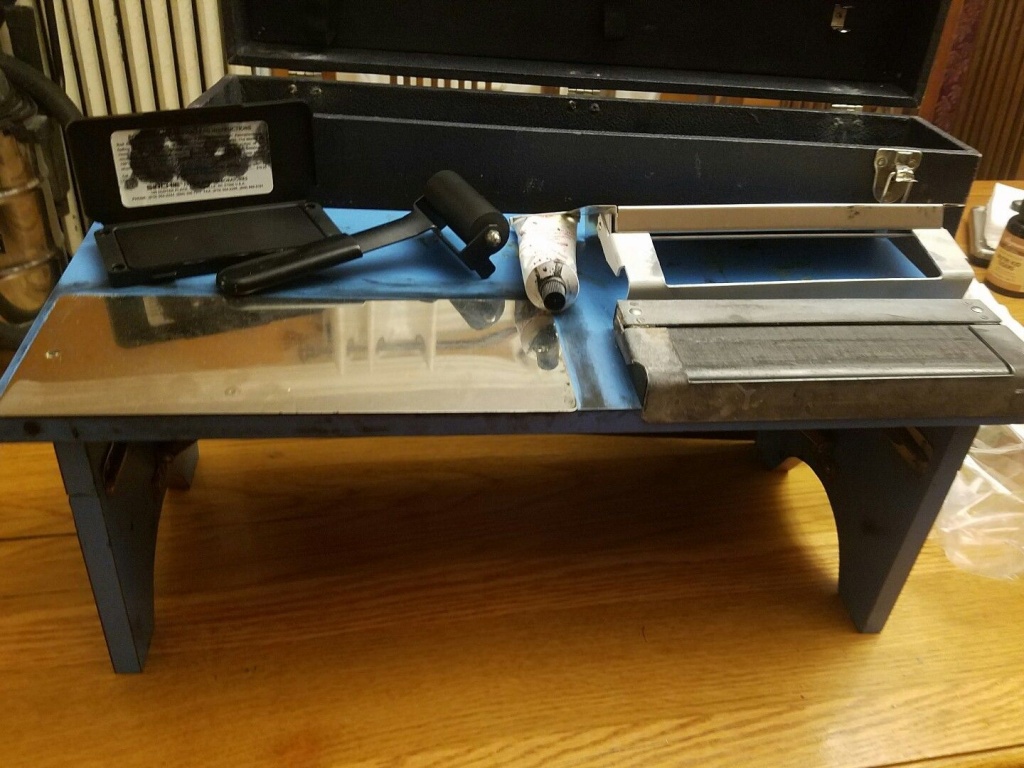
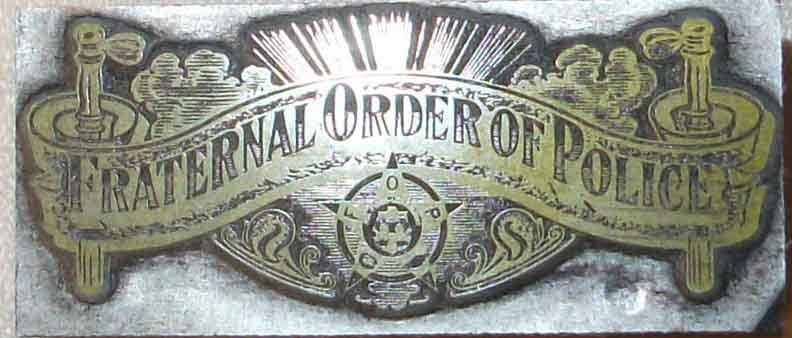
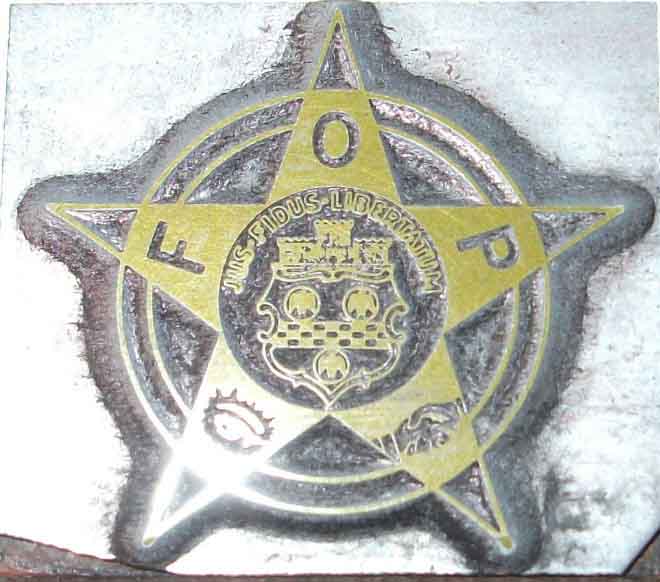
 These are Old Brass Printers Plates for FOP Letterheads and Envelopes

FOP Stamps Some background History on the FOP Logo

The five-cornered star reminds us of the allegiance we owe to our Flag it is a symbol of the authority with which we are entrusted. It is an honor the people we serve bestow upon us. They place their confidence and trust in us to do the right thing, and to be there when called upon; we are to serve them proudly.
Midway between the points, and center of the star is a blue field representative of the thin blue line protecting those we serve.
The points are of gold, to indicate the position of which we are now serving.
The background is white, the unstained color representing the purity with which we should serve.
We shall not let anything corrupt be injected into our order.
Therefore, our colors are blue, gold and white.
The open eye is the eye of vigilance, ever looking for danger and protecting all those under its care while they sleep, or while awake.
The clasped hands denote friendship. The hand of friendship is always extended to those in need of our comfort.
The circle surrounding the star midway indicates our never-ending efforts to promote the welfare and advancement of this order.
Within the half circle over the centerpiece is our motto, "Jus, Fidus, Libertatum" which translated means "Law is a Safeguard of Freedom."

Some have given "The Thin Blue Line" a negative meaning; They think it means police stick together (lie for each other, cover-up for each other and partake in corruption for each other; The truth is, The Thin Blue Line refers to the low number of police officers that form a line between the "Good Things in Society" so we can protect them from the "Bad Things in Society ".
In most departments the police are outnumbered by as many as 100 to 1 or more, that is to say for every officer on the beat, there could be as many as 100 people he is responsible for protecting, and 99% of our police will put their lives on the line to live up to their oath to protect that 100 or more people.

During the Decency Rally in 1969, Police were outnumbered by as many as 200 to 1 while packed into Memorial Stadium before fights and other assaults, took place through the stadium which nearly leads to riots. This isn't much different from the riots of 1861, and the riots of 1968 when police were outnumbered, but The Thin Blue Line of the Baltimore Police Department's FOP Lodge #3 will always stand tall, never back down, and will always manage to get the job done.

Devider

How it all Started
The Eulogy for Richard Allen "Dick" Simmons 
as read by Earl Kratch at his Memorial Service
Sunday on August 18th, 2013

RICHARD ALLEN SIMMONS – Some called him Richard or Rick or Dad, but on the job, we called him Dick. He was a true Baltimore City Police Officer. He handled himself well. In his younger years as a beat walking Patrolman, you could tell when he was working on what was happening in his post. When he worked, there was no loitering in front of his bars, drug store or any other businesses or corners. He kept them clear.

I came to know Dick back in the early 60’s when he was a footman in the Eastern District and I was a Headquarters Narc. We had conversations of our objections of the Baltimore City Police were represented by a labor union, instead, we wanted to be associated with a professional law enforcement organization, that being the Fraternal Order of Police. During this time period, there was a group of Baltimore City Police Wives who spoke out on issues within the police department. We had feared at that time of retaliation if we spoke out. Dick’s first wife Anne Simmons was a member of that group and they contacted the National Fraternal Order of Police President John Harrington who was also the President of the Philadelphia Pennsylvania City Lodge #5. He along with Pennsylvania National Trustee Steve Condos (A Pennsylvania State Trooper) came to Baltimore, met with us and this was the beginning of the Fraternal Order of Police, Baltimore City Lodge #3 being formed. Dick became our first President and I became the Treasurer.

Not having payroll deduction for collecting dues at that time, we would go to the districts and headquarters collecting dues on payday – not an easy task. John Harrington put us in touch with a Don Sloane who did the Philadelphia Lodge #5 fundraising – solicitation of funds for Associate Membership which put Associate Membership car medallions on the streets of Baltimore.

The Police Union at that time found a way to get us bad press and they contacted the Baltimore Sun Papers – the paper ran a story showing our FOP Associate Membership car medallion stating that this medallion would get the person out of speeding tickets and parking tickets in Baltimore City. Our attorney who was with us from day one, Sidney Schlachman contacted Dick and me, telling us that we had problems. That we where to meet him at City Hall for a meeting at 1 P.M. that day. That the possibility existed that we may be fired. We got our ass whipped and was instructed to cease and desist the program, which we did. We then went to a bi-yearly magazine publication with another promoter who did solicitation for adds to put out the magazine.

Back in 1967, John Harrington informed us about the Grand Lodge FOP National Conference that was to take place in August 1967 in Miami Beach, Florida. Dick and I, along with our families, and at our own expense, attended this conference. We where the only delegates registered at this conference from Maryland. At this conference, we found that if we formed a Maryland State Lodge with three Maryland Local Lodges, we could have a National Trustee on the Grand Lodge Board of Directors. We came back and with some research, found that there was two other Maryland Local Lodges – Hagerstown Lodge # 88 and Prince Georges County Lodge # 89. Back in the beginning, the Grand Lodge assigned the numbers. Nationwide in the order, the local lodges were formed. Thus, Hagerstown was the 88th  FOP Lodge that was formed and Prince George’s County #89 was formed next. 

On November 8th, 1967, Dick, I and our attorney Sidney Schlachman, traveled to the Hagerstown Lodge #88 Club House, meeting with them and Prince George’s County Lodge #89. At which time National President John Harrington formed the Fraternal Order of Police, Maryland State Lodge. Note; at this time we were unaware of the existence of the Cumberland Lodge #90. With this, Dick became the first Maryland National Trustee. I became the Treasurer.

This was the start of the growth of Fraternal Order of Police in Maryland. People like Dick Simmons, Bill Giffin and Ralph Ryland from Hagerstown, I and others later on like Les Bates from Anne Arundel County Police expanded Maryland FOP to what is today, with around 20,000 members in over 60 local lodges. All this came about because of people like Dick Simmons who had dreamt of an FOP.

Dick Simmons, Ralph Ryland, Les Bates, I and others have lived for the existence of the FOP. To the time of Dick’s death, he was in contact with me at least 2 to 3 times a week talking to me about FOP business. A little over a year ago, FOP, Maryland State President John “Rodney” Bartlett presented Dick Simmons the top award that a member could receive from the Fraternal Order of Police, Maryland State Lodge, that being the Lifetime Achievement Award. The emotions shown by Dick was that of one of the peaks of his FOP life. He was very humble to be recognized by his peers. This plaque is presently on display at this gathering.

Richard Allen Simmons was known to some as "Rick" and to others, as "Dick" still others called him "Dad" but to the BPD he was "Mr. FOP" from Maryland. May he Rest In Peace. Some stories about forming Lodge #3 and other Lodges in the area

support police BPDAn Adventurous Trip
by Earl Kratch  

To say the least, being involved in forming Fraternal Order of Police in Maryland has been an adventurous trip. First with the formation of Baltimore City Lodge #3 and then the Maryland State Lodge. But, we didn't stop there. "Dick", myself along with Ralph Ryland and then Les Bates and others that came along, reached out to other agencies in Maryland, forming them into local FOP Lodges. Most of them were the same old story, them being scared of the administration retaliating against them. Dick and I put many a mile on my car, forming lodge after lodge. Looking back over the years, I counted twenty-nine local Maryland Lodges that I was primarily involved with or assisted in forming. While working in the Narcotic Unit, working along with Baltimore County Police detectives, and just after we formed Baltimore City Police Lodge #3; I talked to some of the Detectives in the Baltimore County Police Department and they showed interest in forming a local FOP Lodge. I then went back to "Dick" who was now our Maryland State Lodge National Trustee - - - thus we formed FOP Baltimore County Police Lodge #4. And it kept on going as the FOP was becoming a wave across Maryland. On a funny note, I along with then Maryland FOP State President Les Bates, where going to meet with a group that wanted to form a local lodge. On the way, driving through Charles County, we came across a uniformed Charles County Deputy Sheriff, directing traffic in the pouring down rain getting soaked and wet as he had no rain gear. Les stopped his police car, opened his trunk and removed an Arundel County Police Department raincoat. He gave it to the deputy that was standing in the rain directing traffic asking him why his agency didn't supply him with a raincoat - - - thus we started another lodge, that being Fraternal Order of Police,  Charles County Lodge #24. I am so blessed with having had the opportunity to have come in contact with so many law enforcement personnel, that have become my fraternal brothers and sisters. These brothers and sisters have the same goals as I, that of giving their all, making Maryland law enforcement an honorable recognized profession with proper benefits. 

Thank You!  Fraternally / Sincerely, Earl...


Devider

Presidents of FOP's Lodge #3


Richard Simmons 1966-1973

Gus Drakos (deceased) 1974-1980
John Laufert (deceased) 1980-1986
Edwin Boston 1986-1990
Don Helms 1990-1992
Leander "Bunny" Nevin 1992-1994
Gary McLhinney 1994-2003
Daniel J. Fickus 2003-2004
Frederick V. Roussey 2004-2006
Paul M. Blair, Jr. 2006-2008
Bob Cherry 2008 - 2014
Gene S. Ryan 2014 - 2018
Mike Mancuso  2018 - Present


Devider


24 Feb 1967

Police Bill Introduced
It Urges Recognition of Fraternal Order Lodge

Annapolis, February 23, 1967 – A bill to direct Donald D. Pomerleau, Baltimore Police Commissioner, to recognize the Fraternal Order of Police as the “Official Representative” of members of the force was introduced in General Assembly Today. Already pending is a rival measure designed to force recognition of a non-striking AFL-CIO union local of Baltimore police patrolman and sergeants.

Sen. Paul A. Dorf (D., 5th Baltimore) introduced the, "Fraternal Order Bill" “by request, as marked. He said he put it in at the request of those trying to get recognition for a Baltimore Lodge of the Fraternal Order, a national organization that claims more than 60,000 members. Furthermore, he said he agreed to lend his name to the measure so that he and his fellow Baltimore legislators could get, “all the issues on the table” when the rival bill comes up for hearings. The AFL – CIO measure, now before the House Judiciary Committee, does not mention “Union” union name.

It specifies that if most of the Sergeants and Patrolman, in the department decide by secret vote to designate an “Organization” to represent them, the Police Commissioner must deal with that union on such questions as Hours, Working Conditions and Grievances. The Fraternal Order Bill reads, in part: “The Police Commissioner of Baltimore City police shell allow the members of the Baltimore City Police Department to form and join a local lodge other Fraternal Order of Police, said organization to be established and recognized for the following purposes: “To better the existing conditions of policemen; for advancing social and educational undertaking in the department deciding among policemen; to encourage an amicable and official relationship, protection and cooperation among police officers; to provide fellowship among police officers… “The said local lodge so organized shall act as the official representative of the members of the Baltimore City Police Department.”


Devider

The Baltimore Sun Fri Mar 17 1967 72CLICK PIC ABOVE or HERE

Donald D. Pomerleau  Airs His Stand
To Back Fraternal Order of Police as Agent

17 March 1967

Annapolis, March 16 – The Baltimore Police Commissioner Donald D. Pomerleau, announced today that he intends to recognize the fraternal order of police as the organization to represent policeman within Baltimore’s Police Department.

He announced this intent in Annapolis on a day when he, the delegates, senators, organize labor officials, the Fraternal Order of Police organizers, individual policeman, the police personnel service board and the United Baltimore City Police Wives, all claim to speak for the best interest of the department.

A board that is clearly the city’s biggest bandwagon of the year, they all favorite as much money for policeman salary and benefits as could be gotten.

On Other Issues

But on other issues, they demonstrated as much unity as a bag full of cats. For example, in an early morning meeting with the city delegation, Commissioner Pomerleau was a sword “the house” was “giving him everything you want,” meaning the money package he had asked for.

But in the afternoon, Commissioner Pomerleau had to appear before a committee to defend himself against a resolution calling on the governor to investigate his actions in a recent disciplinary case. That resolution was sponsored by delegate Charles Jake. Krysiak (D., 1st Baltimore).

The key issue of the day was the bill allowing policemen to form an employee organization within the department – the bill designed to allow a police union. Mr. Pomerleau delivered a figure of speech against the union and found himself befriended by his hardest organized critics – the United police wives Association. Mrs. Lillian Griffin, the president claimed the husband’s do not want to be represented by organized labor.

2000 Cards

She said this shortly after union officials displayed a boxful of cards, claiming it represented the endorsements of 2000 patrolman, presumably not all bachelors. Mrs. Griffin challenged the union statement of strength, claiming the collection of cards extended over a three-year period and included signatures of men who would be resigned from the department and others who have since become disenchanted with the idea of joining the union.

Then a delicate asked Mrs. Griffin how many members her organization represented. She declined to answer. The resolution on Commissioner Pomerleau, also being considered by the judiciary committee, is the latest in a series of efforts, mostly underground, to portray him as unsuited for the job.

Phillips Case

Incalls on Gov. Agnew to investigate the disciplinary action taken against for patrolman Leroy a. Phillips, and the commissioner's public remarks about the case as reported in the sun. Mr. Phillips was found not guilty by the departmental board to be innocent of all charges that he repeatedly said “Nager” at a woman he was arresting.

On the 17th of February, the Sun quoted the Commissioner as saying that he believed Mr. Phillips was guilty. Before the judiciary committee, Mr. Pomerleau said that the officer had been offered departmental punishment after an investigation convinced four supervisors, including two deputy commissioners, that he was guilty.

The Commissioner said that Mr. Phillips was reassigned following the case, a policy action taken whenever a policeman is the focal point of a public controversy. The Commissioner denied making the remark “in the context” in which they appeared in the February 17 story. An action on the resolution was deferred by the committee.


Devider


In the Line of Fire
A Veteran Cop faces his Toughest Opponent: City Hall

By Evan Serpick
Credit: David Colwell
 

The Baltimore City Fraternal Order of Police Lodge 3 in Hampden is a part clubhouse, part HR office. In one room, officers go over paperwork regarding leave time and benefits. In the next, a neon police car hangs over a bar where off-duty cops swig beer and watch SportsCenter.

Upstairs, FOP president Bob Cherry toils in a busy but tidy office. A Norman Rockwell poster that shows a kind cop stooping down to help a little boy hangs behind his desk. On the floor are stacks of paperwork, some of them related to the union's long-standing struggle with City Hall over police pensions. Others, research about accidental police shootings. Cherry, who's been a cop for 18 years, always wanted to work in law enforcement.

"The model of public service was put in me as a kid," says Cherry, who grew up in a working-class town south of Boston and still has the Southie accent to prove it. "I believe that there are some folks who have that calling."

Unlike most cops, Cherry spent years working with inner-city kids before he joined the force. After graduating from Boston College, he worked as a case manager and team leader for Baltimore's Choice program, which provides outreach and support for troubled young people. For three years, he counseled and tracked kids in Cherry Hill and East Baltimore.

"It was frustrating," says Cherry, who has lived in Baltimore City since 1990. "All these kids, their neighborhoods were ravaged by poverty, no jobs, drugs everywhere—the one avenue where you would hope they would get some security would be school and, back then, they were pretty bad."

Still, Cherry fell in love with the city.

"It's like Boston: the blue-collar, tight-knit neighborhoods," he says. "I realized that this is a city that I want to work to improve."

In 1993, Cherry became a police officer, quickly rising through the ranks, working on the Violent Crimes Task Force, and ultimately, as a detective in the homicide division. In 2008, his colleagues in the FOP elected him their president, taking him off the streets.

It's been an eventful three years. The recession and cuts in the city budget have meant near-constant battles with City Hall over salary, benefits, and pensions. Three police officers were killed in the line of duty in the past year. And this year has brought a string of controversial incidents, including an accidental police-on-police shooting in January and the arrest of 19 officers in an alleged extortion scheme in February.

"I wish I was back on homicide," says Cherry—not at all kidding. "It's hard to keep everyone happy up here, whether you're dealing with City Hall, command staff, or even the men and women who you represent."

Relations with the City Council and Mayor Stephanie Rawlings-Blake headed south last year when the council drastically cut city contributions to police pensions, reduced benefits, and eliminated tuition reimbursement.

Cherry was particularly miffed that the mayor helped kill a bill allowing the city and the FOP to enter binding arbitration and shot down an FOP counter-proposal to the city's changes in the pension plan that, he says, would have matched City Hall's cuts.

"You show up at our officers' funerals and say 'good job.' You go on TV and talk about the reduction in crime and say 'good job.' But you won't sit down with us who, though we disagree, have come a lot further than unions across the country," he says. "It's unfortunate."

Ryan O'Doherty, a spokesperson for the mayor, says the pension legislation included many fiscally responsible compromises.

"The mayor was concerned about getting the pension system funded so it would be there when police officers and firefighters need it," says O'Doherty. "Bob Cherry was more concerned about keeping a system where government employees retire in their early 40s with a full pension after 20 years."

It got so bad that the FOP filed a federal lawsuit against the city and helped pay for billboards that read: "Welcome to Baltimore. Home to a Mayor & City Council who turned their backs on our police and firefighters."

"It's frustrating that I have a strained relationship with folks at City Hall," says Cherry, who hasn't talked to the mayor in six months. "I think we can bring a lot to the table."

Cherry is looking into a performance-based contract for cops, like the one the Baltimore Teachers Union recently signed.

"There's less money going around," says Cherry, who's a fan of ousted D.C. schools chancellor Michelle Rhee, who also favored performance-based contracts. "We have to find ways to streamline our services without giving up on the goal of public safety."

Above all, says Cherry, his most important priority is making sure his fellow police officers get the respect they deserve.

"There are a lot of intelligent, hard-working men and women in the Baltimore Police Department that can make Baltimore a stronger place," he says. "I love representing them." 


Negotians3 15 84  Recovered 72Courtesy Tom Douglas
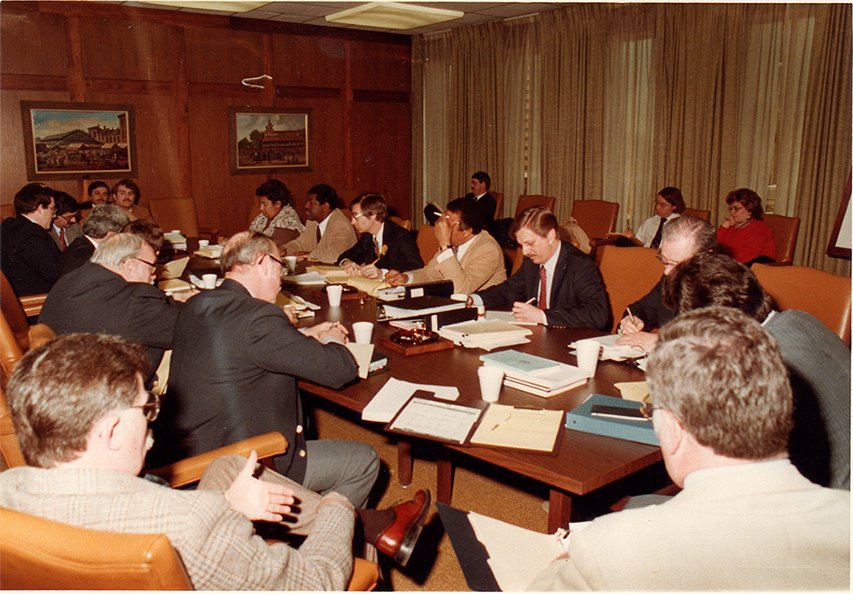
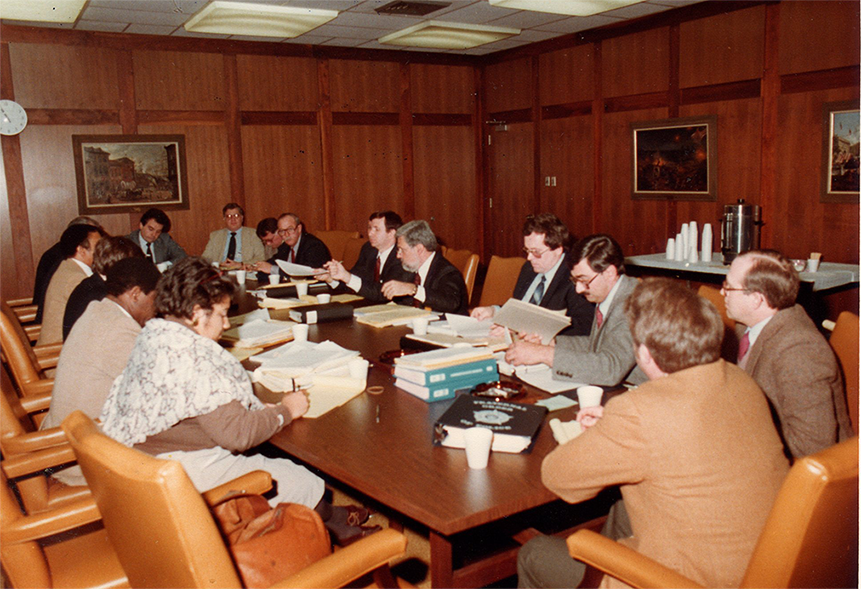
Contract Negotians3-15-84
Negotians3 15 84 A Recovered 72Courtesy Tom Douglas
Contract Negotians3-15-84

Devider

 To Read About the Baltimore Police Strike

Click HERE

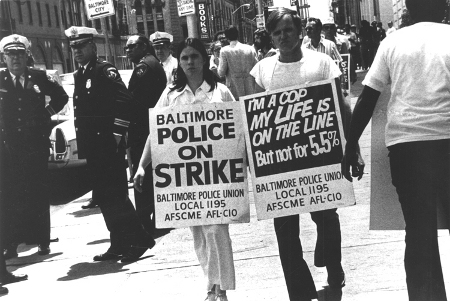
Baltimore Police officers on strike 1974


Devider color with motto

Please contact Det. Ret. Kenny Driscoll if you have any pictures of you or your family members and wish them remembered here on this tribute site to honor the fine men and women who have served with honor and distinction at the Baltimore Police Department.

Anyone with information, photographs, memorabilia, or other "Baltimore City Police" items can contact Ret. Det. Kenny Driscoll at This email address is being protected from spambots. You need JavaScript enabled to view it. follow us on Twitter @BaltoPoliceHist, like us on Facebook or mail pics to us at 8138 Dundalk Ave. Baltimore Md. 21222 

Copyright © 2002 Baltimore City Police History - Ret Det Kenny Driscoll 


Gino Inocentes

Gino Inocentes

Gino Inocentes' Police Pictures

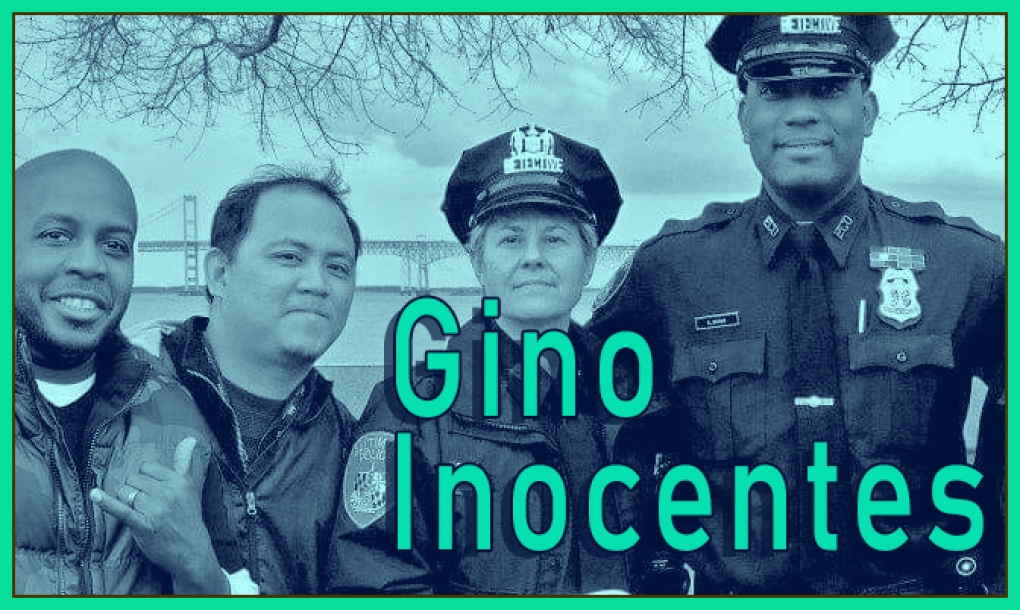
Gino Inocentes Baltimore's Police Photographer... Proving Police Involved Shootings aren’t always a Negative Thing... Gino is our Multi-Media Tech for Media Relations Section (aka Public Affairs Section)... What he does for the department is mostly training, and promo videos, along with photography & graphic designs. He used to do a lot of evidence videos while under the academy, where he held the title “Video Analyst/Non-linear Editor”. When they transferred him to Public Affairs Section in 2011, his main tasks were to create and produce all kinds of media for the departments, social media sites, and official websites... His official title is, "Criminal Justice Associate", and like most of our members in the BPD, he takes his job to heart, and provides what could be among the best social media sites, and official website info of any department in this country.

We are proud to have Gino doing what he does to aid in the education, and preservation of our department and departmental history. Below and on various pages within this site you'll find many of Gino's pics; and while Gino's a professional photographer, you don't have to be to have your pics added to this site. We are interested in our history; so, if you have pics of you, your partners, or family; feel free to send them to us for inclusion on the site. We enjoy Gino's work, but all pictures of Baltimore Police are equally important, and equally wanted, and welcome. Email us at This email address is being protected from spambots. You need JavaScript enabled to view it. to find out how to best have your pics added to the site.


1 black devider 800 8 72

If you have Baltimore Police Pictures, feel free to send them our way, we are always looking for pics of our departmental history, and your BPD pics, stories and items are all part of that history... so scan them and send them in, or mail them to us, and let us scan them for you, once scanned, we'll save an extra copy to disc, and mail it back to you along with your originals... just include a note with return address if you want them back.. we have had people give us picks too, so let us know which you want and we pay for all discs and return shipping.

1 black devider 800 8 72

POLICE INFORMATION

Copies of: Your Baltimore Police Department Class Photo, Pictures of our Officers, Vehicles, Equipment, Newspaper Articles relating to our department and or officers, Old Departmental Newsletters, Lookouts, Wanted Posters, and or Brochures. Information on Deceased Officers and anything that may help Preserve the History and Proud Traditions of this agency. Please contact Retired Detective Kenny Driscoll.

This email address is being protected from spambots. You need JavaScript enabled to view it.

Devider color with motto

NOTICE

How to Dispose of Old Police Items

If you come into possession of Police items from an Estate or Death of a Police Officer Family Member and do not know how to properly dispose of these items please contact: Retired Detective Ken Driscoll - Please dispose of POLICE Items: Badges, Guns, Uniforms, Documents, PROPERLY so they won’t be used IMPROPERLY. 

Please contact Det. Ret. Kenny Driscoll if you have any pictures of you or your family members and wish them remembered here on this tribute site to Honor the fine men and women who have served with Honor and Distinction at the Baltimore Police Department.

Anyone with information, photographs, memorabilia, or other "Baltimore City Police" items can contact Ret. Det. Kenny Driscoll at  This email address is being protected from spambots. You need JavaScript enabled to view it. follow us on Twitter @BaltoPoliceHist or like us on Facebook or mail pics to 8138 Dundalk Ave. Baltimore Md. 21222

 Copyright © 2002 Baltimore City Police History - Ret Det Kenny Driscoll

Charles Gaither

Charles Gaither

Commissioner Charles D. Gaither
"The General"

It's no secret among those that know me that I am not a fan of General Gaither, the man that said, even a broken clock is right twice a day, and Gaither did some good things. So while I will never be a fan of him as a person, I have to credit the thing he did right: he invented systems to make police service faster before radios were in use. He worked on a better traffic light system, crosswalks, and many other services and devices to make Baltimore safer and better. But his racist views on African Americans and their ability to police in Baltimore were inexcusable, and while I will not ignore the things he did right, I will not give him a pass on the significant errors on his part when it came to humanity and caring about all men, all women, and all children on an equal playing field.

A close friend of mine claimed that because he came from a racist family, he once had racist views. While he once felt the way all racists do, those views changed when he was educated and learned everything he had ever been told was wrong. He said he could understand and see where Gaither was coming from; he basically said that as kids, we might have been raised with racist views and could believe everything we were told, but the day we find out they were wrong and that the only difference between a white man and a black man is the color of their skin, but still they continue to carry those incorrect views, prejudices, etc., ignoring facts that are right in front of them, well, that is a racist. My friend has passed away, but he told a story of desegregation within the department and how his sergeant told him to report his new partner for sleeping on duty (if he slept) and he (the sergeant) would have him fired. For the first few days, he was trying to catch his new partner sleeping so he could carry out his sergeant's wishes, but by the end of the first week, he realized something that he was ashamed at his age for not already knowing, and by the end of the second week, the two partners had done what most police partners do: they became friends. Becoming friends, they did what friends do: they ate together, laughed together, and shared personal stories. Over the course of their careers, they attended each other's kids graduations and weddings; they camped and vacationed together; they were the true friends, brothers that our police family became. After saving each other's lives and counting on each other to have each other's backs, they had a bond.  Gaither would never learn this kind of friendship because he was too ignorant to want to. The only race any of us should care about is the human race, and to hate a man, woman, or child simply because their skin doesn't match yours is not only racist, it is foolish. The color of our skin is no different than the color of our eyes or the color of our hair, and we would never dislike someone for having blue eyes when we have brown eyes; that would be silly, and while racism is no laughing matter, it is a silly person that wastes their lives hating someone they don't know anything about other than their skin is a different color. Having done so his entire life caused Gaither not only to lose the respect of historians that would someday study his work as a police officer, but it also put a dent in that chapter of Baltimore Police History.

Something all commissioners need to take into consideration is that the job they bear when they take the oath as Baltimore's police commissioner is more significant than they are, and that knowledge has to become part of the choices they make.
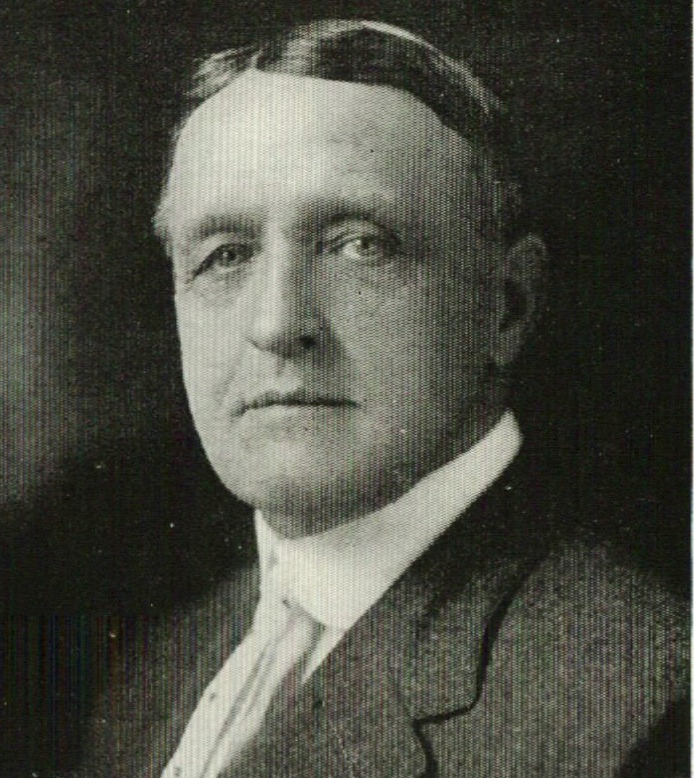
8

Gen. Charles D. Gaither
Baltimore City Police
Commissioner (1920-1937)

1920 - On June 1st, 1920, a man by the name of Brigadier General Charles D. Gaither, previously commander of the First Brigade, Maryland National Guard, began his duties as the Governor-appointed first Baltimore City Police Commissioner. Called "The General," he took Baltimore City traffic seriously and would personally drive through downtown city streets, observing the manner in which traffic was handled, especially during rush hour.

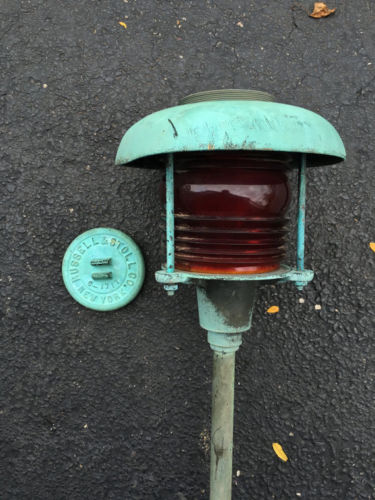
1921 - By July 1921, under his direction, the Police Department had placed fourteen six-foot-high "lighthouses" on concrete bases, which were intended to warn motorists of dangerous curves and bends at night. The flashing lights in the lighthouses were fueled by acetylene tanks (see photo below and left): red flashing indicated places where people had been killed, yellow for dangerous curves or bends where caution must be exercised, and green for danger at intersections where slow, careful driving should be exercised to the right. 

The earlier days of traffic lights and warnings resulted in disgruntlement among drivers and even beasts. Prior to placing the traffic lights on streets with protective bases, they were continually run over by motorists refusing to stop. On October 16, 1923, the Baltimore Sun reported that a certain Jersey bull by the name of Reddy had caused a riot in the middle of the congested intersection of Bryant and Pennsylvania Avenues while being led to slaughter. 40 bulls were being driven down the avenue where automobiles stopped in obedience to a blinking red light, but not Reddy, who saw it as a challenge and proceeded to charge it. In the charge, a truck struck and broke its leg before he could reach his "enemy." Unfortunately, agents of the SPCA needed to kill Reddy earlier than his originally intended fate.

1 black devider 800 8 72

4 May 1921

Police Reorganization

Whether or not all citizens will be able to subscribe to the details of Commissioner Gaither's plan for reorganizing the police department of Baltimore, there should be general satisfaction over the fact that he has seen fit so far in advance of the meeting of the legislature to prepare a program.  The trouble with so many state and municipal visuals is that they wait until the last minute and then wonder why the public does not at once jump to support their half-baked ideas.  It is comforting to know not only that Commissioner Gaither was alive to the present need for a reorganization of his department but that in the drafting of his proposals he had looked ahead to the steady growth of the city.

The fact that Baltimore was at the time under-policed had frequently been contended by past commissioners and others.  The fact that the present organization of that time, was a clumsy and not calculated to produce efficient work was becoming increasingly evident. In some respects, at least, Mr. Gaither had adopted for his program ideas that had been proven effective in other communities.  It was gratifying that he had thoroughly prepared himself to discuss the subjects publicly.  If the people of Baltimore were not in substantial agreement as to what they wanted by the time the Legislature met, the commissioner, at least, would not have been to blame.  He had started the discussion.

1 black devider 800 8 72

museum 7

 Transfer of Badge to Mark the Retirement of General Charles Gaither

1 June 1937

William P. Lawson will take over the office of Commissioner of Police for the next six years at noon on Tuesday, 1 June, 1937.

General Charles D. Gaither, at noon on that same Tuesday, 1 June, 1937, was to hand to Mr. William Lawson the gold-plated commissioner’s badge, which he had received 17 years earlier from Mr. Lawrason Riggs when General Gaither himself became the Baltimore Police Department’s first solo Police Commissioner.

By this act, Mr. Lawson, who took the oath of office a day after his appointment by Gov. Nice, automatically entered into his duties as the executive head of the Baltimore Police Department, becoming the agency's second solo commissioner, a title he was expected to hold for at least the next six years.

Has Name Taken Off

Several days earlier, General Gaither gave his badge to Mr. George J. Brennan, Executive Secretary of the Department, with instructions to, “Have my name taken off and Mr. Lawson’s put on.” No one could recall if Mr. Riggs’ name was removed 17 years earlier when General Gaither was to receive the badge by appointment of former Governor; Albert Ritchie. Mr. Riggs was the president of a three-member police commission known as the BOC (Board of Commissioners). The BOC was discontinued when Gov. Ritchie reorganized the State Government, including the Baltimore Police Department, which at the time fell under State rule.

No Formal Ceremony

Other than the transfer of the badge, there will be no formal ceremony when Mr. Lawson takes over General Gaither’s duties. In certain Republican circles, however, it was whispered that Mr. Lawson might find himself at the center of a large group of congratulating friends bearing floral tributes. Prior to his appointment by Governor Nice, Mr. Lawson was chairman of both the state and city Republican State Central Committees. General Gaither was at his office in the Police Building yesterday morning but left early to enjoy the afternoon on his Howard County farm. There, he recalled the changes that had taken place in the department during his 17-year administration.

City’s Growth of The Force

“When I Came In,” he said, “942 men were authorized for the force, but we had only 725 or 730. The Department was short of men who had a base pay of $25 a week. This was right after the First World War, and men could get more money from other work. Many of the members of The Police Department gave up their jobs to enter more remunerative employment.

“When I came in, the only things the department had were a Detective Bureau of 25 men and 725 patrolmen, a Bertillon bureau, and a “Beauty Squad” of 68 policemen detailed to handle traffic at street corners. Some of these were on bicycles, and there were three motorcycle men.

“Out of this ‘Beauty Squad, was developed the present Traffic Division, with 182 men and 47 motorcycle men. We now have over 1300 patrolmen with a base pay of $35 a week. circa 1937.”

Gaither Reviews Work

Every year, hundreds of men take the examinations to get on the eligibility list for appointment to the Baltimore Police Department. Pressed to enumerate some of the features he introduced into the department, General Gaither modestly agreed to name a few.

They included the following:

The Accident Bureau.
The Bureau of Missing Persons.
The Blinker Light Recall System.
The Automatic Signals.
This Through Highway System.
The Interstation Teletype System.
The Bureau Ballistics, Including an Arsenal for Emergency Purposes.
The Detective Bureau of 85 Men.
The Traffic Division.
Standardization of Police Arms, now all men carry .32 caliber pistols.
Removal of the Police Department Headquarters from a cramped space in The Courthouse to its own building on Fallsway.
The Radio Patrol.
The beginning of a two-way Radio Communications System, now being installed. 

Uniforms improved

The fact that General Gaither failed to mention but which Mr. Brennan did not forget was that the General was also the department’s stylist. When he became Commissioner, patrolmen wore uncomfortable uniforms with tall, stiff helmets. Like those worn in Lindon by Bobby Cops. General Gaither designed the uniform most like the one worn today, circa 2003, which we called Class A’s. And the general started a tradition still used to this day in which, during hot summer months, police were permitted to doff their coats. Before this, police officers were ordered to wear their coats all year. Not only were they to wear the coat all year round, but there was also a time when they were required to wear their uniform both on and off duty. One thing General Gaither did that may or may not have been seen as respectful to the men and women that had been a part of the Baltimore Police Department long before he had arrived. To those before him and after him that had died and or would die, as well as those who had been seriously and permanently injured or someday would be for the City, the department, and the uniform of a Baltimore Police Officer. He felt there were those that worked the streets of Baltimore and earned the right to wear the uniform of one of its Police Officers. As such, General Gaither never wore our uniform; he never felt as if he earned the right, so he always appeared, no matter what the occasion, in a three piece suit.
1 black devider 800 8 72

s l500 3


1 black devider 800 8 72

POLICE SOON READY WITH NEW ALARMS

 5 Sept 1922

The Sun (1837-1989); pg. 6

"Recall System" Will Be Completed

In Two Districts Early Next Week.

PLANS CITY-WIDE EXTENSION

Gaither hopes to have All Baltimore Covered by Light

Signals next Year.

After delays and complications for more than six months, the new police "recall system" will be completed early next week [11 Sept 1922] in the Central and Western districts, as announced yesterday by Charles D. Gaither, Commissioner of Police. This system, conceived by the Commissioner, will be established throughout the city by next year, Mr. Gaither said, providing an appropriation permits it.

Having been tested through experiments with the call box at Baltimore and Charles streets and in outlying sections of the Northern District, the system is regarded as feasible and satisfactory and is expected to aid in the quick capture of criminals. Through the Recall," patrolmen all over the city can be summoned immediately, and instructions were given to the entire force at once.

How the System Works

All police call boxes in the Central and Western districts are being equipped with a red light projecting over the top of the box. A cable connects the series of boxes to the respective districts and headquarters. When a patrolman is wanted, his box is "flashed." And the light blinks until the telephone receiver is removed from the hook. If the entire force is wanted, every box flashes simultaneously until answered. Under the present system, there are no means of obtaining communication with patrolmen on the street. The policemen call their respective districts every hour and between the hours of call, unless someone is dispatched to call the officer wanted. There are no means of locating him. When the light flashes, the officer will know that his district wants him and will answer.

A City-Wide System is Good

“The plan is a good one. I think,” commented Mr. Gaither, “and by next year we hope to have the system installed in all of the eight districts. If all of our appropriations are sufficient, this will be done. We were delayed this year when we received the wrong equipment and had trouble obtaining the correct cable. The siren system, as established in New York banks, was commended by the Commissioner. Banks in downtown New York have been equipped with huge horns that are blown in cases of robbery or hold-ups, and attention is immediately attracted to that point. The idea could be adopted here advantageously.”

Gaither suggested this program, and it was not only successful here in Baltimore, but it was a system that would be adopted by departments up and down the East Coast.

1 black devider 800 8 72

“The General” of Baltimore Police

Commissioner Gaither Learned his Lesson as a Guardsman

Half a dozen spellbinders bombarded a listless crowd of perhaps fifty people in the War Memorial Plaza. Around the square stood a hundred uniformed policemen. The officers were all twirling their espantoons, looking bored. Nothing happens. So many policemen, apparently on hand to preserve order, seems a little silly. They outnumber the rest of the crowd and themselves by two to one. No nervous Nelly was Commissioner Charles Gaither, who sent all those bluecoats to the Plaza. But he has seen Baltimore’s police force overpowered and whipped to a standstill. During some of his first days policing Baltimore, then as a National Guardsman, he and his men were stoned by Baltimore’s infamous "Mobtown". He helped put down the rioting in the streets of Baltimore at the point of the bayonet. This happened nearly 60 years earlier, but he could never forget. He doesn’t believe in taking chances. Aside from the effects it has had on him, now it is more than just him. He has the men wearing the uniform of our Baltimore Police to consider, and so he made all decisions with them in mind. Or, as he expressed it, “I don’t believe in sending a boy to do a man’s job.” That is why our police will, as often as possible, outnumber the crowds they are to maintain, protect, and control.  Charles D. Gaither was born November 20, 1860, at Oakland Manner, an 1800 acre farm on the Columbia Pike about 2 miles below Ellicott City. He was little more than a year old when the Civil War broke out. His father, George Riggs Gaither, recruited a company of Marylanders for service in the Confederate Army, and during his absence, his farm was sold by his father, who feared confiscation of all his rebel sons’ property by the Federal Government. A house at 510 Cathedral St. became the Captain’s home; from there, Charles D. Gaither, the fourth of nine children, went to private schools, ran with the number 7 Fire Engine Company, and established a reputation as a first baseman. When the boy was 12 years old, his father was elected Major of the Fifth Regiment, whose roster read like the society's visiting list. In those days, men paid an initiation fee of five dollars to join the Regiment, monthly dues of a dollar, and $50 for a uniform. Each man also paid his own expenses at summer camp, a frolic usually held at Cape May, Longbranch, or some other fashionable seaside resort.

From the day his father became an officer of the Fifth Regiment, Charles Gaither began to hang around its drill hall, the present Richmond Market Armory, inpatiently waiting for his 18th birthday in order that he might enlist. In April 1877, the father, who had been promoted to Lieutenant Colonel, resigned, but the son was still bent on being a soldier.

At 6:30 PM on Friday, July 20, 1877, the military call, one, five, one, was rung on the City Hall and fire bells. The police closed all of the bar rooms in town. Gov. John Lee Carroll had ordered the Fifth and Sixth Regiments of the Maryland National Guard to Cumberland, where striking railroad engineers and firemen had halted train service.

The crowd gathered at the Richmond Market Armory to watch the Fifth Regiment marked out for the former Lieutenant-Col. and his son. The companies falling apart were little more than skeletons. Earlier that summer, dissension in the Regiment had led to the resignation of all its field officers, reducing the number of its enlisted men to just 175. Of these, only 135 had reported for duty. “Going along, Col.?” Someone asked the elder Gaither. “It looks like we’re going to need all we can get.” Suddenly Charles D. Gaither, a square-shouldered 17-year-old boy who stood 6 feet tall and weighed clothes and all maybe 180 pounds, felt his father’s hand clap his shoulder, his father’s voice saying, “What’s the matter with his boy going?”

The younger Gaither stumbled upstairs into the armory, delighted. With his father’s consent, he was enrolled in senior Capt. William P. Zollinger’s Company H. Someone tossed the new recruit a pair of gray trousers. Someone else gave him a blue blouse. A third man slapped a forage cap on his head, and a fourth put a musket in his hands.

In the absence of field officers, senior Capt. Zollinger commanded the entire Regiment. His company, age, led the column down Eutaw Street toward Camden station, where the guardsmen were to board the train for Cumberland. Because of his height, Private Charles D. Gaither was number three in the second rank of four.

The sounding of the military call that July afternoon, when the streets were filled with people who were bound from work (there were no 40 hour weeks in those days), jammed Eutaw Street with people curious to see what was going on.

On Pratt Street, the crowd cheered the soldiers. But on Camden Street, they stoned them—a sudden change in mob temperament never forgotten by the tall, roll-neck recruit in the second rank of that force.

Near the station, the crowd blocked the street. The command was: “Battalion holds! Fixed bayonets!”

The crowd broke. Into Camden station marched company H, halting just within the wide door while an officer hurried ahead to find their train.

From the rear of the column, the word came up: “And They’re stoning them badly back there!” Camden Street was thick with flying brickbats.

The men in Company H stood with their shoulders hunched, protecting their heads with the blankets on top of their knapsacks. Through the station's door sailed a brick that bounced off private Gaither's blanket, smacked the first sergeant squarely on the head, and knocked him flat on his bum.

“Burn them!” Bellowed the mob in Camden Street. “Hang them! Shoot them! then Burn them”

The train that was to have taken the guardsman to Cumberland was partly wrecked by the mob, which later set fire to the station. Firemen who answered the alarm were stoned. Hose lines were cut. The police could make no headway against the mob. Alarmed by the riot, Gov. Carroll countermanded the order sending the guardsman to Cumberland, directed them held at Camden station and telegraphed President Hayes for Federal Troops “to protect the state against violence.”

Private Gaither got his first bayonet practice that night helping the Fifth Regiment clear the streets around the station, usually, a bayonet prick was enough to send a rider flying. Once the command was given, “Load, Ready, Aim”… But it was not necessary to fire. The mob did not wait. Private Gaither learned to look hard – Boiled, to appear comfortable when lying on the stone sidewalk with a knapsack for a pillow.

Business, as well as train service, was suspended next day. Banks, post office, Custom House were under special guard. A Revenue cutter covered bonded government warehouses at Locus Point with his guns. Light Street streamers anchored in the harbor to avoid damage. Railroad cars were burned. Again riders charged the guardsman. 77 members of the Fifth Regiment had been injured at the end of the second day of strike duty.

2000 United States Marines and soldiers of the regular Army arrived in Baltimore the next morning – Sunday. 2000 more were on their way.

By the following Saturday, for the first time in a week, trains began to move again. Company H of the Fifth Regiment was sent up along the main line of the Baltimore and Ohio, toward Frederick Junction, to guard railroad bridges.

Private gazers squad was dropped and Elysville, where the tracks crossed and re-crossed the Patapsco River over to bridges. The guardsman only rations were the hardtack they carried in their haversacks. They had no tents, the only shelter insight was a Flagman’s House.

“At least a place to sleep,” muttered the corporal. “How about it Gaither?”

The flagman pricked up his ears. “Gaither,” Gaither he repeated. “Howard County Gaither – Rebel Gaither – down there by Ellicott city? Not in my house!” That night private Gaither slept under the front porch.

The Police Commissioner is not sure that he really learned anything about policing during that first brief tour of duty. He was too young, too green. But he must have absorbed a certain familiarity with what mob violence means.

The sixth Marilyn Regiment to entrain with the fifth when the guardsman were first order out, never had reached Camden station as a unit. Clubbed, stoned, fired upon from all sides by the mob in Baltimore Street, the soldier had halted to wheel and fire back into the crowd several times. 10 persons were killed and 13 wounded before the Regiment was literally torn to pieces, its members were seized, stripped of their uniforms and thrown into the Jones Falls. The few who made the Camden station ran for it. Their prudent commander followed them in a carriage – after dark.

Looking back on this, the Commissioner sees the value of a demonstration of force.

The fifth Regiment had March to Camden station in regimental formation. The sixth had been dispatched from its armory, at front and Fayette Street, company by company. The companies were small. Had they stuck together, the Commissioner thinks, they might’ve spared themselves a lot of grief.

Once he came of age, young Gaither’s promotion in the fifth Regiment was rapid. By 1887 he had been elected Connell. Three years later he resigned to give all his attention to a bond brokerage business. But shortly before the United States declared what John hay called it “splendid little war” with Spain, the formal Connell was persuaded to rejoin the Regiment as Capt. of company F. He was still Capt. of company F in May 1898, when the Regiment went South in Cal high boots, flannel shirts and winter overcoat’s to fight mosquitoes, bed cooking and typhoid fever at Tampa. Here is men began to call him “big six.” Nobody knows just what inspired this nickname.

For 10 hot weeks the Regiment, now designated the fifth United States volunteers, set around Tampa was sweat in its years and sand in his mouth. “Big sixes” company was detached as division headquarters guard. Orders were issued to embark the whole Regiment for Cuba – orders were countermanded. Santiago. Typhoid swept the fifth. It was mustered out of the federal service and shipped home.

But the martial spirit was still upon the captain of company F. Through the United States Sen. Louis Emery McComas he applied for a commission in another volunteer Regiment. Sen. McComas carried his request to the White House and pressed upon Pres. McKinley that the applicant was the son of a former Confederate officer.

“A Confederate officer's son?” Mussed the President. “Would he accept a commission in a Negro Regiment?”

He would and did, going to Cuba as a Lieut. of the ninth United States volunteer infantry, a Negro outfit. He remained in the federal service until 1899, then returned to Baltimore to succeed his father, who had died that year, as commander of the fifth Regiment veterans court with the rank of Col.

After the Baltimore fire, Adjutant-General Clinton L Riggs made Col. Gaither inspector – general of the Maryland National Guard.

The acting Inspector General told Marilyn’s guardsman how to drill. As executive officer as Saunders rains later he also taught them how to shoot. He himself was Capt. of the American rifle team that won the 1912 international match at Buenos Aires.

Appointed Brig. Gen. in command of the Maryland National Guard in 1912, his first active duty as a general officer, like his first active duty as a private soldier, was riot duty. He had four companies of the Fifth Regiment to Chestertown to bring the Baltimore to Negroes in danger of being lynched.

There was no evidence. A clever show of force was all that was necessary, general Gaither said afterward. If you are ready for trouble and look as if you mean business, trouble is not likely to begin. That is one of his pet theories

A high rating awarded general Gaither in a tactical test against regular Army officers on the Mexican border in 1916 seemed to assure him of going overseas as a brigadier when he took the Maryland brigade to Camp McClellan at Anniston the following year. But early in December, he suffered the keenest disappointment of his life. An army surgeon listens to his heart, ordered him discharged for physical disability.

In vain to the general appeal for a revocation of his order. A hard rider, a strenuous tennis player, he had never been in better health. But the order for his discharge stood and at Christmas time he came back to Baltimore, his faithful sorrel, Picket, following in a boxcar.

From a reviewing stand at the day, the Maryland National Guard returned to Baltimore from France the general stall picket dancing to the music of the band – with a policeman in his saddle. Picket had already joined the police force. Before the war was over the general had sold him to the mounted service.

Such was the preparation of the man appointed in 1920 by Gov. Ritchie to be police Commissioner of Baltimore. He came to the job 60 years old, but a vigorous, a wrecked, military man with a soldiers jaw, a stick and a pipe and a soldier’s vocabulary.

The day after his appointment the general (he is always been “the general” to the police) announced that the day of “pull” was over as far as the Police Department administration was concerned. The cops squared their shoulders, saved a little closer, put a little more polish on their shoes and a sharp increase in their trouser and waited for the lightning to strike.

No shakeups, no dismissals followed. And when they got to know their new boss they got to like him. In believing any of them were perfect. He told them so. But he was ready to go to bat for them. Out of this devotion of the general for his force grew a police esprit de corps never before particularly evident here.

The general had no fool’s idea – his own phrase – about policing. For all the tradition of snap and cadence behind him, he was far from being a martinet. He didn’t believe that method or system can substitute for common sense. More police and speedy trial answered the crime problem for him.

He knew the town from end to end – and from a tired flatfoot’s point of view. For years he had been walking to keep down his weight. He knew how long it took to walk any beat in the city, the quickest and straightest route between two given points. He is still a great walker, frequently turning up on the remote post to ask astonished officers what is happening. Prohibition and traffic were the Scylla and Charybdis of the first years of his administration. Crime, with the exception of the Noris case, took a backseat. A ruling by the attorney – general relieving police from enforcing the Volstead law called for some rather delicate discrimination. And no traffic regulations that suit everybody having yet been perfected, the general got it going and stopping when he told motorist what they could and couldn’t do.

But he is never been swept off his feet by any crusading zeal. He figures that enforcing the law – was he knows to the letter – is a much more important police function.

If his men smother radical demonstrations before they have time to sprout, they are likewise in order to play fair. In labor disputes, he never forgets that strikers have their rights and demands that his men work and partially to preserve order. Family relief work by police during the first critical emergency of the depression, to say nothing of food and shelter provided until around 5 o’clock in the afternoon – except when the horses are at Pimlico. He likes to see them run, Homeless men at police stations, have made his department the first friend to every afternoon of the spring and fall meats, but rarely places a bet because he picks too many wrong ones. He telephoned headquarters every night at 11 o’clock to see what is up and tunes into police calls. Needy.

The General makes his job a full-time one, getting down to work at 9 o’clock every morning and staying there without any time wherever he goes, and occasional football or baseball game on a Saturday afternoon, Pimlico during the racing season the theater at night, the general always buys a ticket. Since he became police Commissioner he has never been known to accept a pass. And it is most uncommon for him to use a Police Department automobile. When he rides, he rides in his own car, buys his own gasoline. He would rather walk and ride any day.

Now 75 years old, his hair snow white, he is given up to set or two of 10 as he used to play every summer evening before dinner was one of his two daughters. But he can still walk the legs off of many of the younger man. Fine mornings, from early fall until late spring, see him strolling down to the police building from his apartment at Preston and St. Paul streets. When summer comes he and his wife move out to a farm on high rolling hills near Ellicott City.

Why should he be popular in the police department? If he has done nothing else, he has put all the cops on a three platoon system, which means less work, and raises their pay. But the administration is mutual. After 15 years as commissioner, the general says”:

“It takes nerve to go into the places that a policeman has to go. But my men go in. None of them has ever been yellow.”


1 black devider 800 8 72

This is the one thing that has caused me to lose any possible respect for this commissioner. I would have liked some of the things he had done, such as helping to cover the paychecks of the entire police force once, for some reason, the city's check would not or could not be cashed. This commissioner withdrew the funds, sent them to the district's captains, and saw to it that the men were paid. He invented systems to make police service faster before radios were in use, worked on a better traffic light system, crosswalks, and many other services and devices to make Baltimore safer, but his racist views on African Americans are inexcusable, and while I will not credit him for the things he did right, they will not give him a pass on this major error on his part when it comes to humanity caring about all men, all women. I had a close friend that said he was brought up by a racist, so he had racist views, and while he once felt the way all racists do, those views changed when he was educated that everything he had ever been told was wrong. He said I can understand and see where he was coming from; he basically said as a kid we might have been raised with racist views and could believe everything your family told you, but the day you find out they were wrong and that the only difference between a white man and a black man is the color of their skin, and you continue to have the wrong views, prejudices, etc., ignoring facts that are right in front of you, well, that is a racist. My friend has passed away now, but he told a story of desegregation and how his sergeant told him to report his new partner for sleeping on duty, and he would have him fired. For the first few days he was trying to catch his partner sleeping so he could carry out his sergeant's wishes, but by the end of the first week he realized something that he was ashamed at his age for not already knowing, and by the end of the second week the two partners had done what most police partners do; they became friends. They became friends; they did what friends do: they attended each other's kids graduations and weddings; they camped and vacationed together; they were true friends, brothers that family police become after saving each other's lives and counting on each other to keep protecting each other's lives. Gaither would never learn this kind of friendship because he was too ignorant to want to learn that the only race is the human race, and to hate a man, woman, or child simply because their skin doesn't match yours is not only racist, it is foolish. The color of our skin is no different than the color of our eyes, and we would never dislike someone for having blue eyes. Having done so his entire life caused Gaither not only to lose the respect of historians that would someday study his work as a police officer, but it also put a dent in that chapter of Baltimore Police History, something all commissioners need to take into consideration. The job they take when they take the oath as commissioner is bigger than they are and more important too. 

1 black devider 800 8 72

Note: We could have gone through and edited this to sound more politically correct, but the original wording of this text allows us to fully grasp the extent of the ignorance and prejudice that existed during that time. It serves as a reminder of the challenges black officers had to overcome in order to achieve what we have within the agency today. By preserving the original language, we can better understand and appreciate the progress that has been made.

3 July 1920

No Negro policeman, General Gaither’s dictum

Announces none will be appointed, even if they pass examination declares time is not ripe representative of color race informed of decision – can maintain order without them, Commissioner Rules.  

Police Commissioner Charles the Gaither has decided that Negroes although they take the examination, will not be appointed to the police force. 

General Gaither declared yesterday 2 July 1920, that “the psychological time had not come in Baltimore for the appointment of Negroes on the force.”  

The Negro population was informed of general Gaither’s stand through a Negro newspaper. Call Murphy. Colored editor of the paper.: General Gaither Tuesday and asked for the generals “position on the subject of appointing colored men to the force providing they were successful in passing the police examination and that their names were entered on to the eligible list.”

The general told Murphy the time had not come for such action and that he positively would not appoint a colored man as a member of the department. Murphy appointed out that New York City was a force of nearly 11,000 policemen at eight Negro policeman. General Gaither replied that if the same percentage were applied to the local department Baltimore would have no Negro policeman.

“There is no doubt,” said Gen. Gaither. “That colored policeman could be of value to the department under certain conditions, but Baltimore does not need Negro policeman at this time. Our officers and patrolman have for many years maintain law and order in Negro neighborhoods and we propose to do so in the future. As far as I am concerned the question of appointment of Negroes to the police force is settled.”

Colored men interested in having Negroes appointed to the force made an appeal to the former police board headed by Gen. Lawrason Riggs. At that time information was submitted showing that the following cities had Negro policeman: Pittsburgh 65 Trenton to Philadelphia 300 Cincinnati nine Chicago 95 New York eight Los Angeles 18 Cleveland 15 Detroit 14 Indianapolis 15 in Boston 25

Figures were also submitted showing the cities that did not employ colored policeman. The large southern studies not having Negro policeman New Orleans and Atlanta. Gen. Riggs told the Negro delegation then that he did not think the time had come for the appointment of Negroes to the force.

4 December 1937 - Mrs. Whyte, become the First Negro Member of Force, she was hired and assigned to the Northwestern District… she would continue to work for the Baltimore Police Department until her retirement 3 December of 1967… during her 30 years, she never missed a single day. In 1955 she was promoted to the rank of sergeant. She was in charge of the policewomen and transferred to the newly opened Western District. In October 1967 just two months before retirement she was promoted to the rank of Lieutenant. Charles D. Gaither, was Police Commissioner of the Baltimore Police Department for 17 years, from 1920 to 1937. There are those that dislike the racial tension that was once a part of the Baltimore Police Department, and while some may say there are still racial problems, we all must admit, that in 1920, while qualified for the Job, Mrs. Whyte would not be hired because of policy and a Commissioner that publicly stated he would not hire a Black officer. Any issues of today, are matters of personal problems, maybe a sergeant, or squad member, but today we have the policy on our side, a side that is right in not holding someone back from doing their job, due to skin color. When Mrs. Whyte was finally hired, she showed everyone what education and persistence can do for a race.


1 black devider 800 8 72

Run Away72

Restless Use and The Call Of The Road

17 August 1924

Bill and Jim were “hard guys” they read all the “Wild West” stories they did find, and they never missed a movie in which was pictured the wild West. They would discuss their desires to “go West and grow up with the country.” Mutually agreeing that such an existence would be “life.”

The respective families of Bill and Jim didn’t know they were “hard guys,” in fact, they thought them normal boys who didn’t wash their ears as often as they should and two were given to yelling when grown-up people talked and will be modulated tones. The families above agreed that boys of 14 and 15 years old were “trying.”

When Boys Disappear

Then one day Bill and Jim disappeared, and their families were astounded. Of course, they knew about the boys taste for the wild West fiction and movies, but they had never taken it seriously. However, the best thing to do seemed to be to send a request to the police headquarters in nearby cities, giving a description of Bill and Jim, and asking that they are sent if found back to their home in Western Maryland.

One of these notifications came to Baltimore police headquarters; it was sent to the Bureau of missing persons, of which Capt. Joseph McGovern is chief. The names and descriptions of the boys were put on the “lookout.” Which every member of the police department receives: and Sgt. Edward Doherty, who special work it is to look after runaways, added the task of discovering them to his list of responsibilities.

A few days later two small boys were located sleeping on benches in one of the squares in Baltimore. They acknowledged that they were the intrepid seekers for adventure. Bill and Jim, emphasized that they were very hungry, and exclaimed, “G but will be glad to get home!”

This story is typical of the many that come to the Bureau of missing persons and to the office of the traveler's aid society as well. Both organizations devote much of their time to the problem of the runaway boys and girls. According to officials of both, the problem of the runaway girl is more difficult than that presented by her brother.

“Sometimes I think that running away is a part of a boys education,” said Mrs. Mary C judge, executive secretary of the traveler's aid society. “Although we are supposed to look after the girl traveler especially, we also keep a watch for the boy who may be in need of assistance: and we are called upon quite often to help some runaway youngster who doesn’t find his freedom the fine thing he expected it to be.

“Of course, there are various reasons why both girls and boys leave their homes, but it is seldom that we find a boy who is sorry to be located and returned.

“With the girl, there is always more difficult, as the average runaway girl is usually a social problem, her case is likely to develop tragic elements, and she has left her home because she cannot bear to face disgrace.

“But, behind the boy's flight there may be any number of reasons: and in the majority of cases, his act is only indicative of a passing phase.

“One of our representatives noticed a boy and Union Station a short time ago, who, one question, acknowledged that he had run away from home.

“At first he gave a fictitious name, but later told us the truth and asked us not to notify his mother. He had been working, he explained and earned six dollars a day, although he was only 17 years old: but he had a quarrel with his mother and decided to leave.

A Case In Point

“He told us candidly that he was sorry, but said that he didn’t want his family notified as he intended to get work and earn his Fairholm.

“However, despite his request, the fact that he was a minor made it advisable that we Institute a discreet inquiry as to his family, which we did through our representatives in his home city.

“Through them, we ascertained the home conditions were splendid and that the boy's return was greatly desired.

“The story ended by the mother wiring the fair and the youngster gladly coming back. We had a report on the case the other day stating that the boy is again at work and everything is progressing well.

“The desire to see the world is reasonable for many boys leaving home. When a young fellow grows to be about 14 to 16 years old, he wants to broaden his horizon.

“But that is a desire that doesn’t die with age,” continued Miss judge. “For the oldest runaways we have had under our jurisdiction was 87 years old. He was an inmate of a country home in the western part of the state and decided that he wanted adventure. So he came to Baltimore with a roll of bills and two trunks: but he wasn’t very well able to take care of himself, so we had to send them back.

Thought to Try Bayview

“Another case that had an element of pathos was that of the runaway woman more than 70 years old. She had been in a charity institution in Washington but decided she didn’t like it there.

“I heard Bayview was a fine place,’ she told us, in the country where you get butter and eggs. So I thought that, if I had to be in a poor house I’d rather be in Bayview.”

“So you see,” continued miss judge, “the wanderlust doesn’t strike only the young people.”

Miss Judge instances several 13 or 14-year-old girls who have started out with the idea become a Mary Pickford’s, but who have been returned to their homes.

Stepparents As Causes

At the Bureau of the missing persons Sgt. Doherty added a few reflections on his experience.

“The reason the youngsters leave home?” He repeated an answer to the question. “Well, there are a number of reasons.

“When a boy is about 15 or 16 years old he may not have any better reason than that he just wants to get out and see the world – and occupation of which he is quite likely to tire in a very short while.

“However, sometimes a boy leaves home because of unhappy home conditions, and one of the causes that stands out is the stepmothers or stepfathers. You see, a mother or father may flush with the child all day, or the child may do the fussing, and no real harm may be done: but just as soon as the stepmother or stepfather do the fussing one may look for trouble.

“Of course, motion pictures showing the “Wild West,” not as it is but as boys like to think it is, have a great deal to do with the reckless spirit that takes hold of a lot of young fellas, but I think another important contribution to this spirit, especially in girls, is the literature that pictures a certain sort of life as if it were filled with luxury and entertainment.

“I don’t think that telling the story of a woman who has broken all social and morals, but who finds life gilded for her, is at all helpful. The silly young girl with think that if she runs away and goes in for that sort of life she, too, will achieve luxury and wealth.

“You’d believe this as sincerely as I do if you could hear them talking about certain famous – or somewhat infamous – characters. I’m sure that this sort of story has a lot to do with many of girls determination to get out and see the world – a determination that always ends in grief.

Finding Girls Difficult

“Girls are more difficult to locate than boys, because the average boy runs away ‘on his own,’ while the girl often has an older or more experienced mind to guide her. Usually, the reason for a girl’s disappearance is ‘an affair’ with some man.

“But the boys just run away for the excitement, or for the adventure and pretty nearly always they are delighted to be ‘picked up.’ The average youngster may bring a few dollars away from home without, but that gives out very soon, and then he is ‘up against it.’

“Just the other day I found a boy who would come to Baltimore and put up very grandly at one of the hotels until his money had exhausted; then he began to wander the streets, hungry.

Nearly All Boys Found

“We find almost 95% of the runaway voice; and unless they are afraid of punishment or perhaps proud, they’re pretty glad to go back to three tasty meals a day and comfortable home.

“This applies more particularly to the boys of good families of who may fall victim to “the call of the wild.” The boy who has been reared in a very poor home often is better able to take care of himself.”

In the files at the office of the Bureau of missing persons the records show that about 65 runaways were reported during one month. Two weeks later about one half of these had been located, and the cards telling the stories of these “dashes for freedom and adventure” conclude with the words “returned home.” This number includes local reports and those sent to the city from nearby towns.

Looking over these cards, it is possible to obtain an idea of those things which prove attractive to some growing boys.

One suggests that the runaway named may have entered the Navy or joined some show.

“She could be found around circuses,” is the statement on several of the cards, and on one it suggests that this particularly youth “may be found around shipping offices or radio stores,”

“Read wild West stories and talked about Army and Navy,” was interested in Marines or Navy,” “may enlist an army,” “was last seen in alto,” “was interested in movies,” our other inscriptions.

Other Data on Cards

The “movies,” however, are mentioned more often on cards recording the girl runaways.

On these cards are not only statements of the interest of the boy or girl who has disappeared but also usually a description of close worn when last seen and of any physical peculiarities as well.

The pathos of the unattainable may be read in the record of one girl, one whom it was stated that she might be found around motion picture studios and parlors, indicating that she had ambitions to become a movie “Queen.” But of whom it was also reported that she had a “splotched” complexion and was – sad to relate – “bow-legged!”

In the files may be found the names of boys and girls whose families occupy varied positions in the social scale. The name of the son of a prominent educator is filed next to a youngster whose training cannot have been conducted accordingly to very high standards. The fashionable girl who mysteriously disappears is in the same file with the girl who is, possibly, located on a “shore” and sent to a reformatory institution.

The traveler's aid society has its representatives at the railroad stations. There the stranded or perplexed man or woman, boy or girl, is approached and aid offered. The runaway is said to be recognized easily.

Recent Cases Tabulated

In its report for one month, there were 93 major cases recorded. Of these 25 were of persons less than 16 years old and 28 between the ages of 16 and 28.

The Bureau of missing persons recently compiled a report that will be read at the coming convention of policewomen to be held at Toronto, giving the number of female runaways and their ages reported to the Baltimore Bureau last year.

48 white and 25 Keller girls less than 14 years old were reported. Between 15 and 18 years, there were 117 white and 14 color girls; between 19 and 30 years the numbers were 68 white and 13 colored; and, after the age of 31, there were 29 white and 14 colored reported missing.

Of these numbers, 46 have not been located. The largest number of those whose disappearance remains a mystery is 17 between the ages of 19 and 30 years and 11 between the ages of 15 and 18 years.

1 black devider 800 8 72

Three Platoon System Will Start January 1 

General Gaither Sets Date for Putting New Police Force Plan and Operation 

To Ask For Funds in the Fall

Commissioner will appeal to the Board of estimates for funds for necessary equipment, including at least 30 motorcycles.

Police Commissioner Charles D Gaither has begun definite steps toward the establishment of a three platoon system for Baltimore’s police force. In less than six months’ time, the eight-hour tour of duty for Baltimore policeman will be in force.

It was learned yesterday the general Gaither is having a redraft made of the fixed posts. Officers competent for the work have been assigned to resurvey the police posts for the purpose of extending the lines. Many posts will be made larger. This will give an equal distribution of police service and will provide the necessary men for the three-platoon system.

Six Month’s Time Needed.

General Gaither is convinced that within six months the police force will be divided into three ships. The general said that, with the necessary equipment at hand, he will be able to put the three platoon system into operation January 1, 1921. The foundation for the system lies in recognizing the various posts. Work is now underway rearranging the new posts for the central district.

“I am quite positive that a better morale will be obtained throughout the department by instituting the three-platoon system.” Said Gen. Gaither.

“The city will get a straight eight-hour tour of duty from each of the three platoons. Foot policeman are necessary for certain sections of the city, but a mobile department can, in my judgment, render the most efficient service. The thing cannot be done in a day. But I expect to put this three platoon system into actual operation by January 1.”

Will You 30 Motorcycles

To execute this plan at least 30 motorcycles equipped the sidecars will be necessary. During the fall general, Gaither will go forward to the board of estimates and ask for sufficient funds for the necessary equipment. Within a few months, the personnel of the department may be up to its full quota, as it is believed men will be attracted to the department because of the new system. 

1 black devider 800 8 72

Gaither Plans Details for Eight – Hour Shifts 

Police Commissioner completing arrangements to put force on a three-platoon system. 

Hampered, He Declares 

Says Denial of Needed Motor Equipment Will Reduce Number of Reserve Patrolman 

While police Commissioner Charles D Gaither will be unable to put the three platoon system of policing the city into effect January 1, he is completing details for the effective working of the eight-hour shift, he announced yesterday. 100 additional patrolman will be available soon, but the Commissioner Gaither says he realizes that it will take several weeks before these men are fit for active service. Post in all districts, except the northern and southwestern, has been remapped. 

“I cannot fix any definite time when three platoon system will be put into effect,” said Commissioner Gaither. 

“I intend to have the system in working order as soon as possible without sacrificing the general efficiency of the department. I have been somewhat hampered by denial of needed motor equipment and this will cut down my reserves. I planned to have a force of reserves, but the cutting down of the motor equipment has necessarily caused a reduction in the number of reserves.”

To Work Eight Hour Shifts.

The operation of the three platoon system means that policeman work a straight eight-hour shift. Hours of duty will be from 8 AM to 4 PM; 4 PM to midnight; midnight to 8 AM… the men will be divided into three divisions – first, second and third. The greatest number men will be assigned to the division on duty between 4 PM and 8 AM the divisions, according to the Commissioner Gaither’s plans, will alternate so as to eliminate men from Karen to annual assignment tonight work. 

Commissioner Gaither has no authority to promote additional round Sgt.’s other than those provided by law. To provide round Sgt.’s for the new system he will be eligible to appoint 16 acting round Sgt.’s if he deems them necessary to the personnel of the division. 

It was learned yesterday that in some instances the number of posts will be reduced in certain districts so as to provide men for the three ships system. To equalize the reduction of foot patrolman Gen. Gaither will strengthen the districts through the addition of motor patrols.

Plainclothes Forced Tripled. 

For the past six weeks, the city has been under the heaviest police patrol in its history. The number of plainclothes policeman working from eight police stations has been tripled. The nucleus of this system was laid 13 months ago one Marshall Carter assigned 25 plainclothes men to the detective bureau. 

Scores of suspected Negroes, mostly residents of other states, have been arrested during the past week, and the number of holdups reported is lessening

1 black devider 800 8 72

29 July 1920


The shakeup is Imminent in Police Department

District Captain slated for Transfers that may include Lieutenants and Sergeants 

Gaither is silent on names 

He says, however, that he has a plan to improve conditions retirement for detectives also said to be considered. 

That a shakeup is imminent in the Police Department, the district captains are scheduled for transfers would probably will include lieutenants and sergeants. Was the information that leaked out last night at police headquarters? It also was learned that retirements are scheduled for the Detective Bureau and that a program for improving police service all over the line is under consideration. 

Police Commissioner Charles D Gaither declined to discuss details of the impending transfers. Marshall Carter declared that he “was executing orders and was not in a position to discuss anything was general Gaither had underway.” Nearly everyone at police headquarters was equally uncommunicative about the reported shakeup, rumor of which was talked in corridors of the courthouse and on the street. 

League may leave central. 

It is known, however, the general Gaither now has under consideration the transfer of Capt. Albert L league central district. Capt. League has made several visits to headquarters during the last five days. It also was reported that Capt. George G Henry Northwest district is also on the slate for a change of command. Information concerning lower officers in the Department who may figure in the transfers could not be obtained, although a number of names were mentioned.

General Gaither declined to be quoted on the subject when names were mentioned. However, he did say this: “when I became head of the Police Department had one object in view and that was to give the citizens of the city the best police service possible. There is nothing authentic, at this time, in the matter of general transfers of men. I have a plan in mind for improving police conditions; if I believe captains may accomplish more efficient work to transfer, then, of course, the logical thing to do would be to make the change.”

During the two months that he has been police Commissioner, general Gaither has spent many days making investigations for himself. He has seen some things involving the Department of which he did not approve.  

Hurley and Henry mentioned

The name of Capt. Charles E Hurley was mentioned last night as a Pro-bowl successor to Capt. League. As commander the northern district captain Hurley, it is said, has attracted the attention of general Gaither by the manner in which he has handled important cases. Hurley, it is said, can be counted upon for law enforcement in the central district, which may involve the sporting element. Capt. Henry, of the Northwest district, also is being considered for the central district assignment. It is not unlikely that Capt. Henry actually will be chosen to succeed Capt. League.

The names of two headquarters detectives have been mentioned in official circles for retirement. Both men according to police records have lost considerable time on account of illness and each has been a member the department for more than 30 years  

1 black devider 800 8 72

 16 October 1920

Tells How Prohibition Changes Police Work

General Gaither says The Passing of Salute has Caused Scattering of Criminals.

Explains Motorcycle Needed 

Declares patrolman on foot is handicapped and that better protection would be given by a motorized unit

Police Commissioner Charles Gaither’s statement before the Board of estimates Thursday that the disappearance of the corner saloon has “so spread the troubles of the department” that a more mobile police force is absolutely necessary presented a new angle to the effect of prohibition on police administration that arouses interest yesterday. 

Commissioner Gaither explained yesterday that he did not mean to imply that the elimination of the saloon has increased the work of the police, but merely that it has changed the nature of the work. 

“With the neighborhood saloon in operation,” said the Commissioner, “the Police Department felt that, sooner or later, that saloon was a spot where trouble of some sort would likely break out. It was also, very frequently, a meeting place for men the police like to keep informed about. Because of these things the foot policeman was a necessity. He had to be kept in the neighborhoods and around such places as the saloons.” 

“The elimination of the saloon, however, has changed all of this. Disreputable and suspicious characters will formally be gathered there are now scattered and a police must look far and wide for them. It is necessary, if these men are to be caught, they must be caught immediately after their crime has been committed. That brings the problem down to one of speed. The criminal of today doesn’t travel on foot or in streetcars. He uses an automobile. 

“There is no need to keep a foot policeman now in one popular neighborhood. The size of our force compared with the size of the city means that it takes a man on foot about an hour to get over an ordinary beat in a residential section. The man who was going to commit a crime. Say a petty robbery for instance. Watches that foot policeman, season past the spot where a crime is to be committed, and then feel certain the policeman will not be back to that spot for an hour. 

“With more motorcycles, however. We could do so much better. Taking for a post, as at present constituted, we could cover them all to men on foot and one on a motorcycle, and cover them better. The motorcycle man would be free to roam around the whole territory of the four post. The burger would never know when to expect him. He would pop up at any minute anywhere. 

Besides, he continues, “we could establish motorcycle stations throughout the city, with a man always on duty at them. If a resident anywhere heard a suspicious noise or saw anything that needed the attention of police he or she could use a telephone and a motorcycle man would be on the job almost anywhere inside of five minutes.”


1 black devider 800 8 72

Here Wisdom of Baltimore Policemen Reads like some Bestsellers

15 August 1920

In 23 years 1078 Members of the Force received Commendations for Bravery and Self-Sacrifice and Devotion to Duty.  

In 23 years 1070 policemen have been commended for heroism and good policeman ship on the Baltimore police force. They have been required to appear before the board of police commissioners and more recently before General Charles D Gaither, the sole Commissioner, to be gravely patted on the back and told that they were a credit to the force. Terse, formal letters have been written to them, and their names and acts have been printed on the lookout sheet which every policeman studies every day for tips to new cases. 

Back to the formalities of these 1078 commendations are 1078 stories of intense human interest. Brought with all the thrills that must figure in detective novels, teaming with bravery, self-sacrifice, and mystery and screw deduction. In the thick file full of letters and reports that Sec. Josh Kenzie keeps locked up in police headquarters whole bestsellers are packed in single pages

All in a day’s work

Yet, for the policeman, it was all in a day’s work on the streets of Baltimore. 

For instance in the midst of a shelf of letters from persons who solve patrolman Sidney Mercer stop a runaway horse on Howard Street four years ago there is this report from Mercer Robert D Carter Marshall Sir about 5 PM March 7, 1916 while I was on duty at Howard and Fayette Street I saw a horse attached to a wagon run south on Howard Street when the team reached Fayette Street and grabbed the bridle rein and stopped same one south side of Fayette Street by throwing the works no one injured the shift of the wagon and harness was broken that is Mercer’s report just as he wrote it punctuation and all. He had to make the report, every policeman has to make one about every incident that he believes worth a report. He would rather not have made it. Any policeman would rather not. Reports require writing and composition, and policeman are not notable writers.

If Mercer had been a notable writer and as much given to self-glorification as to hear his him he might have told how the horse had started to bowl at Franklin Street, how it was coming at East at top speed when he stepped in front of it from his traffic post, how he leaped and grabbed the bridle with both hands and flung his legs around the horse legs throwing it like a wrestler.

Didn’t Tell of Own Rescue.

But Mercer was like patrolman Henry Mager sip, of the Eastern district, who wrote, describing how he had taken part in a fire rescue just before he had to be rescued himself:

I was at my posted Baltimore next streets when I heard two shots, and running to Exeter and Pratt streets I went upstairs and was handed Mrs. Henry marvelous. I took her outside and handed her to a boy and went back upstairs.

Seven patrolman and two sergeants were recommended for rescue work at this Pratt Street fire. They were all going home on Roland Park car at 415 in the morning and a patrolman saw smoke coming from the door and windows. More children and to all persons were asleep on the second floor.

Sgt. Henry lineman kicked in the side door. The police informed the line from the top of the stairs to the bottom because the stairway was about 18 inches wide and they had to pass the half suffocated victims over their heads from hand-to-hand. When Mager sup and patrolman trolls am Davis got back to the street they heard that somebody was trapped on the third floor and started back.

Davis came down to gain gasping, and when he looked for Mager sup that policeman was missing. Peering upward to the smoke is all Mager sip hanging over the second-floor window sill he ran over to a fire truck, got a ladder with the help of some other policeman, and mounting it alone, carried the unconscious Mager sup to safety.

Caught 19 All Jacks

Four policemen were commended in July this year for rounding up 19 automobile themes in 10 days. They had stolen 43 automobiles. The policemen were Sgt. Thomas Burns and John Lynn patrolman Oscar M Cannon and show for James Feeley.

Nothing appears in their reports to show how they worked, but an idea may be gained of the way policeman Auto jacks from the story of how patrolman Robert E Bradley and George W Leon caught to them.

Coming down Lexington Street one night Bradley Saul two men near a car at liberty and Lexington. His policeman instincts made them see the car and men in one glance and he became alert. He hid behind another car to watch them. In 20 minutes a third man joined them. They did nothing but talk. Then they parted, to going west on Lexington Street.

Bradley followed these two by a devious route to center and Howard streets, picking up Leon on the way. At center and Howard, the policeman quietly collared them. Not a thing had they done so far as the policeman knew. They acted purely on instinct. But then they got the men back to headquarters the prisoners confessed not only to the theft of two cards, both of which were recovered but admittedly assaulting a man at Furnace Creek, a man who was still in the hospital. The Anna Bradley, by the way, were new men to the force

Highwayman Suit in Cell

It was instinct plus alertness that led to sergeants and three patrolmen to the Served for Highwayman just two hours after they had robbed a man on the street of his watch and pocketbook. 

The robbery occurred at 1230 in the morning an alarm was sent around to all policeman. At 2:30 AM sergeants Cornelius carry and Charles Baker were strolling east on 25th St. near St. Paul, when they sought to soldiers crossing 25th at Calvert Street. Baker ran down St. Paul Street the 24th, aiming to box them in. Patrolman Walter Martin came up and carry sent in after Baker. 

Next minute a soldier and a sailor came along St. Paul toward 25th St. and carry. Have been joined by patrolman George Will, grab them. At Calvert and 25th St.’s, they met Baker and Martin with two soldiers. And the whole bunch March to the station. The victim of the robbery identified all four. 

Baltimore ends no more of the story of the burglars who robbed Stephen and/or wigs jewelry store in September 1916, then and these other cases. They were Jacob Kramer and Leon Miller notorious safe men with pictures and every bird Killian Bureau in the country. But they had become notorious by being masters of the crime, and their Baltimore job had been a fair exhibition of their skill. They had stolen $18,000 worth of jewelry and left not a clue. But the book of commendations holds two letters to detectives George Armstrong and Peter Bradley for Armstrong and Bradley got Kramer and Miller and put them away in the Maryland penitentiary for 10 years. 

Doggedness, wariness, and self-control had won laurels for Armstrong and Bradley in this case. After trailing Kramer and Miller through Philadelphia and Boston, they stood one day in a railroad station in New York close enough to the two safecrackers to startle them with a whisper. But they let them go. They wanted to get them with the goods – and dream of every detective – and they did, that very night 

Water holds no terror for them 

It’s instants after instance of the everyday policeman in Baltimore that has one commendation where to be multiplied the stories would fill several newspaper pages. So only a few cases can be selected randomly. But it might be well to mention that Baltimore policeman has taken to the water in the line of duty, as patrolman Edward Healy, of the Eastern district it one day when he heard the cry, “Man overboard!” 

Healy ran to Pratt Street and E. Falls Ave., and there was a man in the harbor, claiming to appoint of slippery rock while two men looked down at him helplessly. Patrolman Healy stalls a rowboat more about two blocks up ran their road down to the man, who was about to lose his grip, and got him into the boat. He lay on the floor, apparently half dead until the rowboat came but needs Pratt Street Bridge. When he jumped up and tried to leap overboard, he was drunk. 

Healy had on a long winter overcoat. If he had to jump after the man he would’ve drowned. But he grappled with him, threw him to the bottom of the boat and for the best of the trip to assure used him for a seat while he paddled with one oar. The other had floated away with this couple.

1 black devider 800 8 72

Once Machine Guns and Rifles for Force 

15 October 1920 Gaither, outline department needs, ask for new weapons to well riots. 

Mobile force is his aim. 

He proposes a wider use of motor equipment. Adequate reserve strengths and three platoon system – may do without a boat. 

Rifles and machine guns for the use of the Baltimore police department were asked for yesterday by Commissioner Charles the Gaither, who was called before the Board of estimates to explain the financial needs of the department next year. He said his plan was to put the department in a better position to handle riots, and in urging the innovation, referred to the recent outbreaks among prisoners at the Maryland penitentiary. 

Commissioner Gaither said the Police Department of New York, Boston, Philadelphia and other large cities were equipped with rifles and machine guns. He asked for two machine guns for the local department and $7000 for the purchase of rifles. 

Mayor suggested an Alternative. 

It would make of the Police Department a sort of trained military force that would be of benefit to the city when needed, the Commissioner pointed out. Mayor Broening suggested that federal or state troops might be asked for one such occasion, but Commissioner Gaither said the police would be quicker. 

Outlining his plan for 1921, Commissioner Gaither said his aim was to raise the standard of the department and put it on a more efficient base by inaugurating the three platoon system, increase to 135 the number of men on motorcycles. Provide sergeants and others in outlying districts with automobiles, place inadequate reserve force in each police station and make the department a mobile force. 

Can dispense with a new boat. City solicitor merchant told Commissioner Gaither that the board of estimates was hard hit this year and that it would be necessary to make cuts in all department estimates to keep the new tax rate within reasonable bounds. The Commissioner promised his hearty cooperation in keeping down the expenses, and in this connection said his department would not be crippled if not given the new police boat next year for which $75,000 was asked. He also stated that he could, if necessary, get along without new patrol wagons that were asked for.

The board showed a disposition to eliminate from the police budget provision for the boat and patrol wagons, and one or two other small items, thereby cutting nearly 2 cents out of the tax rate. 

The general discussion developed the intention of the board to strip the department budget of all but actual necessities.

Would Buy Men’s Uniforms 

With the possible exception of the new boat. The patrol wagons and other improvements not considered absolutely necessary at this time. Commissioner Gaither will get what he asked for in his budget, which shows a total increase of $414,000 compares with the appropriation for 1920. 

Without including it in his budget the commission recommended an appropriation of $50,000 for the purchase next year of uniforms for new man coming into the department and for replacing and repairing uniforms of those already in service. 

Commissioner Gaither said a uniform including overcoat, cost the policeman $105, under the terms of the existing contract. Attention was drawn to the fact that the policeman of Baltimore received less pay than those of other cities, and that it would be no more than fair to give them their uniforms. The board of estimates to the matter under consideration. 100 more men needed, he says. 

Explaining the increase in his budget Commissioner Gaither said the $130,000 was for 100 additional policemen next year. He said they were absolutely necessary and pointed to the fact that Boston has 900 more policemen than Baltimore. The additional motorcycles the department wants will cost $111,508 speaking of this plan for placing more men on motorcycles, the Commissioner made a point of the fact that the disappearance of the corner saloon. Which required the presence of a policeman in the immediate neighborhood, has so spread the troubles of the department that policeman must now look after burglars and other miscreants in scattered sections. 

The present method of policing is based on footwork, the Commissioner asserted, and there is not a post a man can walk around in an hour. The Commissioner went on to say that without the three platoon system the city will be without the protection it needs. Post now covered by four men will be covered by one footman and two motorcycle men, Commissioner Gaither said. 

Would increase reserve. 

Urging the necessity for more motorcycle men, Commissioner Gaither said it would enable him to have a reserve force of eight men at each station at the present time, he stated, the reserve is on the street and must be picked up in emergencies. 

Under the new system each district will have a fixed post, which will enable persons needing a policeman to get him in five minutes, at most, Commissioner Gaither said. 

Increasing in salaries, including the pay of the 100 additional policeman totals $209,263.40  

Gaither

1 black devider 800 8 72

POLICE INFORMATION

Copies of: Your Baltimore Police Department Class Photo, Pictures of our Officers, Vehicles, Equipment, Newspaper Articles relating to our department and or officers, Old Departmental Newsletters, Lookouts, Wanted Posters, and or Brochures. Information on Deceased Officers and anything that may help Preserve the History and Proud Traditions of this agency. Please contact Retired Detective Kenny Driscoll.

This email address is being protected from spambots. You need JavaScript enabled to view it.

Devider color with motto

NOTICE

How to Dispose of Old Police Items

Please contact Det. Ret. Kenny Driscoll if you have any pictures of you or your family members and wish them remembered here on this tribute site to Honor the fine men and women who have served with Honor and Distinction at the Baltimore Police Department. Anyone with information, photographs, memorabilia, or other "Baltimore City Police" items can contact Ret. Det. Kenny Driscoll at This email address is being protected from spambots. You need JavaScript enabled to view it. follow us on Twitter @BaltoPoliceHist or like us on Facebook or mail pics to 8138 Dundalk Ave. Baltimore Md. 21222
 

1 black devider 800 8 72

Baltimore Police Historical Society

Baltimore Police Historical SocietyBaltimore Police Historical Society put the articles found on this site together using research from old newspapers, old books, old photographs, and old artifacts. We rely more heavily on information written at, or near the time of the incidents or events that we are researching. We do not put too much weight on the more recently written historic information, or information that has been written with a biased opinion, or agenda. We will not tell our readers what to think about our past, as much as we will tell a story as it was written with the hopes our readers will form their own opinions. We tell a story about what happened, and not why it happened. That said, ever so often we might come across a story that to us is so exciting we might express an enthusiasm in our writings. We hope the reader will still form an opinion of their own based on the information written at the time, and not information more recently written that has a so-called "filtered past" or that has been twisted and pulled in the direction of a storyteller's personal feelings or agenda. Please enjoy the site and feel free to write us should you have any questions or information.


Copyright © 2002 Baltimore City Police History - Ret Det Kenny Driscoll  
Vehicles

Vehicles

 Baltimore City Police Vehicles

The First Police Vehicles used in the Baltimore Police Department came beginning in 1909 based on a newspaper article dated 1911 which gave us the following count;

Auto Patrol vehicles have been added to the department subsequently as follows: The first vehicle ever came in May 1909, the second in May 1910, the third in June 1910, followed by the fourth in Aug 1910, fifth in July 1911, the sixth, seventh, and eighth all came in November 1911. In addition to these eight auto patrol units, there was a (Prisoner Transport Vehicle)  known as “Black Maria”, a truck, and a machine (auto) each for Marshal Farnan and Deputy Marshal Manning, making a total of 11 automobiles purchased for the entire department from 1909 to 1911.

advert453


There was a news article from August 1907 that stated the Department was to receive a Columbia Electric Automobile when complete the machine was put to use in the Central District as an Ambulance, and Patrol/Paddy Wagon. It was said to have been easy to run, and easily made 16 miles an hour. Unlike the illustrated picture used to show Baltimore’s New Police vehicle, Baltimore’s Wagon would come with windows and curtains. From the article at the start of this page, it would appear the vehicle they order in late 1907, didn't make it to Baltimore until early to mid-1909. (Some things never change.)


Scan 2018042572I

Courtesy Patricia Driscoll Scan 2018042572I n2006 Chevy

1 black devider 800 8 72

The Department settled on the new design and ordered 60 vehicles, there were only 30 in the country all white, with 30 more out of the country. The department took them, the black vehicles were imported back into the country and came to us; in the future, we will only have black, (unless they do as they did in the beginning and use white for T.I.S. and other traffic units) but initially, we had to take what was available. I like the black best, and think this is one of the best looking cars we've had in a long time. "Captain J. Eric Kowalczyk of the Baltimore Police Department said, “Our new vehicle design is an outward reflection of the inner change taking hold in the police department. It was designed by our officers and speaks to the pride they have for this organization.” Police Commissioner Anthony Batts said, “You may have seen pictures on social media of a new type of Baltimore Police vehicle. The picture shows a black caprice, with new markings. “Yes it is real, and yes it is coming. We are currently waiting on some remaining equipment to arrive before the vehicles can be deployed to the districts, but that is the future we are headed towards. “A number of months ago, a working group was convened by Colonel DeSousa, to see if there was any interest in a new look for our cars, and what equipment you wanted to see in them. “The result was very clear, and the design of the new cars is the same design that has been on Foxtrot for years. I want to make sure that you have a car that you can be proud of and I know you will be very happy with the cars when they come to the districts soon.”


wtfCourtesy Rick Ojeda
2014 Chevy
1507142 10203102526420211 1771515064276860636 nNorthern District
3 Dec 2014
10847900 10203102523100128 3713119199586017241 nNorthern District
3 December 2014
123 December 2014
143 December 2014
173 December 2014
203 December 2014

1 black devider 800 8 72


2012 BPD Chevy Caprice PPV400

Courtesy of Jim Derreth
2012 BPD Chevy Caprice PPV

Die-cast BPD Hidden Link

2012 BPD Chevy Caprice PPV400ii Courtesy of Jim Derreth
2012 BPD Chevy Caprice PPV
2012 BPD Chevy Caprice PPV400iCourtesy of Jim Derreth

2012 BPD Chevy Caprice PPV 

Devider

LIGHTS ON
History of Emergency Lights on Police Cars


Police cars began adding spotlights to the driver side or out of the roof of vehicles for extra visibility as soon as the electrical systems could handle them, but red and blue dome rooftop police lights didn’t become common until the mid-1930s.

The first police lights made from tail lights— which explains the red — they were mounted on the front fenders, or front bumpers, long before they went to the roof. Some cars had them in pairs, and others had an extra light mounted on the front right fender, facing rightward, that read “PULL OVER” or “STOP” when lit, which was used to stop speeding drivers.


The first 360° rotating “gumball” type light, called the “Beacon Ray”, was introduced by the Federal Sign and Signal Company in 1948. Red (and later blue) gumball lights remained popular through the late 1960s when they began to be replaced with horizontal “light bars” that included multiple rotating lights, mirrors to reflect their light forward or wherever else it was needed, and a siren.

STILL THE SAME

For all the changes that police cars have gone through in their first 100 years, one thing has not changed, at least not since that angry mob pushed the City of Akron’s custom-built electric police wagon into the river in 1900. Police cars have always been modified versions of standard automobiles, nothing more. Automakers didn’t even offer special law-enforcement upgrades (such as improved brakes, tires, steering, and suspension components) until Ford added them to its first “Police Package” cars in 1950. GM, Chrysler, and other major American automakers soon followed, and American police cars have been made that way ever since. So far, none of the Big 3 automakers have ever designed a “purpose-built” police car from scratch, because annual police car sales are too small to justify the expense.


Devider


flashl

67shield

Tow

Courtesy John Heiderman

sd 1910 wagon

This is what the backseat of a 1980's BPD Patrol car looked
like after some big ole oversized policeman turned the front
bench seat 
into a reclining bench seat

sd 1910 wagon
COURTESY BALTIMORE POLICE DEPARTMENT

 To visit a Bike Unit Page Click HERE or ether of the two Bike Unit Pics below Bike 1920
COURTESY SGT. ROBERT FISCHER Bicycle Officers COURTESY SGT. ROBERT FISCHER

19001stmotorcycle
COURTESY SGT. ROBERT FISCHER

 1920'S INDIAN MOTORCYCLE

1926fordsupervisors
 COURTESY SGT. ROBERT FISCHER

 1926 FORD COUPE

SUPERVISOR'S CAR

Car logo 1985 72Courtesy Gary and Kath Lapchak
Car Logo - 1985

1920s MOTOR


1935chevsound

 COURTESY SGT. ROBERT FISCHER

  1935 CHEVROLET

 SOUND CAR DEPT. SAFETY EDUCATION

 OFFICER LOUIE MARTINDALE (DRIVER)

OFFICER CLARENCE FORRESTER (STANDING)

8 7 1937bpdcarshotat

OFFICER WILLIAM HACKLEY PHOTOGRAPH

 Officer Fred R. Fleischmann and Officer Joseph Hergat

8 7 1937ttyshootingatpolicecar


37 terraplane
COURTESY SGT. ROBERT FISCHER
1938 Buick A I D cars

 Photo courtesy Sergeant Robert Fisher

1940 AID Car TC 3

 1940's Chevrolet A.I.D. Traffic car TC-3

1947 international wagon
COURTESY SGT. ROBERT FISCHER
1947 International Patrol Wagon

 Officer Oliver R.Ellis, Traffic Division

April 26, 1947

1940s Tow Truck

 1940's BPD Tow Truck

1942 Packard
Photo courtesy Sergeant Robert Fisher

 1942 Packard A.I.D. Off. U.B. Huff

1947international gaither place

COURTESY SGT. ROBERT FISCHER

1948buick

 COURTESY SGT. ROBERT FISCHER

 1946 Chevrolet FleetMaster Town Sedan

UNUSUAL LETTERING AND 2 TONE PAINT SCHEME

1948 Buick as listed on this photo is wrong
1 black devider 800 8 72
Sun Wed Jul 19 1944 72
Police Cars Marked

19 July 1944

Baltimore Police radio cars are being required to surrender their anonymity by having the word “POLICE” painted on their sides in conspicuous lettering, commissioner Hamilton R Atkinson announced today 19 July 1944. The radio cars of Central and eastern districts appeared today with identifying lettering on their sides, and the cars in the other districts will be similarly equipped in the next few days, the commissioner said. Having no standard color and no lettering on their bodies, the radio cars heretofore could not be identified, except by their small license plates. Accordingly, Commissioner Atkinson said, numerous complaints were made by citizens, particularly in outlying districts, who said they never saw a police car in their neighborhoods. The foot-high letters on the cars will remedy that situation, he said.

1 black devider 800 8 72

19 July 1944
Radio Cars are Marked for the First Time
 
 
Radio cars are marked for the first time departmental history. The Commissioner at the time Hamilton Atkinson said the cars could not be missed as they will have 12" letters running down both sides of the cars that simply reads "POLICE"  NOTE - Accident investigation vehicles were marked prior to the 1944 radio cars
1 black devider 800 8 72
Wed Oct 17 1956 72
55 ford2
SHANNON BAUM PHOTOGRAPH
 1956 Ford, man kneeling on left is the owner of Shannon Baum, maker of the decals for the department,
checking out the POLICE decal on the rear of the car.
They also added the flashing red light to the roof for the first time in Baltimore.
1955 Ford Pic taken in 1956
when POLICE was added to the back
of our Patrol Cars
POLICE REFLECTIVECourtesy Johnny Heiderman
an Example of the Rear Panel of the Patrol Car
POLICE Reflective Letters

17 October 1956

Police Cars Get Reflector Signs

Some 200 Baltimore police cars are getting a safety device added today [17 October 1956]

That’s as simple as black and white.

The word “POLICE,” written in 5-inch white reflective letters on a black background, is being cemented to the rear of the cars. The change was suggested by inspector Leo T. Kelly after Commissioner James M. Hepbron noted an “unusual number” of accidents in which private vehicles rammed into the rear of stopped police vehicles. Within the past week, the cars have also been equipped with flashing red roof lights, similar to those used on Fire Department vehicles.


1948chevrolet8a

 COURTESY SGT. ROBERT FISCHER

 Officer Maurice Cochran and Timothy Moran, Southwest District  72

1948
OFFICER WILLIAM HACKLEY
Officer Wilbert Sudmeier (center)

 1948 GREY CHEVROLET

LARGE 12 INCH RED LETTERS
POLICE

1949chev

 1954 CHEVROLET

OFFICER WILBERT SUDMEIER (DRIVER)

chevrolet


1950s Chev

 Photo courtesy Sergeant Robert Fisher

1950evucp12

 COURTESY SGT. ROBERT FISCHER

 1950'S EMERGENCY VEHICLE UNIT (EVU)

 TACTICAL UNIT  CP-12

1950 CheV traffic
COURTESY SGT. ROBERT FISCHER
1950chevcp10
COURTESY SGT. ROBERT FISCHER
1950'S CHEVROLET

 PATROL WAGON  CP-10

1951chevrolet cp1
COURTESY SGT. ROBERT FISCHER
1951 Chevrolet
COURTESY SGT. ROBERT FISCHER

1950s Chev traffic car

1950's Chevrolet Sedan Accident Investigation car

1950s BPD PATROL WAGON

1956 ford safety partol

COURTESY SGT. ROBERT FISCHER
1955 Ford pic taken in 1956 as is evident from the red flashing roof light.
This light was first added by Inspector Kelly when he added the word POLICE
to the rear of patrol cars in an effort to stop cars from being rear-ended.  

1956 FORD1

 1955 FORD

SAFETY PATROL CAR
See remarks above regarding red light and rear markings

1955 FORD2

KSCN0012 SMSun paper pic
1955 Ford 2

 COURTESY SGT. ROBERT FISCHER

k 9 19569

 1955-1956 Ford K-9 cars (above)

   1957 Ford Safety Patrol Unit (below)

1957fordsafetypatrol

 COURTESY SGT. ROBERT FISCHER

 1957 FORD

SAFETY PATROL CAR
1957 Ford S 2
COURTESY SERGEANT ROBERT FISCHER
1957 Ford RD 15
COURTESY SGT. ROBERT FISCHER
This is word POLICE first added to the back of the car in 1956
1957 FORD RD 23 NEW BLINKING LIGHT
1957 FORD
Showing the side door markings
1957 Ford ND8
1957 CHEV AID UNIT
1957 CHEVROLET  A.I.D.
Accident Investigation Division
1958fordk91
COURTESY SGT. ROBERT FISCHER
1958 FORD
K-9 CARS
1958 Ford A.I.D
 COURTESY SGT. ROBERT FISCHER
 
k9aws
COURTESY SGT. ROBERT FISCHER
1958 FORD
K9 UNIT
1959 ford dist car
1959 Ford at the scene of an accident
ned1959
COURTESY SGT. ROBERT FISCHER
1959 chevrolet cp
COURTESY SGT. ROBERT FISCHER
1959 ford cp 10
 
COURTESY SGT. ROBERT FISCHER
1959 Ford A
 
COURTESY SGT. ROBERT FISCHER
1959 Chevrolet CP 8
 
COURTESY SGT. ROBERT FISCHER
59ford cp10
 
COURTESY SGT. ROBERT FISCHER
1950s tow trucks
 
COURTESY SGT. ROBERT FISCHER
1960jeepn29
 
COURTESY SGT. ROBERT FISCHER
 1960'S JEEP
NORTHERN DISTRICT  N-29
DRUID HILL PARK OR LAKE ROLAND PATROL VEHICLE
1960bus
 
1960'S BUS
COMMUNITY RELATIONS
OFFICER FRIENDLY
1960s bus1
1960ford1
1960 Studebaker Lark
 
Photo courtesy Sergeant Robert Fisher
1960ford rd 53
 
COURTESY SGT. ROBERT FISCHER
1960 BPD FORD SW
 
1960 FORD
SAFETY PATROL CAR
1960s Jeep Park Patrol1
 
COURTESY SGT. ROBERT FISCHER
1960ford test3
 
COURTESY SGT. ROBERT FISCHER
Above 1960 FORD patrol car, testing a new paint scheme. Black with front doors and roof WHITE, 
Below, 1960 Ford patrol car testing a new paint scheme. Black with both doors and roof WHITE.
Neither design was adopted.
All Black with a White roof was selected.
1960ford testcar1
 
COURTESY SGT. ROBERT FISCHER
1960ford testcar2
 
COURTESY SGT. ROBERT FISCHER
1961 ford1

 COURTESY SGT. ROBERT FISCHER 

1961 Ford CP

 COURTESY SGT. ROBERT FISCHER 

1962 ford k9 wagon

  COURTESY SGT. ROBERT FISCHER 

1962 Ford K-9 wagon
1960s gmc towtruck
 
COURTESY SGT. ROBERT FISCHER
1960s cp 11

COURTESY SGT. ROBERT FISCHER


10365858 10202288517679781 8487288181464478605 n

Courtesy Mark Lindsay
The first CP-11 and CP-12 trucks were donated to the Department from a Baltimore Bread Company.
Here one of the trucks: late 60's. At the Fallsway parking lot behind the old HQ Bldg.

BPD Rocker with Radio Patrol Patch

1950 door shield


BPD Officer 1960
1961 ford 2
1961 Ford A.I.D car TC 2

Photo courtesy Sgt. Robert Fisher
1961 Ford A.I.D. unit TC-2

 Accident Investigation Division

1962 Ford NED car 413
 
 
Photo courtesy Sgt. Robert Fisher
1962 Ford sedan NED post car #413
1963 Ford

 1963 Ford Sedan

1963 Plymouth

 1963 Plymouth Traffic Car 

In 1963 the department used both Ford and Plymouth in the fleet. The Plymouth was used for Traffic
 
1964dodgeford
COURTESY SGT. ROBERT FISCHER

 1964 FORD BLACK & WHITE PATROL CAR WITH THE McDermott FLASHING LIGHT. 

1964 DODGE TRAFFIC UNIT (AID) ACCIDENT INVESTIGATION DIVISION. WHITE CAR WITH BLACK HOOD AND AA REVOLVING ROOF LIGHT

1964 Ford Custom ND 502 car

1964 Ford ND 502 car

1965ford

1965 ford radar


1965 Ford unmarked Traffic RADAR car
 
66fordtest521
 
COURTESY SGT. ROBERT FISCHER
1966 Ford, testing a new paint scheme. Northern District Car N-521


The new colors were BLUE & WHITE.
The color scheme was adopted in 1967 with the new fleet of Chevrolet vehicles.
Blue body with both doors and the roof WHITE
NOTICE: the District Commander above the door emblem, this was also adopted in 1967 for the Captain of the District
This color scheme was adopted by Police Commissioner Pomerleau, who had come from Florida where this color scheme was used. Also used in Hawaii.
Bottom photo, the adopted version was for the trunk lid to be BLUE.
NOTICE: the small light on the roof behind the bacon, RECALL LIGHT.
When the officer was out on Foot Patrol, if he was needed for a call for service, the roof light could be activated from headquarters to notify the officer.


1966ford testcar
 
COURTESY SGT. ROBERT FISCHER
67 chev test car

 COURTESY SGT. ROBERT FISCHER

KSCN0002
 
Sunpaper photographer William L LaForce

Date 2 Oct 67 - Police Department Baltimore Patrol Cars 1967

cushman

CUSHMAN SCOOTER USED TO PATROL SHOPPING CENTERS AS A MOTORIZED FOOT PATROL

1 black devider 800 8 72

The Following 4 Pics came to us Courtesy of retired Lieutenant Robert Wilson

img146img147img152img169
 

1 black devider 800 8 72

1967 chev

1967chev

 COURTESY SGT. ROBERT FISCHER

1967 CHEVROLET

 ONE OF THE FIRST OF THE BLUE & WHITE COLOR SCHEME

HAS THE OLD BPD LICENSE PLATES
SHOP# 9670
1967 Chevrolet04
 
COURTESY SGT. ROBERT FISCHER
1967 CHEVROLET
 
jules denito 67 chev
 
COURTESY JULES DENITO

 1967 Chevrolet

 Officer Jules Denito Southern District

67 chev k 9
 
COURTESY SGT. ROBERT FISCHER
 
1968 international

 COURTESY SGT. ROBERT FISCHER

 1968 International Park Patrol Vehicle

 Assigned Northern District

Druid Hill Park & The Baltimore Zoo
 
1968 International Tow Truck 2
 
COURTESY SGT. ROBERT FISCHER
 
 
1968 Tow Trucks 1
 
COURTESY SGT. ROBERT FISCHER

1968 FORD FALCON

 1967 FORD FALCON METER MAID CAR  

68 chev 1200blk marshall

 1968 Chevrolet Southern District Unit, parked in the 1200 blk. of Marshall St., north of Osten St. 

"ON FOOT PATROL" flasher light on the roof used by the motorized foot officer.
 
ON FOOT PATROL
 
Courtesy Officer John Brazil
 
1968 Chev 8904
 
Photo courtesy Sergeant Robert Fisher
 
1969 ford
 
COURTESY SGT. ROBERT FISCHER

 1969 Ford

1968 Chev 1970 FORD

 1968 Chevrolet Biscayne and 1970 Ford Custom

1970ford9509 1970 FORD

SHOP# 9509
NOTE THE CHANGE OVER TO BLUE ROOF LIGHTS
Off Friendly Bus
Photo courtesy Bill Manzke
 
Baltimore City Police Community Relations "Officer Friendly Bus"  An old used MTA bus given to the BPD and converted into a police vehicle by  painting it with the new blue and white color scheme as used on the current fleet of vehicles.


Officer Friendly Bus1

Photo courtesy Bill Manzke 

1970 Ford

 COURTESY SGT. ROBERT FISCHER
9636 smSun Paper Photo  Courtesy of my future Son-in-Law Matt Zembower


In 1971 the Department started adding Shop Numbers to the Roof, or Trunk of radio/patrol cars so that "Fox" could more easily identify officers from the sky. This was for both officer safety, and to more easily combat crime; as while in the air the observer could tell specific units where suspects on the ground were hiding. 

1971 Ford 635 NWD Car

COURTESY OFFICER W.M.HACKLEY

 1971 Ford shop # 9677 635 car Northwest District 

1971 Ford1

 COURTESY SGT. ROBERT FISCHER

1971 FORD

1973plymouth satelittest car

 1973 Plymouth Satellite TEST CARS

A double light bar was never adopted.
 
73 ply
Officer Friendly bus Officer Friendly bus2
1970s pontiac

1974 Plymouth May 1974

BPD NEWSLETTER

Commissioner Donald D. Pomerleau, members of the Command Staff and Officers representing the nine Districts and the Tactical Section were on hand recently when Mayor William Donald Schaefer presented the keys for the new Police Department Vehicles. The 200 new "air-conditioned" Plymouth are white with red and blue stripes on the sides

Officer Edward Sherman

BPD NEWSLETTER 

1 black devider 800 8 72

Officer Succumbs To Exhaust Fumes

September 1975 

Funeral services were conducted on Wednesday, September 17, 1975, for Southwestern District Officer Edward S. Sherman who died September 13, 1975, as the result of. a unique and tragic set of circumstances. Officer Sherman, 28, a 5 year veteran of the Baltimore Police Department was found unconscious in his patrol car by two fellow officers who were on routine patrol. 

The following excerpts from investigative reports shed light on what caused the officer to succumb to carbon monoxide poisoning: "At about 0718 hours this date, Officer Gary Martin and Officer R. Gooden, working 812 car, responded to the rear of Edgewood Elementary School . . . to try up same. Upon arrival, they found 811 car . . . on the rear lot with the motor running and all of the windows rolled up tight. "The car was butted against a chain link fence with a deep undergrowth (of weeds) . . . After attempting to arouse the officer by beating on the windows . . . Officer Martin broke the right front window and pulled Officer Sherman from the vehicle. While on the scene Officer Martin checked Officer Sherman's vital signs and could find none. . . " Extensive tests were made using the same automobile in an effort to ascertain exactly what caused carbon monoxide, in amounts sufficient to cause a fatality, to accumulate in the passenger area. Results of these tests pointed to three factors, which in the opinion of the experts, caused the high carbon monoxide level:

1. The patrol unit was backed to a chain link fence which was covered by a high growth of weeds. 

2. The engine of the vehicle was left running" for an extended period of time. All of the windows were closed. The heater was not in use. 

3. A small strip of rubber molding (weather stripping) underneath the trunk door near the locking mechanism was missing. (See photograph below.) 

Subsequent tests made on 1973, 1974 and 1975 model marked patrol units indicated that the absence of any of the above-listed circumstances would not have caused fatal levels of carbon monoxide to accumulate in the passenger section of these vehicles. 

Commanding officers subsequently caused an inspection of all vehicles in all districts and divisions in order to determine if the rubber molding was intact and that the rubber grommets (where appropriate) on the trunk floor were in place. Ongoing checks will continue. The rubber molding or rubber grommets can be repaired or replaced quickly in any defective Departmental vehicles. 

In order to prevent similar tragedies in the future, all motor vehicle operators are to make certain that the rear of the vehicle is clear of any obstruction when it is to be parked with the engine running. Additionally, windows should be opened as far as comfort permits whenever heaters are in use.

TRUNK

  BPD NEWSLETTER 

1970s Scout K9

 Photo courtesy Officer Mike Caplan

  1970's Scout K9 unit

BPD ford red blue stripes 1975
PHOTO COURTESY OFFICER MICHAEL CAPLAN
1974chevroletmalibu

 1974 Chevrolet Malibu
Baltimore Police experimented buying former
Rent-A-Cars, as a cost-saving method, that proved unreliable.

1980s BPD Malibu
Photo courtesy Bill Manzke
1974 Chevrolet Malibu
1974 Plymouth Satelite101
Photo courtesy Officer Mike Caplan
1974 Plymouth Satelite100
Photo courtesy Officer Mike Caplan 
BPD cars new old style 1975E

 PHOTO COURTESY OFFICER MIKE CAPLAN 

In 1975 the new white color and striping scheme were phasing out the old blue & white unit

1970s Volvo

Photo courtesy Officer Mike Caplan

1970's VOLVO on Patrol on Belair Rd., Northeast District My Uncle Patrolman Mike Driscoll test drove one of these for the City

VOLVO

BALTIMORE POLICE NEWSLETTER

Representatives of the Volvo Corporation of America recently loaned the Department on a trial basis a 1974 Volvo. The air-conditioned four-cylinder marked unit is being compared in a performance study with a 1974 Plymouth. The study is designed to determine the feasibility of utilizing a smaller vehicle on patrol. It is currently deployed on a high mileage post in the Northeastern District for 30 days and then will be switched to the Central District for a comparable time span on a post with low mileage and heavy traffic.


1975 aspen

 1975 Dodge Aspen
Former Rent-A-Car 

1975ford maverick

 1975 Ford Maverick
Former Rent
Rent-A-Car
Northwest District Parking Lot

1978ford
COURTESY SGT. ROBERT FISCHER

 1978 FORD LTD 
SHOP# 9153

Marion Wiczulis 1982 1
Courtesy Joe Wiczulis
 
In 1982 Officer Marion Wiczulis, Traffic Enforcement, in an unmarked cruiser
 
Marion Wiczulis 1982 2
Courtesy Joe Wiczulis
Marion Wiczulis 1982 3
Courtesy Joe Wiczulis

 This Traffic car was the only one in the fleet to have whitewall tires and red lights, which were specially approved by Colonel Dick Francis.

Marion Wiczulis 1982 4

Courtesy Joe Wiczulis 

The Following 2 Pics came to us courtesy of retired Lieutenant Robert Wilson

img476img477

City Fair 1979

 Officers at the City Fair 1979

3330 08 police 

bpd motorcycle donated us park police

 OFFICER W.M. HACKLEY PHOTO 

1978 Harley Davidson Motorcycle restored by John Bayer, motorcycle mechanic U.S.Park Police.

 October 1, 1990. 

Motorcycle donated by the BPD to the United States Park Police Service for display in their lobby.
1978 harley
OFFICER W.M. HACKLEY PHOTO
1980amc concord

 1980's AMC Concord

Proved totally unreliable for Police Work

1980amc

 AMC Concord

Pic taken by TIS Officer Scott Wills. This was Officer Wills vehicle, shop 9380, and was a TIS vehicle. It had the red and blue grill lights, and the red flashing spot light that traffic cars had.

1975olds omega

 1980-1984 Oldsmobile Omega

Former Rent-A-Car
Officer Tom Leddon, NWD

bpd90 vi

 This is a 1989/90 Caprice 

1985chev
COURTESY SGT. ROBERT FISCHER 

The Department has recently received 150 new vehicles that will bear the new "Baltimore Police" logo. They are 1985 Chevrolet Impalas equipped with V-6 engines, power steering, power brakes, and electronic fuel injection. Other equipment includes an automatic transmission and heavy-duty seats with extra padding. The new units are being placed in service throughout the Patrol Division, Tactical Section, Traffic Division and Crime Resistance Unit. Thirty new unmarked vehicles of various makes and models have also been added to the Department's fleet. I came on in 1987 and this was the first car I drove 

85chev don healey

1985 Chevrolet, Don Healy, retired as a Major.

baltimoredoor

 BALTIMORE POLICE DOOR SHIELDS

can I get a quick hot shot

Courtesy of Jobosto
How's this for someone needing a hot shot, and having things ready to go when you arrive. 

bpd cushman 

baltimorepd 072906


1990corvette

  1990'S CORVETTE

 CONFISCATED FROM A DRUG DEALER

2000winnebago

 1990'S MOBILE COMMAND CENTER

DSC 0148 722014
DSC 0149 722014

The Following 2 Pics came to us courtesy of retired Lieutenant Robert Wilson

img320img479
DSC 0140 72Jan 2014
DSC 0189 72Jan 2014
DSC 0191  72Jan 2014 DSC 0428 72Jan 2014

1990taurus

 1992 FORD TAURUS

VEHICLE WAS PAINTED A BABY BLUE COLOR TO GET AWAY FROM WHAT COMMISSIONER EDWARDS WOODS SAID WAS AN AGGRESSIVE WHITE. BLUE SCRIPT LETTERING AND NO DOOR SHIELD

light blue Ford Taurus

1992 Ford Taurus in the new "Baby Blue" "Powder Blue" color scheme that was begun by Commissioner Edward Woods. At the press conference, he stated that "They are the prettiest Police Cars I have ever seen" later on he said, " I just wanted to get away from the aggressive WHITE cars".

1992 Taurus

1993Taurus

1995 Chev

 1995 Chevrolet

1997 Ford

1997 Ford Crown Vic Police Interceptor

BPD 1997 Ford Crown Vic 1E

PHOTO COURTESY OFFICER MIKE CAPLAN

BPD 1997 Ford Crown Vic 2

PHOTO COURTESY OFFICER MIKE CAPLAN

2000 Suzuki

2000 Suzuki dirt bike

vicgrey

2000 FORD CROWN VIC POLICE INTERCEPTOR

CONVERTED FROM THE DEFUNCT HOUSING AUTHORITY POLICE DEPT.

balt122

2000chevmounted

Mounted Unit Pickup & trailer

park on vehicle

harborpatrol

2006 MINIATURE ELECTRIC CAR

HARBOR PATROL VEHICLE

Electric carThis picture and below article was found on the internet by a visitor to our fair city.

One of the funniest things I saw in Baltimore was this little electric police car. Not for what it was, which is funny all by itself, but for what the Officer did with it. Now, I know plenty of big macho cops that would probably be mortified to drive this thing. I thought it was adorable. They drive these up and down the harbor pier, along sidewalks and seen here in the plaza square. Pretty easy way to get around. I saw this little thing on the street and wanted to get a photo. I had my camera out and was walking towards it when all the sudden the distracted Officer ran right into a flagpole. PING went the pole!!! What was he thinking? There were 6 huge flag poles on the corner. You can see the size of them in the photo. Did he forget they were there??? Hahahahaaaaa! Everybody who was nearby turned and looked. It took the cop a few minutes to get out and look. I don't think he wanted anyone to see him. There was a nice dent in the huge flagpole and a little scrape on the front of his little car. OMG...how embarrassing! I'm still laughing.


traffic cars


FLASHING LIGHTS DARK2


baltimore ford


motorcycles


parade


2004command
2006 MOBILE COMMAND CENTER
2000ford
2000 FORD CROWN VIC POLICE INTERCEPTOR (P-71)
2002chevblazer
2002 CHEVROLET BLAZER
2000mustang

2000 FORD MUSTANG

TRAFFIC ENFORCEMENT UNIT
BPD car B W

2006chevyimpala2

2006 Chevrolet Impala Patrol Car
baltimore chev


Honor Guard 2


2006 emergency services 1
2006 EMERGENCY SERVICES UNIT# 7811
2006 emergency services 2
bpd tac vehicle
2009 Jeep lights on

2009 Jeep

414home
414 patch


Box 414 Association, a voluntary service that furnishes hot coffee, sandwiches, at large fire scenes, or any other incident that requires Police and Fire/EMS personnel on the scene for extended periods of time.

They have served a very long time in the City of Baltimore providing much-needed relief to Police, and Fire personnel they deserve a lot of credit and warm wishes from those they have served so well. Thanks, guys for a job very well done.

BALTIMORE Ohio PoliceBaltimore, Ohio Police vehicle

City police shifting from white to black patrol cars

10730094 10202936326120392 6079935337652739902 n

The 2014 Chevy - Baltimore City police car
(Courtesy of the Baltimore Police, Baltimore Sun)

1 black devider 800 8 72

Do you think Baltimore City police cars should be black or white?

Pretty soon, the city's white police cars will be a thing of the past.

The white Baltimore police patrol car — a familiar presence on city streets for decades — is slowly being phased out and replaced in a new color: black.

Over the next few months, residents can expect black-marked 2014 Chevy Caprice patrol cars cruising the streets of Baltimore. The change was requested by officers who wanted to appear more professional in updated cars.

The new cars are adorned with a blue streak that runs at an angle on both sides of the car along with a police shield and "Baltimore Police" in white lettering. Police FoxTrot helicopters and many mobile command trucks have had a similar design for more than a decade.

"It's one that we're proud of, and it's one that we think the people of Baltimore are really going to like," police spokesman Lt. Eric Kowalczyk said.

It's not the first time the department has embarked on a new color scheme. The city's police cars were black after World War II when the color was the only shade available. Since then, the cars have been black and white, and then blue and white. In the 1990s, the department planned to shift to baby blue to present a "friendlier image," but the plan was shelved two years and $2 million later.

Former Police Commissioner Edward T. Norris said he wanted to switch to black because he felt the white cars were too closely linked to, of all things, a 1970s television comedy. He also thought sleek black cars would give officers a sense of pride. The change was announced but never occurred.

The current switch is also being driven by the department's desire to boost officers' flagging morale. Less than 10 percent of Baltimore officers described morale as "good" in a department survey last year.

Commanders believe that raises approved last year, a more favorable work schedule and the new patrol cars will help change that. The cruisers also feature seats that adjust more easily and light and siren switches in more accessible locations.

The new black cars will be added to the current fleet as older vehicles are replaced, Kowalczyk said. The changeover won't cost additional money, officials said.

The department bought 30 black cars this year, and they are currently being outfitted for patrol.

Baltimore police union president Gene Ryan believes the cruisers are a big improvement. A committee of officers of various ranks picked the design, color scheme, lettering, and marking, police said.

"If you let somebody have ownership, it always boosts morale," Ryan said. "That car is their office."

It's an iconic shift for the city.

Millions of television viewers recognize Baltimore's white fleet of Ford Crown Victoria Police Interceptors, Chevy Impalas and Caprices thanks to the police television drama "The Wire."

Before that, Kowalczyk noted, the 1990s TV show "Homicide: Life on the Streets," also based in Baltimore, featured different white cars from that era.

"Every design has been iconic in its own right, whether it's been seen on television shows or in the common understanding of the people of Baltimore," said Kowalczyk.

The Police Department has briefed some community groups on the change. Many have embraced it, especially if it helps officers do a better job. The city has significant problems to confront, they said, including more than 190 homicides this year.

"Times are changing... You're reaching into the millennial generation, and they're into a more modern and sleek look," said Joyce Green, president of the Central District Police Community Relations Council. "I want something that the officers like that they designed, and they can take pride in. And that should boost anyone's morale."

Black police cars are common in Maryland. Bel Air police are still changing over their fleet since making the shift to black in 2012 BPD Chevy Caprice PPV400i after 25 years of white cars with green lettering. Howard County police and Maryland State Police also have black vehicles. Maryland Transportation Authority police switched to black in 1988.

"The primary justification was to achieve a new distinctive look, as the agency was in transition at the time," MdTA police spokesman Sgt. Jonathan Green said.

Police cars painted primarily white or a combination of white and black have been historically associated with policing. Some research shows those schemes are the easiest to distinguish as related to law enforcement.

Researchers have also studied whether white or black-and-white cars serve as better crime deterrents than other cars in other colors, and have come to differing conclusions.

Times are changing... You're reaching into the millennial generation, and they're into a more modern and sleek look. - Joyce Green, president of the Central District Police Community Relations Council

A 2009 Federal Emergency Management Agency study on the visibility and conspicuousness of emergency vehicles found that "no single particular color" appeared to be the optimal choice for emergency vehicles to be seen under varying conditions.

Mark D. Thomas, professor of cognitive science at Albany State University, researched whether color made any difference as to how fast the mind recognizes a police car.

Black-and-white cars, he said, are the most recognizable police cruisers because the color pattern has been most widely used by agencies. That combination, he said, also sticks out more than other shades.

But he also found the amount of time it takes the mind to recognize black-and-white cars versus all-white cars as police vehicles is less than half a second. The amount of time it takes the mind to recognize a black car as a police vehicle is also probably negligible, he said.

He said many police agencies use either white or a combination with white as the primary color because they believe it better represents "community policing," where officers aim to be visible and easily accessible. State police agencies, whose officers roam highways, often use dark colors, he said, because troopers want to sneak up on speeding motorists.

"If [police[ want something more stealthy, black is more stealthy than white," Thomas said. "But if they want something that will be seen more, especially at night, then they want white."

Baltimore police said they don't believe they'll lose any visibility with the new design.

"I don't think there's going to be anyone mistaking them," Kowalczyk said.

Past efforts to change patrol car colors have backfired. The department dumped the baby-blue scheme partly because many officers and residents felt the cars made the police look soft.

In 2001, the department began making the change to black when then-Mayor Martin O'Malley learned of the plan, according to Norris, who was the commissioner at the time.

Norris said O'Malley, now governor, demanded the commissioner stop the changeover because he felt black would project an image of a force that was overbearing and intimidating.

O'Malley could not be reached for comment Friday.

"So I painted everything else those colors," Norris said. "The command vehicles, the helicopter, everything else."

Norris said he also ordered other changes to boost morale to make up for the pay raises he couldn't give officers. He swapped out 9 mm service weapons for more powerful .40-caliber guns and lifted a ban on the use of espantoons — the wooden nightsticks that Baltimore officers had used for generations.

"You can't pay them what they deserve, but you can give them things that will help them in their jobs," he said.

The white cars especially rankled Norris when a research firm showed him that the lettering on the side of the cars matched the font used on the credits of the "Mary Tyler Moore Show."

Black police cars, he said, would have projected a tougher image.

"I just thought it commanded more respect," Norris said.

This email address is being protected from spambots. You need JavaScript enabled to view it.">This email address is being protected from spambots. You need JavaScript enabled to view it.

twitter.com/justingeorge

Copyright © 2014, The Baltimore Sun


1 black devider 800 8 72

EL The Following 25 Pics came to us courtesy of retired Lieutenant Robert Wilsonimg050img063img064img138img139img146img149img152img161img167img168img201img212img218img219img220img222img241img283img315img334img399img499img513img522img535


1 black devider 800 8 72

POLICE INFORMATION

Copies of: Your Baltimore Police Department Class Photo, Pictures of our Officers, Vehicles, Equipment, Newspaper Articles relating to our department and or officers, Old Departmental Newsletters, Lookouts, Wanted Posters, and or Brochures. Information on Deceased Officers and anything that may help Preserve the History and Proud Traditions of this agency. Please contact Retired Detective Kenny Driscoll.

This email address is being protected from spambots. You need JavaScript enabled to view it.

Devider color with motto

NOTICE

How to Dispose of Old Police Items

Please contact Det. Ret. Kenny Driscoll if you have any pictures of you or your family members and wish them remembered here on this tribute site to Honor the fine men and women who have served with Honor and Distinction at the Baltimore Police Department. Anyone with information, photographs, memorabilia, or other "Baltimore City Police" items can contact Ret. Det. Kenny Driscoll at This email address is being protected from spambots. You need JavaScript enabled to view it. follow us on Twitter @BaltoPoliceHist or like us on Facebook or mail pics to 8138 Dundalk Ave. Baltimore Md. 21222


Copyright © 2002 Baltimore City Police History - Ret Det Kenny Driscoll 

1974 Strike

1974 Strike

Baltimore Police Strike

Baltimore Police officers on strike 1974

 IMG 20160623 0002 72

The Baltimore Police Strike was a 1974 labor action conducted by officers of the Baltimore Police Department

Striking officers sought better wages and changes to BPD policy. They also expressed solidarity with Baltimore municipal workers, who were in the midst of an escalating strike action that began on July 11. On July 7, police launched a campaign of intentional misbehavior and silliness; on July 11 they began a formal strike. The department reported an increase in fires and looting, and the understaffed BPD soon received support from state police. The action ended on July 15 when union officials negotiated an end to both strikes. The city promised (and delivered) police officers a wage increase in 1975, but refused amnesty for the strikers. Police Commissioner Donald Pomerleau revoked the union's collective bargaining rights, fired its organizers, and pointedly harassed its members.

The Baltimore action was one of few police strikes in the United States since the Boston Police Strike of 1919. Although it was followed by a wave of police unrest in other cities, it remains one of a very few notable police strikes in US history. The action was also a test case for the American Federation of State, County and Municipal Employees (AFSCME), which was rapidly growing in size and strength but had not had much success in unionizing police officers.

Police Unionization in Baltimore

City officials opposed the organization of police as a group of workers, fearing the breakdown of order that might result from police strikes. However, Baltimore had a high proportion of minority and pro-union officers. Police officers who wanted to unionize met in secret for years before voting in 1966 to form Police Local 1195, a chapter of AFSCME. One of Local 1195's key leaders was Thomas Rapanotti—a labor organizer who worked in a coal mine, then at Martin Aircraft, then for AFSCME. Rapanotti expanded the union in Baltimore and made inroads into surrounding counties.

The Fraternal Order of Police (FOP) immediately presented itself as a competing union. FOP Lodge #3, which still exists, and is independent of other types of workers and less militant as a labor group.

Conflict with Pomerleau

Baltimore's Police Commissioner, Donald D. Pomerleau, was particularly hostile to the idea of a police union. He repeatedly declined requests (from Baltimore's AFSCME Local 44 as well as from within BPD) to recognize Local 1195, even when much of the police force had joined.

Local 1195 and its allies in organized labor voiced many complaints against Pomerleau. In addition to criticizing Pomerleau's changes to department policy, they accused him harassing and intimidating union leaders. The AFL–CIO called his actions 'union-busting'. In 1968, officers picketed BPD headquarters and demanded his resignation. Grievances with Pomerleau continued to mount. In a 1973 grand jury investigation on corruption within the BPD, Rapanotti accused him of spying and of applying polygraphs tests selectively only to lower-ranking officers. Banned from striking by its constitution, in March of this year the union began to consider job actions.

Collective Bargaining

By 1973, about 2,000 of Baltimore's 3,500 police officers claimed membership in Local 1195. AFSCME leaders and representatives from other public employee unions and organizations pressed the City of Baltimore for collective bargaining rights and higher wages. Some of the officers had worked previously at Bethlehem Steel and been on strike before.

In November 1973, Pomerleau agreed to recognize collective representation for police and held an election to choose an exclusive bargaining agent. He stipulated that whatever the result, no secondary boycotts, slowdowns, stoppages, or strikes would be allowed. Local 1195 won the election by a large margin, with 1,488 votes to 769 for FOP 3. Turnout was 85%. After Local 1195's victory, Rapanotti laid out a 26-point proposal for the city.

Local 1195 immediately attempted to make good on the promise that collective bargaining might improve conditions and wages for police officers. The police asked for an increase of their salary range from $8,761–$11,082 to $12,500–$14,500. The city offered 5.5% raise, with a 0.5% increase in benefits. This package had recently been accepted by other city workers, including teachers, who went on strike in February of the same year. (The salary raise was 5.5% or 20 cents an hour, whichever was greater for the workers at hand. For many other municipal employees, 20 cents an hour was greater.) On June 30, Local 1195 voted unanimously to reject the city's offer.

1974 STRIKE 721974 STRIKE Cut in pay nations finest with bug 72


Actions begin

The lead-up to the police strike was a period of radical labor activity and unrest, sparked by a walkout of the city's garbage collectors.

Municipal workers Strike

Main articleBaltimore municipal strike of 1974

On July 1, 1974, over 700 sanitation workers walked off their jobs in a wildcat strike (against the wishes of their union leadership in AFSCME Local 44). Workers cited low wages (they wanted a 50 cent raise instead of a 20 cent raise) and undignified conditions (heat, exhaust fumes, and poorly maintained trucks) as reasons for striking. Mayor Schaefer threatened to fire them all. Soon after the strike began, AFSCME announced its support and sent major leaders from its national offices. By July 7 approximately 2,500 municipal sanitation workers, corrections officers, and other personnel had gone on strike. The atmosphere created by this strike emboldened the police force to push harder for their own demands.

Police Job Actions

Baltimore's police officers sympathized with other city workers, increasing their readiness to strike. The municipal strike—with garbage pileups and rioting inmates—also created an atmosphere of crisis, in which the role of police would be especially conspicuous. On July 6, the union formed a Steering Committee, with 84 members, to plan job actions intended to pressure the city for negotiations. According to the findings disclosed by a 1977 court case, these actions had "tacit approval" from Commissioner Pomerleau, who also wanted the city to negotiate further.

On July 7, police began 'job actions' that signaled their discontent. Officers would write lengthy reports on pennies ("objects of value") found along the side of the road and would turn obvious samples of tobacco over to the police lab for drug analysis. There was a massive increase in traffic stops and a 1000% increase in tickets issued. One ticket led to an altercation resulting in three arrests. Mayor Schaefer's limousine was ticketed twice. Kenneth Webster, a state Delegate, was arrested (on littering charges), for tearing up one of these tickets in front of the ticketing officer. John A. Lann, a police officer, was arrested and suspended from the BPD for blocking traffic on the newly constructed I-83. Union officials threatened a total strike if he was not released.

These actions mounted day by day and garnered widespread attention. On July 10, police cars blocked two out of three lanes on Franklin St. downtown.

Decision to Strike

Pressure for a strike had been building since the new contract was announced on June 30. Rapanotti opposed a full strike, predicting (correctly): "This thing is only a week old. If you pull and strike at this moment, they're going over there and offer the garbage men some money, and we're going to be standing there holding our Yo-Yo's." But after four days of job actions, the union's members were ready to escalate.

After meeting for an hour and a half on the afternoon of Thursday, July 11, members of the Steering Committee decided unanimously to go on strike.

img160

Police officers strike

At 8PM on July 11, 39 officers on the 4PM–12AM shift returned to their stations and turned in their equipment. They were joined by 33 members of the Tactical Section Only 96 (of 238 scheduled) showed up for the midnight shift. Striking officers established picket lines at seven stations. The Baltimore Sun reported that looting began immediately in West and East Baltimore.

Strikers formed picket lines and carried signs reading "I will not die for 5.5" and "Professional Pay for Professional Service".

Striking and Non-striking Officers

It is estimated that nearly 1,300 police officers of the 2,300 went on strike. Non-Striking officers worked overtime: 12 hours a day, 7 days a week. (According to Pomerleau, there were only 565 strikers; most sources said his estimate was too low.)

Newspapers reported tension between striking and non-striking officers. "Don't trust that guy," one striking officer said of a working officer to a national guard soldier. Some non-striking officers likewise felt betrayed by their fellow workers and by Local 1195, which was officially a non-striking union.

Officers of the Fraternal Order of Police released statements opposing the strike.

Fourteen white youths picketed the strikers, displaying signs that said "Safety First; Money Second".

Effect on crime

After the walkout on Thursday, July 11, the BPD and the fire department received increased reports looting and arson. Trash fires (facilitated by the sanitation workers' strike) were the most common violation reported. These fires intensified immediately in southwest Baltimore, where all 22 officers on the night shift had walked off. Fire alarms increased to hundreds per day, and some firefighters were harassed when they arrived on the scene. Areas already high in crime saw more of it.

Police reported that the city was particularly quiet on the night of Friday, July 12. This abrupt halt in reported crimes coincided with the visible arrival of outside forces.

One man, identified as a looter, was shot and killed by a non-striking officer on July 12. Commissioner Pomerleau declared, "We're in a semi-riot mode, similar to the 1968 riots." However, activity in the streets never reached the same levels, and much less damage resulted.

Government Response

The strike met with opposition from the city government, the state government, and the judiciary. These authorities reacted more severely to the police strike than to the simultaneous municipal strike.

Before midnight on July 11, Circuit Judge James C. Murphy issued an injunction ordering the strike to end immediately. This injunction had no immediate mechanism for enforcement.

On July 12, Maryland governor Marvin Mandel ordered outside police help from 115 state troopers and ten canine units. They arrived with 100 cruisers and a tractor-trailer carrying two jeeps. These troops were outfitted with riot weapons but wore soft hats instead of helmets.

The Maryland National Guard was put on alert but Mandel said he did not expect them to become involved.

Also on July 12, Commissioner Pomerleau announced that 457 officers had been suspended.

On Saturday, July 13, Judge Murphy declared a fine for each day of striking—$25,000 for the union and $10,000 for Rapanotti. He also threatened Rapanotti with jail if the strike continued beyond 10AM on Monday, July 15. (Murphy issued parallel threats to union leaders connected to the ongoing municipal workers' strike.)

On July 14, Pomerleau fired 82 offices and demoted 9 detectives and 18 police agents (officers with college degrees). All the officers fired were 'probationary', meaning that they had served on the force for under two years; Commissioner Pomerleau stated that these officers were not entitled to hearings for their jobs. He further announced that there would be "no general amnesty", and that all striking workers would be fired unless they resumed their jobs immediately.

Negotiations

The police walkout quickly triggered negotiations for both police and the striking municipal workers. Union representatives and city officials met for five hours on July 12, the day after the night shift walkout. With leaders of both Locals under direct threats from Judge Murphy, marathon negotiations continued day and night, with few breaks. These negotiations were tightly controlled by outside representatives of AFSCME, who temporarily suspended Rapanotti for negotiating without accompaniment.

On Sunday, July 14, AFSCME negotiators responded to Commissioner Pomerleau (who had just fired 82 officers, threatened to fire more, and declared no amnesty) that amnesty would be a condition of settlement.

On Monday, July 15, the city announced its settlement with Local 44: a 25 cent raise immediately, and an additional 45 cents in 1975. The arrangement with the police was less clear. According to Mandel and Pomerleau, union leaders had promised that the officers would return to work. Leaders of the police union then announced in a press conference that they had been "assured of fair play" and that "many would be reinstated"—but there was still no promise of amnesty. Rapanonotti announced that the decision would be taken for ratification to a committee of strikers. Police officers would receive no immediate increase in salary. An increase of the salary range to $10,000–$13,500 was planned for July 1975.

Striking officers ratified the agreement on the morning July 16. Many of the strikers felt defeated, and most had already returned to work. Many of those who had been fired came to the meeting to express anger and frustration about the negotiations. Before this group would vote had to be reassured that leaders would seek amnesty.

Aftermath

Pomerleau announced that returning strikers would be treated harshly, writing in a July 18 letter : "I have asked the sergeants of this department to 'take charge.' If they wish to deprive a striker of an air-conditioned car or refuse to assign a striker to overtime duties that is their prerogative and, I will back them up." These returning workers were also banned from park and stadium patrols, and from assuming "officer in charge" status.

Pomerleau suspended and then fired George P. Hoyt, president of AFSCME Local 1195 and leader of the strike. Hoyt had been a member of the force for 17 years and was four days away from retirement when he was fired. Pomerleau subsequently fired dozens of officers, including all of Local 1195's remaining officials.

On July 25, Pomerleau issued a message, posted on bulletin boards and read for three days at roll call, which distinguished between strike leaders and followers. In this message, he specified the offenses that would in particular be punished:

As these are completed, please be assured that varying actions will be taken on an individual basis against
1) those officers from the Southwestern District and Tactical Section who deserted their posts at or about 2000 hours on Thursday, July 11, abandoning the citizens and endangering their brother officers,
2) those who instigated, planned, and implemented the walkout of Tactical and Southwest,
3) those who conspired to diminish the department's ability to respond by:
   a. jamming communications
   b. mixing keys in the Motor Pool
   c. blocking departmental [buses] so reinforcements could not move expeditiously, and
   d. holding open mikes 

4) those who exhorted and even coerced other officers to strike
5) and those who spat upon their brother officers. These men will be dealt with.

Thomas Bradley, president of the Metropolitan Baltimore Labor Council (a regional arm of the AFL–CIO), promised to establish a committee "who will see to it that there are no reprisals". AFSCME president Jerry Wurf also promised to help the officers get their jobs back. These campaigns were ultimately unsuccessful.

Judge Murphy fined AFSCME $15,000 and union organizer Thomas Rapanotti $10,000. None of the striking officers or leaders were imprisoned.

1974 Police Strike

Impact on the union

On July 17, Commissioner Pomerleau revoked the union's right to bargain, citing the terms of his 1973 order. He also announced and announced that union dues would no longer be 'checked off' automatically from workers' paychecks and that union leaders would not be allowed to visit police headquarters unescorted.

The union of police supervisors (Local 1599), withdrew their membership in AFSCME.

Local 1195, along with AFSCME, filed a lawsuit against Pomerleau and Mandel for union busting and illegal spying. The suit also accused Captain Donald E. Einolf and Edward Crowder as agents of an anti-union conspiracy. This lawsuit was lost in 1977.

The city refused to allow police collective bargaining (let alone right to strike) until 1982.

Resentment

With no reprieve from the city, the formerly striking officers turned to Governor Mandel, asking him to re-authorize their union and impose amnesty. Mandel, feuding with AFSCME president Wurf, refused to assist them, declaring that he would prefer to lose the union's support in his re-election campaign.

Some officers felt sold out, or used as "cannon fodder," by the union leaders. Twenty of the officers who were fired sued national and local AFSCME offices in 1977 for false representation and negligence, charging that they should not have authorized an illegal strike that could lead them to lose their jobs.

Tension persisted between strikers and non-strikers. Some of the officers who did not strike opposed amnesty for those who did

Devider

Firing of Bomb Expert Sought

Sep 19, 1974

ROGER TWIGG
The Sun (1837-1987); Sep 19, 1974;
pg. C2

Firing of bomb expert sought

Baltimore Police bomb squad expert, who devised an item that enables police to defuse homemade bombs in packages from a distance was recommended for dismissal yesterday after a departmental trial board hearing.

Officer Leopold J, Luberecki a 16-year veteran was found guilty of three or five departmental counts stemming from the police strike.

Officer Lubereck had been a member of the steering committee of the police union, Local 1195 of the American Federation of State, County, and Municipal Employees, which voted to strike the night of 11 July 1974.

Officer Luberecki said he voted against the strike that night and then reported for work. He was found guilty of violating the general order not to strike, having knowledge of a strike vote that caused a mutiny and being absent without leave for an hour.

Officer Lubcrecki said he was off the day after the strike began and spent an hour going around delivering signs to picket lines. He added that he was called back into work, but made "one-hour token walk-out" after being called His lawyer, Paul DBekman, argued that the bomb expert was no different than those in earlier cases who simply had received reprimands.

Knowledge of Strike

But, Millard S. Rubinstein, the assistant attorney general assigned to the Police Department, argued during the hour-long hearing that because the officer had knowledge of the strike he deserved more than a reprimand. Officer Lubcrecki devised a bomb-control device that is in use in various law enforcement agencies around, the country, a police spokesman said. The board's order is subject to review by the police commissioner, Donald D. Pomereau, who is authorized to modify the trial board recommendations. In one case the commissioner differed with the three-member board, according to sources. Officer Jerome Buccola, the Southern district shop steward. He had been recommended for dismissal, but the commissioner instead suspended officer Buccola for two months and then allowed him to return to duty.

1 black devider 800 8 72BALTIMORE ENDS ITS 15‐DAY STRIKE

By Ben A. Franklin Special to The New York Times

15 July 1974

BALTIMORE, July 15—A 15. day strike by sanitation men, jail guards and most other municipal service workers ended today, but hundreds of policemen refused to return to duty without an unqualified amnesty for their illegal four‐day strike.

At a hastily called news conference here tonight, Gov. Marvin Mandel and Baltimore Police Commissioner Donald D. Pomerleau said they had received an assurance from the policemen's union leaders that striking officers would be asked to begin returning to duty tonight. According to a police spokesman, 421 Baltimore patrolmen were officially listed as on strike.

The Governor said this assurance was in return for his and the Commissioner's promise that the police department would follow routine disciplinary procedures, before departmental boards, in any punishment of returned strikers.

But there was no promise of amnesty for all police strikers, as hundreds of rank and file strikers have been demanding for the last several days in picket lines and at meetings.

Hours later, at a news conference, leaders of the policemen's union sought to make the best of their apparent capitulation on the issue of the probationers.

“There will be no mass reprisals and we intend to press vigorously for the reinstatement of the 82 probationary employees who were dismissed,” insisted Thomas A Rapannotti, director of the union's police council. “We believe that many be reinstated,” Mr. Rapannotti said. He added that union leaders had been “assured of fair play” by Governor Mandel.

But William H. Engelman, a Union lawyer, acknowledged that “some men will be taken pack, some men will not be taken back. The commissioner has the last word.”

Mr. Rapannotti said a rank-and-file strike committee of police officers, not represented at tonight's meeting with reporters, would decide whether to recommend adoption of these terms to the membership at a ratification vote tomorrow.

The wage settlement with municipal employees exceeded the 6 per cent limit that the city had insisted was its limit.

The impasse on the amnesty issue blocked the policemen's acceptance of an agreement under which they, too, won most of their demands for salary increases exceeding the city's asserted 6 per cent ceiling.

Nevertheless, hundreds of striking officers apparently were reporting for duty. For the first time since last Friday, when Governor Mandel ordered state troopers in as reinforcements, the riot‐trained state policemen were absent from the city tonight.

The police strike here apparently is the first of this magnitude in a major city in the United States since the Boston strike of 1919, in which the Massachusetts Governor, Calvin Coolidge, rose to prominence.

Late today, Circuit Court Judge James W. Murphy removed a threat of imprisonment for contempt of court against the strikers union leaders, P. J. Ciampa, Ernest B. Crofoot and Raymond C. Clark.

Judge Murphy fined Local 44, the municipal workers union, $90,000 today for contempt of his injunction against the strike.

City officials estimated that it might take weeks to dispose of the thousands of tons of refuse that have collected on sidewalks, curbs and streets here since the garbagemen began their wildcat strike on July 1. The walkout began after the workers rejected a union sanctioned wage settlement that they regarded as inadequate to meet inflationary pressures here.

Mayor William D. Schaefer had insisted on no more than a 6 per cent settlement, contending that Inflation had sapped the budget and the city could not pay more. He told a news conference this afternoon that Baltimore would make up the estimated $2.5‐million cost of the higher pay agreement by cutting 300 jobs from the payroll, apparently mostly in the sanitation department.

Job turnover in the department is high, however, and there reportedly was no intention by the city to terminate the 300 jobs summarily: The agreement covering sanitation men and other workers included a no‐reprisal provision protecting strikers.

The 300‐man uniformed city “ail guard force here had been reduced by the walkout to only about 25 supervisory personnel, responsible for 1,200 prisoners in an overcrowded, overheated jail.

All returning patrolmen will apparently face case‐by‐case disciplinary hearings later. But with the aid of striking patrolmen who decided to return to duty late today, and by maintaining the force on 12‐hour, seven‐day‐a‐week shifts, the Police Department said that it would deploy 773 patrolmen here tonight. The normal weeknight complement is 307.

The police walkout began here last Thursday night, when nearly half the 2,800‐man force joined the strike by sanitation men, jail guards, highway repairmen and park and zoo maintenance workers. The stoppage caused a rise in looting, arson and crowd disorders that had tapered off under the emergency increase of nighttime police patrols by non-striking officers.

Some sanitation men were reporting to work late today, following the overwhelming approval of their new two‐year wage agreement. The pact was reached at a meeting this afternoon in the auditorium of the city headquarters of the American Federation of State, County and Municipal Employees, which represents both the city's civilian workers and policemen.

The amnesty deadlock with the police was chiefly over Commissioner Pomerleau's dismissal last night, on the brink of the settlement at dawn today, of 82 probationary patrolmen who had joined the strike.

The Commissioner's statement last night threatening to extend the policy to tenured officers appeared to have softened today, however. “The parameters, when you interpret what was said last night, allow for reasonableness and flexibility” in the reinstatement of veteran officers who joined the strike, he told reporters today. “But there will be no general amnesty.”

The economic agreement, negotiated for nearly 43 hours, gives city hourly workers an immediate increase of 25 cents an hour‐5 cents more than the city had said it could afford—plus increases during the first six months of 1975 that total 45 cents an hour. The total during the two‐year contract period is 70 cents an hour.

A disputed “point system,” used by the city to terminate sanitation workers for absenteeism, was referred to arbitration, and all city workers won a fully paid medical insurance plan.

The police negotiators reportedly agreed to let the city hold its 6 per cent salary‐increase ceiling this year. But in July 1975, police salaries under the tentative wage agreement are to rise, to $10,000 to start, with a top of $13,500. The current range is $8,761 to $11,082.

1974 original wire photo of youth looting in Baltimore after a police walkout

Youth Looting in Baltimore 1974 During Police Strike

1 black devider 800 8 72

Sun Paper Metro Section 11 March 19751974 original wire photo of youth looting in Baltimore after a police walkout

Sun Paper Metro Section 11 March 1975 Suggests Police Commissioner Donald D. Pomereau sent ISD Spies into, Police Union meetings, to instigate Strike, in order for the Commissioner to shut down the Union in favor of the FOP Page 1 HERE

11 march 1975 pg2 BPD StrikeSun Paper Metro Section 11 March 1975 Suggests Police Commissioner Donald D. Pomereau sent ISD Spies into, Police Union meetings, to instigate Strike, in order for the Commissioner to shut down the Union in favor of the FOP Page 2 HERE

1 black devider 800 8 72Most of the striking officers were not fired, only those that were working and walked off of the streets. Those that didn't report for their next shift were not fired unless they threatened the officers that were reporting for work. Probationary officers that were on strike as of 4pm on July 12th were fired. Most were hired back after 6 months.  

Michael Hires

1 black devider 800 8 72POLICE INFORMATION

Copies of: Your Baltimore Police Department Class Photo, Pictures of our Officers, Vehicles, Equipment, Newspaper Articles relating to our department and or officers, Old Departmental Newsletters, Lookouts, Wanted Posters, and or Brochures. Information on Deceased Officers and anything that may help Preserve the History and Proud Traditions of this agency. Please contact Retired Detective Kenny Driscoll.

This email address is being protected from spambots. You need JavaScript enabled to view it.

Devider color with motto

NOTICE

How to Dispose of Old Police Items

Please contact Det. Ret. Kenny Driscoll if you have any pictures of you or your family members and wish them remembered here on this tribute site to Honor the fine men and women who have served with Honor and Distinction at the Baltimore Police Department. Anyone with information, photographs, memorabilia, or other "Baltimore City Police" items can contact Ret. Det. Kenny Driscoll at This email address is being protected from spambots. You need JavaScript enabled to view it. follow us on Twitter @BaltoPoliceHist or like us on Facebook or mail pics to 8138 Dundalk Ave. Baltimore Md. 21222


Copyright © 2002 Baltimore City Police History - Ret Det Kenny Driscoll 

How to Dispose of Old Police Items

logo

Please contact Det. Ret. Kenny Driscoll if you have any pictures of you or your family members and wish them remembered here on this tribute site to Honor the fine men and women who have served with Honor and Distinction at the Baltimore Police Department. Anyone with information, photographs, memorabilia, or other "Baltimore City Police" items can contact Ret. Det. Kenny Driscoll at   Kenny@BaltimoreCityPoliceHistory.com follow us on Twitter @BaltoPoliceHist or like us on Facebook or mail pics to 8138 Dundalk Ave. Baltimore Md. 21222.

NEWSLETTER

Subscribe now to get 100 exclusive photo & two newsletters per month