The Off-Duty Slayings of Officers Adam Vazquez and Leslie Holliday

The Off-Duty Slayings of Officers Adam Vazquez and Leslie Holliday

On December 21, 2005, Baltimore lost two of its own in a killing that stunned the law enforcement community and drew national attention. Off-duty Baltimore City police officers Adam Vazquez and Leslie Holliday were shot to death in a Pikesville townhouse in what authorities described as a personal dispute that turned deadly.

Vazquez, 26, had served on the Baltimore City Police Department for about four and a half years, while Holliday, 34, worked the midnight shift with him in the Northwest District. The case quickly became a major story because the suspect was also a police officer — Eugene Victor Perry Jr., then an officer with the Maryland Department of General Services, and Holliday’s former fiancé.

What Happened

According to contemporaneous reports, Perry was accused of forcing his way into Vazquez’s townhouse and shooting both officers after they had let him inside. Investigators said the killings appeared to stem from a deeply personal relationship conflict rather than a random act of violence.

The tragedy was especially jarring because all three people involved were tied to law enforcement. That fact intensified the public reaction and deepened the sense of betrayal felt inside police circles.

The Investigation and Charges

Baltimore County police charged Perry with two counts of first-degree murder soon after the shootings. By mid-2006, court records and reporting indicated that the case had stalled after doctors found Perry incompetent to stand trial.

The legal process eventually moved forward, and in 2008 Perry received two concurrent life sentences for the murders. The case remained one of the more disturbing officer-involved murder cases in Maryland because it combined domestic violence, jealousy, and an abuse of police trust.

The Officers’ Legacy

For Baltimore police, the deaths of Vazquez and Holliday were not just another homicide case. They were a reminder that officers can be vulnerable even off duty, especially when personal relationships and firearms intersect.

Vazquez was later buried in Brooklyn, where his family and the department honored him in uniform. Holliday’s death, alongside Vazquez’s, left a lasting mark on the department and on those who served with them.

Closing Thought

The murders of Adam Vazquez and Leslie Holliday remain a grim chapter in Baltimore police history — a case where personal turmoil, professional trust, and deadly access to weapons collided with fatal consequences.

Harry W. Gilmor


Maj Harry Gilmore C S A NARA 529239
Harry W. Gilmor
Confederate Cavalryman and Baltimore Police Commissioner


Harry Ward Gilmor was one of the more unusual figures in Baltimore’s police history. Before he became Baltimore City Police Commissioner from 1874 to 1879, he had already built a reputation as a Confederate cavalry officer during the Civil War and as a daring raider in Maryland and beyond.

Born on January 24, 1838, at his family estate near Baltimore County, Gilmor came of age in a region deeply divided by the Civil War. He entered Confederate service and rose to become a cavalry leader known for aggressive mounted operations, including raids that gave him lasting notoriety in Maryland.

War Service and Reputation

During the war, Gilmor became known for bold and fast-moving cavalry actions. His name was tied to “Gilmor’s Raiders,” a Confederate unit associated with disruptive raids in Maryland and neighboring areas. By the time the war ended, he had established a reputation as a fighter who favored audacity and speed over caution.

He was also active in the Gettysburg Campaign and later operations in the Shenandoah Valley and western Maryland. His wartime career left him with lasting injuries, including a wound to the jaw that would later contribute to his death in Baltimore.

Return to Baltimore

After the Civil War, Gilmor returned to civilian life and eventually entered public service in Baltimore. He was appointed Baltimore City Police Commissioner, a role he held from 1874 to 1879. In that era, the commissioner stood at the center of the city’s law enforcement leadership, overseeing a department that was still developing its modern identity.

His appointment is striking because it placed a former Confederate officer in charge of Baltimore’s police force only a few years after the war. That choice reflected the complicated politics of postwar Maryland, where former wartime loyalties, local influence, and public service often overlapped.

Lasting Legacy

Gilmor died in Baltimore on March 4, 1883, at the age of 45. He was buried in Loudon Park Cemetery, and reports note that Baltimore Police stations lowered their flags at half-staff at the time of his death.

Today, Gilmor remains a complicated historical figure. To some, he is remembered as a Confederate cavalry officer; to others, he is a notable chapter in Baltimore police history. His life reflects how deeply the Civil War shaped public service, memory, and leadership in Maryland long after the fighting ended.

Article Angle

If the article is meant for publication, it can be framed in one of three ways:

  • A straight historical profile.

  • A Baltimore police history piece.

  • A Civil War-to-public-service biography.

That mix of military and civic roles makes Gilmor a strong subject for a human-interest historical article.

Would you like this turned into a longer magazine-style feature with a stronger lead and headline?

1 black devider 800 8 72

POLICE INFORMATION

We are always looking for copies of your Baltimore Police class photos; pictures of our officers, vehicles, and newspaper articles relating to our department and/or officers; old departmental newsletters, old departmental newsletters, lookouts, wanted posters, and/or brochures; information on deceased officers; and anything that may help preserve the history and proud traditions of this agency. Please contact Retired Detective Kenny Driscoll.

This email address is being protected from spambots. You need JavaScript enabled to view it.

Devider color with motto

NOTICE

How to Dispose of Old Police Items

Please contact Det. Ret. Kenny Driscoll if you have any pictures of you or your family members and wish them remembered here on this tribute site to honor the fine men and women who have served with honor and distinction at the Baltimore Police Department. Anyone with information, photographs, memorabilia, or other "Baltimore City Police" items can contact Ret. Det. Kenny Driscoll at This email address is being protected from spambots. You need JavaScript enabled to view it. follow us on Twitter @BaltoPoliceHist or like us on Facebook or mail pictures to 8138 Dundalk Ave., Baltimore, Md. 21222

Copyright © 2002 Baltimore City Police History: Ret Det. Kenny Driscoll 

They Always Said, “Black Man Armed With…”

blackman arrested copy

They Always Said, “Black Man Armed With…”

How One Researcher’s Discovery Exposed a Century of Media Bias — and Why the Pattern Still Shapes Crime Reporting Today

By Copilot — original findings first published by Ret. Det. Kenny Driscoll on the Baltimore Police History site (2016)

For more than a century, Baltimore readers didn’t just consume the news — they absorbed a worldview shaped by the way the news was written. And for generations, one pattern appeared so consistently in the Baltimore Sun’s crime reporting that it became invisible through familiarity: when a Black man or woman was arrested, the headline almost always included their race. When a white suspect was arrested, race was almost never mentioned.

This wasn’t a footnote. It was a framework.

Retired Detective Kenny Driscoll first documented this pattern publicly in 2016 on the Baltimore Police History website, after spending years combing through archived Sun articles while researching the history of the Baltimore Police Department. What he found was not subtle. From the Sun’s founding in 1837 through the late 1980s — and in some cases into the early 1990s — the paper routinely used race‑first language for Black suspects:

  • “Negro held for assault”

  • “Colored man arrested”

  • “Negret woman charged with theft”

  • “Black man armed with knife”

But when the suspect was white, the story almost always began with:

  • “John Smith, 24, was arrested…”

  • “William Jones was charged with burglary…”

No racial identifier. No parallel structure. No balance.

This pattern wasn’t occasional. It was systemic, predictable, and relentless — and it shaped the way Baltimore, and the country, understood crime.

The Pattern in Black and White: A 1906 Example

On 2 March 1906, two crime stories appeared back‑to‑back in the Baltimore Sun.

Story 1: A Murder

Two brothers — Abraham and Solomon Birkenfeld — got into a fight. Sixteen‑year‑old Solomon shot his older brother in the chest, killing him.

Not once did the article mention their race.

Story 2: An Arson Case

Directly beneath it, two men suspected of arson — William Lewis and David Powell — were introduced as:


“Negroes charged with arson.”


Later the article called them “colored,” then switched back to “negroes.”

Same page. Same day. Same reporter. Two crimes — one a murder, one an arson. Only one group had its race treated as part of the crime.

This wasn’t an anomaly. It was the norm.

What 150 Years of This Did to Readers

From 1837 to the late 1990s, readers saw:

  • thousands of stories about “Black man arrested…”

  • thousands of stories about white suspects with no racial label

  • a constant pairing of Blackness + crime

  • a constant pairing of whiteness + neutrality

Over time:

  • the absence of race became a signal the suspect was white

  • the presence of race became a signal the suspect was Black

And the two categories blended together in the public mind.

This wasn’t just reporting. It was conditioning.

It shaped who readers feared, who they trusted, and who they assumed was responsible when a crime occurred. And importantly, this was not the police doing it — the Baltimore Sun was often no friend to the police either. This was a media‑driven distortion, not a law‑enforcement one.

The result was a subconscious “default suspect,” created quietly through repetition, not rhetoric.

2015–2016: Publishing the First Modern Analysis

Baltimore Police History — the original source of the findings

When Driscoll published his findings on the Baltimore Police History site around 2015–2016, he didn’t expect the reaction that followed. He simply documented what the archives showed:

  • Black suspects were almost always labeled by race

  • White suspects almost never were

  • The pattern persisted for more than a century

  • The psychological impact was enormous

  • Anyone could verify the findings by reading the old Sun archives

He included clippings, side‑by‑side comparisons, and examples like the 1906 articles.

The response was immediate — and surprising.

2017–2018: People Start Asking to Cite the Research

Within a year or two, the history site began receiving emails from:

  • college students

  • journalists

  • researchers

  • authors

  • documentary producers

They all asked the same questions:

  • “How accurate is your article?”

  • “Can I reference your findings?”

  • “Can I cite your research?”

  • “Can I use your Sun clippings in my project?”

People weren’t just reading the work — they were using it.

They were seeing the same pattern Driscoll had uncovered and using it to explain modern media behavior.

2022: The Baltimore Sun Confirms the Pattern

Then, in 2022, the Baltimore Sun published a formal apology acknowledging:

  • its history of racially biased reporting

  • its role in reinforcing stereotypes

  • its pattern of race‑first labeling for Black suspects

  • its omission of race for white suspects

  • its contribution to public misperception and inequality

The very pattern first documented by Driscoll on the Baltimore Police History site years earlier was now being admitted by the institution itself.

Driscoll’s early research wasn’t just correct — it was validated by the source.

The Modern Media: Same Game, New Rules

People often say, “The media doesn’t report the news anymore.” But the truth is more complicated.

The media has always made choices about what to highlight and what to omit. The only thing that changes is which identities get spotlighted and which identities get softened.

Today, studies show:

  • When a perpetrator is Black or Muslim, identity is emphasized

  • When a perpetrator is white, coverage leans toward “lone wolf,” “mental health,” or “isolated incident”

  • When a perpetrator is transgender, many outlets avoid mentioning it entirely

The instinct is the same as it was in 1906 — just pointed in a different direction.

Newsrooms still make decisions based on:

  • what’s “safe”

  • what’s “sensitive”

  • what avoids backlash

  • what avoids lawsuits

  • what fits the narrative of the moment

The result?

People feel like the truth is muffled, spun, or selectively reported. And they’re not wrong.

Why People Still Trust the Media — and Why They Shouldn’t

People trust the media out of habit. Out of hunger for information. Out of the belief that “the news” is where you go to know what happened.

But if you grew up reading:

  • “Black man armed with…”

  • “Negro held for…”

  • “Colored woman arrested…”

while white suspects were simply named, you already know the curtain is thin.

Trust in the media is collapsing not because people suddenly became cynical, but because the pattern has been found, reported on, and admitted to.

The scripts changed. The bias didn’t.

What This Means for Today’s Reader

As a retired Baltimore detective, Driscoll has seen both sides:

  • the real crime scene

  • and the way the story gets written the next morning

The difference between:

  • “a man shot two people” and

  • “a Black man, armed with a large‑caliber handgun, shot two people”

is not just wording. It’s perception, policy, and public pressure.

The same instinct that once racialized Black suspects now sometimes erases identity altogether — not because the media learned the right lesson, but because it learned a different way to present it.

The habit didn’t die. It just changed shape.

A Call to the Reader

The next time you read a crime story, ask yourself:

  • “Why didn’t they say who did it?”

  • “Why didn’t they describe the suspect?”

  • “Why did they phrase it that way?”

Remember this:

The media has always made choices about who gets named and how.

From the 1800s to today, identity has been both spotlighted and erased depending on who controls the narrative.

The real question isn’t:


“Can we trust them?”


It’s:


“Can we finally force them to be honest, consistent, and fair — whether the suspect is Black, white, Muslim, male, female, transgender, or anyone else?”


Because the damage is real. And the lives affected are real.


The Auditor Trap - Provocation Masquerading as Journalism

The Auditor Trap

Audit trapProvocation Masquerading as Journalism


A Police Training and Response Guide for Managing Provocative “First Amendment Auditors”

By Ken Driscoll, Retired Baltimore City Police Detective and Historian

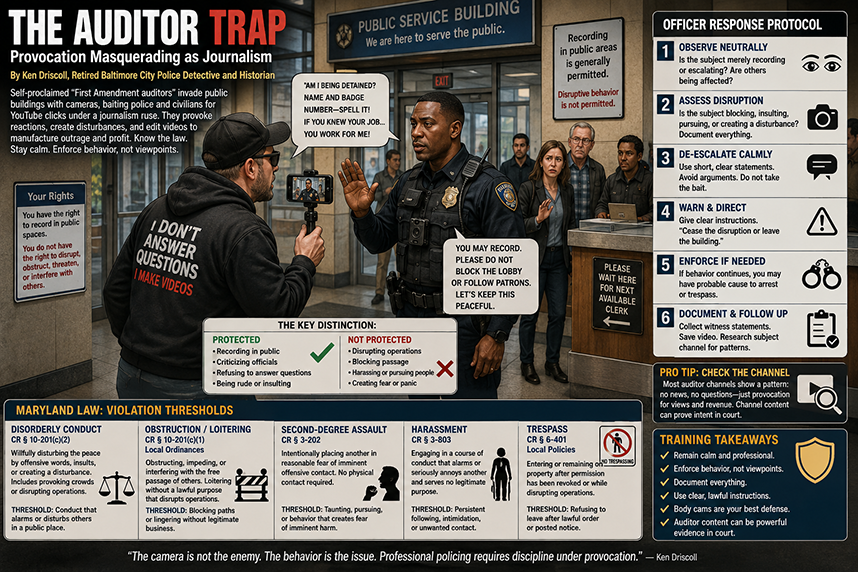
The rise of self-described “First Amendment auditors” has created a new challenge for law enforcement, courthouse security, municipal employees, and even ordinary citizens conducting business in public buildings. While legitimate journalism and constitutional recording rights remain protected under the First Amendment, many modern “auditor” channels operate less like investigative reporting and more like staged confrontation entertainment designed to generate online revenue through outrage, humiliation, and provoked reactions.

These encounters are not accidental. They are often carefully engineered productions meant to create viral content. The objective is rarely information gathering. The objective is emotional escalation.

Many auditors enter government buildings with cameras already recording and immediately begin searching for emotional responses from employees, civilians, or police officers. They commonly demand names and badge numbers in an aggressive tone, refuse simple requests for cooperation, intentionally argue semantics, and repeatedly state phrases like:

  • “You don’t know the law.”

  • “If you knew your job…”

  • “I don’t answer questions.”

  • “Am I being detained?”

  • “Spell your name.”

  • “You work for me.”

  • “You’re violating my rights.”

When ignored, some escalate by targeting civilians instead of officers. Citizens conducting ordinary business may become nervous or frightened when cameras are thrust into their faces in confined spaces. Auditors frequently exploit those reactions for content, mocking fear or frustration while encouraging confrontation. In some cases, they intentionally create crowd disturbances, impede movement through lobbies or hallways, or follow retreating individuals to provoke stronger reactions.

The camera itself is not the problem. The conduct surrounding it often becomes the issue.


Understanding the Real Objective

Most professional journalists gather information, interview subjects, verify facts, and publish news reports intended to inform the public. By contrast, many auditor channels contain:

  • No investigative reporting

  • No public records analysis

  • No civic education

  • No balanced commentary

  • No news publication structure

Instead, their content overwhelmingly consists of:

  • Reaction compilations

  • Police confrontations

  • “Owned” videos

  • Edited emotional exchanges

  • Clickbait thumbnails

  • Monetized outrage content

Officers should understand this distinction clearly: the goal is frequently to provoke an emotional mistake on camera.

The officer who becomes angry often becomes the thumbnail.


Constitutional Reality: Recording Is Generally Protected

Police training must begin with constitutional restraint. Courts have repeatedly affirmed that individuals generally possess a protected right to record public officials performing duties in public spaces.

Cases such as Glik v. Cunniffe established that recording police in public is ordinarily protected activity.

This means:

  • Recording alone is not a crime.

  • Verbal criticism of police alone is not a crime.

  • Refusing casual conversation alone is not a crime.

  • Being rude, arrogant, or insulting alone is usually not criminal.

Officers who misunderstand this create unnecessary liability.

However, constitutional protections are not unlimited shields against otherwise unlawful conduct. Recording rights do not erase criminal statutes involving harassment, obstruction, threats, assault, disorderly conduct, or trespassing.

The key legal distinction is conduct versus content.

Police must enforce behavior neutrally, not viewpoints emotionally.


The “Auditor Trap”

Provocative auditors often rely on several predictable tactics:

1. Emotional Triggering

The auditor attempts to embarrass or anger officers publicly in hopes of generating a reaction suitable for YouTube monetization.

Common tactics include:

  • Repeating insults

  • Interrupting commands

  • Talking over officers

  • Mocking appearance or intelligence

  • Demanding repeated badge identification

  • Pretending confusion over simple lawful instructions

The officer who argues emotionally loses operational control immediately.


2. Manufactured Crowds

Auditors frequently choose confined public buildings where emotional reactions naturally attract attention:

  • DMV offices

  • Libraries

  • Courthouses

  • Police lobbies

  • Permit offices

  • Schools

  • Post offices

As arguments develop, crowds form. Once crowds gather, normal operations become disrupted.

This becomes important legally.


3. Targeting Civilians Instead of Police

Some auditors intentionally shift attention toward ordinary citizens because civilians are more likely to react emotionally than trained officers.

Examples include:

  • Following frightened customers

  • Recording children near entrances

  • Blocking hallways while filming reactions

  • Pursuing retreating individuals verbally

  • Mocking fearful responses

Once behavior shifts from observation into intimidation, harassment, or obstruction, legal thresholds may emerge.


Maryland Criminal Statutes Commonly Implicated

Disorderly Conduct — Maryland CR § 10-201

Maryland disorderly conduct statutes may apply when conduct intentionally disturbs public peace or disrupts lawful public operations.

Potential indicators include:

  • Loud confrontational yelling

  • Creating hostile crowd reactions

  • Blocking service counters

  • Interfering with pedestrian flow

  • Escalating verbal confrontations in confined buildings

  • Refusing repeated lawful directions tied to public safety or operations

The key factor is not criticism of police. The issue is willful public disturbance.

An officer should articulate:

  • What disruption occurred

  • How operations were affected

  • Who became alarmed

  • What warnings were issued

  • How the subject escalated after warnings

Body camera footage becomes critical evidence here.


Obstruction or Hindering Passage

When individuals intentionally position themselves to interfere with public movement or operations, obstruction-related statutes or local ordinances may apply.

Examples include:

  • Blocking lobby entrances

  • Preventing access to counters

  • Standing deliberately in traffic paths

  • Creating crowd bottlenecks for reactions

  • Refusing lawful movement requests tied to safety

Again, officers must focus on behavior, not filming.

A person quietly recording from the side of a hallway is very different from someone intentionally obstructing movement to provoke conflict.


Second-Degree Assault — Maryland CR § 3-202

Many officers mistakenly believe assault requires physical contact. Under Maryland law, assault may include intentionally placing another person in reasonable fear of imminent offensive contact.

Potential examples:

  • Aggressively pursuing frightened civilians

  • Cornering retreating individuals

  • Advancing while taunting

  • Using threatening proximity or gestures

Statements such as:

  • “Why are you scared?”

  • “Run away then.”

  • “Not so tough now?”
    may become relevant when paired with aggressive pursuit behavior.

Context matters enormously.

The question becomes whether a reasonable person would fear imminent offensive contact under the circumstances.


Harassment — Maryland CR § 3-803

Persistent alarming behavior directed at unwilling individuals may cross into harassment territory.

Potential indicators:

  • Continuing pursuit after requests to stop

  • Repeated intimidation of employees

  • Following retreating civilians

  • Repeatedly targeting the same person

  • Conduct clearly intended to alarm rather than gather information

Documentation of repeated warnings becomes important.


Trespassing

Public buildings remain public forums for legitimate business purposes, but many government facilities still maintain lawful behavioral restrictions.

Once an individual:

  • materially disrupts operations,

  • refuses lawful directives,

  • or interferes with building functions,

administrators may revoke permission to remain.

Officers should ensure:

  • warnings are clear,

  • instructions are lawful,

  • and removal is behavior-based rather than viewpoint-based.


The Importance of Neutrality

The strongest officers in these encounters are usually the calmest officers.

Auditors thrive on visible anger.

The ideal officer response is often:

  • brief,

  • professional,

  • unemotional,

  • repetitive,

  • and highly documented.

Avoid:

  • sarcasm,

  • legal debates,

  • ego contests,

  • threats,

  • or profanity.

Never try to “win” the argument on camera.

The operational goal is lawful resolution, not verbal victory.


Recommended Officer Response Protocol

Step 1: Observe Without Escalating

Determine:

  • Are they merely filming?

  • Are they disrupting operations?

  • Are civilians becoming alarmed?

  • Are exits or counters being blocked?

  • Are they following unwilling individuals?

Do not assume criminal conduct simply because cameras are present.


Step 2: Begin Documentation Immediately

Activate:

  • body cameras,

  • lobby cameras,

  • witness collection,

  • supervisor notifications if needed.

Narrate observations clearly:

  • “Subject is blocking the service counter.”

  • “Multiple citizens appear alarmed.”

  • “Subject has ignored requests to stop following patrons.”

Detailed articulation defeats edited online narratives later.


Step 3: Use Calm, Limited Communication

Effective phrasing includes:

  • “You may record.”

  • “You may not block the entrance.”

  • “Please step away from the counter.”

  • “Do not follow patrons.”

  • “Keep the walkway clear.”

Avoid debating constitutional law roadside-style.

Never argue YouTube legal theories.


Step 4: Issue Clear Warnings

Warnings should be:

  • specific,

  • lawful,

  • and behavior-focused.

Example:


“You are free to film, but if you continue obstructing this lobby or alarming patrons, you may be subject to arrest for disorderly conduct or trespassing.”


This distinction is critical.


Step 5: Enforce Quietly and Professionally

If probable cause develops:

  • avoid crowd theatrics,

  • avoid emotional statements,

  • avoid retaliatory language.

The cleaner the arrest, the stronger the case.


Investigative Value of Auditor Channels

An overlooked training point is the evidentiary value of the auditor’s own content.

Many channels unintentionally establish:

  • motive,

  • intent,

  • behavioral patterns,

  • monetization goals,

  • prior conduct,

  • and editing manipulation.

Patterns may include:

  • repeated confrontational titles,

  • selective edits,

  • staged thumbnails,

  • prior removals from buildings,

  • encouragement of public confrontation.

Channel evidence may rebut claims of legitimate journalistic intent when the actual conduct demonstrates deliberate provocation.

Subpoenaed full-length footage can become extremely valuable in court.


Training Recommendations for Departments

Departments should incorporate dedicated auditor-response scenarios into annual legal update training.

Recommended drills include:

Scenario-Based Role Play

Train officers to:

  • withstand verbal insults,

  • avoid emotional escalation,

  • maintain command presence,

  • and articulate conduct-based violations clearly.


Camera Discipline Training

Teach officers:

  • assume constant recording,

  • avoid side comments,

  • narrate observations professionally,

  • and maintain consistent demeanor.


Building Coordination

Coordinate with:

  • courthouse staff,

  • library administrators,

  • municipal offices,

  • and security personnel

so all parties understand:

  • lawful recording rights,

  • lawful behavioral restrictions,

  • and trespass procedures.


Final Operational Principle

The greatest mistake officers make with provocative auditors is treating every encounter like a personal challenge.

The greatest mistake auditors make is believing a camera immunizes unlawful conduct.

Neither belief is correct.

Professional policing requires discipline under provocation. Courts consistently favor officers who:

  • remain calm,

  • issue lawful warnings,

  • document behavior carefully,

  • and enforce statutes neutrally.

The camera is not the enemy.

The behavior is the issue.

And the officer who understands that distinction usually wins both the street encounter and the courtroom afterward.


POLICE INFORMATION

We are always looking for copies of your Baltimore Police class photos, pictures of our officers, vehicles, and newspaper articles relating to our department and/or officers; old departmental newsletters, old departmental newsletters, lookouts, wanted posters, and/or brochures; information on deceased officers; and anything that may help preserve the history and proud traditions of this agency. Please contact Retired Detective Kenny Driscoll.

This email address is being protected from spambots. You need JavaScript enabled to view it.

Devider color with motto

NOTICE

How to Dispose of Old Police Items

Please contact Det. Ret. Kenny Driscoll if you have any pictures of you or your family members and wish them remembered here on this tribute site to honor the fine men and women who have served with honor and distinction at the Baltimore Police Department. Anyone with information, photographs, memorabilia, or other "Baltimore City Police" items can contact Ret. Det. Kenny Driscoll at This email address is being protected from spambots. You need JavaScript enabled to view it. follow us on Twitter @BaltoPoliceHist or like us on Facebook or mail pictures to 8138 Dundalk Ave., Baltimore, Md. 21222

Copyright © 2002 Baltimore City Police History: Ret Det. Kenny Driscoll 


Baltimore's Flag Legacy

Baltimore American Flag

Baltimore's Flag Legacy: The Star-Spangled Banner

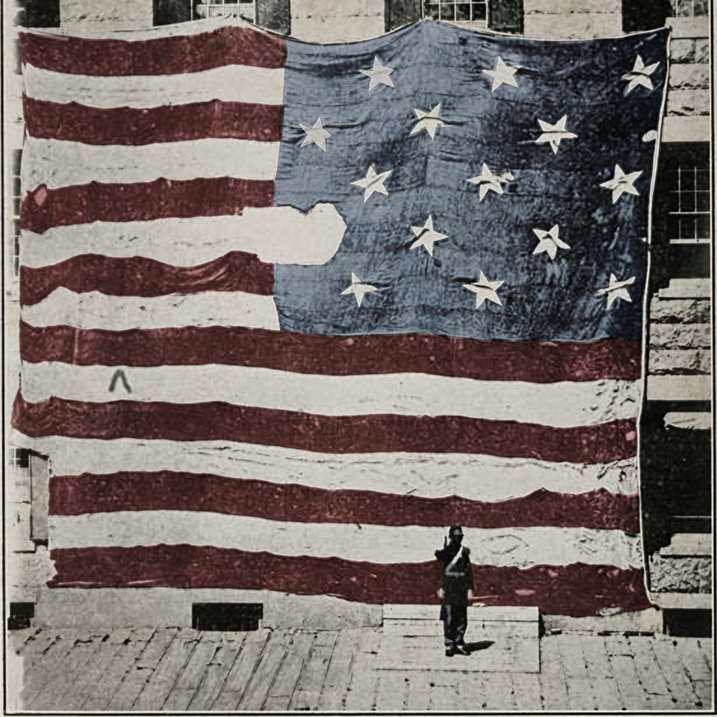
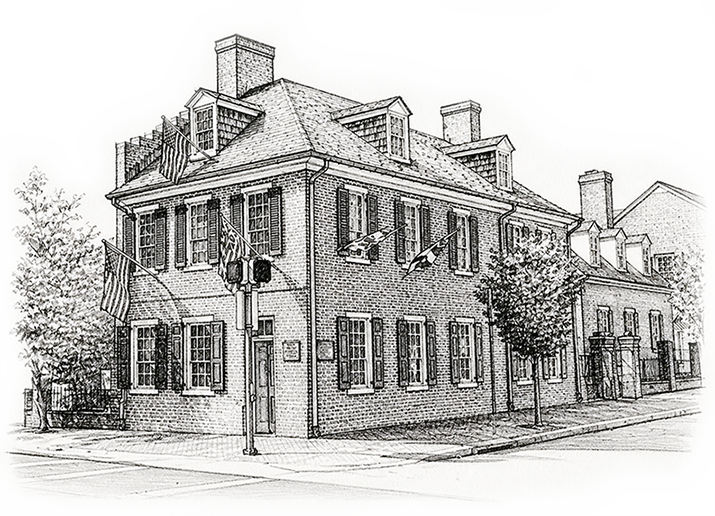
Baltimore's women crafted America's enduring symbol. In 1813, amid War of 1812 threats, Major George Armistead commissioned local flag maker Mary Young Pickersgill for two oversized flags to defend Fort McHenry—one a 17x25-foot storm flag, the other a massive 30x42-foot garrison flag visible miles out. Pickersgill's Pratt Street home (now the Flag House & Star-Spangled Banner Museum) became the workshop where her all-female crew stitched history.

The Flag Makers' Crew

Mary led a skilled team under tight deadlines:

  • Mary Young Pickersgill: Philadelphia-born (1776) flag businesswoman, daughter of Revolutionary flag maker Rebecca Young; widowed entrepreneur who sourced wool bunting and oversaw the project.

  • Caroline Pickersgill: Mary's daughter, assisting in sewing.

  • Eliza and Margaret Young: Mary's nieces, handling stitching details.

  • Rebecca Young: Mary's mother, veteran seamstress from the Revolution.

  • Grace Wisher: 13-year-old free Black girl indentured (not enslaved) by her mother for apprenticeship; managed chores and likely stitched, embodying Baltimore's diverse labor.

They worked in the attic and a nearby brewery, finishing in six weeks with 400 yards of fabric.

Baltimore's women crafted America's enduring symbol. In 1813, amid War of 1812 threats, Major George Armistead commissioned local flag maker Mary Young Pickersgill for two oversized flags to defend Fort McHenry—one a 17x25-foot storm flag, the other a massive 30x42-foot garrison flag visible miles out. Pickersgill's Pratt Street home (now the Flag House & Star-Spangled Banner Museum) became the workshop where her all-female crew stitched history.

The Star-Spangled Banner, flown over Fort McHenry 1814 (witnessed by Key), was donated to the Smithsonian by Armisteads in 1912.

Mary led a skilled team under tight deadlines:

  • Mary Young Pickersgill: Philadelphia-born (1776) flag businesswoman and daughter of Revolutionary flag maker Rebecca Young; widowed entrepreneur who sourced wool bunting and oversaw the project.

  • Caroline Pickersgill: Mary's daughter, assisting in sewing.

  • Eliza and Margaret Young: Mary's nieces, handling stitching details.

  • Rebecca Young: Mary's mother, veteran seamstress from the Revolution.

  • Grace Wisher: 13-year-old free Black girl indentured (not enslaved) by her mother for apprenticeship; managed chores and likely stitched, embodying Baltimore's diverse labor.

They worked in the attic and a nearby brewery, finishing in six weeks with 400 yards of fabric.

The Star-Spangled Banner itself, tattered but triumphant after 25 hours of British bombardment.

 Flag house sketch 72i

Fort McHenry's Stand

On September 13–14, 1814, British forces shelled the fort; the flag endured, whipping in the wind. Francis Scott Key, witnessing from a truce ship, penned "Defence of Fort M'Henry"—later "The Star-Spangled Banner," our national anthem since 1931. The flag signaled victory, preserving Baltimore.

The Smithsonian displays the flag today; visit the Flag House for the full story.


1 black devider 800 8 72

POLICE INFORMATION

We are always looking for copies of your Baltimore Police class photos; pictures of our officers, vehicles, and newspaper articles relating to our department and/or officers; old departmental newsletters, lookouts, wanted posters, and/or brochures; information on deceased officers; and anything that may help preserve the history and proud traditions of this agency. Please contact Retired Detective Kenny Driscoll.

This email address is being protected from spambots. You need JavaScript enabled to view it.

Devider color with motto

NOTICE

How to Dispose of Old Police Items

Please contact Det. Ret. Kenny Driscoll if you have any pictures of you or your family members and wish them remembered here on this tribute site to honor the fine men and women who have served with honor and distinction at the Baltimore Police Department. Anyone with information, photographs, memorabilia, or other "Baltimore City Police" items can contact Ret. Det. Kenny Driscoll at This email address is being protected from spambots. You need JavaScript enabled to view it.. Follow us on Twitter @BaltoPolice Hist or like us on Facebook or mail pictures to 8138 Dundalk Ave., Baltimore, Md. 21222

Copyright © 2002 Baltimore City Police History: Ret Det. Kenny Driscoll 


Paul Steimetz


Paul Nicholas Steimetz – Baltimore City Police Officer

Paul Nicholas Steimetz was a Baltimore City police officer whose life spanned both military service and decades of work in city law enforcement. Born on October 9, 1946, in Baltimore, Maryland, he grew up near Loyola University Maryland (then Loyola College), within the neighborhoods and institutions that would later shape his understanding of the city he served.


Military service and early years

Before joining the Baltimore Police Department, Paul served as a Vietnam‑era veteran, a period of national upheaval that exposed him to hardship, discipline, and a sense of duty. That experience likely informed his eventual choice of career in public safety, where he would spend much of his adult life patrolling the streets of Baltimore and engaging with the community.


Career with Baltimore City Police

Paul’s Baltimore City Police service is described as a “fulfilling career”, reflecting both professional satisfaction and personal commitment to the job. Though specific tours, districts, or ranks are not publicly detailed in the brief obituary record, his status as a longtime officer places him among the generation that worked through the socially turbulent and often violent decades of the late twentieth century in Baltimore.

A historical reference on the Baltimore City Police History / Central District page lists Paul Steimetz as a partner of an officer involved in a documented shooting incident, indicating that he was on the street, often working in a patrol or investigative role, and that his name appears in the department’s recorded history. That kind of detail is valuable for your site: it anchors him in a specific departmental context and suggests he was part of notable operational events.


Off‑duty life and personality

Outside of uniform, Paul was known as a laid‑back man who enjoyed watching television, especially cop‑oriented shows, and was a fan of baseball. These simple pleasures reveal a side of him that many officers share: after a demanding street job, he unwound by staying close, in spirit, to policing and sports, staying connected to the rhythm of the city even in retirement.

He was a devoted father to Bryan and Tim Steimetz and lived with his grandson Evan, taking pride in being a steady, supportive presence for his family. His obituary notes that his “legacy of love” continued through the lives he touched, underscoring that his impact went beyond the badge and into the day‑to‑day care of his children and grandchildren.


Later years and passing

Paul Steimetz passed away peacefully on March 17, 2026, at the age of 79, surrounded by his loved ones. In addition to his children, he is survived by his grandson Tim Steimetz, Jr., and by siblings Jim, Jay, Bill, Fran, and Judy, who carry on his family’s story.

Sgt. David “Randy” Dull

Sgt. David “Randy” Dull


Sgt. David “Randy” Dull a veteran Baltimore City Police detective sergeant whose career in the Central District’s Major Crimes Unit spanned more than four decades of service, leadership, and quiet influence on generations of detectives. 

Long Career in Central Major Crimes

Sgt. Dull joined the Baltimore Police Department and built his reputation in the Central District, eventually becoming a key supervisor in the Central District’s Major Crimes Unit (MCU), later reorganized as the District Detective Unit (DDU). Alumni records list him specifically as “David Randy Dull – CD – MCU – DDU,” reflecting his long association with central-district investigations and his supervisory role there. 

Over more than 35 years of service, he became known as an experienced investigator who understood both the street-level realities of Central District crime and the demands of complex follow-up investigations. His work placed him at the center of major felony cases in downtown Baltimore, including robberies, shootings, and other serious offenses that routinely flowed to Central’s major-crimes detectives.

Leadership and Mentorship Style

Within the unit, Sgt. Dull developed a reputation as a working sergeant who stayed deeply involved in the details of his detectives’ cases. A 2015 department profile of one of his detectives, retired Detective Kenny Driscoll, notes that when “Detective Sergeant Randy Dull suggested an investigative avenue or next step, Kenny had already completed it or was working on it,” underlining both Dull’s active case oversight and the high standard he set for his squad.

Now, it’s time for Detective Kenny Driscoll to respond with his thoughts on Sgt. Dull. Kenny described his own style as often out-of-the-box, like being the first officer in the agency trained in SCAN (Scientific Content Analysis), a technique so new the agency refused to pay for it. When trained, SCAN came off as a linguistic polygraph, where only Kenny was trained and had to be taken at his word. Sgt. Dull was willing to take that risk and trust in Kenny’s ability. SCAN became a very powerful tool for the Baltimore Police. Kenny also introduced going after cloned phones to combat cell phone thefts, bait robberies, thefts from autos, and other Part One crimes related to cell phones, which reduced cell phone thefts. But before doing so, they went after bootleg music because it was a way to get probable cause to search cloned cell phone operations. Each step was a little more out-of-the-box, yet Sgt. Dull was open to this, and in the end, the efforts paid off. It seemed when new ideas came up to fight crime, Sgt. Dull—a stern leader—was open to giving these techniques a try. He seemed very forceful at times with his squad, but he was also very protective of his detectives. As a result, he often led a squad of investigators that had the best crime numbers in the city for solving crimes, closing cases, and obtaining confessions. He was well-respected, the kind of leader who had his men and women working harder because they enjoyed being thought of as some of the best.

In that same profile, Sgt. Dull described Det. Driscoll as the “truest sense of a cop,” emphasizing teaching, leadership, and sharing techniques like SCAN across the unit. That comment reflects Dull’s own philosophy: a belief that good detectives should not only solve cases but also pass on skills, building a stronger investigative culture in Central Major Crimes.

Dedication Beyond the Minimum

Accounts from the Baltimore Police Historical Society describe Sgt. Dull as having “more than 35 years dedicated service” and note that he often paid out of his own pocket for training or equipment to make things easier on himself and “his men.” That willingness to invest personal funds in equipment and professional development underscores how seriously he took his supervisory responsibilities and the welfare of his squad.

Those same historical notes portray him as a consistent supporter of the department’s history and alumni community, placing him among a group of veteran officers and supervisors who remained engaged with the agency’s legacy even as they neared or entered retirement.

Recognition for 43 Years of Service

By 2024, Sgt. Dull’s tenure had reached approximately forty-three years, an unusually long career even by veteran standards. In July 2024, a ceremony highlighted by command staff recognized Detective Sgt. Randy Dull with a Certificate of Appreciation specifically for his 43 years of service to the Baltimore Police Department. That public recognition from senior leadership, including a deputy commissioner, signaled how widely respected he was within the organization.

This formal acknowledgment complemented the quieter, day-to-day respect he earned in Central Major Crimes, where his guidance on cases, his expectations for thorough investigative work, and his commitment to his detectives left a mark on the unit’s culture.

Legacy in Central Major Crimes

Sgt. Dull’s legacy in the Central District’s Major Crimes Unit is twofold: he is remembered both as a seasoned supervisor who shepherded major felony cases for decades and as a mentor who helped shape the investigative skills of younger detectives. His name appears in alumni and historical records alongside other notable Central detectives and supervisors, reinforcing his standing in the department’s collective memory.

For many Baltimore officers and detectives who worked in Central, Sgt. Dull represents a model of the old-school detective sergeant: hands-on with cases, demanding but fair with his people, and deeply invested in both the craft of investigations and the well-being of his squad.


1 black devider 800 8 72

POLICE INFORMATION

We are always looking for copies of your Baltimore Police class photos, pictures of our officers, vehicles, and newspaper articles relating to our department and/or officers; old departmental newsletters, lookouts, wanted posters, and/or brochures; information on deceased officers; and anything that may help preserve the history and proud traditions of this agency. Please contact retired detective Kenny Driscoll.

This email address is being protected from spambots. You need JavaScript enabled to view it.

Devider color with motto

NOTICE

How to Dispose of Old Police Items

Please contact Det. Ret. Kenny Driscoll if you have any pictures of you or your family members and wish them remembered here on this tribute site to honor the fine men and women who have served with honor and distinction at the Baltimore Police Department. Anyone with information, photographs, memorabilia, or other "Baltimore City Police" items can contact Ret. Det. Kenny Driscoll at This email address is being protected from spambots. You need JavaScript enabled to view it. follow us on Twitter @BaltoPoliceHist or like us on Facebook or mail pictures to 8138 Dundalk Ave., Baltimore, Md. 21222

Copyright © 2002 Baltimore City Police History: Ret Det. Kenny Driscoll 

Abandominium Raids

Innovative Policing in Baltimore's Central District: The Rise of Abandominium Raids in the Mid-1990s

In the mid-1990s, Baltimore City was grappling with a perfect storm of urban challenges: soaring violent crime rates, a proliferation of vacant buildings, and a police department under pressure to innovate amid limited resources. With homicide rates averaging around 45 per 100,000 residents—up 55% from the previous decade—the city was a hotspot for drug-related violence and gang activity. Amid this backdrop, the Baltimore Police Department's (BPD) Central District Major Crime Unit pioneered a creative strategy known as "abandominium raids." Drawing from street slang, these operations targeted abandoned structures—dubbed "abandominiums" by locals, a portmanteau of "abandoned" and "condominium"—to disrupt crime networks and gather vital intelligence. This approach not only cleared dangerous squats but also turned potential adversaries into informants, solving open cases and even preventing major crimes.

Baltimore's Vacant Building Crisis and the Central District's Role

Baltimore in the 1990s was marked by economic decline, with deindustrialization leading to widespread job loss and population exodus. By the decade's end, the city had tens of thousands of vacant properties, many serving as hubs for drug use, squatting, and criminal hideouts. These "abandominiums," as they were colloquially known in urban slang circles since at least the early 1990s, provided shelter for the homeless and transients while enabling illicit activities. The term, popularized in places like Baltimore and other East Coast cities, captured the ironic transformation of derelict buildings into makeshift "homes."

The Central District, covering a dense urban core from Pennsylvania Avenue west to Greenmount Avenue east, and from the Inner Harbor south to around 28th Street north, was ground zero for much of this activity. Encompassing tourist areas, cultural districts, and high-crime corridors, it handled a mix of major felonies, including homicides, robberies, and narcotics offenses. The Major Crime Unit, focused on serious offenses, operated citywide when needed but rooted its efforts in this district. Under the broader push for proactive policing—echoing national trends like "broken windows" theory—the unit sought ways to address root causes without alienating communities.

Coining the Strategy: From Street Slang to Police Tactic

The abandominium raids weren't invented in a vacuum; they adopted a term already in use on Baltimore's streets to describe these squats. Officers in the Major Crime Unit recognized that vacants were intelligence goldmines. Squatters and transients often witnessed or knew about local crimes but were overlooked in traditional policing. By formalizing raids on these sites, the unit turned a reactive response into a systematic operation.

Conducted once or twice a month—more frequently during slower periods—the raids targeted large vacant structures like abandoned theaters, rowhouses, or commercial buildings. Teams would sweep in, securing the premises and detaining occupants. Typically yielding a dozen or more arrests per operation, these efforts focused on charges under Maryland's 31a burglary code (a misdemeanor for fourth-degree burglary or criminal trespass, involving unauthorized entry with intent to commit theft or remain unlawfully). But enforcement was just the start; the real innovation lay in what followed.

The Human Element: Debriefs, Meals, and Mutual Respect

Post-arrest, the unit's approach diverged from standard procedure. Arrestees were treated with respect—a core rule emphasized by unit leaders. "You don't get information by mistreating people," as one veteran officer recalled. Detainees received hot meals, coffee, and a chance to debrief in a non-coercive environment. For many facing homelessness or addiction, even short stints in facilities like the Central Booking and Intake Facility (CBIF) offered rare basics: showers, beds, and temporary respite from the streets.

This humane tactic fostered cooperation. Squatters, often on society's margins, shared details on everything from petty thefts to major felonies. Debriefs yielded intel on burglaries, rapes, robberies, and homicides. Rarely were there hard feelings; some even became paid informants, providing ongoing tips.

Breakthroughs: Solving and Preventing Crimes

The raids' success was evident in tangible outcomes. In one standout case, a squatter's tip exposed an armored truck robbery in the planning stages. Details included an inside man from the truck company. The unit alerted the FBI, which confirmed the plot, made arrests, and thwarted the heist before it occurred. This mirrored broader 1990s efforts where BPD collaborated with federal agencies on high-stakes crimes, though specific armored truck plots were often reactive rather than preventive.

Homicides were another win: One debrief uncovered leads on two separate murders, clearing cases that might have gone cold. Robberies and burglaries saw similar resolutions, with intel linking patterns across districts. These raids not only solved open investigations but prevented planned crimes, disrupting networks before they escalated.

Leadership and Legacy: An Open-Minded Supervisor's Vision

Key to the program's success was a forward-thinking supervisor open to "out-of-the-box" ideas. In an era of rising scrutiny over aggressive tactics—Baltimore's zero-tolerance push under Mayor Martin O'Malley began in the late 1990s—the unit balanced enforcement with community-oriented elements. This supervisor encouraged innovation, recognizing that respect built trust and yielded better results than force.

The raids exemplified how targeted, intelligence-driven policing could address vacancy-driven crime without exacerbating tensions. However, as Baltimore shifted toward data-heavy systems like CompStat in the late 1990s, such grassroots strategies evolved or faded amid broader reforms. Today, with over 16,000 vacants still plaguing the city, echoes of this approach persist in modern nuisance abatement and community engagement efforts.

Conclusion: A Model for Compassionate Enforcement

The abandominium raids of Baltimore's Central District Major Crime Unit in the mid-1990s stand as a testament to innovative policing in tough times. By adopting street wisdom, prioritizing respect, and leveraging debriefs, the unit turned abandoned eyesores into sources of justice. In a city still wrestling with vacancy and crime, this story reminds us that effective law enforcement often hinges on humanity as much as handcuffs. As Baltimore continues initiatives like Vacants to Value, the lessons from these raids—solve crimes, prevent harm, and build bridges—remain relevant.

Fort Marshall with Baltimore Riots Context

Fort Marshall Baltimore Md Fifth Regiment Artiller

Fort Marshall: Baltimore's Civil War Bastion

Fort Marshall stood as a key Union defense in Baltimore, Maryland, during the American Civil War, built in 1861 to safeguard the city's eastern flank. The fort's construction came amid severe southern unrest following the April 18-19, 1861 riots—sparked by Fort Sumter's fall—where mobs attacked Union troops like the 6th Massachusetts on Pratt Street. While not directly involved (as it wasn't built until August-October 1861), it indirectly addressed the fallout: arrests of southern sympathizers Marshal George P. Kane and Mayor George W. Brown in September 1861, followed by martial law and the police shutdown, which heightened needs for federal fortifications like Fort Marshall to suppress secessionists.

Located on Snake Hill (also called Murray Hill or Potter's Hill) in what became the Highlandtown and Canton neighborhoods, this star-shaped bastion fort was constructed mainly by the 7th Maine Volunteer Infantry Regiment. Named after Colonel Thomas H. Marshall, who died in Baltimore shortly before its completion, the site included Camp Emory outside its walls.

Regiment. Named after Colonel Thomas H. Marshall, who died in Baltimore shortly before its completion, the site included Camp Emory outside its walls.


Strategic Role

Positioned about 1.5 miles from the city center on elevated ground, Fort Marshall offered better visibility than Fort McHenry across the harbor. Armed with up to 60 artillery pieces by war's end, it protected alongside Fort Worthington against Confederate threats and guarded the hospital at Patterson Park. Troops patrolled city streets, railroads, and warehouses to suppress local secessionists and saboteurs, even aiding 1864 elections on Maryland's Eastern Shore.


Daily Life and Operations

The fort housed 400 soldiers in barracks with a subterranean magazine, serving as a training ground for regiments before frontline duty. Service was described as monotonous yet privileged compared to stricter posts, with July 4 salutes reminding locals of Union control. A tragic 1863 incident killed Navy Commander Maxwell Woodhull during a cannon salute.


Legacy Today

Abandoned by 1866, the site was salvaged and redeveloped; in 1873, Baltimore German Redemptorists built Sacred Heart of Jesus Roman Catholic Church there after leveling the hill. Nearby, Fort Marshall Brewing Company operated from 1869 to 1899, boosting southeast Baltimore's brewing heritage in today's Brewer's Hill area. No physical remains survive, but it highlights Baltimore's transformation into a fortified Union stronghold.

 
1 black devider 800 8 72

Fort Marshall played no direct role in the immediate aftermath of Baltimore's April 18-19, 1861 riots or the arrests of Marshal George P. Kane and Mayor George W. Brown.

Timeline Mismatch

The riots erupted right after Fort Sumter's fall on April 14, 1861, with mobs attacking the 6th Massachusetts Regiment on Pratt Street. Federal authorities responded swiftly by September 1861, arresting Kane (accused of aiding secessionists) and Brown, then suspending Baltimore's police force under martial law led by General Benjamin Butler and later others. Fort Marshall's construction began later that fall (around August-September 1861 under Lt. Col. Henry Brewerton), with the 7th Maine Infantry building it on Snake Hill through October. It wasn't operational until after those April events.

Broader Context

Early riot suppression relied on immediate troop deployments like Camp Federal Hill (Fort #15), established in April 1861 with guns aimed downtown to quell pro-Southern unrest. Fort Marshall, armed later with up to 60 guns, focused on long-term eastern defense, patrols against saboteurs, and protecting Patterson Park's hospital—enforcing Union control over a restive city but not tied to the riots themselves. By 1862, its garrison (e.g., 5th New York Artillery) helped maintain martial law


1 black devider 800 8 72

Civil War Forts

Baltimore, Maryland, hosted dozens of fortifications during the Civil War, transforming from a pro-Southern hotbed into a heavily defended Union stronghold after the April 1861 riots.

Civil War Forts Overview

By 1865, the city featured 44 forts, batteries, redoubts, and armed camps—many temporary earthworks dismantled by 1869—to counter secessionist unrest and potential Confederate raids. These ringed the urban core, protecting key sites like railroads, bridges, and Patterson Park's hospital. Construction ramped up post-riots, with Fort Federal Hill (#15) as the first, its guns aimed downtown to enforce order amid arrests of Mayor Brown and Marshal Kane.

Fort NameLocation/DetailsKey Role/Notes 
Fort McHenry Wards Point, Locust Point Iconic star fort (1798); housed POWs, aimed guns at city to deter riots.
Fort Marshall (#14) Snake Hill, Highlandtown Star-shaped; built 1861 by 7th Maine; later church site.
Fort Carroll Soller's Point Flats, Patapsco River Hexagonal sea fort (1850s-1900s); supplemented McHenry harbor defense.
Fort Howard North Point peninsula Later Endicott-era (1890s-1920s); Civil War precursor nearby.
Fort Federal Hill (#15) Federal Hill April 1861 build; 50 guns suppressed downtown unrest.
Fort Worthington (#13) Kenwood/Preston Sts., near Baltimore Cemetery Paired with Marshall for eastern flank.
Fort Patterson (#12) Hampstead Hill, Patterson Park Hospital guard; aka Camp Washburn.

Pre-Civil War Defenses

Earlier sites like Fort Whetstone (1776 Revolution, star fort with 13 guns) and Fort Covington (1813-1832, ten-gun brick) guarded the harbor alongside Fell's Point BatteryFort Babcock (1813, six-gun redoubt) marked Sailor's Battery west of McHenry.

Legacy

Most vanished under urban growth, but survivors like Fort McHenry (national monument) and Carroll's ruins recall Baltimore's pivotal role in keeping Maryland loyal. Explore remnants at Patterson Park or Federal Hill Park.


1 black devider 800 8 72

The Fort Federal Hill Cannons 

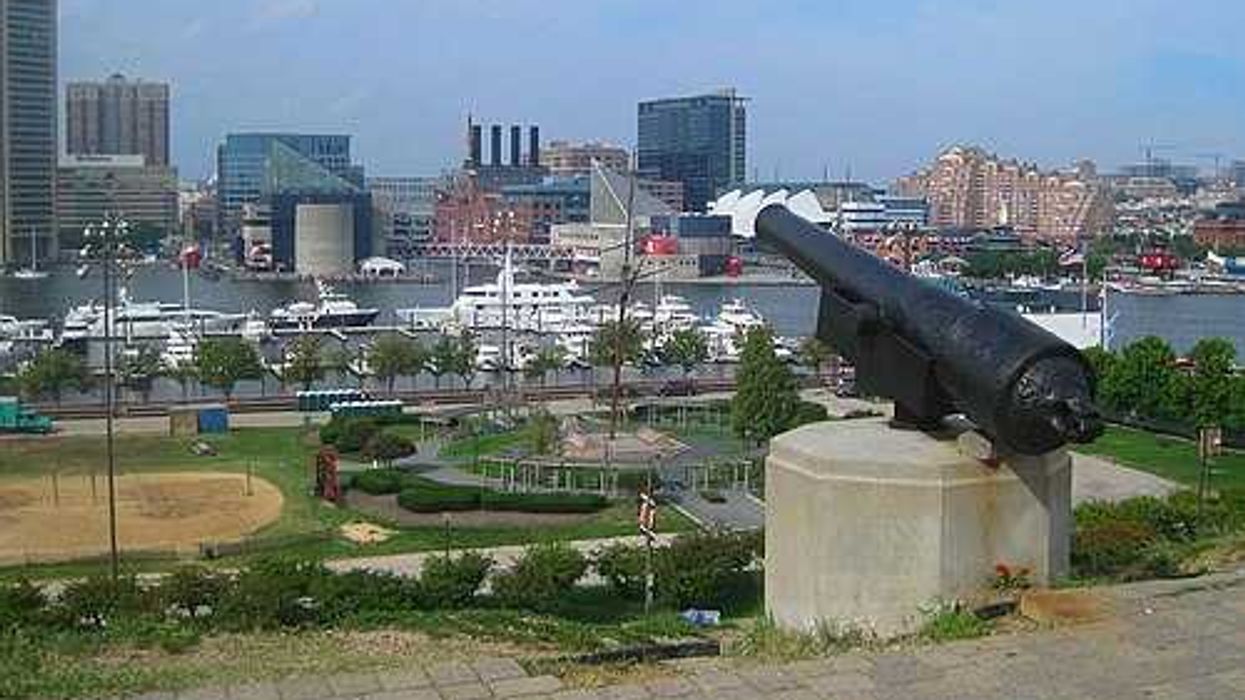
The cannons at Fort Federal Hill were deliberately positioned to point toward Baltimore's downtown core, including the Pratt Street area, as a show of force against Southern sympathizers.

Purpose and Setup

After the April 19, 1861, Pratt Street Riot—where mobs attacked the 6th Massachusetts Regiment—Union General Benjamin F. Butler occupied Federal Hill on May 13, 1861. He ordered earthworks built with numerous artillery pieces trained on the central business district across the Inner Harbor basin, aiming one large cannon at the secessionist Maryland Club on Monument Square. This deterred further uprisings in a city rife with pro-Confederate unrest, ensuring Maryland's loyalty without firing a shot.

Strategic Impact

The fort's guns overlooked key riot flashpoints like Pratt Street Station and Camden Station, backing martial law measures like the arrests of Mayor Brown and Marshal Kane. Replica cannons in today's Federal Hill Park still face that direction, symbolizing Union control.


1 black devider 800 8 72
 

Baltimore, Maryland, has a rich military history shaped by its strategic harbor on the Patapsco River and Chesapeake Bay. Over more than two centuries, the city built or adapted dozens of fortifications to guard against naval attacks—from the Revolutionary War era through World War II. The forts you mentioned (plus a few closely related ones) represent different periods: star-shaped bastions from the early republic, Civil War outposts, and Endicott-era concrete gun batteries from the late 19th/early 20th centuries.

Note: No record exists of a “Fort Collins” in the Baltimore area. It may be a reference to Fort Carroll (a common mix-up in local histories), which I’ve included below. Here are short narratives on each, drawn from official park records, historical documents, and military archives.

Fort McHenry (National Monument and Historic Shrine)

Built 1798–1803 on Locust Point (replacing Revolutionary-era Fort Whetstone), this pentagonal star fort was named for James McHenry, George Washington’s Secretary of War. Its defining moment came during the War of 1812: on September 13–14, 1814, Major George Armistead’s garrison endured a 25-hour British naval bombardment of rockets and shells. The fort held, preventing the capture of Baltimore. The sight of the giant 30×42-foot garrison flag still flying at dawn inspired Francis Scott Key to write “Defence of Fort M’Henry,” later set to music as “The Star-Spangled Banner.”

The fort later served as a Civil War prison, a WWI Army hospital, and a WWII Coast Guard training site. Today it is the only site in the National Park System designated both a National Monument and Historic Shrine. Visitors can walk the ramparts, see Rodman guns, and watch the flag-raising ceremony. It remains one of Baltimore’s most visited historic sites.

Fort Federal Hill (now Federal Hill Park)

In May 1861, shortly after the Pratt Street Riots, Union General Benjamin Butler occupied the prominent hill overlooking the Inner Harbor and hastily fortified it with cannons pointed at downtown Baltimore to deter secessionist activity. It was officially called Fort Federal Hill during the Civil War and garrisoned by Massachusetts troops. The city acquired the land in 1880 and turned it into a public park. Today the 10-acre hill offers panoramic skyline views; a few original cannons and a Grand Army of the Republic monument remain as reminders of its military past.

Federal Hill's Warning: A Baltimorean's Reflection on Leadership - The Fulcrum

Fort Armistead

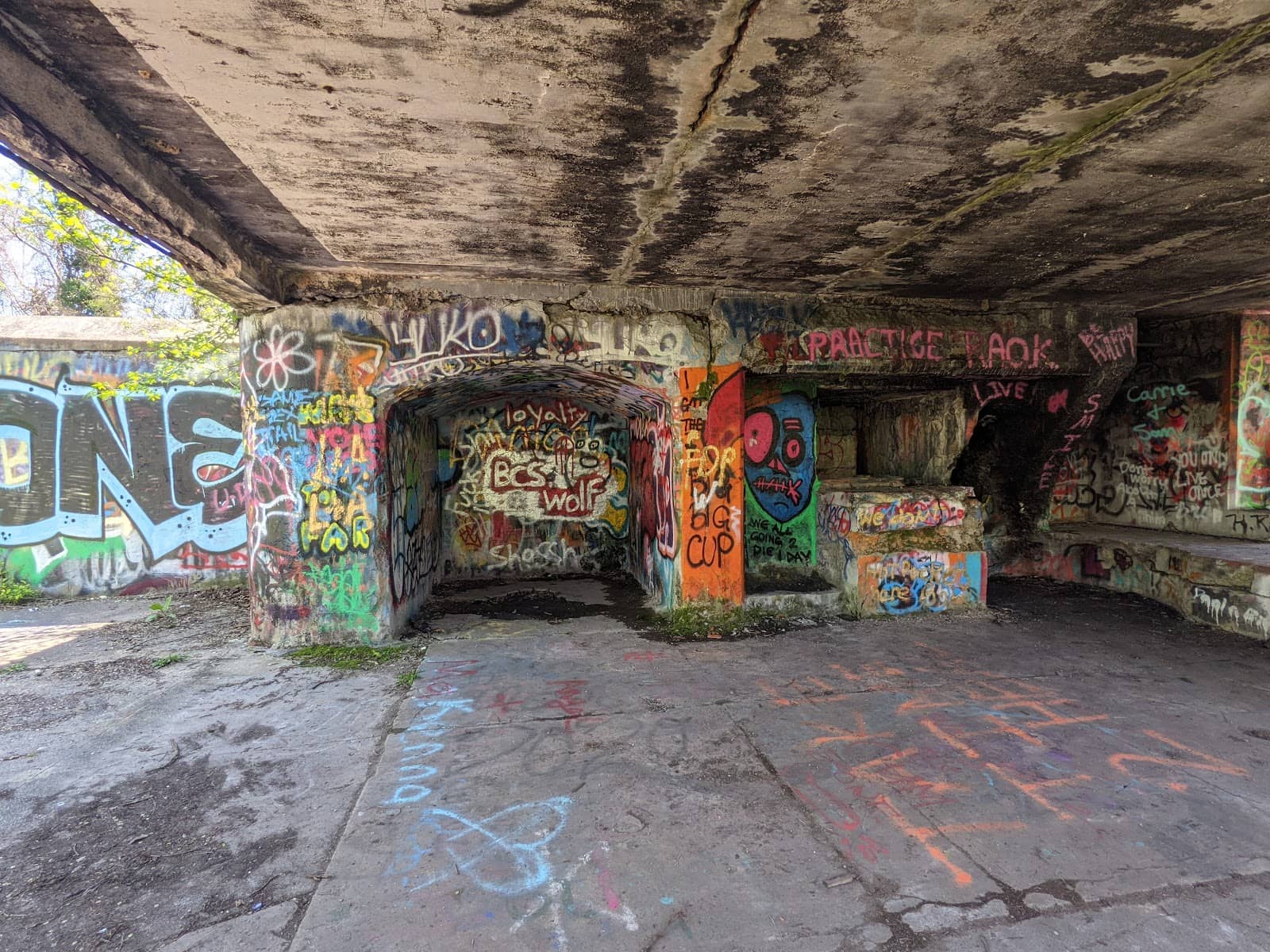
Constructed 1897–1901 at Hawkins Point as part of the Endicott Program modernizing U.S. coastal defenses, this concrete battery fort mounted disappearing guns (12-inch, 8-inch, and smaller rapid-fire pieces) and controlled a minefield across the harbor channel. It never fired in anger. After WWI the guns were removed; the site briefly stored Navy ammunition in WWII. Declared surplus in 1923, it became a city park in 1928. Today the overgrown concrete emplacements and tunnels are popular (if somewhat graffiti-covered) with urban explorers and fishermen.

Fort Armistead Park (2026) – Best of TikTok, Instagram & Reddit Travel Guide

Fort Howard (now Fort Howard Park)

The tip of North Point was the British landing site on September 12, 1814 (the day before the bombardment of Fort McHenry). In the early 1900s the Army built reinforced-concrete batteries here and made it the headquarters of the Coast Defenses of Baltimore—earning the nickname “Bulldog at Baltimore’s Gate.” Guns were removed after WWI; the site later served as a Veterans Administration hospital and WWII POW holding area. Baltimore County now operates the historic portion as a park with interpretive signs, gun mounts, and trails.

Fort Howard played key role in Baltimore's defense | Haunted Happenings in Maryland

Fort Holabird (Camp Holabird)

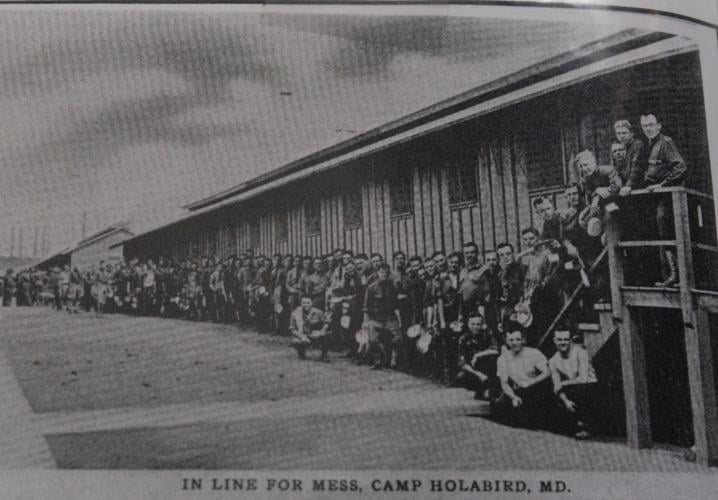
Established in 1917–1918 on marshland near Colgate Creek (Dundalk area), this was the Army’s first motor-transport training center and depot, named for Quartermaster General Samuel B. Holabird. It later became a major vehicle research facility (the Jeep was extensively tested and refined here) and, by the 1950s–60s, home to the U.S. Army Intelligence School and Counter Intelligence Records Facility. The post closed in 1973; most of the land became the Holabird Industrial Park. A sphinx statue once guarded the intelligence building (now gone).

Fort Carroll (likely intended as “Ft. Collins”)

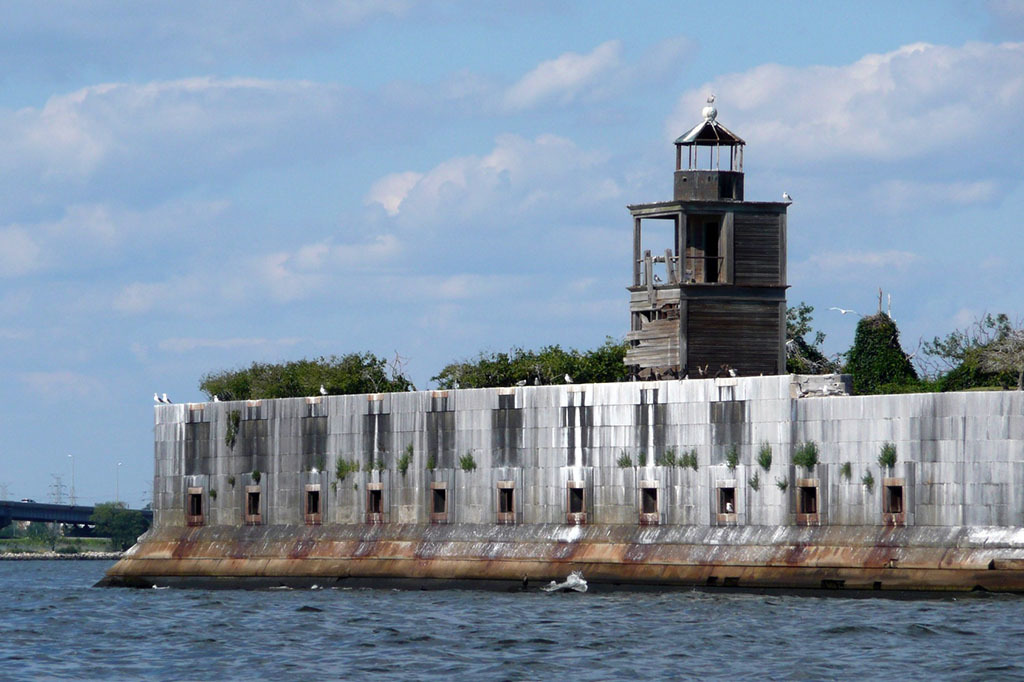
This hexagonal artificial-island sea fort sits in the Patapsco River south of the Key Bridge. Designed by then-Brevet Colonel Robert E. Lee and begun in 1848, it was never finished (walls were only partially built). Lightly armed during the Civil War, it received modern concrete batteries around 1900 but was abandoned after WWI. Today it is an abandoned, overgrown historic site listed on the National Register of Historic Places—reachable only by boat and occasionally visited by kayakers and urban explorers.

Other Notable Nearby Forts

  • Fort Smallwood (another Endicott battery, now a county park with gun emplacements).
  • Fort Garrison (1690s stone blockhouse in Baltimore County—one of Maryland’s oldest surviving frontier forts).

Many of these sites are open to the public today as parks or monuments, offering a tangible connection to Baltimore’s role in defending the young United States. If you’re planning a visit, Fort McHenry is the best starting point—then pair it with a drive or kayak trip to the others for a full “harbor defense tour.” Let me know if you’d like driving directions, current hours, or more photos!
1 black devider 800 8 72

Fort McHenry National Monument & Historic Shrine

Location: Locust Point, Baltimore City
Era: Built 1798–1800; used through World War II
Summary:
The most iconic fort in the Baltimore region, Fort McHenry National Monument & Historic Shrine – Wikipedia is a star-shaped coastal bastion fort whose steadfast defense during the War of 1812 became one of America’s defining moments. On September 13–14, 1814, British warships bombarded the fort for 25 hours in the Battle of Baltimore. When dawn broke and the American flag still flew over the ramparts, lawyer Francis Scott Key was inspired to pen “Defence of Fort M’Henry,” the poem that became The Star-Spangled Banner, the U.S. national anthem.

Originally replacing an earlier Revolutionary War fort (Fort Whetstone), Fort McHenry guarded the entrance to Baltimore Harbor for well over a century and saw service through World War I and World War II (as a Coast Guard training base). It became a National Monument in 1939 and remains one of the nation’s most celebrated historic sites.


Fort Armistead

Location: Hawkins Point, Baltimore City
Era: Built 1897–1901 (Coast Artillery)
Summary:
Part of the late-19th century Endicott coastal defense system, Fort Armistead stood at the outer edge of Baltimore’s harbor defenses, farther seaward than McHenry. Named for Major/Colonel George Armistead (the commander of Fort McHenry during the 1814 bombardment), it was armed with modern artillery of the era and intended to deter hostile warships from reaching Baltimore.

The fort was decommissioned after World War I and the land eventually became Fort Armistead Park, with remnants of batteries still visible (though much overgrown). The site even saw brief reuse in World War II as a naval ammunition storage area.


Fort Holabird

Location: Southeast Baltimore / Dundalk border
Era: 1918–1973
Summary:
Unlike the coastal artillery forts, Fort Holabird was a U.S. Army base and training depot, established in World War I as a motor transport training center and later home to a quartermaster and signal depot. It grew in size during World War II and continued active Army use through the early Cold War.

The post garnered some notoriety in the late 1960s and early 1970s when portions of the intelligence school and prisoner-witness programs operated there. After closure in 1973, most of the land was transferred to Baltimore City and redeveloped into an industrial park, though traces of its past persist in local memory.


Fort Howard (Maryland)

Location: North Point peninsula, Baltimore County
Era: Endicott coastal defense era (late 1890s–1920s)
Summary:
At the eastern mouth of the Patapsco River, Fort Howard formed another segment of Baltimore’s harbor coastal defenses. Originally a landing area of British troops in the War of 1812 (at North Point), the site later became a heavily armed Endicott period fort with reinforced concrete batteries and large Coast Artillery guns.

Nicknamed the “Bulldog at Baltimore’s Gate,” Fort Howard worked in tandem with Forts Armistead, Carroll, and Smallwood to protect the inner harbor against potential naval assault — though it never saw combat in those later years. The fort was turned over to the Veterans Administration in 1940 and today much of the area is public parkland within Fort Howard Park with preserved batteries and interpretive signs.


Fort Federal Hill (Federal Hill Park)

Location: Downtown Baltimore (Federal Hill neighborhood)
Era: Civil War (1861–1865)
Summary:
The rise known today as Federal Hill Park was used as a defensive position well before the Civil War, but its most militarily notable period came during the Baltimore riot of 1861 and early Civil War months, when Union troops hastily erected earthworks and cannons atop the hill to command the city and deter Confederate sympathizers.

During this period it was dubbed Fort Federal Hill. While few formal structures remain, replica cannons and interpretive plaques mark its place as a key point in Baltimore’s Civil War history — a reminder of how strategically even urban high ground was used in past conflicts.


Related Nearby or Notable Forts

While not on your original list, these help complete the picture of Baltimore’s ring of defenses:

Fort Carroll

Location: Patapsco River artificial island
Era: 1850–1921
Summary: A massive hexagonal sea fort built on an artificial island designed to protect the channel into Baltimore Harbor. Constructed under the Third System of coastal defenses and even supervised in part by Robert E. Lee (before his Civil War fame), Fort Carroll never fired in anger and was largely obsolete by World War I. Today it remains an eerie abandoned structure in the river.


Summary

Baltimore’s forts reflect a long arc of American military history — from Revolutionary defenses and the War of 1812 to 19th-century coastal artillery modernization and 20th-century Army logistics facilities. Some, like Fort McHenry, are national shrines; others, like Fort Holabird, played equally vital but lesser-known roles in wartime mobilization. Many of the coastal forts are now parks or historic sites that let visitors imagine what defending one of America’s great ports once entailed.

1 black devider 800 8 72

POLICE INFORMATION

We are always looking for copies of your Baltimore Police class photos, pictures of our officers, vehicles, and newspaper articles relating to our department and/or officers; old departmental newsletters, old departmental newsletters, lookouts, wanted posters, and/or brochures; information on deceased officers; and anything that may help preserve the history and proud traditions of this agency. Please contact Retired Detective Kenny Driscoll.

This email address is being protected from spambots. You need JavaScript enabled to view it.

Devider color with motto

NOTICE

How to Dispose of Old Police Items

Please contact Det. Ret. Kenny Driscoll if you have any pictures of you or your family members and wish them remembered here on this tribute site to honor the fine men and women who have served with honor and distinction at the Baltimore Police Department. Anyone with information, photographs, memorabilia, or other "Baltimore City Police" items can contact Ret. Det. Kenny Driscoll at This email address is being protected from spambots. You need JavaScript enabled to view it. follow us on Twitter @BaltoPoliceHist or like us on Facebook or mail pictures to 8138 Dundalk Ave., Baltimore, Md. 21222


Copyright © 2002 Baltimore City Police History: Ret Det. Kenny Driscoll 

Lieutenant Robert "Bob" Wilson
A Pioneer in Community-Based Crime Prevention

Early Career and Rise Through the Ranks

Lieutenant Robert "Bob" Wilson joined the Baltimore Police Department in 1968, during one of the most challenging periods in the city's history. Baltimore was still recovering from the riots and major civil unrest that had shaken the community. Wilson began his career on the streets of the Northern Police District, where he served as a patrol officer until 1972.

His dedication and effectiveness earned him a promotion to sergeant in 1972, leading to his transfer to the Chief of Patrols Office. He later returned to the Northern District as a Community Relations Sergeant, demonstrating early on his commitment to building bridges between law enforcement and the community. His continued excellence led to his promotion to lieutenant.

Commander of the Crime Resistance Unit

As a lieutenant, Wilson served as shift commander in the Northern District before taking on his most impactful role: Commander of the Crime Resistance Unit (CRU). Under his leadership, the CRU became a model for innovative, community-based crime prevention programs that would influence policing strategies nationwide.

Innovative Programs and National Impact

Lieutenant Wilson's Crime Resistance Unit developed and implemented several groundbreaking programs:

Taxi On Patrol (T.O.P.) Program (1982)

  • Launched on January 20, 1982, in partnership with Checker Cab Company and Yellow Cab Company
  • Trained taxi drivers to observe and report crimes while on their regular routes
  • Placed identifying decals on all participating cabs
  • What began as a Baltimore initiative became a national program adopted by cities across the country
  • Worked closely with Deputy Mullen and Mark Joseph of Yellow Cab Company to ensure citywide participation

McGruff the Crime Dog Program

  • The CRU assisted in developing this national crime prevention program
  • Agent Marty Seltzer was instrumental in bringing McGruff to Baltimore communities

Metro Crime Stoppers

  • Developed and coordinated by the CRU
  • Key personnel included Officer Charles Feaster, Sergeant Hezzie Sessomes, and Officer Mike Byrd

Vehicle Security Initiatives

  • Distributed thousands of decals (designed by Officer Pete Katich) on parking meters
  • Placed thousands of summonses on vehicles reminding citizens to lock their cars and remove valuables from sight
  • Focused on proactive prevention rather than reactive enforcement

Professional Achievements and Recognition

Lieutenant Wilson's expertise extended far beyond traditional policing:

Professional Certifications:

  • Certified Protection Professional (CPP) from the American Society for Industrial Security (ASIS)
  • One of very few police officers to achieve this prestigious status
  • Demonstrated mastery of security knowledge through extensive job experience and academic prerequisites

Professional Memberships:

  • International Society of Crime Prevention Practitioners
  • Maryland Crime Prevention Association
  • Maryland Crime Watch Steering Committee

Awards and Honors:

  • Jimmie Swartz Foundation Medallion Award—recognized for "humanitarian qualities and unselfish deeds"
  • Four official commendations during his tenure, including the Unit Citation

Legacy and Impact

Lieutenant Robert Wilson's approach to crime prevention was revolutionary for its time. Rather than focusing solely on enforcement and arrests, he understood that preventing crime required community engagement, public education, and innovative partnerships with private sector entities like taxi companies.

His work with the Crime Resistance Unit demonstrated that effective policing required thinking beyond traditional methods. By enlisting taxi drivers as additional eyes and ears, educating the public about simple security measures, and creating programs that engaged citizens in their own safety, Wilson helped transform how Baltimore—and eventually cities nationwide—approached crime prevention.

The programs he developed in the 1980s laid the groundwork for modern community policing strategies that emphasize partnership, prevention, and public engagement over purely reactive law enforcement.

The Crime Resistance Unit Team

Wilson worked alongside a dedicated team of officers and agents who helped bring these innovative programs to life, including:

  • Sergeant Bob Lassahn
  • Sergeant Marty Seltzer
  • Sergeant Lewis
  • Sergeant Kincaid
  • Agent Rodriguez
  • Agent Douglas
  • Officer Mike Byrd
  • Officer Charles Feaster
  • Sergeant Hezzie Sessomes

Sources:

  • Baltimore Police Museum - Lt. Robert Wilson profile
  • Baltimore Police Museum - Crime Resistance Unit history
  • Baltimore Police Department historical newsletters (1985)

1 black devider 800 8 72

POLICE INFORMATION

We are always looking for copies of your Baltimore Police class photos, pictures of our officers and vehicles, newspaper articles relating to our department and/or officers, old departmental newsletters, old departmental newsletters, lookouts, wanted posters, and/or brochures, information on deceased officers, and anything that may help preserve the history and proud traditions of this agency. Please contact Retired Detective Kenny Driscoll.

This email address is being protected from spambots. You need JavaScript enabled to view it.

Devider color with motto

NOTICE

How to Dispose of Old Police Items

Please contact Det. Ret. Kenny Driscoll if you have any pictures of you or your family members and wish them remembered here on this tribute site to honor the fine men and women who have served with honor and distinction at the Baltimore Police Department.  Anyone with information, photographs, memorabilia, or other "Baltimore City Police" items can contact Ret. Det. Kenny Driscoll at This email address is being protected from spambots. You need JavaScript enabled to view it. follow us on Twitter @BaltoPoliceHist, like us on Facebook or mail pictures to 8138 Dundalk Ave., Baltimore, Md. 21222

Copyright © 2002 Baltimore City Police History: Ret Det. Kenny Driscoll 

How to Dispose of Old Police Items

logo

Please contact Det. Ret. Kenny Driscoll if you have any pictures of you or your family members and wish them remembered here on this tribute site to Honor the fine men and women who have served with Honor and Distinction at the Baltimore Police Department. Anyone with information, photographs, memorabilia, or other "Baltimore City Police" items can contact Ret. Det. Kenny Driscoll at   Kenny@BaltimoreCityPoliceHistory.com follow us on Twitter @BaltoPoliceHist or like us on Facebook or mail pics to 8138 Dundalk Ave. Baltimore Md. 21222.

NEWSLETTER

Subscribe now to get 100 exclusive photo & two newsletters per month